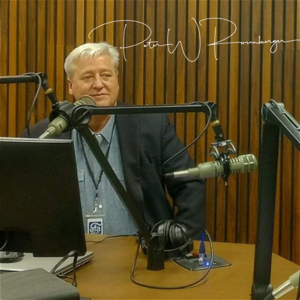
This is the Truth Network. Welcome to Hope for the Caregiver. This is Peter Rosenberger here on American Family Radio. Glad to be with you. This is the program for all things caregiver-related.
An odd subject, would you not say?
Well, that's okay. I'm an odd guy. But There are 65 million Americans right now who are doing this. Odd task of caring for someone who has a chronic impairment. Maybe that's you.
And if that is you, Well Congratulations, you're in the right place. And if it's not you, Well Congratulations, you're still in the right place because if you love somebody you're most likely going to be a caregiver if you live long enough you're going to need one and so we all got a stake in this. Hopeforthecaregiver.com. Hopeforthecaregiver.com. If you want to see more information about what we do, how we do it, all the resources available, it's all out there.
at the website hopeforthecaregiver.com. Most caregivers never planned to become one. You know, there is no Orientation: There's no certification course, there is no caregiver university. And uh there's No moment when someone hands you a badge and says you're in charge now. It just happens.
You just find yourself in an exam room. You find yourself in a hospital hallway or You're in a recovery room or um post op or Sometimes you're in the delivery room.
Sometimes you get a phone call from jail where a loved one has been arrested for. A DUI. or something similar. Regardless. You find yourself in this situation, and you are like, okay, what happens now?
And for a lot of us who are dealing with somebody with medical issues. We're in the room with people who know more medicine than we do. And we you know we struggle with that a little bit But we know the patient better than anyone there. Would you not say? They may know the science of what's going on with our loved one, but do they know our loved one?
Do they understand them and what makes them Tick. And that realization marks the beginning of what I've come to call caregiver authority. Those of you who have been listening to this program for some time understand what I mean by that. But for those of you who are new, because we have new people finding this program every day, I get this all the time. People say, you know, I found your show by accident.
Well, I'm pretty comfortable with that. It's like, I never went to it purposely, I just stumbled over it. And actually, I just crashed right into it. No, but that's okay. I don't care how you got here.
I'm just glad you're here. But those of you who have been with this program a long time know what I've referred to as caregiver authority. What do I mean by that?
Well, we we don't go to medical school. Most of us don't.
Some of you all probably have, and and uh this audience is big enough that there are physicians and nurses and all kinds of people involved in the medical field who are also serving as caregivers that listen to this program. But the learning curve for us arrives pretty fast. and and under stress. And we learn terminology late at night. How many of you all have done searches online about your loved one's condition?
How many of you have looked up? Pharmaceutical stuff, just to see, okay, what is this drug? What's going on here? What is the doctor saying? And this is what we do as caregivers.
And you do this long enough, and I promise you, you will be doing this. And so we try to catch up and play catch up as much as we can. Search um through all these things, we and we struggled to understand treatment plans. But You know, the whole time we're pretty exhausted, and it kind of clouds our clear thinking. And You know, that's our disadvantage we have as caregivers when we're dealing with all these medical professionals who truly understand the disease.
But now here's the difference. Clinicians understand The disease or the condition. That's what they're trained to know. But we, as caregivers, understand the person it affects. We know our loved ones normal.
We notice hesitation before pain is admitted. We notice fatigue. That's hidden behind politeness And we notice symptoms that never appear during a ten minute appointment. It's like taking your car to the mechanic because it's knocking and doing something and gets there and and and you can't recreate it. You know, how many of you have been in that situation?
Because I've done that. And sometimes those symptoms don't. Appear in a ten minute appointment. You just can't make them do it on demand sometimes. We hold the history.
for our loved one that doesn't fit neatly into the chart. And that authority carries responsibility. We often have to speak for them when they can't. How many of you have done that? Pain medication can cloud thinking.
Fatigue will silence questions. Fear keeps patients agreeable when something feels wrong, but they don't want to say anything because they're afraid. And in those moments, somebody must provide the narrative clear. and calmer. And that usually is us as caregivers.
And yet, we have to recognize boundaries on this, too. We are not owners of this. It doesn't grant us permission to override the dignity or rob our loved one of agency. One of the hardest things, you've heard me talk about this over and over and over and over on this program, is learning what belongs to me and what does not. I've learned that I advocate, but I don't replace.
I speak too little and then concerns go unheard. I speak too forcefully and risk becoming an obstacle rather than an ally. And most caregivers live within that tension. Do you? I do.
And and over the years. And when I say years, I really mean decades. I've had to question instructions. I've had to clarify medication plans. I've had to correct misunderstandings, and occasionally.
I've had to stand firm with nurses, techs, Therapists, CNAs, administrators. Physicians. and surgeons, and none of those conversations were comfortable. All of them. were intimidating.
You know, they didn't train me for this in music school. I'm a pretty good pianist. But You know. Confronting a surgeon? But if I was silent.
There would have been even a greater risk. I called a meeting last year when Gracie was going through all those 11 surgeries in five months. And we were going in for like surgery number eight, I think, or maybe nine. And I Called a meeting in Preop, and I had an ortho-surgeon, two ortho-surgeons, and a head plastic surgeon there. in the pre-out room and I said, we're going to have a timeout.
Folks. And we're going to ask where this is going. And I said, here's what I've learned from Gracie. And right now we're chasing Gracie. and over my years I have learned that that is unsuccessful.
That you can't chase Gracie. She will outrun you, even though she's missing both legs. You cannot chase after her. You're going to get into a spiral. And I said, the way you have to do this, you have to bring shock and awe to the situation.
You have to get way out in front of this thing, turn around and face it, and say, We're going to stop right here. And they understood that. And we did that. We changed up some things and it worked. And we got her on a better path.
But it was a bit gnarly there for a while. If I didn't say something, what would have happened? Caregiver authority doesn't elevate us above the professionals. If anything, it humbles us. I mean, responsibility demands Clear listening and communication, doctors and nurses, they're busy people.
and crisis rarely follows hesitation. or wandering explanations. You've got to be able to say it and say it well. Conviction must come first. This is something I want you to really hang on to.
Conviction must come first. We must settle this internally, that this is my responsibility. and then the courage will follow the conviction. and then the clarity will follow the courage. I promise you.
every time it happens. The goal is not control, it's faithful presence.
Sometimes the responsibility doesn't even end when the caregiving ends. After the funeral the questions remain, the mistakes may need to be addressed, not for punishment, but stewardship. Communicating what we've witnessed may not change what happened to our loved one, but it can help prevent the same failures from happening to someone else. Advocacy sometimes extends beyond the cemetery. Caregivers may never wear a white coat.
Yet we are often the ones who recognize when something It has changed. When something's wrong or another question must be asked before decisions move forward, And sometimes Speaking up is exactly what love requires. This is Peter Rosenberger. This is Hope for the Caregiver. We'll be right back.
Welcome back to Hope for the Caregiver. This is Peter Rosenberger, and this is the program for you as a family caregiver. Healthy caregivers do indeed make better caregivers. And that is the guiding principle for everything on this program: how do we as Caregivers, my fellow caregivers, I'm your fellow caregiver. How do we stay strong and healthy as we take care of someone who is not?
What does that look like? And last block, we talked about the caregiver authority that we have. I want to give you a quote. This is from my book. It's called A Caregiver's Companion: Scriptures, Hymns.
and forty years of insights for life's toughest role. And you get this book wherever books are sold.
Now, this book is not a linear book that you have to read it from start to finish. You can pick it up anywhere you want to read it. It's a quote on one page of something I've said over the years, and then on the next page, I put a scripture. Or a hymn stanza that punctuates what I just said there.
So it marries these two thoughts together. And then there's a place for you to write your thoughts as well. And you, again, get this book wherever books are sold. But here's something that we were just talking about this, and I opened it up here. It says: Our responsibility as caregivers is to see the bigger picture.
when our loved ones Can't. Still talking about caregiver authority. that we have this place and that's our responsibility. And then a scripture I put with that is Psalm 78:72. With upright heart he shepherded them and guided them with his skilful hand.
And that's mirroring. what our Saviour does. He sees the big picture when we can't. And most of the time we can't. In fact, I would suggest to you ninety nine point nine nine nine nine nine percent of the time we can't see the big picture.
But we have a Saviour who can. And all we're doing is modeling that. for our loved one. in their distress, And we're using that authority.
Now, where does that authority come from?
Well, it comes from us stepping into a place of responsibility voluntarily. Nobody's putting a gun to our head to make us do this.
Okay, you say, well, Peter, I have to. I'm obligated to do it.
Well, how's that obligation working for you? It'll take you so far. That obligation will take you so far and then it'll turn into resentment. We do this For what reason? Why?
Because of love? Because of commitment. because of duty and honor and responsibility. but if you do it out of obligation you will find yourself resenting. everything about it.
And I have found For me. What drives me on this, as much as I love Gracie, and I do. What drives me better and sustains me and stabilizes me is that constant recognition of what Christ has done for me. And so I'm not Extending In fact, I had this conversation with Gracie. I don't think she'd mind me sharing this with you.
You know, I told her the other day because she sometimes she feels, you know, overwhelmed about all that I do for her. And I and I looked at her, I said, You owe me nothing. And she said, But you've saved my life several times. And I said, Did I? Did I really?
Or was I p put here by the one who is shepherding your life. I said, he saved my life. He established me. I am extending only what I have been receiving from him. I said, your allegiance is not to me, it's to him.
And I said, that's a better way of looking at this, so you don't feel like this is one-sided here. We're both standing in the need of a Saviour. And that Saviour who is shepherding you, Gracie, has shepherded me to put me here.
So that I can better care for you in this journey. But make no mistake, it's him. and his redemptive work in me that has created this. And you can just see how that just kind of wrapped around her. And I'm not minimizing the work that I do, and I'm not trying to be self serving or sound more noble or spiritual.
That's biblical truth. What do I have that I have not received? What has gone on in me that would equip me to do this. You can do a lot of things for a month. Three months, six months.
even a couple of years. But when you start getting into decades of this, you've got to have something that is more substantial. That you're standing on, that is equipping you, that is filling you. You can't pour out all the time. from an ist empty cistern.
you have to drink as you pour. What are we drinking from? And we drink from the river of life. Jesus said to the woman at the well there, He said, take one drink from me, and you're never going to go thirsty again. That's, and I love that old hymn: Fill My Cup, Lord, I lift it up, Lord.
Let's see if I know that. See, let me go to the caregiver keyboard here for a second here. Remember that?
Okay, anyway. All right, well, that's not our hymn for this week. But anyway, I thought I'd throw that out with the caregiver keyboard. But Fill my cup, Lord, I lift it up, Lord. And that's what we do as caregivers.
If you think that you've just got to white knuckle this thing through. Until you get all the way to the cemetery, then you can get on with your life. That flies in the face. of what I just talked about in the last block. This may be your life.
In fact, I would suggest to you that it is. For however long it endures. Most of you aren't going to deal with what I deal with, and that's okay. I don't deal with what other people deal with. That's okay.
But there is a point where we realize this is where God has me. I was able to save Gracie's life. Why? because I was where he had me. And I give him the credit for it, not me.
I know me, I've seen my work. And I go back to the first time this happened, and I was at the hospital with her. This was decades ago. But I was sitting still next to her. I was actually looking at the menu of what I was going to order that night for us for dinner into the hospital room, because she I was just picking out her meal for that night.
And this is back in Nashville. This is 20 plus years ago. And I looked over at her. And she was blue. And I'm not talking about sad.
I'm not talking about like I'll have a blue, blue, blue, blue Christmas without you. I'm not talking about that. I'm talking about she was blue, smurf blue. And I went, jumped up. yelled for the nurses to come in there.
They called the coach. He had coded. And she'd gone in Code Blue and this enormous team came into the room and they started resuscitating her and everything else. I was just sitting there. I wasn't on my phone.
I wasn't watching television. I wasn't reading a book. I was just looking at the menu to order dinner. But I was just sitting there being still. Why?
Because God had been working in my life. With with great intensity on teaching me the importance of being still. It's hard for me to do that sometimes, particularly as a caregiver. But in that particular day, I was. And because I was, I was able to save her life.
She was not on telemetry. If I had not been there, if I'd stepped down the hall, if I'd been out there making a phone call. She'd have died. And there have been numerous circumstances like that at home and in hospitals and so forth where that has happened. But I was there Why was I there?
is the question. Not the fact that I was there. Why was I there? What has sustained me? What has put me in this position?
and that is the redemptive work of God through Christ. That has equipped me to understand this is my responsibility, this is my role, this is my place to be. as unto him Do you see how that shifts your mind a bit?
So it's not like I'm just oh, I got to take care of Gracie. No. I have been assigned in this. and I have to answer to her Heavenly Father for this. And he is entrusted me with this particular task.
Now, in my better days I think like that. On my not so better days, I don't. But that's called sanctification. And that's another topic we'll get into at another time. But we justified, boom, that means that just that's the work of the cross.
But sanctification Takes a bit more time. And for some of us, it takes a lot more sandpaper than for others. That's where I, that's where my journey is. But. But the point of it is, do you see how that shifts everything?
So that we're not Beleaguered with these thoughts of it's all up to me. No. This is your responsibility. You stand right here. And you listen to the things of God in this.
What would God have you do? And you said, Well, Peter, God's not speaking to me audibly.
Okay. That that's not what I'm suggesting. But he has spoken to you. Very clearly. in his word.
and everything we need to know is caregivers. to stabilize our hearts, to steady our our walk, to to stiffen our spine. To increase our focus, it's all right there. It's all in scripture. You start reading in Genesis and you go all the way through and it's all right there.
The the entire thing can be summed up in two words. AGGRESSIVE Assurance. Aggressive Assurance. I've written articles about that. I've wrote a chapter in my book called that Aggressive Assurance.
And I coined that phrase when I went down to the first big nine-hour surgery that Gracie was going to have several years ago. And she was so nervous. I mean, she was really, and Gracie's not normally like this. She's pretty. Pretty stalwart in this sort of thing.
I mean, she's she has faced this so many times, but this was a very big surgery. They're going to have to completely redo her entire back. And she was going to, it was a big surgery. And she was like almost throwing up before I was taking her to the airport. And I got her there, got her through it.
But I went down there and I had that conversation with all of her providers. Every one of them, from techs to CNAs to all the way to neurosurgeons. And I said I named this procedure Operation Aggressive Assurance. And I said that to everyone that treated her. And I said, This is how you deal with Gracie.
You assure her. that you've got her. You don't just come in and just give her a bunch of numbers and say, okay, we'll check back a little later. You assure her, Gracie, we're watching this. We've got you.
Honey, we're not going to let you drop. And it was an amazing transformation on her to that she could rest in that when they came in and talked to her that way.
Now why am I doing that?
Well, what do I have that I haven't received? and I have received aggressive assurance from my Saviour. Peter, I've got you on this. I've got you. And you could see it all through his word.
And the question we have to ask is, do we believe this? Do we believe him or not? Do we take him at his word? Genesis 15 is the crux of everything. Abraham believed God and it was accounted to him as righteousness.
He took him at his word. And that's the question we have for us. Do we take him at his word? Do we believe him? Because he has extended aggressive assurance to us.
That he who began A good work. is faithful. To complete it to the day of Christ Jesus. That is aggressive assurance. Paul says, I am convinced that nothing's going to separate us from Him.
And He went through this litany of every calamity. Not the powers of hell. Though all hell should endeavour to shake He's not going to forsake you. And that Yes. Hope for the caregiver.
This is Peter Rosenberg. We'll be right back. Welcome back to Hope for the Caregiver. This is Peter Rosenberger, HopefortheCaregiver.com. Glad to be with you.
This is the program for you as a family caregiver, and I'm very, very glad. You know, when they told me. years and years ago when I started doing this that this will never work. People said, oh, you know, this show, why would you? It's so dark.
It's so distressing. I mean, nobody wants to think about this kind of stuff. You're never going to fill up an hour. And um Here we are.
So I've been on the air now. Almost fourteen years. And we've got over I think over 900 episodes. I think getting close to it anyway, of our podcast and I'm just getting started. There is so much ground to cover here of speaking The applied understanding of scripture into the situation for us as caregivers.
And this is where I want to spend the rest of my life. In this arena of showing caregivers, what does this look like? What does this mean? People used to come up to me all the time.
Well, just trust Jesus. Just give it to the Lord. Whoop whoop. What does that mean? Would take a moment and think about that.
Have you ever heard somebody say that to you?
Well, you just need to just trust Jesus with this. Just give it to the Lord, just give it over to Him. What does that mean? What does that look like? When you're dealing with something like what we deal with, that is relentless.
See, I got a theory that most people can handle some discomfort for. you know, 12 hours, 24 hours, 36 hours.
Some people can go a week, some people go a couple of weeks. But you start you start putting Months, years, and decades, and it doesn't show any signs of slowing down. It's relentless every day, is this? You're going to have to figure that out: what does this mean? What does this look like?
And the only place you're going to figure that out, I am convinced. is going back into scripture. That's the only place where you're going to receive that level of understanding. And people say, well, Peter, that's a Christian's belief. But what if you don't believe it?
What if you're not a Christian?
Well, I tell you what, you do what I've done for 40 years. and you do it as an atheist, and you write a book about it, and I'll read your book. But I ain't found anybody that's done that.
Okay. So I'm just telling you, this is what sustains me. And this is what continues to sustain me forty years into this. And that forty years is important. That is not a slight number.
That is no way. A testament to me. That is a crucible, if you will, a laboratory of where God has taught these things to me, and I have seen them sustain when nothing else will. Caregiving tested this. Marriage enforced it.
Marriage does do that. Church examined it. I have had ministers of the gospel, smart men, Educated people. Very, very wise people. who have pushed me and pushed me and pushed me.
The culture challenges it. My music expresses it. and perspective. is what sustains it, because I've been able to see now That's why I love these hymns that go back and talk about this. Like we talked about Isaac Watts last week.
O God, our help in ages past, our hope for years to come. In other words, the perspective of looking back, oh, He sustained me here, He sustained me here, He sustained me here. If you go back and look in Deuteronomy, you got Moses giving this entire history lesson of how did we get here. Don't forget these things. And of course it didn't take but a generation for them to start forgetting some of these things.
But the point of it is, we have to be reminded over and over and over, and we see these things. That's why we look back at these things and say, Through many dangers, toils, and snares I have already come.
Now If you're listening to this program right now, I want you to understand something. This is an undeniable truth. You ready? Caregiving has not killed you. I can tell that because you're listening.
You have not succumbed. to this. You are here still. Do you understand the point I'm making? You are being sustained.
Now, you may not feel like it. You may be depleted. You may feel empty. You may feel a lot of different things. And I get that.
I truly do. But we're still here.
Now the question is why? Do you see what this crucible does to us? It forces us to ask better questions. It forces us to understand what this looks like, how does this apply? What does it mean to trust God in this situation?
And I go back to what I said while looking through the glass there at the ICU when Johnny Erickson Tata called me and she said, You know, how are you handling this? And I'm looking at Gracie. She's got all these tubes in her. She's got she's unconscious. She's intubated.
And there was nobody around me. It was very quiet that day. You've heard me say this before. And for some reason all the nurses and texts and doctors and so forth were all in the different I C U rooms, and nobody was right out there with me at least not within twenty, thirty, forty feet. And I was standing there very quietly and I looked.
Gracie, this woman who has stood with precedents. and all the things that she's accomplished in her life. And I had to ask myself that question. Christian. What do you believe?
Christian, what do you believe? And so when we get to that level, Yeah. Distilled Faith, if you will. of asking are we really anchoring ourselves on this or not? You see, it's very difficult to cry out to a Saviour that you don't think you need.
And this is what is going on in our culture. People put Jesus on a shelf until they need him. And then they started to get a little bit of a tre But it's different for us as caregivers, isn't it? We don't have that option. Every day.
It is a day of need. Every hour. That's why I love that hymn, I need thee every hour. And somebody's going to eventually write: I need the every minute. There is no gap in what our need is because it is intense at all times.
And that's why caregiving has tested this in me. What do you believe, Christian?
Sometimes I think that we're all one big check away from saying, okay, God, we've got it from here.
Okay. You know, I'm okay now, God. I'm at peace and I'm good, and I'll get back with you. And so Okay. That I see that in myself.
If I just had this that way, then I could be at peace. No? No, that's not the way it works, is it? And for whatever reason, God has allowed something into my life and something into Gracie's life that is so up in our faces all the time. That we don't have that option of suspending it, if you will.
Okay, we got it today, God. I don't have it any day. Gracie doesn't have it any day. And so we are back in this situation where we are tethered to this. We are bound to this.
But not in a pure. punitive way. But in a mercy way, Because we are bound to Christ in this. There's a clarity of thought that comes because we recognize how great our need is. How can we rail against something that brings us to the foot of the cross?
Because ultimately that's where we belong. And the more we dance around that issue, the less understanding we're going to have of Christ. But when we run to Christ. There is no because there's no other place to go. But we delude ourselves thinking that there is.
We have a lot of anesthesia that is available to us in this world to help mask the signs of the the injuries and the pain and the heartaches that we have.
So we don't have to go into those places. It's very uncomfortable. But when God operates on you, I've noticed. He doesn't often use anesthesia. He's like, bite down on this.
and what he's asking us to bite down on. is his very word. This is going to hurt. Bite down on this. But it's necessary.
And we trust him.
Now, you're not going to hear this from a lot of people in broadcast ministry. It does itself, quite frankly. It doesn't prompt people to just throw money at a situation. Oh, well, we got to support that ministry. He's telling us we're going to suffer.
But This is what the scriptures teach. This is what it says: In this world, you will have this. That's not much of a sales pitch, is it? But it's the truth. But the great promise is not that we're going to suffer is that He has entered our suffering and He will never abandon us in it.
and he is working it out. For our good, for his glory, for eternal purposes that we can't even wrap our minds around. We're going to understand that one day. The question is do we believe that we can trust him today? As you watch your loved one struggle.
As you watch a child with special needs. As you watch. A loved one with addiction If you watch somebody you love whose mind is going every single day due to some horrific disease like Alzheimer's. Christian, what do you believe? And so I ask myself, and I ask you, fellow caregiver.
How do you deal with this? And here's something I've learned. And name it? I name what I'm dealing with.
Sorrow, disappointment, loss, anger, all the same, name it. And then I grieve it. Grieve it out.
Now Here's the difference between grief and grief. and despair. or rage. I'm not accepting what's happening if I'm despairing at it or raging at it. But if I'm grieving it out, if I'm mourning it out, I am accepting it.
And Jesus said, Blessed are those who mourn. For they shall be. Comforted. There's not going to be any comfort that comes if you're not mourning. If you're raging about it, if you're despairing about it, you're not getting the comfort.
The comfort is there, and the comfort is his presence. Remember what I talked about, aggressive assurance that he is present with us in this.
So name it. Grieve it. But don't prosecute it. This is a mistake I made for many, many, many years. And Quite frankly, I'm not alone in this, but I seem to have taken it to some really extreme levels.
If God loved Gracie so much, why would He allow so much pain? If God is all-powerful, why would He allow such heartache? and suffering. And I'm trying to prosecute the Almighty. It is a horrific place to be in.
when you level charges. at the Almighty. And I would not recommend that for you. And that's a longer conversation we can have at another time. Because there is a point where we realize Who he is.
and who we are not. that he is holy. He is not obligated to anything. And what has happened? through his plan of redemption.
Leads us to put our hands over our mouth and fall down to our knees. You see, sin is a much bigger problem than we think it is, and the cross is more magnificent than we could ever imagine. And that is hope. For the caregiver. Welcome back to Hopefully.
Caregiver, this is Peter Rosenberger, and this is the program for you as a family caregiver. HopefortheCaregiver.com. HopefortheCaregiver.com. I had an unusual experience, and I'll get to our hymn that every caregiver ought to know. in just a moment.
But The clinic director over in Accra, Ghana, that we work with for our prosthetic limb outreach that Standing With Hope does. Standing with Hope has two program areas. It is the prosthetic limb ministry and it is the caregiver ministry for the wounded and those who care for them. We started the prosthetic limb ministry many, many years ago. We've been going to West Africa for 20 years and somebody's getting a leg every week.
a prosthetic limb. This came out of Gracie's own desire to help Her fellow amputees, just like this show is out of my own desire to help my fellow caregivers. We offer that which we have received, as we've been talking about on this program.
Well, I got a text from him, and he said, Can you send me a new picture of Gracie? They have some older ones. He said, Can you send me a new picture of Gracie? I want to show the patients. And I have a great picture of Gracie.
You could see these things. If you go out and join our email list, I send these out on newsletters, and there's a great picture of her standing up straight for the first time in decades. And she's at the hospital. She's still using crutches, but actually, she uses them backwards. She doesn't use the things that go around her arms, she just holds onto them just for balance, like a cane.
And she is straight for the first time in a long, long time. And she's getting better, she's getting stronger. And it's a beautiful picture. She was smiling, just a huge smile on her face. And I sent this over to him.
And he wanted to show this to the patients that come in.
Well, he sent me a picture this week. Of a lady named Esther, which, by the way, we're in the middle of Purim, Jewish holiday, talks about Esther, and that's what it's all about. And I thought that was kind of interesting that her name was Esther. And Esther's a double APT. She was pretty.
pretty forlorn. She's a middle-aged woman. And she's in a wheelchair and and Moses, the clinic director, showed the picture of Gracie to her to encourage. And then he sent the picture of Esther. back to us and I showed that to Gracie.
Two women Two women you know, that are separated by, you know, a a half a world away. And Both of them are double amputees. And In Both of them are encouraging the other. Gracie's encouraging Esther, but then when Gracie sees Esther, she's like, she's encouraged to know that her work is doing something and Esther's getting new limbs and they needed some resin. And we have to buy that regularly.
And I said, Moses, you got everything you need? He said, well, a little short on resin. I'm going to get some more. And I sent him the money to go do that because that's part of what we do at Standing with Hope is provide the materials that they need to build the leg on site.
Now we'll provide recycled. Components that we have through our work with the prison that CorCivic runs a prison down in Arizona, and the legs go to them. They disassemble, then we can take the components. Inmates volunteer to do this. Pretty cool program.
And then we send those components over there. Then we buy different items, and we send over liners and sleeves and all kinds of things. that you need on a regular basis to make a leg. And so we got that going so that she's getting a leg, but there's some, somebody's going to come in next week, and the week after that, and the week after that. And if you want to be a part of that, we we can roughly do a leg, uh, below the knee leg, roughly about 350 bucks.
And we use and recycle components and the materials we have. We train them to do it for their own people. It's an extraordinary ministry, and I would very much welcome your help in doing that. Help us give the gift that keeps on standing. And It's, you know, if you give somebody a leg, they're going to stand.
teach somebody and equip somebody to make legs, hundreds are going to stand. But if you point them to Christ while you're doing it, then they're standing with hope. And that's the whole point. And that's everything that we do.
So it was just a beautiful experience to see this with Gracie and Esther. And Esther saw Gracie's picture, Gracie saw Esther's picture. And very soon, Esther's going to be able to stand and walk. And it's she's got a long journey ahead of her.
So does Gracie.
So do you.
So do I. But guess what? He sustains us in it. And I wanted you to share.
So you can go out to standingwithhope.com. Slash giving, and you could just see it right there and just get involved, whatever level you want to. We would welcome the help. It's an exceptional ministry. We're just a mom and pop, it's a 501c3 nonprofit.
We're just a mom and pop and right now mostly just pop. But We love what we get to do. And we invite you to be a part of that. Let's get to our hymn that every caregiver ought to know. Robert Lowry.
Do you know who Robert Lowry was? He was a. He was a Baptist pastor in New York and New Jersey in the late 1800s, and he was not a professional musician. He was Preacher. but he felt like that his congregation needed to understand the distilled message of the gospel.
He wrote a lot of hymns, like more than 500, Shall We Gather at the River? and Christ Arose. But this one may be his most Famous and concentrated. statement of the gospel. He didn't want to have a dramatic story in mind.
He just simply wanted to have like a catechism of, okay. What is our problem and what addresses this problem. And that's what it is for us as caregivers. When it gets down to it, what is our issue? And I said this in the last block: sin is a bigger problem than we think it is.
The cross is much greater than we could ever imagine. And if we don't understand the reality of our sin, Then, how can we appreciate grace? It's very difficult to preach grace. first, without preaching the need for grace. You follow me?
We got a lot of people that do that. And Robert Lowry didn't do that in this hymn. And he wrote, What can wash away my sin? Nothing but the blood of Jesus. And I thought I'd get Gracie to sing this one today.
This is from my CD titled Songs for the Caregiver. And you can stream that wherever you listen to music. You can do it as the whole record, or you could just do this particular song, Nothing But the Blood. And this is Gracie singing it. And think about this: Gracie seeing Esther's picture, Esther seeing Gracie's picture, but all of this is pointing to the picture, the picture.
of Christ. Who gave his life for us. That's why we created our ministry standing with hope, not because of prosthetics, not because of caregivers, but because of the redemptive work of God through Christ that washed us of our sins. and made us whole again. And this is Gracie singing Nothing But the Blood.
Yeah. What can wash away my Yeah. Nothing but blood. Of cheese. He's uh What a Shit.
Make me whole in nothing but the blood of Jesus. Oh precious is the snow that makes me white as snow. No other found I know nothing but the blood of Jesus This is all my hope and peace Nothing but the blood of Jesus Jesus This is all my righteousness Nothing but the blood of Jesus Oh precious is the flow that makes me white as snow No other fount I know nothing but the blood of Jesus Oh precious is the flow that makes Me white as no other fount I know nothing but the blood of Jesus Nothing but the blood of Jesus Nothing but the blood of Jesus And that's why this hymn is our hymn Of the week, that every caregiver ought to know. It reminds us of what is more important than anything. keeps us grounded, keeps us focused.
That's what allows us to show up. time and time and time again, because we have been redeemed. not because we're so noble, not because we're so all that, just because we are a grateful people. Who recognizes that our Savior has placed us in this place? That this is not happenstance, that this is not an accident, that God is purposing things in us, and we can trust Him, Christian.
What do you believe? And by the way, I threw in a couple of chords on there that you might like. That's me playing the piano on it, as I am often doing for Gracie. But threw in that, oh, Precious Is but I won't play it over the theme song here, but it's got that diminished to a flat nine chord to go in there, and then it goes to that minor two. And then the minor five chord, and you I think you'd like it if you want to try it.
Let me know if you need the chart for it or something. I can't promise I got the chart for it, but I can at least tell you the chords I played. How about that? But this is a hymn that every caregiver ought to know. We can sing it around the house as we're caregiving.
We can sing it in the laundry room. We can sing it in the hospital. We can sing it in the dark watches of the night. You know how I know that? Because I've done it.
And I've done it repeatedly. Because it anchors me, it sustains me, it turns my eyes to where they need to be so that my body as a caregiver can be where it's supposed to be. And that gives me great hope as a caregiver. This is Peter Rosenberger. We'll see you next time.