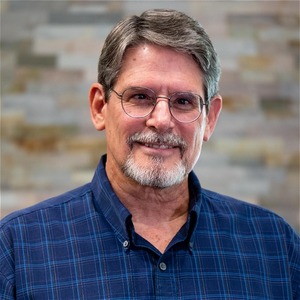
Welcome to Delight in Grace, the teaching ministry of Rich Powell, pastor of Grace Bible Church in Winston-Salem. Oswald Chambers said that faith is the deliberate confidence in the character of God, whose ways you may not understand at the time. There are times when God's apparent inaction to our circumstances may seem inconsistent with what we know of His character.
This is the wrestling of the prophet in Habakkuk 1. And in Habakkuk 1, God voices a response, leaving for us a helpful view into His heart. Let's listen in to this message titled, Why is faith sometimes hard? This is part two of the message which was first preached on November 11th, 2018 at Grace Bible Church in Winston-Salem. Because if we become fixated on the immediate circumstances of the journey and we lose sight of the destination, then our faith becomes hard.
We have to keep that big picture in view. Here's the second reason, and this will take us now back to Habakkuk. Hard faith. Why is faith sometimes hard?
Why is it difficult? Because yes, there are some things about which we can have certainty, but there is also mystery. There is mystery in faith. And Habakkuk here is dealing with a mystery.
Now, who is Habakkuk? He's a prophet. He was a prophet to Judah. At this time of his prophecy, the northern nation of Israel, remember, Israel as one nation was divided, and there becomes the northern nation of Israel and the southern nation of Judah. Israel was taken captive and scattered by the Assyrians in 722 BC.
Didn't hear from them anymore. And then there remains Judah and Benjamin down south. They are still God's chosen people, His elect, right? But here they are.
They are behaving very badly. They are very wicked. In fact, the scriptures say that they were more wicked than the previous nations that God had driven out of the land.
That's not a compliment, is it? Here they are, God's chosen people, acting more wickedly than the pagan nations that God had driven out of the land. So Habakkuk is wondering what's going on here.
Lord, you need to do something. He is a contemporary of the prophet Jeremiah, the last prophet to Judah, before they were taken captive by the Babylonians. So this is somewhere around 600-605 BC. And speaking of Jeremiah, you think back at the Hebrews chapter 11 verses 33 to 35 and then 35 to 37, Jeremiah fell in the 35 to 37 category. His life was hard. His walk of faith was very hard.
But the people of Judah were very wicked, very wicked character in practices. Law was perverted. You can read it here in chapter one. This is what he's saying.
Look what he says about it. Verse four. So the law was paralyzed. Justice never goes forth for the wicked surround the righteous. So justice goes forth perverted.
What's going on? He is begging for divine intervention and he does so with a question. Look at the question. Here it is. Look at verse three of the middle.
I think this is what encapsulated best. Middle of verse three. Why do you idly look at wrong? Here's the prophet asking God, Jehovah God, infinite sovereign creator, why do you idly look at wrong? You've probably asked that question a time or two, haven't you? Lord, look, this junk that's going on in my life, I don't deserve this.
People are doing this to me. Why are you just standing by and letting it happen? I've been there.
And probably you have too. So he is invoking divine intervention. Now, there is certainty. Yeah, there's that's the mystery behind it. What is God doing? Why is he not doing something?
Right? That's the mystery. But there is a certainty behind this because we are expecting him to act a certain way because we know certain things about him.
What is the certainty? Well, that comes later on. Look at verses 12, 12 and 13. He says, Are you not from everlasting? Oh, Lord, my God, my Holy One, we shall not die. Oh, Lord, you have ordained them as judgment and you, O rock, have established them for reproof.
You who are of purer eyes than to see evil and cannot look at wrong. You see, he has an understanding of who God is and what he's like. He is transcendent. He's not bound by space and time.
He's beyond that, that his perspective is transcending where we live and experience. But he is also sovereign. The fact that God is sovereign means he is absolutely free. There is nothing outside of God himself that restricts him.
You and I can't say that. And he understands that God is sovereign. He is holy and he is in control. He is the omnipotent creator and he is absolutely pure. As John says, in him is light and in him is no darkness at all. So what is the prophet Habakkuk saying here concerning the people of Judah?
They are a wicked people. Justice is perverted and the wicked surround the righteous. And so what Habakkuk is saying, your apparent inaction is inconsistent with what I understand about your character. You see, there's the mystery.
It pops up. God, you're not behaving the way I would expect you to. That's kind of paraphrasing sometimes what we say to God, isn't it?
And this is the problem. This is part of the mystery of faith is that God seems unpredictable. Now you stop and think about it for a moment. Aren't you glad God is unpredictable? If you could predict everything that God would do and exactly how he would do things, wouldn't that make you equal?
You wouldn't need to exercise faith. You wouldn't need to really trust him, would you? You see, that mystery is necessary in order to trust him. But God seems unpredictable in several circumstances in our lives when adversity strikes and lingers, physical adversity, relational adversity, financial adversity. When it strikes and it lingers and we wonder, God, why can you maybe just help me out here a little bit? God seems unpredictable when evil seems to go unchecked. How can you stand by and let this happen? God seems unpredictable when I'm depressed and feeling aimless. Help me out here, God. Why are you just standing on the sidelines and not doing anything? I want you to know something because this is how God is revealed in scripture. Here comes the truth.
You ready for this? God is never an idle or unconcerned spectator in the events under the sun. You see, our faith can be difficult sometimes because we think that this is what's going on, that God is idle and unconcerned.
He's just on the sidelines watching what's going on. God is never an idle or unconcerned spectator in the events under the sun, where we can very easily slide into the rut of thinking that God doesn't care or He's not able to do something. And that happens, generally speaking, when we lose sight of the promises and we become fixated on the immediate context, the problems. We lose sight of the promises and we become fixated on the problems.
We very naturally slide into that rut. Does God, does the scriptures not say, do the scriptures not say He cares for you? They do. Do we believe that? Do you want to know if God cares for you?
How do we know God cares for us? Can we look at history? Can we see the cross again?
Can we see redemptive history? The fact that an infinite sovereign creator would invade our reality in His Son and take upon Himself the mocking and the shame of the cross in our place and took upon Himself the necessary blow of God's holy wrath in our place. And we ask if God cares. Yeah, He cares.
More than you can even imagine. You see, this is the value of scripture. This is the value of all of scripture. And it's a particular value to the Old Testament. We say, well, the Old Testament is just all those stories that don't really pertain to us today.
Here's how they pertain to you. Same God. God is like what God has done. We need to know the God of the scriptures. This is what He can do.
This is how much He cares. And so God reveals to Habakkuk, who is complaining about the wickedness of the people of Judah, and God says, God is God answers him. And then when God answers Habakkuk, then Habakkuk comes back with another question.
Why that way? And we can do that often, can't we? God will answer a question, and we don't recognize it as an answer. We think God is pushing back against us. And so we ask Him why that way. So here's the third reason why faith can be hard, and that's theology and propensity.
The propensity of our theology. When God tells Habakkuk, yes, Judah is wicked, and Habakkuk is saying, God, why aren't you doing anything about it? And God says, stand back and watch. I'm bringing the Chaldeans down. They would become the empire of the Babylonians. And they were a fierce army.
Nothing stood in their way at this point in history. And when God reveals to Habakkuk, Habakkuk, this is how I am going to bring justice to this wicked people. I'm bringing the Chaldeans down. And what does Habakkuk say? He says something that you and I would often say to God. When He answers our prayer, and we don't recognize it as an answer, we recognize it as God's inactivity, or He didn't hear me. God, you didn't hear my prayer, because you're doing that.
I expect you to hear my prayer. You're doing that. I expected you to do this. And so what we say is, that's not how I would do it.
That's not how I would do it. This is something that makes faith difficult for us, because we say to God, that's not how I would do it. You see, this is a reflection of our theology, and the propensities that come to us in our flesh. As we are preoccupied with our circumstances, two things happen. Number one, we tend to think God is like us. Get this, right? God has revealed Himself to us.
But when we become fixated with our immediate context, we lose sight of the bigger picture. Thanks for joining us here at Delight in Grace. You've been listening to Rich Powell, the lead pastor at Grace Bible Church in Winston-Salem. The Delight in Grace mission is to help you know that God designed you to realize your highest good and your deepest satisfaction in Him, the one who is infinitely good. We hope you'll join us again on Weekdays at 10 a.m.