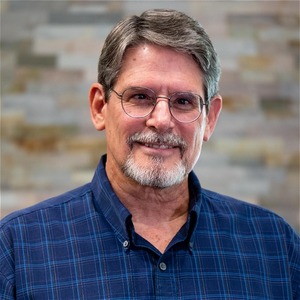
Welcome to Delight in Grace, the teaching ministry of Rich Powell, Pastor of Grace Bible Church in Winston-Salem. How do we respond to the wickedness and the brokenness of this life under the sun? Fear and anger are natural emotions in the face of evil or destruction.
What do we do with those emotions? In this message, Pastor Rich answers these questions from Habakkuk 3, where we find a highly emotional plea for justice, a cry for help in the face of evil. Let's listen to this message titled, Faith, Seeing God's Work.
This is part three of a message first preached on November 25th, 2018 at Grace Bible Church in Winston-Salem. And actively, and here's where it requires action on our part, we are actively selecting the content of our minds. That's attitude. Actively select the content of your mind. And you can do that because you are created in the image of God. You are a self-aware being. You can think about what you're thinking. I could ask you right now, what are you thinking?
And you could tell me. No other part of creation can do that. But you and I created in the image of God can.
That means we have the selective power about what occupies our minds. We need to see God at work. We need to live by faith.
That means we need to recount. We need to occupy our minds with who God is, what He has done, and what He is doing to understand the reality of the situation. The first reaction on the prophets part is very striking here.
Look at verse 16. I hear and my body trembles. My lips quiver at the sound. Rottenness enters my bones. My legs tremble beneath me.
What is that? That is a physical response. He is gripped by God's power. He's gripped by His power.
His body, that the word there can be translated heart, and that is His innermost thoughts and desires. Are my innermost thoughts and desires gripped by the awesomeness of God? And by when I say awesomeness, I'm not talking about a glib, oh that's awesome.
That's not what I'm talking about. Do you understand the infinitude of God? He has no limits. His power has no limits. His goodness has no limits.
Do you know that? And when we contemplate those truths and we see what God has done in history, it will grip us at the core of our being. And it's apparent from this that the prophet himself was physically overcome. This was an involuntary reaction to meditating upon God.
He was physically overcome by the awesomeness of God. The only thing I can compare to that is this last October when I was down in Haiti, I was teaching, it was 9 o'clock at night, teaching a class, and all of a sudden the building, the whole building starts to shake. That makes you feel vulnerable. It makes you feel weak, like you could get swallowed alive.
I mean the whole building is nothing but concrete, right? And it's shaking. And I'm sitting here teaching and I'm feeling the shaking and meanwhile the students are just, they are scattering, going out the door into the streets where it could actually open it up and swallow, right? But that was a scary feeling and the students were very much overcome by that because they remember the 2010 earthquake where over almost 300,000 people died. It's that kind of grip where you recognize where something is so utterly more powerful and out of your control that you become gripped at the core of your being by thinking about it. So that's an involuntary response.
Let's talk about what we do though that is voluntary. Are you ready for this? You say, so much is going on, it's just completely out of my control.
This is what the prophet was feeling. God, why don't you do something? I want to see you work. I trust you. I want to see you work. But here are the things that we need to do and this is a stewardship, okay? What we're going to be talking from here on, this is a stewardship.
In other words, what you do with your mind. God has entrusted you with a mind. He's entrusted you with self-awareness in His image. What you do with that is a stewardship.
He has given it to you to manage well for His glory in His strength. What are you doing with your mind? Do you see yourself as just the victim of whatever enters your mind? That's what's going on in so much of culture and society today and that's why people are just losing it entirely. That's why outrage is the number one emotion on social media. We're losing it.
Really? Is that what we are? We're just simply victims of our emotions?
No, not at all. What do you do with your mind? Look what he says. Look with me now at verse 16. Verse 16a, he's talking about the involuntary physical effect of God's awesomeness.
And then 16b, he says this. Are you with me? Yet I will quietly wait for the day of trouble to come upon people who invade us.
What is that? That's God's justice. I will quietly wait.
Now think about that. All this turmoil that's going on and you may feel a lot of turmoil in your life. Maybe you're feeling a deep, deep famine or there's a lot of turmoil going on. I will quietly wait. What's going on there?
This is a willful act, a willful choice on the part of the prophet. I will quietly wait. Think about what he means by quietly. Does it just mean he's not saying anything?
It goes beyond that. Where is the quiet happening? In his heart and mind. I will quietly wait. I will rest in his promise.
It is a voluntary action. The trouble is temporary. The trouble is temporary.
Say that with me. The trouble is temporary. What did Paul call it? This light momentary affliction and you and I will never feel the kind of pain and anguish that Paul the apostle felt.
Yet he called it a light momentary affliction. And so like the prophet, I will quietly wait. What is this? This is mental rest in confidence. Mental rest in confidence in the one who is the object of my trust.
And it comes by this. It comes by affirming these truths that I know to be true about God. God is good. He is at work and I am His.
I will quietly wait. God is good. He is at work and I am His. Whatever storm, whatever turmoil, whatever famine is going on in your life, this is what you need to remember. God is good.
He is at work and you are His. If indeed you are. You see, that is stewardship of the mind. You are not at the mercy of your emotions.
It is stewardship of the mind. Rest in His promise. Next point. Look down at verse 18.
Say, Rich, what about verse 17? I'm getting there. Be patient. Quietly wait.
Okay. Verse 18. Yet I will rejoice in the Lord.
I will take joy in the God of my salvation. Why is this important? Because the prophet recognizes that there are storms in life.
What are those storms? He's talking about a famine. And this famine is consistent with what God said to His people. He said, if you abandon me, if you ignore me, not because God needs the attention, but because God is good and He is our sustainer.
If you abandon me, you are hurting yourself. That's what He's telling them. That's what verse 17 is all about. And if that is true in the famine of life, though the fig tree should not blossom, nor fruit be on the vines, the produce of the olive fail and the fields yield no food, the flock be cut off from the fold and there be no herd in the stalls.
What is He saying? We are experiencing the famine that comes from God because we as a people have abandoned Him. It makes as much sense as abandoning every meal from here on for the next three weeks. How are you going to feel after that?
Famished. And God says, I am your fountain of living water and you think you know better, you think you can find your satisfaction and your sustenance in other places, then I'm going to let you try it. And it doesn't work. And that's why the trees don't blossom. There's no fruit on the vine, there's no olives, the fields yield no food because they've abandoned God.
And it's happened exactly as God told His people it would. But verse 18 says, He takes joy in His presence. Yet, even though all of this famine is going on, yet I will rejoice in the Lord, I will take joy in the God of my salvation. In other words, the famine of the immediate circumstances, He does not react in the heat of the moment. Again, you and I as human beings, we are not simply slaves to our impulses. We are volitional, rational beings.
We do not, we should not react in the heat of the moment. But instead, in the heat of that moment, of the turmoil, of the famine that's going on, God is the focus of my attitude and the fountain of my emotions. God is the focus of my attitude and the fountain of my emotions. So here's what you need to do. You want to see God work?
You're listening to this? You want to see God work? Practice the presence of God. Practice the presence of God. Be a good steward about what occupies your mind and then practice the presence of God. As the prophet says, take joy in His presence. Thanks for joining us here at Delight in Grace. You've been listening to Rich Powell, the lead pastor at Grace Bible Church in Winston Salem. The Delight in Grace mission is to help you know that God designed you to realize your highest good and your deepest satisfaction in Him, the one who is infinitely good. We hope you'll join us again on weekdays at 10 a.m.