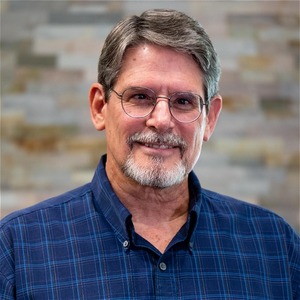
Welcome to Delight in Grace, the teaching ministry of Rich Powell, Pastor of Grace Bible Church in Winston-Salem. How do we respond to the wickedness and the brokenness of this life under the sun? Fear and anger are natural emotions in the face of evil or destruction.
What do we do with those emotions? In this message, Pastor Rich answers these questions from Habakkuk 3, where we find a highly emotional plea for justice, a cry for help in the face of evil. Let's listen to this message titled, Faith, Seeing God's Work.
This is part two of a message first preached on November 25th, 2018 at Grace Bible Church in Winston-Salem. Who gets hurt when you kick a tank? Not the tank, okay? This is the picture that Habakkuk is painting. You don't mess with him. Listen, life is on his terms. And if we think life is on our terms, we are utterly deluded. Living by faith is understanding that life is on his terms. You look at verse 7, he says, I saw the tents of Cushan in affliction.
The curtains of the land of the Midian did tremble. What he is affirming there is the same thing that David affirms in Psalm 124, where David says, unless the Lord, let all Israel say, unless the Lord had been on our side, we would have been, and in so many words, he says, we would have been wiped out unless the Lord was on our side. As God's covenant people, the Lord was on our side because we are his people. And the truth of the matter is this, the very existence of the nation of Israel is a living testimony to the activity of God in history, were it not for God, the nation of Israel would not exist. We have to understand that David understood that were it not for God, you and I would not be a people.
We would not exist. See, it's understanding that God is the necessary being. It is his universe. He has created me and invited me into his universe and his purpose. And we in our humanness, thinking that I am the greatest, most important reality, sometimes think of, I need to let God into my life, really?
Think about how utterly delusional and arrogant that sounds. I just don't have time for God. He's your maker and he made you for himself. And the prophet here, as well as David in Psalm 124, recognized that God is, listen to this, the necessary being.
What does that mean? It means if God is not, nothing else is. And if God is not, nothing else matters.
And that's the truth of it. He is the necessary being. And then the prophet gets into recounting miraculous deliverances of God, verses 8 through 10.
Miraculous rescues. And he speaks of the waters. Was your wrath against the rivers, O Lord? Was your anger against the rivers or your indignation against the sea when you rode on your horses, on your chariots of salvation?
You stripped the sheath from your bow, calling for many arrows. You split the earth with rivers, the mountains you saw, and the mountains saw you and writhed the raging waters swept on. The deep gave forth its voice.
It lifted its hands on high. References here to the many deliverances and miraculous rescues that God has made involving water. It began with the Nile, the Nile River. Remember the plagues upon Egypt. And God used that to bring judgment upon the Egyptians to deliver his people. And then the Dead Sea, where the Pharaoh was chasing after the Israelites in his mighty army with chariots. And he was chasing after them and Israel was pushed up against the Dead Sea. And God opened the Dead Sea and, I'm sorry, the Red Sea. And God let them walk across on dry ground. Miraculous deliverances. And then when Pharaoh, in his arrogance, thought he could do the same thing, all the water comes crashing down. Do you see God working there?
It's kind of obvious, isn't it? God hasn't changed. Same God. Same God. And that made it very clear, number one, that he very much cares about his people, and number two, that he very much can take care of them.
Have we lost sight of that? That's living by faith. God very much cares and God very much can take care of us. So the miraculous rescues move on then to verses 11 and 12. And this recounts, we believe, I believe, the battle for Gibeon, the city that the Israelites had made peace with and there were five kings that joined together to fight against Israel and Joshua was leading them at this time. It's in Joshua chapter 10. And God promises them, he says, listen, don't fear, the battle is mine.
I will give them into your hand. Now that's a direct promise of God, wasn't it? So Joshua went out with that promise, believing God, and he trusted God, knowing that he would have been overwhelmed were it not for God, because five nations were coming against them in solidarity. And what does God do?
Remember what God does in Joshua chapter 10? The sun stops and you say, Rich, scientifically the sun isn't moving. I get that. But somehow the rotation of the earth stopped. Now you and I can say, you know, scientifically that's not possible, correct. You are absolutely correct in saying that.
But here's the point. God is sovereign over creation. Is he not a worthy object of your trust?
The miracles of Jesus walking on the water, changing water into wine, raising people from the dead, it makes one thing abundantly clear that this one is sovereign over creation. He is worthy to be our object of trust. Verses 13 to 15, make something abundantly clear. You trampled the sea with your horses, surging the mighty waters.
I hear in my blood trembles, my lips quiver. Verses 13, you went out for the south of this, I skipped over this, I'm sorry. Verses 13, this is such a key phrase here. You went out for the salvation of your people, for the salvation of your anointed. You crushed the head of the house of the wicked, laying him bare from thigh to neck. In other words, he was defenseless. You pierced with his own arrows the head of his warriors who came like a whirlwind to scatter me, rejoicing as if to devour the poor in secret.
You trampled the sea with your horses, the surging of mighty waters. What is the point that Habakkuk is making here? It is this, God zealously fights for his people. God zealously fights for his people. And this is what Habakkuk is asking, this is his petition, do it again God, do it again. I want to see you work. I'm recounting all of these things that you have done in history, no doubt, no question, you are a worthy object of trust, do it again God, do it again. I want to see you work. He provided, he gave a fatal blow to the enemy.
Why? Because he's keeping his covenant with his people, with the fathers of his people. And he returns their evil upon their head, verse 14. You see, this is the rescue and the retribution of God. The sea represents, oftentimes in scripture, the sea represents the restless people of godless nations rising up, hence the phrase, the surging of mighty waters. It's God's passionate rescue of his people and retribution against the enemy.
You know, the picture that I see here, one of my favorite actors is Liam Neeson, you know, Taken, or Taken 2, there could be five or six of those as far as I'm concerned, but you know, he goes in and he wrecks havoc for the men that have taken his daughter, right? He's that passionate about his love for his daughter and protecting her and rescuing her that he goes in and he does everything else just to wipe the guys out. This is kind of how, you know, it's kind of dumbing down God, but you know, that's for our understanding at an earthly level under the sun. This is how God does it.
He passionately fights for his people. Now, understanding this about God, we come to the end of Habakkuk 3, come to the end of his book, of his prophecy. There's been a petition and the bulk of it has been a meditation recounting all that God has done. Listen, Christians, are you listening to me? Do this, do this, recount, meditate on all that God has done.
Get in the habit of doing that. We learn from the prophet this way, but this comes to the next point here in the sermon because the third point is this, we're going to spend the rest of the time talking about this, and I'm calling it re-action. Reaching meditation re-action. Reaction now, I don't normally like to use the word reaction, but it alliterates well.
You understand that and that's necessary element, right? Reaction but it's the reaction because the prophet says I will. It is a willful choice of his response to meditating upon who God is and what he's done.
The re-action part, what does re mean? It means repetition, doing it again. So if I want God to do it again, there's something I need to do again.
What is it? I need to remember what God has done. I need to remember what God is like. But the repetition comes down to this, being choosy about what occupies your mind and you know you can do that. Now listen, it's hard. I've had to deal with something very, very difficult this past week and it's hard. When something ugly happens and you have been on the blunt end of somebody else's sin, it is difficult to be choosy about what occupies your mind. It is, isn't it?
But you have that choice and you have that power. It is a command. It is meditation. This is why Christian songs are so powerful.
Did you know that? Memorization of scripture is so necessary for us because by reviewing it and going over and over again, we are informing our minds and being choosy about what occupies our minds and actively and here's where it requires action on our part. We are actively selecting the content of our minds. That's attitude. Thanks for joining us here at Delight in Grace. You've been listening to Rich Powell, the lead pastor at Grace Bible Church in Winston Salem. The Delight in Grace mission is to help you know that God designed you to realize your highest good and your deepest satisfaction in Him, the one who is infinitely good. We hope you'll join us again on weekdays at 10 AM.