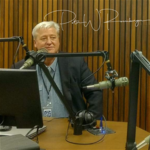
Hi everyone, it's Brian Kilmead here. Are you tired of those uncomfortable dress shirts, especially when they bunch up under a sweater? If so, then you must check out Collars Co., makers of the dress collar polo. Listen up. These shirts are four-way stretch, buttery soft polos with firm dress collars on them, so they give you the dress shirt look, but extremely comfortable polo feel.
You can wear them with anything under a sweater, with a blazer, or by themselves as an elevated polo. They work for any occasion. These polos are perfect, whether it's in the office, on a golf course, or a night out. Collars Co. is exploding and have gone viral on social media thanks to the 1 million investment they received on Shark Tank from Mark Cuban and Peter Jones.
You don't have to worry about collars that flop down and spread out. They stay firm and sharp all day. It's an amazing array of sweaters, quarter zips, pants, and outerwear. If you're looking for the performance dress shirt or polo that looks great all day, check out collarsandco.com. Use promo code Brian for 15% off.
of any purchase of a hundred dollars or more. That's promo code BRIAN.
Okay. This episode is brought to you by Credit Karma. When it comes to your money, Credit Karma keeps you ahead of the game. You can count on credit karma to keep up with your financial needs as they evolve, helping you monitor your progress and giving you personalized recommendations so you can make strides towards your goals. Make sure you're on the right track, no matter where you are on your financial journey.
Intuit Credit Karma, karma you can count on. Download today. Uh Mary Walter in for Brian Killmead. 866-408-766. Nine is my number.
I think you're gonna wanna join me on this one. I really do. Don't forget, you can join me on my live cast Tuesdays, 7:15 p.m. Eastern Time. Always different, not always political.
Never know who it's going to be.
Sometimes I have guests, sometimes I don't. But you can participate, ask questions, leave comments live on Rumble, YouTube, and Getter. Look for Mary Walter Radio. Audio is available on Apple Podcasts, Spotify, and Spreaker. Again, look for Mary Walter Radio.
Now, during the course of this conversation, if you can't pick up the phone and give me a call, You can just cut Tag me in a post on X at MaryWalterRadio with no S. And just leave your comment there, and I will try to multitask.
So. I want to have this conversation, and the producer, Alice, and we were talking about this, and I think it's an interesting conversation to have. And I think everyone at some point in their life comes across a situation where they're like, hmm, I wonder if this is something that would be an option. And I'm talking about medically assisted suicide.
Now, Medical, they call it medical aid in dying MAID. It's really big in Canada, European countries, but Canada seems to be like the forerunners. They're all about the MAID. It's not euthanasia because it requires terminally ill patients to self-administer the medication. Euthanasia involves a health care provider directly administering a fatal dose.
Active euthanasia is illegal in all fifty states. Montana is the only state where medical aid and dying is legal through court ruling rather than legislation. More than a fifth of the U.S. population currently lives in a jurisdiction where. This is authorized.
I didn't even realize that.
Now, the reason I say that this is a conversation I think everyone at some point in time or the thought passes through your brain. We all know someone who has some incurable illness, right? I I I think everybody does. I know quite a few people. My husband works with an ALS organization, and you see the it's a death sentence, and your brain is fine.
It's just that your body slowly stops working. They don't know why, and it affects everyone differently, and you don't know how it's going to affect you. And you just see. As I get to know, I've gotten to know these patients over the years. knowing what's in front of them and they have no control.
And they have questions, well, do I go on a feeding tube?
Well, do I go on a breathing machine? And these are all questions that they have and they have to make as the patient. And it's really hard. And sometimes you think, you know, would they make the decision if they had it to stop their suffering. It's terminal, it's a terminally ill disease, but they may not be terminal at the time.
You know, the disease has to progress, and for some people, they lose the ability to walk, other people lose the ability to speak. And anyway, so. And I and I've said to my husband on more than one occasion, you know, We wouldn't make our pets suffer like this, but we make grandma suffer. And so I have very, very mixed reactions on this. What bothers me, though, is I look at Canada.
Which this is very prolific in Canada, this maid that they have there. And They only have to show that they have a condition that is intolerable.
So it went from a terminal illness in Canada to now, well, you know, there's people who have it, it's in terminal the pain is intolerable, rather, but that their condition is intolerable and they can't be relieved under conditions that they consider acceptable. There's a story about a mother and her son is Blind, he has type 1 diabetes, had some complications, and he lives in public housing and he has depression because I guess they have all those things you have depression. But long story short, He Wound up Using this system, this made system to end his life because he felt his condition was intolerable.
Now many people live with blindness or type 1 diabetes and or depression. They get medication for it. But if you personally feel that it's intolerable, you can do this.
So the number of people doing this is skyrocketing in Canada. The fastest growing category in Canada statistics is not cancer, heart disease, or any specific illness.
So, for me, it's not because of cancer, it's not heart disease people. It's another group of people who choose this called other. Made deaths in the other category almost doubled in 2023 from a year older, a year earlier. They're up to over 4,200. And uh Adding up to 28% of all assisted suicide deaths.
Now is in the other. Category In 2015, Canada's Supreme Court ruled that assisted suicide is constitutional, and the country now has one of the highest rates of medically assisted death in the world. 5.1 percent, a total of almost 16,500 deaths in 2024. I don't know what the numbers are for 2025. In Oregon, Again, it accounts for 0.9% of deaths.
So it's used much more restricted here in the United States.
So we'll go into this a little bit more, but I want to get your thoughts on this. I don't want it to be morbid or morose, but I think it's a conversation since if you go to deathwithdignity.org, it's a very liberal site, right?
So automatically, I'm against it. I'm like, oh, this is no good. It is growing. In this country, and let me give you out the phone number before I go into this. 866-408-7669-866-408-898-898-8999- 408-7669.
And I think it's easy for those of us sitting here with no, you know, we're fine, we don't have anything to worry about. You don't know what's going to be down the road. And could you possibly be in a situation where you have a disease that has no cure or cancer or something along those lines, and you are terminal? That's what the requirements are in this country at this point. You could say, you know what, I just want to stop the suffering.
I just want to stop. And I tell my husband, I'm like, if that ever happens to me, put the pillow over my head, right? Because I don't want to live that. I want quality of life, not quantity of life. I want quality.
And if the next six months of my life are going to be sitting in a bed with diapers or a bedpan or drooling and I have no quality of life, I don't think that that's what I would want.
However, Being Catholic, that kicks in too.
So everybody's situation is different.
So, where it is legal in the United States, California, Colorado, Delaware, D.C., Hawaii, Illinois, Maine, Montana, New Jersey, New Mexico, Oregon, Vermont, and Washington. States that are considering it this year. Arizona Indiana, Kentucky, Massachusetts, Minnesota, Missouri, New Hampshire, New York, North Carolina, Pennsylvania, Rhode Island, Tennessee, and Virginia.
Now, they call it a state under threat. States actively under threat. DC, death with dignity in D.C. is under threat. Yeah.
Uh congressional opponents are trying to repeal DC's death with dignity law by including a writer in the House Appropriations Committee budget bill.
So they're very upset about that. And in Illinois there is a bill there that would repeal it, HB 4381.
So they've got their people on that. There's an amendment pending in New Jersey. That would waive the 15-day waiting period for patients who are not expected to survive the 15 days.
So, if you're not expected to survive the 15 days and you just want to call it, In New Jersey, they'll let you do that. But I see room for. Shenanigans with that. Washington State. They uh s what is the something's going on there.
So it doesn't say exactly what's happening in Washington, D.C. It's currently legal, and they say there's an amendment pending, but they did not. didn't expound on the amendment that's pending.
So I think it's a conversation that a lot of families have, right? You know, because you have your living will.
So you could say, I don't want to be kept artificially alive. Like, I don't want extraordinary measures. You can have do not resuscitate orders. And I'd rather make those decisions. while I am still compost mentis, you know, I still got got everything upstairs, and I can make that decision with a clear head.
So it's coming, whether you like it or not. It's expanding across the country. It's a conversation that has to be had, even though I think a lot of people, I know seniors who don't even want to make a will. They don't want to even have that conversation, let alone anything else. 866-40-87669.
Or as I said, you can go on X, tag me, and a post, Mary Walter Radio. Bonnie in Washington, you're going to kick it off here. Bonnie, welcome. You're on the Brian Kilmead Show. Hello.
Yeah. Hi, Mary. I was just listening to you, and when you were mentioning about Canada, it just made me think about your universal health care. And how long it takes them to get in to see a doctor, especially if they have a terminal illness.
So I can totally see why. You know, they have more people that just want to go ahead and just end it because they know that they're just not going to get the treatment that they should be getting. You know, it's interesting that you say that there is a woman, her name is Jolene Van Alstein. She's 45 years old and she lives in Saskatchewan, and she has been suffering for eight years with an endocrine disease that causes nausea, vomiting, and bone pain. She had three surgeries.
She needs another one to save her life. And she couldn't get it in Canada because of where she lives. There's no surgeon in that area. And to get to an endocrinologist, she could do it in another area of Canada, the wait's too long.
So now there's a movement to bring her to the U.S. And have her get treatment here. Because you know what they approved her for? They said, well, you can go do MAID. Because she couldn't get the surgery in Canada.
So You know, that's that that's the alternative because their health system's so fantastic, you know. Yeah. I I th I I can just suffer because I can't get it. Yeah, especially for a terminal illness, you know, you gotta get in right away, you know, it's And that's why a lot of 'em flee to the United States, you know, to get their their health care needs. Yep, exactly.
Exactly. Bonnie, thank you for kicking it off. I do appreciate it. I'm glad you brought up Canada because, as I said, this woman has been in the news, and especially if you get into it with anyone, any Canadian on X or any other social media about their health care, and they're like, oh, Canadian healthcare is great. You Americans are so stupid.
You know, like, yeah, bring this chick up because the only alternative they gave her was, well, you could just apply to die if you want. And that's what I'm afraid of with this. I'm afraid that it gets bastardized along the way. 866-408-7669. A lot of people want to get in here.
I will get to your calls. And again, you can tag me on X at MaryWalter Radio. All that's coming up on the Brian Kill Meat Show. Real talk, real guests, real insight. Where curiosity meets conversation.
It's the Brian Kilmeat Show. Hi, I'm Megan Alexander, and this is Middle East Tomorrow. Five years ago, the U.S. brought leaders from Israel, Morocco, the United Arab Emirates, and Bahrain together to sign the Abraham Accords. That historic day ignited a cross-border movement of changemakers who are joining forces to reshape the region.
Join me as I uncover the stories of the people transforming the Middle East today and tomorrow. Go to partners.foxnews.com/slash Met. The talk show that's getting you talking. You're with Brian Kilmead. Welcome back to the Brian Kilmead show.
Talking about MAID, as it's called in Canada, which is medically assisted suicide, and in the U.S., they call it death with dignity or assisted suicide, whatever it is. Euthanasia, not legal. You get the medication, you administer it yourself. You, as a patient, different states have different requirements of how it's handled. We don't have a nationwide policy on it, but I've seen how it has progressed in Canada.
And I don't like it that it went from having a terminal illness to a condition that is quote-unquote intolerable. And the patient just decides this is intolerable. I can't live like this anymore. And that's that. And ah man, you know, like I get it.
But I also don't get it. I fear it at the same time, if that makes sense.
So I'd like to get your input: 866-408-7669 on X. Mary Walter Radio. If you want to make a comment there and tag me in it, Renee in New York, you're on the Brian Kilmead Show. Hello, Renee. Hi, Marion.
Hi. Hi, go ahead. Yeah. Um, just talking with the girl that answered when I called. And explaining my situation, I just like fell to tears because what choices do we have?
You know, we don't have many choices in life. that are our own. We have the law that we have to live up to. We have So many um rules and regulations You know, you die you were born without your permission, and then and then when you die, you know, there's all these loopholes and whatever. And I'm a nurse 30 years, but now on the other end of that, and I'm desperately sick every single day of my life.
Doctor after doctor after doctor, emergency room, one after the other. Collapsing sometimes there. And they run a bunch of tests and they see things that they're all little things, but all put together. I'm desperately ill, and no one can fix any of them. I'm chronically dizzy.
My I'm so sick just opening my eyes that I stay in bed with sunglasses on. My life is.
So you have let me ask you a question. You have no diagnosis of what is wrong with you. It's an unknown. I have an arm an arm full. Yeah, an arm length full.
I have brain aneurysms, but they're stable. I have left bundle branch block of my heart, but it's stable. I have these S V T's I have to take medicine for. There's heart constant heart palpitations and heart stopping. I have now because I think the body can only take so much now.
I have these stomach issues that are sending me to the hospital. I don't have any pain. I just want to pass out. And a cardiologist said, I think it's your stomach.
So I went to a stomach doctor. Right. And I'm at one now for a night and I'm in the parking lot. Yeah. So you're saying that for you, what you're saying is not to interrupt you, but a lot of people want to get on here.
I just want to make sure I understand what you're saying. For you, this is something that you would consider because you're like, I'm done. I can't do this anymore. I can't hit. See, and I hear stories like this.
I hear stories like this. And I would say, okay, who am I to impose my beliefs on you? Right? I don't live in your body. I don't live with that pain.
I don't live with those conditions.
So who am I to do that? And I would say, listen, in my brain, I say, okay, if that's good for you, the only thing I fear. Is that we go. No, I fear that we go from loosening it up so much, like in little tiny increments that people are having a bad day and they go to their doctor and they're like, I'm miserable. Life is horrible.
I'm so depressed all the time, I can't live anymore. Sure, here you go. Or, like this woman in Canada, or they say, you know what, you're costing too much on socialized medicine because that's where we're headed anyway. You're costing the government too much.
So, we're not going to give you any more.
So, here you go. This is your cheapest alternative. End it. That's what I fear.
Well, I agree with you one thousand percent. And I think about kids that commit suicide at a very young age, they don't realize they're the whole lives ahead of them because somebody wrote something bad on their Instagram doesn't mean their life's over. They don't know yet. I so it should not be put in the hands of people like that and anybody that is um Just like you said, having a bad day or something, you know, it can't be, it can't be.
Now, one man's trap is another man's treasure.
So like you said, we don't know what someone else is going through. But I think there should absolutely be guidance and guidelines. And if you've exhausted everything that you can possibly do, and I have, every clinic around the country, You don't even want to know in two and a half years alone what I've been through. There's nowhere left for me to go. There's nothing so for a responsible human being that doesn't want to lose their life, but can't put up with the constant sickness, constant fizzing, whatever.
Yeah. Yeah, Renee, I don't mean to cut you off, but we got to go. We're out of time. But I really feel for you and I will pray for you. And I just hope that there is some, you find some doctor that can help you because I heard it in her voice.
And I have a friend like this who also has one unknown illness after the next, after the next. And you can see the changes physically in her, and it's horrific. It really is bad. More of your calls coming up on the Brian Kilmead Show. Five years ago, the U.S.
brought leaders from Israel, Morocco, the United Arab Emirates, and Bahrain together to sign the Abraham Accords. I'm Megan Alexander, and this is Middle East Tomorrow. Go to partners.foxnews.com/slash Met. He's so busy, he'll make your head spin. It's Brian Kilmead.
And welcome back to the Brian Kilmead Show, continuing our conversation here about assisted suicide in the United States. It gets a couple calls, and then there's other news that we also will hopefully have some time to get to as well. There's so much happening. But this is an important conversation, in my humble opinion, because it is spreading across the United States. And each state has different rules and currently legal in California, Colorado, Delaware, District of Columbia, Hawaii, Illinois, Maine, Montana, New Jersey, New Mexico, Oregon, Vermont, and Washington.
And other states that are considering bills this year to make assisted suicide legal in their states: Arizona, Indiana, Kentucky, Massachusetts, Minnesota, Missouri, New Hampshire, New York, North Carolina, Pennsylvania, Rhode Island, Tennessee, and Virginia.
So slowly spreading, and it is not. It is not something that a healthcare provider directly administers to you. The patient has to be able to do that.
So that's part of this whole calculus that comes into play here. And you heard that last caller. I mean, it's heart-wrenching. It's gut-wrenching when you hear that. And she's a nurse, and so she sees people in hospice and says, I don't want to go like that.
I mean, how many times have you seen a loved one who's really suffering? You're like, oof, you know, we wouldn't do this to the dog. Why do we do this to grandma? But the other part of me, the other side of me, says, I fear that it will usher in a society where, if you're just having a bad run of it, listen, our 2025, I had a couple of highlights. I really did.
I had some really great, big highlights, but man, the hits kept coming. 2025 in general, not a great year. But because I'm having a bad year and I've got like a six-month run of bad things or something like that, and so now I'm depressed, should I be able to just say, I'm done, I can't do this anymore? Like because you're depressed. That's where I think the funkiness of this comes in for me.
And it's a discussion that we have to have, I think, as a country. 866-408-7669, 866-408-7669. Or you can reach out to me on exit Mary Walter Radio, tag me in a post. Charles did that, and he's listening in Jacksonville, Florida. He said, I'm willing to bet doctors push a lot harder on those patients to make a decision.
Right? Also, I wonder how it would move gun statistics. I don't know if it would move guns. Oh, meaning because right now, do you know the bulk of us? Deaths by handguns or suicides.
in this country. The bulk of the handgun deaths, suicides. And yeah, I don't know what it would do. And also, are you going to have to pay for it? Do you have to pay for the medication?
There's a lot of questions. And I assume that we probably pay for the medication.
So let's have that conversation. Let's get into it a little bit more. Let's go to Phoenix, Arizona, and speak with Catherine. Catherine, you're on the Brian Kilmead Show. Hi.
Hi, good morning. Thank you. Yes, my heart goes out to Renee. But we have solutions for her. There are solutions across the United States and in Canada.
There are medical schools of holistic medicine that specialize in pain, chronic disease, emotional pain. And these are things that Western medicine is just starting to see as integrated medicine, but they're not referring and they're not giving that option. Yet the Joint Commission, which accredits hospitals, now mandates that they require the hospitals to They require the hospitals to Um The requirement hospitals, I interrupted here at the office, requirement hospitals to offer. Acupuncture instead of opioids because it's so effective.
So I just want to say that there is hope out there for people, and when the options are there, It gives them a chance at life. We have people at our clinic, we run an acupuncture college here. And I'm the president of the school, so biased. But I am a recovering attorney who found this medicine to be so effective that we got the law passed here in Arizona. Interesting.
Now, did you reach out to me on X? No, okay, because listen to this. Breezy Jr. reached a tagged me in a post on X and said, Listening to the caller today saying she had nothing left broke my heart. I wish I could have reached her and asked if she had tried an herbalist.
It just seems that doctor seems doctors don't treat the disease, they just treat the symptoms.
So it really dovetails with exactly what you're saying: that there are other alternatives. Out there as well.
So let me ask you, so the alternative medicines, do they treat Just the symptoms?
Well, we see things differently. It's based on physics, quite frankly. Physics and then actually homeopathy is quantum physics. Or they're both quantum physics, but the nanoparticle medicine. That's homeopathy.
I was just curious if it's a symptoms versus disease type thing. Super interesting. Catherine, thank you so much. I hope Renee is still listening. I really do.
She does work in the medical industry, so I would assume she's probably branched out into looking into other things, but you'd be surprised how many people don't. Like I said, I have a dear friend, and I'm always pushing her to look for other things, you know, to go other places. But a lot of times, insurance doesn't cover it. And when you don't have a lot, It's hard to sometimes make that leap when you can just keep seeing the doctors that are covered by your insurance plans. David in Jacksonville, welcome.
You're on the Brian Kilmead Show. Hi. Hey, Mary, thanks for taking my call. First time caller. Really appreciate you having me.
I just wanted to say, as a person living in Jacksonville, Florida, who's a spiritual person, a believer in God, it's amazing that we believe God has given us free will. But yet we we choose sometimes to kind of not look at the fact that If God doesn't actively come down from heaven, which the last time I checked, he doesn't do that on a regular basis and stop a person from doing what they're doing, why is it that other human beings feel compelled to take it upon themselves to try to dictate what a human being is choosing to do with their selves and with their life? That seems boggling to me. And I understand you have fears, but that seems kind of weird, you know, because sad to say, sometimes we're looking at it from a vantage point of the one not suffering, the one not being the caretaker.
So why is it that we're trying to do what God doesn't even do? And I understand that, totally understand that, but I just look at Canada. Canada started out with all good intentions, but because of their socialized medicine system, which we're going to have here, because of that, she can't get a doctor in her area.
So you're geographically tied to the area, just like in England, you have an assigned hospital that you have to go to. You have assigned doctors because they're in your geographic area.
So if you don't live in a city, you have fewer choices.
So she's in Saskatchewan and she can't get the treatment she needs because they don't offer none of the doctors offer it in Saskatchewan.
So she can try to get a doctor appointment with a doctor outside of her area, but the waiting list is too long. Because they're specialists and they take care of the people in their area first.
So they go, well, here, you can do made, you could die. That's what I fear.
When someone's trying to help themselves. You have valid fears, but I'm just simply looking at it from the basics. Right, I get it. You're a believer in God. We live in a country that hopefully still is predominantly Christian, but a lot of times people forget.
Generally speaking, God doesn't come down from heaven and say, get off the railroad tracks. He doesn't send an angel, generally speaking, to push you off the railroad tracks. When God gives something, he completely gives it and he doesn't take it back.
So, what I'm saying in that regard is that if we truly respect that, every last single adult Human being. Has been given free will. Even children have it, but they haven't been given stewardship over it until they become an adult. But once you become an adult and you've given stewardship, if you're to the point where you have decided, regardless of what your reasons are, whether it's because you're having a bad year, bad day, because you're terminally ill, whatever the case may be, if you're exercising your free will and you're choosing that as an option, Why is it that another human being feel compelled to stand in the way of that? It's it's it and it's an opinion I think a lot of people hold.
David, thank you so much. I appreciate you joining me. And thanks for calling in. Really, really appreciate that. I I understand that.
But I do think the road to hell is paved with good intentions. We've seen it with so many things, right? We've seen so many great programs in this country where, oh, well, we're just going to give people a safety net to get by. That's all. It's not going to be abused.
We're just going to give them a safety net to get by.
Well, you know, I know they're on it for a generation and a half, but now we have to give them food, too.
So we're going to give them food because they're not using the money that we give them. And you know what? Snowballs. And we've seen it happen in Canada.
So I have paws, and I'm like, how can we do it differently here if. to avoid what is happening in Canada. I I'm sorry, but I think just because you're having a bad day Isn't the reason to run off? And I understand it's not there yet. They have to go through a process, but just because you're depressed.
And I understand David's point as well. It's very hard. All right, more of your calls. We'll wrap this up coming up on the Brian Kilmead Show. It's Brian Kilmade.
20 Days, One Historic Move, An Unbelievable Journey. Melania from the Amazon MGM Studios captures the one-of-a-kind transition into the White House, showcasing the planning, the pressure, and personal moments that come with stepping into the role of the first lady for a second time. From logistical complexities, decisions made behind closed doors. The film brings you closer to Mrs. Trump and her family as they return to the nation's capital.
See what history looks like before the doors officially open. Melania arrives exclusively in theaters January 30th, 2026. Uh Information you want, truth you demand. This is the Brian Kill Me Show. Yeah.
Mary Walter in for Brian Kilmey talking about assisted suicide spreading across the country. More and more states taking it on, more and more states approving it.
Some put it up to a vote, some of it is passed legislatively, and sometimes it goes to court. And that's how it is passed. But after seeing what's happening in Canada and the expansion of it, how do you feel about it? 866-4087669. 866-4087669.
Can't get to the phone, tag me on a post on X at Mary Walter Radio Mattin, Oklahoma. You're a hospice nurse. I'm glad you called. Welcome to the Brian Kilmey Show. Thank you.
Yes, I've been doing hospice. I'm an RN. I've been doing hospice for 20 years now. I really don't truly know exactly how I feel about this topic. I think it would have to be very highly regulated, but in My experience in seeing hundreds of deaths over my career It's extremely, extremely rare for us not to be able to get somebody comfortable at end of life.
I think what most people struggle with. with terminal illness is You know, the loss of function, the loss of the way their life used to be, the anxiety, the The emotional and mental issues that come along with dealing with terminal illness. And that's why. With hospice, we have a team approach that includes social workers, and chaplains, and volunteers. and other support staff that help people through those portions of Of end of life.
So I can think of maybe one case in my entire career that we really truly struggled to get somebody comfortable because they had an extremely rare type of cancer with. Severe pain. It required Unbelievable amounts of medication and intervention to get them comfortable, but we were able to get it done. um and get her comfortable before she passed.
So Um I I think a lot of what people deal with is not the physical as much it is as it is the mental and emotional. In my experience. Yeah, and you would know, and God bless you for what you do. That has to be, it must take a toll on you mentally as well, seeing this over and over and over again.
So, so kudos to you. I give you a lot of credit for what you do. God bless you. Thank you, Matt. Yeah, I'm I'm I'm a fan of that.
Like, I'm okay with. Just pump me up with the morphine. Like, just give me the good stuff. That's fine, right? You know, and that one caller.
I get what he was saying, but here's the other part of it that says, you know, like, well, you know, God's gonna take you on his time.
Well, if you believe that, then you wouldn't do intervention to make your life longer, right? Because if God gives you cancer, well, then that's how God wants you to die, right?
So you wouldn't go do chemo or do this or do that. This is a very, very deep thing, and I think it's a very individual thing as well. And maybe we should just leave it up to the individual. Laura in New York. Laura, you're on the Brian Kilmead show.
Hello, Laura. Hi, how are you? Thank you. I'm calling because I was very, very touched to hear about the boy who had type one diabetes, had complications and decided to Do the medical suicide. I have been, I am 60 years old now, but I have been a diabetic type 1 since I was seven years old.
I have complications from it, but I'm still going. I'm still working. I'm still pushing through life. I have lots of pains because I also have other problems like rheumatoid arthritis. I have joint pain in every part of my body.
I have tendon tears, etc. Whatever the case may be. When I was younger, there were times, of course, life is tough for everybody at certain times in their life, but when I was in my teens, there was heartbreak, and then there was a divorce, and then there was my mother's death, and my father's death, etc. Life could become very, very depressing and very, very sad. And if I didn't have my noggin on straight, and they had that option out there, I may have said, you know what?
I can't take this anymore. Take my life away. And I am so glad that that opportunity wasn't there, that that decision wasn't there for me to be able to make. And it breaks my heart that someone took that, especially a young person. If you're terminal, if you do have a terminal illness, I understand.
Maybe you should have that right to make that decision. That's not up to me. But for someone who's not terminal, I think it's absolutely horrible. There are other ways. There's morphine and there's whatever other medications that they can give you to help.
There's depression medications to help you feel better about yourself. We can go to learn how to deal with blindness, etc. But to take your life, life is a one-time thing. It's the only chance we get. And yes, at times it gets hard for everybody.
Everybody suffers some, maybe more than others. But I've had a difficult life, but I would never want the opportunity to take my own life. I believe in God also. I know that may have a lot to do with it, but I also respect myself enough. That I would not want to even be given that opportunity.
And I thank you for sharing what you, you know, about your medical conditions and what you're dealing with. But this is to me just keeps illustrating that it's a very, very individual decision, right? It's a very individual thing. And, you know, for you, that's not what you would do. But I guess we don't know what God's going to hand us, right?
We don't know what's coming down the road. You know, the older you get, you start to look at your parents, your grandparents are like, oh, okay, so that's genetic, that's in the mix. Maybe that's what it's going to be. And you start to look at it. And I just think you start to think of things like about things like this.
And, you know, do you, some people want it as an option, Laura? Thank you. Let's very quickly, Charles in Minnesota. I've got about a minute and a half, Charles, so go. Yeah.
Charles Yeah, Charles, go!
Okay, I'm not in Minnesota, I'm in Indianapolis. Oh, okay.
Well, sorry about that. You can't get good help these days. I just wanted to say I am in favor of assistive suicide as long as it's not for things like depression or insecurities, things like that that can be dealt with. But I also think that we spend too much time and effort trying to prolong people's lives with medication till they get to the point where they want to commit suicide. And we need to sort of draw a line in the sand and say beyond this point, we're not doing them any favors and stop doing that too.
Yeah. Yeah, but see, we have, listen, because of lawsuits, doctors are going to do everything the family wants, even if you have a living will. If there's a family member who says, no, I want the feet, whatever, they're going to do it now because they're so afraid of the lawsuit down the road because we sue for everything. And even if the lawsuit gets tossed out, it still costs them money. It still costs them the mental anguish of having to go through depositions and everything else.
So a lot of that stuff is taken out of our hands more and more.
So I think there a lot needs to be looked at at our medical system as well. And I think, unfortunately, this is separate from that, which is really odd. Charles, thank you. I appreciate you joining me. Charles, not from Minnesota.
All right. We're out of time. Thank you so much for the calls on this. I do appreciate it. I wish we had more time to continue the conversation, but I think it is something that we're all going to have it.
And especially if you have elderly parents, you have to sit down and talk to them about. A living will, you know, or the will. And hey, what would you like if you wind up? You know, God forbid, in the hospital or something, are tough conversations to have, and a lot of people don't want to have them. But this is just another layer on that, that you have to have that conversation.
Thank you so much, Mary Walter. You're listening to the Bride and Kill Me Show. This is Ainsley Earhart. Thank you for joining me for the 52-episode podcast series, The Life of Jesus. A listening experience that will provide hope, comfort, and understanding of the greatest story ever told.
Listen and follow now at FoxNewsPodcasts.com or wherever you listen to podcasts.