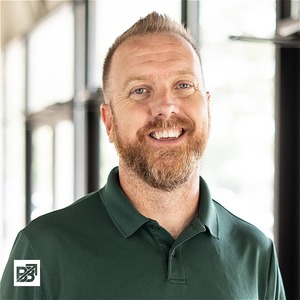
Welcome, good morning, Mercy Hill Church. My name is Daniel Thompson. I'm the college pastor here. If you're new to Mercy Hill, I want to say welcome and I want to let you know one thing that you can count on. You can count on one thing here at Mercy Hill.
Things will always change. They will always change. Just like our new service time that's coming up, if you've gotten comfortable with being in a service here at one of our campuses, times are changing because we are always in the business of making ways for people to hear the gospel. If there's not enough seats, we'll build another service. If we need to tell people to slide over, we'll do it.
So I want to encourage you, especially those of you here at the Ridge, if you are at our 9:15 or at our 11 o'clock service currently, I want to challenge you to talk with your family and consider moving to the 8 a.m. service. We're going to do it again. It'll probably be 18 months from now. We'll be doing it again for something else.
We wanna challenge you to move for the mission, not because we think that it makes you a better Christian or anything like that, but what we've seen in our lives, and what you saw in the video just now, is it actually does more in you than God even does through you. It begins to allow you to see the mission as more valuable than yourself.
So let me ask you this question: What is it worth for someone who is close to you but far from God? What is it worth for them to have a spot to come hear the gospel? What is it worth for the parents with children in the room? What an awesome opportunity when they wake up a little bit earlier, an hour earlier than they're used to. When they wake up a bit earlier and they're like, why do we have to go to church so early?
You say, because the gospel is worth it. What a chance to disciple your family, disciple your own heart.
So I want to challenge you not to say, like, well, that would be uncomfortable. I'm sorry if you got this wrong impression. This is not about comfort. And if you've gotten that, hey, this is the last day you can say that. It is not about your comfort.
It is not about you getting exactly what you want. It is about those who are far from God, hearing the gospel and being moved to live on mission. And so let's model that as a body.
So I want to challenge you to go. It also affects our other service times. It moves them back 15 minutes.
So it's going to be at 9:30 and 11:15 coming up in a few weeks. If you're at one of our campuses, that is going to change for you as well. It's going to back it up 15 minutes. If you're listening to the service at a campus right now and your friend isn't here yet because they're showing up late, don't tell them because they'll be on time next week or in a couple weeks.
So that's good. They'll finally be on time and be here for all of worship. It'll be great. But I want to let you know that's coming because that's what we're going to do. We're constantly trying to make ways for people to hear the gospel.
And so I want to challenge you to move to that end, to move for the sake of God's mission here at Mercy Hill and see what He does in your life. If you're newer to Mercy Hill, you may not know this, but we do something called City Project every summer. What it is, is for our college students. See the t-shirt I have on, it says scent. What we do is we have college students who spend the entire summer with us.
They live in host homes and they get discipleship training, they get all of these things. And we just finished that up. This past week was our last day of it. It was a really awesome moment. It was a send-off.
But I wanna let you know: it's one of the best things about serving at Mercy Hill, but it's also one of the things I hate the most about people who don't get to see this stuff. If you're not currently serving, I want to challenge you to jump in because I feel like you're missing really what we are. If you show up on Sundays, that's great, but this really isn't where everything happens. This is where it starts, but it really spills over into everything else. We had one of our college students who, about 18 months ago, he would have probably said, man, I would have said I was a Christian.
but I don't know if it was. His name was Spencer Connick. He's a UNCG student. And this past summer, he said something so profound to me that I think it would hurt us as a body not to hear this. That we were talking about the gospel.
He was saying, you know, I got baptized this past year. I stepped into something like City Project, put my yes on the table. And as I began to grow, he's like, I began to hear the gospel and understand it in a new way. That not only did Jesus love me, he's like, I heard that my whole life. He's like, not only did he want to save me, but also when I went internationally, he's like, it dawned on me.
That the same thing he did for me, he did for those all around the world, and they have no idea who to give the credit to. They have no idea who to give the credit to. He's like, people on our college campus, people at your work, they have no idea. And what he said is this: he said, if that is true, If the gospel is true, how can I not spend my life? trying to get that to others.
How could I not do it? And that is what is happening in the life of our college students, in our high school and middle school students, in our kids' ministry. And so, if you're not jumped in, I'm not asking you to jump into serve because we desperately need people. Honestly, we're okay in college. I can say that, but what I can say is this: you are being robbed of the joy that Christ wants you to have in your life.
By not serving. And so, if you're not around a ministry, I want to encourage you and challenge you and push you to jump in. But today we're going to be in Psalm 43.
So if you have a copy of scripture, open it there. We're going to be in Psalm chapter 43. If you have your phone, go ahead and open that up. Last week, we were in Psalm 42. If you're like, weren't we just in that?
We were in the chapter before it. And we discussed how, in the midst of hard times, God uses those times to teach us to trust in Him. There was this refrain that happened over and over again. In chapter 42, if you look back as you're turning there, in verse 5 and 11 of 42, this same refrain kept jumping out. It said, Why are you cast down, O my soul?
Why are you in turmoil within me? Hope in God, for I shall again praise Him, my salvation and my God. And we learned about the importance of preaching to yourself like the psalmist did. The psalmist was reminding himself of truth over and over in the midst of these hard situations. And we learned that we ought to do that.
But I do have to confess something to you. I hate, and I do mean hate. I hate when we, we pastors, give an application that's like, do this thing. And then we say, all right, have a good Sunday. And we tell you to leave, and we don't tell you actually how to do it.
That's what I did last week. I told you to preach the gospel to yourself daily.
So, if you left a little bit and you're like, great, that's good. And then you were like, I don't really think I know how to do that as well as I should. I was setting myself up for success this week, because that's what we're gonna talk about. We're gonna talk about how do we actually walk that out. I knew I was preaching this week.
I knew we're in Psalm 43, and they really flow seamlessly. And most pastors and commentators agree that this is really one Psalm. If you look in your Bible and you write, I want you to look at Psalm 42, 44, 45, 46, all the ones that are around it, they have this header. Psalm 43 does not have that header. Psalm 43 does not have that.
It does not separate itself in the text. But then, what does happen in Psalm 43 at the end? If you look at verse 5, it has that exact same refrain that we saw in Psalm 42. It really flows in. We see it in 42, verse 5, we see it in 42, verse 11, and we see it in chapter 43.
Verse 5, that exact same refrain: why are you downcast? Oh, my soul, hope in God, for I shall again praise Him.
So they really go together. And if you weren't here last week, that's perfectly okay. This is going to make sense to you. We're going to look at the Psalm, we're going to see Christ reign. It's going to be super applicable to your life.
But I do want to encourage you to go back and listen to it. Because if these are meant to be read together and understood together, let's understand them together. Let's do it as the Bible wants us to do it. But let me refresh your memory. If you forgot last week, if you're like me and you forget what happens when you walk out the door, let me refresh your memory and remind you.
The psalmist is far away from God's people. He is far away from the temple. He is miles outside. He's either sick, or he's being chased, or he's being oppressed, or he's being kept out of the city, or Israel and he's an exile from Jerusalem. And he's.
In a really, really tough spot, he's heartbroken. If I could use a term that would really help us understand the plight of the psalmist, he is spiritually depressed. He is spiritually depressed. He's in a time where things just don't feel like they used to. I don't have to explain to you what that feels like.
You've had times where prayer is the hardest thing you've ever done in your life. You've had times where singing a song in church or wanting to open your Bible or the times when talking about God used to keep you up till two or three in the morning with friends or used to love it constantly and now it feels like a distant memory. I don't have to convince you that those are realities. We've all experienced those things. But today we're going to see kind of what the psalmist started doing in 42 and what he continues in 43 of how do you preach to your soul?
How do you shepherd your soul out of those hard times back to hope in God? How do you do that? I would tell you this. Last week, I had tons of people come up to me and be like, I really, I mean, I was great preaching to your soul. And I wanted to ask the question, well, how do you do it?
But what I feared was, is we don't know how to do it. A lot of us know the gospel, but we don't preach the gospel to ourselves daily. A lot of us know it, but we don't actually live it out every day. We're like, that was something I did at youth camp where I raised my hand and got baptized. That was the gospel.
No, no, no, believer. The gospel is the same sweetness for you today as it was the day you were saved. And if we don't get that, let me tell you: if you feel like you are spiritually depressed, like you are spiritually far from God, if you are at our campus and you feel like God is a million miles away, it is most likely because you have not understood how the gospel is given to us to help shepherd us through these hard times. And that's what we're going to see today in Psalm 43. And so if you're a believer.
And you've been there. Or if you're a believer and you're wise and you know you're gonna be there one day. Man, let's hear what the psalm says. Let's read for ourselves. And let's see how God wants us to shepherd our own hearts, starting in verse 1.
He says, Vindicate me, O God, and defend my cause against the ungodly people. From the deceitful and unjust man deliver me. For you are the God in whom I take refuge. Why have you rejected me? Why do I go about mourning because of the oppression of my enemy?
Send out your light and your truth. Let them lead me. Let them bring me to your holy hill and to your dwelling. Then I will go to the altar of God to God, my exceeding joy, and I will praise you with a liar, O God, my God. Why are you cast down, O my soul?
And why are you in turmoil within me? Hope in God, for I shall again praise Him, my salvation and my God. That's that refrain right there again in verse 5. That's kind of how we know it's one collective thought from the psalmist. And it goes right in together.
But I have two little girls. Let me give this as an illustration to kind of make this point. I have two little girls and I have a son on the way. I have a three and a half-year-old girl, I have a two-and-a-half-year-old girl, and I have a son on the way. And if you're good at math, pray for us.
All right, that is good. Add us to your prayer list. We have a son on the way, it's great. But our kids are getting that time. If you don't have children, you'll learn this hopefully one day.
If you do have children, you've been around children, you definitely understand this. One of the best things that happens in your child's life is when they can start doing things for themselves. When they can eat for themselves, they don't have to, they can use their own fort, they can use their hands, when they can go to the bathroom by themselves. It's great. The bad part about that is, as good as that is, Them learning to do it is the worst thing on God's earth.
It is the worst thing. Our daughter is in the I Can Fasten My Seatbelt in my car seat by myself, Sage. I see some parents laughing because you know, it's horrible. I feel like the psalmist here. I feel like I'm God.
Where are you? Right. And if you try to help them, they're like, no, I got it. And they're just buckling things the wrong way. It's twisted.
You see a strap going around here, one around their neck. They don't really know what's going on. But our oldest is in that phase where she's trying to do everything by herself and she's learning how to do things. And one of the things she's really learning right now is to push through fear. You know, kids, they're afraid of things all the time, and she's learning to push through fear.
My youngest doesn't have the fear gene for some reason, but my oldest got it double time. We were at the pool last weekend, and she's learning how to jump in the pool. The pool is like three feet. You know, I'm kind of sitting there awkwardly, and I'm like, all right, jump in. And she's terrified.
She's like, her knees are shaking. She's like trembling. And she's like, I can't do it. No, I can't do it. And I'm like, hey, you got this.
You can do it. And I'm trying to convince her and coax her. And I'm like, hey, let me hold your hand. We'll jump in together. She's like, no, no, I can do it.
So I'm like, all right, kind of annoyed at this moment, if I'm being honest with you. But I'm like, hey, it's a one-foot jump. You got it. But she's sitting there, and then I hear her under her breath kind of mumbling. She's like, I can do it, I can do it, you can do it, I can do it, I can do it, I can do it, I can do it.
You won't get hurt, I can do it, I can do it. And she's like mumbling over and over. She never jumped in. But the point is, she was constantly trying to remind herself. of that truth because we had told her a million times, you can do it.
She has believed this truth, but her feelings are far from it. And so, what has she done, a little three-year-old girl, what is she doing? She's trying to tell her feelings a truth that she does not feel right now. She's trying to do that. She's trying to coax herself up.
And I'm sure in the next couple of weeks, she'll do that and she'll never think about jumping in the pool again. It'll be a whole different issue. But the point I'm trying to make is that is true. And yes, we might not be as afraid to jump in a pool. We might get better at putting on a car seat.
Maybe not. I've seen some of my friends try to put a kid in a car seat. It's horrible. But we learn these things a little bit differently. But that same feeling never really goes away.
Just when you get older, you understand what the Bible says when it says we don't fight against flesh and blood, but against powers and principalities of darkness. And this feeling shifts from jumping into a pool to how you have to talk to yourself when you're in the spiritually depressed moment. And so, if we're here today, what do we have to do as believers? We have to learn how to talk to ourselves: you can do this. You can hope in God, you can get back.
And so, if you ever want to get out of that moment of when you're feeling like they're lying to you and the difficulty makes your heart feel like you're far from God, you have to learn how to shepherd your heart back to Him.
So, here's our big idea for today: that the only way to move from hopeless to hopeful is by learning to shepherd your own soul. If you ever want to move from that like knee-trembling, hopeless feeling like God is never going to turn around and you feel like it's never going to be the same again, the only way you can actually move from that, to like we see in the psalmist, to hoping in God again is if you learn how to shepherd your own soul. And that's what we're going to see today. We're going to see what it looks like. What does a shepherd do?
Shepherd's got his staff.
Sometimes he leads to the front and leads the sheep.
Sometimes he's from the back and he has to whack him in the rear end for a little bit. Other times he picks him up on his shoulders and he puts them on his neck and he walks them, saying, No matter if you want to go this way or not, this is where you ought to go. Can you do that with your soul? Can you do that? Can you take the truth of Scripture, pick your soul up on your shoulders, and say, You do not feel like this is the way.
You do not feel like this is true right now, but this is true no matter what you feel. And so we're going to go this way, and you're going to shepherd your own soul. Can you do that? Can you do that, or are you tossed to and fro by life? Do you feel like you're near God right now because everything is going well?
And do you feel like you're far from Him because everything's going bad? Or Is what you know to be true about God constant no matter your circumstance? We have to learn. How to get our heart to where God wants it to be in spite of our circumstances. That's what we see the psalmist attempting to do, and that's what we're going to see today.
Psalm 42 really outlines the problem. It continues in Psalm 43, but Psalm 43 is where we really see how do we respond to that problem. In verses 1 and 2, he says, Vindicate me, O God, and defend my cause against the ungodly people. From the deceitful and unjust man, deliver me. For you are the God from whom I take refuge.
Why have you rejected me? Why do I go about mourning because of the oppression of my enemy? This is the first thing I want you to see. Is that you need to shepherd your soul by crying out to God, not about God? You know, I mentioned this last week: that God isn't bothered if you have questions or complaints, He's only concerned that if you bring them to Him.
He's not bothered if you have them. He only wants you to bring them to him. One pastor said it this way, and I think it makes the point. He said, if you complain about God, it's a sin. If you complain to God, it's a psalm.
Right, that's the point he's trying to make. Is that about God is grumbling and complaining in a sinful way, but complaining to God exactly what he wants you to do? Right, we see that very, very clearly here. There's one thing that I want to make sure that you see that the psalmist does, and really kind of what he doesn't do here. And I think it's one of the reasons that we fail to shepherd our own souls well.
is because of what the psalmist does here. He starts off, what does he say in verse 1? He says, Vindicate me. He asks for vindication. It's not a word I don't hear people all around the lobby asking about vindication.
Have you been vindicated recently? You need to be vindicated. That's not a word we use a lot. What he's saying is: the people have judged me unfairly. They've judged me unproperly.
I have been judged guilty for a thing that I'm not guilty of. He's saying, Vindicate me, O God. Clear my name against these oppressors. And he cries out, he says, God, you're my refuge. Why have you rejected me?
He's crying out honestly. But this is what I want you to see. Notice what he doesn't do. He's in the midst of ungodly people. And you can kind of see the juxtaposition here.
He's saying, I am a godly man, and it's seemingly like I'm in a bad spot, and I'm around these ungodly people who don't seem to be in the same bad spot that I'm in. But what he doesn't do is this. He does not look at the other person and say, God, get vengeance on them. He does not look at the other person and say, God, it's unfair that they are this way and I'm this way. He does not compare himself to the other person.
Why? He doesn't give a crap about them. He only cares about God. He's in this situation. He's like, God, I don't care what the people around me look like.
I don't care what they think of me. All I care about is what you think of me. Your vindication, your thoughts of me are the only things that matter. And as I began reading this, this thought popped into my head. I was reading verse one and I was like, he doesn't really ask God to, like, hey, smite these people, God, these are ungodly people, or God, these are ungodly people and they have a good life and I don't.
Why is it this way? He doesn't say any of that. All he says is, God, your judgment of me is all that matters. That's the only thing that matters. And this question popped in my head as I was studying.
It was how many times during these difficult times in my life has God wanted me to get my eyes on him and I can't get my eyes off other people? How many times in the moments of my life where I felt far from him have I looked at others and I'm like, well, their life looks okay, and my life is not in God's life. Look at me, look at me. And I can't get my eyes because I'm so worried about other people, about my life in comparison to theirs. God, I'm your man.
I should have this. If you've ever had kids, you understand this.
Sometimes you got to clap and say, look at me. But I wonder how many times my Ma. Fixation and my worry has been about other people. But how many times I, instead of putting God in my heart, And pouring my God out to heart to God, pouring my heart out to God, and looking to Him, have I complained? To God about what others have or didn't have.
And I think many people miss what God wants to do in your life. I think many of you are missing what God wants you to do in your life because you're too concerned about what He is or isn't doing in someone else's. In this moment. In isolation. The psalmist is at rock bottom.
He, more than anybody, could probably look around and see quote-unquote unfairness compared to other people. He could feel like he's God's man and he's far away. He could feel spiritually depressed. Other people who look like they're not doing anything God wants them to do, seem like everything is fine, but he's not worried about them. Why?
Because he's only focused about what God says about him. How many of you, how many times have I, in a moment like that, where God wants closeness to me, I am worried about what he's doing in other people's lives? And when you live this way, when you do this, it is impossible to shepherd your own soul if you're worried about what is happening in someone else's life. It is impossible to do it. We get so absorbed on whether or not we have, are we this person, we're keeping up with the Joneses spiritually.
You know, I know people do it all the time with houses and cars and appearance outside of the home, but man, I'm telling you, it's the worst in our hearts. It's the worst and the psalmist ain't having it. He's not doing this, but when you do it, it will prevent you. But one more thing I want you to notice here before we move on any further: if you were here last week and you read the psalm and you look at it, there's something really cool that happens. This psalm is a lament, it is a cry out, it is a plea to God.
This is kind of how it's structured: it is verses one through four of lament, and then verse five is that refrain. Then it's verses 6 through 10, and then in verse 11 of chapter 42 is that refrain again. And then in Psalm 43, it's the exact same thing. It's verses 1 through 4 of Lament. And then verse 5 is that refrain again.
But we see something really, really cool happen. And I don't want us to miss it. is in verses 1 through 4 at the beginning, we begin to see this shift. Where he's crying out to God, talking about how his circumstances are unfair, and then he stops himself dead in his tracks and he says that refrain: he says, Hope in God. And then we see him shift a little bit.
He's like, God, but I'm deep, cause to deep. My life is just going into deeper and deeper distress. I feel like I'm just being, I'm drowning, I'm being cast over your waterfall. And then he says, Refrain, he stops him again. But what happens here in 43?
Is as he begins to lament in those first two verses, what happens in verse three? Before he gets to the refrain, Before he has to remind himself to hope in God again, he begins hoping in God again. He begins to do it before he has to remind himself to do it again. Look at what he does in verses 3 and 4. He begins to say, God, all I want is you.
I'm not worried about my circumstance, it is what it is. But as he's begun to shepherd his own heart, his eyes are getting fixed on the king. His eyes are getting fixed on being back to God. And this kind of question rose in my brain. I wanna ask you.
You guys have all heard people say cry out to God. You heard me say it. You guys have known the Bible, take your cares to God. Why does God want you to cry out to him? Why does God want you to confess your emotions to him?
your feelings to him. Why does he want to do it?
Well, let me ask you. Does God not know how you feel? He does, right? We know what 1 Samuel says: man looks at the outward appearance, but God looks at the heart. He knows our hearts.
Is God a high school boyfriend or girlfriend and saying, Are you mad at me? Of course not. Why? Why is the God of the universe who is all-knowing? Who knows your heart, who knows your feelings, who does not need the psalmist to write this out to know how he feels.
Why does God want us to complain to him, to confess to him, to have questions to him, to say how we feel to him? Why does God want that? Here's what you need to know. If you haven't taken a single note, write this down. Is that God doesn't need us to cry out to him to know how we feel about him?
He we need to cry out to God to remember how he feels about us. We don't cry out to God. Because he wants to know how we feel. We cry out to God because we need to remember how he feels about us. We forget.
And what we see in the psalmist is as we begin to cry out, we remember how God feels about us because we can be tricked. Think about this: we don't know why the psalmist is far away. We don't know. But play this game with me. Imagine.
Imagine it's because of his sin. It very well could have been. Imagine his sin has kicked him out of God's presence. Imagine his sin has caused him not to be on the run. Maybe he is outside of God's people, outside of God's presence, because of this reason.
And he's sitting there in isolation, hundreds of miles outside of God's temple. And he's sitting there saying, I can never go back to God. He would never forgive me. He would never forgive me. But then, as he begins to cry out to God, what does he remember?
I cannot outsend God's grace in my life. I cannot run further from God. He doesn't feel the truth in the beginning, but as he begins to cry out, he remembers what's true about God. He remembers that the Bible says, well, our good works are like filthy rags. And we hear that, like, yeah, I've washed some washcloths before.
To keep it as clean as I can, the Bible is saying that is a rag that is used for women in a specific time in their life where a thing happens, it only happens to women. You get the picture. You can explain that kids ask your parents on the way home. What is happening here? Is he is remembering, and we remember this.
That he's remembering that God does not feel that way towards me that my sin and my distance from God makes me think he feels. And so, as he begins confessing, as he begins crying out to God, the truth about how God is feeling toward him begins to be reminded, and he begins to remember it in his heart and mind. And so, what happens in the psalmist is as we begin. To confess to God. We see what this word is, this word in the Hebrew is hesed, this loving kindness, this long-suffering kind of love that is true about God that we don't feel all the time.
It begins to become true again in our hearts. And it begins to happen. We see this all over the New Testament. It happens in Matthew 9:36. When I was in student ministry, Justin Lucas and my boss students are at camp.
If you don't know this, our students, there's over 300 of our middle and high school students at camp and volunteers this week. It's absolutely incredible what God is doing. Justin, when I worked in student ministry, he was my boss, and I sat down with him and I told him, I was like, Man, I'm gonna be honest with you, I sit in this kind of constant discontent sometimes with people. If they don't do what I want, I can get frustrated very easily with people. My heart does not naturally empathize.
With people when they give me a reason they didn't do something and something like that, and I want it to, because I know that's how God wants me to feel. And he goes, You need to pray at Matthew 9:36 every morning. You need to set an alarm at 9.36. And so I did what you did, and I go, what the heck's Matthew 9:36, right? What is that?
And so we opened the Bible. And it's when Jesus is looking out of the crowds when he's going into Jerusalem. And it says he looks out on the crowds like sheep without a shepherd, harassed and helpless, and he had compassion on them. And I was reading this, I began to think this thought. Did anyone say, hey, Jesus, those crowds are helpless, those crowds are harassed, they're sheep without a shepherd?
No, he knew their heart. We know it later when he says, Come to me, all you are weary and heavy laden, I will give you rest for your soul. Did anybody say, Hey, Jesus, we're weary, we're heavy laden, please give us rest? No, he knew their heart. God knows your heart, Jesus looks at your heart.
He knows a psalmist's heart. He knows your heart. And so, why does he constantly want us to cry out to him? Because you forget his heart towards you. You forget it.
And I forget it.
Some of you are pro-Christians.
Some of you know exactly when to stand up.
Some of you sit down.
Some of you pass the offering bucket without looking. You know what to do. And you forget it. You forget it every week. Why?
Because you do not outgrow having to shepherd your own soul. You don't do it. You'll never outgrow it. That's what's happening here in the Psalmist. As he's crying out to God, his heart begins longing more and more to be with God.
So, if you're here today and your circumstances in life make you feel like God is far off. You feel like God is distant from you, and your soul just feels spiritually gone. If I'd asked you to raise your hand earlier on who feels spiritually depressed, your hand would have shot up. If that is you. Cry out to him.
Not because he needs to know how you feel. He knows. Not because, you know, he's not tricked like a lot of us are when you come in here with your nicest shirt on. He's not tricked that you're okay. He understands that.
But you can forget how he feels about you if you don't cry out to him. You can forget it. He's not worried about your feelings toward him. He knows them. He wants your heart.
And if you're here today and you aren't a Christian, you have not believed in the life, death, and resurrection of Christ for the atonement of sin. For the atonement, the payment that we have incurred, that we have accrued for ourselves because of our rebellion against God. If you have not believed that the only sacrifice that is worthy to atone from that is the blood of Christ poured out on your behalf. Then what you need to do is understand that God looks at you and he sees that your heart is tired. He knows that you're broken.
He knows you've gone from thing to thing your entire life and you felt good for moments. But really, if you look at the course of your life every single year, you just feel worse and worse and further and further. You need something else to lift you up. He sees you and he's saying, come to me and I will give you rest for your soul. That's what he wants you to do today.
And that's the first step in shepherding. And the truth is, as I said, the gospel right there. A lot of us Christians have not thought about that in weeks. A lot of us have not said that to ourselves in months. And we think for some reason it saved us and we don't need it to sanctify us, but we do.
So preach the gospel. Then he continues in verse 3: He says, Send out your light and your truth. Let them lead me. Let them bring me to your holy hill and to your dwelling. Then I will go to the altar of God.
With my exceeding joy, to God, my exceeding joy, and I will praise you with the liar. Oh God, my God. This is the second thing I want you to see. is that you shepherd your soul by asking for direction, not merely deliverance. Not merely deliverance.
Now, don't hear me. Deliverance is not bad. We see that all through the Bible. It's perfectly fine. Shadrach, Meshach, and Abednego.
They say he can save us, he will save us, and if not, he is still good. They want it out the fire, right? We understand that. That is okay. But the psalmist is saying that that is not what I want primarily.
That is not the thing that I want primarily. Deliverance is fine, but what he's saying is I don't want deliverance if it doesn't bring me closer to you. That I don't want to get out of this spot if I'm not closer to you when I come out of this thing. Look at what he says. His first request is not, change my circumstance.
Because he understands the greatest need of a discouraged heart is not deliverance, it is divine direction. That if your heart is discouraged today, you do not need a change of circumstance. You need to be closer to your king. That is the difference. A change of circumstance is great.
But if it doesn't get you closer to God, it is all for naught. Because we know this is true. We know. That you can get out of a hard place and not have a changed heart. You can get out of circumstances and be no closer to God.
You can feel better and not be in a better spot. That's why the psalmist doesn't start by saying, God, you are almighty. You are all strong. You can snap your fingers and I could be back at your altar. I can be close to you again.
We all agree that's true. God can do whatever he wants to. We understand that that's what he can do, but he doesn't pray that because he understands that the direction that God is leading him is more important than him being delivered from this situation. He's asking him. God, show me where you want me to go.
Let your truth and your light lead me. You know, I think many people miss what God is trying to do in a circumstance, in a situation like, even if it's a horrible circumstance, many of us miss what God is trying to do because we just want to get out of it. more than want to see where he is taking us. I think many of us miss it because we just don't want to feel that way again. We just don't want to feel that bad.
Let me ask you this: if God removed every hardship and ache of your heart, but you were no closer to Him, would you want that? Would you want that? If he removed every difficult thing, the rest of your life is rainbows and puppy fur. It's easy. But you were no closer to him.
Would you want that over being near to him in the hardship? And the truth is, a lot of times in my life, I would pick the easy path. But the psalmist is saying never. Never. He's in a moment that's saying, God, I desperately need you.
But more than I want to get out of this spot, I want to be closer to you. I want to be closer. The psalmist wants nearness.
So, what's this destination? What's his direction? He's saying, let your truth and your light lead me, direct me, direct to what? If you're saying directions, what is it going to? What does he say in verse 4?
He says, the temple, the altar. God's presence, is that what you want most in your life? When your soul is downcast, when your heart feels far, is that what you want most? Would you rather feel better or be closer? He's not asking to feel better anymore.
He's saying, let your truth and your light get me closer to you. That's what the psalmist is begging for. He's not saying, God, send your light and truth to get me out of here. He's saying, send your light and truth to get me to you. God is the goal.
God is the goal. Sometimes we'll use God as his genie. We'll have to say, God, give me the thing that I really want. I want deliverance. I want my life to change.
I want my circumstances to change. And what God is saying is: no, I am actually the end of the direction. You know, my dad, one of his favorite things in life is to embarrass my mom. Anyone else, any husbands in the room, want to do that? Any people have dads the same way?
My dad says that's his life goal. He loves making her feel uncomfortable in public situations. It brings him joy, and I'm not gonna lie, I loved it as a kid, it was incredible, it was hilarious. But one of the things he would always do is when people would ask, hey, you know, Danny, that's my dad's name, he'd be like, Danny, what are you getting your wife for Christmas? What are you getting her?
He's like, same thing I get every year. I'm going to put a bow on my head. She's got the greatest gift. That's what he'd say. And obviously everybody'd laugh, and my mom would elbow him in the ribs or whatever.
He's classic. Good things. But we'd look at him and be like, all right, he's being an idiot. He's a fool. But the point is, we understood that the gift has to be something other than him.
The problem is, that is exactly how most of us treat God. That he's like, hey, you're in this situation. What you need is me. He's like, no, no, I need to be out of this situation. He's like, no, no, you need to be me.
You need to be to me. You need to come to me. And we look at him and we're like, no, no, God. I want the gift. I want out of this thing.
I want a better life. I want a better situation. And he's like, all roads lead to me. They all lead to me. God isn't just the one who guides you to the gift, He is the gift.
He should be the thing we want. Look at what he says in verse 4. He says, To God, my exceeding joy, the thought of going back to the altar, the thought of offering a sacrifice, the thought of looking at the sacrificed animal that has died on behalf of his sin does nothing but bring him overwhelming joy at the thought of being right with God again. If I could ask you to list out all the names for God, we've done this with our colleges before. They say Father, they say Savior, they say Redeemer, they say Lord.
All those are incredible, incredible titles for God and Christ, and those are good. No one has ever said, my exceeding joy. My exceeding joy. But that's what the psalmist is saying. He's like, God, if your truth will guide me back to you, you are my exceeding joy.
You are the thing that I want most. Man, the destination God wants us to arrive at isn't mere relief, it's worship.
So what's that point? What's that point? He's not what God wants us to do. Oh, God, send me your light in your direction. It's not the direction it's taking us.
It's not relief of a situation. It's right worship of God. If you're newer and you ever heard this before, I want to tell you this: the goal of your life is right worship of God. The entire reason you are here is to rightly worship God. The reason that we do everything is right worship of God.
John Piper said this, and it's kind of become a cry for missions all around the world. He said, missions, international missions, missions exist because worship doesn't. Because there are places where people do not worship God rightly, and so that urges us to go on mission out there. That one day in heaven missions won't exist anymore. Why?
Because everyone will worship rightly. Right? And so that's the goal. That's always been the goal: we would worship God correctly. And so how do we do that?
Well, we know that the light and truth has come into the world, John 1. Says that in the beginning was the Word, and the Word became God, and in Christ was the light of men, and that light has shone in the darkness, and the darkness has not overcome it. That all of these things lead back to Christ. What is the direction God wants you to get out of? I think I miss this so much that when I'm in these hard seasons of life, I'm like, God, where are you showing me to go?
Where do you want me to go? And I feel like He's screaming at me, back to where you left. You used to be on your face at the foot of the cross every day of your life. And for some reason, you thought you needed to move beyond that. And so what he's saying is, back to the light and truth, back to the cross.
What does the Bible say Jesus is? That he's the author and the what? Perfector of our faith. That you do not grow beyond the gospel, you grow deeper into it. Where does a psalmist want to go?
He's not saying, I want to go far from God. He's saying, I want to go right back to where I ought to be. And so, for the Christian on this side of the cross, what is God leading you to? When your heart is far from Him, when you feel spiritually depressed, when you feel like life has turned you upside down, where is the direction God is taking you? It's right back to the altar.
And our altar is in the shape of a cross. He wants you on your face. At Christ's feet. Saying, God, I should have never left this place. That's what he wants you to do, and he wants you to live the rest of your life there.
He wants you to live in that posture again. That's the last thing I want you to see in verse 5. That refrain happens again. He says, Why are you cast down, O my soul, and why are you at turmoil within me? Hope in God, for I shall again praise Him, my salvation and my God.
Third thing is this: shepherd your soul by talking to yourself, not listening to yourself. If you were here last week, you're like, that's pretty much what you said last week. It is. It's nearly the same thing, word for work. Preach to yourself, preach the gospel to yourself.
You know, the Bible has this really cool thing that is hard for us when we understand it, it's good. But before that, there's no italics, there's no bold, there's no underline in the Bible.
So, what do they do? They repeat things. They repeat things. So, this refrain happening over and over again. Because the Bible, it's helping us because this.
You guys ever seen those t-shirts that people wear and they say, like, I'm with stupid, and it's got the arrow pointing this way. You know, it's like calling your friend stupid. This is the Bible's version of saying you're wearing a shirt that says, I'm with stupid, and the arrow is pointing right back at you, right? Because we are dumb. I will forget it.
Why do I have to say it all the time? Daniel, why would you say it back-to-back weeks? Because I forgot it from the time I preached it last week. Because we get in the habit, we are so good at listening to ourselves, we are very bad at talking to ourselves. We are very bad at preaching to ourselves.
We forget what God wants us to do over and over again. You will forget. But the psalmist, he questions himself. In his despair, and then he preaches the gospel again, and then again. And you might look at this and say, Well, why does he repeat this phrase over and over?
Isn't that the sign that he's not learning from it? No, no, that's a very Christian word that you've heard. It's called discipleship. It's saying the same thing over and over until you get it. And then when you get it, you do it more.
Well, Daniel, I've already read the Bible before. Read it again. There ain't not a single person in this room who's read the Bible too much. I can tell you that.
Well, Daniel, I've told myself to hope in God. Say it again.
Well, I know the gospel in and out. You don't know it enough? Because you ought to bleed it. It ought to come out of you. You ought to speak to yourself daily the truth about what God is telling you, because you will forget it.
You know, we say it all the time in churches. We don't sing this song as much here. But in the church I grew up in, we sang it all the time, you know, come thou fountain of every blessing. He says this phrase, prone to wander. Lord, I feel it.
Prone to leave the God I love. That is not for unbelievers. That is for the church. You mean to tell me the people who are blood-bought Christians who believe in the life, death, and resurrection of Christ are prone to wander? Yes, you are.
When your circumstances in life hit you hard enough, you will be prone to wander.
So, what do we do? You listen to the next, right before that in the song. Let thy goodness like a fetter bind my wandering heart to thee. What does that mean? What is a fetter?
A fetter is a chain. What he's saying is, this is God, your loving kindness, your hesed, your goodness should bind me, bind my wandering heart to the gospel because I got that t-shirt on this pointing back at myself, and I will forget it.
Well, Daniel, I don't think I would forget it. You ain't better than Paul. Paul said the thing I don't want to do I do and the thing I do I don't want to do You are here today. You need to come back to church. You need to hear the gospel preached.
You need to read the Bible again today because you're like me and you'll forget it. You will want to abandon your love if it wasn't for Christ. If we could lose our salvation, we would, but He holds on to us.
So preach to yourself back in right fellowship with God. Preach it. To yourself. That's what the psalmist is doing. He's not dumb.
He can look back on his page and see that he wrote the words five seconds ago. But why does he do it? Because he's trying to say, you'll forget it. I'll forget it. I'll forget it.
And so he wants to remind us that that is what we ought not forget, and we shouldn't beat ourselves up when that's true. We should go back to him. I know all you guys got GPS on your phone. That's one of the things that my dad hates more than anything now. He's like, I'm like, dad, how do you get to the store?
And he's like, I'm like, tell me the name of the store, Dad. And he's like, no, it's up there. You go to the yellow house in the corner. You take a left and you go to that tree. I'm like, no, no, just tell me the name.
I'll put it in my GPS. He's like, I hate GPS, right? But we all have it. But one thing I can tell you this: I don't care, I don't know if you got Apple Maps, I don't know if you got Waze, I don't know if you got Google Maps, whatever you got, this has never happened. You have never missed a turn.
And your phone said, you missed your turn. You gotta go back home. Can't go to your destination now. That's never happened. What does it say when you miss a turn?
It says re- Calculate it. You guys can talk. We're in church. You can talk. It's okay.
It says recalculating. Because what it's saying is, you can either take a different route or you might have to repent and go back to where you were and then go again. Why, when it comes to a GPS, we're like, that makes total sense. But when it comes to the God who is long-suffering and forgiving, and it says if you confess your sins to him, he is faithful and just to cleanse you of all unrighteousness, forgive your sins. But we're like, oh no, God, it didn't go the way.
Where are you, Lord? But what he's saying is Hey. I have a different path. Or you might need to repent. If you have sinned, My blood has covered that.
You need to preach the truth to yourself when your heart feels far from it. You need to be my daughter on the edge of a pool saying, I can do it, I can do it, I can do it. God will forgive me. God loves me. If He has not spared His son, will He not give me everything in life?
Yes, He will, so I do not have to hide my sin from Him when I feel far from Him. My heart feels distant. My distance I feel is not in actuality where God is to me. It's called the truth because it is not dependent upon me. And you need to preach it to yourself daily.
And so here's the big idea. Here's the application. You need to shepherd your soul back to hope in God. That's the whole point. There ain't nothing you've heard today that's revolutionary.
If you ever been to church, probably once. You've heard a lot of it.
Well Daniel, why do you say it? Because we forget it. I could preach the same sermon next week. And a lot of people are like, hmm, that's good. I'd never heard that before.
Because we forget it. Because we forget it every week. What do you need to do? You need to go home tonight and you need to read Psalm 43 and pray it. And pray it in light of the gospel.
What do you do tomorrow? You read Psalm 43 and you pray it in light of the gospel. What do you do 100 years from now? Read Psalm 43 and pray it in light of the gospel. Why?
Because you'll forget it every day. You forget every day. But the spirit inside of us is provoking us to preach truth to ourselves, to shepherd our own soul back to hope in God. You know, the movie just came out, The Odyssey. It's a new movie.
If you haven't seen it, I'm going to spoil it. Books a couple thousand years old. You'll be all right. But the point of the whole thing is: it is Brad Pitt and all this character. But one of the scenes is this.
Odysseus is going out to sea, and there's a thing called sirens, and they're little mermaid-looking things in the water, and they sing this beautiful song, and the sailors really love it, but they'll walk overboard, and then when they fall in the water, these sirens are monsters, basically, and they'll pull them down, they'll drown you, and it kills the soldiers.
Well, Odysseus gets very smart. And he tells the soldiers, hey, plug your ears. And what you want you to do for me is I want you to tie me to the mast of the boat.
So when they get out to the water, what happens? The sirens begin singing their song.
Well, some of the men can't hear, but Odysseus can. And he's screaming and everything in him. Wants to abandon the boat. But he can't why because he's tied to the mast Because what has happened? What was true of him a minute ago?
He doesn't feel anymore, but it's still true. It would be bad for him to wander. And so, what you need to do today is you need to tie yourself to the master of the cross. You need to sit at the foot of the cross and tie yourself there. If you're not in a bad spot, if your heart is not far from God, if you do not feel like you're in a horrible circumstance, I can tell you, almost guarantee you that you will be.
And when you get in the moment, it will almost be too late to try to get yourself to hope in God again.
So, what you need to do today is you need to come to the altar. You need to come to the altar or campus. You need to ask your friend and say, come spiritually, tie me to the foot of the cross so that when I get out to sea and the world and my fear and my feelings are beckoning me to doubt God and to leave the God I love, when all that is there, I won't get to do it. I won't get to leave. What does that look like in practice, Daniel?
Get in the community group. Have community. Confess. Have accountability. Learn to shepherd your soul in that way.
If you are not in a group, you are playing the fool's game. If you're not in a group and you couldn't be in six months and be like, man, I'm in a hard time. I don't know what to do. I'm going to say, get in the group. Tie yourself to the mast.
And when you want to untie yourself, have brothers and sisters in Christ that'll kick you in your teeth and keep you tied to it. Because you will. You will want to do it. I tried to boil it down as simple as I could. This last little point.
It's like, okay, this whole sermon. What's the practical, you know? Flesh it out, Daniel. As easy as you can. You know, I'm a dummy, so I need it as simple as I can.
Here's I got you for you. You need to cry honestly, ask humbly, and preach truthfully to your soul. That is how you shepherd your soul. As simple as I can. You need to cry honestly.
You need to cry out to God and say, God, this is where I am. It feels like I am far from you. I do not know what to do with it. You need to ask humbly, God, get me back to where I can be at your feet. And in the moments where it does not feel true for you, you need to preach truthfully to your own soul.
No matter how you feel. That's what you need to do. Church, I want to tell you. If we do this. If we begin living this out.
We're going to need to add ten more services. Why? Because you cannot love God rightly and not be on mission to get others to worship Him rightly. It will happen. It will happen.
So I know that all of our campuses are here today. People, you need to come to the altar, you need to pray in your seat, you need to do whatever you need to do. You need to beg God, say, God. I'm either in this spot. And I need your light and your truth to get me out of it, get me back to the foot of the cross.
Or, Lord, I know I'll be there one day, so tie me to. the base of the cross and let me only see you even when my feelings want to run. God's the only one that can do it. Let's pray. God I ask That today at all of our campuses.
The Lord, we be a people. who understand that we are prone to wonder. But God, that does not lead us into despair. It leads us to delight because we have a God who wants to keep the wanderer close. And so, Lord, for the unbeliever, I pray that we would repent and we would come to the cross for the first time.
But for the believer, if we have drifted, our eyes are not on you, that we get them back on you and get to the foot of the cross. And if we're the Christian who's there, we would ask you just to bind ourselves. To the cross.
So, when life and our feelings and our enemy and fear want us to drift away, that God, we would be near to you.
So, Lord, as we respond, as we come to the altar, as we stand and sing, maybe joyfully. And what you've done for us on the cross, God. We'd understand it's only going to happen because you do it. It's in Christ's name we pray. Amen.
Mm-hmm.