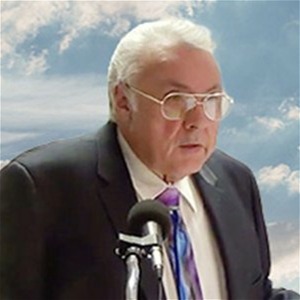
The following program is sponsored by What's Right, What's Left Ministries, and is responsible for its content.
Portions of the following program may be pre-recorded. I am Pastor Ernie Sanders, the voice of the Christian Resistance. Stay tuned, my radio broadcast, What's Right, What's Left is coming up right now!
Coming to you live from Independence, Ohio. We change our life for the better in many different ways. Heard around the world every Monday through Friday. Pastor Sanders is always years ahead of the rest of the media telling you exactly what they're covering up.
This is What's Right, What's Left. I tune in every chance I get to hear exactly what's going on with the voice of the Christian Resistance. Unabashedly cutting through the rhetoric by exposing the hard topics facing our society and world.
A lot of the other news media don't pick up the news items like he does. And bringing to light the enemies of freedom who are out to steal your rights, your children, and enslaving you. You really get the truth out. I can tune into your show and hear the unvarnished truth.
Thank you. What's Right, What's Left with Pastor Ernie Sanders. Good evening and welcome to another edition of What's Right, What's Left. The voice of the Christian Resistance and tonight back in the phone booth we have pastor's mighty men. Pastor Richard Lewis is back there and Eric there is back there.
Eric's there with their right. And in the glass cage we keep him in there. We let him out now and then. But he's good. We keep him in there because he does such a good job for a young fellow. He does good. None other than the guy with a smile. His name is Style. Hey, how's it going pastor? Alright, we got you there. And of course you heard the cackle. That is little Lisa. Good evening everyone.
Alrighty. And then way out in the country of North Carolina. That's where the Carolina reaper grows.
That's right. Some call it the Carolina creeper. We have none other than all natural Miss Apothecary herb herself. Miss Wendy Wilson. Hey Wendy. Hey pastor. Good evening.
Good to have you here with us again. And we have got a lot to do tonight. We're going to get into it. We're expecting that John Mckernan is going to try to join us tonight.
Hopefully he can make it in. And so this is pledge week, pledge week, pledge week. So folks, oh, we got a pledge already. Coach has pledged 100.
Thank you, coach. Alright, we have, um, the numbers are four credit card, eight, eight, eight, two, eight, one, one, one, one, zero. And again, that's eight, eight, eight, two, eight, one, one, one, one, zero.
And for, uh, the regular is eight, eight, eight, six, seven, seven, nine, six, seven, three, eight, eight, eight, six, seven, seven, nine, six, seven, three before we even get going though. Just got a text from nurse Elaine Conley and Elaine's back in the hospital again. So I'm going to tell you that poor woman, she has had such problems, you know, physically with her all these years she spent like you, Wendy, so much time helping other people. And boy, just recently, she's been in and out of the hospital and she went just back, just went back in a little while ago, uh, with heart defibrillation.
And, uh, that is not good. So let's pray for her. Heavenly father, Lord God, I just want to hold, he laying up and ask Lord again, as we've done so many times in the past and Lord, you've always pulled her out of it, but Lord, that you might even receive a healing, a complete healing. Lord, uh, father God, it's been, she's had such a tough time. She's helped so many other people and now Lord, she needs help. And we know Lord that when you help somebody, you help somebody. And so we would ask father God that you might touch her, Lord, and that you might receive a complete and total healing.
This we ask in Jesus name. Amen. And you're right about that. When he healed somebody, it's a done deal.
You're not kidding about that. And so I did, I did send you a pledge. Uh, well, um, look for it in the mail, $300. All right. But Wendy down for 300. Yeah. See if somebody can match that tonight. What do you think? Alrighty.
That's right folks. You know, the last time you did that, uh, we got like two or three matches. So let's see if we can get a $300 match for Ms. Wendy, who can match Ms. Wendy for 300. Alrighty.
888-281-1110 or 888-677-9673. Uh, Wendy, the, uh, the title of the message was, uh, going strictly by the book, going strictly by the book. Now often over the years, you know, you hear that, especially in the military. I heard that we're going to go strictly by the book here. And, uh, sometimes they're extenuating circumstances where you really can't go by the book in some extent when it comes to the military code. But, and then of course you, how many times have you heard police officers say going by the book, you didn't go by the book and, um, but there's one book where that does not apply to. And that's where you always go by the book because it's without error.
There's no error there. And I'll bet you know what book that is, right? The Holy Bible.
Absolutely right. And so we're going to pick it up where we left off tonight in Philippians chapter one, starting with verse 12. And so, okay, we have Laurie in Massachusetts pledges 100.
Thank you, Laurie. Which we start off in verse 12, but I, but I would, you should understand, brethren, that the things which happened to me have fallen out rather into the, further into the gospel. Here now, see, Paul was writing from his prison cell, uh, in the palace, uh, in Caesar's palace in Rome. And because of his unjust imprisonment, the gospel was being spread throughout Caesar's palace. And, uh, Paul's courage was contagious. Uh, there were those, uh, that we're going to see that were kind of envious of Paul's popularity.
Others were not willing to be, uh, arrested or jailed like Paul here. He says this, so that my bonds in Christ are manifest in all the palace and in all other places. And so here now, uh, the Roman soldiers were very interested in the gospel. I mean, you know, like when you get changed between, uh, two people and the Jews and the Romans didn't have a lot in common, except for this man with this Christianity, what is this we're talking about? And everybody heard about this, this Jesus, everybody knew about the, uh, miracle, how, what happened when he was crucified, how he rose again. And how the earth, um, other graves were open and on the earthquake and the veil of the temple was run. And so these, these Roman soldiers, they want them to, here's a guy that seemed to know everything. This apostle Paul fell. He'd seen pretty smart. And so here as he's witnessing to them and they're getting saved, um, you don't think Caesar was too comfortable having Christians in the palace, do you?
Probably not. Not happy. So what were they doing? You know, they were building a road all the way into Asia there.
And what they would do is they would take these soldiers once they were converted, send them out to work along the highway. And so Caesar was sending out missionaries. He didn't even know it, did he? It's awesome, isn't it? Yeah. Yeah.
It works that way. So that my bonds in Christ are manifest in all the palace and in all the places and many of the brethren and the Lord waxing confident by my bonds are much more bold to speak the word without fear. So they're saying, look at this man here, Paul, look, this fellow, he is a true believer. He's got courage. Uh, what is, what has happened here? Um, remember when president Reagan was shot and they were putting him in the limousine, what did he do? He raised his hand up and victory, you know, and you know, he yelled out, you know, keep fighting or whatever. I can't remember, but I remember, uh, he, he wanted everyone to know that he was okay. Uh, and then we saw president Trump, the very same thing.
Okay. And that, what did that do? Uh, when he was shot, you didn't see people emptying the stands digitally. They stood there. It was his, it was his courage to kept people there. Wasn't it? Well, I mean, they, they were concerned for him.
Yeah. And so here he's Paul is saying, and many of the brother and the Lord waxing confident in my bonds, much more bold to speak the word without fear. Some indeed preach Christ, even of envy and strife and some also of good will. What do you think he meant by that? Well, I mean, that's sort of like that commandment, you know, preach the word of God in season out of season when it's convenient and when it's not.
Well, not exactly. Okay. Because what that means there is that you keep preaching the gospel, whether you get persecuted for doing it or whether you get praised for it.
The important thing is that you're doing it. Okay. Okay. What, what he's, what Paul is saying here, that some indeed preach Christ, even of envy and strife. I, I know personally for what that means, because I had a number of the prissy preachers criticized me for my activity out there in the streets for, for being arrested for saving babies. Yes, I got some of my worst criticism, not only, you know, from the opposition out there, but the prison preachers say, well, he's supposed to obey the government and I would not encourage my people to go out and protest against abortion because it's legal.
Okay. And you're supposed to obey the government, right? Uh, is that what the Bible teaches? So are we to obey government or God? Uh, God and, and the government is supposed to uphold God's ways.
Absolutely. And so the prissy preachers did that because they didn't have the courage to do the right thing. They knew it and I knew it and well, everybody knew it, you know. So Paul goes out and that's the same thing within Paul's day.
They were saying, look, you don't have to be like Peter and Paul and all these people get arrested. You can get along with the government and you can get along with Caesar and God. We're going to be separatists, aren't we?
We are. Are we to be in the world and of the world or in the world but not of the world? The latter one.
Right. He says what? He says the one preached Christ of contention, not sincerely supposing to add affliction to my bonds. In other words, again, um, these, they're out there saying again, you don't have to be like these people. You can, you, uh, you can obey Caesar and you can obey Christ.
Why don't that, that would be pretty hard when they go in two different directions, huh? Well, the Bible says you can't serve both. Right. And so here he goes on to say, but for the other of love, knowing that I am set for the defense of the gospel, but then notwithstanding every way, whether in pretense or in truth, Christ is preached either in do rejoice.
Yes. And I will rejoice. In other words, Paul said, look, it's not about me. You know, it's not about me. It's not about us. It's only about Christ. So look, I'm just glad that they're preaching the gospel, even if they're doing it to my detriment.
That's all right. But the gospel is being preached is the gospel is God's word. That's important, not me.
And that was the point that he was making. And so he goes on to say, for I know that this shall turn to my salvation through your prayers and the supply of the spirit of Jesus Christ. According to my earnest expectation and my hope that in nothing I shall be ashamed, but that with all boldness and always. So now that Christ shall be magnified in my body, whether it be by life or by death, for me to live is Christ and to die is gain. But if I live in the flesh, what do you what do you what do you think he meant to say to die is gain? Oh, you go to heaven and you get your eternal rewards.
Yep, you're exactly right. That's what he was saying for him. But if I live in the flesh, this is the fruit of my labor. Yet what I shall choose, I want not. In other words, he said, well, I know not that word. What means means I know not for I am in a straight betwixt to having a desire to depart and be with Christ, which is far better.
Nevertheless, to abide in the flesh is more needful for you. So what is what is he saying? He says he sees the blessings are far off and he can't wait to get there, but at the same time, he understands why he's here. He's needed here. He's needed here. And the people there in Philippi, they need to hear the gospel, don't they?
Right. He says, and having this confidence, I know that I shall abide and continue with you in all of your furtherance of the joy of faith that you rejoicing may be more abundant in Jesus Christ for me by my coming again to you. Now, let me ask you this. Paul, you think Paul had any doubts at all at any dose at all about when he died?
We read over the first second Corinthians five, eight absent from the body is to be present with the Lord. The Lord. Yeah, I don't think he had doubts, you know. No, he had he had he was totally, completely confident. OK, why do you think he was so completely, totally confident?
Well, I mean, I think you gain that confidence in faith and by faith, by reading the word of God and prayer. Yeah, the Paul had an experience that none of the rest of us had. OK, and I wonder if style knows. Hey, style. Yeah.
What experience did the apostle Paul have that none of the other preachers had? Well, let me let me answer it this way. What would you say? This kid is brilliant. You know, because I'll say that.
All right. Here's what I would say that he spent three years. He spent three years being personally tutored in the Arabian desert by the Lord Jesus himself. He took the words right out of my mouth. That's exactly what I was going to say. That's what I need to know something. That's why I go to you now. OK, there you go. You hear that, Wendy? Yeah.
I mean, what was the apostle that went to his he was taken up into the spirit and they were asking him questions and he said, thou knoweth, Lord. So that's kind of what he just did. Yeah, absolutely. Absolutely. Let's let's go over to Second Peter and in Second Peter.
We'll find it here versus 19 through 21. He says we have also a more sure word of prophecy wherein you do well that you take heat into a light that shineth in a dark place until the day dawn and the day star rise in your heart. Knowing this first that no prophecy of the scriptures of any private interpretation for the prophecy came not an old time by the will of man, but holy men of God spake as they were moved by the Holy Spirit, the Holy Ghost. Now here, you know, as sure as Peter was and what he had seen and heard, this was only his own experience and. And so Peter's people is given a kind of a personal testimony to others, right?
Yeah. What was he was saying that God's written word was available to all in the holy scriptures was more sure than. Than any personal experience one might have, right, he's he's telling you that it came from what the Old Testament prophets he was he was quoting, huh? And so, in other words, Peter is saying, look.
I have my own personal experience for the Lord Jesus. I mean, was Peter always such a believer? No, he was not. No, and Peter, when the Lord told him you you'll deny me thrice before the cockroach, Peter, I will never do such a thing, right?
But but now. Old Peter's got absolutely no doubts at all, right? I mean, he knows he knows that without any doubt what his future is going to be.
Why why was that, do you think? Well, it was quite a sobering experience, you know, when he realized the Lord spoke that before it actually happened, because it was just a testimony. God knew Peter more than Peter knew Peter, you know, and and he also knew that experience would promote and propel him into this.
As he was. Well, when he says you're absolutely right, no private interpretation. So he's saying that.
There is no. That no true prophecy springs from the private reasoning of individual men just speaking of their own opinions, does it? Right.
What he's telling you that who is involved with this prophecy, knowing this first that no prophecy of the scriptures private interpretation for the prophecy came not in old time by the will of man, but holy men of God spake as they were moved by who? The Holy Spirit and did the Holy Spirit get it right? Yeah, absolutely. Absolutely. Every time, huh?
I believe so. And Jesus made a pretty clear point when he said that heaven and earth would pass, but there's only one thing, one thing that will never pass away. What was that? Heaven and earth. The word of God passed away, but the word of God would never pass away. Well, he said my words, my words shall never pass away. And so here we're going to pick it up.
I think tomorrow in Romans chapter 15 verses four through seven. Very, very interesting. But for right now, we're going to go to a quick break and then we'll find out what's on your mind.
I got a pretty good idea. Let's get back up to this. Hell's for losers. Heaven's for winners.
This word is not where it begins. I am blessed by you. I'm coming home someday. Heaven's my wife.
I'm blessed by you. Where the saints all stay and little children play, I'm blessed by you. Where the saints of old walk on streets of gold, I know that I will see. That heavenly prize is no surprise how happy I'll be. Gonna see my family again.
Gonna be with one lost friend. Maybe soon I don't know whether I'm blessed by you. Gave me treasures, preaching sinners. Hell's for losers. Heaven's for winners.
This word is not where it begins. I am blessed by you. I'm coming home someday. Heaven's my wife.
I'm blessed by you. Where the saints all stay and little children play, I'm blessed by you. Where the saints of old walk on streets of gold, I know that I will see. My mansion on high, through glorified eyes, how happy I'll be. Where his glory shines, there I'll apply. On those golden shoulders, I'll be satisfied. Oh, some bright day, gonna fly away. It's there I'll stay.
I'll be there with you, cause your words are nervous. I'm blessed by you. Alright, blessed by you. Folks, we've been blessed by the good Lord. I'm like Paul. I can't wait to get there. I'll leave all the problems here back on earth, right? See, it kind of works this way. Most of us out here, we had a lot of problems and not a whole lot of answers.
God has all the answers and no problems. And that's why it's a good place, it's a good thing to want to go where he's at. Now we have with us here, oh wait, we have Patricia in New Jersey pledges 100. Joanne in New York matched you, Wendy, for 300. Marilyn in California for 100. Juanita in Michigan for 100. Indonesia, how do we pronounce that? Dionisio.
Dionisio in New York pledges $10. Thank you, thank you, thank you. Alrighty. Excellent. Very good, absolutely. You got your first match for tonight. Alright, folks, can we get another match with Wendy?
888-281-1110 or 888-677-9673. Wendy, your topic tonight, let me see, tell me if I'm right. Okay. Science has a program to predict when you will lose your mind. Listen, I'm already, I'm ahead, I'm way out ahead of science. Anyone who registered as a Democrat has already lost their mind.
Right? Well, it can be argued, yes. Alright, there you go.
Take it away, Ms. Young Lady. Well, as you pointed out, science has predicting tools on how long it will take for people to lose it. And many Americans and people all over the world are concerned about dementia. And we've covered a lot of these topics in research before in this area of healthcare. But this is a report from the American Academy of Neurology, Pastor, and it has suggested their new research helps to predict how long it takes for a person with dementia to lose their cognitive function at the point at which they can't carry on adequate conversations, control their elimination channels, identify familiar faces, or know where they are.
So I thought we'd take a look at this. This is a quote from the study that was also in the July 2024 Journal of Neurology. They said, our research is a new study that looks at predicting how quickly people with early dementia will experience cognitive decline.
So there's this rate of decline that they're predicting, Pastor. They said the research did state that cognitive decline will vary per person and that the rate at which the decline happens will vary. However, family members are all that are caring for their loved ones with dementia want to know what to expect, and therefore, science wants to be better able to answer those questions and use their predictive models. So in this study, the researchers tested 961 adult volunteers. They were the ages of 65 and older, and they all had mild dementia, and they tested them on thinking and memory skills, and they compared them to another group over time that didn't have dementia.
So the study doubled to also test some new drugs that Big Pharma was wanting to put on the market for dementia. So this is what the test parameters stated. So in the test, they scored people. If you scored over 25 points, you were outside the dementia category, so you didn't have dementia. If your score fell within 21 to 24 points, you were considered to have mild dementia. If your score was 10 to 20, you had moderate dementia, and if your score was 10 or lower, you had severe dementia. Now, some of these results did reveal that those with the mild cognitive impairment of dementia with a score maybe of 26.4, just above the 25, in the beginning of the study, but within five years, these people scored 21, putting them in the mild dementia category. So the scores of those that were in the beginning of the study with the mild dementia category scored 22.4, also moved to the severe dementia category within five years.
So there's this pattern that emerged faster. Usually within three to five years, they were saying, people just declined cognitively. So therefore, the research models are predicting the rate of cognitive decline. For instance, a person with mild cognitive impairment with a score of 28 could expect to reach the level of moderate dementia in about six years, they said. So this study also estimated that the new drugs that they were testing would slow the decline about 30%, and that the same person would reach the moderate dementia point in 8.6 years. Other examples they gave were a person with a score of 21 or mild dementia could be expected to reach moderate dementia within 2.3 to 3.3 years. So I think, you know, with the topic of President Biden and his dementia, you have to wonder, okay, so, you know, we're four years into his supposed reign, and he must have had mild dementia in 2016, or 2020, I should say. Let me ask you this. What's the difference between dementia and senility, being senile?
Very little. A lot of these conditions, Alzheimer's and whatever, they're all kind of lumped into the category of dementia. Like Alzheimer's, they look at Alzheimer's by the amyloid plaque that the brain has. A lot of times, they look at that. Some definitions might be that senile is dementia with an attitude. I know some of those people.
I do. Yeah, very challenging, right? But, you know, this research and this testing, Pastor, may in the future be utilized by physicians to establish a baseline, not only guidelines, but also to put up barriers for cognitive impaired folks.
For instance, let me give you an example. How long will a person with cognitive impairment be permitted to drive a car? Or how long can someone with cognitive impairment be able to keep doing their hobby, or be permitted to vote, or be permitted to control their finances and their property? They don't have to worry about the voting by the Democrats who do that for them.
They do that all the time, right? Well, in this research, only the predicting quality of life, or is it really about that, or is it about to place some controls to assist physicians and family members to maybe legally take over? So, because predictions aren't always accurate, and this study did reveal that the cognitive tests, they gave these tests not always given at the same time of day, so scores could be affected and produced different results when they tested later in the day when these volunteers may have been tired. Here's a quote from one of the lead researchers.
He is from Amsterdam in the Netherlands, Peter van der Veer. He says, we hope these models will help physicians translate these predicted scores into answers for people's questions. Well, I don't know about you, but I know a lot of tests and tools that science tends to use overall tend to have a 20% error margin built into them. So, if you haven't noticed, science has really been pouring a lot of research into these types of programs in order to predict behavior. Now, high tech is really interested in this area of healthcare, pastor, and I'm concerned that with the lack of ethics lately within science, that tools like this to predict can be used to usher in some serious restrictions and prohibitions based on a program.
Here's an example. Could this dementia prediction program be tweaked to predict a wide array of other medical concerns such as the risk of joint or back injury? Or could such predicting tools be incorporated into the job required physical exam? And could predicting tools disqualify applicants for jobs or for life insurance or health insurance or even extended education?
So, it's something the industry should guard against as it could discriminate against people even before they have a health condition to worry about. You know what concerns me is this, Wendy. You've seen with Biden. Some days, he's like a zombie. He looks like he's in a trance.
And there's days when you saw Obama taking him by the hand and leading him off the stage. He didn't know where he was at. You saw him at times where he wanders. He just wanders off and somebody has to go get him and bring him back. But then like other times, like right away from what I hear today, he went back, supposedly went back into the hospital with COVID again.
And of course, you don't know how much of that is true because you never get the truth out of these people. But anyhow, what is it? Because I'm concerned about the drug companies saying, look, we've got a brand spanking new drug here and this drug will take you. And if you're senile, if you have dementia, it can restore your faculties because there's times when Biden is, well, where he's… Lucid. He's lucid. I know.
Yeah, I mean, I think some of his staff admitted recently that he has about two hours of lucidity per day. Hmm. Yeah. So, yeah, that happens. Well, I know that there's some drugs they give him before, you know, a certain occasion they pump him up before he goes to speak something. But it doesn't seem like they always work, do they? Right. It can create confusion.
There are some side effects to a lot of those medications. But yeah, I mean, people that have Alzheimer's and they just slowly drift and they just slowly lose a lot of their memory and how to dress themselves or bathe themselves. And then I think the last thing to go is music.
So people with Alzheimer's that can't communicate, can't do anything, they're almost like in a vegetable state, they can put a set of headphones on them and play some music from the era in which they grew up and they start tapping their feet and humming. Well, that's what happened with John McTernan. In fact, wait, John's here with us now. He was listening to my songs and he started tapping his feet and humming and now he's here.
All right. Hello, Pastor Ernie. Hey, Big John, how are you?
Oh, wonderful. We got the electricity back on a little while ago. Well, praise the good Lord for that. Now we got you back up, we got to get Pastor Joe.
He's had some terrible times there in Missouri. Pastor Ernie, the Internet lines, they're all down. They're putting up the electric lines. I have no idea when I'll be able to get back online like that. Well, you know, meanwhile, you can sit in with me.
888-281-1110 or 888-677-9673. This is pledge week, folks. We got to hear from you out there if you're going to continue to hear from us. And Wendy was just talking about here that this new program that they got scientists predicting when people will become, will have dementia, will come down with dementia. They usually say if you've got mild dementia, basically from this study is you'll slide into severe dementia within four or five years. So it's kind of just if we look at Biden, you know, he was able to debate four years ago with Donald Trump, but now he can't.
And it's just roughly four years away, apart, you know. Well, yeah, but he's kind of had a problem for some time, okay. You know, I've noticed, you know, not as bad as it is now where he, you know, he turns into almost into a zombie at times. But, you know, I noticed this even before, even going all the way back, remember when he was running, you know, against the other Democrats in the debates, there was some times where he was stymied, okay. But, you know, nothing like he is today.
Right, yeah. But everybody's different. Yeah, I know the medications that they had him on, if you notice the paler look to his face and the flatness, he had very little expression. And that has to do with a lot of neurological medication.
And, you know, everybody's different. I've had some people that were, I mean, I had two aunts and an uncle that were well into their 90s and they still were sharp as tacks right up until the time they died, okay. I mean, they didn't, they weren't delusionary or anything. I had an uncle who was 96 years old and still driving himself to work every day. Yeah, I was growing up in the upper northeast and my grandparents were in their 70s and they had friends up and down the street and they still rode their bikes up and down the street, you know, in their 70s.
They had good balance, they weren't worried about falling down and, yeah, yeah. What do you think about that, John? Can you believe that people in their 70s can actually get around? Well, Pastor Ernie, I'm 76. I know you are. I know you're being wise, guys.
You're on me tonight. But I think a lot of it, I guess you could say it's my personal opinion, the more, the better your diet plays a big impact. You stay away from those oils and the sugar and the fats like that and you stay away from, I stay away from the doctors as much as I only, the last time I really had anything done was I had wisdom teeth. And Pastor Ernie, just a brief little testimony about it, I am, I may be in the book of, what do you call it, of records, what is that called?
Guinness Book of Records? Yeah, yeah, because when I got my wisdom teeth pulled from being impacted, I was 67 and the medical staff came out to meet me, the anesthesiologist was shocked because I was by far the oldest they ever seen for having impacted wisdom teeth. So I felt okay going in and coming out. I felt like an old, old, old man. I was a spectacle because of my age. But yeah, I had to have that done.
It was cutting my gums really bad and I was in tremendous pain. But you stay away from those drugs that they put you on, Pastor Ernie, and that has a lot to do with your health. Those drugs have side effects and some of them can affect your brain and bring on dementia. Well, Wendy, you know all about that, don't you? Yeah, I mean, you can get a drug-induced dementia is what he's referring to.
Yes, you can. Absolutely. I see that often. I see that often.
Some of the heart medications give people memory loss, short-term memory loss, and so you should look up your medication list and see if that's the case. I've often gotten calls from people that are caring for parents and they're really beside themselves because it was getting bad. And I say, well, are they on meds? And they go, yeah, probably four to six of them. Well, you've got another match, Wendy.
Beverly in New York matches you for 300, so you've got two matches now. Thank you, Beverly. Yeah, so check your medication list, like look it up online, type in the drug and the side effects, and then WebMD typically will list your rare and common side effects, so I think that's helpful, too. So you can see if the medication, maybe the person can take something else, ask the doctor, you know, maybe they can take something else, and oftentimes that clears up that issue. Well, I don't have to worry about doing that because I don't take any medications, and I don't trust them, I never have. And I've seen so many people, we just had an example with Harry, one of our fellows who's been in the nursing home, and he was unable to, he said, Pastor, I can't even stand much, let's walk. And all of a sudden, his wife tells me things are looking much better for Harry, he can finally get out of bed and walk. And the reason for that was his nurse took it upon herself to take him off some of the medications they had him on, and because of that, he was able to get up and start walking again.
Yeah, that's a good point. There's a lot of doctors working in geriatric areas, and they've taken their patients off meds, because a lot of the medications can increase their risk of falling, so a lot of times it's the meds that interfere with their walking, their gait, their balance, and that kind of thing. I mean, I had a family member years ago who was found unconscious in her house, and it was because the cardiologist got the drug wrong, the drug dose wrong for this person, and they had an imbalance in their blood pressure and they passed out. We had a situation where one of the folks, pastors actually called me, he was in the hospital with COVID, and he wanted me to talk to his doctor, he had told his doctor that he did not want remdesivir, and he said, I want you to tell Pastor Sanders here to me, he wants to talk to you too. And I told him, by no means do we want him to have remdesivir, and the doctor said, well, it's not that remdesivir had $1,000 a dose, you know, it's so bad. The problem with remdesivir is that doctors aren't trained in how to use it, and you have to use just the very, very smallest amount, and you have to continuously watch that. Well, hydroxychloroquine does a better job, and it was 70 cents, not $1,000 a dose, right? But of course, we had to make sure that Fauci had a good retirement, right? Did it kill him, Pastor Ernie, or did they not give it to him? They didn't give it to him, but he did die of the COVID, anyhow.
He was 82, I believe. Well, Mr. McTernan was right, though, diet is important with regard to mental health, and they have found on cultural studies when they do them all over the world that, have you ever seen those reports where they're looking for the oldest living people, and then they want to know what their lifestyle is about? And every one of them pretty much say it's a very simple lifestyle. It's nothing special.
It's not anything fancy. They don't eat processed foods. They don't eat any of that ultra-processed stuff, and it's very basic. And some of these people even smoke and consume a little wine, and they're over 100 years old. So diet's important.
I would look at that. A lot of what people with dementia are eating is processed, so I think that has a lot to do with it. It seems like those people that live these long, they're always in the Himalayans or someplace.
Well, they're in remote or more remote areas. And like I said, they have their own gardens, but it's a very simple life. And so lots of fruits and vegetables and lean meats. And usually when you look at some of these countries that have low risk of heart disease and cancer and diabetes, they'll have meats, but they don't go over four ounces on a serving. It's mostly fruits and vegetables and whole grains and things. So Americans eat a lot of meat, way more than we should as far as a portion goes.
And plants, if you get the right plants, they have a lot of protein, so you don't always have to rely on meat for protein. And herbs also, medicinal herbs, have some basic impact that we can rely on, especially for cognitive function. You've heard the herb ginkgo biloba, haven't you? Oh, yeah. Memory?
Yeah, from memory. Ginkgo biloba is excellent for memory. The challenge is getting the nutritional elements of the plant to the brain area.
So what I like to do is pair it with a circulatory herb like cayenne and rosemary, and it gets it up there. So very helpful for memory issues. I had a friend of mine, a lady tell me one time, you see, they had her on a strict diet. I mean, she had to eat like carrots and this. And she told me, she says, listen, I don't want to live a long time if I got to eat rabbit food every day.
And that was her opinion. Well, you know, and the thing is, I mean, you can make things more palatable that are very simple. It's just that people are used to, in the American fair of food, you're used to salty, sweet, and creamy, the textures.
And so it's just re-educating your palate a little bit. Yeah, I know what that's like. I have to. I had a weakness, and my weakness was chocolate.
But I have to avoid that. What about you, John? Well, Pastor Ernie, you don't have a palate.
Oh. You're just burnt out by those peppers that you put in your mouth. You must have been talking to my wife, haven't you? No, you had peppers so hot, you had to use gloves.
Yeah, you're right. Well, actually, my wife uses the gloves. She couldn't. Those were habaneros, and just the fumes that came off those habaneros, she couldn't. I was cutting them up in the sink, and she couldn't stand by the sink because the fumes were coming off. But I was, like, eating a couple of those every day. That's why I said you don't have a palate. You know, when I was down in South America, I spent a long time in the Amazon jungle, and I was one of the very few people that didn't have any parasites.
Do you know why? Because I was eating those hot peppers, and they killed all the parasites. Yeah, well, what's excellent also, Pastor Ernie, is the proper oils. You know, the unprocessed olive oil and coconut oil are tremendous for us. Yeah, I have that coconut oil. I use that on toast instead of butter sometimes.
I get that question a lot. You know, where do you go for olive oil? Because so much of it in the store has been adulterated. You know, they kind of mix it.
They cheat. They mix it with other stuff. One of my favorite oils is by a company in California called Apollo.
Have you ever tried that? Very unique oil. They cold press the olives in a vacuum, so there's no rancidity started when it's exposed to air, and very lovely oils.
And they get olives from all over the world, and olives, depending where they're grown, can have different flavors. We're up to about 90 seconds before the break, Wendy. I don't know if you're going to stay with us until after the break. Yeah, I got an early call tomorrow, so I'm going to have to... You better give yourself a good commercial, then.
Well, sure. They can give us a call at Apothecary Herbs. Our number is 866-229-3663.
Or visit us online at thepowerherbs.com. We do have a free catalog, and also starting tomorrow, we're going to have a special sale, and it's 20% off. So tomorrow you'll see details online, but it's in honor of Mail Order Week. It's a sale for mail orders.
So if you're interested in saving 20%, the sale starts tomorrow. Well, very good. And folks, listen, I can tell you, I use all of her products. They're good. They work.
I've been using them for years now. I don't even know how many years. Was it 20 years or something now? I think it was 2002 we met. Yeah, a good 20 years, at least. And so I don't take any medications.
I take the natural herbs, because God made the natural herbs, and Big Pharma makes the medications. There you go. We're out of time, Wendy. I'm out of time, but thank you again for being here. God bless you, young lady.
Thank you, and bless you both. We'll talk soon. Bye-bye. We're coming up to a break, and we'll be back right after this with a whole lot more. Don't go away, Big John. We'll be right back. The second hour is coming up next.