What's the easiest choice you can make?
Window instead of middle seat? Picking a vendor who sends a great gift basket? Outsourcing business tasks you hate? What about selling with Shopify? Whether you're selling a little or a lot, Shopify helps you do your thing, however you cha-ching. Shopify is the global commerce platform that helps you sell at every stage of your business. From the launch your online shop stage to the first real-life store stage, all the way to the did we just hit a million orders stage, Shopify is there to help you grow. Whether you're selling scented soap or offering outdoor outfits, Shopify helps you sell. Wherever and whatever you're selling, Shopify's got you covered. Sign up for a one dollar per month trial period at Shopify.com slash try. Go to Shopify.com slash try now to grow your business, no matter what stage you're in.
Shopify.com slash try. The following program is sponsored by What's Right, What's Left Ministries and is responsible for its content. Portions of the following program may be pre-recorded. I am Pastor Ernie Sanders, the voice of the Christian Resistance. Stay tuned, my radio broadcast, What's Right, What's Left is coming up right now.
Coming to you live from Independence, Ohio, where we change our life to the center in many different ways. Heard around the world every Monday through Friday. Pastor Sanders is always years ahead of the rest of the media, telling you exactly what they're covering up.
This is What's Right, What's Left. I tune in every chance I get to hear exactly what's going on with the voice of the Christian Resistance. Unabashedly cutting through the rhetoric by exposing the hard topics facing our society and world.
A lot of the other news media don't pick up the news items like he does. And bring into light the enemies of freedom who are out to steal your rights, your children and enslaving you. You really get the truth out. I can tune into your show and hear the unvarnished truth.
Thank you. This is What's Right, What's Left with Pastor Ernie Sanders. Good evening and welcome to another edition of What's Right, What's Left on this 10th day of July 2024. And tonight we have they're turning the dials and buttons and doing all those things.
Our producer, none other than with a smile style. Hey, style. Hey, good evening, Pastor.
All right. We're we're ready to roll tonight. We have a special guest tonight.
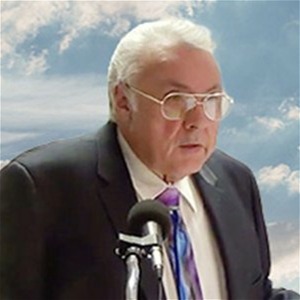
Dr. Mitch Glasser is a Jewish believer in Jesus and the president of Chosen People's Ministry. And are you there, Mitch? Are you there?
I'm right here. Listen, I know we had talked earlier and I was telling you we were going to do Isaiah 53, but the Lord laid it on my heart to change that. Well, actually, some of what you were saying to Romans Chapter nine. Are you ready to do that? I am. I knew it.
All right. Let's go over there to Romans Chapter nine. And here again, you're a Jewish believer in Jesus.
So let me ask you a couple of questions right out of the bat. What is a Jew? What is the difference between a Jew and an Israelite?
Because today you've got everybody talking about the Syrian and this and that and all everything. But kind of get a far away from the actual God's word, the Bible. So what is a Jew? A Jew is a pretty simple definition. Pastor Ernie, it's a Jew is somebody who's a physical descendant of Abraham, Isaac and Jacob. And there is a lot of other little responses to that having to do with the the dispersion of the 10 tribes.
All by the Assyrians and only having Judah and Benjamin and, of course, your Levites who were without land left. And so the name Jew became more popular as a result in the southern kingdom. So there's not really a big difference between Hebrew and and Jew and even Israelite.
It's just that became the common nomenclature because of the dispersion by Assyria and. So a Jew is a physical descendant of Abraham, Isaac and Jacob already. We're going to get into the difference between the seeds of Abraham and the sons of Abraham. But first, before we do that, tell us tell us about chosen people's ministries. Oh, I'd love to chosen people ministries began in eighteen ninety four and I'm not the founder of it. So just so everybody understands that it was founded by a Jewish rabbi from Hungary who came to the Lower East Side in eighteen ninety two. And he heard a Polish Presbyterian missionary to the Jews preaching on the Lower East Side of Manhattan and accepted Jesus as his Messiah, had a radical transformation and was filled with God's love and passion to reach his fellow Jews. Particularly persecuted Eastern European Jewish people who were coming to the United States to find freedom of religion and opportunity. And so Rabbi Kohn established himself in a little Dutch village called Brooklyn.
And and which, of course, is now a little bit bigger than it was then. Now there's three point four million people in Brooklyn and about almost a million of them are Jewish. And so Rabbi Kohn established chosen people ministries and the ministry continue to grow under the leadership of his son, Joseph Hoffman Kohn. And from small beginnings, chosen people ministries now has operations in 20 countries, a couple of hundred staff and another hundred board members and tons of volunteers. We start messianic congregations in many places and have lots of people going to those congregations.
And so it would spread all over the place. But everybody's doing the same thing. And that is proclaiming the good news of Jesus and the size of Jewish people. All right.
Let's go to the first earning. We don't throw the gentiles back in already. Roman Chapter nine, I I say the truth in Christ. I lie not my conscience also bearing me witness in the Holy Ghost that I have great heaviness and continuous sorrow in my heart. For I could wish that myself were accursed from Christ for my brother and my kinsmen, according to the flesh, who are Israelites, to whom pertaining to the adoption and the glory and the covenants and the giving of the law and the service of God and the promises. Whose are the fathers and of whose whom are concerning the flesh?
Christ alone, who is overall God bless forever. Amen. Paul, Paul, when he says this, that he would he would rather himself to be accursed.
How how deep do you think the gravity of that is? I mean, Paul had a pretty good understanding about hell, didn't he? I absolutely. This is one of the greatest statements of burden for anyone who is watching without Christ, whether they be a Jew or a gentile. I think that's the model and example for all of us. We need to have our hearts broken by God for those who do not know Jesus as their savior and Messiah. And so the apostle Paul understood what it was like to live in darkness and to not have the light of life in his in his in his soul. And so I think that Paul and so often most of us also, we're trying to help Jews and Gentiles who don't know the Lord, find the joy of forgiveness and the abundant life that we've experienced through Christ.
And so Paul was trying to do exactly that. And he was willing to step into a priceless eternity in order for his brethren, according to the flesh, to find the answer to the truth in Jesus. Not as though the word of God has taken no effect for they are not all Israel, which are of Israel, neither because they are the seed of Abraham. Are they the children? But in Isaac shall the seed be called, that is, they which are the children of the flesh. These are not the children of God, but the children of the promise are counted for the seed. And so here now, the difference between the seed, the sons, the promise, the children of the promise of the sons.
What's the difference between the seeds of Abraham and the sons of Abraham? Well, I think this is a pretty common theme all through Paul. You see it. I think you see the capstone of this when he gets to Romans 11. And let me read verses one through five.
I think it'll help explain chapter nine. I say that God has not rejected his people, has he? Why would Paul even say that? Well, because Paul was painfully aware of the national unbelief of Jewish people in Jesus. And so it seems that God made unbreakable promises to the nation of Israel, through Father Abraham, that were unbreakable. Whether the Jewish people had faith or not, God was not going to cast them off. And so Paul's question is, has God, God has not rejected his people, has he? Which means has God rejected his people?
Paul says may never be meganitos, strongest construction of a negative in the Greek language. And then he goes on to give a personal testimony. For I too am an Israelite, a descendant of Abraham of the tribe of Benjamin. So he gives his physical lineage. And that's very important because it's the physical, physical lineage that goes back to the covenant that God made with Abraham in Genesis 12, 15, 17, confirmed by circumcision, chapter 22, and then to Isaac and Jacob as well. So in verse 2, God has not rejected his people whom he foreknew, progonos, the Greek word, which means a previous relationship. So God has not rejected his people whom he foreknew, because God had a previous relationship with the Jewish people by virtue of the Abraham covenant. And then Paul, being the good rabbi, a great Old Testament expository preacher, gives a great story from the book of Kings in verses 2 through 4 and talks about Elijah, how he felt he was the only one left after his encounter with Ahab and Jezebel. And he says in verse 4, Paul quotes, he says, But what is the divine response from? And here's what God had said, I kept to myself seven thousand men who have not died in need of hell. So there's the principle that in every day and every age, God has a remnant who will be faithful to the God of Abraham, Isaac, and Jacob.
To be in that remnant, you must be a physical descendant of Abraham, Isaac, and Jacob. And then Paul adds, in the same way, it's come to be at the present time, which was his time, and I would say in our time, a remnant according to God's gracious choice, King James says, according to the election of grace. And so, but if it's by grace, it's no longer on the basis of works. Otherwise, grace is no longer great. And so there is a remnant of physical Jewish people who have found Jesus to be the Messiah, and it is according to God's gracious choice, eklegon, the Greek word for election. But if it's by grace, karat, unmerited favor, it's no longer on the basis of works.
Otherwise, grace is no longer great. So let me put it through this one. I'm Jewish. What did I have to do with being born Jewish? Not much, Pastor Ernie. Not much.
What's in your call, huh? And so that was God's mercy, God's grace. In other words, it was beyond my ability to make something happen.
I couldn't produce my own birth. And so that's a great illustration of grace. So God gave me the great gift of being born in a Jewish home. I'm a descendant of Abraham, Isaac, and Jacob. And then God gave me what I think personally is even an even greater gift, and that is the born again by the Spirit of God.
Also, God's riches at Christ's expense, karat, an unmerited favor experience that I've had that's completely changed my eternity by accepting Jesus as my Messiah. So going back to Romans chapter 9. So who, and Paul will talk about it in verses, talks about it in these verses, who are the, what we would say the true Israelites, are they Gentiles?
No, no, no. Paul, if anybody knew that there was a distinction between Jews and Gentiles, it was Paul. He literally wrote the book on it in Ephesians 2 and 3 and other passages. No, Gentiles have been brought near to the covenants and promises of God. No longer strangers, no longer foreigners.
Absolutely. The ground is equal at the foot of the cross. Gentiles are fully embraced in the same way that Jewish people are embraced when we accept God's gift to accepting Jesus as Messiah. And so to be part of the remnant, to be a true Israelite in the sense that Paul is using this term, you need to be a physical descendant of Abraham, Isaac, and Jacob, and you need to be born again by the Spirit of God. And so I believe that in Romans chapter 9, Paul's talking about messianic Jews or Jewish believers. All right, very, very good.
Now, you thought that when you were growing up as a young Jewish man, first of all, you had relatives who died at the hands of Hitler, and you thought that these were Christians, that Hitler was the leader of Christians. Yeah. And so, go ahead.
Yeah, go ahead. Well, my grandparents on my mom's side were from Belarus, and they came to the U.S. in the 20s. And they were supposed to be the first, the vanguard, they were supposed to get the rest of their family to come. They were both ultra-orthodox Jews.
Each of them had 10 or 12 brothers and sisters, so there was a family of probably close to 30 Jewish people living in Belarus, actually in Minsk, the Minsk area, and so a traditional home for the Jewish people at that time. And so they came over in the 20s. My grandfather was supposed to start a business, which he did. My grandfather and grandmother were then to bring over their family, which they tried, but the family would not come.
They would not come. And so the 20s wrapped up into the 30s, and the 30s kept rolling by, and then Hitler, like a stormtrooper out of hell, descended upon Minsk and upon Belarus, and literally it was a bloodbath. And my relatives were all slaughtered by Hitler, and the only ones who survived were my grandparents on my mom's side because they had already left and they were living. And so I was raised with pictures of these relatives hanging in my grandparents' living room and dining room, and I would ask, who are they? They said, this is your family, and they were slaughtered by the Christians.
And so how do I respond to that? Well, it shaped my understanding of Christianity. What I know now is not what I knew then growing up in a Jewish home, and that is that to be a true Christian, you need to be born again by the Spirit of God. And I actually believe that real Christians love the Jewish people and don't hate the Jewish people and do not seek the destruction of the Jewish people. So what kind of Christians were the Nazis in Germany? Well, the real Nazis were probably more demonic than they were Christian, but Hitler co-opted the church. And these people who basically were state church people, some of them were nominal, maybe some of them were dedicated.
I don't know, but I can tell you this much. They didn't act like Christians. And I think the best scene to understand this is one of the scenes in Schindler's List. Even Spielberg was the son of a Holocaust survivor. And in some ways, you know, this movie was autobiographical, even though it was all about Schindler. It was still very autobiographical. Some of it was autobiographical. And there's this one scene where this beautiful blonde Lutheran family with gorgeous children is celebrating Christmas, where the home is completely decked out.
And he's in an SS uniform. And in the next scene, you know, basically putting Jews to death. And so that is the way, it may not be true or anybody, but it's the way Jewish people think. And there's a reason that Jewish people think, because it happens.
One day at the Christmas tree, the next day at the oven. And so I was raised with that understanding of Christianity, which put me very, very far away from Jesus. And it's one of the objections your brothers and sisters, your Jewish friends, have about Jesus. They don't want to accept a Savior or a Messiah who led a group of people who murdered Jews. True or not, that's the way Jewish people perceive it. And it's a huge objection to the gospel that most Jewish people have today. When Jesus was hanging on the cross, there were the religious leaders, the ones that the Lord Jesus had referred to as the sons of Satan. You know, when he told them in John 8 that you don't know me because you're not of my father, but of your father, the devil. And they were saying, let his blood be upon us and our children. Let his blood be upon us and our children. Do you think that the effect of that is what you saw?
No, no, no, absolutely not. These were not prophets. They were unsaved Jewish people who were trying to self exonerate before something terrible happened. I think that even the Jewish leaders, and of course, it wasn't all the Jewish leaders, and there never would have been a Nicodemus or Paul. So it wasn't all the Jewish leaders, but some of the Jewish leaders who rejected Jesus. And you know, Matthew 23, you see it very clearly, but at the very end of Matthew 23, verses 37 to 39, Jesus is excoriating the Jewish leaders against Jesus. Who again, may not have even been in the majority, but he was excoriating these Jewish people.
And he said, your house will be left you desolate. That's the destruction of the temple in 70 AD. And that was a temporal judgment. So, and you will not see me until you say, Baruch ha-Baba, Shema, and I bless you to see who comes in the name of the Lord. So I actually believe from the mouth of, that truth really does come from the mouth of Jesus himself in such an extraordinary way. The only actual real judgment upon Jewish people for the rejection of Christ is the destruction of the temple in 70 AD.
And Jesus removing himself until he will return in his second coming. So whether a group of overzealous, self-righteous, Jewish leaders, and again, not all of them, said his blood be upon us. I think they were just saying it. They had no authority to say it. They weren't prophets.
But they were wrong. Because, and that verse has been misused by anti-Semites throughout the centuries who hated the Jewish people. And if you remember, and I'm sure you know this Ernie, that John Chrysostom, who was a fourth century church father, and he basically invented the term deicide. And deicide, of course, means the killing of God. And so the Jews were charged with deicide, not just those leaders who were already well-dead, who actually may have joined arms with Roman soldiers and others in nailing Jesus and putting Jesus on the cross, but in no way can you actually accuse the Jewish people of deicide.
Chrysostom was dead wrong. And that act, along with that passage, has been the seedbed for anti-Semitism that unfortunately corrupted the Christian church for centuries upon centuries. And yet today we have the opportunity to make a new choice, don't we?
We're not stuck in time. We are rooted and grounded in the word of God. And so we need to obey the word of God. And so we need to love the Jewish people, pray for the Jewish people, leave the judgment of the Jewish people to God.
Our responsibility is to love, pray, and preach the gospel. And so the church really had it wrong, Ernie, and the Jewish people and Jewish evangelism has paid the price of the century. Well, you know, deicide would be kind of like evolution in the sense that both are impossible.
Okay? You can't have a creation without a creator, therefore evolution is gone. Then God cannot die. And so God can't be killed. If he can't die, he can't be killed.
Right. Not only that, Ernie, remember, Jesus didn't... He was God in the flesh, man. I mean, who could have caught him? Never mind, kill him, you know?
Yeah, yeah. He gave his life willingly because he loved us enough to bear the penalty of sin, pain, and death, and conquered death with his resurrection. So Jesus did exactly what Isaiah 53 said he would do. He'd live a perfect life, he would die as a sacrificial lamb, and he would rise from the dead and give life to all who believe in him. So Isaiah 53 is talking about the Messiah and not Israel, the servant, right?
Yeah. I mean, there are other passages as we discussed in Isaiah 40 through 66, that great second half filled with hope and glory of the book of Isaiah. Verse 39, chapters focus on judgment, a little bit of hope, but chapters 40 through 66 focus on the future and on the glory of the Jewish people. It's interesting, I call Isaiah 53 the corned beef in the sandwich, you know, and it's sort of in the middle of that second part of Isaiah. And the reason why Israel and the Jewish people, the reason why you and I have a glorious future is because Jesus died for our sins and he rose again from the dead. And if he had not, there'd be no future for us, Ernie.
There'd be no future for anyone. And so Isaiah 53 is very specifically about a person. I believe it was fulfilled in Jesus, of course. But, you know, in Isaiah 42 and in Isaiah 49, there are some parts of those passages, and these are called the servants' songs, 42, 49, 50, and 52, 253. And in these servants' songs, there's no doubt that some of it is referring to the corporate nation of Israel. But the angels are in the text, not the devil in the detail. The angels are in the text. And if you read the text carefully in Isaiah chapter 52, depending on where you start that, I started at 7, a lot of people started at 12.
But in Isaiah 52, and then all of the 12 verses of Isaiah 53, we go verse by verse by verse, and we can see that it definitely refers to an individual. All right, very good. We'll be back right after this with a whole lot more.
Don't go away. How he did all the things that he did, because he was Yahweh's own son. He said, I am the way and the truth and the life. So they hung him from a tree till he was crucified. Then they carried him and buried him in a tomb three days and three nights long. And with a bang and a clang and a great big boom, the angel removed the stone from the tomb, and when they all went looking inside, well, Jesus, he was gone. And now, you know, there ain't no skeleton in Jesus' closet. The Father calls it for the Son to be redeemed.
When you're resurrected from the grave, you leave no deposit. Yes, there ain't no skeleton in Jesus' closet. Now as the Spirit moved and the church caught fire and the gospel spread through the Roman Empire, that old devil's old world order was turned upside down.
It seemed the more that he martyred and he crucified, the more the Holy Ghost of Jesus Christ was multiplied until the gospel of the saving grace of Christ was finally spread the world around. All because there ain't no skeleton in Jesus' closet. The Father calls it for the Son to be redeemed. When you're resurrected from the grave, you leave no deposit.
Yes, there ain't no skeleton in Jesus' closet. Now the Muslims say it's down to all you bow. The Hindus pray they'll come back as a cow. The Orient will say only Buddha's the way, but what are they gonna say on resurrection day?
Now the world's got leaders that are trying to lead, but the truth of the matter is they're all deceived, cause they've all got secrets in their past they're trying to hide. So when Satan steps up to make his deals, he threatens to tell all the other big wheels, so they all conspire together to save their own hands. But you know there ain't no skeleton in Jesus' closet.
The Father calls it for the Son to be redeemed. When you're resurrected from the grave, you leave no deposit. Yes, there ain't no skeleton in Jesus' closet. Yes, there ain't no skeleton in Jesus' closet.
Boy, you got that right, Carl. Now there's a fella who's as talented, what a talented songwriter and singer, and now he's home with the Lord, and boy, he was looking to go home there too. He was a real and still is a believer. There ain't no believers.
All of them in heaven and hell are believers now, right? Anyhow, we're back with Dr. Mitch Glaser, and Mitch, you know, it's an interesting thing, because here, you know, you were talking about the Holocaust before, and of course you hear these people saying it never really happened, it never really happened. You know, I mean, it's like unbelievable that they would do this. I actually had a guy call in on the radio program once and said, you know, there's no actual proof that Jesus ever existed. I said, you know what, I gotta hand it to you. That was the dumbest thing I've ever heard.
I said, there's been more written about the life of Christ, more documented about him, than probably the next 100 best-known people that ever existed, and you're calling and telling me there was no evidence. But I actually had a woman say to me, and she's probably listening to this radio program tonight, she listened to us, that said that this revision is history, that all you see in all these films, and I know we went to the Holocaust Museum there in D.C. several times, and that that's all made up. And this woman said that really what you see, if you really knew the truth, Hitler was really a pretty nice person. Now, this woman I'm telling you about is a Jewish woman.
How do you figure that? Well, there's some Jewish people who, they may have grown up more secular, they may be working out their own problems, and they've got some kind of reason, but there's always been Jewish people who are against their own people, and we just call them bad Jews, Ernie. You got it, okay. And if you're listening, you know, give me a call sometime at the Chosen People office in New York City, and we can talk about how you can work out your issues about being Jewish, because it really is distasteful to find Jewish people who don't love their own people, Ernie.
Well, Cora was one of those, wasn't he? And, of course, you have that fellow named Judas, although, you know, he betrayed the King of the Jews. Well, I mean, yeah, I mean, there's always been, hey, you know, there's been a lot of stuff going on, Ernie, about the definition of antisemitism right now. And it's a very important issue, and there is a big difference, because some people say that antisemitism cannot include evident hatred of the nation of Israel any more than you would hate another nation for a variety of reasons, but it can't be personal.
It can't be ethnically based. You know, you can't say, I hate Canadians, because they all have found out, or I hate Greeks, because, you know, they had ancestors who worshiped false gods. You can disagree with them, but there are boundaries to this, and the reason why this is important is because the United States Board of Education has embraced a different and a newer definition of antisemitism that actually includes making statements against Israel that one would not necessarily make about another country or political party.
And so, if I may, and that means that subject to some of the title documents, I forget which one it is, but according to some of the title documents, the activity on campus can be, if people behave a certain way, it can be considered a criminal action. And so, this is a very serious issue, and so let me just read this, and this is by the International Holocaust Remembrance Association, very, very reputable group, and their definition was accepted by the Department of Education, which is supposed to be, you know, very much not in favor of anything positive towards the Jewish people, but they approved it. So they write, antisemitism is a certain perception of Jews which may be expressed as hatred towards Jews. Rhetorical and physical manifestations of antisemitism directed toward Jewish individuals or their property, towards Jewish community institutions and religious facilities. And then they go on to give some illustrations.
I'm just going to read one of them. Manifestations might include the targeting of the state of Israel conceived as a Jewish collective. However, criticism of Israel to that level against any other country cannot be regarded as antisemitic. Antisemitism frequently charges Jews with conspiring to harm humanity and is often used to blame Jews for why things go wrong. It is expressed in speech, writing, visual form, action, and employs sinister stereotypes and negative character traits.
And one last one, and this is among about 12 illustrations, but this one is the one you were talking about. Denying the facts, scope, mechanisms, i.e. gas chambers, or intentionality of the genocide of the Jewish people at the hands of nationalist socialist Germany and its supporters and accomplices during World War II, the Holocaust. That is a prime illustration of the kind of antisemitic characterization that, if perpetrated at an American educational institution, can be deemed a chargeable offense.
And so this is becoming quite serious. And so if you remember the other day, three Columbia University administrators were fired. And the reason they were fired was not because they allowed the encampment. They were fired because they made antisemitic statements and defined by this IHRA definition and the illustrations. They made antisemitic statements in their emails, and that led to their dismissal. And so I thought I would just put this out there because denying the Holocaust is an offense against the Jewish people, but it's really an offense against humanity.
And right now, if this is propagated and promulgated on a U.S. campus, you can be charged. Well, that should be because of what we've seen taking place. Let's go back to Nazi Germany here. You know, the Bible says judgment begins in the house of God, and in that house it begins in a pulpit. And just like in Israel, where they are in Germany, the pastors failed God.
The pastors, the Bible says the righteous are as bold as lions. And when the pastors had made the statement, we are the conscience of Germany, Hitler said, no, no, I am. And they backed down.
They backed down. If they had stood together, Hitler could have never have done that. People would have followed them had they had the courage, but they didn't have the courage. Here in America, the abortion Holocaust, America's national sin, the abortion, the child-killing Holocaust, if the pastors had had the courage, if they had had the courage to march on D.C. and put that court that was only supreme in its rebellion against God on trial for treason against God and country, we would have never had 60 million, 160 actually million dead babies. It's actually twice the amount that they report. They only report one out of every two babies that have been killed. And the sewers in this country from coast to coast have run red with the blood of innocent children that cry out to Almighty God.
But again, the pastors failed to stand. And so, here we take a look at that. Now, saying all that, Joe Biden has said he wants to bring one million Palestinians, one million Palestinians here into the United States. He's already brought in about 30 million illegal aliens. And so, but he hasn't mentioned bringing in one million from Israel, has he? I'll pass on that one, Ernie.
Like I said, I'm a missionary, not a politician. Yeah. All right. Well, here, I can see what is taking place there.
Now, you, let me, I want to go back to the way we had talked earlier. At the age of 13, you had your mitzvah. Bar mitzvah. Bar mitzvah. Bar mitzvah, yeah. Bar mitzvah. It's where a Jewish 13-year-old has been going to Hebrew school learning a portion.
It's really a beautiful thing. They've learned a portion of the Bible, and the Bible is actually chanted in synagogue. And so you have these 13-year-olds who've been studying since they're seven or eight years old, like I was, learning how to chant a portion of the Bible. But, brother, if I only had read what I chanted and believed it, I would have been much better off and not messed up my own life, you know?
And so at the bar mitzvah, the Jewish educational programs are pretty strong, but I don't know, maybe it was just me. But it never took for me. I just didn't find it personally meaningful. I didn't really have a personal relationship with God. I'm not saying, I mean, I believe the only way to heaven, the only way to find forgiveness is through Jesus, of course, but I never connected personally with the Jewish religion. I celebrated all the holidays, the Passover, the Hanukkah, and the bar mitzvah, and everything, but it didn't connect to me until my two best Jewish friends came to know the Lord in the middle of this crazy Jesus movement in the late 60s and 1970s. And they moved into a Christian community, and I went up there to save an attorney because I thought they were brainwashed.
I mean, what kind of Jew believes in Jesus? And secondly, you know, what kind of drugs were these people using to get my smart friends to believe in Jesus? And I just couldn't figure out how to reconcile that. And the old guy who was running that, he's 20 years younger than I am now, but the old guy who was running that Christian community gave me a Bible, and he said, listen, just read it for yourself.
I was asking him some terrible questions, and I think he was a combination of being faithful and trying to get the office back, you know, but he said, read it yourself. And so I did. I began reading the Old Testament in English, not in Hebrew, which I maybe understood at that time, maybe every 10th word. And so I just fell in love with the Scriptures, and it was interesting, in all the places where I didn't connect previously, now I began connecting. And my soul awoke to God, and I realized that Abraham and Moses and Isaiah and David, who were my heroes, they all had this personal, intimate relationship with God. And my friends found that relationship with God, and all these ex-hippie, used to be drug users and everything else whose lives were just transformed by the power of God.
I wanted what they had. And you see, this is the important thing about witnessing to your Jewish friends. It's the important thing about coming to know the Lord. When all you need to do to be a good witness is to be yourself, if it's authentic, it will come through. And Jewish people especially will see it. They'll see the way you behave, they'll see the way you speak, the way you treat other people.
If they're doing business with you, they'll see the way you handle money, they'll see that you're an honest person, and a hard-working person, and that you have faith and you have value. And when people see that, they are very attracted to whatever the reason is why you are the way you are. And this is how I came to faith. And the more I read, the more I asked God to show me the truth, and one day, I went down to a phone booth in the middle of the Redwood Forest.
Long story. And you can go to IFoundShalom.com. We have a hundred testimonies of Messianic news, and you can read my testimony watching video and many others.
IFoundShalom.com. And I found a copy of The Good News for Modern Man in a phone booth in the middle of the Redwood Forest in a campground. Can you imagine? And I took that Bible and I began reading it, and man, I couldn't put it down. I didn't sleep that first night. Because I found that Jesus was the reason why my friends' lives had changed. And I came to the conclusion that if anyone was going to be the Messiah, if anybody was going to be God in the flesh, it had to be Him. And then, Ernie, when I read the Sermon on the Mount, I knew I had found my Messiah. And what man could speak like that? And so I accepted the Lord, and I was barely 19 years old.
And that was the most important decision I ever made in my life. Well, amen. Today, I know obviously that only for those of us that understand the Scriptures, really, in the words of Jesus, do we see that a much deeper, deeper understanding there. We see the ultimate intellect, don't we?
And ultimate intellect, the ultimate in kindness and humility and gentleness and sincerity and power. You know, so I grew up in a neighborhood where, well, to be blunt, there were Jews and Catholics, and so I was very familiar with the crucifix. And I always, when I looked at the crucifix, it kind of turned me off.
And one of the reasons was, is there was this, what I thought, was a weak person hanging on this cross made out of wood or metal or whatever it was. And I discovered an all-powerful Jesus, you know, and I discovered someone who was powerful, peaceful, and loving all at the same time. And it's interesting, Ernie, because I was raised, even though I didn't connect as well with it, but I was raised as an orthodox Jewish person. And because of that, I was taught to believe the Bible, and I wasn't a liberal, reformed Jewish person who might believe that there's an ethical age coming and there's not really a personal Messiah and all that, or the Messiah who's the person. I was trained differently. I mean, I was trained to believe that there would be a person, a Messiah, who would fulfill the Scriptures. And I was, I mean, I was taught all of those things. And I was never taught that he would die as anatomic for our sins, because that's not part of Jewish life or thinking.
But it is part of the Bible. And so, when I began meeting Jesus through the New Testament, and comparing that with the Old Testament prophecies, like Isaiah 53, Micah 5, 2, about Bethlehem, and over and over and over again, I saw a different kind of Jesus than some kind of weak person being hanging on a cross, you know? Amen.
Usually viewed as bleeding, you know? And I found someone who was all powerful who could carry me through this life. Amen. Stile, how much time do I have? I'm coming up on time. Okay.
I'm going to ask you, because you're only going to be with me the first hour, you're welcome to stay the second if you'd like, but I'm going to ask you, Mitch, if you would give an invitation to the people out there, all from coast to coast, tell them how they can make it home to glory and avoid that burning lake of fire. I will. And I just want to mention one thing, if I can, as I introduce it. Okay? Sure. I'll give you a minute. When we get down to one minute left, I'll give it to you, but go ahead. Okay.
I'm going to go ahead and add it. You know, Ernie, I'm also thinking a lot about this anti-Semitism that we're seeing on the rise today. You know, you've got to understand the scriptures to understand anti-Semitism because I believe anti-Semitism is the work of the devil. And Satan wants to destroy the Jewish people because he always wanted to keep the Jewish people from writing the Bible, from surviving great difficulty and being able to produce the Messiah, so producing the scriptures and the Messiah. And now the devil is using Hamas and other people with that same ideology, because it's not just a group of people, it's an ideology. They're using, they're trying to destroy the Jewish people. And I don't think they even know why they're trying to destroy the Jewish people. But Satan is using Hamas. I'll take whatever he's saying, but I really believe that that's true.
And they are a tool in his hands. And because of that, Christians need to rise up. And so we're going to have a conference at Moody Bible Institute on November 9th, beginning on the 8th with a concert, but November 9th is the main day. And go to our website and look at Opposed Anti-Semitism or the Chosen People website and look for this Moody Summit Against Anti-Semitism.
This is going to be a dividing line moment for the church. And we're calling all those who want to support the Jewish people and stand with the Jewish people, to stand with Jesus, the Jewish person, and to stand with the God who made promises to the Jewish people. I want to see a lot of you come and be part of this conference.
It's just a day long. President of Moody is going to be speaking, myself and others. And you will get an understanding of the spiritual roots of anti-Semitism that you just won't be able to get anywhere else. And so I hope that you'll come and that you'll make a commitment to standing with the Jewish people. Once had a really great Southern Baptist friend, Ernie, old timer.
Like us, huh? And with a good Texas drawl, he said, you know, brother Mitch, you got to love what God loves and take what God hates. And it's just so true. God hates anti-Semitism. And God loves the Jewish people. And that's going to take a commitment on the part of Christians, because the world's going to tell you, be fair. Don't be so against those who are trying to attack the Jewish people.
They have their problems, and maybe they're doing it for a reason. Well, whatever reason they have is not the reason the devil has. The devil is trying to keep Jesus from returning, because Scripture says that in the last days that the Jewish people will turn to Christ, Zechariah 12, 10. And when they look unto him whom they have pierced, they'll mourn for him and repent as they mourn for an only son. And then chapter 14, just two chapters later, we see that after the Jewish people turn to Jesus, the one who is pierced, that Jesus stands on the Mount of Olives in all glorious power, splits that mountain in two, and establishes his Davidic kingdom. That was so wonderfully promised in Scripture. You cannot separate the salvation of Israel from the second coming of Christ.
The two go hand in hand. Jewish people are already turning to Jesus. The remnant's increasing, but the day is coming when the nation will turn. But they're not going to turn unless we present the gospel to the Jewish people. And by opposing anti-Semitism, we can change this negative dynamic that my family understood, that I got over, that your Jewish friend needs to get over, because they think you can't be Jewish and believe in Jesus, because Jesus was the father of anti-Semitism. That's not true. It's a lie from the pit of hell. The devil is the father of anti-Semitism. Jesus, the Jewish Messiah, is the antidote.
Well, you're absolutely right. Now we're coming up right now to the break, so I'm going to have to hold you over. And then on the other side of the very quick break, you can give that invitation. Tell the folks out there how they can make it home. And by the way, very quickly, I just wanted to say, you know, the devil tried to stop the coming of the Messiah, you know, going back to Egypt, and then he tried to stop it again in the days of Queen Esther, and then the Spanish, and then in Hitler.
The devil tried to stop, you know, back in the old days, you know, the coming of the Messiah there in those days, and he's not going to be able to stop the return of the Messiah either. Hang tight. We're coming up to a fast break. And then, Mitch, you'll have all kinds of time to give a good, long invitation. So be right back right after. Sure. Thank you.
Yeah. Be right back. To What's Right, What's Left Ministries, 14781 Sperry Road, Newberry, Ohio, 44065. If you missed part of tonight's program, you can check out the podcast at thewordcleveland.com.
Thewordcleveland.com. Once again, thank you for listening and supporting What's Right, What's Left Ministries, the voice of the Christian resistance. Stay tuned. The second hour is coming up next.