I started Orna in 2013 and we make bike apparel. The best part of Shopify for me is our ability to run the business as essentially non-technical people. We're able to admin everything on the back end, front end, and sell things online easily. If Shopify were a bike accessory, I think it would actually be the bicycle. It's the thing that you do the thing on.
We run the business on Shopify. Start your free trial on shopify.com. Yeah. The following program is sponsored by What's Right, What's Left Ministries and is responsible for its content. Portions of the following program may be pre-recorded.
I am. Pastor Ernie Sanders, the voice of the Christian resistance. Stay tuned. My radio broadcast, What's Right, What's Left is coming up right now. Coming to you live from Independence, Ohio.
Changed our life for the better in many different ways. Heard around the world every Monday through Friday. Jesse Sanders is always years ahead of the rest of the media, telling you exactly what they're covering up. This is What's Right, What's Left? I tune in every chance I get to hear exactly what's going on with the voice of the Christian resistance.
Unabashedly cutting through the rhetoric by exposing the hard topics facing our society and world. While the other news media don't pick up the news items like he does. And bringing to light the enemies of freedom borough to steal your rights, your children, and enslaving you. You really get the truth out. I can tune into your show and hear the unvarnished truth.
Thank you. And this is what's right, what's left, with Pastor Ernie Sanders. Good evening and welcome to another edition of What's Right, What's Left on this ninth day of June. twenty twenty six and tonight Well, he's backed by popular demand. My astute young producer, Style.
Hey, Style. I think that's unpopular demand, hey Pastor. You do have a way with the old folk. Anyhow. And uh my special guest tonight is a man of very, very high standing and stature.
and a very accomplished leader, Uh and you know when it comes to I hate it. The euthanasia when it comes to the prevention of euthanasia. He is to prevention of euthanasia, what Elvis was to rock and roll, and Muhammad Ali to boxing.
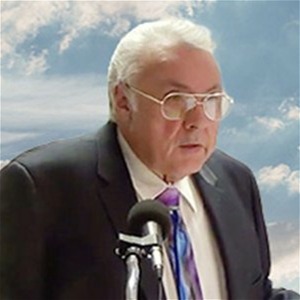
Okay. My good friend for a long time, Alex Shattenberg. Hey, Alex. Hey, Urnie, it's great being with you. And I don't know if I look like Elvis, though.
Well Yeah. I I probably better leave that alone. And uh, you know, when was the first time we had you? On the program. I would say, Alex, that it's been well over 30 years.
Would you say? The first time I would say the first time was probably in the 90s. What do you think? Would have been in the either the late 90s or 2000s or something like that. It's been a very long time, yes.
Yeah. I I remember the first time I went to hear you speak and um And it was an interesting thing because he was here in Ohio, someplace down around Dayton. Do you remember that? Do you recall? Being down around the Columbus or Dayton area there.
Yeah, I do. I've done several presentations around there, more around Cleveland. But I do women drive guns several around that area, yes. Uh this was the first time this had to be This had to be in probably in the late nineties. I don't know if you remember that, but Anyhow, I got in there and I started my work full time in ninety nine.
doing this work against euthanasia and assisted suicide.
So I'm thinking it was uh probably like um Like I remember I spoke in Ohio several times in the early years, but I'm not sure if it's ninety nine or if it was like two thousand and one, but it's certainly a long time ago. Yeah, yeah, seeing how this is 2026, but I don't know if you remember this w when I was there. I was on the board of Oh I'll write to life and and uh I actually was was heading up the really the pro-life movement here in Ohio. Uh I was with Doctor Jack Wilkins when we started. when we had our mission statement right from the beginning.
In fact, The only ones I remember that's still with us is Linda Tice. You remember Linda Tice? Yes, absolutely, yes. Her and I are the only ones I think left from the original board back in those days. But anyhow.
What happened was I got there, and I didn't have a seat. There were two tables in this little room that we were in. And uh the one table had three chairs there and all the other seats were taken and one of the ladies there said, Pastor, why don't you set up over here? And that was where you were sitting. It was your table.
You were there wi and you had a a lady speaker with you.
So they set me right up there at the speaker's table. I remember that because do you remember that? I was with Nancy Elliott. I was with Nancy Elliott. That's it.
Yeah, Nancy Elliott. She was a member of the New Hampshire legislature. And she had done that for quite a few years. And that's how she got involved in this issue because they had brought up an assisted suicide bill in New Hampshire. And she fought against it.
Yes. Yeah, yeah, that's the Elliot, yeah. Anyhow, I'm gonna do some scripture and then w we're gonna get into A lot of a lot tonight.
Okay, so I'm going to be in Proverbs chapter 31. Starting with verse 1, verses 1 through 9. I'm going to change up. This is a little different tonight because. I'm going to vary from my r my actual regular scripture this week.
The words of Kingule The prophecy That is And do you know why?
Well, because that king of mules actually Samson or Samuel. Yeah. Anyhow. And so Here Uh Not S not Solomon it's Solomon, that's what I was trying to say. This is actually King Solomon, okay?
And he's he's doing this here. What he's doing is he's repeating are the words of his mother And so here He goes on to say. Oh. My son? In fact, see, he did this in the very first in the very first Proverbs.
It was It was uh Solomon repeating or parroting what King David, what his father had said to him when he was talking about my son Now here this is Bathsheba. that he is he's parried in her or her words. My son, my And what the son of my womb? And what, the son of my vows? Give not thy strength unto women, nor the ways to that which destroyeth kings.
In other words, he's she's given him a warning Uh n not to be promiscuous. and not to let himself be taken in by women. And also when it comes to Alcohol. It is not for kings, O Lemule, it is not for kings to drink wine, nor for princes strong drink. He's telling em don't make the mistake that so many kings do, where they g get drunk and give away Their kingdom.
lest they drink and forget the law and pervert the judgment. Of any of the afflicted.
Now he's getting into the afflicted. Here, give strong drink unto them that are ready to perish. and wine unto those that be of heavy hearts. In other words, Referring to people That you may say you well, you might say terminal. Or, you know, people that have been wounded, people that they're they're gonna dice.
that are you know soon to die and people that are suffering Yeah. Maybe from an incurable disease. Let him drink and forget his poverty. and remember his misery no more. In other words, give him a pain killer.
Doctor Wilkie used to always say, that you can actually control h more than ninety five percent of the pain. What he used to say with people, there's no Uh no sense in the way they treat people cutting off their food and their water. Open thy mouth for the dumb.
Now, here, this is he's now he's talking about different people. He's talking about people that are unsaved. people that are unsaved in a and they're ready to perish. As he's telling you, open the mouth for the dumb. in the cause, and all such are appointed to destruction.
Those that were you know, die in their sin. And he's telling you to witness to him. Witness to him Don't let em die in his witness to em Open thy mouth, judge righteously, and plead the cause of the poor and the needy. And I'm going to stop there. And I'm going to turn it over.
Uh to you, I've been I was just amazed that um Canada legalised euthanasia. Uh in twenty sixteen And since then, they've killed, actually, I believe, murdered. over a hundred thousand of their people. Is that correct? Yes, yes.
So as of April, so we're We're now um Almost two months past that one hundred thousand death mark. And it's only growing because what's happened with the law Is they have made it first of all, they made it very loose, but that doesn't matter. Once they've normalized killing, They've made it seem like this is the answer to death, that we will kill you. What's happened is it's become the normal, it's becoming the normal way to die, especially in places like Quebec. where they have the highest euthanasia rate in the world Uh, when I'm saying that, I'm talking that I'm comparing it to for instance to the Netherlands.
And Belgium, who have had this for a long time. And this is death by poisoning people to death.
So you're right, this is murder. In fact, In Canada, euthanasia was legalized by creating an exception in the criminal code to homicide.
So when someone says, oh, Alex, it's not homicide, it's not murder. It's made.
Well, no, no, no, no. It's actually murder. It's killing people. That's what it does. That's what it is.
And there you have. Put some nice coated language around it. They've sugarcoated it and they want to call it something like Aiden dying. But in fact, it's not Aiden dying, it is killing. And it's become common.
And the other thing, of course, is, of course, they say that, oh, well, you know, from the beginning, they said we're going to try and control this. They said, Pastor, it's only going to be for those few cases.
Now, of course, I don't think it's ever good for any cases, but it's not the point. They said it'd only be for those few cases, but it's not that way because. They in Canada got rid of the terminal illness requirement. We became wide open. It's become something that has killed off people in poverty, people who are homeless, people who are living with disabilities who are not dying.
Button has Uh how would you say irremediable conditions meaning they have chronic conditions So and it just keeps getting worse. You know, there's there's not much good you can say about it at all. I can say only uh one good thing is because of how insane Canada has become. Other countries are now rejecting it. Which is a whole nother story we can talk about.
But it's very interesting how Scotland has recently rejected euthanasia. The British House of Lords recently rejected it. The little country of Slovenia recently rejected it. And why did they reject it? And they 'cause you know uh you know they sell this as this Pandora's box of beautiful things.
We're going to give you a peaceful death. But in the end, when they look at what's going on in Canada, they say No. No, we're going to reject that.
So, anyway, it's insane what's going on in Canada. And you're fortunate that it's not legal in Ohio.
Well, I'm going to be able to do that. I know, and we're going to do everything we can to make sure it's not. Uh but here Uh you know, you know, Canada th you might say they've they've literally lost their mind. when I look at Canada and I think of states like Colorado that seem to be They they wanted seemed to be on a fast track to hell. Uh in Canada now.
Uh they're this this legislation that they've got is that they're trying to push through. uh would make would make hate speech the Bible The the teaching the preaching of the Bible would be hate speech there in Canada. In other words, any passage of scripture that offends an atheist or a devil. you know, would be uh hate speech and Yeah, you can't say in Canada. Uh if you say that there are only two genders, that's hate speech.
That's hate speech.
Well, that's a different topic than euthanasia. But in fact, you're talking about Bill C9, which recently did pass. And so Um It's it's really it's exactly as you're saying, that in the past They had definitions for hate speech, but what they had is they had exemptions. for people who did so out of who made these comments based on you know Biblical teachings. That means of course you couldn't hate somebody, but If you made a statement based on a biblical teaching and it was a strongly held and held position based on your religion, then that you had an exemption, but that's what they've removed.
So that means you can't say certain things anymore.
Well, it's just passed.
So we'll see what happens How they implement this. Yeah, I would just wonder because, you know Um here a lot of you know, that would it would make It would make me say, You know what? I I'm not going to Canada on vacation. I used to go up there and visit. I'm not going back any more.
You know, not if uh in fact This radio program in Canada is Uh, is illegal. And yet I it's broadcast way up into Canada. And especially when I read Romans chapter 1. That would probably give me the death sentence there, w the way it's going. I'm not sure about the death sentence 'cause we don't have a death sentence here.
We have euthanasia, but we don't have a death sentence. It's all pretty crazy, all of it, if you think about it, but nonetheless. Yeah, it is. You know, uh would you uh go back and Tell, remind us, I remember um you just mentioned The country they're um That that you got your You started. Tell us your story, how you got involved in this to begin with.
Yeah. Okay, so I've been involved with this issue of euthanasia-assisted suicide for a very long time. And in uh in the nineties in Canada, There was a case. Of Robert Latimer.
So, Robert Latimer was a man in Saskatchewan who killed his daughter Tracy, who was 11 years old, and his daughter Tracy had cerebral palsy. And so, what he did is he said that he did so to prevent her suffering. And he said it was based on he had no other choice. because she was suffering. And so this case went to the courts.
And it ended up going through the courts twice, believe it or not. You don't have that in the US, but in Canada, if you get a, how would you say, A type of a hung jury or whatever, you can retry it again. And that's what happened in Canada.
So, anyway, the fact of it is, is. There was some polling that was done in Canada showing that a little over thirty percent of Canadians thought that what Robert Latimer did to kill his daughter Tracy with cerebral palsy that he did nothing wrong. He did nothing wrong. And that sort of hit me hard because we had We were getting involved with the disability community because we have a son who's autistic.
So, autism and cerebral palsy are not the same thing at all, obviously. They're very, very different. Nonetheless, I I had a different feeling about the reality of The lives of people with disabilities and how they're treated. And that got my attention very clearly, where I realized this is a serious problem. And there was almost no one talking about the issue from our point of view from saying it's wrong to be killing people.
We just should never, ever even consider this concept of killing people. And therefore, I started getting involved in it. I started talking about it. I did a little video on it. I did some speaking on it.
Before you know it, I was working full-time. running the Youth and Asia Prevention Coalition.
Well, you had mentioned too, I believe the Netherlands. You mentioned you had an autistic child, and you had a conversation. I believe you were. Oh. And and what's the what what was the first the other ni country you mentioned, uh Netherlands and Belgium countries they were the old earlier countries to legalize uh the killing of people for uh medical reasons like this.
Were you in Belgium? where with and with your wife and son, And did some woman make a remark about about your son? If I remember right. No, no, that was in our video, but that wasn't our son. We did a video back in what was it called?
It was called The Euthanasia Deception. And so that's a film that the Euthanasia Prevention Coalition produced. And we sent a film crew to Belgium to do a bunch of interviews with people who were. Had life experience with euthanasia, because this is before it had been legalized in Canada. And the one guy had a child with significant disabilities.
And I knew of this guy because he was speaking out against euthanasia, so I knew who he was.
So, the film crew interviewed him and had pictures of his daughter, who had significant disabilities. But this was a family who, in every way, You know, they treated their child with full beautiful dignity and loved their child. but he tells the story of going into the park. with his child, who was then maybe about ten years old or so, in the wheelchair and someone making a comment to him, why didn't you do euthanasia for that child? And so this is the kind of thinking you realize that when you allow the killing in this way, when you legalize this and you say, oh, you know, it's only going to be for the extreme case, obviously it doesn't limit itself to that because you've changed the whole culture when you say it's okay to kill.
So that was in that first film.
So if you and you can still find that film, Euthanasia Deception, we still distribute it. And we did another film called Fatal Flaws. which actually refers to fatal laws. But anyway, fatal flaws. And we looked at what was going on in the US, in Oregon, in Washington state, and we compare that to the Netherlands.
So this is also very early when Canada just legalized euthanasia.
So we were comparing really the Oregon and the Netherlands and what was going on there in the US, but it's just a suicide, to what was happening in the Netherlands. We were able to show through that field that in fact The US should be waking up to this because it's very similar.
So, in the US, you have legalized assisted suicide in 13 states now.
Now, assisted suicide is a little different from euthanasia, but the very little difference. Because both laws allow the doctor to decide. To be involved with killing you. And both laws use very similar types of poison to kill you. They're very similar, the only difference is how it's done.
With euthanasia, the doctor injects the poison into your system. And with assisted suicide, the doctor prescribes that poison. And you would then would mix it in a drink and consume it. And uh and uh you would then How would you say self-administer, but it's the same type of poison, it's the same intention, it's the same decision by the doctor. It's very, very much the same, only differs by how it's carried out.
You had mentioned um what a kill kit that that uh Some of these they they bring their kill kits with them. Um what about the money, the money that's out there to be made today and and killing people.
Well, it depends on where you're at because there are doctors who this is all they do now.
So if you look at Canada, there's a small group of doctors that this is all they do. They do a lot of killing.
So you would say, Alex, you had 100,000 deaths in Canada since legalization by killing people by poison. And so it's in 10 years. And actually, the numbers just keep going up.
So it was probably last year, we don't have the final number out, but I have quite a bit of the data from the different provinces. We probably had about 17,700 deaths last year by lethal poison. And it would have been you know, but what we have is this small group of doctors who do most of those deaths.
Okay. They do this full-time. This is what they do.
Some of them are retired doctors.
So let's say someone who lives in a smaller area. And they're retired doctors. But they still have their medical license, and they've decided that in their retirement years, they're going to take on this new business of killing people.
So yes, they do make a reasonable amount of money at it. There's no question about it. They make a f a lot of money at it. But what's also what's so crazy about it is they've become addicted to killing.
So I'll give you the prime example. You mentioned about the kill kit. There was this recent case of a doctor in London, Ontario.
So I live near London, Ontario, but my office is in London, Ontario.
So if you Google Euthanasia Prevention Coalition, You'll see our office is in London, Ontario.
So, this is a doctor in London, Ontario. What he did was. He had approved Uh, the poisoning of this one man who lived just outside of London in this little town of Beachville. It's a very tiny town. In fact, Beachville, this is gonna upset Americans when I say this.
Beachville was the place where the very first baseball game ever happened in the world. was not in the US, it was in Beachville, Ontario. And you guys can get all upset at me, but we have lots of proof that that very first game actually happened in. Beachville, Ontario. Anyway, this guy got killed in Beachville.
What happened is what is he was approved for being killed. But then he uh had a He went down quickly. And so he had become incompetent.
So the family called up his doctor and said, Well, you know. Our family member, he's gone down quickly.
So he said, Well, he's already been approved, so he came to do the killing, but his kill kit was not ready for him. He went to the pharmacy, the kill kit wasn't ready.
So what he did is he took left over. Lethal drugs from a previous killing. And he went to that guy's place. and he injected him with the leftover drugs from previous killings, He had done enough killings. This doctor's name was James McClain.
So he went there and. He then declared the man dead. The man's name was Bradley Stewart. He declared him dead. And then uh one of the um nieces who wasn't that old noticed that her uncle was still breathing.
So he was declared dead. The doctors the the the doctor who did the killing has left already. and they notice the uncle's still breathing.
So they call him back and he does another injection. But this is the kind of thing they do. This is the craziness of it. The other thing about it is how does the drug actually work? People say, Oh, well, these are peaceful deaths, Alex.
You know, it's the most peaceful way to die. Hold that right there, Alex. Hold it right there. I want to pick up on this. We'll be back right after this.
And I want to hear this. Be right back.
Well, there's people on the left. And people on the right, and there's people that's in between. You better hope you're right when you leave this life. And bow before the King of Kings. Bow before the king of kings Some say I'm a little bit too far right when I Write and sing my song.
But on Judgment Day Maybe for God. I'd rather be right than wrong. Lord, I'd rather be right than wrong. You say no one murdered more than Hitler did. Most people would say that's true.
But over fifty million Babies that were never born. Or might disagree with you. Yeah, they might disagree with you Some say I'm a little bit too Too far right. When I write And sing my song, but on Judgment Day before God's throne, I'd rather be right than wrong. Lord, I'd rather be right than wrong.
We got a right to feel the way we feel. We got a right to make it stand. And I'm proud to say on my wedding day that my woman was not a man, a great, big, ugly man.
Some Say yeah. I'm a little bit too far right when I write and sing my song. But on Judgment Day before God's throne, I'd rather be right than wrong. Lord, I'd rather be right than wrong. Thank God I'm saved on Judgment Day.
I'd rather be right than wrong. Lord, I'd rather be right than wrong. Yeah, I'd rather be right than wrong. You're either on the right or you're on the wrong. Proverbs 8:36.
All of those that. Hate me, love death, saith God. And we have with us again uh tonight Alex Shattenberg from Euthanasia Prevention Coalition. And Alex, go ahead and pick it up where you left off there. It was interesting.
First of all, I didn't realize you were such a great singer. I didn't sing much in that song, but actually I do see Okay, very good.
Okay, so a lot of people talk about this as being such a peaceful death, and that's the whole, it's another one of the lies because of how the drugs actually work.
So there's a doctor. Who has done a lot of research into how these drugs actually work. And what he's done is he's looked at the autopsies, because obviously the autopsy doesn't lie. And it shows you that when they've died by these lethal drugs, They are actually Almost always have very, very, very heavy lungs.
So, what he calls that, and what's that referred to as is pulmonary endema.
So, what they've done is they have given you a drug to put you into coma. They give you another drug that puts you into paralysis.
So now Any time they put you into coma and they put you into paralysis, it's obvious that it's going to look. It's got a lot. Like you are peaceful. And even if you're not peaceful. You're gonna look peaceful because you can't respond.
You're in coma and paralysis. Then they give you another neuromuscular blocking drug, which actually shuts down your ability to breathe. Of course then your lungs will fill with fluid, but when you stop breathing. Your heart will stop.
Now what's what's important about this is these drugs are not as How would you say, effective, as someone would say? I'm not opposed to killing because they don't do it effectively. I'm opposed to killing because I'm opposed to killing. Nonetheless, Last year in Oregon, if you look at the Oregon Assisted Suicide Report, it tells you that. The longest time of deaths in Oregon last year was 123 hours.
123 hours.
So think about this. They tell you it's a peaceful death. What the longest time of death last year in Oregon by assisted suicide Took over five days. Five days.
So can you imagine they've put this person into coma? They've put them into where they are in paralysis. And then it took the person five days to die. Five days.
This is a pretty horrific thing. There was uh recently a case In uh in Ontario Of uh, and I can just read the case to you right here, just so uh, you'll see uh the whole situation. This is one that traumatized someone. It was a case of Mr. D.
And so, this case came out from the Ontario Coroner's Office.
So, obviously speaking, it did not come from Alex Shaddenberg, it came from the coroner of Ontario. The coroner's got nothing to gain here, okay? And it was a case of Mr. D. Mr.
D was 87 years old and he had congestive heart failure. He was approved for euthanasia.
So, when they came, the doctor administered the first drug midazilam. The second one was lidocaine to numb the veins and prepare for the injection, and then propofol. which is the coma-inducing drug. And it began to burn and sting. Burn and sting.
Okay? And then they gave they gave this man medazlum. But what happened is. He started to groan and he started his muscles all tensed up, he was grimacing and he was calling out for help. The family afterwards was absolutely traumatized.
Because as they're killing Mr. D here, now Mr. D, of course, they're not telling you his name based on privacy. He's calling out, he's calling out asking for help 'cause he's in so much distress.
Now Now, how often does this happen? It happens.
Well, for most people, of course, the coma drugs and the and the person will be paralyzed.
So even if they are. in distress They can't respond anyway. Because of the drug They've been given. It's impossible for them to respond.
So, when they say this is a peaceful death, you can't say it's a peaceful death. You don't know if it's a peaceful death. But what you do know is there's actually quite a few cases when you start going through the data. of horrific deaths. 123 hours.
But the 123 hours was not the longest death in Oregon's history for assisted suicide. In 2023, they reported there was one that was 137 hours. 137 hours to die when this is supposed to be a quote. They sell it as a peaceful death. They say, Oh, you know, Ernie, we don't want you to suffer.
So they they play on the fear of suffering. And they'll say the best answer to this is We're going to assist your suicide. We're going to do it with. these lethal drugs, but it'll be it'll be beautiful and it'll be peaceful. But a hundred thirty seven hours a day is not beautiful and is certainly not peaceful.
And on top of it, You can just sort of imagine the distress upon the family watching this whole thing take place. Yeah, I can imagine that that that would have to be absolutely horrible. Um In in Oregon, uh here in the United States, uh what What are the numbers here? I mean, I don't think, you know, percentage-wise, but population-wise, we're much bigger. Are what what are the numbers say in Oregon, uh You know what it comes to.
Okay, so first of all, there's a serious problem with the numbers. This is one of the things I talk about. You probably heard me speaking just recently in Cleveland. And I was talking about the fact that the American data Is very poor.
So the Oregon Department of Health. reported that last year There was 400 assisted suicide deaths in Oregon. But there was probably actually a lot more than that. I'll give you two reasons for that. First of all, every year's report has this problem of under-reporting, meaning that if you look at the 2023 report, And then you look at the 2024 Oregon Assisted Suicide Report, you'll see that the 2024 report has corrected the data from the 2023 report because there's a whole bunch of deaths they missed.
in twenty twenty three, but then they showed up in twenty twenty four.
So, they have these deaths that were late reports, et cetera. But there's another thing that goes on. This is a self-reporting system. And I think I've talked about this a lot.
So, what that means is a doctor whoever is going to kill Ernie Sanders.
Now, he better go quickly because Ernie's not going to put up with this. I'm just using him as an example, and maybe it's not a funny example. But anyway, the point of it is it's a self-reported.
So, the doctor who then prescribes the lethal drugs for you to die is also the doctor who sends in the report. Often, in this case, because there's very few assisted suicide doctors.
So often the case the doctor has no They have no connection to you at all. They never met you in your life. They might have met you for an hour or so, maybe, just to approve your death, et cetera.
Now they're carrying out the death, and then they have to send the report. The other data shows is they're almost never at the report. About 10% of the time, the doctor who is prescribed the lethal poison for you, he's also at their death.
So, you know, it's very inopten that they're actually at the death. But on top of it, you get this other problem called underreporting. But what do I mean by underreporting? They every year, if you look at the Oregon Report or the California Assistant Suicide Report or the Washington State Assistant Suicide Report, it shows you that there's this large number. Um People who received the assisted suicide poisons, but the government has no idea what happened to them.
So I said to you that according to the 2025 report, there was probably, it says there were 400 assisted suicide deaths, there was probably about 450. I'm just counting. I'm just, when you see the 2026 report, you'll see I probably was right. The ingestion status was unknown in 179 cases.
So, what that means of the 637 people who received the lethal poison prescription, there's 179 people, they know they got the prescription. They were proof and they got it. They just don't have any idea what happened to these people. They don't know if they die. They don't know if they use the assisted suicide drugs.
They simply don't know. There's no report, there's no information, they have nothing.
So you have to start thinking about that. That means in twenty twenty five, there was one hundred seventy nine assisted suicide poison kits in Oregon sitting around, and the government had no idea what happened to them. They have no idea, they don't know if the person died by assisted suicide or they died a natural death. If they took the, they don't know, they just don't know. And this is the kind of thing you get: it's really a crazy system because we're talking about life and death.
And I am opposed to killing people, and I have really good reasons for being opposed to killing people. But my biggest reason is. I don't trust you with my life. You should not ever have the right to kill me. It says that simple.
We're human beings. Uh we are certainly not like a god. We are not ones who you should not have a human being involved with the decision to kill somebody. We should be actually allowing for proper care. and natural death.
And truly caring for people. But anyway, this is the reality of Oregon.
So as I say, it's very hard to actually get hard and fast numbers there. We know how many poison prescriptions were written. We just have no idea how many actually died.
Now you can do the same thing with the California numbers. I believe when I was speaking in Cleveland, I showed you all the California numbers, and it's exactly the same problem. It's just that there's more deaths in California because it's a much larger population.
Well, that population is is dwindling. They've had just in the past year over a million people leave. Uh California. Uh uh you know for we can't afford to live there. No, I know they can't afford to live there.
And plus it's not exactly a great place. Uh because of how the government is. Yeah, it is absolutely insane. It is corrupt. It is completely, totally corrupt.
I mean completely corrupt. And uh You know, here where the voter, you know, they're under investigation by the DOJ now. They're going after them. They're going to really try to make an example. out of them because you know we do you know All you need to is- Oh, the election fraud.
Yeah, the election fraud is just unbelievable. Unbelievable. for, you know, for forty five years I was upon death row on a regular b I ministered upon death row for, you know, on a regular basis, weekly basis. And here's um you know, when you if one of I know when an abortionist It goes to prison. They have to put that abortionist into solitary because the other inmates will kill him.
Um you know, in in the s the prison systems you have a s societal ladder. The very bottom, they know. would be pedophiles, but there's a floor below that, and that's That is where Abortionists go. And they uh an abortionist doesn't last long in in prison. Even the pedophiles hate 'em.
And I was just wondering about, you know, these These people in Canada, these retired You call them doctors. We wouldn't refer to 'em. They're they're not doctors. They're assassins. These are retired assassins.
Wouldn't you uh you know, they like to play with words and I think, you know, you should refer to 'em as assassins. I think Uh if uh if the people started using proper, and that's what we do here on this radio program. Um We use proper verbiage for th these people and and that's what the Bible demands. The Bible demands that I do that. I agree with you.
I call it killing because it is killing. And and people get upset at me for calling it killing. But in fact, that's what it is. But you're right, and I even said to you, I it is poison.
So this is not medication. People call it medication. It's not medication when they kill you. You know, it's poison. How do you kill somebody?
You give them a poison. That's how you kill them. This is so this is what it's about. But I I agree with you. That's what it's all about.
That uh this is and also the language. They've played with the language. They want you to think that this is something else. The euthanasia, the whole lobby, the death lobby, are wanting this to be seen as medical treatment.
So they're pushing hard on the change in definitions. They want it to be called medical treatment. They also want it to be it to be cared compared to palliative care.
So they say always in their literature that this is a type of palliative care.
Well, obviously, it's not a type of palliative care.
Now, we already have some problems with palliative care. There are some very good palliative care people who do wonderful things. Who do not kill people, but they keep them comfortable until they die naturally. These are wonderful, caring people. And then there's others who will abuse the drug regimen.
and kill you quickly.
So we already have that problem. But in the case of euthanasia or assisted suicide, this is not palliative care. There's nothing palliative about it. It is about killing. That's what it's about.
That's what it does. It's a horrific idea. Hospice is not the same. Oh. All over the country.
There are places I remember, you know, hospice was just that. Hospice was usually loving. And and care, but And that's been changing, hasn't it? It has been changing because you had the deaf lobby getting involved in it. And uh they do not respect life in any way.
Now in Canada, it's even worse because in Canada you had a situation where we legalized euthanasia.
So now killing somebody is now legal. And then they said, oh, every medical institution that receives government funding while hospices receive government funding they must provide the service they call it a service So, you're getting in different places where what used to be a safe place to go to die, where you were cared for by caring, loving people.
Some of those places have become now euthanasia centers. Yes. I'll give you another example. You actually interviewed this woman a few years ago from the Delta Hospice Society. And you might remember, because I believe that you interviewed both of us that one night.
And she was in the Delta Hospice from Delta, British Columbia. And oh yeah, I remember that. She was a nurse, I believe if I remember right, or maybe not. She ran the Delta Hospice Society, but the government of British Columbia Because the Delta Hospital Society refused to kill their patients, they refused. Because of that.
The government defunded the Delta Hospice Society and they expropriated their 10-bed hospice.
So that 10-bed hospice, which was a No kill zone. became a killing zone. And so this is exactly what the government is being pressured. In Quebec. And it's very sad.
In Quebec, the government passed a law which said that all hostages must provide. Euthanasia.
Now that's a crazy idea.
Now, most of them were doing it already anyway, which is even sadder. That's very sad. They weren't being told they had to, but most of them were doing it anyway. But there was a bunch that were not. There was a Catholic hospice called St.
Raphael's hospice in Montreal, which was built. And paid for by the Archdiocese of Montreal, so by the Catholic Church. They had converted a Catholic church in a neighborhood that they didn't have enough attendance in anymore. They converted it into a hospice. They paid all that money.
They took care of it. They signed an agreement with the. Quebec government a ninety nine year agreement that they would not have to be involved in any way in killing their patients, so they would not have to be involved in euthanasia. And the government changed the law saying now you do have to. And they've taken over that from The Catholic Church.
So here the Catholic Church is providing a no-kill zone. Anybody could go to it. You didn't have to be Catholic to go. Anybody could go to that hospice and be cared for. And they had that.
basically stolen by The government from them. This is the kind of thing you're getting in Canada. It's pretty insane. The question I have to ask after the bat shows you that there's the death. culture the death lobby It does not allow any dissent.
It does not allow there to be another point of view.
So Literally, what did they have against the Delta Host Society? What did they have against St. Raphael's? They just refuse to kill. But guess what?
There's a lot of people who want to go to a hospice that you know will not kill you. They want to go there.
So, why can't we have choice? If you're going to allow killing, why can't we at least have freedom of choice? They're saying, no, you can't have that. Because they bear no dissent from their positions.
Well, let me ask you this because I see, you know, just recently, Uh in and in England, United Kingdom, they had this uh It's huge the largest protest march ever in the history of the country. People were fed up with the the the communism that that's in there socialism w and an un unholy alliance between radical Islam and and the communist And they had this huge, huge, and there's... There seems to be pushback and even as there's pushback Um they're doing the same thing when it comes to the hate crimes thing now. And recently here with with the beheading, you have two things happening. One, you had to Mm-hmm.
This this uh young British boy that was stabbed and and murdered there. Uh but because he was murdered by a Muslim They uh The the police let the the guy they was the boy stabbed seven times Let him blave to death. They put cuffs on him. Because of of uh the woke. You don't offend the Muslim.
The Muslim killed him. And the police v virtually took the side of the killer there and and Um Because that's that's the way they they're going. But the people s are getting fed up fed up with it. How do you what do you see happening in Canada? Do you see in?
Any any movement towards the right at all? Uh Okay, in Canada we do see good things happening. It's interesting what you talk about with the UK and that, like there's a totally different situation than what we would have. But Canada, we have a very controlling government.
So it's a very difficult situation because you have a situation where we've had a long time Of continuous liberal governments. And under Mr. Trudeau, it was very, very bad because Mr. Trudeau. Controlled that Liberal Party, and he had very extreme ideas.
So, you know, you do get a lot of frustration with the situation. The problem with all of this is, as you know, Ernie, is a lot of people become like sheep. You know, they get used to the way it is and they become like sheep.
So whether you're going to talk about other issues, but even if you look at the issues of euthanasia, assisted suicide. They have they buy into a narrative because They have come to accept it. This is how it is. And they stop fighting back. They stop, they think, well, if the government says so, then it's okay.
If the doctor says so, that's okay. I was just visiting my mother on Sunday, and a friend of hers. had just been diagnosed with cancer.
So they were upset and they were sharing this information. And and this woman's husband said, and I he he did so in a in a In a kind way, I think, but nonetheless. It said, well, whatever the doctor says is best.
Now, you know, my work I'm doing, I'm opposed to killing people. I know there's doctors involved with killing people, and some of them are actually pretty crass.
So, you know, my wife and I immediately respond saying, well, you know, it might be the best thing. But I wouldn't say whatever the doctor says is best. You know, we have to do the right thing. We have to do what's right for your situation. And that might not be an easy decision.
That could be a very difficult decision. But with our governments, a lot of people, as you know, it's sad. Like if you look around you, a lot of people are sort of buying in. And we have to sort of stand against that. The other thing about standing against it is we provide an opportunity for other people to say, oh, Well, there are people who are saying no to this, and there must be a reason for that.
There must be a reason for it. By speaking up, we do make a difference. In the culture itself. As for the killing culture, I really think that the silence has been too deafening for too long. That if we were more willing to speak up, if we were louder, yes, yes, that would be more difficult.
People might say difficult things about us and that sort of thing. But it would not be. How would you say so accepted that it's okay to kill?
Now in Ohio you don't allow. assisted suicide. But there's a lot of big push right now going on to have assisted suicide Ohio. There's a bill right now in Ohio to legalize assisted suicide. I know the death lobby is organizing a whole team of people in in Ohio Because they see Ohio as a future state for legalization.
It's not just down the line for them. They're viewing this as, you know, if we get organized in Ohio, we will legalize in Ohio. And that's what they're pushing. This is the kind of thing that's going on around us that we're not aware of. And there's a lot of people who've got big money who are putting into you know, investing into this because they they want there to be more killing.
They believe in it. That's what they did here, Alex, in the with issue one in twenty twenty three. They actually get they they worded it. They worded it to mean exactly the opposite. We tried to warn the people: don't don't vote for this.
It doesn't you think it's telling you one thing, and it's not. This is what what they're doing is they're amending or making it that killing babies uh is a constitutional right. And I got a feeling that that that that same group of people, the death lobby that you're talking about, who are going to try to do the same thing. We're working right now uh on legislation to undo that.
Okay. uh to get that to get that out of our constitution now But that's exactly it.
So, in my own country, we're right now. You know, people say, Oh, as I say, I'm talking about euthanasia, sister suicide. When they legalize it, they said it would only be for those extreme cases.
Well, what's the debate about right now in Canada? The debates about. euthanasia for people with mental illness. That's the debate. The debates about euthanasia for newborns, newborns with disabilities, we should have euthanasia for them.
These are this is what we're debating right now. Euthanasia for people with dementia. This is the kind of stuff that's going on. But you see, if we had that debate first back in 2015, people would have rejected it. They would have said, no, of course not.
But but once you have accepted killing, It becomes very difficult now. Let me jump in for a minute here. Are are you going to stay with me the second hour or?
Well, that's up to you. You're you're the interviewer.
Okay, well well, yeah. No, you're you're welcome.
Sometimes You know some people that every every now and then kind of doze off, right? I've never met anybody like that. Do you know somebody like that? Yeah. I know, see, see, you thought I was dozing off, but you didn't know.
I was just uh pretending to be an old man. There you go. And I did a good job of it. Anyhow, we got to tell the folks right now how they can your organization is is needs support. It needs support More than any other organization.
Uh, pro-life organization out there. Uh, so tell the folks how they can support you.
So we have Youth and Asia Prevention Coalition. You can find that at epcc.ca, but we also have EPCUSA.
So you can go to the ETC USA website and it's a five zero one C three. And the EPC USA is involved with these state battles To prevent the legalization of assisted suicide. We're also involved with going to events. Informing people, making sure they're aware about what this is all about so they can fight it.
So we're taking that leadership role.
So, I encourage you to go to the EPCUSA site. It's easy to find EPCUSA, or go to Euthanasia Prevention Coalition, and you can link. to the EPC USA site and provide support for them. Like for instance, this weekend I'll be speaking at two events in Washington, DC.
So there's a leaders meeting. That I'm going to be speaking at on Thursday, and then a national conference I'm speaking at on Friday.
So these are the kind of things I'm involved in to help inform people, to give them the, how would you say, the ability for them to take the battle back to their own state. and to be successful in protecting life. and uh preventing the killing.
Okay. We're coming up to a break in just a minute, but when we come back, I'm going to take open the phone lines, take some calls. But if the people really understood, think about this, if they really understood the danger. They would do something, and this is what we're going to convince them. We'll be right back after this.
Don't go wait. More to come. Thank you for listening to What's Right, What's Left, the voice of the Christian Resistance. To support this ministry, head to wrwl.org. That's wrwl.org.
Mail your donations to What's Right, What's Left Ministries. 14781 Sperry Road, Newberry, Ohio, 44065. If you missed part of tonight's program, you can check out the podcast at thewordcleveland.com. The word Cleveland.com. Once again, thank you for listening and supporting What's Right, What's Left Ministries, the voice of the Christian Resistance.
Stay tuned, the second hour is coming up next. And come on.