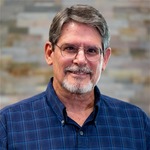
The principle of sowing abundantly, to reap abundantly, is evident throughout our spiritual life. Will your harvest be eternally multiplied? Today, on Turning Point, Dr. David Jeremiah compares the corruption that comes from sowing to the flesh with the blessings that flow from sowing to the Spirit. To introduce the conclusion of his powerful message, sowing and reaping, here's David.
Hey friends, thank you for joining us today. Today we examine a life-changing principle. that teaches that we have the choice. to the outcomes of life. What we sow is what we reap.
And the Bible teaches us there are two main areas where sowing and reaping take place.
Sowing to the flesh and sowing to the spirit. Reaping from the flesh, reaping from the spirit. How can you make sure that you are having a spiritual harvest? You have to plant into the spiritual soil of life. And it is a wonderful principle to follow.
And it's absolutely true, not only because it's in the Bible, because it's in life. I have proved it in my own life. I know it is true, and I'm very excited to share it with you.
So here we go with part two of sowing and reaping. But before we open our Bibles to Galatians 6 today, Let me just remind you that we need your help as we do what we do on the radio across this nation and around the world. One of the ways we encourage your involvement with us is through our monthly resource program. We're so excited to be adding to your library of spiritual resources. And this month, that resource is what God promises you: a book that has just come out from Turning Point Publications, Seven Truths That Will Change the Way You Live Your Life.
This is a beautiful book filled with incredible truth, and it's available to you for your gift today of any size. When you send your gift, simply say, Please send me the book, What God Promises, and we'll have it in the mail to you before you know it.
Now, Let's get going again with sowing and reaping. Come in. Be not deceived, God is not mocked. Mm-hmm. The word for mocked in the New Testament language is the Greek word muktaridzo.
Strange-sounding word, and it literally is a root word that comes from the word nose. And the essence of that phrase is this. Be not deceived. You cannot turn your nose up at God. And the word to turn one's nose up finally became an idiom for the concept of sneering.
You ever see anybody sneer? If you've got any teenage kids around, you know what I'm talking about. You know, they know how to sneer. Boy, that's one of their things they learn at that stage. In essence, what Paul is saying is this.
Don't turn your nose up at God. Don't sneer at God. The word then came to be used in later language usage for an attempt to fool someone or to outwit someone or to deceive someone. What Paul is saying is this. Be careful that you don't deceive yourselves.
But remember, God will not be deceived. It's possible to deceive yourself, but God will not be deceived. You cannot mock God. You can't turn your nose up at God. You cannot sneer nor try to outwit God.
He won't be outwitted. You can't mock God. Whatsoever a man sows, that shall he also reap.
Now be careful in the matter of sowing and reaping that you don't deceive yourself and that you don't try to deceive God, because he won't be deceived.
Now I've thought a great deal about how we go about deceiving ourselves. I think perhaps in the area of the sowing and reaping of financial areas and stewardship, there is more self-deception that goes on than perhaps any other area of the ministry. I really believe that with all my heart. Partly because I have been involved in some of those strategies myself. I have rationalized myself.
But as I have pastored over these years that I've been involved in serving God in some aspect of the ministry. I have watched as Christian people have consistently tried to deceive God and have literally deceived themselves. And if what we learn in the statistics that come out of this church, which probably aren't any different than they are in many major churches, and that is that. 20% of the people in the church give 80% of the money, and about 50 to 20% of the people do not tithe or give anything close to what might be considered even a minimum standard for stewardship. Then, men and women, the vast majority of this church and many other churches are involved in some form of self-deception.
They have come to believe that what God says, you can't violate, the sowing and reaping principle, that somehow they can. They have come to rationalize within their own minds that that works for the most people, but we're in a special situation, and so we're not subject to that law. And I want to suggest to you that that is purely and simply a strategy of Satan to deceive you. And I want to remind you that though you may rationalize yourself, God is not going to be fooled. He won't be mocked.
How do we do it?
Well, let me suggest some ways that I have discovered.
Now this is not so you will have new ideas for self-deception. This is in order that you might recognize self-deception if it's taking place in your own life. First of all, Sometimes we deceive ourselves in the sowing and reaping principle because we say, I can't afford to give. I have to wait till my house gets in order, till I get better fixed financially, till things are going better, I've got more bills paid, I've got more income. Then I will begin to give to God as I know I should.
And that sounds very good, doesn't it? In most areas of life, that makes sense. We don't buy things till we have the money. We don't start commitments till we have taken care of the old ones. But you see, the problem with that is this.
the harvest out of which you intend to give Is totally dependent on whether or not you're going to sow any seed now so the harvest can be harvested. It's like a vicious cycle, if you will. You can't get the harvest out of which you hope to give until you sow some seed. And you're sitting there thinking, well, I won't sow any seed until I get the harvest, and you're at a stalemate with God and with yourself. You say, How in the world do I change that?
You have to break into the cycle wherever you are and begin to sow. And every single Christian knows what I'm talking about. None of us began to give because we felt we could afford it. We began to give because it was a command from God. We looked at all the things we were responsible for and we said there's no way.
But when there was no way, God made a way, and we did it, and we began to sow. And guess what? When we sowed the seed, a harvest began. And out of that harvest, we were able to take a few more seeds and sow them in the ground over here, and they began to grow, and a bigger harvest came. We took some more seed, and we and it's the sowing and the harvesting.
That's the cycle we go through. But you have to start with the sowing. Nobody ever starts with the harvesting. I'm reminded of a couple who tried to use this fallacious argument relative to their marriage, and it goes like this. The bride, bent with age, leaned over her cane Her steps, uncertain, needed guiding.
while down the church aisle with a wan, toothless smile, The groom in a wheelchair gliding. And who is this elderly couple thus wed? You'll find when you've closely explored it. This is that rare, most conservative pair who waited till they could afford it.
Now, most of us, if we're honest, would never wait to get married till we could afford it. We didn't do that. And if you wait until you can afford it to begin to give to God, you will deceive yourselves. You will never do what God wants you to do, and you will be rationalizing in your own mind. But just remember now.
You can deceive yourself, but you can't fool God. Another way that we are involved in self-deception Especially in a church like this one, and I'll explain what I mean: is this. We rationalize that we give our time to God. and therefore we're not so responsible to give of our income. That's very good that we give our time to God because all of us ought to be involved in doing that.
You see, the principle of stewardship is that God owns everything. And He is totally in control of all of us. And every single one of us ought to be giving of our time to God. But no place in my Bible do I find that it's possible for me to exchange the time that I give to God and then get. out from under the responsibility to monitor what I do with my funds.
And you see, that is a subtle deception that we follow because for many folks, The hard cold cash that they have accumulated or that they are earning is the last bastion of defense that they have against God's total inroad into their life. And they will hold off at that pass For as long as they can, God, you can have my time, you can have my talent, you can have everything that I have, but just leave my funds alone. And God says no. That's deception. Because if I own all, there are no exceptions, there are no clauses, there are no conditions.
I own it all. It's all mine. And I want you to give back to me that which I have entrusted to your care. You see, that's a very insidious deception for this church because we are a church that is filled with people who are involved in what we might call vocational ministry. I suppose that if I decided that I was going to exchange my time for what I give to God, I could get off the hook completely.
I work somewhere between 60 and 80 hours a week doing what I do, and I love every minute of it. But if I reasoned in my own mind that as a pastor I give my time to God, therefore I don't have to give my money to God, I wouldn't owe God anything. But you see, that's not valid. And in this church, we have many ministries where they come here to church and they're vocational Christians. They're working in the Lord's work.
It is so easy for us in that group to begin to think that we can get out from under the responsibility of giving our Income to the Lord because we spend all of our lives serving God. And that is a deception. The strategy. from Satan. That's not from God.
I grew up in an institutional setting in Cedarville College. Our church there was almost totally filled with students, staff members, and faculty people. And I remember during those growing up days what a struggle it was to get those people who were professional people to believe really down here in their heart that they were to function as Christians in every area of their life. And that they had no special category simply because they went to work someday in a Christian institution. Oh, how easily we are deceived into thinking that we can give our time to God and then we don't have to give him our money.
I would like to suggest to you that more than the average person, we are responsible before God. Because you see, where did we get our money in the first place? It came out of that which God's people provided for ministry. Every dime that I get in my salary has come from the people of God who have given to the ministry of this church. And for me to reason in my mind that somehow I am not responsible for the stewardship of what God's people has given to me.
Oh, that's just self-deception. That's rationalization. But listen now. God won't be fooled. You can't turn your nose up at God.
Here's a third area.
Sometimes we rationalize and deceive ourselves by saying, I give to a broad spectrum of ministry, so I don't have to give so much to the church.
Now I give to other ministries beside this church. I believe in ministries and I give to ministries and I think we should. But men and women, the focus of the New Testament is on the New Testament local church. If you go back to the book of 1 Corinthians, you will discover in 1 Corinthians chapter 9 that Paul uses the principle of sowing and reaping as it relates to his giving of the gospel to the church. He said, If I have sowed unto you spiritual things, is there anything wrong with you sowing back carnal things or financial things?
So in 1 Corinthians, Paul says that he sowed and the congregation reaped. Here in Galatians, the Bible teaches that the congregation sows and the ministry reaps. The sowing and the reaping work on both sides of the street because the church is set up in such a strategic way for the sowing and reaping principle to function. There is no other organization on the face of God's earth that I know is like that. And then please note that the Scripture prioritizes our giving on the basis of where we receive the Word of God.
Let him that is taught in the Word. communicate with the one who teaches the word.
Now, please hear me. That doesn't mean we shouldn't give to all of the other organizations. We should give to them. All of us ought to be involved in giving outside of simply the spectrum of the church in some way, some more and some others. But the focus of the New Testament is on the local church, where the Word of God is taught, where you are encouraged in your growth.
And that is not just some crazy principle I dreamed up to help the income of this church, that is the Word of God. I would not be serving as a pastor of a local church if I did not believe that that's where God's hand of blessing resides. I had opportunities out of seminary to go into other organizations, all of which were tempting and exciting. But I came to grips with the New Testament in this way: I believe with all my heart that the New Testament church. The local church is the vehicle of God's blessing in this generation, and I want to be where the action is.
And because of that, The New Testament clearly focuses in on the household of faith. As we have, therefore, opportunity, let us do good unto all men. Especially unto them who are of the household of faith. That verse of scripture simply teaches that if you have vast opportunity, you can spread your money out in many areas. God has blessed some folks in this church.
with more than an average income.
Some of our people have set up foundations.
Some of our people have put things together so that they can direct vast amounts of money to the things of God. And those people have opportunity and they can spread their opportunity out. And the scripture says: as you have opportunity, do good unto all men. Have a wide spectrum in your giving. But don't forget to specifically prioritize the household of God.
Because that's where the blessing of the Word of God is to your life.
Now, you see, I know a lot of people that don't believe that and rationalize it. One of the ways that they like to do that is by spreading themselves out this way, they are not accountable anywhere. And therefore, they can come down to the end of the year. They have spread themselves out all over the place, and they have no real accountability to any one area of ministry. And I think that's self-deception.
But I want to remind you. You can't mock God. You can't fool God. He knows what's in your heart. and he knows the motivation behind what you do.
The first principle was the principle of personal deception. Principle number two is the principle of moral corruption. Notice what it says. He that sows to the flesh Shall of the flesh reap corruption. What does that mean?
Is it wrong to sow to the flesh? Absolutely not. Every time you eat a meal, you're sowing to the flesh, right? Every time you buy a house, you're sewing to the flesh. You've got to take care of the body.
Every time you go to the doctor, you're sewing to the flesh. It's important to sow to the flesh. Everyone has to do it. If we don't sow to the flesh, the flesh dies. And though most of us are spiritual creatures, we're not anxious to check out yet.
We'd like to stay around for a while.
Sowing to the flesh is important. But the scripture says, whatever you sow to the flesh is going to come back in corruption. Isn't that true? Everything you sow to the flesh is going to die. Because you see, money Sown to the flesh.
is going to stay in the flesh. Money can buy food, but it can't buy an appetite. Money can buy a bed, but it can't buy sleep. Money can buy a house, but it can't buy a home. Money can buy pleasure, but it can't buy happiness.
Money can buy a crucifix, but it can't buy a Savior. Money can only buy in the areas that we invested in the flesh those things which ultimately are going to corrupt. And the word corrupt in the New Testament language is a word which literally means this: to have the principle of life taken out of it. I thought about that as I read about a man who was up at the top echelon of politics, who began to sow to the flesh over and over again. He got involved in drugs and alcohol and all of this, and all of this has now come to a harvest in his life.
And it's corruption, it's death, it is the destruction of everything he believed in, it's total oblivion as far as any future for that man. He has sown to the flesh, and all of the life has been taken out of him. And I watch people as they take the time that God has entrusted to them, the energy that God has entrusted to them, the ability and creativity that God has entrusted to them, and they use that to earn income, and then they take every dime they have and they sow it all back into the flesh. And the Bible simply says this: you're going to have a harvest. One of these days, and whatever you harvest is going to be based on what you've sown.
And if everything you have sown has been in the area of the flesh, your own life, your own appetites, your own wants, your own desires, and you have sown nothing to the spirit. All you're going to get at the end is a sense of emptiness and despair because all of the life has been taken out of it. The vicar in the church in England. was kneeling by the side of one of his wealthy parishioners. And he was pleading with this man to give his heart to God.
The man was so feeble he couldn't even talk. And so the vicar was saying to him, If you want to trust Christ, if you want to place your life in Christ before you die, I want you to reach out your hand and take hold of mine. And the man wouldn't do it. The vicar said to him, Time is fleeting. It's going to be over for you before very long.
You need to put your life in Christ. You need to trust Christ. You need to reach out your hand and take hold of my hand and we'll pray together. And he wouldn't do it. And his life began to fade and Finally the old man died and his lifeless, pulseless hand fell open and in it was the key to his safe.
He clutched the key to his safe rather than reach out his hand to trust Christ as if he could carry his possessions with him into the next world, and he died without God. There are many men and women that I know, even Christian men and women, who spend all of their life and energy and creativity in this world. Cars and houses and boats and clothes and stocks and bonds and investments and all the rest of it, all of which are good. As long as they are kept in perspective, but the only thing they will ever give you. corruption.
They're going to die. You say, well, how do you change that around? Notice that the next part of the verse: But he that soweth to the Spirit shall of the Spirit reap life everlasting. The Bible says that everything we do by way of sowing to the Spirit is going to outlive us, it's going to be eternal with us. And you know, it's just a simple matter of what we put in is what we get out.
If we don't put anything into our spiritual lives, we're not going to get anything out of it. I don't understand why people don't come to grips with this. People come to me and say, Pastor Jeremiah, what's wrong with my spiritual life? Why is God not using me? What's wrong with me?
Well, do you come to church?
Well, most of the time. What about Sunday nights? Not too often. Do you ever have time in the Word? Not too much.
How much do you pray? Not very much. Friend, you're getting out what you're putting in. That's just pure and simple. If you don't put anything into it, you won't get anything out of it.
And the same thing is true in the financial realm. If we are not investing financially in the things of God, we are not going to reap out of the things of God. The sense of Blessing and priority. and excitement that God wants us to have. Because you see It's a principle you can't violate.
Whatever you sow. That's what you're going to reap. And some of you are waiting for God's harvest in your life. And you're thinking that things are going to change, but I'm telling you, they're not going to change until you start sowing. And you start taking some of that which God has given you and putting it back into the things of God so it can be multiplied.
And the principle is this: when God sees that you know how to do with what He's given you, faithfully and properly. Then he can look down and say, you know, Jeremiah did all right last year. I think he took care of what I gave him. I believe I can trust him with some more. And he will.
The Bible says it this way. Whatsoever a man sows, that shall he reap. Be not deceived. God isn't mocked. If you sow to the flesh, you will of the flesh reap corruption.
But if you sow to the Spirit, You will of the Spirit reap life everlasting. George W. Truitt. for 40 years was the pastor. of the First Baptist Church in Dallas, Texas.
On one occasion, one of the ranchers to whom he ministered asked if he would go with him to a quiet place to pray. The rancher told him that he had come to grips with the truth that all that he owned belonged to God. He said, All of this vast land that I have isn't mine, it's God's. All of this herd is not mine, it belongs to God. All of my possessions that I thought were mine aren't mine.
They really belong to God. And Dr. Truitt, I want you to kneel down by me here. And I want you to tell God that I'm giving all of this back to him. It's all his.
You just tell him in my behalf that I want to give all of this back to God and dedicate it to him for whatever purpose he chooses. Dr. Truitt said he prayed a very simple prayer of dedication with his arm around this dear rancher. He said, when I got done, I thought the prayer was all over, and I started to get up. And the rancher just sort of pulled me back down to the ground again.
He said, I'm not through yet. He said, Dr. Truitt, now I want you to tell God that I also give him my prodigal son. My son, who's away from the Lord, my son who's violating the things that we've always stood for. I want you to tell him that I give that boy back to him, and I want you to ask him.
Just take that boy and bring him back. Dr. Truitt said he could hardly pray for the tears coursing down his face as he began to realize in that situation the relationship between our giving of ourselves to God in the physical financial realm And the expectation that should be in our hearts when we do that: that God wants to get involved with us in the spiritual realm. When we sow to the Spirit, we reap spiritual things. I don't know about you, but when I'm not doing what's right before God, it's awful hard for me to get on my knees before God and with power and expectance pray, God, meet this need in my life.
And God points his finger down and he says, Jeremiah, why aren't you doing what I told you to do? There is a glad excitement that comes when we bring our lives into focus with the principles of God and we recognize that what we sow, we're going to reap. And that is not something we can violate. We can rationalize it, we can deceive ourselves. But we can't mock God.
Yeah, that's a really interesting thing, isn't it? Be not deceived. God is not mocked. For whatever we sow, that we will reap. Get that principle in your heart and it'll change everything.
Well, tomorrow we're going to talk about grace giving. And how what God has done for us is such a tremendous motivation for us. To be faithful in giving back to him. One of the great passages on stewardship in the Bible, Second Corinthians, chapter eight. Before we say our final goodbye today, let me remind you that Turning Point is taking a very special conference cruise to Alaska this July.
The dates are 12 through the 19th of July, and we'll be visiting Hubbard, Glacier, Juneau, Ketchikan, Victoria, many beautiful places. on a beautiful ship. with beautiful people and great weather and We'd like you to come along with us. Find out about it at davidjeremiah.org. And we'll see you tomorrow on the next edition of Turning Point.
Our message today originated from Shadow Mountain Community Church and Dr. David Jeremiah, the senior pastor. Reach out and tell us how this ministry helps you grow by writing to us at TurningPoint, PO Box3838, San Diego, California, 92163. Visiting our website at davidjeremiah.org/slash radio or calling 800-947-1993. Ask for your copy of David's new book, What God Promises You, 7 Truths That Will Change the Way You Live.
It's yours for a gift of any amount. You can also download the free Turning Point mobile app to instantly access our content or search in your app store for the keywords Turning Point Ministries. Visit davidjeremiah.org slash radio for details. This is David Michael Jeremiah. Join us tomorrow as we continue the series Investing for Eternity on Turning Point with Dr.
David Jeremiah.