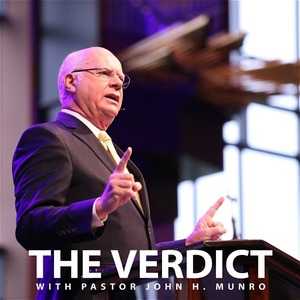
Today on the verdict with Pastor John Monroe. And Esther chapter four, Esther. Faces such a defining moment, the most important moment in all of her life. She knows that her life has been But a preparation for such a time as this. This is the reason she is Queen Esther.
Welcome to the Verdict, featuring the Bible teaching of Pastor John Monroe. Throughout life, we all encounter pivotal moments, decisions that reveal our character and set the course for our future. Today, as we continue in the Book of Esther, we'll see how Queen Esther faced the defining moment of her life. A decision that would determine her fate and impact the future of her entire people.
Now, here's Pastor John Monroe with today's message. for such a time. The drama in the Old Testament book of Esther is unmistakable. An evil man, Haman, the Prime Minister, is plotting against the Jewish nation. We saw last time that he wants to use his position of power to destroy all the Jews.
What's going to happen? What's Mordecai going to do? What is Esther going to do? In life, there are defining moments. And the defining moment is coming for Esther.
In these defining moments of life, how we respond often charters the rest of our lives and impacts others. Have you had defining moments in your life? How have you responded? Let's look now at Esther chapter 4. and learn first of all what Mordecai does when he hears that Haman not only wants to kill him, But all of the Jews.
In all of our lives there are Defining moments, they don't occur every day. Not every week. Not every month, possibly not every year. But throughout our lives, there are occasional opportunities and situations far removed from the humdrum and the routine of life. These are events.
Crisis Unexpected turns in the road, challenges. and struggles which are very momentous in our lives. They act as a kind of fulcrum in our lives. Whatever our action or inaction, our decision or lack of decision a response or lack of response, the consequences are far reaching. These decisions May not only set a path, For the future They reveal Our character.
Our priorities are Our values. and their faith. These divining moments, as you know, can come in all kinds of ways. A competition, an exam. a job application, a crisis, a death, a serious illness.
An offer of promotion, a proposal of marriage, termination of employment. an offer from a new employer Difficult decisions, ministries, opportunities present to us. These are defining moments and how we respond. reveal so much about us. Basixteen.
1954 was a defining moment, a defining day, a defining race for Roger Bannister. He had been preparing for this one moment All of his life. He's a medical student at Oxford, England, and was training to be the first man on the face of the earth to run a mile. Under four minutes. Other great athletes were hoping to take the prize for themselves.
There was Wes Santee from Kansas. John Landy, a brilliant athlete from Australia who had a mind-blowing training schedule. Bannister and his coach had decided that May 6, 1954, would be the day of the race. That that day started very discouragingly for Bannister. He was at his peak, he felt, physically, emotionally, and psychologically.
But. This was England. A day in Oxford, it was rain and wind, meaning that it looked impossible that a new world record for the mile could be set in such a weather.
However, his coach was absolutely convinced that Bannister was capable of this effort no matter the weather. Because it said, if you forgo this chance, would you ever forgive yourself? No one knows what the future holds. Wes Santee or John Landy may do it first. You might peel a muscle, you might fall under a bus.
There may never be another opportunity. This was for Roger Bannister a defining moment about 6 p.m. That day the wind abated. And the race began. Roger Bannister said, I felt at that moment that it was my chance to do one thing supremely well.
Indeed it was. On May 6, 1954, Roger Bannister became the first man to run. a sub four minute mile. It was his defining moment, and the record goes down in world history. This is from a wonderful book, by the way, called The Perfect Mile by Neil Boscombe, if you're interested in athletics and running.
It was a defining Moment. Often, when these defining moments come to us, We know what is the right thing to do, but there is often opposition, there are obstacles. If we do the right thing, we may be misunderstood, we might get fired, our colleagues may look down on us, our family may not understand, we may lose that promotion. You may lose your job or your reputation. You may lose friends.
But seizing the moment may be a source of great blessing. On May 13, 1940, Winston Churchill addressed the British Parliament. An earlier Prime Minister, Neville Chamberlain, had tried to achieve Peace for our time in the appeasement of Hitler at Munich in 1938. As Winston Churchill contemplated the German threat, he said, I have nothing to offer but blood, toil, tears, and sweat. You ask what is our aim?
I can answer in one word, victory. On another occasion, Churchill said, I felt as if I were walking with destiny. And that all of my past life had been but a preparation for this hour and for this trial. I was sure I would not fail. Defining moments.
I'm not a runner. I'm certainly not a great politician or statesman like Winston Churchill. But for all of us, We face defining moments in our life. You're presently facing a defining moment. Are you prepared?
to accept the challenge from God to rise above the mediocre and the mundane. Will you be courageous or will you avoid the challenge? Will you take the easier way out? Will you let the moment that God is giving you pass that defining moment. Yes, we believe, as we've studied our Bibles, In Esther, as today we come to Esther chapter 4, we have seen over and over again God's sovereign hand.
We believe in the sovereignty of God. We believe that God is in control, but we also believe. As the Bible teaches, in personal responsibility, As a human being, God gives you the capacity to choose. You say, well, how can we reconcile God's sovereignty? And a human responsibility.
I'm not sure if I can reconcile them in my mind.
Well, I'm not sure if I can do that, but both are clearly taught in Scripture. And because We may not reconcile them. We understand that we're dealing with an infinite God. Who is perfect? And we, as human beings, often don't understand his ways.
This is why in scripture we're told over and over again to trust God. That's what we want to do. And today, in this wonderful story of Esther, in Esther chapter 4, Esther. Faces such a defining moment, the most important moment in all of her life. How she responds.
will have enormous consequences. for herself and for the Jewish nation. And from Esther 4, we're going to learn this lesson. In the defining moments of life, Do the right thing. and leave the consequences to God.
Think of it. In the defining moments of life. Whatever they are for you in your context, do the right thing. Irrespective of what other people say, irrespective of the society, sometimes irrespective of the advice of your friends and what is expedient and what is comfortable, do the right thing. These defining moments of life and leave the consequences.
To God. That's living by faith. That's trusting God.
So let's turn in our Bibles now as we continue. this story, this dramatic story of Esther. We have looked at Esther 1, 2, and 3. If you missed them, they're online. And we can to Esther four.
Let's read first of all the first three verses. When Mordecai learned all that had been done, Mordecai tore his clothes. put on sackcloth and ashes, and went out into the midst of the city. And he cried with a loud voice and bitter cry. He went up to the entrance of the king's gate.
for no one was allowed to enter the king's gate clothed in sackcloth. And in every province, Wherever the king's command and his decree reached, There was great mourning among the Jews. with fasting and weeping and lamenting. and many of them lay in sackcloth. And ashes.
Mordecai. This Jewish man Puts on sackcloth and ashes. We previously saw that he refused to bow to Haman, this evil man who's the enemy of the Jews. But hey man As the king's prime minister, he's got tremendous influence over the Persian Empire, this huge empire with the king Ahasuerus. And Haman is furious that Mordecai won't bow before him.
And his hatred goes far beyond Mordecai, as we saw last week in chapter 3, verse 6, to all of the Jews. The people of Mordecaia Throughout the whole kingdom of Ahazuaris. The decree is that the Jewish nation is to be totally annihilated. They're to be wiped out from the face of the earth. Hayman is filled with evil.
He's motivated by Satan, who's always anti-Semitic. Always opposed to the people of God. And we see in Haman. a kind of mini anti Christ.
Now, from King Azure, as we learned last week, that Haman obtains the necessary authority, chapter 3, verse 13. to destroy, to kill. And to annihilate all of the Jews, young and old, women and children, in one day, and to plunder their goods.
So, on hearing the edict to annihilate his people, we're not quite sure how Mordecai hears of that. He tears his clothes. He puts on sackcloth and ashes. He's in deep deep mourning. He wails loudly and bitterly.
And he goes as far as the entrance to the King's Gate. This was a public morning. Mordecai may have been A leader, a spiritual leader among the exiled Jews in Susa. He probably was well known. And we see in verse 3 this fasting, this weeping, this lamenting.
And many of them lay in sackcloth and ashes. Why? Mass genocide is being planned. The Jewish people, they get the word. This decree goes throughout all of the provinces.
They're going to be liquidated. How can they stand against the might of their superpower, Persia? And they know the law of the Mides and Persians will never be revoked. There seems no hope, so they lament. And Whip.
and fast.
Now let's read Esther's initial response. First of all, She is informed, verses 4 through 9. When Esther's young woman And her eunuchs, remember she's the queen in the palace. The Queen was deeply distressed. She sent garments to clothe Mordecai so that they might take off his sackcloth, but he wouldn't accept them.
Then Esther called for Hathak, one of the king's eunuchs who had been appointed to attend to her, and ordered him to go to Mordecai to learn what this was and why it was. Hathak went out to Mordecai in the open square of the city in front of the king's gate. And Mordecai told him all that had happened to him. And the exact sum of money that Haman had promised to pay into the king's treasuries. for the destruction of the Jews.
Mordecai also gave him a copy of the written decree issued in Susa for their destruction. That he might show it to Esther and explain to her and command her to go to the king to beg his favor and to plead with him on behalf of her people. And Hafak went. and told Esther what more to care Headset. Esther then is aware of this national mourning.
She's in great. anguish, she sends clothes to her cousin Mordecai. Who had adopted her into his family so that his sackcloth could be removed, but he. doesn't accept it. He continues mourning.
And lamenting. Then she dispatches Hathak, this man from the palace, who takes care of her, to inquire what's going on. And Mordecai. Gets the message to Esther. Through Hathak.
About the proposed destruction of the Jews. In fact, he gives her a copy of the edict. And then Esther Says to Atheic, I want. asked her to plead with the king. for mercy for the people.
Now what's their answer? Verses 10 through Twelve. Then Esther spoke to Hathak. And commanded him to go to Mordecai and say, All the king's servants and the people of the king's provinces know that if any man or woman goes to the king inside the inner court without being called, there is but one law. to be put to death.
except the one to whom the king holds out the golden scepter so that he may live. But as for me, I've not been called to come into the king these thirty. days. And they told Mordecai with Esther That's it. Esther reminds Mordecai, You're telling me to go into the king, but there's a protocol there.
This is a despot. He's a king of these whole provinces. You don't just go and barge before him. He's He's got to hold out the golden scepter. If you go into him, apart from that, you're going to be killed.
We saw in chapter seven that only the seven princes have access to the king. Yes, she is the queen. But she reminds Mordecaia in verse 11: she's not being called into the king for these 30 days. This king has total power. Remember he banished his queen?
Queen Vashdai in chapter one because she didn't obey his command. to go uninvited into the presence of the king is to risk your life. This is the king. And he thinks nothing. of killing people.
Herodotus, the historian, describes Hasuerus' response to the request of Pythias the Lydian. That he might release the eldest of his five sons from their obligation of military service. No. Pythias. Was a generous man.
He'd given money to Hasueris to help him in the war against Greece. He had given him. Great hospitality. But when he asked the king That his eldest son should not go into military service, Hazuaris is so angry, he's so incensed. that he has Pythias' son cut in two.
and makes the army pass between them. That's from the historian Herodotus. You get the picture?
Now you're asking Esther. to go in uninvited Before the king, She could be put to death.
Now we have Her defining moment. Verses thirteen and fourteen. Then Mordecai told them to reply to Esther. Do not think to yourself that in the king's palace you will escape any more than all the other Jews. For if you keep silent at this time, relief and deliverance will rise for the Jews from another place.
But you. and your father's house will perish. And who knows? Here it is. Who knows whether you have not come to the kingdom For such A time Is this?
Mordecai reminds Esther, you're Jewish. You're not going to escape the king's edict, because the edict is that every single Jew throughout the Persian Empire. is to be annihilated. You're not going to be Spared. But notice what Mordecai says to her.
He knows the promises of God. And he says to Esther, if you remain silent, if you don't go to the king, I know, verse 14, relief and deliverance will rise for the Jews from another place. We don't know what that other place is. In spite of Hayman's hatred, In spite of the king's decree against the Jewish nation, Mordecai is confident that there will be a Jewish deliverance. that the Jewish nation will not be exterminated.
Mordecai knows. That God is sovereign. Overall. of the nations. And the faster keep silent If she does not understand To use Churchill's language, that she's walking with destiny and that all of her past life has been but a preparation for this hour and for this trial, God will raise up someone else.
To fulfill his covenant promises and deliver his people. The juice. Let me just stop there. God's asking you to do something. You don't do it?
God's purposes are still carried out. God, in a sense, doesn't need any of us. But any sovereign purposes To fulfill his purposes, he graciously uses you and me. And for Esther, this is her moment, her defining moment. Nothing can thwart the purposes of God, who controls the world politically and militarily.
However, Says Mordecai, if you don't do that, You And your father's house, you and your generations will not survive. And who knows? Verse 14. whether you have not come to the kingdom for such a time as this. Mordecai might have known what Solomon says in Proverbs 21, verse 1: the king's heart.
Is a stream of water in the hand of the Lord. He turns it whatever he wills. Let's remember that with our kings and our presidents. and their judges and our mayors and their governors and those in authority. that their heart is like a stream of water in the hand of the Lord.
And he turns it wherever. He wills.
Now here's Esther's reply. Verses fifteen through seventeen. Then Esther told them to reply to Mordecai, Go. Gather all of the Jews to be found in Susa. And hold a fast on my behalf, and do not eat or drink for three days.
Night. And they I and my young women Well also fast as you do. Then I will go to the king. though it is against the law. And if I perish, I perish.
Mordecai then went away and did everything as Esther had ordered him. Esther gives word to Mordecai to assemble all of the Jews in Susa for three days. The fasting demonstrates the seriousness of the situation. Surely, prayer is implied in the fasting. And Esther Faced with this defining moment in her life.
Purpose is in their heart. Then I will go to the king. Though it is against the law. And if I perish, I perish. She seizes the moment.
Yes, God is in control. But Esther. Nose. What she must do. She knows that her life has been But a preparation for such a time as this.
This is the reason she is queen. And stirred. This is a time where she can either identify with her own people. And possibly be killed, or she can continue to pretend, as it were, to be a pagan Persian. And doing what is right.
She's risking her life. She knows that. If I perish, I perish. But she knows it's the right thing to do. This is the verdict with Pastor John Monroe and the first part of a message titled.
such a time. We'll continue this powerful study tomorrow. But first, let me share a special resource with you. To deepen your understanding and application of our current study, we've created the ESTER Listening Guide. This companion resource helps you follow along with our broadcast series, highlighting key themes and providing thoughtful questions for personal reflection.
The story of Esther offers timeless insights about courage, divine providence, and standing for truth when everything is at risk. Request your free copy today by visiting theverdict.org. Every day, people face crossroads moments where their decisions will shape not only their future, but potentially affect generations to come. Through your partnership with the verdict, you help equip others to make God-honoring choices in their defining moments. Your financial support enables these biblical messages to reach those wrestling with difficult decisions.
Would you consider making a gift today? Your contribution of any amount helps sustain this vital ministry of biblical truth. To donate securely, simply visit theverdict.org. The verdict is a ministry of Calvary Church in South Charlotte, and we'd love to have you visit us this weekend. We're located on the corner of Highway 51 and Ray Road, and we invite you to come join us for worship this Sunday.
For more details about Calvary and current service times, visit theverdict.org. And now, here's Pastor John Monroe with closing remarks for today's lesson.
Well What's your verdict? What do you think of the response of Mordecai and the response of Esther? Have you had defining moments in life? Are you going to do the right thing, or is your life going to be characterized by uneasy compromise? Be warned.
Compromise will lead you further and further away from God. Today I say I will serve the Lord. What about you?
Next time, we'll continue in chapter 4 and see the beautiful response of Esther, a truly inspiring example. Thanks for joining us today on The Verdict. I'm Michelle Davies. Today's program with Pastor John Monroe was produced and sponsored by Calvary Church in Charlotte, North Carolina.