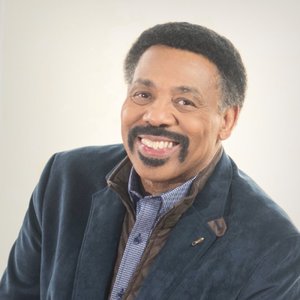
God doesn't mind legitimate pleasure. The problem is, when we look to life to give meaning. Dr. Tony Evans says even life's greatest pleasures don't bring real satisfaction if they lack one vital ingredient. The question is, is God included in your fund?
Or are you looking to it to do something it was never constructed to be able to do? This is The Alternative with Dr. Tony Evans, author, speaker, senior pastor of Oak Cliff Bible Fellowship in Dallas, Texas, and president of The Urban Alternative. The world says work hard enough and you can have everything life has to offer.
But Dr. Evans says there's a catch. The one thing life can't offer is real life itself. We'll learn about a man who learned that lesson the hard way as we begin today's lesson. Solomon the King presents himself as a philosopher, or as he calls it, a preacher. He is telling us about life in a book called Ecclesiastes.
This theme has been pointed out. Vanity of vanities, chapter 1 verse 2 says, or vanity of vanities, all is vanity. Vanity means emptiness without purpose or meaning. Please notice in chapter 2, he says, verse 3, I explored with my mind. Verse 4, I enlarged my works. Verse 5, I made my gardens and parks. Verse 6, I made ponds of water. Verse 7, I brought male and female slaves.
Verse 8, I collected for myself silver and gold. What's the key word? Ah. Ah. Let me tell you about me. Ah.
This is what I did. He goes on this litany of explanation of his dive into having it all. I want it all. And the unique thing about this man is he could afford to have it all. It's one thing to want it all and not have no money. It's a whole different ballgame to be able to get it all whenever you want it because you had not only the resources, he's the richest man, he also had the power to pull off whatever he wanted. You get power and money and under the sun, that spells success. Position, power, money, prestige, recognition. And so, you see, he's looking for self-fulfillment and self-satisfaction.
Ah. He wants to maximize his life. He wants to live, not exist.
And so, he begins a tour of discovery to try to find out exactly what's going to do it for him, what's going to give him the lift in life. The problem was, he says, and behold, it too was futility, empty, vanity. You ever look forward to something and then when you got it, it wasn't all that? It was all that when you were looking forward to it. Or maybe I should say they were all that when you were looking forward to them.
But once you got it, you know, the new car gets old, you know, the new smell dries out and you wind up saying, something's missing. He says this to his vanity. He said, I said of laughter, it's madness and of pleasure, what does it accomplish? He was a man who could bring in his own comedians. He could bring in his own court jesters. He could laugh all the time and you see in some of the movies where they would come in to make the king laugh, to make him happy, to make him forget his troubles. He says, I tried that.
I went to the comedy shows and the comedy clubs and I laughed. But he says, what? Okay, now the laugh is over.
The show is done. What's different? What's different?
Okay. Maybe you say, I can't relate to verse one and verse two. What about verse three? I explored with my mind how to stimulate my body. I came up with ideas to make myself feel good. And I started with alcohol.
He says with wine. While my mind was guiding me wisely in how to take hold of folly until I could see what good there was for the sons of men for a few years of their lives. I enlarged verse four of my works. I got productive. I built houses for myself. Planted vineyards for myself. Made gardens and parks for myself. Planted in them all kinds of fruit trees. I made ponds of water for myself from which to irrigate a forest of growing trees.
Lord have mercy. I could do whatever I wanted to do because I could afford it. And I could build it for myself. I built all these houses for me.
How many of you ladies, when you get depressed, you go shopping for you? Tell the truth, shame the devil. You know, I just need to feel different. So I'm going to go spend it. And now it's easy because you don't need to have it.
You just need to have a card that makes you think you have it. So I did that because I'm looking for some life here. Because I'm under the sun. I'm living in this world, this cold, calculated existence, and I need to escape it. So what I did was I got new stuff. I got new stuff. New houses, new forests, new trees, new fruit, new this, new that. I just—new stuff.
Here's a man in search of meaning. He said in verse 7, I brought male and female slaves, and I had home-born slaves. So I had to pick up a fork, a spoon. I had to do nothing because I had servants all around me. I possessed flocks and herds larger than all who preceded me in Jerusalem. I'm more successful, richer, more popular, more prestige, and I had collected treasures that would blow your mind.
Verse 8, also I collected for myself silver and gold and the treasure of kings and provinces. I provided for myself male and female singers. I had my own band, my own orchestra. I said, come play for me.
And they played for me. So I didn't lack anything. To summarize verse 10, all that my eyes desired, I did not refuse them. I never said no to me, because like a famous football player, I love me some me. I never said no to me. If I wanted it, I got it. For my heart was pleased because of all my labor, and this was my reward for all my labor. In other words, I deserve it. I work hard. I do my thing, and I deserve it.
So I'm not gonna say no to me. If I wanted, I could have it, because I deserve it, because I work hard to get it. So how did all that work out? How did all this, having it all right down at your feet, Solomon, how did it all work out? Verse 11, then I considered all my activities which my hands had done, which was virtually everything, and the labor which I had exerted. So I sat back one day, and I reflected. I looked out on my everything, and I just reflected on it. And he says, when I looked back on my everything and I reflected on it, behold, all was vanity. And we're talking about a whole bunch of all over what we just went over. He says, I looked at all of it, and all of it had a hole in it. And striving after wind.
I said it last time, but let's review it again. When you go outside, strive after some wind. I want you to go get it. Next breathe that blows, get your hand out, and grab as much of it as you can get.
Just don't let that win. And if you miss it, don't catch it. In other words, as soon as I had it, I lost it.
It was there and gone that quick. He says, it was striving after the wind, and behold, all was vanity, striving after the wind, and there was no prophet where? Under the sun. Because he's talking about life under the sun.
Life in the everyday here and now. It did not offer him lasting meaning. Now was it enjoyable? Yeah, because he called it pleasure. It was pleasurable. Was it fun?
No, yeah, for a while. But what it didn't give was meaning. It gave emotional experiences.
It gave freedom to, you know, you got all the money you can ever spend. So he had that. So it wasn't that it was just all of no feeling with it.
It just didn't answer the deeper question under the sun. Life had become kind of empty for him. Kind of empty for him. Most people strive for one or all of these things he had.
Everybody you know wants one or more of these things. He said, I had them all. And it was striving after the wind. Solomon had one more area to explore as a source of meaning, and Dr. Evans will come back in a moment to tell us how that worked out for him.
Don't go away. When Dr. Evans returns in a moment, he'll have more for us from his brand new series on how to avoid a wasted life. This in-depth, nine-part sermon collection explores what the book of Ecclesiastes can still teach us today about the fleeting nature of worldly pursuits and the importance of finding meaning that goes beyond those physical things we can possess. True fulfillment only comes from God.
Real purpose and contentment are found when our lives are aligned with Christ. Right now, we're offering all nine full-length messages in this series on CD or digital download as our gift when you support the ministry of the alternative. Along with the complete audio package, we'll also send you a special bonus, the Kindness Flip Calendar, your 365-day companion to becoming contagiously kind. These reflections will help you cultivate a deep passion for kindness in your daily life as you're motivated and encouraged with insights from Dr. Evans and short prayers and inspiring Bible passages. Visit us today at TonyEvans.org or call us at 1-800-800-3222 to take advantage of this special resource package. I'll repeat that after part two of today's lesson.
Here's Dr. Evans. But he's not finished yet because now he comes in verse 12. So I turn to consider wisdom, madness, and folly.
For what will the man do who will come after the king except what has already been done? So I saw that wisdom excels folly—stay with me here—as light excels darkness. In other words, I saw that to be wise in my decision-making is better than being foolish in my decision-making. I saw that under the sun, you can make good choices and bad choices under the sun. That is, you and I know people—we could be one of those persons who have made— we all have done both—made good choices, the wise way to go, and folly.
We've done the—like we say to our kids, stop acting so silly, folly, not doing it the way it ought to be done. He says, I've seen both of those, and I decided I want the wise way. I don't want the foolish way.
Like, I want light, and I don't want dark. Verse 14, the wise man's eyes are in his head, but the fool walks in darkness. And yet I know that one fate befalls them both.
Watch this. Then I said to myself, talking to himself again, as the fate of the fool, it will also befall me. Why then was I more extremely wise? So I said to myself, this too is vanity. To have a college degree is better than being a kindergarten dropout.
Okay? Because with a degree, you're more likely to be able to get a job, more likely to be able to make more money, more likely to have a better lifestyle, more likely to have your own car, because you've gotten this education that's given you information that makes you more marketable. If you've dropped out of kindergarten or elementary school, or today even just barely a high school graduate, your options shrink because your information base is lower. So that is the reality. Therefore, he says, it is better to get a degree than not have one. And it's better to finish school than not finish school. We would all agree with that. So now he's come to a conclusion under the sun, where men live, work, play, raise families, that we would all agree with.
That's a better decision. But one day, he's looking out the window, and he sees walking by the fool, the folly man, or in our illustration, the elementary school dropout. And he sees them walking by, and he says to himself, Why are you more wise? Verse 15, As is the fate of the fool, so it will befall me. He's saying, as far as life under the sun is concerned, me and the fool are going to wind up in the same place.
My degrees won't make me better off in the grave. He couldn't find meaning in his knowledge base. He could live a better lifestyle, but he couldn't find meaning in it because it wasn't going to give him anything different than the uneducated, or in this case, the fool, would experience. Verse 16, For there is no lasting remembrance of the wise man as with the fool, and as much as in the coming days all will be forgotten. And how the wise man and the fool alike die.
He then comes to a refrain that he will come to a number of times in the book. There is nothing better for a man than to eat and drink and tell himself that his labor is good. This also I have seen that it is from the hand of God.
We have a little turn. He will speak about the reality of life in the sun, and then he will interject God along the way strategically, until he comes to the conclusion of the book, and when he gets to the conclusion of the book, he'll kind of wrap it all up for us. Right now, we have this insertion that there is nothing better for a man, under the sun, to eat and drink—that's a refrain for enjoying life—and to tell himself that his labor is good, to be beneficial. This also I've seen that it is from the hand of God. So, God offers legitimate pleasure. God doesn't mind legitimate pleasure. The problem is, when we look to life to give meaning, but the difference between what he says now and what he said up till now, is up till now, he's been looking to those things to give him meaning. It's not that those things or all these things are wrong in and of itself, to have a house with health servants or to have a— you know, he's talking about the fact that he was looking to it to do something it cannot do.
And the harder he looked for it, the more discouraged he got that he couldn't find it. Let me close with these two verses. For who can eat and who can have enjoyment without him? Ah, he's building on it. The question is, is God included in your fun?
Not that you don't have it. Is God included in it or are you looking to it to do something it was never constructed to be able to do? For to a person who is good in his sight he has given wisdom and knowledge and joy, while to the sinner he is given the task of gathering and collecting, so that he may give to the one who is good in God's sight, this to his vanity and striving after the wind. Now, I'll just introduce chapter three right now. Everybody knows chapter three.
Chapter three is quoted by philosophers, quoted by theologians, quoted by schoolteachers, it's quoted by everyone. There's an appointed time for everything. There's a time for every event under the sun to give birth, a time to die, to plan a time to unroot and, you know, to kill and to heal and, you know, on and on and on and on and on. He introduces you and us to the circle of life. And what he's going to tell you is that under the sun you are locked into a closed universe where time has been prescribed, where one day you get up laughing and the next day you go to bed crying, just back and forth and back and forth, and he says this circle of life under the sun, you cannot escape because the universe has been closed that way. It is the way the world works.
Okay? There's no escaping it. Now, I know this passage is used in an incorrect way to kind of tell people what time it is.
It's not that. He's telling you the times in which you live. These are the times. There's a time to plant and there's a time to harvest. Well, if you want some food, you better know the times.
Okay? Because that's how the world works. You give birth, you die. That's the way the world works. Or to put it in everyday colloquial language, that's the way it is.
That's the way it is. And all that you try to do to escape it is just diving deeper into futility, because you can, because that's the way it is. But then he will, as we go along, give you the secret for how you live in a closed universe that can't give you meaning and find meaning in it in spite of the times that you cannot escape. Dr. Tony Evans, explaining why true enjoyment and meaning in life can't be found outside of a relationship with God.
And if you've never discovered what that means, Tony's here with his quick invitation for you. I don't want to conclude our program without giving our listeners a clear opportunity to become a Christian. A lot of people can listen to Christian messages, but never have a personal relationship with the Christ who is the center of that message.
So let me explain it very simply. You and I are sinners. We can't save ourselves. So God came up with a plan to provide salvation for us for free. He sent Jesus Christ, His Son, to die on the cross as our substitute, validating His purpose by raising Him from the dead. And so all you must do is come to Jesus Christ for the forgiveness of your sins and for the gift of eternal life, and He will give it away. He will give it to you if you come to Jesus for it, believing Him to forgive your sins.
Do that right now. God has already made provision through the death and resurrection of Christ. You just have to accept that provision personally. When you do, you are born again.
You get to start life all over again. Why don't you respond right now by receiving Christ into your life? If you're ready to do that, take the time to visit tonyevans.org and click on the link at the top of the home page that simply says Jesus.
Tony has more information there about becoming a follower of Christ, as well as some free resources to help in your journey. Well, today's lesson is the second in a practical, powerful new series called How to Avoid a Wasted Life. It contains nine messages exploring the wisdom of seeking after those things that will stand for eternity, as opposed to the often shallow, temporary pursuits of the world. As I mentioned earlier, this collection is yours when you make a contribution to help us keep Tony's teaching on this station. And as an added bonus, for a limited time, we're including an inspiring perpetual 365-day kindness flip calendar, good to be used for any year. Be sure to take advantage of this unique resource package while you still can. Just visit tonyevans.org to get the details and to make your contribution and request. That's tonyevans.org. Or call our 24-hour resource request line at 1-800-800-3222 and let one of our team members help you. That number again, 1-800-800-3222. It's part of human nature to seek out a life of meaning and purpose, but seeking it doesn't guarantee finding it, leading to the frustration and hopelessness so many people often feel. Tomorrow, Dr. Evans will share the secret of making the most out of life while there's still time. Be sure to join us for that. The alternative with Dr. Tony Evans is brought to you by The Urban Alternative, and it's made possible by the generous contributions of listeners like you.