The spiritual must always trump the material, because the spiritual moves ahead.
The material is left behind. Dr. Tony Evans talks about how easily our perspective on possessions can become warped until time forces us to face our mortality. You can be talking about how many cars you have, how many houses you own, how many suits and dresses are in the closet.
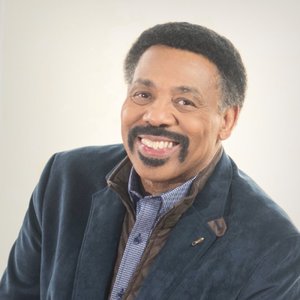
None of that's going to matter. This is The Alternative with Dr. Tony Evans, author, speaker, senior pastor of Oak Cliff Bible Fellowship in Dallas, Texas, and president of The Urban Alternative. Life can present us with some pretty difficult realities, especially if we had some disadvantages to begin with. Today Dr. Evans talks about those biblical principles that can help turn our situation around and empower us to offer hope to others. Let's join him in the book of Ecclesiastes. He says in chapter 4, I looked again at all the acts of oppression which are being done under the sun.
And we got plenty of it today. You look at the oppression, people have to live in fear of their lives, fear of their children, you know. He said, I look at what is being done under the sun, and behold I saw the tears of the oppressed, and that they have no one to comfort them, and on the side of the oppressors was power, but they had no one to comfort them. He says, I look out there and I see the pain. And it's everywhere, with television and computers and social media, you see the pain of people. Sometimes that pain in your coworkers, you see the pain. And it's double pain when you're in pain and there's nobody to comfort you in it. He says, I've even seen the oppressors and nobody to comfort them.
So what they do is they go out and do other things to try to find artificial comfort. So I congratulated the dead, which are already dead, more than the living who are still living. Why? Because it's better off than both of them is the one who never existed, who has never seen the evil activity that is done under the sun. Or to put it in everyday language, it's better not to have been born. Then I have to deal with all this, because of the way life has worked. It hasn't worked for you.
Maybe some of it's your fault, maybe some of it's other people's fault, but it hasn't worked. And he says, I see this, because he's dealing with life under the sun, where people live. And we can be all super spiritual if we want and say, well, I'm saved and that don't apply to me. You just stole a big, fat, evangelical lie. Because we experience the pain.
Christians also experience these things. So it is the reality, unfortunately. So he's just telling you what he sees.
He's not endorsing it. He's saying, this is how it is. And now you and I get to see it all day, every day, because of satellite news. It's just evil everywhere. I know some folks have told me they just stopped watching the news, because they can't handle it.
It's just pain everywhere. You know, you can't just tell your children to go out and play now. You know, because you never know when a predator is going to drive up and snatch them, or grab a woman and abuse her. Just, he says, I looked at this, I watched the news, so to speak, under the sun, and I saw the oppression. I have seen that every labor and every skill, verse 4, which is done, is the result of rivalry between a man and his neighbor. This to his vanity and striving after the wind.
It's a doggy dog world. I see people competing against each other to the harm of one another. This to his vanity and striving after the wind, folk fighting, racial fighting, class fighting, man and his neighbor, neighbor fighting, mate fighting. And all it is, is striving after the wind, because when you finish one fight, you just enter into a new one.
He says, a fool folds his hands and consumes his own flesh. One hand, full of rest, is better than two fists full of labor. So he says, when you look on earth, it's better to have a full one hand and rest than have both hands full and not be at peace. So he's making this observation of what he sees in the world.
I looked again at vanity under the sun. There's our theme again, vanity, emptiness, where men live. There's a certain man without a dependent, having neither son or brother, yet there was no end to all of his labor. Indeed, his eyes were not satisfied with riches. He never asked, and for whom am I laboring and depriving myself of pleasure?
This too is vanity and grievous. I'm working hard for what? For what? You ever feel that about working hard for what?
Especially if it's gone before you get the check, then that really makes you say for what? Again, the issue is purpose. I don't see the purpose.
I don't see the reason for this. He says, now certain things are better, even under the sun, where men live. Certain things just make sense, like, verse 9, two are better than one, because they have a good return for their labor.
In other words, you can get more done with two than one. For if either of them falls, the one will lift up his companion, but woe to the one who falls when there is not another to lift him up. He says, he's talking about companionship.
It's better not to be alone, to have somebody who cares enough about you to walk beside you. He says that's a better way to live, under the sun. So it's a better way. So under the sun, you can make good choices and bad choices.
You can decide to be a lone ranger, or you can decide to be, you know, some form of companionship. He says this is better under the sun. He's analyzing what's the best thing. Now this is all going to eventuate into axiomatic instruction. An axiom is a truism.
It is a normative expectation. And those axioms, called wisdom, is found in the book of Proverbs. Solomon, who wrote most of the book of Proverbs, or much of the book of Proverbs, will take what he has observed and turn it into a wisdom statement for how we should live. So Proverbs is the—I don't want to get too deep into this—Proverbs are not promises in the sense that they're guarantees. Proverbs are normative expectations, because they're the decisions of wisdom. But those wisdom decisions he learned through observing life under the sun, and as he observed life under the sun, God sanctified the best, and those best got recorded in the book of Proverbs. The book of Proverbs, one of the most neglected books in the Bible, is probably one of the most important books in the Bible when it comes to living your life, because the whole book is about making wise decisions, making the better decisions. So he looks at better and not so good in the book of Ecclesiastes, because he's observing life under the sun, and he records the best in the book of Proverbs.
So that's how those two correlate. Furthermore, if two lie down, verse 11, together they keep warm, but how can one be warm alone? And if one can overpower him who is alone, two can resist him.
A quarter of three is that quickly broken. So he's talking about, again, the importance of connectivity and companionship. It's a better way to go. A poor yet wise lad is better than an old and foolish king, who no longer knows how to receive instructions. Don't ever get too old to learn. A child who, he says, he says that a poor but wise lad is better than a foolish king. Now the king has position, but he doesn't have wisdom.
He's a fool. The lad may be poor, but he's wise. So in the long term, the wisdom is going to pay off more than the position of the king. And a lot of us know people in position who are fools. They may have reached the top, but it's a fool at the top. And so he's, again, dealing with this issue of wisdom. For he has come out of a prison to become king, even though he was born poor in his kingdom. In other words, don't let your economic position determine your outcome.
He may have started, but where you are doesn't have to determine where you wind up. And what is the difference? Wisdom. It's the wise poor lad. If you and I, if we ever learn wisdom, that is, the skill of making the best decision.
The best decision. Wisdom is decision making. A fool has nothing to do with your edumacation. Okay? It has nothing to do with whether you graduated from kindergarten or not.
Okay? A fool in the Bible has to do with your decision making ability, or the lack thereof, regardless of how many degrees you have. Many of us have been educated fools. And the truth be told, many of us wouldn't be in some of our situations if we were not foolish, you know, if we didn't make that decision that way. But the key to that is not to get beat up over it. The key to that is to begin exercising wisdom or divinely influenced choices. Even under the sun, you can give hope to people who are not in a good position. Dr. Evans will come back in a moment with a dramatic example of how a small gift of hope can make a really big difference. Before he does that, though, today's lesson, Oppression and Occupation, comes from Tony's latest series exploring the book of Ecclesiastes called How to Avoid a Wasted Life. This Old Testament book is packed with honest questions about life, and Dr. Evans examines them in depth as he reveals the insights and conclusions that can help you navigate obstacles and challenges with wisdom and grace. As you listen to and integrate these lessons into your own life, you learn to better appreciate everyday pleasures and build a more balanced and meaningful approach to life.
You can receive this series for yourself on CD or digital download. The entire collection includes nine full-length messages with extra material we won't have time to present on the broadcast, including two additional sermons. We'll send them all to you as our thank you gift when you make a financial contribution to support this ministry. And as an added way of saying thanks, we'll also include a 365-day Kindness Flip Calendar with daily prompts, prayers, scriptures, and words from Dr. Evans. To take advantage of this limited-time offer, visit tonyevans.org or call 1-800-800-3222 for help from our resource team. I'll share our contact information again after Part 2 of today's lesson and this. Learn more about the live simulcast.
That's dfjconference.com. A couple of years ago when I went home to Baltimore and I was sitting on my father's porch. It's a bad neighborhood. It's drug-infested. They got lights blinking.
There are cameras that go to the police department because there's so much drug dealing that goes on there. And so I was sitting on the porch. The people next door came out. And it was these two girls, each had two children. And they were talking. And I could hear them because the houses are right, row houses in Baltimore are right next to each other. And I could hear them talking. And as I listened to them talk, I could hear the despair.
It was just thick. What are we going to do? How are we going to make it? Both on welfare.
No hope to get off. Each have two children. They were trying to figure out how are we going to sell drugs to get enough to feed the kids. So I'm hearing this. And I just couldn't take it. I mean, they were just overwhelmed. I said, ladies, come over here.
And they're probably 28, 29 years old. So they came and sat on the porch. And I said, what do you want to do with your life? What do you want to do with your life? The answer is we don't know.
We don't know. There was no dream, no hope. We want to get by. I asked, is this what you want for the rest of your life? Is this what you want for your children?
Is this what you want? And then that's when they hit me with the phrase that just wiped me out. They looked at me and said, it's not what we want, but we have no one to help us.
That cut me to my soul. In other words, we're here. We don't want to be here. But there's no one to help us get out of here. So we're stuck. So here would be two more girls who raise four kids who grow up in poverty and barring some intrusion into their existence.
They're hopeless. I said, I tell you what, wait here. I walked in my house, my father's house, opened my wallet. I had two $100 bills. I walked out. I said, now, I'm getting ready to give each of you $100 bills.
Now, you have a choice. I mean, I can't control what you do once I give you this $100 bill. Or you can look at this measly $100 bill in terms of the cost of life that somebody believed in you enough to say I'm willing to invest in this small way in a new direction for your life. That if you could look at this as a God moment, as a God moment, I believe you are better than this. I shared the gospel with them to come to Christ.
They both broke out in tears. And I'll never forget the words as they walked down from the porch. He said, mister, thank you for believing in us. I gave him $100.
But that could have been, if you would have seen that face, a million dollars. Because what it represented was, you don't have to stay here. He says, under the sun, yeah, they're poor.
They are poor. But even under the sun, if you can give people hope, you can go a long way with hope. Okay? So don't forget that. So he comes to chapter five. Guard your steps as you go to the house of God. So he's now introducing the religious factor.
I'll call it the religious factor. He says, go to listen, and don't go to be a fool. Now, who is a fool who comes into the house of God? Let me tell you whether you're a fool sitting here right now. Okay? You are a fool if you have come here to tell God what to do. Okay? If you come to give Him instruction, you are a fool.
Because you don't know that much. When you make a vow to God, do not be late in paying it, for He takes no delight in fools. Pay what you vow.
Ooh, that puts all of us in trouble, doesn't it? What he's saying is, don't take your spiritual commitment casually. Take it seriously.
Why? Because you and I need God to intervene in this circle called life. Do not let your speech cause you to sin, and do not say in the presence of the messenger of God that it was a mistake. Why should God be angry on account of your voice and destroy the work of your hand? You want God working for you, not against you.
Because you're resisting Him by not taking it seriously. Do not be shocked at the sight. For one official watches over another official, and there are higher officials over them. So you've got this chain of governmental command.
After all, a king who cultivates the field is an advantage to the land. So he's talking about, he kind of moves to government at this point, and he says, to operate under it, there is an order. When you see that oppression, and you see justice, fairness being denied, righteousness being denied, don't be shocked, because you're under the sun. And under the sun, people do evil things, particularly if they empower.
And officials will mess over each other, one over against the other. But if you can help it to be productive, everybody benefits, verse 9. So you need it. It can be oppressive, but you can also benefit from it. So you've got both sides happening at the same time.
He comes in verse 10. For who loves money will not be satisfied with money, nor he who loves abundance with its income. This too is empty. It is not wrong to have money. It is not wrong to earn money.
It is wrong to love it. As you are born, so you will die. Throughout his life, he also eats in darkness with great vexation, sickness, and anger.
I've been to many a hospital to see many a person who died miserably. That is, who died unhappy with life, who had all the stuff of life, all the stuff of life. But when you hit that place in your life, you ain't gonna be counting money. You ain't gonna be talking about how many cars you have, how many houses you own, how many suits or dresses are in the closet. None of that's gonna matter. None of that's gonna mean a thing to you. What's gonna matter to you at that point is not what you left behind, but what you forwarded ahead. Okay?
That's what's gonna matter then. That's why the spiritual must always trump the material, because the spiritual moves ahead. The material is left behind for other folk to fight over.
Okay? They're gonna fight over it. And you don't have a will. You don't have a clear will. They will fight.
And if it's really not a will, the government gonna jump in there and try to get theirs, too. So planning, which he'll talk about, is very important. Here's his point. He looks at the world under the sun where men live, and he sees reality. He sees the good, the bad, and the ugly, and he assesses it.
He says it's vanity. That is, you can't find ultimate meaning. You can find periodic things, but not ultimate meaning until God intrudes in it. So I'm gonna give you, he says, the best options under the sun. Even if you're not a Christian, the best options would be the best options if you're under the sun. In other words, even if you're not a Christian, this would be a better way to look at things or to live. But he says, speaking as a man who's now in fellowship with God, the way to get out of the vanity of life, even though you can make better or bad or better choices, is to get the message God is trying to give you by including him in life, which brings an intrusion into the vanity and not allow life under the sun to consume you with its reality. So therefore, keeping God at the forefront of life brings an intrusion in life so that you're not limited to the vanity of life. Dr. Tony Evans, talking about the biblical antidote to vanity. As I mentioned earlier, today's lesson is taken from a brand-new sermon series from Dr. Evans called How to Avoid a Wasted Life.
And don't forget, for a limited time, we're offering the full-length version of all nine lessons in this series on CD or digital download, along with a 365-day flip calendar that will help challenge and inspire you to practice a life of contagious kindness. They're both yours as our thank-you gift when you make a donation to help us continue this outreach. Call us today to make the arrangements at 1-800-800-3222, or one of our friendly team members is ready to help any time of the day or night. That's 1-800-800-3222. Or visit tonyevans.org to take advantage of this special package.
You'll find the details right on the homepage. Again, that's tonyevans.org. Healthy ambition can drive us to improve and succeed, but Dr. Evans says when that morphs into greed, a lot of what we get isn't what we want. Be sure to join him tomorrow as he talks about how to live a more meaningful life punctuated with God's provision and presence. The alternative with Dr. Tony Evans is brought to you by The Urban Alternative, and is made possible by the generous contributions of listeners like you.