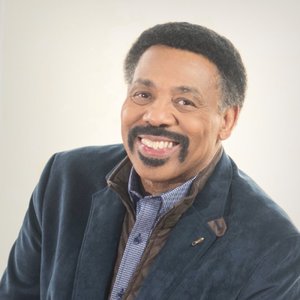
To conquer division, you must conquer the sin that divides. Division runs deep, but Dr. Tony Evans says the cross goes deeper. Because what Jesus came to do was erect harmony where there was hostility.
This is the alternative broadcast featuring the timeless biblical teachings from the archives of Dr. Tony Evans. We may live in a world that's divided, but God has already designed a plan to bring people together, and it starts with the church. Today Dr. Evans shows how Jesus breaks down the walls that divide us. Let's join him in Ephesians chapter 2 verse 11 for a look at how believers can experience true unity without losing their God-given uniqueness. Three words will help you to appreciate this passage. Separation, reconciliation, and unification. Verse 11 and 12 talks about two kinds of separation that existed in the church that Paul wants to address.
One, the social separation as seen in the words uncircumcision and circumcision. He called them Gentiles in the flesh. That is, as people look at other people, this is who you are. As men recognize differences, that's who you were. And he says that was an unenviable position to be in.
Why? Because you have to understand that Gentiles were scorned by Jews. They were called the Gentile dogs. They were viewed as unclean. Galatians 2 verse 11 and following, after Peter had learned his lesson from God, guess what happened? He was eating pork chops with the Gentiles.
Finally found out that pig, he'd been missing all of his life, wasn't that bad. So he's eating some pork chops with the Gentiles, and guess what? Some of the men of the circumcision came in. That means Jews. They came in and saw Peter their pastor and fearless leader fraternizing with the Gentiles and said basically, how dare you eat with them? We got to go to heaven with them. And when we get there, we'll fellowship. But from now till then, they belong on this side of town and you belong on that side of town and nobody crosses these tracks. These are two separate worlds. That text says that Peter was so intimidated by the circumcision, the Jews, by his own race, that he backed up from the Gentiles.
Now can you imagine how they felt? And went to the Jews because he could not associate with them and keep his Jewish friends. They're part of the church, but they're bringing into the church the old standards of measurement, the old standards of adjustment, the old standards by which social acceptability is measured. And those of us who are aware of American history knows that the church was one of the prime promoters of segregation in the history of our country, bringing the standards outside of the church into the church and making them God's standard and then dare to quote Bible verses on top of it. That is the atmosphere that he is addressing. He is addressing an atmosphere where they were separated. And what you have to understand is sin always separates. They were separated socially, but that was really because they were separated spiritually.
Please notice the lines here that we are given in verse 12. They were separated from Christ. In other words, they had no hope of a Messiah. Not only that, but they had no hope. So they were hopeless, he says. In fact, 1 Thessalonians 4 says that we don't sorrow as those who have no hope. And do you know the Gentiles had no hope? They had no hope.
They didn't know what to look forward to, no clear perspective on eternity. Let me tell you something about hope. You have to have two things to have hope.
You have to have a promise to look forward to, and you have to have somebody who can pull off the promise. That is why Christians have hope. Because not only do we have the promises of Scripture, they're backed up by somebody big enough to pull it off.
Now this separation led to the need for reconciliation. And this is where our Savior comes in. But now, verse 13 says. That's a lot like verse 4 of chapter 2, but God.
But this time he says, but now, in this alienation and separation, look at what happens, in Christ Jesus, you were formerly afar off, have been brought near by the blood of Jesus Christ, referring to his sacrificial death. Now let me tell you why you have disharmony between races, between couples, between friends, between anybody. The reason why you have separation always is related to sin.
Why? Because sin is driven by selfishness. You see, people sin because they want to satisfy self. That's why you sin. You want to do something that pleases you, even though it doesn't please God. And the thing that pleases you that doesn't please God is sin. Now, if you get two people living in the same house and both are selfish, I want my way, she wants her way or vice versa, you will automatically count on it, erect the wall of separation.
You can bike on it. Once you introduce selfishness to a relationship, you will automatically bring separation in the relationship. To conquer division, you must conquer the sin that divides. What you cannot do is inaugurate authentic relationship unless you deal with the spiritual issue of sin. So what God did in Christ by his blood was deal with sin. Now notice verse 14.
In fact, you'll see it all through this section. He says in verse 14, he himself is our peace. He himself is our peace.
Notice what he says in verse 17. He came and preached peace. He came and preached peace. What he is saying is that Jesus Christ brought harmony or the basis for harmony when there was division.
Now this is very important what I'm getting ready to get into now because it not only affects Jews and Gentiles, it affects blacks and whites and Hispanics and Asians. It affects husbands and wives and parents and children because what Jesus came to do was erect harmony where there was hostility. His death was about bringing things together. The word reconciliation means to bring together again. That which was split up to bring together again. Now you remember in World War II, Europe was divided. It was divided from the Warsaw Pact and NATO. Germany was split right down the middle and to separate East Germany from West Germany, they erected the what? Berlin Wall. That was the natural result of the dividing of Europe as the outcome of World War II.
Two different lands, two different philosophies, communism versus democracy, two different peoples always on the verge of either a hot war or a cold war. That wall represented hostility. Now notice what Jesus did in verse 14. He himself is our peace. So our peace is a person who made both groups into one Jew and Gentile and broke down the barrier of the dividing wall. This is a Berlin Wall. It's a real wall. You see in the Jerusalem Temple, one built by Herod, there was the wall of the Gentiles.
It separated the Gentile court from the Jewish court. A Gentile better not try to climb over that wall. You and East Germany, you try to climb over that wall when it was up to West Germany, they had men there with rifles to take you down.
No climbing over this wall. In biblical days, they had in the court the wall that separated the Jews from the Gentiles and the Bible says in the book of Acts, they sought to kill Paul because they thought he was bringing a Gentile over the wall. This was serious stuff.
This was death stuff. That's how much the hatred was into Jesus Christ. Jesus Christ's death on the cross, he says, obliterated the wall, the Berlin Wall, spiritual Berlin Wall that separated people who were separated for years. Now, the implication of this is staggering as you'll see in a moment, but what Jesus did was he broke down the barrier.
That is what that wall represents by doing what? Turning two groups into one group. Now, you can't turn two into one and still have two. This new group that would incorporate Jews and Gentiles is called the church.
That's the unique entity. This thing called the church, heaven's new community, would be a new race, almost like a third race. A third race of people who would be brought together in one family based on one person, Christ, who did one act and that was by his blood tear down the hostility. Now, what was the hostility that put up the wall in the first place? Well, he tells us in verse 15, by abolishing in his flesh the enmity, the conflict, strife, and division, which is the law of commandments contained in ordinances that in himself he might make the two into one new man, thus establishing peace. Now, this is deep. Christ tore down every wall that once divided us, but to fully appreciate that, we need to understand where the walls came from in the first place.
Dr. Evans will have that for us when he returns in just a moment. First though, I want to let you know that the message we're exploring today is just one part of a powerful series from Dr. Evans called Ordinary Holy, Finding God in the Mundane. In it, he unpacks the rich truths of Ephesians to show how God can transform even our most routine moments into opportunities for spiritual impact. This complete two-volume, 16-part series is available as our thank you gift when you support the work of the alternative with your generous contribution.
But that's not all. When you contact us today, we'll also include Tony's book, Kingdom Living, filled with practical biblical guidance to help you grow stronger in your faith, deepen your relationship with God, and live out your identity in Christ every day. This special double offer is only available for a limited time, so be sure to visit us right away at tonyevans.org to make your donation and request the Ordinary Holy series and Kingdom Living book. Or if you prefer, give us a phone call at 1-800-800-3222 and let one of our resource team members help you.
I'll repeat that contact information after part two of today's message and this. Far too many of us want to throw in the towel before we've thrown up the prayers. Dr. Tony Evans says Christians have a habit of underusing or overlooking our most valuable spiritual resource. Grace is available, but only at the throne, and you can only approach the throne through prayer. You can deepen your connection with the Lord through our in-depth course on Kingdom Prayer at the Tony Evans Training Center. You'll discover how God has wired the world to work by prayer and experience for yourself how it connects heaven with earth and time with eternity.
You'll not only gain a new understanding and appreciation for prayer, you'll actually pray in transforming ways you've never experienced before. The course is intense, but you can work through it at your own pace and get all the help you need through our online forum. And of course, there's custom content from Tony not available anywhere else. Connect with the Tony Evans Training Center at tonyevans.org. It's like having a seminary on your smartphone or other device.
Start today, tonyevans.org. If you read the Old Testament, as I said earlier, the Jews had laws given to them by God, right? Let me tell you about the essence of those laws. The essence of those laws separated what was clean and acceptable to God and what was unclean and unacceptable to God.
So let's break that down a little bit. If you were a righteous Jew, pig feet you would not eat. Pig feet you would not eat. The reason why, because in the law, pig feet were unclean.
So were chitlins, ham hocks, and all that other stuff, all right? That was unclean. God called it unclean. If you ate that food, then you became unclean because you ate that which was unclean. And what you think them Gentiles like to eat?
Pig feet, hog moths, chitlins, pork chops, ham hocks. They were eating this stuff all the time. So not only were they born unclean, because the Jews didn't like them because they weren't Jews, but they lived unclean because they enjoyed the very things that the Jews were restricted from because they were unclean. So the Jewish law was a law because it separated that which was clean versus that which was unclean.
But here's the good news. In the death of Jesus Christ, the ceremonial laws were no longer enforced. He canceled them out so that no longer could you appeal to your diet or to any other ceremony to observing a certain day, to doing things a certain way as a means of separation because Jesus Christ abolished that as a standard by which unclean and clean was measured. Now, you may raise the question, why God ever set the standard in the first place? Well, God created Israel to be a unique people. He gave them unique laws unlike any of the other nations. He gave them unique guidelines like nobody else had so that they would become a light to the nations because they would be so peculiar, people would want to know, why are you so different? The same thing God says to the church today. We are a peculiar people. The Gentiles would say, you don't eat pork chops?
Why? Then the Jew was supposed to open his Bible and to say, because we have to be clean before God and that would lead him into Jewish evangelism to explain who the true God was and that he had unique standards. All through the Old Testament, God criticizes Israel for being like the other nations because when you're like the other nations, you lose your witness. But when Jesus Christ died, he abolished the need for the ceremony because the ceremonies were all there to point to the need for a ceremony here. Once the Savior comes, you don't need the ceremony anymore.
So it was abolished. Not only did he abolish or nullify the ceremonial law, but he kept perfectly the moral law, the Ten Commandments. He never sinned.
Now, you know what? You're not going to heaven because you've never sinned. Do you know why you're going to heaven?
You're going to heaven because Christ has covered you with his righteousness. So that's what Jesus did by abolishing it and he made the two, verse 15, in the one new man establishing peace. Now, let me tell you why this is important.
This is important because if you don't see yourself as part of the new man, you'll keep functioning like you're part of the old man. Not only was the wall torn down, but the Bible says when Jesus died, the veil in the temple was rent. Do you know what the veil was? The veil is what kept you from going into the holiest of all, which was where God's glory was. So there was a wall to keep you from hooking up with other folk and there was a veil to keep you from hooking up with God. When Jesus died, he solved two problems, not one. You can now relate to God and you can now relate to one another through God. He solved two problems.
Now, it leads to the third thing, unification. First of all, new citizens. So then you are no longer stranger than aliens.
Now, what's that? A foreigner, right? That's a foreigner. A stranger or an alien is a foreigner. You are no longer foreigners.
Gentiles used to be foreigners even though they lived there to the Jewish world. You are not a foreigner because he didn't just come to gain us peace vertically. He came to grant us peace horizontally. Then why don't we have peace?
Because we want to live in the flesh and not in the spirit. His final illustration is a building having been built. Use the building motif. He says three things about the building. One, the building is on the foundation of the apostles and the prophets.
What does that mean? Well, they were responsible for recording and proclaiming the Word of God. The apostles and the prophets laid the biblical foundation for the church. So what he is saying is that the church is situated on Christ and his Word, for Christ is the foundation, but their job is to take the truth of Christ and record it and communicate it. So that's why 1 Timothy 3.15 says that the church is the ground and pillar of the truth. It is the foundation of truth that is the Word of God is the standard by which we measure our relationships.
The Word of God is the standard. Secondly, he's the cornerstone. Christ himself being the cornerstone.
That's a picturesque word. Let me tell you what the cornerstone was. The cornerstone related to the architectural design of the building, and the cornerstone was the alignment stone by which the unity and symmetry of all the other stones would be measured. In other words, the cornerstone was so situated that in order for the building to be straight and be positioned right, all the other stones had to properly align themselves to the cornerstone. So Jesus is the alignment stone.
We ought to all be in line with him. Now what does this say? He uses the word temple. You know what the temple was? It was where God hung out. Your body is the temple of God, but so collectively we represent the temple of God, and if we are unified as a body, then guess what we will be? We will be the hangout of God. We will be where God's hangout was. That was his glory.
That was where he hung out. And God is not hanging out in a lot of churches today because they're using false criteria. Jesus is not the cornerstone, the apostles and the prophets, that is the Word of God, is not the standard, and every brick is not fitting in. We got bricks that want to isolate themselves from the building, yet hang around the neighborhood. Every brick has been positioned to fit in.
Unity is what he's talking about. Fitting in the same direction. Let me close with this passage, 2 Corinthians 5 verse 18. Now all these things are from God who reconciled us to himself through Christ and gave us the ministry of reconciliation. Verse 20, therefore we are ambassadors for Christ as though God were entreating through us, we beg you on behalf of Christ be reconciled to God. Now here's what I want to close with. God in Christ has not only been the reconciler, he has given us the ministry of reconciliation.
Did you hear that? You have a job to do and that is to be a reconciler. You know what the problem is? A lot of us are not reconcilers because we keep the divisions going. We keep mess going.
He says you are my ambassador and you are to be the reconciler. We ought to be the promoters of racial harmony, of class harmony. We ought to be the promoters of families staying together and not breaking up. We ought not to be promoting a godless agenda, but done based on truth and righteousness, not based on race and culture because sometimes people are wrong and they do need to change. But the standard is we must promote reconciliation. Dr. Tony Evans laying out God's plan of reconciliation that begins with believers and the church.
And he'll return with a final word in just a moment. Today's message, Heaven's New Community, is part of Tony's powerful series called Ordinary Holy, Finding God in the Mundane, a 16-part exploration of the book of Ephesians that shows how everyday life can become a stage for God's extraordinary work. For a limited time, when you support the ministry of the alternative with your donation, we'll send you the complete two-volume audio collection along with a special bonus, Tony's book, Kingdom Living, packed with biblical wisdom to help you grow in your faith and purpose. Don't miss this opportunity. Visit tonyevans.org today or call 1-800-800-3222 to make your request.
Again, that's tonyevans.org or 1-800-800-3222. Before Dr. Evans returns, a quick heads up. A new episode of Stories from the Storyteller is just days away. On Bunny's birthday, a tiny gift leaves her disappointed until it turns into a big surprise. At story time, Poppy shares the parable of the mustard seed, showing how God can turn small beginnings into something great. If the kids in your life haven't discovered this animated series yet, now's a great time to share it. Learn more at tonyevanstv.com.
That's tonyevanstv.com. And speaking of stories, sometimes the best part of a story is the one you never saw coming. Tomorrow, Dr. Evans explores the mystery of the church, revealing God's plan that has become believers' everyday mission. Right now, he's back with these closing words. When we adjust to the cross, we'll be God's new hangout. And he'll feel at home with us because we're doing his thing, not our thing. Then you'll see some answered prayer. You'll see some powerful presence. You'll see some supernatural activity.
Why? Because he can trust us with what cost him his son, his life. And that is reconciliation up and reconciliation out. That's heaven's new community. That is the spirit of the church.