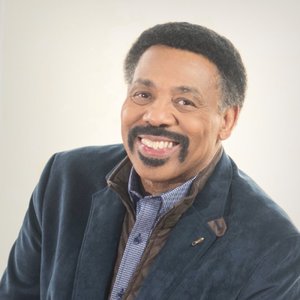
If your life collapsed today and you said, Lord, remember you, what would He remember? Dr. Tony Evans says the choices we make now shape what God remembers later, and that memory determines how He moves in our lives.
Because, you know, whether it's business or sociology or politics, the ultimate issue is what God remembers. This is the alternative broadcast featuring the timeless biblical teachings from the archives of Dr. Tony Evans. When Nehemiah set out to rebuild the broken-down walls of Jerusalem, he wasn't just taking on a construction project. He was calling God's people to rebuild their spiritual foundation. Today, Dr. Evans takes us to Nehemiah chapter 5, where we'll discover that the biggest threat to progress wasn't from outside opposition. Let's listen in as he highlights the importance of recognizing God's priorities. Nehemiah is trying to do an impossible task, for he is seeking to rebuild the community of Jerusalem.
And he is attempting to do it theocratically, that is, based on divine perspective. Rebuilding the walls had much more to do with brick and mortar than just with brick and mortar, but with rebuilding a people who had become dehumanized, who had become desperate. On last time, we looked at chapter 4 and we saw the external problem, that is, the problem from without enemies who were trying to destroy the people's will to change. But today we want to look at the internal problem.
It primarily revolves around money. What was the problem here? We hear it in verse 2. There were those who said, we our sons and daughters are many, therefore let us get grain that we may eat and live. So one problem was there was abject poverty. Large families who were living there who were not economically stable, they didn't have food to eat.
Because they were involved with what the group was involved with, they were not able to sufficiently sustain themselves. So one problem you had in the community of God's people was the problem of the poor. So the Bible is clear on the issue and that is that people are to make sure that the poor of their community are taken care of. Second problem is recorded for us in verse 3. And there were others who said, we are mortgaging our fields and our vineyards and our houses that we might get grain because of the famine.
Thirdly, verses 4 and 5. There were those who said, this is another group, we have borrowed money for the king's tax. So now you have governmental taxation and the taxes were so high that they had to borrow money to pay them.
So the third problem is that profiteering Jews seized the opportunity to make money by charging exorbitant interest rates on loans made to their Jewish brothers so that they could pay their taxes. If there was, listen to me now, ever a time not to build this now. If there were ever a time not to invest your energies, your time, your talent and your resources to erect a wall around Jerusalem, it's now. Now is the time to back away from making the kind of investment of time, energy and resources because guess what?
A lot of people are poor. Guess what? We've got a famine we can't control. Guess what? Taxes are going up and I'm in debt.
If ever there was a time to back away, it's now. However, that's not Nehemiah's philosophy. Nehemiah understood a very central philosophy of life.
Here it is. The reason that you're poor, the reason that you have a famine, the reason that you're in debt and the reason that the tax base is as high as it is is because you left God in the first place. If you hadn't left God, you wouldn't be in Persia and if you wouldn't be in Persia, you wouldn't be dealing with the king's taxes. If you hadn't left God, you wouldn't then have to make high interest loans to borrow the king's tax. If you hadn't left God, you would not be a debtor community, you would be a empowered loaner community. If you hadn't left God, the poor of Jerusalem would have been taken care of, for the rich would have set gleaning fields and made available access so that the poor would have opportunity for stability and economic development. So the reason you got to get the spiritual thing straight up front is because you solve your problem by building the wall.
You don't save your problem by not building it. When you have an economic depreciating community, it is because you have a sinful, carnal, ungodly community. Because God's promise in the Old Testament and the New Testament is always to meet the need of his people.
These people's needs were not being met and it was because of a spiritual thing, so the rebuilding of the wall was more than a building of bricks and mortar or building in facilities, it was getting the people's spiritual priorities straight. As a nation, we have become a detonation long term, predominantly because we've left God's blueprint of economics. I mean, it's as simple as that. The problem is, we have spiritually warped values in our spending habits and therefore we poll. Now, don't get me wrong, I want to be inextricably clear here that I am one of the biggest antagonists going, and you've heard me enough to know this, against this get rich quick scheme kind of stuff that a lot of preachers promulgate where God is your genie and all he does is, you know, write checks when you pray.
Well, that's a lie. There are always different strata in a society, but that's different than exploitation. That's different than unrighteousness and that's what was occurring here. So, Nehemiah had to come and he had to risk being misunderstood to address the people and say, if you get your divine frame of reference right, i.e. rebuilding the wall, we're going to solve your economics in the process.
What do we do? We try to solve our economics and if we have time left over, we get stuff right with God. It's after our ship has come in, it's after we've gotten our pot of gold at the end of the rainbow, it's after we've got our promotion that we want to build the walls of our spiritual life, build the walls of putting our family life back together, and then build the walls of our church life and then revitalize our community. That's backwards.
No, no, no. You don't get your career right and then get your spiritual life right. You get your spiritual life right so God can make an investment in your career.
You don't make your money and then get your family stable because by the time you made your money, there will be no family to get stable. You don't do that. You don't go out and you don't leave the ministry of the church to last while you do everything else first. You prioritize that. You don't wait till later. And even in community life, you don't wait until the community dissipates and then say, I'm going to fix it. No. No, you make your difference by putting God out front.
Out front. So in the worst of times, Nehemiah says, let's rebuild. Let's rebuild when it's a mess because only by getting God in his right place can we make it a miracle. And that's why there's so many miserable people with money. Yeah, they've gotten their pot of gold at the end of the rainbow.
Problem is it's still raining. All right, another problem in verse five, by the way, folks, is they had to sell their sons and daughters into slavery. You know what that means? That means there was no legacy. There was no legacy. Their messed up priorities had ruined the next generation because there's a generation out there who have been sold into bondage. They have been sold into social bondage, moral bondage, economic bondage, and their parents sold them. Verse five, the parents sold them into slavery.
Why? They gave up their kids so that the parents could do what they want to do. They gave up their children so that they could take care of their economic goals. They were too busy to invest in the welfare of the generation to come so the kids were in slavery. Nehemiah understood you can't build Jerusalem if the kids are shipped off in slavery. If the kids are in bondage, he understood there is no community future because there is no family.
Stability. And that's why I say to you what Nehemiah said earlier, he said fight for your family and fight for your loved ones. You have to fight. I mean, we're talking about a war here. You got to fight. I mean, to save your kids, you got to fight and then when you want to quit, you got to fight because that's the way it is in war. You don't get a lot of sleep in war. And we in a war. We in a war. And when your children go left, you got to fight and go get them and pull them back and they go left again, you got to fight again because it's a fight. When Dr. Evans returns in just a moment, he'll explore the power of righteous indignation as Nehemiah confronts the issues at hand.
Don't go away. Far too many of us want to throw in the towel before we've thrown up the prayers. Dr. Tony Evans says Christians have a habit of underusing or overlooking our most valuable spiritual resource. Grace is available but only at the throne and you can only approach the throne through prayer. You can deepen your connection with the Lord through our in-depth course on kingdom prayer at the Tony Evans Training Center. You'll discover how God has wired the world to work by prayer and experience for yourself how it connects heaven with earth and time with eternity.
You'll not only gain a new understanding and appreciation for prayer, you'll actually pray in transforming ways you've never experienced before. The course is intense, but you can work through it at your own pace and get all the help you need through our online forum. And of course, there's custom content from Tony not available anywhere else. Connect with the Tony Evans Training Center at tonyevans.org. It's like having a seminary on your smartphone or other device. Start today, tonyevans.org. Today's message comes from Dr. Evans' comprehensive 15-lesson study on the book of Nehemiah.
The story of Nehemiah isn't just about rebuilding a city's walls. It's about restoring lives, strengthening faith, and stepping boldly into God's calling. Through this series, Tony is uncovering practical insights on leadership, perseverance, and spiritual renewal, lessons that apply to your personal walk with God, your family, and even your community. We'd love to give you the complete collection of messages as our gift on digital download and either CD or USB thumb drive when you make a donation to the Ministry of the Alternative. And as an added bonus, we'll also include a copy of Dr. Evans' powerful book, One Nation Under God. If you're concerned about the direction our country is headed, this book reveals what you can do about it, not through politics, but through a kingdom approach that aligns with God's principles. Visit us today at tonyevans.org or call us at 1-800-800-3222. Make your contribution and let us send you the Nehemiah Audio Series along with Tony's book, One Nation Under God. I'll repeat that contact information for you after part two of today's lesson.
Here's Tony once again. That's another misunderstanding. There is no command in the Bible, thou shalt not make a profit. It's okay to make a profit, but you cannot make a profit by exploitation. That's what you cannot do. You can't make a profit by greed. That's what you cannot do. You cannot rip off other people to increase your piggyback. You can legitimately do business. In fact, Jesus says, do business till I come. But what you can't do is exploit people to do business. They were exacting and he confronts them.
In fact, it was a terrible meeting because he didn't just meet. He said they contended. The nobles sat on one side and say, listen, this is our money. We're going to do what we want. This is our business.
This is our stuff. Don't tell us what to do. You just go back to your governorship. But you're not telling us what to do. The Persian king didn't send you down here for you to get in our business. The meeting produced nothing. There was a standoff in the meeting.
So what did Nehemiah do? Verse 7 says, I held a great assembly against them. Since the private meeting didn't work, he called the whole congregation. He said, church, to use Old Testament terminology, congregation, come. He said, how can you call a congregational meeting about the way a man does his business? Because when you name the name of Jesus Christ, you don't just do business. You represent the glory of God.
And if you're exploiting people, that's a sin. Well, he calls the meeting. He contends with them publicly, verse 8. And I said to them, we, according to our ability, have redeemed Jewish brothers who were sold to the nations. Now, would you even sell your brothers that they may be sold to us? He now talks about redemption. To redeem is to buy back. He says, a lot of your brothers were sold to slave masters who aren't part of a covenanted community. And we had to go put our money on the line and buy them back. And now they're in the family of God, and you're going to put them into slavery again so that we don't have to just buy them back from the sinners.
Now we got to come and buy them back from the saints. What he said is there's supposed to be a marked difference for how you relate in the family of God than how you relate to the secular dog-eat-dog, I-don't-care, prophet-only secular world order. There ought to be a difference, he says. And so, Nehemiah said these nobles need to be addressed. Nehemiah instituted a buyback program. See, whenever you lose something that you ought to have, you got to have a redemption program. That's what God did with you on Calvary. He bought you back.
He lost you in the Garden of Eden and he bought you back. Well, that's not the only kind of buyback. There's economic buyback. There must be, if we're going to save our cities and our communities, a redemption program where people stop ripping off people because they're people of God who take up the slack and buy back. They redeem.
We have a generation of children who need to be bought back. They need to be redeemed. You don't quit on them.
You try to buy them back. Some of you wives need a redemption program in your home. Some of your husbands need a redemption program in your home. You've lost your wife. You've sold her into slavery. You've lost your husband. You've sold him into slavery. You forced them out by your life.
You don't quit and say, bygones be bygones. You buy back. And buy back takes investment. Verse 11, please give back to them this very day their fields, their vineyards, their olive groves, and their houses, also the hundredth part of the money, that's 12 percent, and of the grain, the new wine, and the oil that you are exacting from them. He says give them back what you sold and the interest payments.
What is this? This is the principle of restitution. You get it fixed.
Honey, I've ignored you for five years, so what I want to do is spend the next five years making you never know that you lost the last five years. It's restitution. It is taking responsibility to fix what was broken. So you don't just say, I'm sorry. It'll never happen again.
Fix the mess. So they said, we will give it back and we'll require nothing from them. We will do exactly as you say. So they obeyed. Nehemiah concludes in verses 14 through 19 reflecting on his own leadership, because if he sees the nobles live this way, he's had to make sure that he's been in shape, and then he looks over his 12-year career and concludes that he has honored the Word of God. He reflects, he says, and from that day, I was appointed governor in the land of Judah. Remember me, O God, for good, according to all that I have done for this people. Oh, if there's any prayer you want to be able to pray is remember me. Amen.
Yes. One day your world is going to collapse, I can guarantee it. One day your world is going to break down. Things are not going to go right. It might be economic breakdown. It might be family breakdown.
It might be personal breakdown. Oh, but you want to be able to say, Lord, remember me. Now, my question is, if your life collapsed today and you said, Lord, remember you, what would he remember? Would he remember the good that you did?
Would he look down and say, yeah, I remember you. You were faithful. When you did have what you had, you used it for my glory. You prioritized me. You served people.
You weren't selfish. You honored me with your lifestyle, and when you blew it, you were willing to acknowledge it and said, I remember you what you need. When you call on God, how is he going to remember you?
Because you know whether it's business or sociology or politics or whatever it is, the ultimate issue is what God remembers. A young concert violinist was playing one day. Everybody was getting excited as he did his closing number, and he ended his closing number with a bang, and all the people stood up and applauded and said, bravo, bravo, bravo. As the people clapped, he began to tear up in his eyes. As the applause began to die, an old man sitting up in the balcony stood up and began to clap. As the old man stood up and began to clap, the young man's smile came back on his face. He wiped the tears from his eyes.
He smiled and held up his violin and walked off the stage. A man in the wing said, sir, how come? You were sad when the people stood up, but when the old man stood up, you got glad again. He said, because the old man was my violin teacher. He says, unless he stood up, it would have been a failure, because he's the only one who knows the nuances.
He's the only one who knows exactly how the piece is supposed to go, so it doesn't matter what a thousand people say. I want to know if my teacher going to stand. You may all stand and clap at one of my sermons, but I want to know, is God standing this morning? Your family may stand and what you're doing, but you want to know, is God standing?
Because guess what? If God isn't standing, you ain't done nothing. If God isn't standing, you haven't done anything. If God is not, well, please, you are an abysmal failure, for we shall all stand before the judgment seat of Christ and each man shall receive that which he's done in his body, whether it be good or bad. Listen, don't be worried about where the folks stand.
Don't be worried about where the folk applaud. Make sure, though, on Judgment Day, Jesus Christ stands and says, Well done, my good and faithful servant. Dr. Tony Evans, encouraging us to live for the approval of heaven, not the applause of earth. Now, today's lesson, called A Cry for Justice, is part of Tony's study from the Old Testament book of Nehemiah. As I mentioned earlier, all 15 full-length messages in this sermon collection can be yours with our thanks if you'll make a donation to help us keep presenting these life-changing messages.
You'll receive the complete two-volume series on digital download, as well as either CD or USB thumb drive. And as a special bonus, you'll also receive Tony's thought-provoking practical guide, One Nation Under God. Take advantage of this limited-time offer by calling for details 1-800-800-3222. Our friendly resource team members are on hand 24-7 to help you. That's 1-800-800-3222. Or make the arrangements and get your digital downloads right away at tonyevans.org. Again, that's tonyevans.org. When God has called you to do something great, the enemy's goal is simple—to get you to stop. On Monday, Dr. Evans will show us what happened when Nehemiah was just steps away from finishing the wall, and how the enemy's strategy suddenly shifted from sabotage to smooth talk. It's a reminder that sometimes the most dangerous invitation you can receive is the one that sounds the most reasonable. Be sure to join us for that.