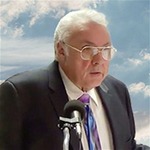
Welcome to The Daily Platform from Bob Jones University in Greenville, South Carolina. Today on The Daily Platform, evangelist Steve Pettit is continuing a study series called Wisdom from Above, which is a study in the book of James. In today's message, Steve will answer the question, who is a wise man? I want to ask you to take your Bibles this morning and turn with me to the book of James, James chapter 3 this morning.
Last week we began our series on Wisdom from Above and today I'd like us to spend a few moments with this introductory verse in verse 13 of James chapter 3. Have you ever been sitting on an airplane and a flight attendant comes over the intercom system and asks the question, is there a doctor on the plane? How many have ever experienced that before?
A few of you have. Well, what do you immediately think? Is the flight attendant curious to meet a doctor or dying to meet one? Is that their thoughts? I don't think so.
When you hear that question, you think, wow, something must be so bad that a doctor is needed right away. In James chapter 3 in verse 13, James asks a question that presupposes a very urgent need. Look at verse 13, it says, who is a wise man and a dude with knowledge among you? The nature of James' question presupposes that wise leaders are needed to help navigate God's people through troubled waters and to bring them into safe harbors. This semester we're studying Wisdom from Above and James' goal, as we learned last week, is to help believers mature into wise men and wise women and I know that that must be the desire of many of you.
I mean, it's nothing worse than to be called unwise. And God's goal for all of us is to become wise people. And so we are carefully observing this thematic peak that is found here in James 3, 13 through chapter 4 in verse 10. And I'd like us to look at this verse this morning by asking three questions. Number one, why is it that wise people are so needed? And I think the answer is because of the struggles that God's people are facing while traveling on the road to Christian maturity. As our brother prayed this morning, he talked about some of us being discouraged and I'm thinking, good night, we've only been here two weeks and we've got a long ways to go. Well, wise people are experienced travelers on the highway to Christ-likeness because the road is filled with detours and ditches and dead-end streets.
And wise people learn how to avoid road hazards in life, how to stay on the right direction. So James asked this question, is there a wise man in the house? Because God's people have issues. By the way, what were some of the issues that we find in the book of James?
Well, here are a few of them. Number one, there were many who were emotionally immature and they were struggling with just being spiritually mature. Some were struggling with the reality of their faith in the face of their own personal trials.
Is God really real to me? Some were falling into sin and they were blaming God for their temptations. Some had a growing resentment over money problems. Some were Sunday morning only Christians who lacked a wholehearted dedication to God. And there were some people in the church who were vulnerable like orphans and widows and they were being neglected by the church. Some were allowing the world to rub off on them and they were drifting away from God. Some were playing favorites with the rich in the church house. And within the body there was an internal envy and strife because of verbal conflicts and serious disagreements. And there were groups that were starting to form in the church and dissensions would inevitably come among them. So then there was a need for wise leadership.
And here's the point. Are there any wise men among you who are skillful enough to give real answers to real problems? You know, I think living here at Bob Jones University is a great test case for that.
Living in the dorms, working here on the property, being involved in societies and sports teams. Is there going to be real wise people here who can give real answers to real problems? Are there any among you who are perceptive enough not just to see problems? Anybody can see problems. But are you wise enough to work towards a peaceful resolution to resolve the problem? Anybody can see problems.
That's easy to do. But who can solve the issues? Are there any who are wise enough to be able to make a connection between the problems and the issues of life and the character and purposes of God? What is God trying to do in the midst of this trial and this test? So fundamentally, why are wise people needed to help lead and guide God's people to resolve life's issues and to advance forward in spiritual maturity?
You know, my hope is that while you're here at the university that you don't just get an education, but you get something that is greater than that. And that is that you get biblical wisdom. So that leads me to the second question. That is, what is wisdom? Well in one way we've made various statements that I think are statements about wisdom. But let me make it very simple. And that is wisdom has to do with the kind of decisions that you are making throughout dealing with life's issues.
Wisdom has to do with making right choices at the right time. Alright, let me give you a simple illustration. My family and I lived for 29 years in what we called a fifth wheel trailer.
Now, we lived in these things, I think we had, I don't know, seven of them over the course of our time traveling. And there's no real special license or special course you have to take to learn how to drive one. You just hook it up and you take off.
And so I sort of learned on the job training. And one of the things you have to learn is how to navigate down a steep hill, okay, because the trailer weighs something like 20,000 pounds and your truck weighs about 8,000 pounds. And so coming down the hill you feel what we call pressure. Now, going down the hill is one thing but the worst possible thing is that some engineer decided to put a traffic light at the bottom of the hill. So you're coming down this hill at something like 55 or 60 miles an hour and at the bottom of the hill you see this traffic light, and I've had this happen many times, I break out in cold sweats.
That's called fear. Because I don't know what's going to happen with that traffic light because you have three colors. You have green, you have yellow, and you have red and you can have the potential of any of them at any moment.
Now, let me see how wise you are. What is the best possible color you could have coming down the hill? Okay, if you said green it's obvious that you're stupid.
Because you've never driven a fifth wheel truck and trailer down a hill. The best possible light is red. Because with red you know exactly what to do, you're supposed to stop. Yellow is the next because at least you know it's going to turn red so you slow down. But the worst and the hardest light is green. Why? Because you have options. Option number one is to continue to drive through the light and not slow down.
However, if you're not careful the yellow light can come and then the red light comes very quickly after that and either you slam on the brakes or you run through a red light and you crash and kill everybody. So what you learn is you learn to make right decisions at right time and it's not just about knowledge, it's not about understanding, it's about experience, it's learning to navigate that light carefully. Wisdom is the ability to navigate life well. For example, in the book of Proverbs there are four creatures in chapter 30 verses 24 through 28 who are considered wise because they know how to make the most out of their disadvantages. For example, ants are not strong but they store up food for the winter. Rock badgers or conies are not powerful but they make their homes in the rocks. Locusts have no king but they fly in formation.
Lizards are easy to catch but they can be found in the king's palace. And these animals are considered to be small, weak, having no authority structure and are easily caught. That is their disadvantage but in their circumstances they know how to survive and they know how to thrive. They plan for their future, they find protection, they cooperate and work together and they make the most out of their opportunities. What is wisdom? Wisdom is becoming skillful in righteous living.
It's not about intelligence because a lot of intelligent people do unintelligent things. Wisdom is learning how to make right choices right now. And that's why you can have knowledge and understanding but wisdom has to do with circumstances and situations and you're seeking God to make the right choices right now. And that leads me to the third question and that is, what does this wise man look like? How is a wise woman described?
Go back to verse 13 and actually this is a rhetorical question because James intends to give an answer. He says, who is a wise man and do with knowledge among you? And then notice what he says, let him show out of a good conversation his works with meekness of wisdom. And he gives us two descriptions of a wise person. Number one, wisdom in the life of a person is demonstrated by the life that they live, by the way they live their lives. Notice what James says, he says let him show out of a good conversation. That word show means to put on display or to bring something to light.
To make known the character of something visually. I really love shiny shoes. Now not the shoes that you buy that shine and you never have to shine them.
I'm talking about leather shoes that you have to shine with black polish. And I learned how to spit shine shoes when I was a freshman in college. I learned how to make them sparkle and pop. I learned how to take a pair of shoes and literally the toes look like black glass. I learned how to do that and I really, really enjoy that.
The fact is I still do it to this day. And when James says wisdom is displayed it means that there's something about their life that shines, that pops. And notice what he says, he says he shows it out of a good conversation. The word good there means meeting high standards or expectations of appearance or quality. Or you could simply say the word beautiful. When we say that the violinist is beautiful do we say she's good looking or she plays the violin well?
Maybe it's both. But to play the violin in a beautiful manner has to do with the quality in which it's played. A wise person has a quality life and the word conversation has to do with their lifestyle. And the beauty that the Bible speaks about of a wise person is primarily seen in their spiritual and their moral character. For example, look at the chief characters of the Bible.
How are they distinguished? Think of people like Noah, Abraham, Moses, David, Isaiah, Elijah, Samuel, Daniel. Or look at women like Sarah and Deborah and Esther and Ruth and others.
They are all distinguished number one by their faith in God and number two by the piety of their life, their moral character. So wisdom again is not an intellectual thing, it's a spiritual thing, it's a moral thing. Wisdom is seen in the choices you make, the words you speak, and the relationships that you develop that reflect your relationship with God and your obedience to his word.
Listen to what Proverbs says about wisdom. It says, a wise man fears and he departs from evil. He that walketh with wise men shall be wise.
The fear of the Lord is the beginning of knowledge, fools despise wisdom and instruction. For the Lord giveth wisdom, out of his mouth cometh knowledge and understanding. So when we talk about a wise person, he demonstrates his wisdom in a life of beauty, beauty both spiritually and morally. That is a wise person. But then notice secondly that a wise person demonstrates their wisdom not only by the life that they live, but secondly by the way they handle the issues of their life.
Notice what the Bible says, let him show out of a good conversation his works with meekness of wisdom. That is wise men and wise women handle things with a specific kind of quality. And that quality is called meekness. Wisdom is demonstrated through a meek spirit. So what does meekness mean? Well let me first of all say that meekness undeniably is the cardinal virtue of real spiritual leadership.
When you go back in the Bible and you look at the people that were leaders, clearly Jesus said that God's people do not lead like the Gentiles who dominate people, but they lead by being a shepherd or by being a servant to them. We go back in the scriptures and we read this, for example in Numbers 12 and verse 3 it says now the man Moses was very meek above all the men which were upon the face of the earth. Moses who was the leader of the Jewish people, two million people and yet he was called a meek man. We read in Matthew 11 29 that Jesus said I'm meek and I'm lowly in spirit.
And then Paul says the same thing about himself, 2 Corinthians 10 one, now I Paul myself beseech you by the meekness and by the gentleness of Christ. So Paul and the Lord Jesus and Moses were all described as meek people. Leaders show their wisdom through a meek spirit. So what is meekness?
It's one of those words that maybe we have an idea of what it is but sometimes we grasp, we have a hard time grasping it. Or maybe perhaps when we meet someone that's meek we could say I think they're a meek person. So what is meekness? Well let me first of all say that meekness is not what? Weakness. Now why do we say that?
Because it rhymes? No there's a real reason for it because apparently a meek person can appear to be a weak person. Because a meek person has a spirit of humility before other people. I think probably one of the best illustrations of meekness is a horse whose will has been broken. And those of you that ride horses and understand how it is to train a horse, they have to go through a process of being broken, being submissive. You can take a horse and put a little girl in the back of it that's seven years old and put the reins in her hand. And if the horse is broken what will it do? It will literally submit to that little girl. Now what could the horse do to the little girl? Well the horse could buck her off and stomp her to death. But what value is a horse like that?
The value of the horse is when its will is broken. So what is meekness? Meekness is not somebody who's rebellious and reactionary. But it is one who sweetly submits to authority. There's a humility about them. They sweetly submit to the providences of God, the problems that come into their life.
In other words instead of living frustrated and unhappy and discontent, they learn to accept the sovereign control of God over their life and they know that God is using this in their life. So what is a meek person? It is someone who has both a humble and gentle strength that strives to lovingly do what is right as it works towards peaceful relationships and resolutions with all men. A meek person is someone who is strong but they're humble and gentle.
Their goal is not manipulation, it's not controlling people, but it is doing what is right for each person and working towards a peaceful resolution and relationship with all people. And I think if we could illustrate wisdom in this way this morning, I think the best model of a wise man that we have, or one of the best models I should say, is actually the man who wrote the book of James is James himself. James is a model of a wise man and where do we see James' wisdom? Well we actually see it in Acts chapter 15 where a very difficult issue arose in the early church. One that was thorny, one that was complicated, one that created tension among the people of God and potentially could split the church if they didn't resolve it.
And what was the problem? Well, the problem was whether or not a Gentile had to become a Jew in order to be a Christian. And the problem was the issue with Jewish circumcision. You say, man, what's the big deal about that? That's not a problem today.
The answer is, yeah, of course not. They resolved it 2,000 years ago. But had you been alive 2,000 years ago, this would have been the topic of conversation in every coffee shop and on every blog and every Facebook update. Because the whole concept was this, that circumcision was a sign of the Abrahamic covenant and Jesus was the fulfillment of the Abrahamic covenant. And if you believed in Jesus, then obviously you should be circumcised because that's what everybody does who's a part of the covenant of Abraham. And so there was this huge tension within the church and there was argumentation and there were difficulties.
What do we do? And so all the leaders of the church gathered together in Jerusalem. You can read it in Acts chapter 15. I mean, everybody was there. Peter was there. Paul was there. And then in Acts chapter 15 and verse 13, James speaks up. James is the lead pastor of the church of Jerusalem and he speaks up and he says, men and brethren, hearken unto me, listen to me. And James speaks words that solve problems and settle issues.
And what do we learn about James and the way he demonstrated his wisdom? First of all, James was a man who listened carefully. What is a wise person like? They listen to other people.
Have you ever been with somebody and you're talking to them and you know they're not listening, they're not paying attention and they're actually thinking about the next thing they want to say and they don't listen to your words? Wise people have disciplined themselves to listen to other people carefully. Secondly, wise people know and respect history.
I mean, James was Jewish. He understood the whole history of the people of God. He didn't, he didn't just live in the present day, but he knew what was going on yesterday. You know, in the church today, we can be very, very foolish to only make decisions based on right now and not look to what people did in the past because it's not as if human nature has changed in the last 30 years. And the problems the church experienced yesterday in many ways are the same problems we experience today.
I don't think it's wrong for us to say this is a different day, but it's not as different as we make it. And we learn from history and if we don't, then we're bound to repeat the mistakes of history. And then thirdly, he was aware of what was going on in the church. He knew what was going on. He knew that Peter had met a Gentile Roman soldier, a centurion named Cornelius and how he had gotten saved. He knew that Paul and Barnabas had preached in the regions of Galatia to Gentile converts and there they were, they were building churches and God was at work and on the move in the church. He understood what was going on in the church.
He wasn't ignorant. He just didn't live in his own little microcosm of Jerusalem. And then fourth, he was knowledgeable of the scriptures. You see, if you knew the Bible well enough, you would have known that Abraham actually wasn't circumcised until years later after he had been saved. And so therefore circumcision would not have been necessary for Abraham's conversion and surely not necessary for the Gentiles.
But many, many times we have conflicts in the church because people are ignorant of the scriptures. And then number five, James understood the big picture. And what was the big picture? What was the main thing? The main thing was to keep the main thing the main thing.
And what is the main thing? Well, what did Jesus tell his disciples after he rose from the dead? He said, go into the world and preach the gospel. You know what James's concern was? Church problems would shut down world evangelization. You know when churches have problems, then generally what happens you will often see is it begins to affect the evangelistic outreach of the church because we turn inwardly instead of working outwardly. And James was concerned that the church would be unified.
That's why in his leadership he built a consensus with Peter and with Paul and the other leaders in the early church so that they would be unified so that they could go out and fulfill the Lord's command. And then finally, he respected the sensitivities of other believers. You see Gentiles and Jews live a totally different lifestyle.
Nobody would expect the Gentiles to live under the kosher laws of the Jewish people and no one would expect the Jews to give up those lifestyle issues to become a Christian. And so therefore, he understood sensitive issues. And I think wise people understand how to defer to one another in love.
If this is offensive to you, then I'm going to avoid doing it. And you take all of these qualities and put them together and what do we find in the life of James? He gave a great answer for in Acts 15 and verse 19. He says, therefore, it is my judgment that we do not trouble those that are turning to God from among the Gentiles. In other words, he said, we should not require Gentiles to be circumcised. But then he said, however, there are Jewish sensitivities that Gentiles need to be careful about. And wherever the gospel is preached, you should not offend other Jewish brothers and sisters who are now believers. And with that simple and yet profound decision, it literally unified the church and it made the difference in world evangelization.
And what do we see in James? The man who wrote this letter that we're studying, we see a brilliant and beautiful example of one who is genuinely wise. Now, as we finish this morning, I want to ask you a very simple question. And that is this. Are you seeking to grow in the wisdom of God? I'm telling you this.
Listen to me very carefully. We are in desperate need that you folks here, you students here seek to become wise people because wisdom is built in layers one step on the next so that we can have leadership in the church and we can go out and make wise decisions for God's glory. May the Lord bless us and help us to be wise. You've been listening to a sermon from the book of James by evangelist Dr. Steve Pettit. Join us again tomorrow as we continue the study in the book of James from Bob Jones University Chapel Services in Greenville, South Carolina.