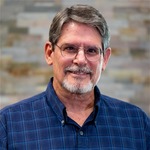
Imprisoned over George Floyd, set free by Jesus Christ—that is the topic we'll discuss today, right here on the Christian Worldview Radio Program, where the mission is to sharpen the biblical worldview of Christians and to proclaim the good news of Jesus Christ. I'm David Wheaton, the host, and our website is thechristianworldview.org. No one woke up on May 25th, 2020. Anticipating the country was about to change, that cities were soon to burn, and that the Marxist woke movement, including Black Lives Matter and Defund the Police, were going to take off. But that's what happened when George Floyd, a drug user with a long criminal history, was arrested after passing a counterfeit twenty-dollar bill at a Minneapolis market.
With methamphetamine and a high level of fentanyl in his system, Floyd resisted arrest for over 10 minutes, leading to one of the four officers, Derek Chauvin, employing the department-approved maximal restraint technique (MRT), where the suspect is handcuffed face down, and the officer's knee is placed on the upper back near the neck, in order to subdue the suspect until emergency medical service. Arrive. Video of a white police officer with his knee holding down a prone black man for nine minutes while crying out "I can't breathe" and calling for his mother spread like wildfire across social media. When EMS finally arrived, Floyd was loaded into the ambulance and taken to the hospital, where he was pronounced dead. The narrative was instantly cemented.
This proved police brutality and systemic racism, according to the documentary *The Fall of Minneapolis*, produced by Alpha News. The official autopsy showed that Floyd died of cardiac arrest, with the drugs in his system as a contributing factor, rather than solely from the restraint technique used by Officer Chauvin. No matter, a perfect storm had been whipped up in order to make political gains. Minneapolis burned with riots night after night. The third police precinct was abandoned and torched by rioters.
Riots spread to 140 cities across the country, leading to the largest civil unrest damages in U.S. history. One of the four Minneapolis police officers on scene that day was Tou Tao, spelled T O U T H A O. Tao never touched George Floyd, but instead kept bystanders at bay. All four officers will be jailed and charged.
Tao with aiding and abetting murder. Tao was sentenced to over five years in prison, serving three.
Now released, Tu Tao joins us to tell us about the George Floyd incident and how God providentially and graciously used the miscarriage of justice against Tao to bring him to saving faith in Christ. Let's get to the first segment of the interview with former Minneapolis police officer Tu Tao. To tell us about your background, growing up as Mung immigrants in Minneapolis, and what your family dynamics were like. Thank you, David, for having me. Just real quick, haven't been in Kentucky prison down there.
I have listened to some of your radio, so it feels kind of a big circle coming back here. As far as my family, my ethnicity is Mung. We're ethnicity that comes from Southeast Asia. It's kind of a small ethnicity, but due to the Vietnam War and the Mung people fighting the Communists and Marxists in Laos, after the U.S. left, many of them were persecuted heavily and fled over to to Thailand.
And the Mung people had to flee for their lives and cross the Mekong River. And many of them were killed, so the United States brought us the Mung people here, and many of us settled here in Minnesota and throughout the state.
So that's where my family comes from. My parents met here in the United States, and they settled in the Twin Cities area. The typical religion for Mung families, I believe, is shamanism. But it sounds like you had some Christian influence growing up. To stepping back a little bit to Laos, some of the first introductory of Christianity came from missionaries from America, and that's where many of the Hmong people were converted through the missionaries there.
So a lot of them came to United States after already having the foundation of Christianity. Of course, there are some that had shamanism, which is kind of animalistic. Sacrificial type religion, and so that's kind of where the monk community is at with what religions that they practice here. But this wasn't your personal faith. You weren't a true believer in Christ growing up, and was your family that way?
For me personally, I absolutely hated going to church as a child. Both my parents came from families that were converted in Laos, and they brought that Christianity here, and we were raised in it. They went to among church here, but as a child, I rebuilt it just like everyone else out of the womb. I just. Could not stand going to church.
I I much rather prefer having fun as a kid, and that's just kind of where I was at. Of course, I had a understanding.
Somebody, plenty of time, told me that Jesus died for my sins, and if you believe, you'll have eternal life. And of course, for me, I just checked the box. Yes, okay, good. All right, can I go now? And that that was kind of as far as my faith took me.
We're going to find out more how that changed later in your life. Again, Tuta is our guest today here on the Christian Worldview. He is a former Minneapolis police officer who was imprisoned over the George Floyd death. In your growing up years, what was your motivation as you? Got into adulthood to become a police officer for the city of Minneapolis, and what were your years like in the force?
Let's say leading up to the incident with George Floyd in 2020. As far as getting inspiration to be a police officer, that kind of started out pretty early in my childhood. My father had been not only verbally abusive but physically abusive, and he had kind of a short temper.
So there was a time where me and my brother, being the age of elementary school, we fought. And argued, and my dad immediately got angry at us, and and started beating us with his extension cord and and whatever he get his hand on.
So my mother intervened and tried to block us, but that just made him more upset. He would go into his room and grab his handgun and come out and pointed his gun at all of us, and that really scared us all. He did go back into his room real quick, and that gave us the opportunity to flee over to my aunt's home, and that is where she called nine one one. And this is when we're living in Minneapolis, and so that was my first encounter with a Minneapolis police officer for the remainder of my life. That just reminded me of that interaction, police officer, how he had arrested my father and taking him to jail for at least a couple of days, but that.
Those two days were very peaceful for a child who, at the elementary age.
So I always remember that. As far as my career with the Minneapolis Police Department, that kind of provided me the inspiration. Eventually, into adulthood, to go to school. And be a police officer and and work for the city of Minneapolis, as a police officer. And and there I worked it for almost nine years, entirely on patrol, working the patrol, pretty much your street cop.
As we come forward now, after those many years on the force, you couldn't have known that your life was about to be changed forever, on Monday, May twenty fifth, twenty twenty. Around eight fifteen in the evening, still light out that time of year, on a street just south of downtown Minneapolis, tell us about the call you received that particular day, and what your thoughts were as you and your partner Derek Chauvin, who was really the most well-known part of the foursome of police officers who were dealing with George Floyd and his resisting of arrest. What were your thoughts as you arrived at the scene where they were trying to restrain George Floyd? On that particular day, it was a holiday, Memorial Day, so we're working kind of a skeleton crew. This is called that squad 320, which was two rookie officers that were working that area, and I guess they were called to a someone passing counterfeit money.
And possibly high on drugs, and so they responded to that, and then shortly after they they arrive, we heard on the radio that they were taking one out, which is kind of signify to all street officers, hey, we're dealing with a person. Just start coming to our area a little bit, because we're going to take him out. And at this point, we don't know immediately what's going on, but that's just kind of a cue for us to start going that direction. Of course, they would later go on radial and say they're they're dealing with a person and they're trying to take him out, but he's resisting.
So we can hear the radial call and kind of a scuffle in the radio.
So that's where we're at the police station, getting ready to eat dinner. And just waiting for that time to come, and of course we hear that on the radio. We're the only squad available because we're we're again a skeleton crew.
So we go there and help them out. We jump in the squad car. Halfway there, they call Coldford, which means we're okay. We know that that area is a high gang area, so they might run into conflict in that area. We're just thinking it's just another call, and.
We're just there to back them up, but we show up, and they're in the midst of a struggle, putting Floyd into a squad car, and he's resisting arrest, resisting and not obeying commands, and that's where our interaction begins.
So, first thing we see as officers on scene is the other two officers struggling with George Floyd, according to. Body cameras that George Floyd had been resisting arrest ever since the first two officers came over to his car, not complying with with putting his hands on the wheel, as you mentioned, not getting into the police car once they got him out of his own car. He was kicking officers. He was lying. He was saying all kinds of stuff, resisting arrest, and that had been going on for many minutes, like I think over ten minutes.
That had been going on before you and Derek Chauvin. Arrived and by the time you got there, shortly thereafter, they got him restrained on the ground, in handcuffs. What was the Minneapolis Police Department protocol for dealing with someone like this, resisting arrest and doing all the things George Floyd was doing, especially considering he's an extremely large and strong man who had a known long criminal history? In other words, did Derek Chauvin, who was the one on top of George Floyd, lying flat in the ground on his stomach, with his knee in the upper back, his upper back to restrain him in handcuffs, did he do anything against his training while waiting? Because there had been a call.
For emergency medical services to arrive almost immediately after they got him on the ground, within seconds they called because they were concerned about his physical well-being. They immediately called EMS. But did Derek Chauvin and you officers do anything that was outside your training and protocol? Part of our protocol there was we already kind of have a suspicion that he is on drugs. The nine hundred one.
A caller had already reported it. He's not cooperating. He's really resisting. Three to four cops. He's able to escape out of the back of the squad car.
So that's already checked the boxes in our mind of excited delirium, which our protocol when dealing with excited delirium is to restrain them on the ground, as what Derek was doing. And what our protocol had taught us for many decades, and to call for Amlyn's medical attention, so that they can sedate him. With ketamine, because that's the most important thing, is to restrain him so he doesn't overexert himself and cause himself to have a heart attack. What happens, especially many people in the ER who's ever worked in ER dealing with patients who are agitated, is part of the thing is you have to restrain them so they don't exert themselves to death, and part of that is putting them essentially to sleep.
So they don't exert themselves because the lactic acid that is built up in that person can become poisonous.
So that was our goal: was to restrain him, wait for the ambulance to sedate him, and that's kind of where the viral video has us all. We're pretty much at the mercy of how fast the medical personnel can get there to sedate him. And they didn't get there very quickly. I think there was actually a wrong turn on the way, and it turned into about nine minutes that the video everyone saw of Derek Chauvin, you know, on top of George Floyd, there lying on the ground.
Now, before we get to that portion of it, though, you personally never touched George Floyd. You were doing crowd control. You were protecting the officers because a crowd had gathered. You were keeping bystanders at bay who were yelling at you, videoing, and so forth. Did you have any sense during any of this time that this situation was developing into a really unusual situation that was different than other arrests that you had made over the years, and that was going to end very badly for you all?
I think the only unusual thing was for me at that moment was, Ohio State Medical taking so long to get there, and that's why I go on the radio like, "We need them here, Code Three." Like, I mean, that means immediately, right now, lights and sirens.
So that was kind of for us the unusual thing. It was waiting for for that long. Of course, a lot of the stuff that happens post incident became kind of the more unusual stuff.
Now, as you've already discussed, the viral video that went out—what the world saw—was a nine-minute video, of a white police officer, Derek Chauvin, with his knee on the upper back of a prone, lying face-down, handcuffed black man, with the man crying out repeatedly, "I can't breathe," "I can't breathe," and calling out for his mother, and so forth. There was no context in that nine-minute video as you all waited for emergency medical services to arrive. Of the fact that he had just resisted arrest for over ten minutes, that there was all kinds of drugs in his system, which I'll get into shortly. His criminal history, the restraint protocol that you were correctly following as a force. And I think the world concluded just by watching that video, as it just filtered and quickly spread across social media.
This was excessive force, and the more extreme elements thought, "Well, this is only excessive. This is racist." What was taking place there?
So, two. Did you watch the news and social media immediately following the incident? As the entire world became the judge and jury on what was acceptable restraint and arrest protocol, and what were your thoughts on the conclusions being made? Because I remember when I personally saw the video, I was thinking, "Wow, that seems very excessive!" And boy, couldn't they have done anything else? But I didn't know any of the context of it.
What were your thoughts as you began to watch the videos and the news start to spread around the world? As far as like social media, media, I was aware that they that was being talked about, but then I was confident that once the world got the context, the entire context of what was going on, that they would understand why we were doing what we were doing. Of course, the media and the powers that be didn't desire to have that. Context to be laid out, and they just kind of made judgment on a on a 15 second video and determined that we're guilty immediately. It's kind of interesting how the media and even prosecutors, when they talk about George Floyd saying he couldn't breathe, they always seem to omit the the first part when he's standing up and resisting, that he's saying he can't breathe while resisting arrest.
So that's contrary to the narrative that was being put out. I think deception started pretty quickly, and as the days went by, kind of see that the deception was kind of set in order. Yeah, and there was other contradictions as well. Besides saying I can't breathe when he's face down, he was saying it before, as you mentioned, when he was standing up. He was also complaining about getting into the police car.
He couldn't do it because he's claustrophobic. Yet he had just gotten out of his own car.
So there's all sorts of things like that happening. Again, you need to know the context on the whole scene here, and not just see one video. The documentary "The Fall of Minneapolis" about the George Floyd death and following riots brings many of these things to light. We have a link to it at thechristianworldview.org, where you can watch it for free. After this short break, we have much more coming up with Tou Tiao, one of the four Minneapolis police officers imprisoned over the death of George Floyd.
I'm David Wheaton, and you are listening to the Christian Worldview Radio Program. We didn't want our kids doing all these secular games like Elf on the Shelf. We really wanted to put Christ front and center at Christmas, and they actually engineered a wooden manger that's small enough to hide. And then I wrote a family devotional with 25 devotions for every day in December leading up to Christmas, including Christmas Day, that you can do in about seven minutes, and the devotions are just. Loaded with the deity of Christ and the gospel, that was Pastor Grant Castleberry describing Manger in Danger, a 25-day devotional for families with children ages four through 12.
The devotional begins December 1st, and you can receive it for a donation of $30 or more to the Christian Worldview. To order, go to thechristianworldview.org, or call one eight eight six four six twenty two thirty three, or write to Box four zero one Excelsior, Minnesota five five three three one. David Wheaton here. For a limited time, we are offering my boy Ben for a donation of any amount to the Christian Worldview. The book is the true story of a yellow lab that I had back when I was competing on the professional tennis tour.
It's about relationships with Ben, my parents, with a childhood friend I would eventually marry, but ultimately with God, who causes all things, even the hard things, to work together for good. You can order a signed and personalized copy for yourself, or for your friend who enjoys a good story, loves dogs, sports, or the outdoors, and most of all, needs to hear about God's grace and the gospel. My boy Ben is owned by the Christian Worldview. It's 264 pages, hardcover, and retails for 24.95. To order, go to thechristianworldview dot org, or call one triple eight six four six twenty two thirty three, or write to Box four zero one Excelsior, Minnesota five five three three one.
Welcome back to the Christian Worldview. I'm David Wheaton. Be sure to visit thechristianworldview.org where you can sign up for our weekly email, the Christian Worldview Journal print publication, order resources for adults and children, and support the ministry. Our topic today is "Imprisoned over George Floyd, Set Free by Jesus Christ." And our guest is Tu Tao, former Minneapolis police officer. The official autopsy of George Floyd was performed 12 hours after his death by Dr.
Andrew Baker, and here's what it found: that there was no evidence that George Floyd died of asphyxiation. In other words, being suffocated to death. It also found that he had pre-existing health conditions like coronary artery disease, hypertension, and the cause of death was determined to be coronary artery disease. Stimulants, and the toxicology report showed that he had methamphetamine in his system, and he actually had a fatal level of fentanyl. Eleven, I think it's nanograms, and three nanograms will kill someone.
So he was over almost four times the amount of fentanyl in his system, and they determined that he did not die by Derek Chauvin's restraint technique suffocating him. No injuries to the vital structures of George Floyd's neck. And again, there's no indication of asphyxia or strangulation, and that's what the world believed. What was your reaction to all of a sudden the four of you officers being arrested and indicted? And I want to play the soundbite of that as the Attorney General, Keith Ellison, brings forth these indictments.
Today, I filed an amended complaint that charges that charges former Minneapolis police officer Derek Chauvin with murder in the second degree for the death of George Floyd. I'd like to announce that today, N.D.P. County Attorney Michael Freeman and I have filed a complaint that charges police officers King, Lane, and Taul. With aiding and abetting murder in the second degree, a felony offense, I strongly believe that these developments are in the interest of justice for Mr. Floyd, his family, our community, and our state.
Two, I'm sure, hearing that brings back a lot of bad memories of that particular time when all of a sudden the full force of government starts coming at you. Did you ever imagine any time during this incident with George Floyd that day that you would be held culpable for his death? No, absolutely not. We walked off that scene just like it's just another call. This is a call that we commonly deal with, especially with people who are on drugs and highly agitated.
So to us, it was just just another call.
Someone had to push it to go this far.
Now, within a day after the death of George Floyd, because of the media and social media and putting this video all across the world. Things in Minneapolis. The riots began. People began to come to the streets, enraged that this white police officer again. According to them, it was a racist incident.
This was the beginning of Black Lives Matter becoming popular, and so forth. This was surely the Minneapolis Police Department was racist against black people, and so forth. And I'd like to play just a little audio from. The documentary film *The Fall of Minneapolis* about what that was like here in our city. Within a day or so after the George Floyd incident, that went on for about a week.
Peaceful protest overnight in the Twin Cities. Several dozen arrests at the state capitol. But that entire time, they've been very peaceful. The crowd continues to be peaceful. Each day, it just compounded.
By the end of the day, it was probably a thousand people. And then the next day it was four thousand people, and then the day after that it was like eight to ten thousand people. I think it's really important for people to understand that the police that were working the street at that time were dealing with situations that, in my mind, only you could think of is wartime. This is like a modern day war zone. I mean, this is this is unbelievable what is happening on the streets of Minneapolis.
You were dodging water bottles, bricks. Roman candles, anything they can get their hands on. It was crazy. It was like I was living in a third world country. I'm like, what is going on?
Where do I live right now? We are still taking rocks, frozen water bottles. They're shooting mortars at us. Can we escalate our use of force to deploy scat rounds? Twelve oh four, negative on the scat rounds.
Twelve oh four, I say again, negative on the scat rounds. There's another plan in play. Stand by. The Minneapolis police officers were left without riot gear. They couldn't use the full force of response to something like this.
I mean, basically, the a large part of the city was burned down for days. I mean, it's almost been something hasn't happened like this in America maybe since the Los Angeles riots. Why do you think the city of Minneapolis and the governor could have called in the National Guard and so forth? Why do you think they allowed this degree of devastation to take place? For the days following the George Floyd death, including to giving up the third police precinct facility to be overrun by rioters, to me it was just pure politics, just to cause chaos during an election year.
That was their goal. In my mind, is just to allow chaos to happen and then to blame the president. It's just pure evil for what they did, was to allow a city to burn down. Having been a police officer who's been trained with riots and protests, it would have been very easy for the department to quell all those protests. We had done it before in the past, so obviously it took some sort of political will to.
Essentially, withdraw the police from their city, and their precinct, to allow it to burn, all for politics and power. Extremely troubling. I think I heard that that has, I think, almost never happened ever in a major city in America where a police precinct was allowed to be overrun, but that occurred back here in Minneapolis. I think it was late May of 2020. As these riots are going on, within about a week after the death of George Floyd, and after the indictment we heard there by Keith Ellison, you turned yourself in, and you were taken and put in a cell in jail.
Here you are, police officer going out to do a call, and now you find yourself about a week later or so in jail. What was going through your mind? As that took place, as you had to say goodbye to your wife and children, and turn yourself in. I'm assuming you were handcuffed, taken to jail. I recall you were offered something to read as you went into the jail cell.
Tell us about that experience. What you chose to take in with you, and someone who you didn't even know writing you a letter, just a month before. This incident happened. My brother, who became a true Christian year prior, had kind of questioned me, like, "Are you sure you are a Christian? Because you don't talk and and act like one." I am like, "Well, I was born into a Christian family, so I consider myself Christian.
Maybe a part time Christian." Obviously, we know biblically that t here is no such thing as a part time Christian, but he said, "Well, you should try reading the Bible." Yeah, maybe one day when I get older, perhaps I'll do that. And then, of course, this happens, and as I'm being escorted into my single cell, because I was a police officer, I had to be separated from a general population, so they escorted me into isolation cell. And before I went in, the deputy says, "Do you want to grab a book? It's going to be a long time in there." So I'm like, "Okay, well." The thought of my brother kind of planted that seed. Like, well, I guess I'll read the Bible because it's sitting right there.
So I grab the Bible and I walk inside and I spend my time reading the Gospel. People always say, "Well, you can find the way out of your problems of life in here." I'm like, okay, well, maybe I'll find my issue here and perhaps this will solve my problem. At that time, I couldn't find the answer to my problem there. Letter comes in from a gentleman, and he talks about the book of Job. He says what was done to you guys is evil, and he spoke about the book of Job.
And I'm like, okay, well, I've been reading the Bible for at least seven days now, and I haven't figured it out. Maybe I'll go to the book of Job, and I read the entire book of Job, and I still didn't really truly understand what was going. I'm like, I get it.
So it sounds like this guy has a suffering a lot. But I don't get how this is applicable to my life. In fact, it just makes it feel worse.
So, you know, I'm walking around, pacing around. We know this is kind of a spiritual battle that we we have to deal with. And the thoughts of you lost everything, take your life. It's this is over. It goes into my mind, and I remember thinking, like, God, are you even real?
Why would you allow this to happen to me? Thought you were good, I remember just sitting down in my bed and thinking, "Well, God, I've read Job, and I have no idea what's going on in this book." And within a few minutes, a Hempstead County deputy comes in, unlocks the door, and says, and goes immediately straight to my Bible, and grabs it without me prompting him. He doesn't even say anything; he just goes and grabs my Bible, and he says, "Let me teach you about the Book of Job." And yeah, I mean, it's. It is mathematically impossible, in my mind. As a police officer, we look at evidence, we do calculations our head, and as the only thing I got from that conversation was because I was preoccupied with doing the calculations, is he said, "Just read the first two chapters of Jill," and of course, those who know Jill knows what the first two chapters are about, and.
Then he left, and I'm still doing the calculation. Like this has got to be impossible. There's no possible way this can happen. There must be a God, and that's kind of where I start tearing up. I've never been a person who cries.
I just start tearing up and weeping. Remember, God, I have sinned against you. My entire life, I have rebelled against you. I'm sorry. Please forgive me.
I believe you, Jesus. I believe that you died for my sins. I repent of all my sins I have done. I'm ready to surrender. I believe that you died for my sins, and from that moment on, my life changed forever.
It's it's just a supernatural story. Praise God. For his providence in all those sets of circumstances, getting the Bible as you went into the jail cell, your brother having told you about reading the Bible or asked you about reading the Bible, and then not understanding it, to having someone from the jail kind of come by at the time and refer you—I mean, it's just all of it is just. Praised God. It's all I can say, and that He actually brought you then to repent and believe in who Christ is and what He did for you.
Just an amazing thing.
So, I don't know how long were you in jail there before you were able to get out on bail, and then what did your wife say when she picked you up? Yeah, so it took about 31 days to raise the funds to bail out of Henpen County Jail. But once I did, she picked me up, and one of the first things I said to her is, "You have now been demoted. Everyone's been demoted in my life. Jesus is number one." And she's like, "What's, what's wrong with you?
What did they do to you in there?" It's not what they did anything. It was what God did for me. Then as we're driving, and I remember telling, "Do you know that Jesus says that He's coming back? Do you believe that? I believe it." That's where, like, she just like this guy has gone crazy because he's never been religious.
That was just kind of the first things impression of my wife when she picked me up. She wasn't a true believer at that point, but she came to saving. Faith later, I believe, which is even better part of the story. But you weren't out of the woods here yet with your life. In the aftermath of this George Floyd death, you were now born again and saved, and your eternity was secure.
But your life here on earth, your freedom was not secure, and you were indicted and had to go to trial.
So, just explain briefly your trial over the. Death of George Floyd, the plea deals that you actually turned down and why you did that. We charged federally and then statewise as well. After we lost a federal case, we also had to deal with the state case, and that's kind of where I guess my testimony and witnessing to Judge Cahill, I guess apparently got viral, in which I share the gospel with him, and it was.
Something that God had commanded us to do, even though evil things have come upon us, we have to be faithful, even in the midst of those trials. I think that was really kind of what God was using to build me up and to grow me spiritually, to be just a man of God, a man of faith, to be a servant to Him. His promise is to get us to deliver us out of our immediate problems. It is to be with us wherever we go. And for us to trust that that is, in fact, what his promise is, and that was what kind of held me together throughout these many years going through these trials.
You didn't accept the plea deal that they wanted you to take, so you could admit guilt in this situation. You didn't take those plea deals. You were found guilty, and you went to prison. What was your state of mind?
Now you're believer, though. It's only natural to have feelings of bitterness, anger, revengeful. You're you're being taken away from your family and children again. How did you resist those sort of fleshly impulses when you were in prison? And what was your time in prison like?
Tou Tiao, one of the four Minneapolis police officers imprisoned over the death of George Floyd, will answer that question and more after this two-minute break. I'm David Wheaton. You are listening to the Christian Worldview Radio Program. The September-October issue of the Christian Worldview Journal features a column by Rod Martin explaining why Christianity commands capitalism. Missy Ropnak writes about Lindsay Clancy, who murdered her three young children, and the widespread sympathy she has received.
And Pastor Matt Morell turns to beloved Psalm 23 and shows how God's names compel deeper love and trust in Him. The Christian Worldview Journal is a print and digital publication designed to sharpen your biblical worldview on current events and issues of the faith. The journal is sent to Christian Worldview Partners as a thank you for their support of this radio ministry. To become a Christian Worldview partner or order an individual issue of the journal, go to thechristianworldview.org or call one eight six four six twenty two thirty three or write to Box Four Zero One Excelsior, Minnesota five five three three one. We didn't want our kids doing all these secular games like Elf on the Shelf.
We really wanted to put Christ front and center at Christmas, and they actually engineered a wooden manger that's small enough to hide. And then I wrote a family devotional with 25 devotions for every day in December leading up to Christmas, including Christmas Day, that you can do in about seven minutes, and the devotions are just loaded. With the deity of Christ and the gospel, that was Pastor Grant Castleberry describing Manger in Danger, a 25-day devotional for families with children ages four through 12. The devotional begins December 1st, and you can receive it for a donation of $30 or more to the Christian Worldview. To order, go to thechristianworldview dot org or call one triple eight six four six twenty two thirty three or write to Box four zero one Excelsior, Minnesota five five three three one.
Welcome back to the Christian Worldview. I'm David Wheaton. Be sure to visit thechristianworldview.org where you can sign up for our weekly email, the Christian Worldview Journal print publication, order resources for adults and children, and support the ministry. Our topic today is Imprisoned over George Floyd, set free by Jesus Christ. And our guest is Tu Tao, former Minneapolis police officer.
You were found guilty. You didn't accept the plea deal that they wanted you to take, so you could admit guilt in this situation. You didn't take those plea deals. You were found guilty, and you went to prison. What was your state of mind?
It's only natural to have feelings of bitterness, anger. Revengeful, you're you're being taken away from your family and children again. How did you resist those sort of fleshly impulses when you were in prison, and what was your time in prison like?
So I spent just slightly over three years in prison, and God had worked it in me to just just continue in belief. Just we could just see it through the Bible, you know, with great prime example of Old Testament Joseph, in which he remains faithful. Even amidst those difficulty, you know, I was determined, with the help of Holy Spirit, not to be bitter, not to fall into self pity. But, well, this is God. I guess you have me here, so I'll work for your kingdom here.
This, I guess, this is the ministry you you have me in, in here.
So I will serve you as best I can, as faithfully as I can. Having gone to prison, literally the first day in prison, in general population. Temp was made on my life, but what was meant for evil, that actually God used it for my own good because that actually moved me. Because I was in a hospital prison, so that actually moved me from a general population to the hospital population. That allowed me to minister to many of the ill patients and pray for them and disciple them and share the gospel.
So that's where my ministry in prison was. You were a missionary in your imprisonment, and just another amazing aspect of it.
Now you mentioned the story of Joseph, and of course, there's so many similarities here. His brothers wrongfully and unjustly sell him into slavery in Egypt. He's wrongfully imprisoned by Potiphar for being falsely accused for trying to rape Potiphar's wife. But then the story finishes or ends in the book of Genesis with Joseph telling his brothers when they come down. They recognize that Joseph has now become the second in command in the land, and so forth.
And Joseph says this well-known line: "You meant it for evil." His brothers are kind of cowering in front of him. They think he's going to get retribution, but God meant it for good. And Joseph trusting in the providence of God, the sovereignty of God in all our circumstances of life, as you have testified today.
So, how would you exhort someone listening today, who believes their own trials? Maybe something not as calamitous as what you experienced with the death of George Floyd, but maybe in their marriage, they've had a hard trial in their marriage, or divorce. Or something that's taken place at their workplace, maybe a business deal gone wrong, maybe they've had a health trial they never expected, that they feel they've encountered something completely undeserved in life, and they're questioning God. What would be your exhortation to them? We all say we trust God in our good times, but can we trust Him during the bad times?
Can we trust His goodness? Even when things are not going our our way, people often quote, you know, Romans eight two eight, all things work together for good for those who love God and those who are called according to His purpose. Do you really believe it? When you look at your situation and you look at that versus, can you believe it? You might not be able to see it now, but can you see God's goodness now and that it will be used for your good in the future?
And that's the promise I held: is that this thing that happened to me, that God would use it for my good, and He did. I am living testimony of it. I know where I'm going, the day I leave this earth, and that brings me comfort and joy. And no matter what I'm going through, whether it's a health issue, financial issue, or false imprisonment, I know where I'm going, and I know that God is with me wherever I go. I want to read another passage, reference another passage too, from James chapter one, verses two through four.
Or James writes, "Consider it all joy, my brethren, when you encounter various trials, knowing that the testing of your faith produces endurance, and let endurance have its perfect result, so that you may be perfect and complete, lacking in nothing." For you personally, looking back at this whole thing, how your life completely changed on that call that day, going down to South Minneapolis, you had no idea it was going to be George Floyd, and he was going to become the focal point of the world's attention for months and months. Really, it's been a major event in the history of our country. Do you consider it joy now, as you look back on this, that God chose? You to go to this George Floyd incident that day and everything that happened to you afterwards. Yeah, my faith has been tested to be genuine, and that's what we can rejoice in: is having gone through these trials and tribulations, and holding on to my faith, and enduring through it, and God's sanctification process, guiding me through it and changing me into the image of Christ.
Is something that I can hold on to and I can rejoice in. It doesn't matter what was I was going through, but I can rejoice that I am a child of God, and He's going to train me and make me into the image of Jesus. There's nothing more that I can rejoice in, and that was given to me through Jesus Christ is that eternal life. I can't ever repay it, but I can rejoice in it. That brings me immense comfort.
That is so great that God gave you even a greater assurance of your salvation, and you know He's sanctifying you. That's more precious and reason for rejoicing than than anything else in life, even "quote unquote" freedom out into the world.
Now, just a couple final questions: Have you been in contact with your partner, Derek Chauvin, who's still in prison? I think he's due to be in prison for a very long time. And if you have been in contact with Him, what is his state of mind, and have you had opportunities to talk about what happened to you, what God did in your life? I have not personally talked with him. I hope that he knows that he has a lot of support that is starting to garner up, and the and the truth is starting to come out a lot more.
A lot of what was evil then is being exposed. And it is not by me or anyone; it is only by God who is exposing the evil that's occurring.
So, I would encourage you to continue trust God in God's plan, and most importantly, to trust God for eternal life. That is more important than anything else, and getting out of prison or or whatever situation has. But I'm confident that God is able. To deliver him out of that prison, I hope he certainly does, because he was very wrongfully and unjustly imprisoned, as you were. Final question for you: To and as we come up to the current day in our state in Minnesota, I'd just like to play one more soundbite from the documentary "The Fall of Minneapolis," talking about the political capitalization being made by.
Governor Tim Walz and Minneapolis Mayor Jacob Frey during that time, the elections were coming up. Everything's politically driven. They were going to use this incident for a political narrative, and they did. It started with the the tragic and senseless murder of George Floyd, and it extended through the week of righteous anger being expressed by. Community leaders and all people of conscience.
If you're feeling that sadness and that anger, it's not only understandable; it's right. Words matter, and calling it a murder is a lie. It wasn't a murder. There was no intent to murder George Floyd for all the reasons we already discussed. It was almost condoning the fact that our city—it wasn't almost—it was condoning that our city burned down as a result of it.
You've been living in Minnesota almost your entire life, and as we head toward the midterm elections, and again, not trying to make this political, but I want to—I want to ask a worldview question here. When you personally experienced what took place back in 2020, with the political leaders allowing this all to happen, and the false accusations being made against you and others, letting the city burn, the amount of fraud that has been taking place in this state, the resistance from leaders and people in the state against immigration and custom enforcement officers. Trying to get those who have entered the country illegally, who have committed criminal acts, trying to get them out, and the resistance to that. How do you explain how so many in this state will vote to put the same party back in power? I kind of go back to scripture a little bit in Ecclesiastes chapter one, verse nine, where it says, "There's nothing new under sun." Everything kind of the madness of man kind of repeats itself over and over and over again.
Satan does the same things over and over again, and for me personally, become a born again believer and having a biblical world view, we can see that happening, and only Christians can really, many ways, stop the madness of man repeating the same cycle over and over again. We have the same people still in place, doing the very same things.
Now, this Marxist communist ideology is being brought all throughout the country. Minnesota really was just a testing ground for a bigger purpose to go and spread throughout the country, and even throughout the world. You could just see that right now in France, where where Paris is burning down. Their ideology calls for burning down our histories. Throwing our history books away so that we don't learn from our mistakes, because they want to rewrite history, and that's something where it's so important for us Christians to have a biblical point of view.
That's how I explain why the same things are happening over and over again. I think that's exactly biblically accurate.
So thank you for saying that, and even more to God be the glory to for. What He has done in your life, not only your earthly life, but just more importantly, what He has done to save your soul, and to sanctify you, and for you to be able to communicate how great this God is, what what a saving God He is. We just thank you for coming on the Christian worldview radio program today. We praise God for your life and your testimony, and we just wish all of God's best and grace to you. Thank you, David, for having me.
Again, Tou Taw, one of the four Minneapolis police officers imprisoned over the death of George Floyd, has been our guest today. If you missed any of the program, you can hear a replay at our website, thechristianworldview.org, or contact your local radio station to see if they air the program at other times. You can also open the podcast app on your phone and search for the Christian Worldview with my name, David Wheaton, to subscribe to the program. Program for free.
Now, the audio clips during today's program were taken from *The Fall of Minneapolis*, a documentary produced by Alpha News, based here in Minnesota. We have it linked at thechristianworldview.org, and I would highly encourage you to watch it. It's free to watch, but be cautioned that there is some coarse language and violence as the George Floyd incident and the following riots are documented. Just one final point. Did you notice what Tu Tao said about how he came to saving faith?
The suffering and injustice didn't save him, but God used those things to get his attention, to have him start reading the Bible, to bring someone into his cell to explain it to him, so that the scales would fall from his eyes to understand and repent of his sin and rebellion against God. And bring him to saving faith in Christ.
So, Tu Tao may have been imprisoned by man, but he was eternally set free by Jesus Christ, as Scripture says. Therefore, there is now no condemnation for those who are in Christ Jesus. Find out how you can be born again, rather than condemned, by visiting thechristianworldview.org and clicking on the page "What Must I Do to Be Saved." Thank you for joining us today on the Christian Worldview and for your support of this nonprofit radio ministry. Until next time, think biblically, live accordingly, and stand firm. The mission of the Christian Worldview is to sharpen the biblical worldview of Christians and to proclaim the good news of Jesus Christ.
We hope today's broadcast encouraged you toward that end. To hear a replay of today's program, order a transcript, or find out what must I do to be saved, go to thechristianworldview.org or call toll free one eight hundred eight six four six twenty two thirty three. The Christian Worldview is a listener-supported nonprofit radio ministry furnished by the Overcomer Foundation. To make a donation, order resources, become a Christian Worldview partner, sign up for our weekly email, or the Christian Worldview Journal print publication. Or to contact us, go to thechristianworldview.org, call one eight eight eight six four six two two thirty three, or write to Box four zero one Excelsior, Minnesota five five three three one.
Thanks for listening to the Christian Worldview.