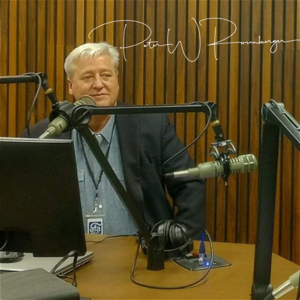
This is the Truth Network. Welcome to Hope for the Caregiver here on American Family Radio. This is Peter Rosenberger.
So glad to be with you. HopefortheCaregiver.com, Hope for the Caregiver. This is the program for you as a family caregiver. If you got up this morning and helped somebody get dressed, Gave somebody medication, cleaned up a mess, made another phone call to an insurance company or medical provider, or put yourself between a chronically impaired loved one, an even worse disaster, this program. is indeed.
for you. How are you doing? How you holding up? What's going on with you? You are why I do this program.
And I'm glad to be with you today. Hope for the caregiver.com. Hopeforthecaregiver.com. All right, now for the last several weeks, we've been talking about theology.
Now, I know that may sound a little strange on a program for caregivers. You may be thinking, Peter, I don't need theology. I need somebody to sit with mom for three hours so I can go to the grocery store. I understand this. I do indeed.
But why are you spending three hours at the grocery store? No, I'm just kidding. I'm like a ninja when I go to the grocery store. I'm in and out, and it's 17 miles away. You may need help getting your spouse into the shower.
You may need help with the laundry or. Your insurance company to stop denying something the doctor ordered three months ago. You may need a lot of different things. I get that. I I speak fluent caregiver.
All right. But I also know that underneath all those practical problems, something else is going on. There are questions we can't answer. by calling the pharmacy. There are problems the insurance companies they're not going to solve.
And there are wounds That don't close because somebody finally showed up to help with the laundry or clean the kitchen, however wonderful that would be. When the suffering goes on long enough, questions start coming out of us: where is God? What kind of good and loving God would allow this? How long, oh Lord? These are the three questions we've been discussing in some form or the other.
They're all, there are a lot of. derivations of this, but th they come down to those basic three questions. You may not say them exactly that way. You may say, Why is this happening? You may say, Why won't somebody help us?
You may say, You know, how can she hurt this much? Why won't he stop drinking? Why did the treatment fail? These are all legitimate questions. You know, I don't know how much longer I can do this.
You know, that's caregiver language. All right, but let me translate that for you. A great deal of the time what we're really asking is Where's coming? Does he see this? Does he care?
Can he be trusted? How long is he going to allow this to continue? Those are theological questions. Before you ever tuned into this program, Hope for the caregiver. And listen to some guy talk about family caregivers, you were already discussing theology.
In your circumstances, not at church necessarily, not in Sunday school class where you're talking about theological principles and you're learning discipleship or you're going through the book of Romans or whatever, or maybe you've never even been to church. Maybe that's not even been on your radar. Maybe somebody just sent you a link to the show. We'll do the podcast. I have doctors out there that are sending this podcast out to spouses of their patients, family members of their patients.
Maybe you're one of those people that just got this. And you're thinking, who is this guy? Yes, he has spectacular incandescent white hair, but why am I listening to it? You know, why are we here? Why are we having a conversation about theology?
But over the last couple of programs, we've stayed with that first question: where is God? Because that's where a lot of caregivers spend some time. And I told you about standing in the prosthetic clinic in Ghana with our team one time, and a four year old boy named Benjamin lost his leg after being struck by a vehicle. And one of the team members said, where was God when this little boy was hurt? I told him God was right there.
Same thing about Gracie's wreck. Same thing about all the other things that go on in life. But I also later realized my answer was incomplete. Saying God watched it happen made God sound like a spectator. He's not.
He's not sitting in the bleachers watching our lives or he's or in box seats, if you will. He's not waiting for somebody to notify him that something terrible has happened. He doesn't play defense. Psalm 139 says, Where shall I go from your spirit? Or where shall I flee from your presence?
If I ascend to heaven, you're there. If I make my bed in the grave, you're there. If I go to the furthest reaches of the sea, you're there. There is nowhere in creation where God is absent. That includes the scene of an accident.
That includes a hospital. Operating suite. That includes A mortuary. That includes divorce court. That includes a rehab center.
He's already there. He's there. at two in the morning at your kitchen table. He's there. He's waiting for us in that moment, and he's shepherded us all the way to it, and he will shepherd us through it.
That does not make the moment painless. It does not answer every question. In some ways it creates a harder question. If God was there if He knew what was happening, if He possessed the power to stop it, why did He allow it? That is a question that has plagued so many people since the Garden.
We're going to get there, but I don't want to rush past something, okay? I just we're going to take this in little tiny bites here, but let's think about this, let's slow down. The question we're already asking is where's God?
Okay? That's the question we ask. You'll get there eventually. If you haven't been there as a caregiver, give it time. You will.
But the first question God asks a human being in Scripture is also. A where question. God asked Adam. Where are you? Think about that for just a moment.
Now God repeated that question to Job at the end of Job, and he said, Where were you when I was doing all this? But let's let's get back to the garden here, go back even further. God said to Adam, Where are you?
Now, did did God lose Adam? Was he wandering through the gardens? Where where did that boy go? Of course not. God knew exactly.
where Adam was. The question was not about Adam's location. God was calling Adam out of hiding. Adam, where are you? What's happened to you?
Why are you hiding from me? Why are you trying to cover yourself? Will you come out here and tell me the truth? The first question God asked man was not because God lacked information, it was because Adam needed to face where he was. And that question reaches all the way into our lives as caregivers.
Where are you? Not where's your loved one, not where's the doctor, not where is the insurance paperwork, where are you? Are you afraid? Are you angry? Are you exhausted?
Are you hiding behind all the work that needs to be done? Are you trying to control something no human being can control? Are you so busy reacting to everybody else's condition you've lost sight of your own? Where are you? Fear makes us all want to hide.
Adam said it himself. I was afraid, and I hid. This may be one of the most honest statements in Scripture. I was afraid. How many caregivers understand fear?
I was afraid when the phone rang. I was afraid when the doctor walked in the room. I was afraid when I saw the test results. I remember looking at the test results of my cancer earlier this year. I'm sitting in my office looking at that.
I hadn't even told Gracie yet. I'm just looking at it. I saw it posted my chart, and I was like, Well, that's just great. And my first question was: what am I going to do about Gracie? That's the first question I thought about.
with the Gracie factory. I'm looking at my own diagnosis of cancer, and I'm thinking about my journey as a caregiver. You know, I was afraid when I saw this, I was afraid looking at your bank account. How many of you get afraid looking at your bank account? That's pretty regular for me.
I was afraid when I thought about what would happen if something happened to me. I was afraid and I hid. and sometimes we hide inside our busyness and sometimes we hide behind competence. We become the person who knows every medication, every doctor, every appointment, every insurance code, and every possible thing that could go wrong. And everybody looks at us and says, I don't know how you do it.
How many times has somebody said to you, I don't know how you do this? I can't count how many times they said it to me. I'm pretty good at what I do. I've got a pastor friend of mine that said, Peter, you do yourself a disservice. I said, what do you mean?
He said, you make this look easier than it is. People have no idea what you carry.
Meanwhile We're scared out of our minds. And we hide sometimes in the anger or behind humor or by trying to fix everybody around us, or sometimes we hide in the bathroom and cry as quietly as possible because we don't want the person we're caring for to hear us. And God asked, Where are you? He's not asking because he doesn't know. We're going to talk about this some more when we come back.
I'm delving into these things because I spent a lifetime reacting and floundering around and basically just being stupid. You know, where's God? God, why are you doing this? I got tired of those questions. After 40 years, you do get tired of those questions.
And I thought, you know what? I'm going to deal with these questions in my life, I'm going to ask these of myself. And I'm going to go to Scripture and see what Scripture has to say, and I'm going to learn about this God. that I profess to believe in. We're going to talk about that more when we come back.
This is Peter Rosenberger, and this is Hope for the Caregiver. Hopefortheregiver.com. Don't go away. We'll be right back. Welcome back to Hope for the Caregiver.
This is Peter Rosenberg. Glad that you are with me today. Hopeforth the Caregiver.com. HopefortheCaregiver.com. Before the break, we looked at the First question that God asked Adam.
after Adam said, and he hid among the trees. Where are you? Now, that's the question a lot of caregivers ask of God, but that was the first question God asked of. Fallen sinful man, where are you? God knew where Adam was.
Adam was the one who needed to recognize where he was.
So let me ask you again, where are you? As a caregiver. Or more specifically, if the Lord's asking you that question. Can you answer it honestly? like Adam did.
Adam said I was afraid and I hid. That's a pretty honest answer. But if the Lord asked me, and he asked you, as caregivers, as human beings. Where are you? Can we see?
You know, Lord, I'm frightened. I'm angry, I'm exhausted. I don't know what to do. I've been trying to hold this whole thing together. Good idea.
I've been pretending that I'm stronger than I am. I've been carrying things that don't belong to me. I'm hiding. Behind whatever else. busyness, freneticness.
Sometimes, you know, you can hide behind resentment. It makes you feel powerful. To carry resentment. It's one of the most delicious sins of all because it makes you feel powerful, because you just indulge yourself in thinking about all the things that vindicate you. and how these people are Whatever.
I mean you you get the point. We had behind all kinds of things. Vices We take things sex. drugs, whatever, alcohol, we hide behind all kinds of things.
Sometimes we hide behind religiosity. And we become one of these people that just spout off all this stuff. Like that lady I told you about a couple of weeks ago when there was an ice storm, and she had power at her house, and so many were without it. I called to check on friends of mine that were staying at her house and I could hear her in the background saying, No weapon formed against us shall prosper. And I'm thinking, Oh.
Bless your heart. I mean, that that's just a level of cluelessness. And some people hide behind that type of God speak. God already knows. He knows what you're doing.
He knows that you're hiding. You're not giving him new information, but you're finally telling him the truth about where you are. This isn't a lecture that I'm giving here. This is not a theological exercise that we're going through as caregivers. This is caregivers standing at the kitchen at 2 in the morning.
Said, here I am, Lord. I don't understand what you are doing. I don't like what is happening. I am frightened about tomorrow, and tomorrow is already here. It's two in the morning, and tomorrow, daylight, will be here in a couple hours.
But here I am. And that's a place where we can begin. as caregivers.
Now let's return to the question we ask.
Well, where is God?
Well, if you walk into your house and call out, where are you? You're assuming that somebody is there. You're not asking whether that person exists. You're asking where that person is. When a Christian cries out, Where is God?
we're already saying something. We're saying that we believe there is a God. At least we say we believe that. Caregivers pray some of the shortest prayers ever prayed. Lord, help me.
Help my unbelief. That's one of my favorites of scripture. Please not again, Lord. God, I can't do this How long?
Sometimes the only prayer We can form. It's just to say Jesus. But I think about what you're saying when you pray that. When you're praying, God help me, you're saying that God exists. You are saying that he hears you.
The implications of what you're saying go so deep here. You're saying that He knows where you are. You're saying that He possesses the power to help. Your prayer, however small it is, however pitiful it is, however it is whispered out through trembling lips, is packed with theology. You probably Don't feel like a theologian.
You probably feel like a caregiver trying not to come apart, but you're making a statement about God. Let's stop right there. Christian, do you believe that there is a God? I'm not asking whether you grew up in church. I'm not asking whether your parents believed in God.
I'm not asking whether you have a Bible somewhere in your house or whether you know the words to amazing grace. I'm asking you whether you believe there is a real God, not an idea, not a religious feeling, not a comforting thought we pull out when the doctor gives us bad news, not a backup plan that we keep behind glass with a little sign that says break in case of emergency. I'm talking about: do you believe a real God exists, whether you are calm or panicked, whether you understand him or not, or whether you approve of what he is doing or not? Do you believe this? Hebrews 11:6 says, Whoever would draw near to God must believe that He exists and that He rewards those who seek Him.
Must Believe that he exists. That's the starting point. The Bible begins the same way. In the beginning, God. It does not say in the beginning there was a caregiver with a clipboard trying to keep everybody alive.
It says in the beginning, God. Before there was a garden there was God. Before there was a diagnosis, there was God. Before there was an accident, there was God. Before there was a hospital or a wheelchair or a pill organizer or an insurance company or a nursing home or stacks of bills, there was God.
And when all those things are gone, there will be God. He will still be. Theological term is esseity, being within himself. He is a being. That's why the Big Bang theory doesn't work.
These things didn't spontaneously combust because that means that they have being in and of themselves. that they are eternal, not created. That that's not rocks and gas have being within themselves. That's what they're telling you. Only God has a seity, being within Himself, self sufficient.
He doesn't begin when I become aware of him. And he doesn't disappear when I can't feel him. He doesn't cease to exist because my circumstances no longer make sense to me. And that is really important for us as caregivers because our circumstances change Constantly, the temperature goes up, the blood pressure goes down, the blood pressure goes up. The scan shows something new.
You get a cancer diagnosis posted to your chart. The doctor changes the treatment. There's so many different things going on. Our person that we're caring for has a good day, or the next day, everything falls apart. Our emotions move with all of it.
We feel. hopeful in the morning and devastated by lunch. But God does not appear and disappear with the numbers on the monitor. God is. That's what he told Moses, I am.
Now, believing that God exists is not some kind of transaction. We do not say, All right, God, I believe in you, now you have to make this turn out the way I want. Faith isn't a lever that we pull to make God do something. We do not place enough belief into a machine and receive healing in return. We don't squint our eyes real hard when we pray.
And somehow this is all going to work out. That's not Christianity. And yet that's being promulgated.
Some of you have heard that.
Some of you've heard that this week from pastors or friends or church fellow church goers, whatever, that you know. that will say these things. And there's nothing that Frost my grummit more than when I hear that kind of stuff. I've had that stuff levied at me and Gracie for a lifetime. and I pushed back hard on it.
But that's a conversation for another day. We're talking about now just the basics here that Mm-hmm. God is not obligated to follow my plan because I've acknowledged his existence. But if I say there is a God, then that yes. that there is a God has implications for me.
And that's where we're starting as caregivers, you and me, today, right now. I can't say, yes, I believe there is a God, and then live as if the throne is vacant and everything depends on me.
Okay, I did that for years. I spent a lifetime reacting and spazzing. I mean, it's embarrassing. You know, the phone rang and I reacted. A machine beep, I reacted.
Gracie cried out, I reacted. Doctor walked in the room, I reacted. Bill arrived, I reacted a lot with those. And and I I spent a lifetime of this. All it did was get me more tired, make my hair beautifully incandescent white, but yes, it is white.
I have four brothers and I have whiter hair than all of them put together. My father died at 89 and I have whiter hair than he did. All that's done is just make me look old. and worn out. I really am thinking about writing a book called Exhausted.
Why do you ask? I think I will do that. And I know I'm not alone on this. This is what caregivers do. We, you know, when.
We react quickly.
Sometimes we say things quickly. We pop off or whatever. I get that. When somebody falls, that's not the time to sit down and work through a theology textbook. You help them.
When somebody can't breathe, you call for help. When somebody coaches, you call for help. Been there, done that. When the doctor misses something, you speak up. Been there, done that.
That's our responsibility. That's part of the journey. But you can't build your entire understanding of. Hopping from one emergency to the next, you can't allow every new crisis. to redefine what is true.
and we can become extremely skilled in crisis. We learn how to read the room. We become hyper-vigilant. You know, and we know what every sound means. We can tell what something is wrong before anybody else notices.
I can look at Gracie and know that something is off, sometimes before a machine can register it. Those skills are important, okay? They matter. and they've helped protect her many, many, many, many times. But being observant is not the same thing as being omniscient.
Being responsible is not the same thing as being sovereign. And being good in a crisis does not make me God. That may sound obvious, but look how we live. We try to know everything. We try to anticipate everything.
We try to prevent everything. We try to control every outcome. We stay awake because we believe our vigilance is the only thing holding the world together. We think if i if I close my eyes, something's going to happen. And something may happen.
And that is part of what makes this so difficult, but staying awake all night doesn't make me sovereign. And worrying about tomorrow does not give me control over tomorrow. Pastor a friend of mine told me, he said, be careful with your prayer life. It's liable to upset your worry life. We worry about a lot of things.
I can exhaust myself trying to possess knowledge and power that no human being has, and then I collapse under the weight and wonder where God is. Perhaps before I ask, God, where are you? I need to answer him when he asks Peter, where are you? And oftentimes, the answer is, Lord, I'm standing where only you belong. I'm in the wrong place.
I'm trying to carry something that doesn't belong to me. I'm trying to do something. that's not mine to do. I'm trying to guarantee an outcome that's not mine to guarantee. I'm trying to save somebody.
Who's already got a saviour? And at some point we have to stop, we have to turn, and we have to face reality. and we have to ask ourselves some hard question what do I actually believe? And why do I believe it? Am I willing to live with the implications of that belief?
At some point we got to land on a square. And we've already Identify the first square. There is a God. Second square is I ate him. And that is not God belittling me.
That's not God saying my work doesn't matter. It's not permission for me to become careless or indifferent. It's an invitation to put down what doesn't belong to me. What does belong to me and what doesn't belong to me? And if you've listened to this program for any length of time, you've heard me say that over the years, a reporter asked me one time, a long time ago, what is the hardest thing you deal with as a caregiver?
And without question, it is knowing what is mine and what is not mine. And I struggle with that mightily. And I learned through that process that my wife has a savior and I am not that savior. There is a god. I am not that god.
And that is hope for this caregiver. We'll be right back. Welcome back to Hope for the Caregiver. This is Peter Rosenberger.
Glad to be with you. HopeforthTheCaregiver.com. HopefortheCaregiver.com. By the way, I just as a programming note and everything else we do, Visit caregiver.substack.com. That's where I keep a library of all of this program.
I've got the podcast, of course, as well. But I've got video, I've got print, I've got articles that I've put out there. I think you're going to find very meaningful. Caregiver.substack.com. Pretty much everything I put out there is not behind a paywall.
It does go behind a paywall after two weeks. Just that's what the library is. And it's only $5 a month. And you can have access to all of it. But everything I put out there pretty much is you can read it.
Just sign up for it. There it is.
So take advantage of it. Caregiver.substack.com if you want more information. There was not stuff like this for me. I mean people Spoke to me, they spoke into my situation, but nobody really knew how to penetrate down to the depths of where I live as a caregiver. I started having to learn to do that to myself.
and now I'm teaching what I've learned through the process. I'm just one beggar showing another beggar where the bread is. That's it. And I've learned these things, and I'm learning these things. I've wrestled with these questions.
And, you know, the nice thing about banging your head up against a brick wall is it feels so good when you stop. That's kind of my life.
So we're delving into this thing. And before the break, we landed on a very simple statement. There is a God. I'm not him. I know that sounds really stupid and basic, but sometimes you got to go back to the fundamentals.
I have found that when a sports team is in trouble, You know, you don't go try to learn to trick play, you go back to the fundamentals. And God is not belittling us. It doesn't mean that our work's not important. It just means we now have a proper hierarchy and understanding and perspective. Of who we are and the scope of things, more importantly, learning more about who He is.
Because if we're asking, where is God? We have to stop and wrestle with the the implications that we're saying that there is a God. Do we know him? De d do we know what his characteristics are? Does he change?
Is he immutable or immutable? Is he unchanging or changing? All of these questions stem from the question of is there a God? And we're just automatically saying, Where are you, God? But the implications of what we're saying is: wait a minute, you're saying that if you're asking where he is.
you're saying that he is not omniscient, that he is somehow distant from you. But is that what Scripture says? Scripture says he is near to the broken heart. Scripture says, Where can I go that you're not there? You understand?
So our speech needs to reflect what we believe. And vice versa. We need to be precise on what we're saying here. Think through what we're saying. We allow ourselves as caregivers to react for a while.
I get that. I get that. I've I've done it for a lifetime, longer than my share. I mean, I have spazzed out so many times. It's it it truly is embarrassing.
And, you know, I have to just cover my head in a bag because I'm just embarrassed by it. I'm I'm a slow learner.
Alright, here we are. But here's what I'm learning through this. Here's what I've learned. And here's what I'm learning. and that the things that come out of our mouth reflect Certain things that are hard and they also come with implications.
So when I am Asking that question, where are you, Lord? What is the implication?
Okay, now we're having a theological conversation. And everything we do is theological. And I'm not talking about the kind that comes to our mind. I think when we think of this, we think of professors with tweed jackets and sitting in classrooms and talk about lofty ideals. I honestly believe that the most honest and effective theological questions we ask are usually in the midst of suffering.
And that's why you have this book. Call the book of Job. in the Bible. that is one of the oddest books in there. For thirty Eight.
chapters roughly. The Holy Spirit superintends a conversation that is rife with bad theology. Job's friends are arguing back and forth and speculating on why God did this. None of them got it right. The only one that got close to it was the young man Elihu, Elihu, or whatever his name was.
And at the end of it, none of them got it right. And when God shows up in the whirlwind afterwards and he speaks to Job. And he asked these questions. Where were you? Where were you?
Where were you? Where were you when I was doing this? Where were you when I was doing this? And the questions become the teaching tool, and Job basically just has to put his hand over his mouth. And he has to just say, you know, look, I I'm just crawling the dust here.
And it was such a moment. And for those of us in the midst of these things, that are relentless. This is where we live as caregivers. We're looking at suffering, we're looking at sorrow, we're looking at loss, we're looking at impairment on a day to day basis, sometimes on a minute to minute basis. And it forces Things out of us way down in the basement of our souls that normal situations allow people to kind of.
Float in and out of that stuff. But with caregiving, it's the ever-present, it's always up in our faces. And we cry out to these things. And it's understandable. Everybody does.
But not everybody does this for decades. And at some point, you have to wrestle with it. you have to stop in the middle of all the thrashing about. And you've got to wrestle with these things. Let me take it out of that for just a moment, if you'll indulge me.
Gracie lives with chronic pain, severe chronic pain. She has not known a day without it since Ronald Reagan's first term.
Now, you think about that for a moment.
Now, what do we do when we're in pain? What do we want? We want relief. And if you ever notice, Jerry Seinfeld did a bit on this a long time ago about there's no more regular strength medication. You go to any pharmacy or whatever, and it's all maximum strength.
You know, over-the-counter stuff. It's all maximum strength. It's like whatever will kill the human body, back it off just a little bit, and that's what I want. You know, it's maximum. This is the most we can give you without killing you.
And we cry out immediately for relief. And we're just, our whole world is shaped by this. If you have a toothache, If you've got something wrong with your foot, if you've got a splinter or something like that, you get a splinter in your hand, and every time you move your hand or something, you feel it, and your whole world is consumed by it.
Well, back aches and so forth. Whatever, as long as there's. A constant pain signal. It's going to consume your attention and focus your thoughts on what's causing the pain. and it needs to be relieved at all cost.
Okay. And we get that. We get that concept. That's why we go to the doctor. That's why we go to the dentist.
That's why, you know. We take the tweezers and get the splinter out, whatever. We get that. Pain is letting us know that something's wrong. But now when pain doesn't go away.
And it's not going to go away. Gracie's going to wake up to morrow and be in just as much pain to morrow as she is to day. It is not an ebb and flow with her. It's it's a constant. And I was talking to Johnny Erickson Tata when we did a video interview the other day, and you heard the clips of it on this program a couple of weeks ago.
She's got a new book out. It's called Keeping Faith When Life Hurts: 100 Devotions for Hard Days. And I said, Johnny, when do you not have a hard day? What is not a hard day for you? And she said, when my pain is about a level five.
Well, the implication is that that the pain never goes away. And when it doesn't go away, you got to wrestle with a philosophical approach to life. I've maintained for years that a chronic pain patient like Gracie, like Johnny, it is a philosophical approach to pain management, no longer an acute pain management. It hurts. I got to do something to relieve the suffering, and then it's all better.
That's acute. Chronic is different. Chronic means it's not going to go away. And so you got to learn how to live with it. You've got to learn how to cope with it.
Gracie can be out of pain today. But she would have to be so sedated or so drugged up that she wouldn't be able to function. They'd have to give her so much local anesthesia. Maybe her mind would work, but her body then would be numb and she couldn't function.
So, do you see where I'm going with this, with our spirits, with the way we process pain in our hearts? If it's relentless, if the things we're dealing with don't go away, We can't just throw stuff at it to medicate it. And numb it or take it away, it's not going to be solved.
So we got to learn how to deal with it. And one of the pains that we deal with, maybe the pain we deal with, is our separation from God. And so that's why we ask this question, where is God? Why would we even ask such a question of an omniscient sovereign being? Where is he?
He's everywhere. But we ask that question why? Why do we ask that? because we're in such agony. such distress that it overrides The truth of what Scripture tells us.
That he's everywhere. That he is here, that he is Ever present. He is near to the brokenhearted. And we have to remind ourselves of this. Why do we have to remind ourselves of this?
Because sin broke our brains. I mean, that's just the bottom line. Our brains are broken. Our hearts are messed up. and we need a new heart.
And we have to be reminded of this because we have a nature that is in enmity with God. And we want to go hide from him. And so we're saying, where is God? And he said, where are you? Thou changest not thy thy compassions they fail not, the hymn writer says.
And yet we're saying, Where are you, God? Where where are you? And all of these things reflect an accusatory stance, but they also reflect our broken brains. I'm sorry we do. We got broken brains.
Some of us are more broken than others. I would. Put myself at the top of that list. I mean, we're just broken brains. We don't think right.
And what does scripture say about our thinking? Do not be conformed. to this world. but be ye transformed by the renewing of your mind. Let this mind be in you, which is also in Christ Jesus.
Jesus's brain wasn't broken. If you go back and look at when he was 12 years old, and he was at the temple, and he was talking to all these teachers of the law, and they were astounded. And I've heard multiple teachers say the reason they were astounded is because of the way his mind worked, it wasn't encumbered by sin. How many times did you hear him say things when you see a scripture, when you read it, and you see him trying, they're trying to trap him, and he'll say these things, and they marveled. and his mind.
It's not encumbered by sin. One day ours won't be either, can you imagine? Can you imagine such a day? We'll be able to think clearly. But we can't right now.
And so we have to remind ourselves that it's not our thoughts, but His. that we focus on. Let me give you a few of them. Colossians three one through two. If then you have been raised with Christ, seek the things that are above, where Christ is, seated at the right hand of God set your mind on things that are above, not on things that are on earth.
Philippians 4.8. Finally, brothers, whatever is true, whatever is honourable, whatever is just, whatever is pure, whatever is lovely, whatever is commendable, if there is any excellence, if there is anything worthy of praise, think about these things. Romans 8, 5 through 6. For those who live according to the flesh set their minds on the things of the flesh, but those who live according to the spirit set their minds on the things of the spirit. For to set the mind on the flesh is death.
but to set the mind. On the Spirit is life in peace. My favorite is. Isaiah 26, 3. Thou wilt keep him in perfect peace whose mind is stayed on thee, because he trusts in thee, because he trusts in the Lord.
That is hope for the caregiver. We'll be right back. Welcome back to Hope for the Caregiver. This is Peter Rosenberger.
Glad to be with you. Thank you for hanging in there with me as I tackle these issues because I think this is where we as caregivers live. At least this is where I live. I don't wake up every day trying to figure out how to dress a wound or how to cook or how to do laundry or how to iron, how to pick up scripts, how to deal with doctors or insurance companies. I got that.
Got it. long time ago. but I do struggle every day with the matters of the heart. of theology issues. The things of God.
A good and loving God allowing such pain, such loss, such suffering how long, O Lord? These are questions that every caregiver is going to eventually get to. You you look at suffering and impairment long enough, and you're going to have these conversations. They're always theological conversations.
So we might as well go ahead and jump into the deep end of the pool and start talking about it more and more and more.
So, that we are anchored in these things. All right. And we're going to get back to that here in just a moment. Also, want to. Tell you all, I've got a prosthetic shipment.
It's landing in Ghana next week. It takes about 10 days or so. We send it out filled with a bunch of prosthetic feet and liners and sleeves and so forth. And then I've got a shipment of Bibles and hymnals that we're going to send, but I'm holding off on that just a little bit longer because we need to raise a little bit more money for this, a little more expensive than I anticipated. And I would welcome the help at Standing With Hope, which is the presenting sponsor of this program.
It's the minister, Gracie, and I founded. We have two outreaches. A prosthetic limb outreach. And the family caregiver outreach to Gracie's fellow amputees and to my fellow caregivers. It's that simple.
For the wounded and those who care for them. And if you want to help be a part of that with a tax-deductible gift right now, you can do that. At standingwithhope.com/slash giving. You can designate it for the prosthetic limb outreach for shipping, and it'll go right to that. That's what we're trying to do.
It's about $5,000, actually about $5,700 for both shipments. And I would welcome the help. Of doing this. And if you find value in what I'm doing here on this program, then you can help us sponsor that particular side of the ministry as well. You can whatever you want on the website there and tell us where you want it to go.
We're a very small organization, mom and pop, mostly pop. And yet we've been doing this now for a very long time, and we would welcome the help.
So you can go out today at standingwithhope.com. Also, sign up for our e-learter. I'll be letting you know soon when our new caregiver calendar will be coming out. I've been taking a lot of pictures. I post them on my Facebook page for caregivers at Hope for the Caregiver on Facebook.
If you want to go see some of them, I'll put it out there sometimes and ask the folks there.
So, do you think this ought to make the calendar? And some people say yes, some people say no.
So, you could judge for yourself if you wanted, but I put pictures I take out here at our home in Montana and I put a quote on there for caregivers. They're beautiful calendars, and it's one of the ways that we help raise funds for Standing With Hope as well.
So, you can find out more about that.
Well let's get back to Our discussion for today, before the break, again, I was talking about how sin broke our brains, and we are. I mean, that's just the way it is. And that leads me to the hymn that every caregiver ought to know. And we've been doing this series for a while, and I get a lot of letters and phone calls and texts from listeners in this audience who appreciate these hymns. And the hymn I want to do today is one we did almost a year ago when I started this.
uh series but it fits very well with what I'm Talking about today about anchoring us. And there's a particular verse in this hymn that I truly love. Edward Mote wrote this thing. He wasn't a theologian. I don't know that he actually even grew up in the church or anything else like that.
He entered adulthood, I think, virtually knowing nothing about God. But he eventually became a Christian and he worked as a cabinet maker and One morning in 1834, he was walking to work through London. and he decided to write a hymn about what he called the gracious experience of a Christian. and as he walked the chorus came to him. And he so he wrote this down.
By the end of the day, he had written four verses and he put them in his pocket.
Well, the following Sunday He met a friend of his, last name was King. And He told Edward Mote, that his wife was gravely ill and asked if he would come and visit her.
So he went to their home that afternoon. And they normally sang a hymn. The King family did. They normally sang a hymn. They read scripture and prayed together before the evening church service.
But when he looked for the hymnal, The man couldn't find it. And Mote said, Well, I've got some verses in my pocket. We could sing those. And so they did. He pulled those verses out of this song he'd been working on, and so he.
Saying those. And they sung this around the home of a dying woman because somebody couldn't find the hymnal. And she was incredibly comforted by this, and she asked him for a copy.
So he went home, sat by the fire, completed the hymn, and he returned it. Um to her and she lived for about another five or six days after that. And he said that the word so perfectly met this dying woman situation that He became convinced that they should be shared, and I'm glad he did. Because he had one thousand copies printed and distributed and the The hymn's original title was The Immutable Basis of a Sinner's Hope. That's a real toe tapper, isn't it?
Immutable, of course, means unchanging, the unchanging basis of a sinner's hope. And the title tells us what the hymn is about. But it was it did. Not exactly a catchy title. And so.
I don't think he had a tune. They may have recited, or maybe they had an older tune. William Bradbury didn't write the tune for this thing until 1863. And and that was um uh thirty years afterwards. But this thing was first shared around the bed of a dying woman.
And then it became a fixture. in every hymnal out there.
So let's go over to the caregiver keyboard and I'll surprise you with what this is.
Okay. All right, we're at the caregiver keyboard. And this hymn, you'll know it. Mm. I hope it's built.
Yeah. On nothing less. Then Jesus blood and righteousness I dare not trust. But the sweetest frame But holy In Jesus' name Oh. Christ a solid room.
Guys did Hallelujah. the grand It's a key sad. Uh All other brownies seem Keep sad. It's a great hymn. When we're struggling with where's God, where's all these things?
Our brain is broken.
So, this is, and then here's the second verse. When darkness Mm-hmm. Veils his lovely faces. Not that he's gone. Darkness veils his lovely faces.
The hymn writer knew this. I rest on his uncle. Changing grace, immutable grace, unchanging grace. Remember, he changes not. In every high and stormy gale My anchor holds with in the vale.
That's how we do it. were anchored to this.
Okay, this keeps us from flying all over the place and spazzing like I did for a lifetime. Because on Christ a solid rock I stand on. The ground. You seeking sin All other ground is sinking sin. And then, of course, you get that last verse, when he shall come.
With trumpet sound Oh may I then in him be found. And it's not May I be like it's a question? It's um. May I be then you know that it it's a it's that Yearning in that plea. It's not a question.
Dressed in his righteousness alone. Faultless to stand before the throne. On Christ the Sarlit Rocker Steel. All other ground. Even at 2 in the morning when you're having a meltdown.
Is sinking sand All other Underground is is sinking He said.
Now you know, well, that's a hymn that every caregiver ought to know.
So when we ask that question, where is God? I'd like for you to think about what I said today. And then Anchor yourself in this text. And in the middle of the night, when it all comes crashing down on you, and you really are despairing, when you open up your wallet, you look at it, you look at your check and account, you're all these things, you go, when darkness veils his lovely face, I rest. And here's a changing Grace.
Just that line alone. I rest on his unchanging grace. His grace is not flitting around. He doesn't wake up one day and have less grace. He doesn't wake up.
He doesn't sleep or slumber, but he doesn't have, okay, I got, I'm running out of grace today, so I'm just going to dole it out a little bit. No, no, it's his unchanging grace. Why is that important to us? as caregivers, because that's the constant. We live in this world of ours right now, filled with so many changing things.
What's constant? besides the craziness in our life. But superintending all of that over all of those things. He is constant. And then he goes into every high and stormy gale.
Well, we have a lot of high and stormy gales, wouldn't you say, as caregivers? That pretty much describes, you know. Every day. By the way, Monday's Labor Day. You know what that means?
Nothing to me as a caregiver. It means that everybody else is taking a day off. But I was talking to a friend of mine. I said, oh, we got a short week this week. And I'm like, well, you do.
I don't. In fact, I'm going to have even a longer week because I don't have anybody helping.
So, you know, in every high and stormy gale, you know, that means Monday, Tuesday, Wednesday, stormy gale. But my anchor holds within the veil. Again, Edward Mote really understood this. He said, you know, we can't see it. but that doesn't mean it's not there.
So when you ask, where is God, remember this hymn. Because it's hope for this caregiver. This is Peter Rosenberger.
This is Hope for the Caregiver. We'll see you next time.