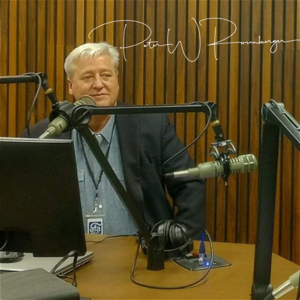
This is Peter Rosenberg, and I'm thrilled to tell you that our new 2026 Caregiver Calendar. Is now available. There are photos of the breathtaking scenery out here in southwest Montana where we live. Each month, you're not only going to see something extraordinarily beautiful, but I put a quote on there for us as caregivers to strengthen us, to equip us. This is what does it for me.
These are things that I've learned, bedrock things that I've learned that I can depend on in my 40-year journey as a caregiver, and I know it's going to strengthen you and yours as well. This is an exclusive gift that we give only to supporters of Standing With Hope, the ministry that Gracie and I founded many years ago for her fellow amputees and for my fellow caregivers, all for the purpose of pointing to the one who helps us continue Standing With Hope. Go to standingwithhope.com/slash giving. Standingwithhope.com/slash giving. Welcome back to Hope for the Caregiver.
This is Peter Rosenberger. This is the program for you as a family caregiver. Very glad to have you with us as we talk about all things caregiver-related. I'm joined today by a fellow caregiver and fellow author. Carol Steinberg, and she has a lengthy credit as a writer with the New York Times and Success magazines and some other things.
But she also left that career and went to work at a local Alzheimer's organization. And she because her family has struggled with Alzheimer's, And she brings immense experience in dealing with that issue. But she's written a new book, and I'm going to let her tell you about that book in a moment. But I want to introduce to you Carol Steinberg. Carol, welcome to the program.
Glad to have you with us. Thanks for having me, Peter. Tell me about your journey with Alzheimer's first, and I'm going to get into this book because I think it's such a wonderful book that you've done, and I love the audience that you're writing the book. four and two But I would like to hear a little bit more about your journey, and then we'll get into that if that's okay. Absolutely.
My dad had Alzheimer's disease, and we're talking back in the nineteen nineties when Alzheimer's wasn't talked about that much and there weren't many Medications available to treat the disease. He and my mom were living in Florida. My siblings and I were living in New York, so to call myself a caregiver, I don't think I really should get that credit. I would say that I was there for my mom if she needed to talk. and came down to help her out.
when needed but I was dealing with raising a family at my on my own at that time, as were my siblings.
So I would say my mom really gets all the credit. for being a heroic caregiver. And when I look back There were many things I think we maybe could have done differently. Maybe we could have convinced my mom to join a support group. Maybe we could have done more things with my dad.
I think we were in the sort of realm of not knowing, not understanding the disease. And after my dad passed away, It was just by serendipity that I found an ad for a local Alzheimer's organization that was looking for a communications specialist. And based on my career as a freelance journalist, I felt. That was the right fit. And it was a way of giving back and honoring my dad.
And from that local organization, we built a national organization where I was an executive for more than 12 years.
So I'm extremely passionate. about the disease. And I've sort of come full circle back into the Alzheimer's world now. As someone who's semi-retired, I do write an Alzheimer's newsletter for a nonprofit organization called Voices of Alzheimer's.
So I'm speaking with people with the disease and care partners. continuously and seeing what the issues are. When you look at the landscape of what's going on, with this what are you Encouraged by? And then on the flip side, what are you discouraged by? I think there is a lot of hope out there right now.
And what I am encouraged by is so many of the people I interview are really positive and hopeful and trying to live the best life they can. And maybe that's a little different from the past, or maybe I just wasn't interviewing the right people in the past. But I think the hope comes from one. I think we are raising awareness of the importance of early detection of Alzheimer's disease so that people can take advantage of the new anti-amyloid drugs that are out there that can help slow progression for people in the very early stages of the disease or who are diagnosed with myocognitive impairment. There is so much research going on and clinical trials going on that hopefully more drugs will be coming down the pipeline.
I'm also encouraged by the fact that there are more resources than ever before. Twenty years ago, when my family was dealing with this disease, The resources were really few and far between. And now there are so many organizations that are focusing on Alzheimer's disease and related dementias. There are government programs like the new Guide Program to help care partners navigate the disease. I also think what's encouraging is that more people are sharing their stories, and that's a big way to raise awareness.
But on the flip side, what is discouraging Is while there are so many drugs and clinical trials and research going on, recently there were two announcements about drug failures that a lot of people had. really hoped would come to be. Discouraging, too, that we still have no cure. Discouraging too that We are seeing a lot more people with young onset Alzheimer's disease, people under 65 who are being diagnosed. And they don't get fair treatment from the government.
They have to wait more than two years to qualify for Social Security after being on disability.
So that's a real hardship for families. Things that you're seeing that families are incorporating now. That have the diagnosis, but they are doing smart things now to. Prepare for the escalation of this disease, not just with drugs, but maybe even natural things, structure within the family. What are some things that you're seeing that's like, wow, this is different.
This didn't happen 20 years ago, or Whatever that you're seeing, that people are preparing themselves. They're almost like building bunkers to deal with Alzheimer's because it's a relentless assault. on the family. And you do have to kind of shore up defenses. Are you seeing that being modeled out?
Building up bunkers is a great analogy. There is so much emphasis these days on lifestyle modifications. The Lanzett Commission. Has emphasized there are 14 modifiable lifestyle changes that people can make. to help Reduce risk factors for the disease, and to also help people with the disease perhaps slow the progression or live longer.
things like physical exercise, Brain stimulation, socialization, taking care of. Vision or hearing problems. Things like that, and people are paying attention to that more and more, and hopefully. that does pan out down the road. to either slow progression or stop the onset of this disease.
Do you see any dietary changes that people are making that are helping with this at all? or any type of nutrition things that maybe that we didn't think about. in the nineties or the early two thousands. There's increasing emphasis on diet, particularly the Mediterranean diet. Eating fish, eating a lot of vegetables, eating fruit, having that colorful plate that nutritionists always talk about.
You know, that is something that I've been watching and seeing how people change the way they. look at food and everything else. And I I mean I'm doing that same for myself and Alzheimer's not in my family but it's just we we Have eaten so badly for so long as a society, and hopefully, that we can start making some changes so people can take better care of themselves. We have, by the way, Peter. I remember interviewing somebody who has young-onset Alzheimer's, and he has adopted the Mediterranean diet, and he said to me.
that what he misses is his pizza and wine. But he's really on a mission to get his body in the best shape possible to fight. this disease. Yeah, I mean, there's all kinds of things that we all love, but at what cost? Exactly.
At what cost? Are you seeing more and more families? rallying together? Because so many times in the past this has torn families apart. And it's been a brutal assault on the family unit, the nuclear family unit.
Are you seeing more and more families? Adjusting now and coming together and partnering in ways that maybe we haven't done before. It's really hard to generalize on that front. Every family is different. Every family has different dynamics going into the disease.
Every family has different relationships among the siblings. A lot depends, perhaps, on where. A family member is living, are they close to the person with the disease? Are they a long-distance caregiver? Are they willing to move?
There are so many issues that come into it. What I think the best thing families could do is to play on their strengths. For example, if there's someone in the family who's Very knowledgeable about finances and legal issues, let them take the lead about getting things in place to make sure. the family is ready for the financial burden ahead. If somebody is very good at communicating, have them lead that dinner time conversation about.
What do you want your future to look like if you get further along in this disease. Things like that. That's where my children's book, Come Grandpa Mia, Let's Fly, comes into play because it's very much focused on. intergenerational The idea that families do need to come together to help the person with the disease, to help a young child understand what's going on and take the fear out of the disease, and also to help. caregivers meet in the moment with the person with the disease.
You know, we we just got through Thanksgiving and Sometimes the holiday meals and the holiday get-togethers are The not the catalyst, but it it's certainly a conversation starter that things have changed since last year. And the family gathers around the table and they start noticing some differences. And family members they haven't seen in a while, grandparents and so forth. And so your book comes into play to have this conversation because a lot of families now, I have found. start having these kind of conversations almost immediately after Thanksgiving.
Because they see each other for the first time in a while and they all get together like, oh, something's not right. Are you seeing that? Absolutely. I recently interviewed somebody who noticed. People sitting around the table and realized: oh my goodness, there's my aunt, there's my uncle, there's my cousin.
Something's not right with each of them, and this person realized that his family has the genetic. History of Alzheimer's disease, and it led him. To undergo genetic testing to see if he too had the APOE for gene, which increases the risk factor for Alzheimer's disease. Recently, on LinkedIn, prior to the Thanksgiving holiday, a very astute caregiving expert, Barry Jacobs, posted A message Noting that The minute someone is in the doorway at the Thanksgiving dinner, you could note that something's amiss, that something's changed with the person, their memory. their behavior, the way they walk, and those are all clues.
and for children sitting around the Thanksgiving table. They might not notice something at first, let's say, with a grandfather or a grandmother. They might think, oh, this is. Grandpa or grandma just kidding like usual. But when it really hits home might be Like the character in my book, When Grandpa Mistakes them for someone else, doesn't recognize them anymore, doesn't know their name anymore.
What's happening? What's going on here? And that's when families really need to sit down with young children and have that conversation to explain the disease in age-appropriate language and to mitigate some of those fears. That's I I I'm I'm Tracking with you on this because I've seen this over and over and over, and I'm so glad you brought this up. When we see these things, we do kind of freak out a little bit, and then we go into panic mode, and you've.
basically given a very simple to follow Language appropriate, age appropriate of how to talk to this. And I have found sometimes, Carol, that children's book make more sense to adults than they do sometimes, even to even children, because we need things scaled down for us.
Okay, what is the simple thing to do here? What is the quiet thing to do that we can start? mitigating uh Some of what this disease can do to people because it comes on. when people see it, they tend to overreact. And I want you to tell me about your children's book, but I would imagine that.
The last thing you want anybody to do with this is to overreact, to overcorrect. But to say, okay, we're going to turn into this, and this is what it's going to look like. Is that a fair assessment of where you've taken this? Absolutely. And thanks so much for asking about my children's book.
I actually wrote the first draft of this book the week my father passed away as a journalist. It was sort of. a creative outlet for me. It was a natural creative outlet for me to deal with the grieving process. And I kept going back to it over the years and tweaking it as I became more and more knowledgeable about the disease.
And just published the book pretty recently. It was a long time coming. The book is a story that explains the brain disorder in very age appropriate language, designed, as I said, to eradicate fear and confusion. It tells the story of a young girl, Linny, Who always loved playing with her grandfather and then begins to notice changes and runs to her mother very tearfully. What's going on with grandpa?
And when I wrote the book, I really envisioned a young child sitting on a parent's or a grandparent's lap. Having that adult read the story to them, having the child ask them questions. But what uniquely sets my story apart as from other books is that in addition to the fictional story. It's complemented by a collection of intergenerational activities. That respond to the question now what?
Now that we know what's going on with my loved one, how can we foster a bond that's loving and respectful? And the activities align with a growing body of research showing the value of intergenerational activities. Things like cooking, gardening, Music. Things that help. The families, perhaps all generations of the families, including the caregiver, meet in the moment.
Is is there any data that shows the stimulation of You know, children engaging with grandparents kind of thing that helps. Yeah, not necessarily Slow down or mitigate, but certainly helps with the engagement of the person of the patient.
So that because children bring such liveliness and life to a situation, does that is there any study that shows any of that? Or is that just kind of a What an observation. I think both. Experts say that Loved ones with the disease. Reap greater engagement and stimulation, improved mood, better quality of life, reduce social isolation.
And the same goes for caregivers.
Socialization is one of the biggest modifiable risk factors for the disease.
So, having all the generations involved in these activities could help everyone. For children, according to researchers, for children. They end up showing greater empathy toward individuals with Alzheimer's disease. and they exhibit greater self-confidence and social skills And a heightened sense of community responsibilities, and those are such key issues that. could help them so much later in life as they grow.
I think so too. I think that, yeah, we focus so much on the benefits to the patient, but. By using the same thing. As adults, and then certainly children engaging. I've noticed this, you know, even with my wife with severe disabilities.
You know, our grandchildren, they came to visit her in the hospital earlier this year and they were all up on the bed. I had a CNA there in the room that came in to take some vitals and they let our oldest grandson help take some of her vitals. What a what a you know A much different way than saying, oh, we don't need to say anything. We just keep them away. No, engage them.
They're crawling all over her hospital bed and everything else. And it's good medicine for everybody. What a beautiful moment. It was. And I've got a great picture of our oldest grandson, and he's taking her blood pressure, you know.
And I think that those are the kind of things that I would like to see families adopting more. We don't need to be. Alzheimer's is scary. Alzheimer's is troubling. But we don't need to live in fear about it.
And we can engage in the midst of it and build quality family time, and it is not. a death sentence to quality family time. even in the midst of Alzheimer's. Is that a fair statement? There is a lot of fear out there about Alzheimer's disease.
I will say that. That can't be denied because there is no cure right now. And it is horrific to see a loved one decline. There is so much anticipatory grief. As you're watching a loved one, and then there is the traditional grief afterwards.
But there are so many things that people can do, that all generations can do. To make the best of this disease and And I think that's the same with any type of condition. You could either make the best of it or you could make the worst of it. And it does take an optimistic attitude, It does take a lot of hard work, perhaps. But it can be done.
And as I said, I have been interviewing a lot of people who really have adopted that attitude. They're traveling like they did before. They're taking on increased activities, socialization, activities that we know can help. offset risk factors or help offset Progression of the disease. One of the things I Tell my fellow caregivers is you don't accidentally deal with this well.
It's intentional, and it is, like you said, it's hard work. But it's good work. And our lives are improved. As human beings, I have seen in my own life and in the lives of so many caregivers I've talked to when we turn into this with the intent of we're going to live in this, not just avoid dying or avoid. A crisis, we're going to live in this.
And Gracie and I came to this conclusion many years ago that there was a point where we say, okay, we got to get through this surgery, we got to get through that surgery, and then we can get on with our lives. And then we came to this understanding that, no, this is our life. And it's it's a hard life, but it's not a bad life. And life is life today. That's all we're promised anyway, is today.
And we leave it to the best. Many caregivers have said that Being a care partner gives them purpose. And that's a good thing. It does. I also want to encourage fellow caregivers to see purpose.
More than just being a caregiver. And that's something I've had to wrestle with myself in these 40 years of this. Is that uh okay, is am I Just a caregiver? There's nothing wrong with that. It's a great work, and I do things, but what.
What else is there for me? Can I do anything more than this? And then I also look at caregivers who are lost after their loved one dies. And this is what I've seen very troubling with diseases like Alzheimer's: you get family members who are so consumed. With Mitigating what's going on with their loved one, that they abandon their own life and their own health and their own careers and their own purpose and their own, well, their own life.
And I watched this one lady, for example, that comes to my mind who she put her business on hold to take care of her dad. She thought he was only going to last a couple of years. He ended up lasting seven or eight years, and she was bankrupt. and her company had folded by the time he died. And that's just unacceptable.
We've got to say, wave flags to people about that and say, look, look, there is a better way here. That's such an important point, Peter, that you're making, because there is life after being a care partner.
So to prepare for that life, people really do need. to take self-care. They need to have something as you said. Beyond simply being a care partner, although that role is so important. And especially with Alzheimer's disease, a disease that could even progress over a twenty year period.
Caregivers can get so lost. if they don't take time for themselves to have their own identity.
Well, identity loss, I tell my fellow caregivers that the three I's of caregiving. We lose our independence, we become isolated, and we lose our identity. And those things can derail us as human beings. And I think we saw globally what happens with isolation during COVID. But we caregivers have been Dealing with that for a very long time.
You know, every time, you know, affliction and disease isolate us anyway. And so we have to be very intentional. There's not a, it's not an accidental. Recovery, if you will. It's intentional.
And that's why I love your book here because this is an intentional thing to sit down with. children. To help them understand, because more and more children are engaged in this. You know, my children grew up with a mom with severe disabilities. Our grandchildren now have never, of course, have never known her any other way.
And we engage. I have a brother with a daughter with severe disabilities, and the family engages every they go everywhere together. And so it's one of those things to have that intentional conversation with children. And I think. Carol, you can correct me if I'm wrong, but I think that we have this right: that children can process a lot more than we probably give them credit for.
Oh, I absolutely agree. And having that intentional conversation is so important. And to be honest, my children's book grew out of some of the regrets I felt by not having that intentional conversation with my own girls, by not having them engage with my dad as much as I think they should have.
So when I look back, there are so many things I would have done differently. And that's part of life, I think. You're not until you're a parent, you don't know what it is to be a parent. Until you're a grandparent, you don't know what it's like to be a grandparent. Until you're dealing with Alzheimer's, you don't know what it's like to deal with Alzheimer's.
But once you've lived that kind of life You learn. and you try to help other families do it better. You do, and you are doing just that. Last word before we close. This is, like you said, we just had Thanksgiving.
We're going into holiday season, which is very difficult for so many families that are dealing with caregiving issues. I call it the Bermuda Triangle with Thanksgiving, Christmas, and New Year's. And just, it could be tough. And the days are short, the nights are long. We've just come from this, and family members may have, for the first time, seen some decline.
What would you like to say to that family member who may be listening? They just now tuned in and they said, oh, that's us. This is what happened. We saw this at Thanksgiving dinner. What would you like to say to them?
Act on it. Early detection of Alzheimer's disease is so important. And it might not be Alzheimer's that is causing the memory loss or causing the other cognitive issues. It could be other conditions that are treatable. And if it is Alzheimer's disease, early detection is so important because you can make lifestyle changes.
You can see if you qualify for the new anti-amyloid drugs that are coming out.
So act on it. Start with your primary care physician. Have a conversation about concerns. And then If necessary, go on through more extensive testing to get that accurate diagnosis. Absolutely.
You know, the resources that are available. at the touch of a button, are astounding now. You know, you think about what it was 30 years ago. And where it is now. And the information is out there at the touch of a button.
And if you're having this situation and you saw this over the holidays or just noticing in general, and you have grandchildren, do not, do not disconnect them from that family member. Have a conversation, get Carol's book, learn how to be able to engage with this. Multi-age families are so important. You know, when you have the family unions become so disjuncted. In our society, let's bring that back and let's have this conversation.
Children are much better at this if they have a good path to be able to understand this in ways that is age-appropriate. And they can do things that are amazing. I have seen it over and over and over where there's just so much engagement, and it's good for the children. I want you to think about that with my grandson, for example. He's taking his grandmother's blood pressure in the hospital.
Instead of being afraid of all the tubes and all the things like that, he's getting to do something that's fascinating to him. Who knows what that'll do for him as he continues to grow? But don't Don't disconnect them. Connect them, and Carol's giving you a beautiful way to be able to do that. Carol, if people want to get your book, it's available on Amazon, and tell me the title of the book again.
Come, Grandpa Meow, let's fly. Why that title? Come, Grandpa, Meow, let's fly. Why that title? It's based on a song that my dad used to sing to us as children and to sing to his five granddaughters while they were swinging on a swing.
And I sing that same song to my four grandchildren. Oh, that is so precious. I'm sorry I interrupted on that. Tell us the title again and where they can get it. Come, Grandpa Meow, Let's Fly, a heartfelt children's story about Alzheimer's disease, plus a guide to intergenerational activities.
It's available on Amazon. And I do want to give a shout out to my illustrator, Chelsea Cooper. who really brought the story to life and really captured My family in the book as well. That's wonderful. And by the way, I think you all have noticed that Carol and I have two different types of accents, and we didn't require subtitles or an interpreter of any kind.
And she didn't have to raise an eyebrow at my southern accent. And I was able to understand her Brooklyn accent. And so I tried my best, Peter. You did. You did marvelous.
You did marvelously. It was delightful. I want you to know how much I appreciate you coming on, Carol. This is the kind of thing that just grabs my heart and it is near and dear to me. And I know that listeners are going to respond well to this because to have the conversation.
Thank you for your willingness to put yourself out there and your family and the work that you do with so many other families. And I'm grateful to have you on the program. Thank you. And thank you for all you do, Peter. Yes, ma'am.
This is Peter Rosenberger. This is Hope for the Caregiver. We'll be right back.