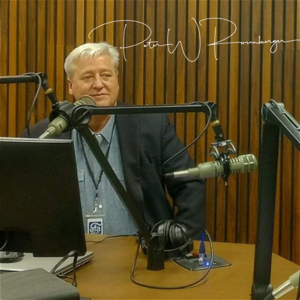
Hey, do you know a caregiver in your life who is struggling with something and you don't really know what to say?
Well, guess what? I do. So get them this book. It's called A Minute for Caregivers, when every day feels like Monday.
They're one minute chapters. And I'd love for you to put that in the hands of somebody who is struggling as they care for a chronically impaired loved one. And it could be somebody dealing with an aging parent, especially each child. Somebody that has an alcoholic or an addict in their family. Somebody who has a loved one who has had a traumatic condition.
This is a mental illness. There's so many different kinds of impairments. There's always a caregiver. How do you help a caregiver?
How do you help somebody who helps somebody? That's where I come in. That's where this book comes in. And that's what I think you're going to find will be incredibly meaningful to them. And if you're going through that right now, they get a copy for you. Friends don't let friends care give alone. I speak fluent caregiver for decades of this.
This will help. I promise you, it'll pull you back away from the cliff a little bit, point you to safety, give you something solid to stand on so that you or that caregiver you know can be a little healthier as they take care of somebody who is not healthy. Caregivers make better caregivers. It's called a minute for caregivers when every day feels like Monday wherever books are sold. And for more information, go to PeterRosenberger.com. This is America's caregiver. I'm glad to be with you today. Thanks for joining me on the program, PeterRosenberger.com.
This is a program where we talk about all things caregiver related. Now, why would we do such a thing? Well, I'll tell you why.
Glad you asked. Because there are 65 million American family caregivers right now. Do you think that's a problem? I mean, that's 20% of the country. And the numbers are growing. And it's not getting any easier. So what does it look like to help a family caregiver? Why should you help a caregiver?
And then what does it look like? That's what I do here on this program. And I'm so very glad you're giving me the opportunity to talk with you about it. If this is your first time, welcome. I'm glad you're here. If you are not a caregiver right now, welcome.
I'm glad you're here because if you love somebody, you're going to be one. Now, not everyone who gives care is a caregiver. Let me explain.
Don't touch that dial. That may sound odd, but stick with me. Many assume that working in healthcare, babysitting grandkids, or checking on aging parents makes you a caregiver. Well, those are all important. And the task often look very similar. But family caregiving is very different.
There's usually no training, no paycheck, and no clock-out time. No one gives you a manual, just a life-altering responsibility you step into because love demands it. And here's how I define it.
If you've got your pencils out, or as we used to say down in South Carolina, your pencil out, write this down. A family caregiver is someone who voluntarily places themself between a chronically impaired loved one and even worse disaster. That phrase, chronically impaired, is key. This isn't a temporary setback. The condition may not improve. In fact, it most likely will get worse.
The burden doesn't lift. Now, that impairment could come from disease, disability, age, mental illness, developmental challenges, or addiction. And to my knowledge, I'm the only person with a national platform for family caregivers that includes addiction, alcoholism, as part of the caregiving world.
If you're in a relationship with somebody who's an addict, somebody who is an alcoholic, you're a caregiver. That's a chronic impairment. And on its own, it will not get any better.
And you may deal with the repercussions of that for a lifetime. Same thing with mental illness. Wherever there's a chronic impairment, a caregiver is usually nearby, and they're usually overwhelmed, weary, and often overlooked.
Many don't realize it. They just say, well, I'm helping my wife, or I'm helping my husband, or this is what you do for your family. Or my brother has a substance abuse problem, or my sister has a drinking problem.
There seems to be almost no end to the types of impairments, but there's always a family caregiver somewhere around that person, somewhere in their orbit. And they're usually pretty whipped and exasperated. And if that's you, well, let me just say it plainly.
You are a caregiver. And here's the deal. If you love someone, and you just heard me say this at the opening of this block. If you love somebody, you're probably going to be one.
And if you live long enough, you're going to need one. So we all got a stake in this. We all got skin in the game here. If this describes you, then you're why I do this program. You're why I write books. You're why I write articles.
You're why I do all these things. I understand this journey in ways that few do. And I know what it's like to be lonely, frustrated, exasperated, despairing, resentful, all of the above. There is nothing that you're going to feel as a caregiver in this journey that I haven't felt yet.
Nothing. When you've been doing it for four decades through a medical crisis like ours, then you've run the gamut of what the human experience is in this situation, even death. And I've maintained for as long as I've been doing this program that caregiving doesn't end at the grave. Now, I've been taking care of Gracie for four decades, but that doesn't mean I haven't had family in my life who required care that I was a part of in some way, and now they're gone. Caregiving changes you. It alters you. And it can wear you down like nothing else. My new book comes out in August, and it's called A Caregiver's Companion, and it's scriptures, hymns, and 40 years of insights for life's toughest role.
I believe that it is life's toughest role is to be a family caregiver. We are usually unprepared for it, and most people find out pretty quickly that they're not up for it. And it will wear you down physically, fiscally, emotionally, spiritually, professionally.
It'll hit you everywhere. And this is why I do this program, because I understand that. I've seen this journey up close and personal now for so long, and I've learned some things. Now, the question I have to ask myself is, do I have a stewardship responsibility to pass on what I know? If I have been sustained in this, if I've seen God's provision in this, do I have a stewardship responsibility to say it?
Yeah, I do. And that's when I started doing this program. We sat around the dining room table at a board meeting with Standing With Hope, and my friend Sam, who is on our board, still is, and wonderful pastor, and huge impact in my life. And he looked at me, and he's always called me Pedro. He actually knew Gracie before he knew me. So he goes way back with us, and he said, Pedro, you need to do a show for caregivers and write for caregivers.
You possess a lot of knowledge that other people would benefit from. Now, I'd been doing it for about 25 years at that point, and that was not on my list of things to do. But Sam was pretty insistent, and I started doing it.
Didn't charge for it. I just did it. This is an extension of Standing With Hope.
I just started talking to caregivers. I remember the first time I gave a speech about it, there were three people there. I remember when I started doing the radio show, and people said, you're never going to fill up an hour with this. And we're getting close to well over 800 episodes, and I've been doing this for 13 years. So, yeah. Yeah, there's a demand for it.
And I've written hundreds and hundreds of commentaries and five books. So, yeah, people are struggling in this area, and they're hungry to find somebody that could say, hey, here's solid ground. Stand here for a moment and catch your breath.
Just take a knee if you have to. I didn't have anybody that could speak with clarity into my circumstances. But now this is the path that God has opened up for me to do, and so I'm doing it. And if this describes you, if you are listening in here saying, my goodness, this guy's talking about me, then you're why I write the books. You're why I do the show. You're why I write my columns.
All of those things exist because the journey is hard enough. But I can help. I can. Keep listening. Keep reading.
Keep engaged. Go out to my Facebook group, Hope for the Caregiver. It's on Facebook.
I have the Facebook page, Hope for the Caregiver. Then I have the group, and you have to answer a few questions. Join the group. We have people posting all the time in there about things that are, some of it's very painful. And it's a private group, and I am the administrator for this.
And I'm just doing this. We've got almost a thousand people in that group. Maybe you could be one of them.
I'd love to have you there. Do not do this alone. Do not try this by yourself. It is too hard of a journey.
I can help. I really can. Dolly Parton said, we can't direct the wind, but we can adjust the sails. Maybe today is the day for you to start adjusting the sails and say, you know what? This is a hard journey.
And if Peter has found God to be faithful in his circumstances, maybe I can trust him with mine too. What do you say? This is Peter Rosenberg, and this is Hope for the Caregiver. We'll be right back. Welcome back to Hope for the Caregiver here on American Family Radio. Thank you there, Rob, and the Not Ready for First Service players. This is Peter Rosenberg, and this is the program for you as a family caregiver.
Glad to have you with us. You want to find out more about what we do, why we do it, how we do it? PeterRosenberger.com. We've got all kinds of things out there, blog posts, links to op-eds that I've written. I've got a couple out right now, one and two I think in Blaze Media, AARP. Ever so often I'll write on caregivers for AARP. They have a pretty big push that they do for caregivers, and I'm grateful that I have an opportunity to write for them and share my thoughts on it. They don't have anybody like me that does that, and so I'm grateful. This is one about, it's called Mission Indispensable, and I wrote it while I was in the hospital with Gracie during this last go-around, and I took an afternoon off to go see Mission Impossible.
The nurses all said, look, go, we got her, everything's okay, and Gracie said go, and I went and saw it at the IMAX, and well, you'll just have to read the article. We'll link to it on the website, and you can also go out there and find links to all my stuff at Substack and just everything I got. All kinds of things, so please take advantage of that. While you're there, sign up for our e-letter. We have lots of things that we like to share about as they come out. We don't do a lot of e-letters because frankly, y'all, I'm tired.
I mean, we're just a mom and pop, and right now it's mostly pop, so I'm not going to do like some of these people do where you get like six mass emails before lunch kind of thing. If I do one a month, I'm doing well, so while you're there, sign up for that. We'll let you know what's going on. We're going to have updates on some things with Gracie. I've got the new book coming out. We're going to have special excerpts from that. Maybe an opportunity to give away a book or two, and so there will be all kinds of things that we're going to do, and we talk about our prosthetic limb ministry and the things going on with that as well, so I hope you will take advantage of all that. Speaking of writing, I've got something that I saw this week, and I'm writing about it, and I'll give you a special preview.
How about that? Just because you're here in the radio audience, and I am very grateful. This is where it all started with radio with me. I wasn't writing books.
I wasn't doing any of those things. I just started doing a radio show and didn't know what I was doing. There are some listening who may make the case that I still don't know what I'm doing, but I'm doing the best I can with what I have, but I love to write.
I found out that I like to write, and so I'll have this as a blog post or sub-stack post or whatever, but I'm going to give you all a special preview of this. Montana is a treasure state. That's what the slogan of Montana is, the treasure state. That's where we live, in the treasure state. When we lived in Nashville and we lived in Tennessee, it was the volunteer state. I was born in South Carolina. That's the Palmetto State. Gracie's from Florida. She was born in Tennessee, but she was raised in Florida, and that is the Sunshine State. So, what state are you in?
Most of the time, caregivers are in a state of confusion, sometimes even in despair. However, for today's exercise, we are in Montana for the treasure state, and gold is a thing. We've got a creek that runs through the property out here, and there's gold in there. I mean, if you could spend the time to go find it, there is gold. There's gold all over the place up here. It just takes a while to get it, a little bit of work, and that's what brings me to something I wanted to share with you, that gold miners don't talk about the dirt. They talk about the gold. You don't hear miners gripe about the dirt.
Think about it. You know it's there. They expect it, but their focus is the gold. Caregivers could learn a lot from miners. We've got no shortage of dirt and drama, exhaustion, grief, hospital rooms that smell like despair, and cafeteria meatloaf. Add that to broken systems, dismissive stairs, and a pile of insurance paperwork, that's a lot of dirt. The dirt's real, but so is the gold.
And if we're so busy complaining about the dirt, we will miss the gold. I used to think, ironically, because I didn't have anybody telling me how to navigate through these things, I used to think, okay, we've just got to get through this so we can get on with our life. We've got to get through this neck surgery. We've got to get through this episode so then we can go get the gold. That's really the way I thought about it.
And Gracie would be candid as well and she'd tell you that's the way she used to think about it too. I've got to get through this so I can go out and do what I need to do. But what we did not understand was that there was gold to be had in the midst of all that, quote unquote, dirt. All the things that others would consider messy, untidy, unseemly, undesirable, there's gold in there. It took a long time for me to understand this. And I go back to this wonderful quote by Sholtzanitz.
I've shared it with you many times. 27 years in a Russian gulag and when he was released he had written this phrase. He ended up winning a Nobel Prize and he said, Bless you prison for the change you made in my life, for there upon that rotting straw, that rotting prison straw, I learned the goal of existence is not prosperity, as we're told, but the maturity of the human soul. And that's somebody who understood gold in the midst of all of his dirt.
The dirt of being incarcerated in a very unpleasant place. You know, Paul spent the last couple years of his life in prison and he was chained to Roman guards. I think they had to switch it out like every four hours. So these guys were chained to him. They probably didn't want to be there and I don't know that Paul wanted to be there, but he used that time to write under the superintendents of the Holy Spirit, scripture. And you know, you can't help but wonder about those Roman soldiers that were chained to the Apostle Paul. Did any of them come to faith? How did they respond to that? Here he is, the greatest expositor of scripture, teacher, pastor, and you're chained to him for four hours.
For a four hour shift. That to me would, wow, I can't imagine those guys would be unchanged by that. But we don't have any record of that. But where's the gold? When you're so focused on the dirt, you do miss the gold. And God allows us to be in some very unpleasant places because he knows where the gold is.
I'll give you an example. One time, the most vivid for me was 30 years ago this month, 30 years ago this month, Gracie came out of surgery. This was to amputate her remaining leg. Now she'd already been a double amputee for four years. And now she's giving up her left leg.
And there's a real finality about that. Because when she had her one leg, she still had the ability to stand even though that left leg was damaged. She could still stand on it even by itself with crutches and she was able to still stand. There's something final about taking away the only means you have to stand independently. And of course prosthetics have been a part of Gracie's life for so long.
But still, it was a pretty brutal time. She comes out of surgery. I'm watching this. I'm there. I was there. I saw this.
I saw this gold. And she comes out of surgery. They're wheeling her from recovery to basically a step down unit.
It's not a regular room. It's like in between ICU. They're wheeling her there. And she's laying on the gurney. She's half sedated. They did manage her pain on the left leg a lot better than they did when they amputated her right leg. And that's another story.
I'll tell you that another time. And the nurses are wheeling her. And her hands are lifted. And she's laying there on the gurney.
Both legs gone now. And she's got her hands lifted to heaven and she's singing praise God from whom all blessings flow. And she's singing the whole doxology. I heard a great quote this week that you will never have great theology without first a doxology. In other words, if we're not praising God, our theology is going to suffer. And here she was in arguably one of the most difficult things a human being can face. The loss now of both limbs. And she's singing praises to God.
You don't think that's gold? And everybody was stunned. I don't know that she was all that cognizant of that she was doing it. She was still pretty loopy from surgery, but she's doing it. A lot of people come out of surgery. I see it all the time.
I've been around hospitals a long time. I've never seen anybody else sing the doxology. Have you? Have you seen this? Anybody?
Let me know if you've seen it because I haven't seen it. And I've been around a lot of surgeries. I've been in a lot of recovery rooms. I've only seen one human being in all my years of this who was singing praises to God in such a manner.
It was an exceptional moment. That's the gold. Miners don't throw away the dirt because of the gold.
Neither should we. Let the world chatter about trauma, drama and dysfunction. We're digging for something better. The question I'm asking myself, and maybe you can ask it too. What gold are you seeing despite the dirt? Are you looking for it?
Are you seeing it? Job 23 10, but he knows the way that I take. When he has tried me, I shall come out as gold. And one of my favorite hymns of all times, how firm a foundation. When through fiery trials thy pathway shall lie, my grace all sufficient shall be thy supply. The flame shall not hurt thee. I only design thy dross to consume and thy gold to refine. That is a beautiful poetic version of what Christ said to Paul in 2 Corinthians.
That he could boast all the more gladly in his weakness. Are we digging for gold? Are we complaining about dirt?
How about we dig for gold? This is Peter Rosenberg and this is Hope for the Caregiver. We'll be right back. Welcome back to Hope for the Caregiver. This is Peter Rosenberger. So glad to be with you today. PeterRosenberger.com.
PeterRosenberger.com. All right. I am starting a new series that I'm going to try to do every week in one of the segments of the program. And it's called 30 Hymns Every Christian Should Know.
I did this a while back with 25 hymns. I don't think we got to finish it because of some surgeries and so forth with Gracie, but I am back in the saddle now and you'll be thrilled to know. At least some of you will be. I hope you will be. Guess what? The caregiver keyboard is fired up. And so we'll see if my hands can do what they're supposed to do because I haven't practiced consistently now for almost five months.
I didn't have access to a piano. We're going to do the best we can. But 30 hymns that every Christian should know, why are we doing this?
What does it matter? Well, remember what we talked about in the last block about mining for gold? That when you're finding gold, the dirt doesn't bother you. Well, what is the gold that we're finding as caregivers? And for me, the gold that I have found, some of that gold has been in the church hymnal, which has been sadly left to gather dust in many churches. But in it are tremendous poetic, prosaic, fabulous texts written by people that wrestled with deep things and they lived to write and sing about it and passed on a legacy to us. And I'm going to start with the number one hymn. The number one hymn that every Christian ought to know.
You ready? Well, I'll give you a preview. You. Holy, holy, holy.
You know the story behind this. Well, let's get into this and why it's important to us as caregivers. Thank you for indulging me on that. I was actually practicing as I was performing that for you.
So I've got to get these fingers back in shape here. I heard a great quote from a theologian earlier in the week. Without a doxology, you will have poor theology.
And I thought, wow, if your theology does not lead to worship, then help me understand how valuable it is. You know, I remember there was a very big seminary. I won't mention the name of it because I don't want to get letters.
If you do write letters, it'll be to send it to peter at the internet dot google. But the New Testament professor, the head of the New Testament department at this very prominent seminary, if I mention the name, you know it, was Jewish. Not a Christian. Jewish. So I understand it would be the Old Testament professor, but the New Testament? Jewish? Not a Christian?
What do you think that class was like? A doxology is a word of glory. It is a sudden outburst of praise that rises up from knowing the truth about God.
It's not just a benediction at the end of the service or not something you do when you bring the offering plates forward in many churches. But it's the heartbeat of true theology. And we see this over and over in scripture. Paul spends 11 chapters in Romans.
He's diving deep. I mean, he's going into sin, grace, sovereignty, mercy, and then he just erupts. Oh, the depth and the riches and wisdom and knowledge of God. Romans 11 33. Peter does the same thing when he's writing.
They can't help themselves. 1 Peter 1 3. Blessed be the God and Father of our Lord Jesus Christ. I mean, it just comes out of him. Good theology doesn't just sit still. It stands up.
It lifts hands. It sings. And if your doctrine ends in pride or boredom or cold intellect, it didn't begin with grace.
But if it ends and begins with doxology, you're on the right track. And that's why we begin with this hymn. Now, it was written by a guy named Reginald Heber.
I think I'm pronouncing his name right. He was an Anglican priest who served as a bishop in India. And he wrote it specifically for Trinity Sunday, which is the Sunday after Pentecost, which basically we just celebrated here a couple weeks ago, when the church celebrates the mystery of the Triune God, Father, Son, and Holy Spirit. And if your church does not recognize Trinity Sunday, you might want to ask. Ask your pastor.
Why not? Why don't we recognize this in the church calendar? But he wrote this for Trinity Sunday. He didn't have the music. And by the way, he died young.
He was just 42. And he never saw the hymns impact. I don't know what they sang when they sang it originally. I don't know what tune he used.
But decades later, about 30 years later, John Dykes, John B. Dykes, D-Y-K-E-S, he was a clergyman and a musician. And he composed the melody that we sing today, the one I just played. Now, he probably didn't put this minor five chord right there. He didn't do that. I'm almost certain he didn't do that chord. And I'm pretty sure he didn't do that major seventh chord. I kind of dressed that up a little bit, y'all. I took a little liberty. But you can still recognize the melody.
At least I hope you can. Well, he wrote this tune and he named the tune, what do you think he named the tune? Nicaea. And he named it after the Council of Nicaea. You've heard of the Nicene Creed. Well, the Council of Nicaea met in A.D. 325, where the church defended what? The doctrine of the Trinity.
How about that? So it was a real nice nod that John Dykes did this. And it affirms God's holiness. And the music honors the historic confession of the Trinity. Now, that's what a confessional church means, that we're proclaiming this in unity. This is what we believe. Don't confuse the word with like, I'm confessing my sins. We are proclaiming, we are confessing this as our creed, as our belief. This is what we believe.
And that's when this happened in A.D. 325. And the title echoes what they sing in heaven. So you've got the words affirming God's holiness. The music is honoring the confession of the Trinity. And the title, Holy, Holy, Holy, that's what the angels sing all the time.
And it's a doxology set to music. So what is the goal here for us as caregivers? Why am I even telling you this? Well, first off, this is how I survive. I'm four decades into this.
Okay? And if this is sustaining me in that kind of journey, I'm asking you to take a tiny, not even a leap of faith, just a skip of faith, just a tiny hop of faith to say, you know what, this can lift your spirit as well. It's not me. I didn't write this. The text came straight from heaven. Holy, holy, holy. And then, you know, Reginald Heber wrote this thing out to honor for Trinity Sunday. And then here comes John Dykes, and he does this thing to honor the doctrine of the Trinity.
And he set this text to incredible music, and it sustains us today, right now, as believers, as caregivers. So the next time you're going through whatever it is you're going through, try this. Maybe you're just muttering it under your breath, and that's okay.
Maybe you could just barely whisper it out, but try this. Holy, holy, holy. Lord, Lord God Almighty. Maybe that's all you could whisper out, but then you could maybe just go a little bit more and say, early in the morning, our song shall rise to thee.
Maybe you're up early in the morning and doing caregiving things. We've all been there. Holy, holy, holy.
Now listen to this line. Merciful and mighty. God, God in three persons.
Father, Son, Holy Spirit. Blessed Trinity. And if that's all you can do, just whisper out that verse as a caregiver. I'm asking you to just try it.
Just try it. What have you got to lose by praising God in your circumstances like that? Holy, holy, holy. All the saints adore thee, casting down their golden crowns. Have you ever had anybody tell you as a caregiver you're going to get a crown in heaven? People say that all the time, and it's a little bit weird to hear it.
And I always respond with the same thing. What am I going to do with a crown? I'm going to cast it down around here, but throwing it down at His feet.
What do I need a crown for? Cherubim and seraphim falling down before thee, which word and art and evermore shall be. The immutable characteristics of God, the great I Am. Holy, holy, holy, though the darkness hide thee. Even the darkness when we're in caregiving and we see suffering and we see pain. But though it hide thee, though the eye of sinful man, thy glory may not see.
I can't even see Him properly. But only thou art holy. There is none beside thee. Perfect in power and love in purity. And then that last verse, and I usually modulate that one.
And sometimes I modulate it halfway through. And holy, holy, holy, Lord God Almighty, all thy works shall praise thy name in earth and sky and sea. Holy, holy, holy, merciful and mighty, God in three persons, blessed Trinity.
This is what I'm going to do for the next, I don't know how many weeks. Just go through 30 hymns that strengthen me as a caregiver. And I really believe, give it a chance.
I think you'll find it does it for you as well. These hymns are there for us and they're there for us for a reason. And if all we can do is utter out, holy, holy, holy, Lord God Almighty, we have given a doxology. And we have given praise in the midst of our circumstances. This means something to God.
We'll talk about that more. This is Peter Rosenberger. This is Hope for the Caregiver.
We'll be right back. Welcome back to Hope for the Caregiver. This is Peter Rosenberger.
This is the program for you as a family caregiver. And I'm so glad that you're with us, PeterRosenberger.com, PeterRosenberger.com. Most of you know, and you've been listening to the program for some time now, that if you have been listening to the program for some time, you'll know that we spent a great deal of time, 143 days this year in the hospital, Gracie did.
What was supposed to be two surgeries turned out to be 11, bringing her total count to 98. That said, guess who I have with me? And so here she is, fresh off of her command performance in Denver.
And she is here with me. And so first off, how are you doing, darling? I'm doing better now that we're home, even though it's rough. It is a bit rough, isn't it? But I think it's rougher on you. No, well, I don't know.
I think it's rougher on you. You went from a whole staff of people taking care of you to me. I will say this, Gracie is much more appreciative of the food that I'm serving her than she was with hospital food. I think you kind of, you ran the gamut of hospital food, didn't you?
Yes, I did. Well, and you, in all fairness, it's not bad food at the hospital. Somebody I know is just very picky. Well, I'm not picky.
Oh, yes, you are. No, I just like certain things. So I eat those over and over and over. And then I have to find something else that I like.
And then I eat that over and over and over. And it just, you know, it gets out of control. It's out of control. It did get out of control. So I have brought you a menu of things that I think you like. And we're eating a little healthier here.
Yes, we are. It's hard to eat healthy in the hospital. But the first night you were home, you slept 13 straight hours. That's the longest you've slept in a very long time at one stretch. And I thought maybe I should wake her up. And I thought, nah, just let her sleep. I mean, you were tired.
And you still are. It takes one year to recover from major surgery. And not all of your surgeries have been as intense as some of the ones you've gone through here.
But you've had 98. All of these have been intense. Yeah, well, they have been fairly intense. And so, and we're not out of the woods yet, but here you are.
Yes. Hallelujah. And your voice sounds a little scratchy, but that's because she had 11 surgeries. So it did a little bit of damage to her vocal cords. But we're going to get those vocal cords back into shape. Because you've got to get out there and start singing. I have not been smoking or anything like that.
It sounds like I've been hit with carms or something, smoking. And I just, for all you listening, I have not. No, they don't allow that in a hospital. I do not do that. But they stuck an awful lot of tubes down your throat many times. And so it does do it.
It has a bit of a challenge. I'd like your audience to know. Well, it's your audience too, darlin'.
They know you. I would like y'all all to know that Peter came every morning and brought me a cup of coffee. But the funny thing is, he would, all of the doctors and nurses and stuff would tap on the door like this. I don't know if you could hear that. I think they could hear that. And I would, they would tap on the door.
And so Peter thought it was funny to tap on the door three times before coming in. So I didn't know it was him. And then when I saw him, I was like, my baby. There he is.
I can't wait. Yay. Well, she would cry when I'd leave at night and go back to the hotel room across the street.
That was horrible. But, you know, I've done my time of spending the night in the hospital. I decided this time I wasn't doing that. But, you know, the thing is, is that my doctor, who I see here in Montana, came up here to the house. And she asked me, well, did Peter come home? And I said, no. Peter said, where I am, that's where home is.
Well, it's true. And that's where, and you know what? We made home there in the hospital room, didn't we?
Yeah. And I know you're tired and I know your throat hurts and it's going to take a while to get your voice back into shape. But you're here and you're doing, I think, marvelously.
I don't know of anybody who could have withstood what you've done. But you're here. And that's good enough. And it's not everything ideal, but.
When you would say that, I would just break up. Because I'd be like, oh my goodness, that is where home is. It is.
It's where you are. We had the caregiver calendar up on the wall. Yeah. That I made it. So we had pictures of Montana. We had the bed. And most people that have watched any of the videos and the pictures I put out, they saw that your bed was all decorated with flowers and so forth.
That's right. And our hospital room there looked pretty lived in. Yes, it was. We had a whole, I don't know, army of nurses and staff that would come through and check on you. And some of them would come after hours just to visit with you.
Yeah. When they would leave to go home. And that was very special to me. Because when they, I mean, because they would tell me throughout these almost five months that I was there.
How much they miss their family when they're working and things. And these people would stay later and talk to me. They knew, they would see me cry when you would leave. And then they would cry when you would leave. And it was so precious.
Well, look. It was a mission field. It was. It really was.
They would come in and there were prayer times with folks. And it was kind of an experience. But you know what? We're home. And I wanted everybody to be able to hear. I wanted everybody to hear from you. I know you're tired. I know you don't feel very good. And you've got a long ways to go. But we're going to get you through it. But I don't have as long a way to go as I did yesterday.
Well, you're 24 hours closer. Yeah. So, all right. Listen, how about we call it a day here? What do you think?
What? As much radio as I think you want to do today. We're home together. We're home.
We're home together. So, anyway, I wanted you all to be able to hear her. And the next time you hear her, her voice will be a little stronger. Speaking of her voice being a little stronger, I thought I'd end with a song that's really become kind of a signature song for Gracie. So, we're going to go out with this. And thank you for joining us this morning, Gracie.
Thank you for being a part of this. I know, like I said, I know you don't feel very good. Your throat is a bit scratchy. But we're going to get that throat back so you can sing like you're singing on this song right now. This is Peter Rosenberger.
Hope for the caregiver. PeterRosenberger.com. And this is Gracie. And I accompanied her on this, too.
We'll see you next time. This is holy ground. We're standing on holy ground. For the Lord is present and where He reigns is holy.