For decades Ruth has benefited from our broadcast and podcasts. Focus on the Family has always been kind of a cornerstone in my life.
I grew up listening to a lot of programs while my mom had it on the radio. The resources available at Focus on the Family are just absolutely wonderful and I am so grateful that you guys, that Focus on the Family is around. And now that she's a wife and mother, Ruth has found a way to give back. By supporting our option ultrasound program. That was one of the best parts of pregnancy, seeing that baby.
So being able to give that gift to somebody else, it's a win-win. I'm Jim Daly. Working together we can be a lifeline to preborn babies and their moms.
Join our Friends of Focus on the Family team at FocusOnTheFamily.com slash families or call 800-AFAMILY. I felt like the Holy Spirit was in me. I could feel his power within me. As I preached there were three crosses that were in the background of the campfire setting. When I gave the invitation, three people responded and gave their life to Jesus. And I know that I will preach the gospel until the day that I die. That's Dave Stone describing God's early call on his life to become a pastor. And for more than 40 years Dave has remained faithful to that call.
We're looking forward to hearing his story today on Focus on the Family with Jim Daly. I'm John Fuller and thanks for joining us. John, I'm so grateful for the service and sacrifices. So many men and women who have dedicated their lives in pastoral ministry.
It is a great call. My brother was a pastor, my brother Mike. And so I watched through his eyes the things that he would do every Sunday. He pastored up in Montana and it was quite an experience for him. It was kind of rural pastor, you know. Small church of a few dozen. And you know so many pastors do so much behind the scenes. I think some of the research that we've looked at, pastors tend to work 48 to 74 hours a week.
Think of that. They wear so many different hats like my brother. They're the teacher, the counselor, the worship leader, the business executive, the recruiter, the supervisor, the greeter, and oftentimes the janitor. And my brother used to do that.
Pull all the chairs out, vacuum the carpet, put all the chairs back. And that's just the job in some of these churches. And that's okay because that clip that you heard from our guest today, Dave Stone, is the heart of a pastor. It's about how do we get people into the kingdom of God.
That is their goal. And I love the fact that so many are dedicated. The difficulty right now with pastors is many things take them out. And we want to talk about both the blessings and the hardships pastors face today. And Focus on the Family has a long track record of advocating for pastors and their families for more than 30 years addressing some of those unique challenges that they face both professionally and personally. That's right, John. And I'm so thankful for the legacy that Reverend H.B.
London left here at Focus on the Family. Of course, he was Dr. Dobson's cousin. But he started something called Pastor to Pastor, which was, believe it or not, a CD. An audio subscription kind of thing.
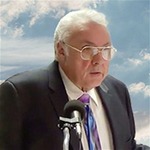
And I think they even did cassettes at that time. But we are looking forward to talking to Dave about the revival of Pastor to Pastor to help pastors and pastors' families deal with the load that they have to bear as they work through their ministry. And I'm so looking forward to this discussion today. Yeah, and Dave Stone has been involved in church ministry for more than 40 years and currently serves on the teaching team of Christ Church of the Valley in Phoenix, Arizona. Jim, he's a board member here at Focus on the Family. And we're so excited to have Dave with us to launch this new podcast, Pastor to Pastor with Dave Stone, which releases tomorrow.
Yeah, it does. Dave, welcome to the program. Thank you guys so much, Jim. John, it's great to see both of you all. Thank you for having me on. I'm so excited about this because I have felt I don't know if it's a twinge of guilt, but I know that once H.B.
passed away and obviously left Focus on the Family, it just we didn't have that person. And of course, you're serving on the board now and you and I have developed a relationship. And it is just really exciting to me to see this revived and your willingness to come and do this.
I'm so grateful to you. Well, it's exciting to me because I've been in several different ministries. And as John mentioned, I've been in ministry for over four decades and I've been in all different sized churches.
So I've kind of seen it all. And I'm a pastor's kid, so I've lived it all even growing up. But it's fun to see how God works in all different sized churches. I was in some small churches. I was youth minister. I then served for 30 years at Southeast Christian Church, which was a larger ministry, and got to preach a whole lot in that ministry and be the lead pastor. And that was out in Kentucky, correct? Yes, that's in Louisville, Kentucky. Then you got called to Phoenix. Isn't that great? Well, believe it or not, you know, it's amazing when you hear God's voice, but we still live in Louisville, but we go back and forth when we preach in Phoenix.
It's so good. Let's pick up on the pastor's kid part, because that what I see oftentimes is children of pastors are under such a microscope that it really sends them in one or two directions. Like yourself, you grow up and you become a pastor.
And then others, that pressure really suffocates them. And maybe the expectation of living perfectly in front of a congregation is so stifling that they choose a different path. Tell me about your father's ministry and what did he do that kept you kind of glued into the faith and not repelled by it?
Well, I have one brother and no sisters, and my brother and I both were drawn to the ministry and became preachers because our dad was the same man in the pulpit that he was at home. And that was winsome and attractive to us. And mom and dad talked positively about the church, but they also didn't hide from us the struggles and some of the challenges that were there.
So they gave us a realistic picture of the ups and downs of it. And yes, it was a fishbowl existence. It wasn't a large church, but in that town, we were the pastor's kids and everyone knew that. And they helped us to see.
And I tried to do the same thing with my three children. They helped us to see that the reason they were making their decisions were not because we were the pastor's kid, but because we were Christians. We were Christ followers. And that is what drew us to the church was because, OK, this is this rule or this boundary is not there because of the fact that, oh, it's dad's the pastor. But no, it's because we want to follow Jesus. Yeah.
And we want to follow him completely. That's so good. Now, you got to tell me, though, you did light a firecracker or two. Oh, man, we did. We did everything. You know, I was back in the vanilla wafer days back when VBS and, you know, we knew where all the food was hidden, lost and found. We had some good deals worked out with dad.
If it was in there for a month and nobody came to get it, you know, then then somehow we got dibs on it. But yeah, we we did some things and I carried it over with with my kids are some of our highlights were hide and seek every Christmas. And for birthday parties, we play hide and seek in the church. Now, we did have some boundaries. You could not go in the sanctuary, but most every other place was was safe.
And it was it was boundary free there. So we would play hide and seek in the dark every Christmas night. And for our kids' birthday parties, we would get together. They could bring their friends.
As long as a kid didn't break a rule, they were invited back. That's funny. I did hide and seek here at focus with my boys.
Now, the problem at focus is a large building. And so when I said go hide, I could not find. Yeah, well, it was like impossible. I started to be weak.
Troy, come on out after like an hour. So they thought that was funny. So they love that. Totally relate to that. But I guess the reason I ask that question is you weren't you weren't a straight arrow. You weren't a perfect kid, obviously. No, no, of course. Of course not. And I think what my parents drilled into me, the same thing that I've tried to drill into my kids, and that is that if they love Jesus and they love the church and they carry that into adulthood, then that might be the most impressive thing that I can ever put on a resume.
Yeah. When God looks at me someday and hopefully says, well done, good and faithful servant, I think at the heart of it will be that my my adult children and my grandchildren love the church and that they love Jesus and that that is a priority to them. And if we have unreal expectations on them, you know, I'll give an example. Last week, my wife came across a letter that our daughter Savannah had written when she was in ninth grade. And she went to a Christian school and they had a dance that was coming up and she wrote a three page letter on why we should not come to the dance. And we should not be chaperones and we should not even come. Don't you trust me?
You know, the whole thing. But she gave two reasons. She said, Dad, when you walk in the room, everybody knows you're there and all the word gets around.
One, you're tall. And secondly, you're the pastor and everybody knows the pastor. And she said, please don't come.
Please don't come. So there's this cry at the heart of a pastor's kid that there is something different. There is this fishbowl existence like it or not. And they get beaten up over that. And so as pastors and ministry leaders, guys and gals, moms and dads have to take that into account and figure out how it is that we can show them that our expectations are there because they're a Christ follower. And that, again, keeping your eye on the ball, that's so important for a pastor and their family to to keep their eyes on the right things. You know, so often we look at the data, pastor's wives feel depressed. I mean, it's as high as 50 percent of pastor's wives will feel depressed, I think in part because they're also in that fishbowl and they're getting advice, unwanted advice at times about their children and how they should teach them to behave differently because the church feels they're fair game. They can share these things and their observations with the pastor's wife about how deficient the family is to them. Sometimes that depression is an outgrowth of the fact that the husband is married to the church and not to her.
I'll give an example if I can tell it. When I had two girls and didn't have our son yet, I really struggled with workaholic tendencies. I still do. But 65 to 70 hour weeks were the norm.
And I just wouldn't say no. I prided myself in not taking a day off. Things that I'd be embarrassed to even say out loud right now as I mentioned them. But there came a time where there was Father's Day I was preaching at. Father's Day service in the very first sermon, we had four services that morning.
So we were kind of crammed into a place. And just before I got up to preach that day, a girl got up and she sang. And the song she sang was Slow Down, Daddy.
And I'll never forget it because she sang the chorus four times. Slow down, Daddy, don't work so hard. We're proud of our house.
We have a big enough yard. Slow down, Daddy, we want you around. Daddy, please slow down. And she sang that song and everybody clapped and I got up to preach. Strode up there confidently and opened up my mouth and nothing came out. And tears were just running down my face. And I looked over at Greg, our worship leader, and he grabbed a mic real quick and said, Hey, let's sing a chorus for a minute. And he led him in a chorus and then I composed myself and I preached. But I later found out that our children's ministry director was out in that service seated next to her son. And when I got emotional he said, Mommy, why is Pastor Dave crying? And she very candidly said, Well, when the Holy Spirit convicts you of sin, sometimes you cry. You know, Dave, I need to ask, there are a lot of pastors that listen to the program. And you may be convicting some of them right now. So what can they do practically to get that prioritization right when they haven't been?
Because people are drawing on them all the time. And frankly, you know, within a church you did a good job preaching on Sunday. People say, Wow, Pastor, that was a great message. It feels good. It's hard to pull back, especially if you're a workaholic and you get your affirmation through how hard I'm working and you don't take a day off and all the things you just said. But if they're listening to this, they're going, wow, that's me.
What can they do? Talk to your spouse and say, OK, I'm starting to wonder if I've overstepped some boundaries here. And I can't look at this rationally, but maybe you can.
Do you feel that way? What concessions do I need to make? Do I need to limit my outside speaking? Do I need to limit my involvement in doing stuff at church?
Do I need to say that 50 hours is the maximum? Get the other person, your spouse's opinion on that and their take on it. And then also try to build margin into your life.
My dad did a great job of when he had my ball schedules or practice schedule or any play that I was in, he blocked it out on his calendar and he protected it like a mad dog. And I think that's the starting point. Let me ask you another question about your kids and the parenting advice that you received. I think when you and Beth, your wife, had your first child, you got some good advice about fatherhood.
What was it? Yeah, I was trying to pick the brain of another staff member and say, you know, what's the greatest way to be a really good father? And he said, well, the best way to be a good father is to be a good husband. And that always stuck with me. You know, concentrate on this person that I'm supposed to love so unselfishly that I would lay down my life for her.
And when my kids see that, they will be drawn to that. Yeah, that's good. And Dave, earlier Jim was mentioning how pastors do everything. But your advice is to try to dial into what you can do, the strength that you have. How does a small church pastor, A, find their gift and then B, just do the main things that they're equipped to do?
Yeah, I think it's a little more difficult in a smaller church. But the key is to keep taking things off of your plate that other people can do. You know, business leaders will say this phrase, only do what only you can do. Now, it's a great business principle and a great leadership principle. It's a little tougher to do in a small church because we do wear so many different hats. But what happens is if you say, boy, I feel like I can do this at the level of an eight, but I could pour myself into someone and in two months they could be doing that at a seven.
And who knows, they might grow to a nine and do it better than I did. But now you're believing in the priesthood of believers. You're involving them.
It's so much better. You're trying to get the church to where it will sustain without you. That's part of what happens in ministry and also in parenting as well. You know, there's this really cool passage in Psalm 127, verses four and five. It says, Children are like arrows.
Blessed is the one who has a quiver full of them. And so God makes this comparison that a child is like an arrow. And back then, an arrow had to be straightened, it had to be sharpened, it had to be aimed, and it had to be released.
All four of those things had to happen for it to serve its purpose. And the same thing has to happen within the church. The pastor needs to say, OK, I'm going to do those four things and I'm going to disciple people and I'm going to pour into people so that this place is sustained when I'm not here. That's what happens with discipleship. That's what happens with succession among leaders, because we're not always going to be there. And so what's going to happen in the generations to come?
And so we have to look to the future and make certain that we're preparing for that. Dave, let me ask you, you know, about 85 percent of churches are under 500, I think is a number that I've heard. I'm not sure if that's exactly accurate, but something close to that. Not many churches are the size of that church that you served at in Kentucky, which was huge.
How many? Over 20,000 people? Multiple sites, et cetera. But that's not the norm. The norm is typically a small church. And the mega church is the standout church, right, where thousands of people typically go.
So that pastor has to wear all the different hats that we talked about. And I think part of that is just managing all the ins and outs of that. So you're a business person to a degree, you're leading staff, you're directing things. And we're saying spend time with your family, prioritize your family. But that practical nature of getting the work done when it has to get done, that's why you were working 70 hours a week. How does a person practically back off when those things need to get done? You just let them go.
You have to play to your strengths and you have to realize that there are some things that you can't get done. You can always be making another phone call. You can always be calling on one more person. There's always one more hospital visit. There's always one more funeral visit that you can make. And so you have to say, okay, these are my priorities.
And there are some things that slip through the cracks. And at times I would just say to my church, I'd say, listen, I wish that I could do more than what I currently do. But my dad taught me that there are four people who are more important than the hundreds or the thousands. And I know that might not make sense mathematically, but I want to make certain that my family is intact and that they go to heaven and that they have a relationship with Jesus Christ.
And I'm not going to do that at the expense of me being a workaholic or trying to be spread too thin. You know, Dave, one of the things that I recognize, and again, I'm part of a big church here at New Life with Brady Boyd. And it's a good sized church. He's got a good sized budget and they hire a lot of assistant pastoral staff to do hospital visits and all those things. Most churches can't do that. But we, I think, as the congregation, we go to church expecting the pastor to fill us with knowledge and give us a good sermon and we sing worship songs. But should we be noticing where that burnout could occur for our pastor so we could step up and say, hey, we can do hospital visits sometimes.
You don't have to do them all. What would really help a pastor from the congregational perspective so that we're not putting all the expectation on the pastor because they're there to help us grow our faith, learn to be disciples for Christ. But then we've got to go be the disciples rather than expecting the pastor to do it all.
Great. That's a great question, Jim. I'm so glad you asked that because there are things that a smaller or medium sized church can do that really empowers the congregation. So let's say on preaching research, there are a lot of people within any church, whether it's 60 or it's 300, you can say, hey, here's some upcoming series that we have. You can put a team together and say, would you be doing some advanced reading for me?
If there's something that you think would be helpful for me, would you send that on to me? And you give them ahead of time what the sermon series are. Another thing would be for those of you who feel like you have the gift of mercy or the gift of compassion or of hospitality, if you have an interest in helping us out by going to make some hospital visits or some funeral home visits, and you start laying this out so that they get to take ownership of it. And what it does is it actually takes some of the pressure off of you because now everything doesn't end and begin with the pastor, but now you start to see that, oh, guess who visited me? John Fuller came and visited me when I was in the hospital.
Now, I can make a phone call to that person, but I can do that from my desk or in my car while I'm going someplace, and that can take three minutes of my time, but John went and saw him twice that week. And that means something. Let me ask you the flip side of that because the other thing in there is control and power.
And human beings, we are given to these things. I know that being president-focused. I mean, it's just part of the responsibility. And then you start saying, well, nobody else can do it the way I do it. I mean, that sounds so prideful, but it does roll through your head because you would do it a certain way.
And it's been successful. That's why you're the senior pastor or you're the president, et cetera. So speak to that other side of that workaholism as you described it, which is the person. And this, again, applies to everybody in every profession.
But the idea that it costs too much to relinquish that responsibility. Yeah, I think you have to ask yourself the question, am I here for myself or am I here for Jesus Christ? And that's the ongoing question that a person has to ask. And let me just tell you, Christian leaders can get wrapped up in their own notoriety. And I see pastors, I have experienced this myself constantly. It's a constant struggle for me. Am I trying to build my kingdom or am I trying to build God's kingdom?
And it's a tug of war. That's why I think Jesus says, take up your cross daily because I have to crucify my selfish and sinful desires. And I really have to get at my motives. Why am I doing that? Why did I go to that hospital? Why did I stay and listen to that person share their problem with me? Is it because I really genuinely cared or is it because I wanted them to think highly of me? And I sometimes see pastors that will stay in their ministry longer than they should.
They have outworn their effectiveness, but the longer and the larger the church grew, they are more apt to stay because they enjoy the notoriety more than they enjoy the responsibility. Wow. Okay, so you had to go through a transition when you stepped down. What were those things that you recognized in yourself in that transition that apply to this? Because that's the microscope moment, right?
Can I actually step away from this when so many things are going right? And I think that all of us, to some degree, we get our self-worth from our job, from our title. I think especially the male ego, I think that we do. Successes. Exactly. So it's like, oh, you know, I keep track of those things. We're competitive. We want to excel in those things. But you have to ask yourself the question, okay, why am I here? I'm here to make his name famous, not my name famous. And that is not easy, but that's why we're here.
Right. And everything Satan comes at us with is, boy, you know, how many people said good sermon today? How many people said, boy, that was really good? Or what are they going to do without you? Well, you got to put that down the second somebody says that and say, hey, listen, let me tell you something. This church is going to go on fine without me. In fact, its greatest days are ahead of us because we're going to build on the shoulders of all the different leaders that we've had in the past. Dietrich Bonhoeffer said this. He said the righteous person lives for the next generation. And so we have to say, okay, this is not about me.
This is about him. And we have to be willing to set the stage, disciple younger leaders so that then they can lead effectively. And we can write off and be in a supportive role and we can be the cheerleader for those who have gone.
It's so good. And again, when we right at the end here, turn it toward the pastor, pastor podcast that you're able to do now with Focus on the Family, what's the goal? What are you trying to accomplish through that? Yeah, really, what we want to do is we want to challenge, inspire and encourage pastors. You know, one thing that we've seen since covid, we have lost so many pastors because every decision that they made, they ticked off two thirds of the people in their church. And there are a lot of people who just just left ministry. And we have not had the same number of people coming up in the ranks. And as a result of them, we we have people who are leaving, people who are not motivated to come into ministry.
And I think it's because of loneliness. I think they don't have a community. And what I want to do is what HB London did. I want to be a source of encouragement to them where they can get a weekly dose. You know, every single week they can get a weekly dose of encouragement and inspiration and challenge. And so if you're listening to this, I would encourage you to reach out to your pastor and say, hey, listen to Pastor to Pastor with Dave Stone, because I promise you it's going to encourage them and they will be a better pastor because of the guests that I'll have conversations with. And they will be inspired to to be a better husband, better wife. They'll be inspired to be a better parent and a better leader within their church. And that's so good.
And that wraps it up really, really well. And, you know, so often at the end, John, we're talking about support the ministry. But if I could change that script today and really say after listening today, make sure that you send this to your pastor to help really to help that pastor find a friend who they can talk to, at least listen to. And I'm sure you're going to be corresponding with some of these pastors as they begin to write.
Oh, yeah. So, Dave, we again so appreciate this effort. Thank you for your heart and what you're accomplishing and what you're continuing to do that Jesus has called you to do and keeping Jesus first. You know, it's so sad that the three things that trip us up in leadership, it's pride, sex and money. And it's always those things. And you really will address all of those things and much, much more to try to help pastors do the job well and finish well. Yeah, we want them to know you are not alone.
Right. So let's do that. Well, we have an entire Web site devoted to helping pastors. The Focused Pastor and you'll also find a link for the Pastor, Pastor with Dave Stone just stop by the show notes to find these resources to help you in your journey with Christ. As always, you can call us if you have questions.
Our number is 800 the letter A and the word family 800-232-6459. And by the way, if you're listening along in the app, we've made sharing this episode with your pastor very easy. There's a share button right there. So if you don't listen on the app, please do so.
It's an easy way to catch up on all the recent episodes and resources. Again, that's the Focus on the Family mobile app. Thanks for joining us today for Focus on the Family with Jim Daly. I'm John Fuller inviting you back next time as we once again help you and your family thrive in Christ. . Your marriage can be redeemed, even if the fights seem constant, even if there's been an affair, even if you haven't felt close in years. No matter how deep the wounds are, you can take a step toward healing them with a hope restored marriage intensive. Our biblically based counseling will help you find the root of your problems and face challenges together. We'll talk with you, pray with you and help you find out which program will work best. Call us at 1-866-875-2915.