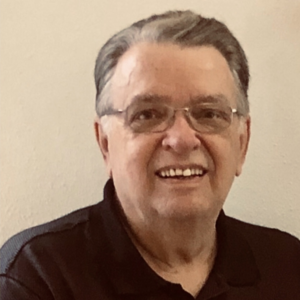
Today on Fellowship in the Word, Pastor Bill Gebhardt challenges you to become a fully functioning follower of Jesus Christ. Think of the nation Israel.
What a privileged group of people, this little speck of dust in the Near East, this little tiny land. God says, you're going to be My people and I'm going to take up residency with you right in your capital in Jerusalem, in the temple. I will make My presence known. I will be present in the Holy of Holies. I'll be right there. What a privilege. And then they deviated from the plan of God.
And what happened? It says God left the temple and wrote Ichabod on the side. I'm done with you. The same thing happens to the churches just as well. The question is, once we deviate from the plan, then we have no spiritual vitality from God's point of view. Thank you for joining us today on this edition of Fellowship in the Word with Pastor Bill Gebhardt. Fellowship in the Word is the radio ministry of Fellowship Bible Church located in Metairie, Louisiana.
Let's join Pastor Bill Gebhardt now as once again he shows us how God's word meets our world. What's the most important thing about the church? What's the most important thing about the church? You see, I think for many of us, we're not sure.
The Bible is clear, but I don't think we're very sure at all. The most important thing about the church is what happens outside these walls. The most important thing about the church is what happens out there. How you live your life. How you walk with Christ when you're not here. The marriages that you have. How you treat each other in the home. The kind of employee or employer you are in the workplace.
The kind of neighbor that you are. Those things are all important, but they're not even the most important. The most important thing about the church come from the words of Jesus. He said, Go therefore and make disciples of all the nations, baptizing them in the name of the Father, the Son and the Holy Spirit, teaching them to observe all that I have commanded you.
We call that the great commission. And he didn't call it that we did, but it is the mission of the church. There's only one commandment in there. We are to make disciples that's commanded.
And then there are three participles by going, by baptizing and by teaching. That's how we make disciples. Each year, what we do at the church here in the spring is we try to emphasize our responsibility to outside these walls. Taking the gospel of Jesus Christ across the street and around the world. We have ever since I've come here allowed always the congregation to establish the missions and outreach budget of the church.
The idea behind it is we're much more concerned about where your heart is than where our heart is. And so each and every year and this year will be no different. There are in the lobby cards like this is a faith promise cards. People in the congregation fill them up, put an amount on. Once we get the amount, we destroy the cards.
And that's the budget for the next year. Where we how we take the gospel across the street and around the world. The reason that's so important is it's what we're about. It's the most important thing about us.
This year, we've decided to sort of give for the theme that the theme outside these walls. And what I loved about the video is I love one word and it said in there, it said that the church is deployed. That's what the church is. But do you ever think of the church that way? The whole idea of the church is you're being deployed. This is just a unit where if you're in trouble, we can be a hospital.
But on the other hand, if you're not in trouble, our job is to motivate you and and to plan for you to be deployed. Out there in the real world, that's what the church is. Now, if we're going to be effective outside these walls, it's very important that we're effective inside the walls of the church and to be effective inside the walls of the church. Then the church has to be exactly what the Bible says the church needs to be. Open your Bibles to Matthew Chapter 16, verse 18. Matthew Chapter 16. And actually, let's look at verse 13 through 18. Matthew six, very famous passage. Unfortunately, one of the most misunderstood passages by many, many, many people in the world.
It's but it's important to us. Verse 13 says, When Jesus came into the district of Caesarea Philippi, he was asking his disciples, he said, Who do people say that the son of man is? The son of man is a term he uses for himself.
It comes from the Book of Daniel. And he said, he said, Who do people say that I am? This isn't the first time he's asked the question.
People always ask that question. Who do they say he is? And notice the response he gets. Some say you're John the Baptist. He said, Others say Elijah, still others, you're Jeremiah.
You're one of the prophets. So Jesus stopped and says, But who do you say that I am? And Simon Peter said to him, You are the Christ. You're the Messiah. You are the son of the living God. And Jesus said to him, Blessed are you, Simon Barjona, because flesh and blood did not reveal this to you.
My Father in heaven did. And then he says something interesting. He said, I also say to you that you are Petros. You are Peter Petros. And it's wonderful in the Greek because the idea is Petros, in a sense, is a chip off of a big rock, a chip. You're a chip.
You're a small stump, but you're a chip off the rock. He says, You are Petros. And then he says this, he said, And upon this rock, I will build my church and the gates of Hades will not overpower it. Now, notice he didn't say you are Peter and upon you, I will build the church.
He could have said that easily if that's what he meant, but that's not what he meant at all. First of all, Peter is not going to build the church. Who's going to build it? Jesus is I will build my church. And that statement, that's where the word this is, the antecedent to that is the statement that he made. That statement is you are the Christ, the son of the living God. He said upon this, I will build my church.
Now, what's interesting about that? That's a promise. That's a promise you can take to the bank. Jesus said, I will build my church. I'm going to build it. But there's a condition on it.
I don't know if you see it in the passage. The condition is I will build it. I have to build the church. Not someone else.
Not man. I will build the church. You see, that becomes the condition of whether the church will be built at all. And over the history of the church and around the world today, you have men building churches. But it's not exactly what Jesus is talking about at all.
In fact, it gets exactly the opposite outcome. Turn with me now to Revelation chapter three, just two verses, one and two. Revelation chapter three, verses one and two. Here, John is writing the letters to the seven churches. It's a precursor to all the prophecy in the book of Revelation.
And he's talking about the condition of most of the churches and almost all of them are already in trouble. By the time John writes and he starts out in verse one of chapter three and he says to the angel of the Church of Sardis, the word angel, angelos means messenger. So very likely most commentators believe that the angel of the Church of Sardis is the pastor teacher of the church. He would be the person he's writing to, to the leader of the church, pastor teacher. He said to the angel of the Church of Sardis write this. He who has the seven spirits of God, the seven stars. He says this, I know your deeds, that you have a name and that you are alive.
But you're dead. He says, I know what kind of church you are. You have a name. People talk about you. That you're you got a lot of life. You see, I heard you had a good reputation. You're an active church.
You have a lot of programs. People like it. You're dead. It's an amazing statement when you think about it. You are dead.
It's interesting. It reminds me of the rhyme of the ancient Mariner, which reads corpses man the ship. Dead men pull the oars. Dead men hoist the sails and dead men steer the vessel.
Sardis is an ecclesiastical corpse. It's dead. Notice, it's active. It has a great reputation. But it's dead.
Why? Because Jesus wasn't building the church. Men were.
We deviate from the plan of God. Remember the story of Samson? It's a good story. He's a young boy. I love that story.
There's a lot of violence in it. Big strong guy. Everything went well, didn't it? Until he deviated from the plan.
Then it ended in complete catastrophe. Think of the nation Israel. What a privileged group of people. This little speck of dust in the Near East. This little tiny land. God says, you're going to be my people. And I'm going to take up residency with you. Right in your capital in Jerusalem, in the temple. I will make my presence known. I will be present in the Holy of Holies. I'll be right there. What a privilege. And then they deviated from the plan of God.
And what happened? It says God left the temple and wrote Ichabod on the side. I'm done with you. And the same thing happens to the churches just as well. The question is, once we deviate from the plan, then we have no spiritual vitality from God's point of view. So the question comes down to, is there a blueprint then of what we should be inside these walls?
And there is. Turn with me now to the book of Acts chapter 2 and verse 41. The book of Acts chapter 2 and verse 41. The best place to see the plan is the birth of the church. This is where the church just gets started. First time, let's get church going. And so you have the birth of the church. Here in the birth of the church, we see the plan. Pentecost has taken place. Jesus is ascended.
There's 120 believers. And then the apostle Peter preaches. And after he preaches, there's a response.
Notice the response in verse 41. It says, so they received his word and were baptized. And that day were added about 3,000 souls to the church. So the church is at least about 3,120 people in the very first day. Now, the question comes down to, how are you going to do church then?
How do you do church? Now remember, they have no idea. They have no idea. They don't know what church is. They have no understanding of the church at all. They have no New Testament. They have nothing in writing. They don't have a how to do church workbook. They don't have conferences.
They don't have seminars on how do you do church. They don't have anything, as a matter of fact, just all those believers. And so God gives them the blueprint, and a blueprint for us, of how do we be effective outside these walls by what we do inside these walls. It says in verse 42, they were continually devoting themselves to the apostles' teaching. The first thing, they were continually devoting themselves to the apostles' teaching.
Wow. Now, we know there are one thing about this group. They're saved. There's 3,120 people or so that are saved. They're redeemed. The church should always be made up of the redeemed, the saved.
That's who they are. They're saved people. One thing I find interesting, by the way, I read some time ago, Billy Graham in his heyday wrote that he believed with all of the big evangelistic stadiums he filled and all that, he believed that throughout his ministry, about 40% of the people that came forward actually ended up being saved. That's what he thought the number was.
What's interesting with Peter is it's 100%. All 3,000 of these people are saved. Peter preached, they believe them, and they're saved.
And so after they're saved, we find this redeemed group of people, and it says then that each of them, in this sense, had been devoted themselves to the apostles' teaching. In other words, the church has to provide a vital learning experience for everybody. The Word of God has to be taught. It just has to be taught. Now, here's what's really interesting. The world we live in right now, it's hard to find churches that teach the Word of God.
I mean, that doesn't even make sense. That's the one vital thing every church should be doing. And yet there are people, and maybe some of them, you spent years or decades in a church, and you were never taught the Word of God.
It didn't even matter what the Word of God was. But here they're devoted to the teaching of the Word of God, the vital learning experience from God. Paul wrote to Timothy and Titus, two young pastors. He said to them, you need to teach sound doctrine. You need to teach the Word. You need to preach the Word.
Whatever you do, don't get sidetracked. You need to preach the Word of God. But is that happening?
And has it happened throughout the history of the church? Look, I don't have very many prayer requests for the future for the church or myself, but let me put it this way. This may shock some of you, but I'm not going to be here forever, all right? My time to go home will come. And when it does, I beg you, don't let somebody stand up here who doesn't preach the Word of God. Just don't do that. And if somebody stands up here who doesn't preach the Word of God, leave. Go find where someone preaches the Word of God. You see, don't do that. Don't be part of that. Don't be involved with all of that human ingenuity.
You see, one other thing about this early church that I find so fascinating is they were totally dependent on God. They didn't have any technique. When you read this section, there's no techniques. There's no neat things to do. There's no coffee house in the lobby. There isn't.
There isn't any of that. How could they do church? That's what church is.
That's sad. That's just the ingenuity of man. That's all that that's become, man figuring out ways.
And we get stuff all the time, and I can read stuff online all the time of all of these techniques that if I would just do the techniques, you're going to attract more people. It's a sad thing. I mean, up until a few years ago, I used to get it all the time and read that the most important thing to really grow your church is money.
You need money, money. Really? That's important?
Yeah. And these different groups would say, and we know how to raise it. We're professionals at raising money. We'll come down to your church. You give us some time in the service. We'll visit people in their homes, and we guarantee we'll extract a certain amount of money from them. How revolting is that?
How disgusting is that? But that's what you need. I mean, if we're going to have a restaurant in the lobby, we need money, don't we? I mean, isn't that what we need? We need money. That's just the ingenuity of man.
That's just man trying everywhere he can. And you see this. It's running rampant in America now.
They have everything you can possibly imagine. We're building $100 million facilities. And the amount of evangelical believers in the country is in steep decline every year. We're not winning the loss.
It's not happening at all. And a lot of people think that's what doing church is. That's not what God says at all. Jesus says, look, that's man trying to build his church. I will build the church. The first thing that they have to have is the vital learning experience. He said that's absolutely important. They have to be saved, a redeemed community.
They have to rely never on human effort. They have to be a teaching church. And then he says the next thing, end of fellowship. Now, that's our name, right? Fellowship.
Yeah, but it's not what you think. For so many of us, what is fellowship? Regrettably, by the way, we always say there's a fellowship room at the end of the hall.
I don't like that very much. I don't know if there's any fellowship going on in there at all. See, we think fellowship is like coffee and donuts. You know, you just sit there and sip a little and eat when you're having fellowship. That's not what fellow, koinonia doesn't mean that at all. Koinonia is a deep, abiding partnership of people.
It's a unity about it. Hold your place there and go with me to John 13. John chapter 13, verse 34. John 13, 34. If you want to know what the heart of fellowship is, this is it. John 13, 34. Jesus, the night before he's crucified, says this to his disciples. He said, a new commandment I give you.
This is new. I'm going to command it. I'm going to give it to you and to us. He said that you love one another. I command you. You have to love one another.
Agape. Notice the condition of the love. Even as I have loved you, you also love one another. How does Jesus love us? Sacrificially, right?
He said, I command you to love one another that way. Now, be honest about this. Is that how you feel? Is that really how you feel? You come to church, you say, I love these people. I really love them. I'll sacrifice for them. Is that how you feel?
Or is it likely sort of like this? Well, I love a few of them that love me. I love people that love me. I like people who like me. I tolerate people who tolerate me. And I dislike the people who dislike me. That's not of the Lord.
That's of you. We're to love one another. We're to love one another, sacrificially. And you're going to see just how far this goes in the context of this church. So let's go back to the book of Acts. If you think that they had fellowship, I think there's around 39 different one anothers in the New Testament. Love one another, forgive one another, exhort one another, admonish one another, confess your sins to one another, serve one another.
It just goes on and on and on. It's all about one another. Why would we do that? Because we love one another. And notice when Jesus spoke in John 13, you know what he said after he said what I just read?
By this, all men will know you're my disciples. If you love one another the way I loved you, everybody out there will say, I've never met a group of people like that. Now, they may not believe the gospel, but I bet you one thing they will say, those people love each other. Now, let me ask you. Do you think that's what people out there think about us or any church?
Oh, they love each other. I don't know about you. Maybe I'm just naive, but I've never heard anyone tell me that it was an unbeliever. I've never heard anyone say to me, you know, one thing about it I'll say, I've never seen a group of people love each other like the people in the church do. Because we don't. That's why.
Because we don't. He says that in that case, all men will know. Now, they devoted themselves to the apostles' teaching and to fellowship. He said, and the breaking of bread and to prayer. And the breaking of bread is interesting in that context because it's more likely what they, there is probably the Lord's table.
In a moment, it'll be the idea of taking meals together. And then he says this, and everyone kept feeling a sense of awe. Now, in this case, you and I would, too, it's pretty easy, because it says, and many wonders and signs were taking place through the apostles. The apostles had enormous sign gifts. They did all kinds of things, the gift of healing. Each of Peter and Paul had each raised the dead. They had done some amazing things.
But really, if you think about it, here's all that happened there. God was at work. And so the people were in awe. They were in awe. God's at work.
You and I should be in awe, because God's still at work. You've been listening to Pastor Bill Gebhardt on the Radio Ministry of Fellowship in the Word. If you ever miss one of our broadcasts, or maybe you would just like to listen to the message one more time, remember that you can go to a great website called oneplace.com.
That's oneplace.com. And you can listen to Fellowship in the Word online. At that website, you will find not only today's broadcast, but also many of our previous audio programs as well. At Fellowship in the Word, we are thankful for those who financially support our ministry and make this broadcast possible. We ask all of our listeners to prayerfully consider how you might help this radio ministry continue its broadcast on this radio station, by supporting us monthly or with just a one-time gift. Support for our ministry can be sent to Fellowship in the Word, 4600 Clearview Parkway, Metairie, Louisiana, 7006. If you would be interested in hearing today's message in its original format, that is as a sermon that Pastor Bill delivered during a Sunday morning service at Fellowship Bible Church, then you should visit our website, fbcnola.org.
That's fbcnola.org. At our website, you will find hundreds of Pastor Bill's sermons. You can browse through our sermon archives to find the sermon series you are looking for, or you can search by title. Once you find the message you are looking for, you can listen online, or if you prefer, you can download the sermon and listen at your own convenience. And remember, you can do all of this absolutely free of charge. Once again, our website is fbcnola.org. For Pastor Bill Gebhardt, I'm Jason Gebhardt, thanking you for listening to Fellowship in the Word. ... ... ... ...