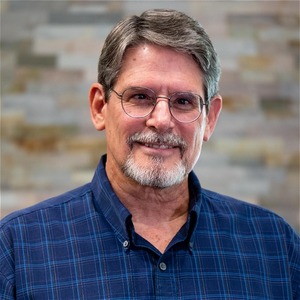
Welcome to Delight in Grace, the teaching ministry of Rich Powell, pastor of Grace Bible Church in Winston-Salem. The Bible teaches that salvation is a free gift for us, that we can be reconciled to God, our sins forgiven, by placing our faith in Jesus. But it's only free because the Son of God paid a most costly price. William Barclay writes that God alone can pay the terrible price that is necessary before men can be forgiven.
Forgiveness is the most costly thing in the world. In today's message, Pastor Rich examines the ultimate reconciliation. Let's listen in. I invite you now to take your copy of the Scriptures and turn with me to 2 Corinthians chapter 5 for our exposition of God's Word this morning. The title of today's message is Reconciliation.
Let me begin reading at verse 18 and I encourage you to follow along with me. Now all things are of God who has reconciled us to Himself through Jesus Christ and has given us the ministry of reconciliation. That is, that God was in Christ reconciling the world to Himself, not imputing their trespasses to them, and has committed to us the word of reconciliation. Now then, we are ambassadors for Christ as though God were pleading through us.
We implore you, we plead with you on Christ's behalf, be reconciled to God. For He made Him who knew no sin to be sin for us that we might become the righteousness of God in Him. The glory of the Gospel is this series that we are concluding today in 2 Corinthians chapter 5. If we are to know what the glory of the Gospel is, then we must know what the Gospel is. And the Gospel is clearly outlined for us in 1 Corinthians 15 verses 3 and 4. Christ died for our sins according to the Scriptures. He was buried and He rose again the third day according to the Scriptures. There is history there.
What will you do with history? Christ died for our sins. And you might say, well, there was a man named Jesus and he lived in history and he died, I recognize that. But what about the theological implications that he died for our sins according to the Scriptures? How do we know that?
Well, we'll discover that this morning. The title of the series has been the glory of the Gospel. And the glory of the Gospel is just simply this, that the regenerating Spirit of God with the illuminating Word of God transforms the redeemed people of God based on the reconciling Son of God, pointing to the righteous goodness of God and overcoming the distracting enemy of God. The Bible tells us that the last enemy that will be destroyed is death. And what is death? Some might say, well, it's where you cease to exist.
Can't happen. Life is a continuum. Listen to me. You who are alive, you who are breathing this morning, your life will continue for eternity. It will not end. There will be those of us who live eternally in a state of life. There will be those who live eternally in a state of death. Death is separation.
And the ultimate enemy that will be destroyed is the enemy of death, which is separation from God. The one who made you and made you for himself. Loves you so much that he did everything necessary to reconcile you to himself.
How did he accomplish that? The text before us says in verse 19 that God was in Christ reconciling the world to himself. God was in Christ reconciling the world to himself.
There's something very clear from this that we need to understand. We don't reconcile ourselves to God. God does the reconciling. We cannot reconcile ourselves to him. Because to reconcile means it implies that there has been a separation.
And it is my rebellion and my sinfulness that separates me necessarily from an infinitely holy God. And I can do nothing to bring myself back to him. He is the one who reconciles me. How did he do that? To reconcile means to make compatible, to make agreeable, to put in right relation.
That which has been separated is brought back together again. How did God accomplish that? How would a holy God do that?
It's outlined very clearly for us in this text. Look with me at verse 21. For he, that's God, made him who knew no sin, that's Jesus Christ, God in the flesh, the perfect man because he was perfect God, and he lived a perfect life. God made him who knew no sin, what? To become sin for us. That's what happened on the cross. He made him to be sin for us. He took my place on the cross. John Muir, a famous explorer, wrote a book entitled The Travels in Alaska.
It was published in 1915. He tells a striking account. There was a bitter war between the Flintkit and the Sitka tribes.
After aimlessly, pointlessly fighting all summer, one of the Flintkit chiefs came out of the blockhouse fort into an open space midway between their fortified camps. And he shouted that he wished to speak to the leader of the Sitkas. When the other chief appeared, he said, my people are hungry. If this war goes on much longer, most of my people will die of starvation. We have fought long enough. Let us make peace. You brave Sitka warriors go home and we will go home. The Sitka chief replied, you may well say let us stop fighting when you have had the best of it. You have killed 10 more of my tribe than we have killed of yours. Give us 10 of your men to balance our blood account and then we will make peace and go home. Very well, replied the chief. You know my rank.
You know that I am worth 10 common men and more. Take me and make peace. The noble offer was promptly accepted and the Flintkit chief stepped forward and was shot down in the sight of the fighting bands and peace was thus established. Years later when missionaries came explaining that when all mankind had gone astray and had broken God's laws, they deserved to die and God's son came forward and like the chief offered himself as a sacrifice to heal the cause of God's wrath and set all the people of the world free. That teaching was readily accepted by these tribes.
They had seen something similar to it. Their words are good, they said. The son of God, the chief of chiefs, the maker of all the world must be worth more than all mankind put together. Therefore when his blood was shed, the salvation of the world was made sure.
They recognized the doctrine of the atonement. God offers forgiveness. He offers his peace.
He offers reconciliation. That reconciliation can happen when forgiveness happens, but divine forgiveness is very costly. God is love, but God is holy. And God least of all can break the great moral laws on which the universe is built. Sin must have its punishment or the very structure of life disintegrates. And God alone can pay the terrible price that is necessary before men can be forgiven.
This is never a case of saying it's alright, it doesn't matter. That's not forgiveness. Forgiveness is the most costly thing in the world. God was in Christ reconciling the world to himself.
How? He made him who knew no sin to be made for us. People, there is the cost.
There is the cost. And as he did that, when Christ was hanging on the cross and he cried out, my God, my God, why have you forsaken me? Listen, it was at that moment that he absorbed the blow of God's wrath that you and I deserve. And he did that so we can be reconciled. Look what he says in verse 19. God was in Christ reconciling the world to himself. What does the next line say? Not imputing their trespasses to them. God says to you, I am willing to not hold your sin against you because my son has taken it upon himself. Wow. You've been listening to Rich Powell, the lead pastor at Grace Bible Church in Winston-Salem. The Delight in Grace mission is to help you know that God designed you to realize your highest good and your deepest satisfaction in him, the one who is infinitely good. We hope you'll join us again on weekdays at 10 AM. We'll see you next week.