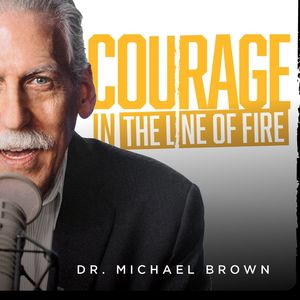
Hey friends, this is Michael Brown with a very special announcement to all of you listening to the Courage in the Line of Fire podcast. I am going to begin a brand new teaching series on the words of Jesus. It's going to be rich. I can't wait to do it. It's going to be impacting for me as I do it.
And we're going to start. with the Sermon on the Mount that will be coming within the next couple of weeks. And we are going to sit at the feet of the Master and learn together. Can't wait to get into this with you. Welcome friends.
We are live. talking about a really really important subject. in a sense, the ultimate subject, the ultimate question. the problem of suffering, God's answer to the problem of suffering, This is not abstract. This is not just theoretical or.
theological or philosophical Many people right now as at any moment around the world are in agony. are are suffering extraordinary loss. We think so much about the tragic floods in Texas and Not just suddenly so many lives lost, but the lives of little children. Little girls. at a Christian camp.
And praying and worshiping, and next thing swept away in terror to their deaths. The question of, well, why didn't God protect them? And okay, we believe they're in heaven now, but why didn't God protect them? Why wasn't What didn't the families know as they prayed that something was going to go wrong? There is unimaginable pain for so many and as I said at any moment at any time in the world There's agony, there's loss.
They're deep, deep questions that don't have easy answers.
So, my goal today is not to surprise you with some slick apologetic or wow. It's amazing. I never knew that. But rather to to talk realistically Honestly. from the heart.
So pray with me Abba father We look to you. Lord, some right now in terrible pain. terrible suffering. agony that very few of us can imagine. I pray, Lord, that you would minister to us.
that you would speak to us that you will help us. In Jesus' name. Welcome friends to today's live stream. If you have a question for me, dealing with this subject. God and the problem of suffering.
If you have a question for me. Hopefully towards the end of the talk. I'll have time to take some questions. Again, you may ask a question that I really don't have an answer to, and I'll just have to tell you that. But Only specifically on this subject.
So be it what scripture says. Be it some theological questions, practical ministry questions to those suffering. Only on this subject will we be taking questions. God, and the problem of suffering. If you have a question, What you do is you post in the chat.
So, this is, I won't be replying to comments afterwards.
So, this is just be live during the chat that you post your question and put at the beginning. at the line of fire.
So the at sign The line of fire This way we'll know that you have a question. Otherwise, you can just be chatting back and forth. Also, if you'd like to contribute and help us with the ministry, with the outreach that we do to the Jewish people, with our standing for truth within the body, if you'd like to help us with that. then just click the dollar sign. But as you give, if you have a question, you can ask it then as well because that will jump to the top of the screen.
Also, if you don't subscribe to our YouTube channel, by all means, subscribe, click that, and... Make sure you click the bell. Bing, ring the bell there. That will notify you anytime a new video is posted.
Okay. First let me address the idea that those of us who have social media platforms or live shows. I had a live radio show for 16 years from 2008 to 2024, five days a week live. Let me address this idea that we are somehow supposed to comment on everything. That whatever happens, oh, well, what does doctor Brown have to say?
What does so-and-so have to say?
Well, I appreciate the fact. that people Respect. my opinion or the opinions of others. And perhaps you could say, well, the fact that we have an audience, we're on the air, means that people want to hear what we have to say, but. Where is it written that we should give our opinion on everything?
I certainly fell into that trap of thinking, okay, whatever's happening in the world around us, I need to pray and think and get insight and bring an opinion, but why? Why? Yeah look if if you have ever been to a funeral? or to the home of someone that's mourning. Many times there are no words to speak.
Many times words hurt, Many times the only thing you could do is just sit with that person quietly. or just hug them and cry together.
So, the idea that we always have to have something to say, again, it's a trap I've fallen into many times over the years. It's it's ludicrous, it's silly. And it opens the door for foolishness. It opens the door for many unneeded words. And we know Proverbs 10:19, where words are many.
Sin is not. Absent. Also Jesus taught, Blessed are those who mourn, Matthew 5, for they'll be comforted. And then in Luke 6, Blessed are those who weep. For they'll laugh.
In other words, there are times in this world where All we can do is weep with those who weep. As 1 Corinthians 12 teaches, that when one part of the body suffers, we all suffer.
Sometimes that's the appropriate response. We We put our hand on our mouth.
So I I I have nothing to say in terms of my opinion. Why God allowed the tragic floods or has allowed other things to happen. It's one thing when it's people against people. Human beings starting wars with each other, causing terrible suffering. It's another thing when it's natural disasters.
And, well, the system failed here.
Well, it was government responsible. I'm not getting into any of that. I'm not saying no one can, I'm simply saying. I am not. I am not.
And I think there's a danger. For all of us to to just be airing our opinions. And social media platforms just make it so easy. I want to give you two examples. After the tragic terror attacks of 9-11, I was praying about What to say.
I was reading this prophetic perspective, this insight from a Christian leader. As many of you know, my wife, Nancy, lost her brother. Douglas in in the the Twin Towers. And I was writing something out one day, and Nancy said, What are you writing? I said, Well, I'm.
I'm looking for I'm writing a response, some insights on what happened at 9-11. And she said, well, why? I said, well, you know, all these other Christian leaders are doing it. People want to know my perspective. And she said, did God show you something?
Did God well I said well I think I have some insights. She said well did God really show you something? And I thought, and I prayed, although I I can't say that in any decisive way.
So I never wrote anything. because really I did not have anything worth saying in the light of such tragic and terrible loss.
Some years earlier A couple was over at our house when we lived in Maryland. And Uh One of them said to, I forget it's the husband or the wife. Uh Mike, did God show you anything about this? And I said, whatever the situation was, I said, no, but I'll give you my opinion. And Nancy rightly said, who cares about your opinion?
The question was not, Mike, what's your opinion on this? The question was, did God show you something?
Well, He hadn't.
So I think for all of us. I'll put myself at the top of the list. How's that? Not accusing anyone else. I'll put myself at the top of the list.
Less is best. Less words. Less opinions. more circumspection, more prayer, more reflection.
So again, when we talk about the problem of suffering, We're not talking about anything abstract. We're talking about present tense, agony. at any moment. Any second People are experiencing tragedy and loss just by the number of billions of people that are here. Um What we don't want to do is give cheap answers.
It's an insult to people's pain. when we give cheap answers. It's showing how little we know. and we understand. And look, I I I have been burdened by things and carry often an intense burden that causes real pain That causes me just to fall on my face before God for extended periods of time and cry out to Him.
But I by nature am not a deeply compassionate person.
So I was shocked to hear about the floods in Texas and looking at the pictures of the little girls and the families and this heroic dad trying to save his family. And I'm sure there's so many stories, the vast majority we haven't heard. And who can imagine what these families are enduring only unless you been through something like that, can you endure it? I I was saddened, but I didn't spend the night weeping, I'm just being honest with you. Nancy, to the contrary, spent the night crying.
Try. She was riveted. to watching the news reports and finding out the personal stories of the people and just crying. crying yourself to sleep kind of thing. Uh I by nature don't have that kind of compassion.
And and those of you who may be like me, and are not as compassionate, all the more do we have to be careful with what we say. less it sounds cheap. Listed sounds. trivial You say, Well, then, why are you doing a broadcast on this?
Well, I've been thinking, I've been reflecting, I've been praying. I Yeah. written a commentary in the book of Job. I've thought about these issues. I wrote the book, Has God Failed You, which, by the way, may be something you find helpful.
at a time of loss or pain or loss of faith has God failed you finding answers when you're not even sure God is real. God's graciously used that book to help others. But even in writing that book, I'd literally wish was on my knees. with with the the laptop by the by the bedside on my knees saying, God, I don't have answers for these people. I've not suffered.
loss the way others have suffered loss. had to bury a child. I haven't had I've watched a family member wither away of cancer. I've watched others die of cancer, slow, terrible deaths, but no, not a family member. Or you suddenly get the report of someone killed in a car wreck that's, you know, that's that that's a s a sibling or something like that.
Sure, we've lost people and mourn, but I was thinking of all the needs and problems out there and thought, I don't have an what can I say, God?
So you dig in the word and you look for God's answers and God's perspective and what can you bring as a servant of His to others, but no cheap answers. Leonard Gravenhill once said that to me, I don't know if he was quoting someone else or not, but no cheap answers to the will of God. And no cheap answers to the things that we can't explain or understand. You say, but didn't you debate Professor Bart Ehrman. Does the Bible provide an adequate answer to the problem of suffering?
Yes, it did. And it In my home study, as a result of working on Job, I got a whole bunch of books on various theodicies. A theodicy is is dealing with God and the problem of evil, God and the problem of suffering. How do we explain these things? You know, it's the old adage.
That if God is all good, and all-knowing then he can't be all powerful. Because if he was all good and he saw everything that was going to happen, then he couldn't be all powerful because obviously he didn't stop the pain. Or If he's all good and all-powerful that he couldn't have been all knowing. Because he wouldn't have created the world in which there's so much pain and suffering, or if he's all-knowing and all-powerful, then he couldn't be all good. And the ultimate answer would be He can be all good, all knowing, all powerful.
And because of that, what will ultimately result for eternity is something that would be worth it. But Right now, there's someone experiencing tragic loss, and right now there's someone who's not even sure of God's reality. Those are just words. I I do believe that that theodicies that that books Articles, talks that deal with the problem of suffering can be helpful. Many people were helped, for example, by C.S.
Lewis writing on God in the dock or a grief observed where he just walked through his own life, losing his wife to cancer. When I was preparing for the Bart Ehrman debate, because this is not a specialist area for me, I read a lot of other material. For example, Randy Alcorn's book, If God is Good. I found very, very helpful.
So there are things that are helpful. I find it helpful sometimes talking to someone if they ask about pain and suffering that I give some explanations. But ultimately. They're questions that don't get answered. Ultimately, there's something that seems to be an exception here.
Or that no, that doesn't line up here.
So Let's be honest. There are helpful answers. But sometimes, from a human perspective, there are no answers.
Now I saw a video with a Calvinist pastor leader, highly respected. talking about God killing people in the Bible. How could that be right? Or God telling the children of Israel to put the Canaanites to death. How could that be right?
And his answer as a Calvinist was At any moment, God can kill anyone. And he has every right to do it because of human sinfulness. And that would be an answer that respects God's sovereignty and recognizes human sinfulness. But the question behind that would be, well, I didn't ask to be brought into this world. Or am I responsible for Adam's sin?
Well, you freely chose sin.
Well, it was inevitable. If you're a Calvinist, you believe that human beings sin because there is no alternative but to say in other words, that that our fallenness was not our choice. And that God preordained Adam's fallenness so that ultimately our fallenness is because of the plan of God for something that he wants to do through it.
So again, maybe if you are in faith as a Calvinist, a Calvinist answer helps. But it doesn't help outside of that. It just makes God seem arbitrary or tyrannical. I'm not saying. that you as a Calvinist see him that way.
I'm just saying for others. You're just going to see God as tyrannical, as arbitrary, as not the loving Father that He's presented as in Scripture. See, that's the problem. The Bible describes God a certain way. is caring and loving.
and as touched by our pain. In fact, in a moment I'm going to go through some verses about God's pain.
So Uh uh I've just been sketching out some of the problems, some of the issues. In point of fact, the Bible itself raises problems. I was reading One book by an Old Testament scholar, and he said, If you want to lodge a complaint against God. The Old Testament already has the forms filled out for you. Just sign your name to it.
I mean, why is the book of Job in the Bible? Why does it raise the question of inexplicable suffering. Inexplicable suffering for the righteous, you say, but that's the thing, there is no unrighteous. No, according to Scripture, there are righteous by God's grace and help. There are people he he considers righteous.
God himself Tells the devil, look at Job. Tells Satan, look at Job. There's no one like him. He fears me. He turns from evil.
He's a righteous, godly man. According to To everything in Old Testament theology, Job's life should have been blessed. And at the end of the book, he lives a beautifully blessed long life. He dies old and full of days. That's the blessed way to die.
With prosperity, with a blessed family, with esteem and honor. According to everything in Old Testament theology, Job... should have just been blessed, and he suffers things unimaginable. I mean, who has suffered everything that Job suffered the way he suffered it in such a short period of time? That's in the Bible.
And Job outrightly challenges God and calls him a monster who doesn't care and the one who's behind corruption and suffering in the world. Why why is that in the Bible? Why did God choose to put that in the Bible? It's to tell us that sometimes things happen that are inexplicable. And the two tendencies, the one from the friends, To to blame Job well, you must have sinned.
Yeah, you must see you must have sinned. Yeah, the reason your kid died in a car wreck is, see, you didn't pray and see, I knew when we went through that church split, you were on the other side. See, I knew there was something wrong with you, and that's why your house burned down. Don't ever don't ever. Ever do what the French did.
Job's friends. They cared But they spoke out of turn in such a way that God rebukes them at the end of the book after A after revealing himself to Job and challenging Job, he rebukes the friends.
So their error was, well, Job, you must have sinned.
Now, yes, sometimes our sin causes our suffering directly. Yes. I refuse to hear God's warning. I drink and text and drive at the same time, and I get in a car wreck.
Well, I can't blame God for that. Obviously. But Don't do it with the friends, Steve. and say, well, it must have been your fault. That's why you're suffering.
You didn't tie, that's why your kid's sick. Oh, please, please don't do that. Please. Conversely, what Job does is he blames God. Where it's actually Satan who was directly responsible for his suffering and God had a greater redemptive purpose in it.
Jove Now says God's just a moral monster over the whole earth. But this is in the Bible for a purpose, and I'll come to God's answer in a moment. Ecclesiastes is in the Bible for a purpose. The the skeptics book. This time and chance happen everybody's no different.
God fearing man, you die young, wicked, you live long. It's like there's no evidence of God in the world. Time and chance happen to anybody. And it's all meaningless in the end. That's in the Bible to say this is how you may feel and process things.
Or the Psalms of Lament, where the Psalm is like, how long? How long? I soaked my bed with tears. My enemy's triumphing. I'm being mocked.
How long? So those are in the Bible for a reason. Uh and What I want to encourage you with is that God's not scandalized by your pain. God's not scandalized by your questions. God's not scandalized by By you.
even accusing him, and getting mad at him, or speaking against him He's not scandalized by it. He put he chose to have these books in the Bible to say. I fully understand what you're going through. I get it. Others have gone through it.
He is God after all. and in fact he is touched with the feeling of our infirmities.
So I want to put some verses up for you. I I did a talk in Germany. Heartbeat of Heaven Conference. a couple weeks back in tubing in. in June.
And I discussed God's pain in it.
Now, I did focus on God's pain for Israel while talking about his care for the people of Gaza and His care for the people of Iran. But the conference was was an Israel-focused conference. But what I'm saying is is universal.
So let me go through.
some of these scriptures with you. The message was entitled, Sharing God's Pain for Israel. And I start off with some foundational verses.
So let's put these slides up so you can see the verses as we're talking about it. The second slide, foundational verses, go to that. And then Let's look at The first verse, Isaiah 63.9. which starts with Bekhald Saratam Lohzar. In all their troubles, he was troubled.
So in all Israel's troubled God was troubled and all their afflictions He was afflicted. The angel of his presence delivered them and his love and pity. He himself redeemed them. But notice... As they suffered He suffered.
So it wasn't God just stop it that it's a perfectly valid question. But instead he suffers with his people. Romans chapter 9. Paul speaks about the perpetual pain that he lives with. because of his people Israel.
being cut off from the Messiah, that that he wished If it would help, he would be cut off for their sake. The pain that he feels. He says, I have great sorrow and unceasing anguish in my heart. It reflects. Gods pain.
So God Himself feels pain. Um Basilius Schlenk. who was the founder of the Evangelical Sisterhood of Mary. said anyone who loves as much as God does cannot help suffering. And anyone who really loves God Well sense that he is suffering.
We don't think much about God's pain or God's suffering because He's God. We're people. He's God And yet Scripture speaks of of his pain. of his suffering, embodied ultimately in the person of Jesus, as we'll see, So I agree with what Basilius Link is saying. Let me read this again.
Anyone who loves as much as God does. cannot help suffering. And anyone who really loves God will sense that he is suffering. She found support for this view in the writings of the Japanese Lutheran theologian Kazo Kitamori in his Theology of the Pain of God. in which he wrote, The heart of the gospel.
was revealed to me. as the pain of God. This revelation led me to the path which the prophet Jeremiah had trodden, Jeremiah 31.20, which speaks of God feeling Israel's pain even as he afflicts. Jeremiah was a man who saw the heart of God most deeply. Kinamori says, I was allowed to experience the depth of God's heart with Jeremiah.
And he's writing after the horrors of World War II in Japan. we dare to speak about this pain of God, We must pronounce the words pain of God is if we were allowed to speak them only once in our lifetime. Those who have beheld the pain of God cease to be loquacious, cease to be wordy. and open their mouths only by the passion. to bear witness to it.
So it's It's it's a very sacred thought, a sacred concept, one that I approached with fear and trembling, truly. Gods Pain. God's pain. There are some theologians who speak about the impassibility of God, not impossibility, but impassibility. Meaning That When the Bible speaks of God feeling anger, feeling grief, feeling joy, feeling sorrow.
That They are just figures of speech. to teach us things in our human language because God never varies. God never changes. And therefore, if he felt joy, if he felt grief, he'd be changing. I personally reject the the idea of impassibility.
Number one, What are these words trying to convey to us? What do these words mean? About God experiencing joy and grief, if there's actually just a theoretical meaning to them. Number two, Jesus said, if you see me, you've seen the Father. And Jesus experiences all these different things.
deep, intense emotions, but with perfect holiness, obviously not in fallen human nature. And thirdly, we are created in the image and likeness of God, and surely... These feelings we have reflect something. in the nature of God that is real.
So he never changes. He is always perfectly consistently God, unchanging in his nature. And yet... I do believe that with absolute perfection and fullness he experiences pain and joy, sorrow and grief. Exodus chapter 2.
Exodus 2. Verses 23 and 24. A long time after that the king of Egypt died, The Israelites were groaning under the bondage and cried out, and their cry for help from the bondage rose up to God Veishma Elohim et Na Katam. God heard their mourning. God heard their mourning.
And God remembered his covenant. with Abraham and Isaac and Jacob, the groaning and the pain of the children of Israel came up before him. Judges 1016. as as the children of Israel are called to repent, they remove the alien gods from among them and serve the LORD. and he could not bear the miseries of Israel.
Literally, his soul was shortened. He's constrained, he's hurting on the inside. because of the misery of his people. God's prophets shared his pain. Jeremiah 9.1.
We're 823 in Hebrew. Mi tendoshimai ve ni me kordim ava ev ke yo mam valaila etch khalale va tami. Oh, that my head were water. My eyes a fountain of tears, then would I weep or bewail day and night the slain of my poor people. What's remarkable though as if you keep reading the next verses.
They end up speaking about the Lord. The Lord said, my people have strayed from me and forgotten me, but it's all I, I, I. And when I was sharing this with Nancy when I was writing a commentary on Jeremiah, She said to me quite profoundly It's like you can't tell where God starts and the prophet ends. or where the prophet ends and God starts because it's all I. The prophets Shared.
God's pain. Isaiah Chapter 22, verse 4 is the prophets speaking judgment. on on Jerusalem. Al Cain almart thee therefore I said, Shoo me thee Let me be, turn away from me. Let me weep bitterly.
Al-Ta'itz al-Lachame, don't try to comfort me over the ruin of my poor people. The prophets saw suffering that was coming as if it was already there and they wept but in weeping they they shared God's pain. Abraham Joshua Heschel, in his classic book, The Prophets. Said this he was commenting on Jeremiah 918 or 917 in Hebrew. following the midrash of the homiletical commentary to lamentations.
He calls attention to the wording Thus says the Lord of hosts, raise a wailing over us. asking Does not the word of God mean cry for Israel and me? God's saying, raise a wailing over us, over who? Over Israel and over me. You think, um I'm not getting this, Mike.
I'm confused. Why are you talking about God's pain when we want to talk about human suffering? I'll come to that. I just want to say again. That Scripture points to the fact that God suffers with us.
it may deepen and heighten the mystery. But if let's just say that Jesus himself was physically here on the earth in human form. And and You find him. going through the the wreckage and diving into the water. trying to rescue people.
and weeping as he carries out the body of a little child that he found. And you're thinking. You're actually here? and you're weeping with us? Why didn't you just stop the flood?
I mean, come on, has it never come? come to mind. That when you're praying for God's comfort, you're praying for a friend to be healed, and you pray and pray for three years, and they get weaker and weaker, and they finally die. And now you pray, Will God, comfort the family. Has it never.
Occurred to your mind to say, Well, why am I expecting God's going to hear my prayer for comfort when He didn't hear my prayer for healing? Has that never crossed your mind? It's crossed my mind at times. What do I do? I pray anyway, because this is where we are.
This is the reality of the situation. But but what if while you're grieving You you hear God weeping as well. I'm not presuming that he's doing this. I'm just asking a question. You think, okay, well, you're grieved too.
You had the power to heal. For whatever reason, you didn't heal. You had the power to stop this accident for whatever reason you didn't. you miraculously delivered this one, but not that one. Yet you're grieving too.
It it does change picture. Jesus himself, let's go back to our slides, Jesus Himself. experience very intense emotions. This is a subject of thought about more in recent months and it's it's very sacred. John eleven thirty three So this is at the tomb of Lazarus.
This is Mary Martha. When Jesus saw her weeping. and the Jews who had come with her also weeping. He was deeply moved and his spirit greatly troubled. Elsewhere in John 11, Jesus wept.
So question what Why do you weep at the tomb of Lazarus? It's a question many have asked. Why did he weep at the tomb of Lazarus? Why was he deeply moved and troubled? Could it be it so broke his heart to see the results of sin on the human race, how death had come in?
Did it break his heart to see our weakness and frailty, even though he knew he was going to raise Lazarus? Was there a holy indignation? towards the the ravages of of Satan's work in the earth? He was deeply troubled, he was grieved, he was moved. Hebrews 1.9 tells us that Jesus experienced intense holy joy.
Hebrews 1.9, Therefore God your God has anointed you with the oil of gladness. beyond your companions. Jesus experienced a holy joy beyond anything others experienced. Mark 6.34. And there are many verses about this.
He experienced intense holy compassion. When he went ashore he saw a great crowd, and he had compassion on them, because they were like sheep. without A shepherd. He heals the sick because of the compassion that he has. Mark 10.35, he experiences intense holy anger.
And they looked around them with anger, grieved. at their hardness. Mm-hmm. He experienced intense holy grief and sorrow. Mark 14, 33 in Gethsemane.
and he began to be deeply distressed. and troubled. amplified and he began to be deeply distressed and horrified at the thought of what was to come. And is paraphrased, again, just to paraphrase Eugene Peterson in the message putting it. In his own words, He plunged into a sinkhole.
of dreadful Agony. He plunged into a sinkhole of of dreadful agony, That somehow, what the Son of God was about to suffer was so unspeakable. Not just the physical agony. Not just the horrific shame. and barbarity of the cross but what he was going to take on himself spiritually and emotionally On our behalf, It was absolutely overwhelming.
Luke 19. Jesus wept. over Jerusalem. I won't read the whole passage, but Luke 19. 41 to 44, he saw the coming destruction.
He saw it's two thousand years later the temple still not been rebuilt. He saw the exiling and suffering of his own people, his blood brothers and sisters. And he wept, he said, If only you had known if only you had known things that that would bring you peace, but now it's hidden from your eyes.
So I'm going to stop there with the slides. And say say this, that In your suffering. It's important to realize that God is not distant. Again, you say, well, why did they answer this prayer? And we prayed before we sent our kids off to camp.
We said, make sure. You're careful here, you follow the rules, do what your counselors say, nothing silly. We've raised them. They honor us. Our kids honor us, and it says, honor your father and mother, that may go well with you.
You say, well, that was a promise for Israel.
Well, it's repeated in Ephesians 6, and Paul says the first commandment with the promise. that in the Ten Commandments it's the first one that says that there'll be results. That it may go well with you, that you'll live long in the land.
Well, the eternity, we understand that. We understand that, but the the the fact is l this life matters too. And that's why we cherish life. We don't love our own lives, meaning... We'll lay our lives down for the gospel, but loving life is a good thing.
Psalm 34 quoted in 1 Peter 3, whoever loves life would see good days. Keep your tongue from evil.
So It may seem contradictory. But God is not distant during your pain. God is right with you during your pain. God is carrying you and herding. For you.
during your pain. You say but that still does not And this still does not answer. The question. of why Even with human evil. the monstrous evil of the Holocaust.
Poland which had over three million Jews which had Jews living there for almost a thousand years at that point, or roughly a thousand years. many of them religious. There were 3.3 million Jews at the beginning of the Holocaust. After the Holocaust, there were 300,000. In other words, More than nine.
Out of every ten Jews were slaughtered in the Holocaust. That was human evil. But What about praying the Psalms and God never slumbers or sleeps and keeps Israel and so on? And Well, they're just saying there you go. I is that simple?
a million and a half babies and children killed, that's simply just dismiss it. There's still quite and if that's not the question that troubles you, then there are other questions. There are other questions. You know, a couple prays for years for a child and God blesses them with a child, and then the. The little boy gets leukemia at the age of two and dies at the age of three after terrible suffering.
Uh what What's the explanation? for that. Yeah. Mm-hmm. So what I'm about to say is not trite, it's quite the opposite.
God Himself. encountering God Himself and knowing God himself. is the only comprehensive and ultimate answer to the problem of suffering. completely unsatisfactory to an atheist, or an agnostic unless that person experiences God. In other words, If I debate an atheist or an agnostic, I've done it a few times, but it's not a specialty area for me.
Nancy, who was a hardcore atheist when we met at 19. always gives me insight into things that I'm missing when it comes to an atheist perspective because she became an atheist by the time she was eight. By the time I met her at 19, she was a religion-mocking... hostile to the concept of God person very hard. And by the way, if you have a question.
Now would be a good time to post it.
So again, At the line of fire, put that first, at the line of fire, then your question so it will stand out. Or if you'd like to help us with a gift, click on the dollar sign and then... That will jump to the top of the page, but please don't think you have to contribute to ask a question.
However, we can help. That's our desire. I've only done a handful of debates with atheist agnostics, probably five or less formal ones over the years. And ultimately I know that my answers will not fully satisfy. I mean, I can raise issues.
I can raise points. You can you can if I had more scientific training. I could bring arguments as to the existence of an intelligent designer. Uh but You know, you could be a deist then.
Well, God set. The world in motion, just like someone makes a clock or a watch and then just lets it tick. He's not involved. It still does not point to Jesus, it still does not fully point to the gospel. The revelation of God in nature, the more science learns, the more impossible it is, in my view, to deny the existence of an intelligent designer and creator.
But that still does not. Answer the problem of suffering and pain because it doesn't bring. the personal God. to your life.
So what I'm saying is ultimately outside of an encounter with God, Human answers fail. They may help someone here and there. or reasoning may help someone here and there. Let's do it where we can help. By all means.
And maybe as a believer, you need to get questions answered. By all means, but ultimately. God never explains to Job what happened. He reveals himself and in a way that we would never imagine. He asked Job seventy quest sev he asked him questions?
Job's the one with all the questions. God turns around and asks Job questions. I never realized it was 70 questions. I remember scholars talking about that when I wrote my commentary on Job. I never thought of counting them.
I heard someone preaching very powerfully a message about this, and God just say something. Pastor Tim Delaney from Times Square Church, God, just say something. That If he just speaks to you.
Sometimes a rebuke.
Sometimes just a word of love, but he knows who we are, he knows what we need.
Sometimes if he just speaks to us That that's enough. That's enough So Mm-hmm. God asked Job questions. Pastor Delaney said it was 70 questions, and then when I checked, it's like, Yeah. And obviously you could debate whether it's one question or two questions a certain place, but 70 is a legitimate count.
But you see, he revealed himself in a way. That satisfied Job, and that brought Job to a place of saying, I heard of you by the hearing of the ear, but now my eye sees you. In other words, I have encountered you in a way that I never have before, and my questions went away. It it's like this. You're in the midst of agony, you're in the midst of terrible loss.
You can't figure out why. You study the Bible. And you k it seems this verse says this, and it seems the opposite happened, and. Uh I I have No answer. And God It doesn't look like you're real.
It doesn't look like you're true. It doesn't look like your word is true. and his presence fills the room. And at that moment you know he's good And you know he's loving. And you know he cares.
and the questions disappear. People that I know that suffered horrifically, like Pastor Richard Warrenbron. I just did a video referencing him the other day. We'll probably post that next week. Uh the horrible torture, solitary confinement he endured, what he witnessed.
and then deeply involved with others suffering terribly over the decades. He he said you never ask why.
Well, I want to ask why. Everyone wants to know why. There are no satisfactory answers. Or here's the thing. God could answer, and it's so far beyond our reasoning that we wouldn't get it.
Or he could answer, and we would not accept the answer because of our human weakness at the moment. Or or he would answer it and it would be too hard for us to hear. But when he reveals himself. It's enough. I've seen it happen with people.
They had no answer? But they say, I just know he's good.
Now, the atheist, the agnostic says, you religious people, you're just sticking your head in the sand, and I see how it could look. Cognitive dissonance. The worst moment you're saying, isn't he good? Cognitive distance, you're just living in denial. reality.
No, in point of fact, It's the reality of God that carries us through. And it's why Believers can go through horrific suffering. and their marriage is not destroyed. and why they go through horrific suffering. and their faith is stronger.
and why they go through horrific suffering. and end up helping others in suffering and pain. You say, Well, you're just convincing yourself well, th their people who were so low, in such despair, If they could convince themselves, they would have a long time ago. They can't. The rut is too deep.
The the darkness is too heavy. They cannot simply convince themselves or they would. You know, people suffering clinical depression. If it was as easy as saying, oh, just decide to have a good day. They they would have a long time ago.
When God makes Himself real to people like that, there is no human explanation for how suddenly there's hope and there's life in the story. More importantly, God makes himself real.
So Please hear me. This is so important. One man of God once said, If you have to get ready in an emergency, it's too late. You have to live ready. What it means is...
If your relationship with God today is superficial. If your relationship with God today is based on your parents' faith or your grandparents' faith, or your spouse's faith. If your relationship with God is based entirely on intellectual argumentation, then when the crisis comes, the bottom may well fall out. That means that you have to know God. in such a deep way.
that when the when the storm comes and it will come. Jesus did say in in Matthew seven, About the man building his house on a rock, so taking the teachings of Jesus and putting them into into practice versus the man who builds his house on sand. taking the teachings of Jesus and not putting them into practice. He said the storms come, that the winds blow. and one house stands, another falls.
Live long enough the storms will come. Live long enough, the winds will blow. Live long enough, and something's going to happen for which you have no answer. Answer. God Himself.
must be the foundation. It doesn't mean you won't get rocked. But ultimately His work in your life. will be so real. that you'll be able to come through and even be closer to him as a result.
and even able to help others. as a result. and even able to say, This is the worst thing that ever happened to me. I hope I never go through anything like this again. And I don't Have an explanation for why God let it happen, but I can tell you.
having gone through it. And Not just in my own life, the things I've suffered which don't compare with what others have suffered. But not only am I saying this for my own life, Not only am I saying this based on the testimony of the book of Job, but others who who've suffered unspeakable losses, Multiple family members killed in a day. Terrible, agonizing. debilitating, suffering their own bodies for years.
I'm talking about their stories where they'll say I can't explain why this happened. I hope I never go through this again. I don't wish this on anybody, but I can tell you. As a result of this, I'm closer to God than I ever was. My life is more blessed than it's ever been.
I'm able to bless and help more people than I ever was. and they see something redemptive in it. And as long as we are in a fallen, suffering world before we are on the other side of eternity. God will work out His redemptive purposes. in the midst of our suffering, in the midst of our pain.
So that, like Joseph, who was sold into slavery by his brothers, could ultimately say, You intended it for evil, but God intended it for good in the saving. of many lives. And ultimately We look at the cross. Because that's where God says. I chose to create a world.
in which I knew before I created it, how much pain and suffering there would be. And only God knows how much pain and suffering there is in the world right now. And if what Basilius Link said is true about his love, That means he's experiencing more pain than any of us could ever imagine. I I can't be dogmatic about this. I want to say this very, very carefully.
But in a season of intense trial that I went through once, and experiencing emotional agony I'd never known before. I I felt as if the Lord said to me, I just I don't want to bear false witness, but I believe it's theologically true. And I felt he was saying it to me, so I say this. as as tentative. But I felt he was saying to me, This is only a fraction.
of the emotional pain that I endured for you. and for the human race. That what he suffered on our behalf, not just physical, but emotional and spiritual, is beyond. anything we can imagine, when he cry out, My God, my God, why have you forsaken me? Even though he was never disconnected from his father, His closing words fall into your hand, I commit my spirit.
Yet he felt. He literally felt as if he was forsaken. As deeply as another human being feels forsaken and abandoned by God, he literally felt that. I was reading a sermon Charles Spurgeon preached on that. Many decades ago, when Spurgeon laid it out plainly, yeah, he literally felt.
Forsaken.
So God chose to create this world. Knowing all the pain, all the suffering that would come because of human sin, and divine judgment and satanic activity and all the consequences. Yet he chose not only to create us, but to enter into our pain and suffering. And for the Son of God to come into this world. and die the most barbaric, shameful, horrific death known to man.
to take on our sin, and to bring us to God so that forever and ever We could be with him.
So I encourage you Ask God to make himself real in your life and seek him earnestly. If you are in pain, if you have no answers. In the book, Has God Failed You? We tell the story. of of a friend of ours That sought God in a way we've never seen anyone.
I see we Nancy and I've never seen anyone seek God. And it was very intense and it was in the midst of pain and... And bad medical diagnoses and other things, but this individual saw it. until they encountered. And and It does say in Hebrews 11, 6.
God's reward of those who diligently seek Him. It says to the children of Israel in Deuteronomy 4, 29 and Jeremiah 29, 13 that we would find them if we sought him with all our heart. If your relationship with God is somewhat superficial. You're just kind of going along with the crowd.
Now's a good time to say, God, I need to really know you. I need to really know you, and it's worth turning off the TV and putting down the cell phone and stopping other activities that I don't have to do just to seek you. You say, How do you seek him? You read the word. You meditate on scripture and you talk to God.
And you do it again, start the next day again. fall asleep crying, get up the next day again. He'll reveal himself to you. It's his desire to. And what happens is you seek him earnestly, it's creating that place, it's opening up your life so when he comes.
You'll have a place. to receive him.
So Lord, I pray for those suffering. I pray for those in pain. I pray that you reveal yourself, To the families in Texas and to all those around the world, war-torn regions and others, just. the everyday agony of life that so many encounter. I ask you to draw near.
I ask for hearts to be lifted to you. I ask you to make your son real. In Jesus' name. Amen. Mm-hmm.