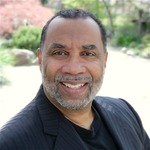
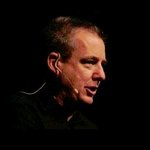
Welcome to Connect with Skip Heitzig. We're glad you joined us for today's program. Connect with Skip Heitzig exists to connect you to God's never-changing truth in ever-changing times through verse-by-verse teaching of His Word. That's why we make messages like this one today available to you and others on air and online. Before we begin the program, we want to let you know that you can keep in touch and in the know about what's happening at Connect with Skip Heitzig when you sign up for email updates. When you do, you'll also receive Skip's weekly devotional email to instruct and inspire you in God's Word each week. So sign up today at connectwithskip.com.
That's connectwithskip.com. Now let's get into today's teaching from Pastor Skip Heitzig. The Orontes River, that's where the town was, down to the seaport. And from there, they sailed to Cyprus. And when they arrived in Solomus, they preached the Word of God in the synagogues of the Jews.
They also had John Mark as their assistant. So saved, serving, sensitized, saturated, sent. I love that progress. They're being sent out by the Holy Spirit. One of the things you discover about God is that God is a missionary God. He has and always has had missionary sensibilities. He's always been in His heart to send people places.
That I will show you. Why would God want to displace a person from their home? Well, He says that in you, all the nations of the earth can be blessed.
That's the purpose of missions. I'm sending you out so that people in that area, those families can be blessed. You can carry the gospel to them. And in carrying the gospel to them, they'll be blessed.
In you, all the families of the earth will be blessed. So God has always been about sending people in order to spread the blessing. When we get to the New Testament, we discover that Jesus Christ essentially was a missionary. Sent from heaven by the Father to the earth. And He Himself gave a purpose statement. I have come, the Son of Man has come to seek and to save those who are lost. He was sent on a mission, a rescue mission from heaven to earth.
That's a mission. When you get to the book of Acts, you discover the Holy Spirit. It's all about sending people. Sent out by the Holy Spirit here in chapter 13. And all through the book of Acts, you see Him activating, sensitizing, and sending people in different places.
Think of the followers of Jesus, the apostles. As the Father has sent me, finish the sentence, so I also send you. I'm sending you just like the Father sent me. I'm sending you on a mission.
You're on earth. I'm sending you somewhere to go spread the blessing that in you, through you, all the nations of the earth can be blessed. So God has always been about, and He is still here out, about sending people out. Turning disciples into apostles, you might say. So God is about turning disciples into apostles. And so at some point in your life, as you take in truth, as you assimilate scripture, as you grow and as you learn, at some point, if you don't get sent somewhere, even locally in town to do something and to share your gifts with others, you'll become a fat, sassy believer. Obese.
Taking in but never exercising. Being saturated but never sent. Being a disciple but not an apostle. So the Holy Spirit sent them out. So from there, end of verse 4, they went to Cyprus. Now that's logical because Barnabas is from Cyprus. He's a Cypriot Jew. Solomus, they preached the word of God in the synagogues of the Jews.
Solomus was the largest commercial city on the eastern side of the island of Cyprus. It's sort of divided, still is today, east and west. Back then, the eastern side, which is where they ported, Solomus had the largest population and evidently a large number of Jews who lived there. Synagogues, plural. So that was Paul's deal. He believed the gospel goes first to the Jew, then to the Gentiles.
So he'd always begin, and you'll see a pattern throughout the book of Acts. Starts in the synagogues, speaks to the Jews. When they want nothing to do with them, he'll share it with the Gentiles who seem eager to hear the message.
So the religious folks become his enemies time and time again. They found a certain sorcerer. Now in another town, they found a certain sorcerer, a false prophet, a Jew, who was named Bar-Jesus, son of Jesus, who was with the proconsul, Sergius Paulus, an intelligent man. This man called for Barnabas and Saul and sought to hear the word of God, proving he's so intelligent. Anybody who seeks to hear the word of God and hear the truth is an intelligent person. But Elamas, the sorcerer, for so is his name translated, withstood him, seeking to turn the proconsul away from the faith.
Now I believe that part of my calling is to teach people not just the applicational truths of the Bible, but the history behind it just so you get a fuller understanding. You see the word proconsul? That's a governor. That could be confused to you because we talk about Pontius Pilate being a governor, and he was a governor. But he's not given the name proconsul, he's not given the name governor or procurator, which Pontius Pilate would have been given, but proconsul. So let me tell you how it worked within the Roman government. Both a proconsul, like this guy, and a procurator, like Pontius Pilate, both of them governed areas. The difference is for a procurator like Pontius Pilate, like Antonius Felix, like Porcius Festus, names that you're familiar with from the latter portion of Acts. Those were people who were called to govern and their orders came directly from the emperor himself. Not so a proconsul. A proconsul was given his orders to govern a province by the senate, the Roman senate. So Cyprus was a senatorial province of Rome. The Roman senate gave Sergius Paulus, this smart guy, this intelligent guy, the right to govern.
So that's how the Roman government was set up. That's the difference between those two. So he's intelligent, smart guy. At the same time he's spiritually hungry. He wants to know more. He's sort of mesmerized by this message called the gospel, that by believing in Jesus Christ, sin can be eradicated, washed away, and you can be new before God.
That was something he had never heard before. But he was interested. He was intelligent. Who better to reach an intelligent inquisitor in that kind of a culture than another intelligent man like Paul the apostle? Paul was quite advanced in learning.
And he will write, or not he will write, Peter will write later on, maybe even having Paul in mind, that we should always be ready to give an answer, a reason to people for the hope that lies in us with reverence and respect. And so there is Paul able to share with him the gospel, but there's a problem. He's a false prophet, a Jew. The reason that's unusual is Jewish people, because of the Old Testament, had an incredible aversion to sorcery. It was prohibited in their text, in their holy book.
It was outlawed. It was capital punishment if you were a sorcerer in ancient Israel. So to find a Jewish person who's a sorcerer is quite unusual. This, it puts a question mark in my mind until I read the fuller description. It says he was a false prophet.
Ah, now that helps me. Because what I see him doing is mixing his religion that he grew up with, Judaism, with some of the other belief systems from different places, maybe astrology. And so he took and he mixed up what he believed in as a Jew and what others had taught him about spirituality. And this is a form of what we call syncretism, where you combine different faiths and you make it sort of your own. You know, it's like a smorgasbord. I want a little of this, a little of that. I don't like this, but I like that. You sort of make your own deal up.
Now, why is this happening? Well, at this point in history, there's a phenomenon that had occurred called the Roman road system that has essentially connected the East and the West. In the West, people are very logical in their thought process. In the East, at this time, people were very mystical in their thought processes and religion. Some of that probably filtered on those roads from the East to the West, got a hold of this Jewish guy who goes, man, I'm open. I have an open mind.
I'm open to anything. See, and the problem with having too open a mind is that if it's open all the time, your brains leak out, basically. You know, one was an intelligent man, Sergius Paulus, not this guy. He's so open-minded.
His brains leaked out. Sorry to put it that way, but I'll tell you an underlying truth because it's not only 2000 years ago in this ancient text, but it happens on every mission field I've ever been a part of. Satan uses religion to deceive people more than anything else, and religious systems become typically the enemy of most mission movements. Before we get back to Skip's teaching, we want to help you learn more about God's radical love for all people by sending you four booklets by Skip Heitzig that will encourage you in God's abounding love and challenge you to love even the unlovable, just like Jesus did. This resource is our thanks for your gift of at least $50 today to help share solid biblical teaching with more people around the world through Connect with Skip Heitzig. Go to connectwithskip.com slash offer or call 800-922-1888 and request your copies when you give at least $50 today to reach people around the world through Connect with Skip Heitzig. Now, let's continue with today's teaching from Pastor Skip.
Every missionary I've sent, I mean, I ask them the kind of opposition that's usually not from atheistic unbelievers as much as it is from religious groups, even, and especially in many cases, organized churches, traditional churches. So Satan is all about deception, and he uses religion and religious systems, whether it's in Ephesus, where they shouted great is Diana of the Ephesians, or in Athens, where they had a God in every corner, and Paul even found an inscription to the unknown God, or a syncretism like this. So one guy's very interested, the smart guy's really interested in the gospel, but the sorcerer, the Jewish guy, the syncretist, tries to persuade him, don't listen to Paul.
He's against it. He says, seeking to turn the proconsul away from the faith, then Saul, now watch this, first time he's called this, who is also called Paul. It's the first time you read his name.
And he'll go by that name from here on out, and I'll tell you why in a moment. Then Saul, who was also called Paul, filled with the Holy Spirit, looked intently at him. Now before we find out what happened, let that little phrase turn around in your heart and your mind for a minute. Paul filled with the Holy Spirit. Now you're probably going to picture, yeah, filled with the Holy Spirit, he looked at him, and loved on him, because that's what people filled with the Holy Spirit always do.
They just say sweet, nice, disarming things. Okay, hold that thought, because he was filled with the Holy Spirit and he looked intently at him, and I'm just trying to picture what that look was like, and said, O full of deceit and all fraud, you son of the devil, you enemy of all righteousness, will you not cease perverting the straight ways of the Lord? And now indeed the hand of the Lord is upon you, and you shall be blind, not seeing the sun for a time. So before you, I want to be filled with the Holy Ghost.
Okay. It might look one way or another, and immediately a dark mist fell on him, and he went around seeking someone to lead him by the hand. Okay, before I jump into that, first of all, the name Saul versus Paul. Saul was his Hebrew name. It was the name he was given on the eighth day of his life when he was a child circumcised, according to the law. That was the name he was given, Sha'ul. That's the name daddy called him. When dad and mom called him in for dinner, it was, Saul, come on in, supper's ready.
Got the hummus on the side, got the falafels going, come on in, Saul. But on the ninth day of his life, little Saul was given his Roman name, Paul, which means diminutive one, or little guy. Now, it doesn't mean he was necessarily small, because after all, he was given that on the ninth day of his life.
So it's not like he's an adult, say, well, he's a short little guy, because he's a baby. Now, he could have been a small baby, but it wasn't an uncommon name, Paul. In fact, Sergius Paulus, the intelligent guy, the proconsul, is named the same. So it's a common name, but that's his Roman name. Once his Hebrew name, once his Roman name. So mom and dad are calling him Saul, but all the kids in the neighborhood are calling him Paul.
That's how he grew up, with both names. Saul, who was also called Paul. And he will be referred to as Paul by his Gentile name, because after all, he's going to be the apostle to the Gentiles.
That's going to be what he traffics in mostly, is getting the gospel out to them. So here's a quick portrait of him, a composite of him. He's a Roman legally. He's a Greek culturally. He's a Jew religiously, and now he's a Christian by the grace of God. He was legally a Roman, because his father had Roman citizenship, so he was called freeborn. He didn't have to purchase Roman citizenship. He was born a Roman citizen, so legally he's Roman. Culturally he is Greek.
He'll stand up on the Areopagus in Athens and quote two Greek philosophers off the top of his head, no notes. So he's quite well read in Greek culture, Greek customs, Greek literature. He's religiously a Jew, trained rabbi at the feet of Gamaliel in Jerusalem. So interesting cat, interesting mix, interesting dude. But now born again believer, in love with Jesus, in love with the gospel, unafraid of people, and becomes really a role model for the church.
I just love studying about Paul. But back to what he said and what he did. So he looks at a guy really intently and goes, oh, you son of the devil. He's like, whoa, question.
Think about it honestly. Was he harsh? Because it sounds like it. If you tried that today, if I tried, let's say I'm talking to somebody after church and I said, you son of the devil. I'm sure the crowd listening around me would say, what's up with heightsake? That dude is acting gnarly tonight.
Did he like eat something weird or what? I mean, that's harsh. But before you say Paul is harsh, you're going to have to, you'd have to also say Jesus was harsh. Jesus, who overturned tables and took a cord and made a whip out of it and drove people out of the temple in Jerusalem.
That's harsh. Jesus, who in Matthew 13, time and time again said, woe to you scribes and Pharisees, you hypocrites. Or like Jesus in John chapter 8, who said that you are children of the devil, same kind of phrasing, whose works you do.
And it just happened to be the truth. Because any time you deceive a person or turn a person away from the truth, that is exactly what Satan wants. Anything or anyone that tries to keep people from hearing truth can technically become an agent of Satan. So what's interesting about this guy is his name, Bar Jesus, means son of Jesus. Not that that had any connotation to Christianity, but it's an interesting name that he's called the son of Jesus, but Paul calls him the son of the devil. So you can have a name that you're a Christian, but not really be one, is my point.
In Revelation chapter 3, Jesus writes a little postcard to the church at Sardis, and he says something very fascinating. You have a name that you are alive, but you are dead. He says that to a church. You have a name that you are alive, but you are dead. This guy had a good name, son of Jesus, owed to God that he was a child of God.
Paul said, not true. So now he says in verse 11, and I know I'm kind of creeping through this. And now indeed the hand of the Lord is upon you, not in a good way. Like, boy, the hand of the Lord is upon that guy.
That sounds good, but not here. It's a bad hand of the Lord upon you. And you shall be blind, not seeing the son for a time. Now, I wonder why Paul said that. If he decided to say that, if he could decide what the punishment will be, or if the Lord said, tell him this. But why would Saul tell a man who's turning somebody away from the faith, okay, just for that, you're going to be blind for a while.
Here's why I believe. Of all people, Paul, Saul, knew the power of darkness. Meaning, on the road to Damascus, he saw the Lord, he was blinded for a few days.
Couldn't see anybody, had to be led by the hand. In that blind situation, where he couldn't be distracted by anything visual, he was just sort of shut off from the world. His mind and his heart could think. And it was a powerful time, those three days of blindness for Saul were powerful moments. He knew the power of a situation like that. So he thought, I think it was a merciful act. And so he had to have someone lead him by the hand as well. Verse 12, then the proconsul believed.
Bingo, pay dirt. That's the glory. The proconsul believed when he saw what had been done being astonished at the teaching of the Lord. He heard the teaching and he saw the effect of the miracle, and the miracle equated to the teaching. So all of that together was the power of the teaching of the Lord. Now when Paul and his party set sail from Paphos, they came to Perga in Pamphylia.
Just go up, take the boat north on the Mediterranean Sea, and you'll hit the southern coast of Turkey today in ancient times, Pisidia. And went to the synagogue on the Sabbath day and he sat down. Oh, verse 13.
Look at this. When Paul and his party set sail from Paphos, they came to Perga in Pamphylia. And John, that's John Mark, departing from them returned to Jerusalem.
Now we've got to just look at this because this is going to come up again. And it's going to become a sticking point to this missionary team for a long time. John Mark, the cousin of Barnabas, is with them. He's their assistant. He was called a few verses earlier.
It means an under rower, somebody who would help out doing whatever. So he went from Antioch in Syria, went over to Cyprus with Uncle Barney or his cousin Barney and Saul Paul. Now they're going to another place and he decides, I'm out of here.
I'm not going to continue with you and be your assistant. I'm going back home to Jerusalem. The question is why? Why does John Mark leave them? We don't know. Don't necessarily think the worst, but we just don't know.
Can I give you a couple of possibilities? Possibility number one, he was not too excited that Saul of Tarsus, now known as Paul, is sort of upstaging cousin Barney. And he is seeing a change in the leadership and he takes umbrage to it. He didn't want to support it. He's not going to be part of that.
As long as Barney's in charge, he'll be part of it, but not this guy. That's a possibility. Number two possibility, he's a Jewish believer. He's already been stretched, seeing the gospel go to Jewish slash partly Gentile people, guys like Cornelius, et cetera. But now just to do this whole Gentile adventure and preach the gospel of grace without having to be Jewish or keep the law, that could have been a little too much for his Jewish sensitivities to handle.
Number three, he was sick. Maybe he got ill, didn't want to go any further, because Perga, Pamphylia, that Antioch of Pisidia that we're looking at, was known for carrying malaria in ancient times. And in fact, Paul the apostle does get sick, we believe, around this time on his first missionary journey.
How do we know that? Well, in Galatians chapter four around verse 13, he says, the reason I preach the gospel to you is because I got sick when I was there. We're glad you listened today and hope you've been strengthened in your walk with Jesus. Before we let you go, we want to remind you about this month's resource, the Jesus Loves Them Bundle, which comes as thanks for your support of Connect with Skip Heitzig today.
Request your bundle when you call and give, 800-922-1888, that's 800-922-1888, or visit connectwithskip.com slash donate. We'll see you next time for more verse-by-verse teaching of God's word here on Connect with Skip Heitzig. Make a connection, make a connection at the foot of the cross and cast all burdens on His word. Make a connection, connection. Connect with Skip Heitzig is a presentation of Connection Communications, connecting you to God's never changing truth in ever-changing times.