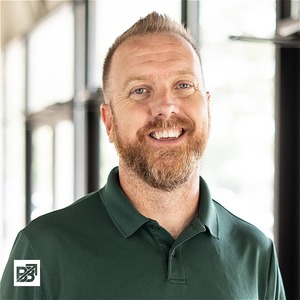
Well, hey Mercy Hill, I'm Pastor Andy. I'm excited to be here with you today and excited to close out this Noah sermon series. I know this has been said already.
I want to say it again. If this is your first time, whether you're right here at the regional campus or maybe you're at Clifton, Northeast, High Point, or Regional North, we are glad that you are here today. You know, we've covered a lot in this Noah series so far. This is week four of four and in week one, we looked at what, at how our sin grieves the heart of God. And then in week two, just to kind of bring you up to speed, we talked about what our sin deserves, that grievous sin in our lives. Week three, we talked about even though our sin grieves the heart of God and how we deserve destruction, that God has provided a great salvation. And here today, we're gonna talk about the promise. So if you have a copy of Scripture, go to Genesis chapter 8. We're gonna be in Genesis 8 and 9, really the end of chapter 8 and the first part of chapter 9. But before we dig into the text, let me set the stage, okay? I think for us to see the beauty of God's promise that we're gonna talk about tonight, His covenant, for us to really see the beauty of that, we've got to take a step back. We got to look at the bigger picture of what's going on. Now, I don't know how many of you have been following the SpaceX Starship program.
To me, the whole thing is extremely interesting. If you have been following along with that, you've probably heard this phrase that's been popularized by the SpaceX team. Here's the phrase, spontaneous, unscheduled, disassembly. So for those of you who have been following along, you know what that means. That means basically they launched the spaceship and it exploded in the air.
It was completely destroyed. And I think that is super interesting. You know, a lot of people, they have questions about a company like SpaceX, like how in the world could you send this multi-million dollar spacecraft into the air knowing that there's a high likelihood that there's going to be some sort of catastrophe and this thing is going to be completely destroyed or have a spontaneous, unscheduled, disassembly. Up to this point, SpaceX has spent five billion dollars on this program. It cost them a hundred million dollars every time they send one of these spaceships into the air. Here's the thing that most people fail to realize when it comes to the Starship program. These test flights, they're not the end destination. They're just one piece of the puzzle. One small piece of the much bigger picture.
In reality, the goal of the SpaceX Starship program is that they want a fully reusable transportation system designed to carry both crew and cargo to Earth orbit, to the moon, to Mars and beyond. You see, when you have a limited view of a singular event, when you lack the bigger picture, when you don't see the vision or the destination or the dream that is in the heart of the person who is leading and managing this program, then you get fixated on apparent failures instead of on the ultimate purpose. I think the same is true when it comes to the story of Noah and the flood. See, we look at this one singular event and we think, what in the world is going on here?
But here's the reality. All of Scripture, from Genesis 1, when God created the heavens and the earth, to Revelation 21, when God speaks of the new heavens and the new earth, it is all filled with purpose. It is all leading to an ultimate destination. I love what Pastor John Piper said about this text that we're about to read. He said, if you don't believe in a God who is powerfully involved in history, then the only explanation of events you will look for are past causes and not future purposes.
What's he saying there? He's saying that everything, everything that God does throughout all of human history has a purpose, including the flood. It's all building towards something great, something grand, something that we should look forward to with eager anticipation. And the exciting thing about today's message is that it's not just all leading somewhere, it's that we have a part to play in the purposes of God in this world. And we can walk through life choosing to either get swept up into that amazing purpose, or we can be distracted by the failures of the past, the worries of the present, or our fears for the future.
I don't know about you, I think one of those options is a lot better than the other. Like, I want to be right in the middle of what God is doing in this world. Like, as he is moving and shaping and changing hearts and lives, I want to be in the mix with that. Like, I want a life that is filled with purpose and that is leading to an amazing destination.
I'm sure you do. As well, if you're taking notes today, here's the big idea for the message. God will bring a renewal of all things. God will bring a renewal of all things.
That will happen. And we have a part to play in that. We're going to be reading from Genesis 8, starting in verse 20. There is a lot to cover here, so let me give you a road map of where we're going, okay? I think the text breaks down into three major sections. The first section is going to be the first section, the second section is going to be the first section. The first is Noah's pure sacrifice. The second is God's gracious promise. And the third is our grand purpose. So that's where we're headed.
We'll kind of work through those three points, then we'll come away with some application, and that will be our time together here today. All right, so the first one, Noah's pure sacrifice. Let's go ahead and jump into our text. Genesis 8, starting in verse 20.
Here's what it says. The Noah built an altar to the Lord an animal and some of every clean bird and offered burnt offerings on the altar. So we didn't get very far. Let's camp out there for a second, because I think this is really important. Noah's first act after exiting the ark with his family was to build an altar and to offer up a burnt offering to God. I want you to imagine this scene, okay? Imagine the world that Noah is stepping into.
It was likely barren, cold, desolate. I'm not sure if you're familiar with the show alone. I love that show. For those of you who are not familiar with the show, the basic premise of the show is they find people who have some survival skills and experience, and they put them in a competition and they put them in a competition with each other. They take them to a remote location, drop them off, and whoever survives the longest without tapping out wins the competition.
It's really cool. Aside from the finale, when you find out who actually wins, my favorite part of the entire show is the very first episode, because they're dropping people off, and you can see it in their eyes. There's all this confidence. They do these interviews before the show, and it's like, yeah, I've been doing wilderness survival for all these years, but then when they're in the environment, you can see them kind of taking it all in, and they're looking around, and they're thinking, man, I gotta survive here for I don't know how long. Many times it's raining or it's snowing.
It's freezing cold. The terrain is harsh. The wilderness is vast, and the task ahead is daunting. Imagine how much more intimidating it must have been for Noah and his family. To this point, they had only known two realities. One was life on earth before the flood, and two was life on the ark during the flood with a bunch of pinned up stinky animals. So what they were walking into, it was an unknown quantity for them. It was not just a new location. It was a new world. Yet Noah's first act was an act of worship. I think there's a couple of interesting things to note on this one verse.
First thing is this. This is the first time Noah has acted without being told to do so. Think about this. God told Noah when and how to build the ark in chapter 6 verse 14. He told him when to go into the ark in chapter 7 verse 1. He told him when to come out of the ark in chapter 8 verse 16, but Noah was not told by God to build the altar or to offer the sacrifice. That's interesting to me.
We'll come back to that, so remember that, okay? Number two, this was a burnt offering. A burnt offering meant that it was completely and totally consumed, meaning there was nothing left for Noah and for his family. It was fully offered up to God with nothing held back for them.
Now there's some obvious application for us today. This is not the main point of the passage. I think it's worth taking a little bit of an aside here though to talk about worship. You know, the first note we made, Noah did not have to be told to worship God, yet he did it anyway. The question is, why?
Why? I think the answer is actually pretty simple and it's pretty applicable for us as well. Do you know why Noah worships? Because worship is the appropriate response when you have been saved from destruction. Church, this may be a little bit of a shot across the bow.
I promise you my intent is not to wound you, it is to wake you. Christian in the room, does your worship reflect that God has saved you from the waters of his wrath, or are you so consumed with other things that you forgot you needed saving in the first place? Second application from this one verse. We know from the biblical record of what a burnt offering is that it was totally consumed, nothing held back from God. Now we obviously don't offer up animals as a sacrifice anymore, thank goodness, but does the way that we bring a sacrifice of praise through our worship and the way we live our lives, does it reflect that same heart posture or are we holding back? Say, well, how is worship a sacrifice? Let me sort of flesh this out for you. Are we willing to sacrifice the perception that we want others to have of us while we worship, or are we too concerned about what others think?
Let me put an even finer point on this one. When we're worshiping, do we have those hands holstered right here, or do we have them high in praise? When it comes to the perception that others have of us, y'all trust me, I get it. This is why I don't dance at weddings, okay? I will do the slow dance I will do that. I am not going to get out there and do the crazy dances that people do at weddings, and I tell myself nobody wants to see that.
In reality, I think my wife and kids would actually really love to see that. Question is, believer in the room, does your posture in worship, the sacrifice of praise that you bring, does it reflect a heart that is grateful to be alive in Christ, or are you aloof in worship? Do you come to church prepared, or are you preoccupied?
I can keep going with these, but I'll stop. Noah offered up a pure sacrifice without being told to do so. He did it out of gratitude and with a willing heart. Now his sacrifice was pure, but we know from the rest of this passage that Noah was not.
I mean, we talked about that last week. When Noah and his family got off the ark, guess what got off the ark with them? Sin. The same sin nature passed down from Adam to him.
It's the same sin nature that causes all the carnage that we see in the world around us to this day. You know, if you fast forward to the end of chapter 9, you'll see that Noah planted a vineyard, and then he became drunk, and then he was a vineyard. And then he became drunk off of the wine from that vineyard and exposed, which led to one of his sons sinning against him. The sin of the father led to the sin of the son.
Then the very next section, we find Noah worshiping God again. So there's this pattern of worship, sin, worship, sin. I think there's some application here for us as well when it comes to worship, because here's the thing. Worship and wandering, sacrifice and sin, they can be mere moments apart, can't they? We can raise our hands and our voices in worship in service, and then raise our voices in anger in the car ride home after service. And here's what we tell ourselves, because I've been there.
I've said this to myself. I'll worship next week. When I've lived a life that's a little bit more in line with God's Word, when I feel a little bit better about myself, then I'll worship.
Y'all, that is exactly backwards. We don't worship because of how good we are. We worship because of how good He is. Noah's sacrifice was pure even though he was not, and it was an appropriate response to being saved from destruction. Let's continue on the text, verse 21. And when the Lord smelled the pleasing aroma, the Lord said in His heart, I will never again curse the ground because of man, for the intention of man's heart is evil from his youth.
Neither will I ever again strike down every living creature as I have done, while the earth remains, seed time and harvest, cold and heat, summer and winter, day and night, shall not cease. So in response to this pure sacrifice from Noah, God makes a covenant. And this covenant, y'all, it is far reaching.
I love what one pastor said about this. He said God's covenant is universal, meaning it extends beyond humanity to every living creature. It wasn't just with man, it was with every living creature. So it was universal.
It was unilateral. He is the sole convener of the covenant. He says twice in chapter nine, my covenant.
So it was universal, it was unilateral, and it was unconditional, meaning no matter what we do, the earth will remain. So this covenant, this promise from God is extremely significant, and it's extremely gracious. That's our second point, God's gracious promise.
Think about this. Noah came off the ark, the world had changed, but the problem of sin had not. Even though humanity had been reduced to a mere eight people, and God's just wrath had been enacted on the rest of all living things, sin remained, and it remains to this day. We see it all around us. Humanity is still broken. Humanity is still exceedingly evil, desperately wicked. I think it's worth pointing out that the Bible reads the human heart like no other modern work of psychology or anthropology ever could. Did you catch the phrase in verse 21?
It says, the intention of man's heart is evil from his youth. Y'all, I have four kids, okay? And I'm not going to talk about their sin nature, because I have to face them after this sermon, all right? But those of you who have kids, you know this to be true. You do not have to teach them to sin, right?
It's baked into their nature from day one. Now my parents say, this is alleged, okay, they say when I was a kid that we were on a family trip, probably in a station wagon or a beat up minivan of some sort, and a cry comes from the back from my little brother. He says, mom, dad, Randy, hit me. And it's alleged that my response was, I did not. I missed. You guys get the idea.
The intention was there, even though I failed to follow through and land the punch. Y'all, we are born sinners, and sin still runs rampant in our world today. And what the sin of mankind still deserves is what Calvin calls a daily deluge or flood of God's wrath.
Let that sink in. Sin is still here. It's still present. It's still in each of us. What we deserve still is a daily deluge of God's wrath, yet God has kept His covenant to this very day. And every time we see a rainbow in the sky, we're reminded of that truth.
You know, we've talked about it already in this series. The rainbow is not the symbol for pride. The rainbow is a symbol of promise and of protection. All of creation still lives under the protection of God's promise from Genesis 8 and 9. There is no daily deluge.
Thank God. What's astonishing is that instead of the daily deluge, we've received a deluge or a flood of grace. Scripture says in the book of John that from the fullness of Jesus, we have received grace upon grace. Instead of a daily deluge of judgment, we receive mercies that are new every single morning. Before we move to our third point, there's a key phrase right at the beginning of verse 22. It's really significant, so I want to draw your attention to it. I'm going to read it again. He says, while the earth remains, seed time and harvest, cold and heat, summer and winter, day and night shall not cease.
And this is one of those moments where we got to zoom out from the story, take a look at the bigger picture. The phrase while the earth remains implies that there will be a time where the earth does not remain. Think about that. Y'all, this promise from God, it does have an expiring clock on it. God's gracious promise, it was universal.
It encompassed every living thing. It was unilateral. He was the sole convener of that covenant.
It was unconditional. No matter what we do, the promise would still remain. But His promise was not ultimate, because the work of addressing the problem of sin was still unfinished.
This is where we got to step back a little bit. We got to look at the whole counsel of Scripture. See, the flood was a real event. It was cataclysmic.
It was brutal. It was the just wrath of God on mankind, whose thoughts were only evil all the time. But it's not the end destination. You see, the flood, it actually foreshadows the final judgment. See, God judged the earth with water in the book of Genesis, and in the final judgment, Scripture says that He will judge the earth with fire. In the final judgment, sin will be eradicated once and for all.
It's a bit of an unsettling thought, because the truth is that apart from Christ, your worst decision, your worst action, that thing that you don't want anybody else to know about, apart from Christ, that is what you are defined by. And right now, you're living under the protection of God's promise from Genesis 8 and 9, but that promise and that protection, they will not last forever. The good news is that the judgment, where God will judge the earth and all its wickedness with fire, it's something that none of us need to face. As much imagery as there is in this passage about death and destruction and judgment and wrath, the beauty of the gospel shines even brighter through this passage. See, Noah's sacrifice was fully consumed on the altar, and it pleased God. Jesus was the sacrifice fully consumed so that we could be pleasing to God. God promised to never again destroy every living thing, because He knew that His only Son would be destroyed on our behalf.
That's the beauty of the gospel. Though this earth will pass away, He offers us hope, and He offers us a future. So we've looked at Noah's pure sacrifice. We've looked at God's gracious promise. Let's take a look now at our grand purpose. So we're going to pick up in verses 1 through 7 of chapter 9.
Here's what it says. And God blessed Noah and his sons and said to them, be fruitful and multiply and fill the earth. The fear of you and the dread of you shall be upon every beast of the earth and upon every bird of the heavens. Upon everything that creeps on the ground and all the fish of the sea, into your hand they are delivered. Every morning or every moving thing that lives shall be food for you, and as I gave you the green plants, I give you everything. But you shall not eat flesh but you shall not eat flesh with its life, that is, its blood. And your lifeblood I will require a reckoning. From every beast I will require it, and from man, from his fellow man I will require a reckoning for the life of man.
Whoever sheds the blood of man, by man shall his blood be shed. For God made man in his own image. And you be fruitful and multiply, increase greatly on the earth and multiply in it. All right, so let's unpack this idea of our grand purpose. So this statement in verse 1 of chapter 9 is really just a restatement of God's command to Adam and Eve back in the Garden of Eden, all the way back in Genesis 1 28.
And that is not an accident, I promise you. See, at the very beginning, after God had finished his creative work, God blessed Adam and Eve, and he uttered those same words to them, be fruitful and multiply and fill the earth. Now in chapter 9, the message is the same.
Why? Think about this. God created in Genesis 1. Man sinned, and creation was broken in Genesis 3. Fast forward to the time of Noah. Man is still sinning, and God exacts his righteous judgment on all of mankind, save Noah and his family. It's a new world.
It's a recreation of sorts. If you look closely at this text alongside of Genesis 1, which I would encourage you to do, you'll see all sorts of parallels between God's creative work and instructions to Adam and Eve, and his recreated work and instructions to Noah. The question is, what are we to make of all that? Well, I think it's actually pretty simple, and it's very applicable.
Circumstances may change. God's purposes do not. From the very beginning, to this day, His purposes have not changed, and that's a truth that I think we can really latch on to today, because God's purpose for Noah is the same for us today. Be fruitful and multiply and fill the earth. Now, sounds like a great command, right? Clearly it's one that we've taken to heart here at Mercy Hill Church.
Okay. Question is, why does He give us that command? Why be fruitful and multiply? Well, the Sunday school answer is, because God said to, right?
Well, that's cool. Why did He say to? Here's the real reason, and I think this is one of those things that if you grasp this, it unlocks a lot of other things for you in Scripture.
Here's the why. We are to be fruitful and multiply because we are unique among God's creation. Of all that He created, we alone were created in His image, and when we image God through a life of sacrifice, through a life of worship, we fill the earth with His glory.
Author Randy Alcorn said it like this. He said, our present purpose is inseparable from God's stated eternal purpose for us to rule the earth forever as His children and heirs. That is at the core of the Westminster Shorter Catechism's defining statement. Man's chief end is to glorify God and enjoy Him forever. We will glorify God and find joy in Him as we do what He has made us to do. Church, our grand purpose is to image God in this world, and in so doing, we fill the earth with His glory. Sounds great.
So what does that look like practically? How do we live that out? Well, I think this idea is pretty multifaceted, and I would encourage you to dig in even further. There's both a physical sense and a spiritual sense. Is it physical in that, yes, having children is a part of this purpose. I think that's very much in view when God spoke these words to Noah, but there's a deeply spiritual application to this as well. We can bear spiritual fruit when we bear the fruit of the Spirit. We can multiply by multiplying disciples, and that's why at Mercy Hill, the flywheel is such a huge deal.
We talk about gather, group, give, and go. It's fully connected to our grand purpose. When we gather together for worship and we sing, we bring Him glory. When we group and when we pour into the lives of others, pray over each other, sharpen each other, we bring Him glory.
When we give in a sacrificial manner toward the mission, guess what? We bring Him glory. And when we go to our neighbors and to the nations, we bring Him glory. God is glorified through changed lives. You know, in the church we use the expression, your kingdom come from the Lord's Prayer. If you're old school, King James English, thy kingdom come.
Y'all, His kingdom, God's kingdom is an inside-out kingdom. There's going to come a day when all things are made new, but in the now and not yet that we live in right now, part of God bringing a renewal of all things happens when we are renewed or made new from the inside out. So now that we've looked at Noah's pure sacrifice, we've looked at God's gracious promise and our grand purpose, here's where I think we can really begin to apply this text. Here's the application for today.
It's really simple. Be renewed and bring renewal. Be renewed and bring renewal. So I want to start by talking to those of you who have not yet believed.
You're around Mercy Hill, you're checking things out, you're curious, but you haven't yet crossed that line of faith. The application for you today is to be made new. You don't need to become a better version of yourself. You can be made new today. And y'all, it's as simple as A-B-C. A is admit. You have to admit that you are a sinner in need of saving. You say in your heart, God, I know that what I deserve is death. I know that I have sinned. You have to admit you're a sinner.
Secondly, you have to believe. You have to believe that Jesus has done everything necessary to save you today. You say in your heart, God, I believe that Jesus did everything necessary to save me when He died for my sin.
Jesus, you took on yourself the punishment I deserved. And then finally you need to confess. Confess that He is the Lord of your life. And when we say Lord of your life, really that means He's the boss. You know, you can say to Him, God, I'm laying down my agenda.
I confess that you are the Lord of my life. I will go where you say to go, and I will do what you say to do. I want to live inside of your purpose, not my plans. I want to live inside of your purpose, not my plans. It's my prayer that all across this room today and at each of our campuses, dozens have prayed that prayer.
And if you did, your next step is baptism. We're going to talk a little bit more about that in a moment. Now let me apply this to those of you who have believed. What do I mean by be renewed? Well, there's a lot of ways that we can be renewed. We're renewed in worship. The Bible speaks of the renewing of your mind. But I want to hone in on this idea of purpose, and I want to call you, challenge you, church, be renewed in your purpose.
Maybe you're here today and you've lost sight of the bigger picture. You know, God has given you an amazing purpose in this life. I know you feel this.
We talk about you all the time. You were made for more. Life is more than straight A's in soccer. It's more than possessions and promotions. God created you to live a life filled with purpose, of calling. He's gifted you. You were made to impact this world by imaging God in it.
That's the truth. So be renewed in purpose, and be reminded. Not only has God given you a purpose, He's also given you a destination.
You know, I mentioned the SpaceX Starship program in the intro, and their stated purpose is to have a reusable vehicle that can carry cargo and crew to Earth orbit, to the Moon, to Mars, and beyond. I'm gonna level with you guys. I don't think they're gonna make it, okay? Certainly not the Mars and beyond. That's my opinion. It's one of those, like, okay, let's just wait and see. Christian in the room, your destination?
It's certain. You know, we've been in in Genesis for the entirety of this series. Genesis is the beginning of all things. Let me fast forward to Revelation, the end of all things. Revelation 21, 1 through 5.
Here's what it says. Then I saw a new heaven, a new Earth. For the first heaven and the first Earth had passed away, and the sea was no more. And I saw the holy city, new Jerusalem, coming down out of heaven from God, prepared as a bride adorned for her husband. And I heard a loud voice from the throne, saying, behold, the dwelling place of God is with man. He will dwell with them, and they will be his people, and God himself will be with them as their God. And he will wipe away every tear from their eyes, and death shall be no more.
Neither shall there be mourning or crying or pain anymore, for the former things have passed away. And he who was seated on the throne said, behold, I am making all things new. Also, he said, write this down, for these words are trustworthy are trustworthy and true. Y'all, those words are indeed trustworthy and true. If you're curious to learn more about our destination, we have an abridged version of Randy Alcorn's book, On Heaven, for sale in the lobbies today.
I'd encourage you to check that out. Christian, be renewed in your God-given purpose today. But I think there's another way we can apply this. It's be renewed, and it's bring renewal. We know from what we just read that God will bring a renewal of all things. That was the big idea of this entire sermon. But believer, you and I, we're God's agents of renewal in this world, like right now. So bring renewal in the way that you live.
The question is, are you imaging God by the way that you live? Let me get really practical, okay? Is your neighborhood better because you live in your neighborhood? Is your company better because you work there? Is our city better because you're a part of it?
Get even more practical. Are you using the creativity and the gifts that God has given you to bring beauty into this world? God has gifted each of us in amazing ways.
And that is not to be held to ourselves. When we create, we image the God who created us. And that's a way that His glory can fill the earth. By so doing, we can be a part of bringing renewal to this world. Would you pray with me? Father, I thank you for your word. I thank you that as Christians, that we can live a life that is filled with purpose. There's not a day, not a moment where we have to question why we're here or where we're going. Father, you've given us purpose.
You've given us destination. You've given us hope. We thank you for your promise. Thank you for the promise of protection that we live under to this day, but we thank you even more for the person and work of Jesus Christ. Father, I pray as we're about to see baptism here today, that you would be glorified, that you would be honored, that you would be high and lifted up, as we celebrate that together. We ask in Jesus' name. Amen.