Hey Kristin, how's it trackin'? With Carvana Value Tracker. What else? Oh, it's trackin'. In fact, Value Surge Alert trucks up 2.5%.
Vans down 1.7. Just as predicted. Mm-hmm.
So, we gonna... I don't know. Could sell?
Could hold? The power to always know our car's worth. Exhilarating, isn't it? Ahhh. Trackin'.
Always know your car's worth with Carvana Value Tracker. Thanks for listening this Truth Network Podcast. This is What's Right, What's Left. I tune in every chance I get to hear exactly what's going on with the voice of the Christian resistance. Unabashedly cutting through the rhetoric by exposing the hard topics facing our society and world.
A lot of the other news media don't pick up the news items like he does. And bring into light the enemies of freedom who are out to steal your rights, your children, and enslaving you. You really get the truth out. I can tune into your show and hear the unvarnished truth.
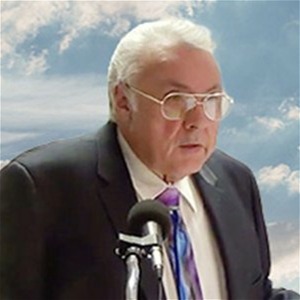
Thank you. This is What's Right, What's Left with Pastor Ernie Sanders. Good evening and welcome to another edition of What's Right, What's Left on the second day of April 2025. And tonight we have as our producer, who's that young Bible scholar in training, none other than Stile.
Hey Stile. Hey Pastor, how are ya? We're doing okay tonight and we have, it's Wendy Wednesday. And she's our version of Mother Nature because she's all about natural medicine. And so she's our medicine admirer, Miss Wendy Wilson. Oh good evening Pastor, good to be with you.
Good to have you back with us, it's always good to have you. We're going to get right into, no we can't, you know why? Because we had a situation today, Terry Crockett, a dear, dear friend for many, many years, a man who loves the Lord. And the last two days he had a brain bleed. Yesterday he had to have two surgeries, yesterday, and then they called me and told me again today, because I had left a message for him because I waited until he was, you know, at least, you know, conscious and that.
Then I got a message that he was, that they hadn't stopped the bleeding, that they were still unable to remove the blood from around his brain, so that they had to give him a third operation today. So I'm going to ask all of the folks out there around the country to join with us right now. It's very important, this is a good man, he's done a lot of work for the Lord, he loves the Lord with all of his heart, and he needs your prayers, he needs your prayers right now.
So would you all join with me? Heavenly Father, Lord God, we want to hold Terry up right now, Lord God. We know you two, you said there's power in prayer, there's power in prayer, so, Father God, we're asking Lord God that you would touch him, Father God, do what the physicians can't do, Lord God.
We know, or at least guide their hands, Father God, and help them, Lord, to stop the bleeding, Lord, and to bring Terry to a full recovery, to a full recovery, and use him in a mighty, mighty way, Lord, right until the time you take him home. And I pray for that for all of us, all of the saints out there that are praying tonight, that for the very same thing, that one, you turn their desires towards you more and more, every day in every way, in all things, at all times, and two, you use us in a mighty, mighty way to place up crowns of glory right up until the time you take all of us home. In Jesus' name we pray. Amen. Amen. Amen.
And we're going to pick it up where we left off. There's been some controversy here about the sign gifts and especially the gifts of tongues. And the title of my message was, is it the Holy Spirit or is it the unholy spirit? And so we've had some controversy, two fellows that I know who are friends of mine, but hereafter, even though they're friends, they're still going to be known as the hillbillies until further notice.
But anyhow, we're going to pick it up in style. You know, I decided, well, I think I want to go take a look and see, maybe I could be wrong on some of this. So I decided to take a look at some of the Bible scholars and see what they had to say. And you've heard of Henry Morris, I hope.
Yes, sir. Well, he's quite a Bible scholar, in my opinion. And so I thought I'd go take a look and see what his opinion was in this very subject. And so here, let me pick it up over in 1 Corinthians 13, verse 12, where we left off before. Charity never fails, but whether there be prophecies, they shall fail, and whether there be tongues, they shall cease, and whether there be knowledge, it shall vanish away. Now, see if this sounds familiar, because you know what I have said about this, right?
Here's what they said, what he says. Fail here is exactly the same as vanish away, the Greek katargio. It sounds like I said that last night, if I remember right. Meaning to become useless. When it says here, again, whether there be tongues, they shall cease. Now, that word cease, pale, in the Greek, from which we derived the word pause, means simply to come to an end. Is that not what I said last night?
I believe it is. I think it's exactly what I said. Okay, maybe not word for word, but okay. And so here now, he goes on. And what that means here is this, when he said that they shall cease, whether there be knowledge, it shall vanish away.
And so here, all three of these supernatural gifts, and maybe some other supernatural gifts too, we don't know, would eventually become useless and would therefore be withdrawn by the Spirit. Well, that happened. We know, he says, verse 9, we know now in part, but we prophesize in part.
And so, of course, we know that the gifts of knowledge and prophecy at that time had conveyed only a part of God's intended revelation to his people. Is that not what I said last night? That is what you said last night. Right. So either I'm copying him or he's copying me, or maybe we're on the same page.
Okay. In fact, the only earlier epistles by Paul were Galatians 1 and 2, and 1 and 2 Thessalonians. So here, eventually, however, more would be forthcoming through the various apostles and prophets. Now, in that which is perfect, listen to this, that which is perfect cannot refer to Christ. Isn't that what we said at his second coming?
Therefore, it's a neuter pronoun. The previous verse refers to the incompleteness of the divine revelation at the time. So that which is perfect, that which is complete, is the word. Didn't I say that too?
Okay, it's unbelievable. Almost certainly refers to the completion of biblical revelation as finally announced by John at the last of the apostles. Revelation 22, 18 and 19, I believe I referred to those verses last night, didn't I? Oh, so, anyhow, he goes on to say, When I was a child, I spake as a child, I understood as a child, I thought as a child, but when I became a man, I put away childish things. Again, the same as I Corinthians 3.1, where identifying characteristics of babes in Christ was carnality in the form of congressional divisions. The implications here follows that the misuse of the spiritual division. Now, I didn't say this last night. I got to say that gifts instead of glorifying God and the building up the church may lead to dissension, division, and even flagrant sin.
What I did is I told a story about, last night, about how a child thinks compared to adults. So here, but when I said through a glass darkly where he read, for now we see through a glass darkly, the completed scriptures are like a mirror which shows us we are as we are and encourage us to make needed changes in the ultimate sense. We shall know in full only when God's plan is complete and revealed in scripture. I didn't say it in those exact words, but that's what I said.
And so, I got to say, I think both of us are right on. Now, I want to jump over to 1 Corinthians 14, and Paul says this. And even, I'm going to start in verse 7. And even things without life giving sound, whether pipe or harp, except they shall have a distinction in the sounds, how shall it be known what is pipe or harp? For if the trumpet give an uncertain sound, who shall prepare himself for the battle? So likewise you except you utter by the tongue words easy to be understood. How shall it be known which is spoken, for you shall speak into the air? There are, it may be, so many kinds of voices in the world, and none of them end without signification. Therefore I know not the meaning of the voice, I shall be into him that speak of the barbarian, and he that do that word there, barbarian, means like a heathen, and also refers to foreigner. And he that speaketh shall be a barbarian unto me.
Even so you, for as much as you are zealous of spiritual gifts, seek that you may excel to the edifying of the church. Wherefore let him that speaketh in an unknown tongue pray that he may interpret. For if I pray in an unknown tongue, my spirit prays, but my understanding is unfaithful, or is unfruitful.
What is it then? I will pray that the spirit I will pray with understanding also. I sing with the spirit and I will sing with understanding also. How shalt thou bless with the spirit, how shalt thou be occupied in the room of the unlearned, says a man, says a man. As that giving of thanks, seeing he understandeth not what thou sayest, for thou verily give us thanks well, but the other is not edified. I thank my God that I speak in tongues more than you all. Yet in the church I had rather speak five words with my understanding, that by my voice I might teach others also, than ten thousand words in an unknown tongue. Wherefore tongues are for a sign not to them that believe, but to them that believe not. And so here today, as we see, the sign gives corporately prophecy, words of knowledge, tongues, and possibly others, are not done corporately today. Like Paul says, the time would come that they would cease and they cease with a complaining can of the scripture to be done.
Now that doesn't mean it can't be done at all. You know, God has no limitation. And so there might become a time when actual, when it might be illegitimate, somebody might actually, God may use that, but today it's more counterfeit.
All we ever see is counterfeit. Now, here I want to go and pick it up, too, here in 14, verse 26. How is it then, brethren, when you come together, every one of you have a psalm, have a doctrine, have a tongue, have the revelation, have an interpretation.
Let all things be done into edifying. What do you think Paul is saying there? He's saying it's just a little, kind of a little strange, maybe that all of you guys seem to be, to have a tongue. You know, maybe, maybe it's not, you know, the Holy Spirit.
Maybe it's your imagination. Like today, the vast majority of those in the pulpits were raised up and put there by God. If any man speak in an unknown tongue, let it be by, now listen to this, by two or at the most by three, and that by course, and let not one interpret, and let one interpret. Now, here, what is he saying?
He was saying that if you have a situation like this, let it be by two, no more than three people speaking in the church on that day, one at a time, one at a time. Okay, have you ever been in a charismatic congregation, Wendy? Are you there, Wendy? Yeah, can you hear me? Yeah, I can hear you now.
Go ahead. Yeah, I have been, and it's kind of an interesting atmosphere, especially when people, you know, break out in tongues, and you kind of just stand in there, and you don't know what they're saying. And so I think, I see where it's important that there should be someone there to interpret. Well, here, last night, I was talking about, we had people call into this radio program, and I remembered specifically one lady that was very upset, she was either from Poland or Hungary, I can't remember, because we have from both countries calling, but this one said how she was, she's over here now, and she was in one of these charismatic churches, and she said there was a guy, or, yeah, there was a guy, no, there was a woman speaking in tongues, and they're the only ones specifically that are told specifically not to speak in tongues, but here, she said she was cursing God, she was cursing God, and she was looking right, she said, what's wrong with you people? Don't you hear what she's saying? And then she realized that she was speaking in her language, and nobody understood that. They were all excited here, and celebrating this woman, and all these people were speaking in these different tongues.
And here, this woman was listening to this other woman who was cursing God. Now, he goes on to say here, verse 23, if there be no interpreter, let him keep silent in the church, and let him speak to himself and to God. I've seen time and time again, when I've been in these churches, and you say, what are you doing in those churches?
Usually they ask me to come to a speech and speak on a particular topic, something that was current, and usually it was something to do with the pro-life movement, because I used to go speaking on the pro-life issues all over. And I had a couple friends of mine that had gotten off into that charismatic stuff, who were pastors. But he says, but if there be no interpreter, let him keep silent in the church, and let him speak to himself and to God. Let the prophets speak two or three, and let the others judge. Now, if any man be revealed to another that seteth by the first, hold his peace. For he may all prophesize one by one, and all may learn, and all may be comforted. Now, he's talking about prophesizing now, too, and not simply speaking in tongues. Now, the spirits of the prophets are subject to the prophets. For God is not the author of confusion, but of peace, as in all the churches of the saints.
Let your women keep silence. Now, he's speaking here specifically about tongues in the church, for it is not permitted unto them to speak, but they are commanded to be under obedience is also, say, the law. And if they will learn anything, let them ask their husbands at home, for it is a shame for a woman to speak in the church. What?
Come the Word of God out from you, or coming out from you only? So, there are those, Wendy, that say, well, that's, you know, that referred to the Apostle Paul out there in the feminist movement as a male chauvinist, okay? Well, Paul, pardon? Yeah, I've heard that. Have you ever heard?
Yeah. Okay, so, do you think that Paul is showing bias? Do you think that it's bias for God to save women not to speak in tongues in the church? Well, God has an order to sing, but I don't know. I mean, I've been in churches and I've seen men and women both speak in tongues, but what does God think about that?
Well, I just read it to you there. First of all, he just gives you the order if you're going to speak in tongues, but then he makes it very clear, okay, that women are not. The guy gives you a natural order of a lot of things. The Trinity.
Right. The father gives the marching orders. The son carries it out. The spirit provides the power. The family. The husband is the head of the wife and the parents are the head of their children. Christ is the head of the husband.
The husband is the head of the wife and the parents are the head of their children. He gives you a natural order of things. And so here in this natural order, he's telling you, okay, that when it comes to this, now he's not saying that women can't talk in the church.
That's not what he's saying. They can pray in the church. They can actually prophesize in the church.
Okay? And they could do that today if they're forthtelling. Now, this is what God's Word says. If they're forthtelling, but nobody can foretell today. Foretelling, he makes it very, very clear there in Revelation 22, verse 18 and 19, that if you foretell today, then what's happening, all of the plagues that are written about in this book would be added to you. And the blessings, if you take away from, and I mentioned last night in the NIV, it's removed 64,000 words from the King James Bible.
The rewards, the crowns will be taken away from you. Okay? And so, here, God cannot be biased. God cannot be biased. And so, here, I wanted to go now, let's take a look at, for example, some of the people that didn't speak in tongues, those that did not speak in tongues.
Okay. Well, Henry Morris, the fellow that I just read his commentary, didn't speak in tongues. See if you've heard of some of these people. Spurgeon, the Prince of the Baptist. Have you heard of Spurgeon, Wendy?
No, I have not. Oh, he was probably the most famous, well, next to John the Baptist. He's the most famous Baptist preacher in history. What about Finney? Have you heard of Finney? I have heard of Finney, yes. Okay. You heard of Jonathan Edwards? Yes. D.O.
Moody? Yes. Billy Sunday?
No. Billy Sunday was a fellow that could preach without a microphone. He could preach, you know, and he preached to thousands.
He had a booming voice and it was a miraculous type of voice, okay. What about a fellow named Peter Ruckman? No. He used to be, he used to be, he was quite a, he was one of the greatest Bible scholars. He used to be on this program a number of times. You've heard of J. Bernard McGee? No. John R. Rice? No.
Boy, I'm going to have to put you in my school. Dr. Greg, Dr. Greg Dixon? I have heard of him. He's been on this radio program many, many times. A number of these people, they're gone now, they're all gone now.
Ruckman, McGee, Rice, Bill, of course, Billy Sunday and D.O. Moody. You've heard of Jerry Falwell? Yes. Pastor Ralph Lins?
I don't think so. Well, I know you've heard of Pastor Hal Larson. Yes. Pastor Joe Larson. Right.
And John McTurden. Right. And have you heard of Pastor Ernie Sanders? Yes. Okay. That's a new one to me.
Yeah. Well, none of those fellows speak in tongues, okay. Now, there are those that think that if they don't speak in tongues, okay, and how is that framed, if they don't speak in tongues when they received, when they were born again, then they won't go in the rapture, they'll be left behind.
How is that framed? Do you remember? I believe that's relatively close. If you don't have the evidence of the Holy Ghost baptism by speaking in tongues, you will not go in the rapture, I believe is how it was said. Well, none of those fellows that I just mentioned, as it said, never had that happen to them.
But now, let me tell you the ones that always do speak in tongues, okay. You've heard of Joyce Meyers? Right.
Yeah. And you've heard of Paula White. Yeah, Paula White, she's been very, she's been on the news a lot lately. She was at the White House, President Trump's new spiritual advisor. She says wherever she stands is holy ground. Wherever she stands is holy ground. Wherever she speaks, God speaks. Wherever she speaks, God speaks.
Remember what her famous quote was that, I've got lips and I've got hips and I can work these, I know how to work these lips and I know how to work these hips. And she pranced across the stage in a mini, mini skirt, but one of her best ones lately is that, well, not only that she is a God, oh, recently she just came out and said, and she's not the only one that said this, also Kenneth Copeland has said this and a number of the others, pardon, okay, and already, but here is what she said, that Jesus was not the only begotten, is not the only begotten Son of God, okay. Then you had Kenneth Copeland, he speaks, Jesse DePlantis, remember Jesse DePlantis, he's the greatest of all. He says that God actually comes, that God actually comes to stops by his church now and then to ask him for advice, the Lord Jesus stops by to ask him for advice, okay. And others you have along there, T.D. Jakes, Benny Hinn, curfew dollar, Earl Pollock, Robert Tilton, of course, the great Reverend Ike, okay, and he said the Apostle Paul was, he got it all wrong, he said the love of money is not the root of all evil, it's the lack of money that's the root of all evil. And Mr. Capps said that Job had lied when he said that God giveth and God taketh away. And so here, there you go, those are the ones that you hear speaking in tongues all the time.
So now you have to kind of draw an opinion, are tongues really today, like they're done corporately? We'll be back after this. We'll be back. We'll be back. We'll be back. We'll be back. We'll be back. We'll be back. We'll be back.
We'll be back. All right, blessed by you. We always blessed tonight, watch that we have a class on Wednesday night at Doers of the Church, it's called The Bible and Current Events, and they were talking about today, what is happening today in the nation of Israel in the tribulation period, and a very, very, very interesting topic, a very interesting program.
So anyhow, every Wednesday we have that, and it was a good one tonight. And now we have Ms. Wendy Wilson, and she's a good one, she's always got a great topic out for us, and tonight she's, you know, thepowerherbs.com, and I'm going to give you a phone number, you ought to write this down, because I'm going to tell you, I use the Power Herbs, and they're powerful, 866-229-3663, 866-229-3663, and Wendy, what do you have for us tonight, young lady? Well, I wanted to talk about the dangers of us not having any human physicians. Have we thought about this with artificial intelligence on the horizon? I thought we'd kind of tell you exactly where it's headed, because journal articles have really picked up on the love fest for artificial intelligence in the healthcare industry. Now Bill Gates recently stated, I'm sorry, did you say something, Pastor?
No, go ahead. Okay, so you may have heard Bill Gates say that within ten years, artificial intelligence will replace physicians and other health professionals. Did you hear that?
I didn't hear him say that, but I can imagine him saying that for sure. Well, this has kind of been a goal, really, of the tech industry, but few really wanted to speculate on it. How soon will this happen and become a reality? It's hard to say because of the complexity of it, but the liability is what hospital authorities will focus on. Will the educators accept that artificial intelligence makes fewer mistakes than human physicians, and will the public embrace artificial intelligence as a physician? Well, I believe it's going to happen, especially if the financial sector is weak and there needs to be budget cuts regarding employees, because hospitals can save a lot of money on salaries, benefits, perhaps liability insurance if artificial intelligence takes over patient care. So it's going to be in stages.
This is how I'm seeing it. And other recent reports that I've noticed in medical journals is that more studies are being done in real time at hospitals using more artificial intelligence to supposedly improve patient care. And a majority of the reports are saying artificial intelligence outperforms the human physicians with near perfect scores on predictions, diagnosis, and patient care plans. Now, Pastor, when I worked in the healthcare industry back in the 1990s, I noticed that hospitals and clinics and doctors' offices all had pretty much accountants to monitor their bottom line. And in one neurological practice I worked in, the accountant practically ran the place with his professional recommendations. So if we follow the money with regards to artificial intelligence, we're going to find that most hospitals, clinics, and practices will tend to adopt AI to reduce their overhead. And I suspect that initially AI will be introduced to outpatient care. This will kind of work them in. People get used to them.
And this includes online access and apps and things like that. Now, as this movement progresses, Pastor, there's going to be a limited number of human physicians on staff as a precaution at first, but over time they're going to be completely replaced. Now, the same can be expected for most of the healthcare employees, nurses, clinicians, people that run the equipment, mammograms and all that.
So let's look at some of the pros and cons for just a second. Now, this is not a complete list, but this will help get your brain working. The Achilles heel of artificial intelligence, there's a list here. Lack of empathy and consciousness, dependent on electricity or battery power, vulnerable in blackouts, inability to employ gut instincts or a hunch. And there have been times where physicians have delivered the Hail Mary pass on that and saved lives.
How about reliant on internet access to the big data it needs? Also, lacks ability to establish patient-doctor relationship, lacks bedside manner, may repel patients not trusting in medicine or have access to technology. So the older sector of our population probably would not embrace artificial intelligence as their doctor.
What do you think, Pastor? Well, you know, I think there's a lot of problems that I can see. You know, a doctor can look at you and, you know, just by signs, some of the signs, you know, a real physician, you know, something that he may see in your eyes or whatever. I had a doctor on here one time that told me that one of the things that he said, have you ever noticed when a doctor is talking to you, sometimes he's close to you, there's things that, in your breath. One of them told me that there was, that tuberculosis, when someone has tuberculosis, they give off a certain odor or whatever.
There's things that even in your breath that a real physician can pick up on. And then what happens and who's going to do the surgery? If you need surgery, are you going to have a robot doing that? They're going to have the machines, the computer, the robot form of AI do it. That's coming.
That's what I'm saying. It's going to go totally robotic at some point. Where the tipping point is, I don't know.
How long it's going to take, I don't know. But if there's some sort of financial collapse, it may force the matter, you see. But the other thing that's really unsettling is that, can Dr. Kiyos be happy? It is a computer. And you're right about doctors being able to smell things on your breath.
Like if you get a very fruity aroma to your breath, most of the time it can signal liver failure. So yeah, I don't know if they'd outfit artificial intelligence with a sniffer. I don't know. But also, having artificial intelligence, this is going to threaten the medical schools and all those other institutions that train doctors. They'll close. Here are the pros. Let's look at the pros list. The financial incentives for using artificial intelligence are going to be, may significantly lower liability and employee costs, eliminates the need for sick day benefits.
Obviously, AI can work longer hours without fatigue or a break. May eliminate the need for ethics classes. May eliminate the need for health benefits and vacation pay. Can communicate with other AI sources globally in real time. Has the potential to lower healthcare costs. May provide faster service and may reduce human error. So these are some of the things that they'll be pitching back and forth as your healthcare authorities start to, you know, weed artificial intelligence more into patient care.
Now presently, there's really not enough patient confidence in AI at this time. However, the market intends to see that improve, especially with insufficient numbers of physicians in practice today. And what that means is humans in medical school, they're not gravitating towards the practice of healthcare that are on the low totem pole of pay. So your general practitioner, for instance, or physician's assistant. They may make six figures, but the people in medical school are looking to be specialties and surgical specialties, which make more money. So I think you'll see a lot of AI eventually start out in outpatient care and then move into the general practitioner area and then work their way up into the specialties. Here's a quote from the director of treatment technology and development at Dartmouth College.
His name is Nicholas Jacobson. He said there is no replacement for in-person care, but there are nowhere near enough providers to go around. So, you know, you're going to hear, you know, they're not going to replace physicians.
You're going to hear that repeated to you. But eventually they will be replacing physicians. Well, who's going to program these computers? I mean, are we going to have computers, programming computers? I imagine eventually with the learning access of AI, it's a learning algorithm type of thing. But yeah, AI is going to definitely in the beginning depend on who programmed this information, but there's a lot of big data out there, so it can pull pretty quickly like a quantum computer, if you will, information and assess it really quickly. But they say AI is a learning system. It learns. But let's do some studies real quick.
This is March 2025. Dartmouth College in Hanover, New Hampshire reported on AI as a therapy chatbot supposedly offering gold standard treatment. The scientists call it the therobot, similar to working with a therapist. Now, in this aspect, in this study, they were using it for mental health reasons.
Let's see, this is a quote from the study. Researchers conducted the first clinical trial of an AI-powered therapy chatbot and found that on average people with diagnosed mental disorders experienced clinically significant improvement in their symptoms over eight weeks. Users engaged with the software known as a therobot through a smartphone app reported that interactions were comparable to working with a mental health professional. The researchers conclude that while AI-powered therapy is in critical need of clinical oversight, it has the potential to provide real-time support for the many people who lack regular or immediate access to professional care. So it's, you know, probably going to be rolled out to people that don't have great insurance at first, right?
Maybe don't have insurance. They go on to say this is New England Journal of Medicine. They said people in the study reported they could trust the communications with the system known as therobot to a degree that is comparable to working with a mental health professional, you know, human. So they're pushing this trust of AI. They say we still need to better understand and quantify the risks associated with generative AI use and mental health context, but we're talking about potentially giving people the equivalent of the best treatment that they can get in the care system over shorter periods of time. So, you know, a little bit of sacrifice, you know. Now, the tech sector has been working on programs like therobot since 2019, and it's pushing for more healthcare technology and encouraging people to engage in it as if it were a friend, pastor.
Can you imagine that? Therobot, it's your friend. Well, here's my question. Look, when you have some disinformation or some wrong information, and, you know, throughout the medical history there has been wrong diagnosis or wrong conclusions, but then at one point, you know, that was corrected. You know, people looked at that and said, okay, we've seen this, we've seen the results, so this has corrected a number of things. I mean, they used to, you know, everybody, you know, for a while, I remember when I was a kid, everybody should have their appendix removed, okay? They didn't even know what an appendix was for, right? But, you know, that was not necessary. The lady I had on here, oh, I have one of my senior moments, but she was one of the best-known trauma surgeons in the country for years and written several books, but she did a ton of research to find out, she said that about 90% of hysterectomies were not even necessary, okay? That was her, she said it was just something done for money.
So what happened? Yeah, if you remember back in the 50s, there was this big rash of tonsillectomies, do you remember that? Oh, yeah. Yeah, they thought the tonsils were just some sort of, you know, blobby flesh that wasn't really needed. Well, they come to find out it's an immune system gland that manufactures antibodies for polio.
So when they took out these tonsils of all these kids, they had a polio epidemic. You know what? It's hard to believe, Stile didn't even know that. Well, I know where you're coming from is, you know, how would AI correct itself, right? That's what I'm concerned about. If the wrong information is programmed into there, then how is that going to be changed? Because if you get to the point where these things can't think, supposedly, obviously the point will come out where at some point they're going to look at humans as inferior intelligence. And I'm with you on that because let me read this quote from Nicholas Jacobson, the director of treatment technology at Dartmouth College. Let me ask you if you think this is a smart comment. He says, we hope that people would treat the software like a friend, actually forming relationships with TheraBot. My sense is that people also felt comfortable talking to a bot because it wouldn't judge them, end of quote. Can you believe it? A relationship with a computer chip.
Well, yeah, I mean it's kind of a, it's kind of been a, I don't think it's for me. Right, well let's look at study two. There's this other study, University of Cambridge in the UK. They published research on AI diagnosing celiac disease. In this study, they said how the tech industry is moving AI into the pathology area.
Now this scares me, okay. Do you know what a pathologist does, Pastor? Why don't you explain it to us in detail? Okay, so a pathologist would read studies. Let's say you had a CT scan, an MRI, an X-ray, something where, you know, a doctor needs to read the results and then come up with what they think the problem is or maybe you don't have a problem.
So it's kind of a process of elimination. Studies, that's what they normally do to either confirm what you have or don't have. So, and pathologists, you can put three pathologists in a room looking at studies and they can all disagree on what they're looking at.
Yeah, well, you know, you can do that with just about three pastors, three, you know, yeah. Well, so the test that they had in this study for AI was to help, it had to diagnose correctly. They gave it 100 cases to diagnose and out of the 100, it diagnosed supposedly correctly 97 cases.
Anyone currently in pathology, though, Pastor, if you're in pathology school, you should see the writing on the wall here. So this research did get published in the New England Journal of Medicine for AI and it is the goal of the University of Cambridge that their national health services will start to use this technology as the people of the UK are more receptive to AI than Americans are at this time. Here is a quote from the article, digital tools that can speed up or even automate analysis of diagnostic tests are beginning to show real promise for reducing the demands on pathologists. So what they're saying is pathologists have more important things to do than look at tests for celiac disease, let them spend their time on more serious conditions.
Well, that's all going to evaporate as AI is going to probably be seen to outperform them. You know, they can probably look at dozens of studies in a matter of minutes and give a diagnosis where a pathologist, it would take them days or weeks to complete. So here's another quote. A medicine learning algorithm developed by Cambridge scientists was able to correctly identify 97 cases out of whether or not the individual had celiac disease based on the biopsy. So there's a study, the biopsy study. You see, that goes back to when you say correctly identify according to who's opinion. You see, I mean, this person that wants to promote AI, is that their opinion that all of these were correctly identified? Well, there's certain mark factors, obviously, in medicine they have. You know, if you see this, it typically will indicate this. So in other words, when they were looking at these biopsies of the small intestine, you have little hairs in the small intestine and people with celiac disease, the hairs are flattened.
They're not standing up like they should. And so that could be an indicator to a pathologist or to the algorithm program, hey, this person may have celiac disease. So it goes by those types of measures that are already in the database. And, yes, it will depend on who is coding the database with appropriate, accurate information. Which, you know, I'm open in the back. So it's whoever, it's the opinions of whoever puts that in the database. And so if you have several different people programming this, you might have totally differing opinions. But, you know, I know what you're talking about.
I would think they would go behind and check, but I don't know. You know, that's kind of, you know, we expect that. We assume that's happening, but I don't know. We're coming up to a break. Wendy, you've got to tell us, do you have a special spring Easter sale?
We do. We have a spring sale going on, and it's 20% off if you order $65 or more. We'll end on Sunday the 6th.
So great time for your allergy stuff, your cleansing, your immune support, and whatever. 20% off, and details are on the home page. Or you can call 866-229-3663.
866-229-3663. And the discount code is SPRING25. SPRING25. Okay, we're coming up to a break when we come back. We're going to take kind of a look at, there's some things out there happening today. Here, behind the scenes, there's a book out that exposes behind the scenes moves that Obama, Obama's behind the scenes, when he was working against Kamala Harris. I listened to a phone call they were playing that Obama had made to Kamala Harris.
And he says, I just want you to know that we're behind you, and we're doing everything we can to see that you win, that we put you in the White House. So he was telling her that, but behind the scenes, he was working against her. It's an interesting thing, too, because now a lot more information just recently came out about those, all those people that were surrounding Joe Biden, who knew all along, okay, that he had dementia. And so what they did, they were using, they were pushing their own agenda. They were using Joe, they were keeping it quiet about his dementia to promote their own agenda. And then this is why when Joe was asked on several occasions about some executive order he gave, and he had a look on his face like, I never gave that, I never did that, okay.
This happened several times because he didn't know about it. We're coming up to the break. When we come back, Winnie, I want you to listen to this and then give me your in-depth opinion. Be right back with more.
Six, five, four, three, two, one. Thank you for listening to What's Right, What's Left, the voice of the Christian resistance. To support this ministry, head to WRWL.org. That's WRWL.org. Mail your donations to What's Right, What's Left Ministries, 14781 Speary Road, Newberry, Ohio, 44065. If you missed part of tonight's program, you can check out the podcast at thewordcleveland.com.
Thewordcleveland.com. Once again, thank you for listening and supporting What's Right, What's Left Ministries, the voice of the Christian resistance. Stay tuned. The second hour is coming up next.