This podcast is sponsored by Talkspace. You know when you're really stressed or not feeling so great about your life or about yourself?
Talking to someone who understands can really help. But who is that person? How do you find them?
Where do you even start? Talkspace. Talkspace makes it easy to get the support you need. If you're depressed, stressed, struggling with a relationship, or if you want some counseling for you and your partner, or just need a little extra one-on-one support, Talkspace is here for you. Plus, Talkspace works with most major insurers, and most insured members have a $0 copay.
No insurance? No problem. Now, get $80 off of your first month with promo code SPACE80 when you go to Talkspace.com. Match with a licensed therapist today at Talkspace.com.
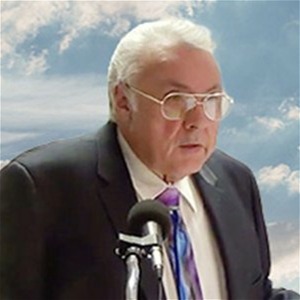
Save $80 with code SPACE80 at Talkspace.com. The following program is sponsored by What's Right, What's Left Ministries and is responsible for its content. Portions of the following program may be prerecorded. I am Pastor Ernie Sanders, the voice of the Christian Resistance. Stay tuned. My radio broadcast, What's Right, What's Left, is coming up right now.
Coming to you live from Independence, Ohio. We change our life for the better in many different ways. Heard around the world every Monday through Friday. Pastor Sanders is always years ahead of the rest of the media telling you exactly what they're covering up.
This is What's Right, What's Left. I tune in every chance I get to hear exactly what's going on with the voice of the Christian Resistance. Unabashedly cutting through the rhetoric by exposing the hard topics facing our society and world.
A lot of the other news medias don't pick up the news items like he does. And bring into light the enemies of freedom who are out to steal your rights, your children, and enslaving you. You really get the truth out.
I can tune into your show and hear the unvarnished truth. Thank you. This is What's Right, What's Left with Pastor Ernie Sanders. Good evening and welcome to another edition of What's Right, What's Left on this 26th day.
Day after Christmas of 2024. Only for a few more days than tonight. You've heard that song with Jimmy Rogers. He's a hank of hair and a microphone. He's a walking, talking bud. He's no honeycomb.
None other than style. Hey, good evening Pastor. Boy, did we mess that thing up last night with it. Absolutely. With the blue Christmas.
Alright, live in the studio here. You've heard the cackling. Always a cackle, never an egg. Little Lisa. Good evening everyone and hope you had a wonderful Christmas.
Alright, we did. And then from right to right, because there is no left ever allowed or tolerated in here, we have the elder Randall Barkley. Good evening.
Merry Christmas. The joy of the Lord is our strength. And we have that long time, well, a long time friend, a long time Bible teacher. We and him and I go way, way back.
Associate Pastor, none other than Richard Lewis, Pastor Lewis. Welcome everyone. Glad to be here. Alrighty. We have a whole lot to get to tonight. And so we're going to pick it up where we left off in the Christmas story. The title is a prelude to Theophilus. And we're going to pick it up in Luke chapter two. Let's take it verse for verse, okay? Okay.
And comment on it, okay? Verse one, and it came to pass in those days that there went out a decree of Caesar Augustus that all the world should be taxed. Well now, Caesar Augustus was considered one of the greatest of all the emperors of Rome, okay? But, you know, the whole world at that time was only the, to them, the world was what Rome controlled. I mean, because you can't tax areas where you don't control, huh?
That's for sure. And so here, besides that, that wasn't really a taxing, it was a census to get ready to tax. The tax come later, huh? And the taxing was first made when Seronius was governor of Syria.
And there went to be taxed everyone to his own city. So we know that where Joseph was from, Bethlehem, and he was from the city of where David and Rachel and a number of very well-known Bible people. Bethlehem wasn't a very big city at that time. It was small, wasn't it? Yes, it was. In fact, there weren't that many people, and I know we always hear about, you know, when Rachel heard, you heard Rachel weeping because they had, you know, Herod had killed all the babies, all the male babies. But, you know, compared to what Planned Parenthood does every single day, it was really nothing.
There was so few compared to that. And so, and Joseph also went from Galilee out of the city of Nazareth to Judea to the city of David, which is called Bethlehem, because he was the house of the lineage of David, to be taxed with Mary, his espoused wife being great with child. So espoused, it wasn't, it's a lot different than today what we have when you today become engaged, as you call it, engagement, or betrothal, as we call it. It was different because to be espoused in those days was almost like being married. In fact, in order to get unespoused, you had to get, have papers writing of divorcement. You had to be divorced. So they had done everything but consummate the wedding, right? Yes.
And to be taxed with Mary is espoused wife being great with child. And so it was that while they were, you know, that was, that was a 65 mile trip. Wow. Can you imagine? I don't think you and I could. A foot or a mule or a donkey or in a cart, however it went, it had to be painful. Can you believe being great?
I mean, he said being great with child. Can you imagine? That's probably what brought Jesus along. I would imagine I wouldn't know which one would go first, me or the donkey, you know what I mean?
Trying to do 65 miles. And so here, and so it was that while they were there, the days were accomplished that she should be delivered. And she brought forth her firstborn son.
What is so very important about that saying right there? The firstborn son. How does that coincide with what a number of religions teach? They teach that she didn't have any other children.
It was just him. Matthew 25 tells us clearly that he had brothers and sisters. So Mary had other children, but she was a virgin when she conceived Jesus. So here, what he's saying, again, the firstborn, it made it very, very clear that he did have, of course, also refers to when you were talking about now, how do those other religions explain that?
They say that some taste of Jesus was not the oldest, but the youngest of his brethren. That Joseph had been married prior to that and had children by another woman. But there's no evidence of that, not even by Josephus or any of the other. And obviously, no evidence of that in the Bible, is there?
No. They do it through lying. Well, they also, a lot of them have different Bibles. They have taken whole verses and sections out of the Bible or changed the wording. Well, that word for brother there in Matthew, if you look it up in the Greek, it means of the same womb. So if you're of the same womb, you're not a cousin because like the Catholics teach that those are cousins and not actual brothers. But that word of the same womb means that's a brother. For Mary, yeah, sure. One other point, since you're right here, it's interesting, she brought forth her firstborn son. It was just her and Joseph, and they knew how to deliver a baby. Isn't that interesting?
Yeah. Because, I mean, you think about Joseph, he has this woman that's with child from the Holy Ghost, and he knows how to deliver a baby. They were taught so much that we don't even, you know, today. How many guys do you think could deliver a baby?
I never have. And here now, and she brought forth her firstborn son, wrapped him in swaddling clothes and laid him in the manger because there was no room for them. And there was a very good reason that they, in those days, that wasn't an unusual thing. They often wrapped the children, the newborn babies, in these swaddling clothes for a good reason.
Do you know what that reason was? It was to keep their, often they wanted their arms and legs to be straight, okay? The legs to be straight and not bow-legged, and so they believed if they wrapped them up there, you know, when they're young like that, their limbs would grow out, their legs would grow out straight. Oh. I also heard it was to protect the internal organs and as well as keep them warm.
Yeah. The warmth in that would be obvious, you'd want to wrap them, but yeah, apparently it was kind of tight, so yes, I could, that would make sense if it was to keep their legs and arms straight. And there were in the same country shepherds abiding in a field keeping watch over their flock by night. Now shepherds at that time were at the absolute bottom of the pay grade. I mean they were, they were at the pay scale, they were at the bottom. Shepherds were, I don't know what you would call it today, would be like a fast food, working at a fast food restaurant, maybe even less than that.
I guess you'd have to go to what, delivering papers or something, I don't know. Here. And lo, the angel of the Lord, now here we go. This is something that a lot of people, whenever it refers to the angel of the Lord, it's referring to a Christophany, well, the appearance of the Lord himself. We've seen this many times in scripture, but how do we know for sure, because see, in this passage, in this one chapter, you've got the angel of the Lord, you have an angel of the Lord, and then you have the angel of God, okay. So here, but how do we know that this was the Lord himself? Well, the evidence is, and lo, the angel of the Lord came upon them, and the glory of the Lord shone round about. Shekinah glory is only present when God is present. Shown round about them, and they were sore afraid, and the angel said unto them, fear not, for behold, I bring you good tidings of great joy, which shall be for all people, for unto you is born this day in the city of his Savior, and city of David his Savior, which is Christ the Lord.
Now, what do you have here? We know that God is omnipotent, omniscient, meaning all-powerful, all-knowing, but he's also omnipresent. Remember what David said, no matter where you go, God is there, and then God says that he fills the universe, his presence fills the entire universe, okay. So here you've got the Lord Jesus talking to the shepherds at the same time he's referring to his birth in a human form over there. This, like he says, all things are possible with God.
Yes, absolutely. Yeah, you know, Pastor, one of the things that stand out there is that the angel had to tell them to fear not, you know, when the Old Testament prophets would come, actually the people would be afraid. It was like, you know, are you coming in peace? And many people have it kind of twisted thinking that, oh, I'm just going to, you know, stand before God, I'll do whatever, or even the presence of angels. But we know that when the message was delivered to Daniel, even Daniel himself fell down almost as a dead man. And we have to understand, so when the presence here of God showed up, there was a fear, although it was, he was bringing the tidings and all of those things, he had to let them know to fear not. And, well, it wasn't something that happened every day, because he was not on the ground, he was on the air and the sky above them.
And so, you know, not too often are you going to look up and it's going to be somebody hovering over you. Especially with Shekinah glory, but there's more evidence that this was only the Lord himself because he said, and this shall be a sign unto you, you shall find the babe wrapped in swaddling clothes, lying in a manger. Of course, that was a sign because that wasn't accustomed to put the kids in a feeding trough in those days. And now here you go, here's the evidence, here's the proof. And suddenly there was with the angel a multitude of heavenly hosts praising God and saying, glory to God in the highest, and on earth peace and good will towards men. So the angels would only worship who? God. And so the angels there were worshiping God, so we've got the presence of God.
And the other point too, it says, this is by night, and you figure they're out, it's night, it's pitch black probably outside, except for the stars, and all of a sudden this great light appears. There had to be some fear about that. Oh yeah.
Yes. You know, of all the times in history that, you know, if I could go back in history, this would be one because I would want to see the whole sky lit up with angels. You know, that had to be an amazing, amazing sight there back in those days. And the shepherds were definitely impressed, weren't they? Well, and it came to pass, as the angels were going away from them into heaven, the shepherds said to one another, let us go even into Bethlehem and see this thing which has come to pass, which the Lord has made known unto us. And they came, now that was one of the last times that God spoke, okay, to the people there, okay, that the Lord had spoken to them again.
2,000 years ago, right? And they came in haste and found Mary and Joseph and the babe lying in the manger. And so here now, this was not when the three Magi came.
No. This was two years, two years, they came two years later than this. Yeah, at least, yeah. And they had seen it, they made known abroad the saying which was told them concerning this child. And all that heard it wondered at those things which were told them by the shepherds. But Mary kept all these things and pondered them in her heart.
What do you think was going through her mind? Well, that's an interesting thing is because the way she became pregnant had to affect her drastically. And all through the nine months that she was pregnant, she had to be thinking, what will this be all about? And then they had this happen, it's like, you know, some people try to say that Mary, as Jesus started his public ministry, really didn't know some of the things were going on in that. But you don't have a child miraculously and not affect you your whole life.
Any woman that has a child, that affects her whole life. But can you imagine a child like this while you're a virgin? Yeah. Just recently there came out here on the Internet some heathen is promoting saying that you have to be real, that Mary was impregnated by a Roman soldier.
That's the latest thing that came out. Oh, boy. I mean, you know, it's but here's the point.
I think about this. You're a young woman. And, you know, they always say she was somewhere around the area of 15.
I don't know how old she was, but I'm guessing somewhere around 20 years of age, maybe, you know. But here's the thing. Remember, Gabriel, the angel, he had to be an awesome sight in itself. But he says the Holy Ghost is going to come upon you. Can you know you're a young woman and here this you're you're told that the Holy Ghost is going to come upon you. OK. You know, what's that all about? You know, what's that like? You know, exactly. And then and then then he says that holy thing, OK, within you, OK, talking about, of course, the Lord Jesus. Well, that had to be that had to center thinking. Oh, absolutely. And you wonder as the years pass, you know, she has to think how much did that really happen to me?
You know, right. And the shepherds returned glorifying and praising God for all the things that they had heard and seen as it was told them. And when eight days were accomplished for the circumcision of the child, his name was called Jesus, which was so named to the angel before he was conceived in the womb, meaning God with us. Now, it's an interesting thing because, you know, that they'll tell you today that the eight days now this this is thousands, you know, two thousand years ago is the exact best time to circumcise a child. That's that's because the vitamin K in the baby, a male baby, is at the highest level in their bodies at eight days.
Well, it is a clotting vitamin that you need. And when the days of her purification to the law of Moses were accomplished, they brought him to Jerusalem to present him to the Lord. Well, if it was a male baby, the days of purification were 40 days.
If it was a female, it was 80 days. That's very interesting. Yes.
Yeah. And so and as it is written in the law of the Lord, every meal that openeth the womb shall be called holy to the Lord. You know, we had talked about that earlier, you know, with John the Baptist when Zacharias said his name will be John.
And people couldn't believe it because that just wasn't done. It would be it was an insult or dishonored to name him your first born male in anything. And, you know, under the husband, you know, right. It's father by his father after his father. OK. And to offer a sacrifice according to that, which is sitting on the wall of the Lord, a pair of turtle toes or two young pigeons. So actually, if they could afford a lamb, it was a lamb. But in those days, many people couldn't afford a lamb.
Yeah, that's interesting. You mentioned Zacharias when Gabriel appeared to Zacharias and Zacharias kind of questioned what was going on. Well, you know, the Jews always asked for a sign. Yeah, but see, Mary didn't.
No. You know, when when he appeared to Mary, Mary just says, I will be done more or less. Well, no, she said remember what she said is, but how could this be? Because I have not known a man. Do you think Mary wanted to make sure that this guy know that she had she was a virgin?
Yes. And so so she asked simply asked a question for Zacharias. He he wanted to he wanted to have proof. He wanted proof. And so Gabriel gave him proof. Well, when the angel said to him, first of all, your prayers have been heard. Now, Zacharias had two prayers, right? One was that he wanted to he wanted a son and him and Elizabeth.
Now they were way past that in age. The second was he wanted to see the birth of Messiah. And so that should have been a when you know. But what let's let's go back even further when the angel appeared to him inside the Holy of Holies right away. He knew nobody except for the designated priest would last in there for a second.
They'd be stricken dead. Yes. So he knew right away.
This was no ordinary man. Right. And so so that tells you one thing. I mean, that would have been enough for me. I would have known that. OK, number two, when he said.
How how do I know these things? He wanted a sign. Yes. And he says, I am Gabriel.
I stand in the presence of God. That would have been enough for me. Yes. All right.
Yeah, it's interesting, though, the response between Mary and Zacharias with the dealing with Gabriel, the angel already. We're going to stop here. Now, listen, folks, we're going to go to a clip.
Now, we haven't been able to verify the autisticity of this clip, but we can tell you that it makes a whole lot more sense than anything you'll hear on the fake news media. And so. Go ahead and take her away. Of St. Peter at the pearly gates, St. Peter said, Welcome, Forrest. We've heard a lot about you.
He continued. Unfortunately, it's getting pretty crowded up here. And we find that we now have to give people an entrance examination before we let them in. OK, said Forrest, I hope it's not too hard. I've already been through a test. My mama used to say life is like a final exam. It's hard.
Yes, Forrest, I know. But this test is only three questions. Here they are. One. Which two days of the week begin with the letter T? Two. How many seconds are in a year? Three. What is God's first name?
Well, sir, said Forrest, the first one is easy. Which two days of the week begin with the letter T? Today and tomorrow. St. Peter looked surprised and said, Well, that wasn't the answer I was looking for. But you have a point. I give you credit for that answer. The next question, said Forrest, how many seconds are in a year? Twelve. Twelve, said St. Peter, surprised and confused. Yes, sir.
January 2nd, February 2nd, March 2nd. St. Peter interrupted him. I see what you mean. I'll have to give you credit for that one, too. And the last question, said Forrest. What is God's first name? It's Andy. Andy, said St. Peter in shock. How did you come up with Andy?
I learned it in church. We used to sing about it. Forrest broke into song. Andy walks with me. Andy talks with me. Andy tells me I am his own.
St. Peter opened the gate to heaven and said, Run, Forrest, run. Well, like I said, we haven't been able to verify the authenticity, but we verified the authenticity of Stephanie Stock with the Ohio Advocates for Medical Freedom. Hey, Stephanie. Hey there. Thanks for having me on tonight. I appreciate it. All right. Very good. What did you just think of our little clip there? That was hilarious. I haven't heard that before.
All right. Well, listen, we want to find out all about HB 73 because, you know, this is an activist program and this is the voice of the Christian resistance. So tell us all about HB 73 and what we need to do about it.
So HB 73 was a wonderful piece of legislation that we had introduced here in Ohio back in February of 2023. And it what it did was make sure that everyone in Ohio could have access to get the drugs their doctor prescribed for them without interference from pharmacists like we saw during COVID, refusing to fill certain drugs because they were working. And of course, they didn't want people to have access to those. They wanted them to, you know, have to get costly remdesivir and, you know, make them afraid that the vaccine was the only option, et cetera. So the bill was making way for that. Now, it still allowed for religious objections, of course, because we never want to force the pharmacist to fill something they have a moral objection to.
And also, you know, there was a life threatening situation. But basically, basically it said, you know, this is up to the doctor and the consenting patient and the pharmacist should not be overstepping their scope of practice by refusing certain drugs for political reasons. So we had that for outpatient and then we had a pathway for getting the drugs they needed in an inpatient setting, including if everyone refused to help them. You could have it outside doctor get credentials to come into the hospital and treat the patient for the one drug that everyone's refusing to treat them with. And then it had a provision that said they could not come for after doctor. They could not threaten their license or sign or penalize them simply because they were prescribing certain drugs off label that the the licensing boards didn't approve, like approve of, like they did with ivermectin, hydroxychloroquine, those kinds of drugs that we saw also during COVID. And then it had a provision to protect their free speech. So if they, you know, had an opinion that was different from that of a licensing board or a health agency, they couldn't come after your license because you say maybe spoke about concerns with a vaccine or certain treatment, et cetera, which we saw that happen.
Let me stop you right there. Did I know a number of people that they did come after some very good friends of mine that that they did go after their license. And Jerry Tenpenny was one. Yeah, there were doctors, Dr. Bowden, Dr. Wagschule here in Ohio. We had doctors across the country that were were threatened or had their licenses revoked or they were fined.
I mean, it was it was just terrible what was done to good physicians for absolutely no reason other than they were doing things outside of, you know, quote unquote, the norm. So this bill was really going to protect everyone. It was called the Dave and Angie Patient and Health Provider Protection Act because, of course, it protected patients right to get the drugs they needed that their doctor prescribed and they could send it to. And then, of course, it protected the health providers that were getting those those drugs to them and or giving them informed consent by giving them warnings about certain interventions that they had concerns about. And then it also had a provision that said the World Health Organization has no jurisdiction here in Ohio and no state funding can be used to incentivize or to implement any health mandate, public health mandates, including any drug bans, because we saw them, you know, of course, kind of at the federal level. All these agencies said, oh, you can't use it for that.
You shouldn't be using it for that purpose. OK, when you had this this thing here, like you mentioned, when there's a fear, you know, you know what? They actually referred to that there in the hospitals as run.
Death is near. They sure did. I heard that from many health providers that came in contact with us during the state. They they did call it that.
They still call it that because that is still, unfortunately, the protocol in hospitals is terrible. They were what? Do you remember what they charged here? It's cost seventy five cents for ivermectin.
A dose of ivermectin are here now. What it costs for rent does appear. It was, I believe, several thousand dollars.
Yes, it was about three thousand, depending on if you did the five or the 10 day course, that was between three and five thousand dollars. And of course, the feds gave them complete immunity. So anybody that died because of that treatment, they were completely immune. About 40 percent of the people that took it died. Yes, it had it had a very high rate of organ failure and things like that. It's a terrible it's a terrible drug in the fact that it had complete liability protection, just like the vaccines do. Unfortunately, you know, people died. People died. They were denied access to drugs and they were given protocols.
Well, Anthony Fauci, Anthony Fauci owned a patent on run death is near. Yes, it was actually used it was actually, I believe, an Ebola treatment and they were dying. They were dying when they were trying to give it to them for that. So, I mean, they already knew this drug had catastrophic effects. Yet they gave it immunity and they gave it to patients and they are still giving it to patients to this day as the COVID protocol. So people are still dying right now.
Not as not as in greater numbers, but they're still dying right now. So this bill was extremely important. I thought I'd commit to the last provision. And that was you cannot starve or dehydrate a patient in the hospital because we all know that happened to nobody likes to talk about it. It's extremely inhumane, but it happened all across the state. We had many, many families reach out to us and say it was actually used as a way to sort of punish the patients that were refusing to go on the ventilator.
They would just neglect them. I was with I was with Dr. Jack Wilkie in the very beginning when he started Ohio Right to Life and National Right to Life. I was there when we made our mission statement. And one of the major things that Dr. Wilkie, one of his major concerns was doing exactly that. He would speak on that. We would have him on the radio program often and he would talk about that there was no need to dehydrate these people. How what a what a terrible way of dying that was.
It was absolutely terrible. And you speak about right to life. We actually had Cleveland right to life testified for this legislation and right to life action coalition here in Ohio also supported the bill. I know I'm on the board of that.
Oh, wonderful. Yeah. I mean, it's you know, they were in support because obviously they're for saving. They want to save the lives of the born and the unborn. Right. We if when we're pro life, we're pro life from the womb until natural death.
That includes everything in between. So we were really thankful to them for testifying for the bill. Unfortunately, you know, the bill is the bill is essentially I mean, it's essentially dead now. It's not technically dead until the 31st. But, you know, it passed the House clear back in June of twenty three under Speaker Stevens passed the House.
We had seventy five votes for it, only 16 against it. And then it sat there all summer. And then it was assigned to Senate Health Committee on the very beginning of September of twenty three.
And it was literally just it just sat there and was rotting. And at the end of January, the Senate chair, the health chair for the Senate, Steve Huffman, he finally said, oh, well, we're not going to give this bill a hearing until we have opposition meetings, which we had already had several meetings on the House side before we move that bill through the process of the committee and the floor vote. So we had already addressed basically most of what we could address without changing the intent of the bill, because you know how opposition is coming back and they just want to get the thing because they don't want you know, they hate medical freedom legislation.
So the hospitals and the pharmacy associations and all those guys were absolutely against it. So we did all these meetings in February. We rewrote the bill. We turned that one in.
They adopted it. But he said at the time they adopted it was still not happy with us, but we're going to use this as a working document. And then we had hearings in May, you know, proponent in opposition testimony in May.
Then it sat again that through June. We gave them and they had a bunch of complaints. But the medical board hired a big wig law firm to come in and try to counter everything in the bill.
I mean, they really pulled out all the stops. The head of the Pharmacists Association, Senator Dave Burke, he came out against the bill. Of course, they're good buddies with Steve Huffman and his cousin, which is the Senate president, Matt Huffman.
I mean, it's just a mess here in Ohio. They all were, you know, trying to help their buddy who's the head of the Pharmacy Association who didn't want the bill. So we wrote a Dash 7 version. He didn't like that. He sat on that.
Didn't come November. We gave him a Dash 8 and said, look, we're giving you everything we can possibly give you, but every clarification we can possibly do for opposition. But this is the bill we need. This is what patients need.
This is what health providers need. There's no glitches in here. There's no issues. There's nothing constitutionally, blah, blah, blah. They give you every excuse in the book, of course.
Still didn't like that version. So here comes December and we get notification on, I think it was December the, maybe it was the 8th, December the 8th, that we're going to get a hearing. We're going to get another one more hearing on the bill and a possible vote.
Of course, we're thrilled because at the end of this assembly, the bill dies. So we're getting excited. I'm calling everybody up, putting out a call to action, you know, get one more round of testimony into the bill. Got three more witnesses lined up. And so here we are ready to go down there to testify. And then three o'clock the day before the hearing, we get a new bill. Steve Huffman, I'm in cahoots with his cousin, Matt Huffman, has rewritten 73. It was a disaster.
Got it. Did they totally gut it? It was. Well, it's worse than gutting it. I assumed they were going to cut some stuff.
Right. I had heard rumors that he might cut all the outpatient pharmacies and only give us inpatient. I had heard he was talking about that, but it was worse than that. They actually made it the antithesis of the bill. What he did was, yes, he cut out outpatient pharmacies, but for the inpatient provision, he made it only applicable during a pandemic. And he gave the pharmacist the right to decline for a scientific objection. He literally gave them the right to do what they did during the pandemic, which is why we wrote the bill. We were floored. And then they limited the free speech section.
You could have the health providers could have free speech, but only about off label drugs. I mean, it. Oh, my gosh.
It was absolutely terrible. So I'm flipping out. I'm trying to call my witnesses up for the next. We're supposed to testify at nine thirty in the morning. And I've got a Christmas party that night I was trying to go to. And I'm going through the bill and making notes.
It was a mess. So called up the witnesses and said, hey, you guys are testifying on a bill that no longer exists. I'm afraid they're going to actually vote this thing out of committee. You know, just let them know in your testimony that the current version of this bill would not save the life of your loved one because it's true.
I mean, it was just awful. So they came and God love them. They did a great job. One of the witnesses was actually a constituent of the chairman who got at the bill. You know, she you know, she said this, the bill that you currently just the bill you just voted on would not save my husband's life today. What is the point of this bill now?
It was just awful. So they voted it out of committee right in front of our faces, just literally spitting in the faces of all these families that the bill was written for. And then three hours later, they brought it to vote on the Senate floor. The senators did not receive an actual copy of the bill. They received a bill analysis which didn't even cover the catastrophic things it had done to the bill. So we're texting, you know, senators, hey, this is a terrible provision. We don't even want this bill anymore. So bad.
The family messaged me. They wanted their name removed from the bill. I mean, when have you heard of that?
It was terrible. So they passed it. We had a few senators that went ahead and voted no on it. And but it still passed 18 to 13.
And then it had to go back to the House that evening for what's called concurrent. And that's when you know, because it's a House bill and the Senate changed it. They have to re vote on it in the House.
It was so bad. Pastor Sanders said 88 reps voted against that version of the bill. So out of leaving the House, we had 75 votes for it when it came back after the Huffman's were finished with it.
Eighty eight opposed the bill. So after that, it was supposed to go to what's called Conference Committee. And Conference Committee is where you have a few designated people. Usually it's the bill sponsor and sometimes the chair of the committee where the bill was in. They have a group of four Republicans, two Democrats, and they sit down with the bill.
And they try to figure out some parts that they're willing to salvage that everyone can agree they'll still vote on. So that was supposed to happen. There was about a five day gap.
We the bill sponsor, we worked with her. She said, OK, forget it. We can't you can't even say they botched the pharmacy part so bad.
It's not fixable. We're gonna have to let that go and come back for that next assembly. So what we were asking for was protecting the license of the doctors, the health providers, protecting their medical free speech, making sure the World Health Organization had no jurisdiction here. And then, of course, the part about you can't dehydrate or starve the patients. Right.
So here we're having this discussion. We think we're supposed to go to conference committee. We hear from you, Hoffman, that he and his cousin and apparently they're in cahoots with DeWine because they said, oh, well, we're going to give you three provisions because otherwise DeWine's going to veto it. So they're if they know DeWine's going to veto it.
Who does that tell you? They're sitting down, having their powwow with deciding how what scraps of freedom they're going to give Ohioans in HB 73. So we find out what do they want to cut the licensing perfection. They're like, well, let's get this. We'll give you free speech, WHO, and we won't starve the patients. We were baffled.
We were like, how can you not give us the licensing provision? You've already destroyed the bill. You've taken it down to nothing. Oh, well, DeWine will veto that. So fine. We said, OK, we'll take what we can get. And the next assembly, we're going to come back for all of the stuff that you guys screwed us over on.
And so that was our plan. And it was and we re-voted it out. Senate, House, they put in another bill, though.
They didn't do conference committee. They stuck it in another bill. Here's another plot thickener. So the bill they put it in had appropriations, which means it's a bill that has money designated in it. So when they whenever you have a bill, they ended up calling this the Christmas tree bill at the end of every lame duck section. There's always one bill.
Everybody throws all their bills into it. You know that they did all these road naming bills and this and that, whatever. And so they put those in and then they threw in our three provisions of 73.
But the catcher is on a bill that has money designated in it. It allows the governor to do line item vetoes, meaning he can just take certain little sections he doesn't like and cross them right out and not make those parts lost. So that was another thing. Instead of the Huffman's letting us do a conference committee as that bill number and and voting on that bill is just a smaller portion of the bill. Instead, they shoved it into a bill with appropriations going full well. It gave DeWine the opportunity to then go ahead and veto it.
But then that wasn't even the worst. Then Matt Huffman, who's the Senate president, he holds the bill because remember, here in Ohio, the governor gets 10 days to do a veto. So this bill was passed on the 18th.
So they should have turned it in the same day. There would have been time DeWine would have had to veto it by around the 28th or 29th. That would have allowed the House and the Senate to come back and do a veto override if he vetoed something. But instead, Matt Huffman didn't turn the bill in until after the point where we would be able to come back to do a veto override.
And then DeWine announces on the 20th. He's going to veto over. He's going to veto medical free speech. I'm not even kidding you.
I wish I was. Republican governor. We both know he's not really a Republican, but he's claiming to be one. He's going to veto medical free speech.
Now, he hasn't done it yet because he's going to wait till the very end of the year so that that way. Absolutely. Is there a chance of anybody coming back to do a veto override? I mean, I've never seen such nefarious behavior from Senate leadership in cahoots with our governor.
Just absolutely terrible. And I talked I talked a lot, but I wanted to get all that out so that we could have a conversation about it. Now that you kind of know the whole plot, how it went through, just really, really very, very upsetting. Well, then what we need, we need some phone numbers, because this is an activist audience right here. You're probably one of the most activist audience in the country. And these folks will stand up. They they like freedom. Our listeners, they're patriots and they love freedom. So what we need, I need three phone numbers to call.
You know, those three that you mentioned started with Mike DeWine. So what we the best thing to do, because we have all of our calls to action on our website, if they go to Ohio AMF dot org and they click on the legislative initiative section, they can click on HB 73. It'll open up.
It'll kind of give a description of what I just gave you. And then at the bottom, it has the contact link to send an email to Governor DeWine. We're also asking people to reach out to Lieutenant Governor Houston.
We're asking Houston to make a public statement against this veto, asking DeWine not to veto medical free speech. Now, he's trying to get in. He's trying to get appointed to J.D.
Vance's position. He's trying to decide between that and running for governor. So if he wants anybody to any grassroots support, he better get off his butt real quick and start telling Minnie Mike that vetoing free speech is probably not a great idea. One is against the Constitution. And two, we got a Trump administration coming in. And how bad would that look to have our own governor here in Ohio where J.D.
lives, vetoing medical free speech? So we're really trying to put a lot of pressure on Houston as well, because he should be adamantly opposed to that. So those are the two people we're asking folks to reach out to. Again, the contact information is right there at Ohio AMS dot org, right under the legislative initiative tabs under HB 73. So it gives them very specific instructions, including a little blurb they can cut and paste and put right into the into the email. And then there's a phone number for Houston's office and an email also for Houston's office. OK, now there's a lot of a lot of folks out there, believe it or not, are not on the Internet.
There's a whole lot of voters out there that are not on the Internet, older folks. So we would probably need the governor's number. We can call directly to the governor or lieutenant governor. And so I would imagine we can get those fairly easy. Can we get those fairly easy way?
I'm going to go to my go to guy. I will look into it right now. There you go. If you go to the Web site, you can pull that up right now and then you can read it aloud for your listeners. I can go on there as well. OK, why don't you do that? Why don't you get ready to go on there and do that? Because I can't do it where I'm at here. I don't have a ready to pull that up and then you can read it aloud and folks can write it down.
Well, you pull it up and you read it aloud. OK. All right. Hold on. All right. I'm pulling it up. Give me a minute here. I said I had this ready for you, but I wasn't thinking about folks not having access. So let's pull up down here. All right.
So for. OK, so for lieutenant governor, you said the phone number is six one four. Six four four zero nine six nine. OK, six one four six four four zero nine six nine.
And that's the tenant governor who stood. Lieutenant Governor Houston. And I can give you Mike DeWine's number.
OK, you pull it up. Mike DeWine's phone number is office number is six one four. Four six six.
Three five five five. OK. I know Mike DeWine. I've known him very well for, you know, 50 years, in fact. And folks, if you call these numbers, tell me that I said to call him.
OK. And he needs to know that. OK. Again, now, when they call up, they would they would say that. Well, tell us exactly how you want what you want the folks to say. So what we'd like them to say is, Governor DeWine, do not veto medical free speech.
Super simple. That's for DeWine. Do not veto medical free speech.
You don't need to give bill numbers or anything because it's pretty self-explanatory. And for Houston, we're asking we're asking Lieutenant Governor Houston make a public statement urging Governor DeWine to not veto medical free speech. All right. I will give this out again tomorrow night.
And wonderful. Thank you. You should call the line up yourself if you have his number up. Think or call him right up. I'll do that.
I'll do that for you. I'll give him a call. Maybe he'll listen to you because I you know, he hasn't been listening to the people. He certainly didn't during covid and he's not listening to us now.
It's just just terrible. We cannot be limiting health providers ability to speak freely because if they can't speak freely, they can't give their patients informed consent. I mean, we've had doctors that they were overheard telling a patient, you know, I've got some concerns about the vaccine.
I'm not going to recommend it for you today because I do have some concerns and people have overheard down the hall, turned them in and at least one physician that I know of was ordered a psych evaluation because he suggested to a patient that he had concerns about the vaccine and was not going to recommend it for that. I mean, that is crazy. Doctors have got to be able to give their patients informed consent. Absolutely. Medical boards should not be allowed to come after them for giving a medical opinion. It's just it's criminal, truly criminal. You're absolutely right.
I mean, it's it's communists what it is. And yes, yes, it is, because they're literally dictating what what can be said. And DeWine made statements. It's been in the news at this point. DeWine said we can't have doctors running around giving out misinformation. That's what the left says. Yeah, I know that.
And who decides what's misinformation? You know, we've we've seen. Yeah. DeWine and Acton, I guess, is his buddy Amy Acton.
I'm sure she had a little say in this view. Well, you're you're very right about that. OK. You know, I've known it.
I've known Mike, like I said, for all these years. He has changed. He has moved so far to the left from where he used to be. I mean, he used to be, you know, where I'm at.
And he has just moved so far from the left to the left. I just can't believe it. And I got a good idea why to.
Hey, Stephanie, quick, quick question. Do you know I saw an article in AP that the hospitals were receiving forty eight thousand dollars in government subsidy for every patient that dies from covid-19 in their care. Is that your accurate number? I don't know if it's that high. I do know they were absolutely given money based on a covid death diagnosis. I know they were given somewhere around five thousand dollars. I don't know if it was weekly or monthly for patients on ventilators.
I mean, they they actually made it lucrative to kill patients. Yeah. Yeah.
But that exact amount, I'm not 100 percent sure. But I just find out for you. Stephanie, I am out of time for tonight. I want to thank you so much for being here and we'll get on top of this again. God bless you. You have a blessed new year.
We'll be back right after this one more. Thank you for listening to what's right, what's left, the voice of the Christian resistance to support this ministry and to w r w l dot org. That's w r w l dot org. Mail your donations to what's right. What's left ministries. Fourteen seven eighty one Sperry Road, Newberry, Ohio, four four zero six five. If you missed part of tonight's program, you can check out the podcast at the word Cleveland dot com.
The word Cleveland dot com. Once again, thank you for listening and supporting what's right. What's left ministries. The voice of the Christian resistance. Stay tuned.
The second hour is coming up next. Since 1981, Unbound has connected people like you with families worldwide on their self-directed paths out of poverty. A brighter future is possible for these families when we all walk together. Sponsor a child today and you'll help a family take the first steps on their path. Change their future in just one click. Start walking with your new friend today at Unbound dot org slash walk.