GLP ones are changing weight loss. My sister had amazing. The ideal treatment is. Seems like everyone's a GLP one expert these days. But when it comes to your health, it pays to listen to someone who actually is.
Orderly Meds makes it easy to get started with personalized support along the way. And with your first month's order, we're giving you the second month free. Visit OrderlyMeds dot com. Bringing order to the chaos of GLP ones. Individual results may vary.
Eligibility and prescription required. Not medical advice. Visit orderingmeds. dot com for details. Compound medications are not FDA approved.
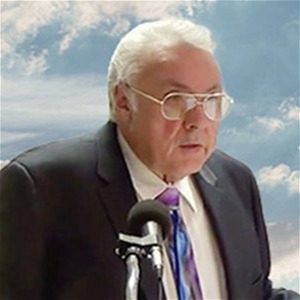
The following program is sponsored by What's Right, What's Left Ministries and is responsible for its content. Portions of the following program may be pre recorded. I am Pastor Andy Sanders, the voice of the Christian Resistance. Stay tuned. My radio broadcast, What's Right, What's Left, is coming up right now.
Coming to you live from Independence, Ohio. Changed our life for the better in many different ways. Heard around the world every Monday through Friday. Pastor Sanders is always years ahead of the rest of the media, telling you exactly what they're covering up. This is what's right, what's left.
I tune in every chance. I get to hear exactly what's going on with the voice of the Christian resistance unabashedly cutting through the rhetoric by exposing the hard topics facing our society and world. A lot of the other news media don't pick up the news items like he does, and bringing to light the enemies of freedom who are out to steal your rights, your children, and enslaving you. You really get the truth out. I can tune into your show and hear the unvarnished truth.
Thank you. This is what's right, what's left, with Pastor Ernie. Sanders. Good evening, and welcome to another edition of What's Right, What's Left, the voice, the legendary voice of the Christian resistance. On this 25th day of November, 2026, and tonight, my producer is none other than the mighty, mighty Mike Winchell.
Hey, mighty Mike. Hey, Pastor. And she she owns every bit of pretty amongst the five of us tonight. You own every bit of it, Kathy, because man, I tell you, we some awesome looking men here tonight. But anyhow, and that is none other than the research lady, Kathy Brady.
Good evening, Pastor. Hello, everybody. It's good to have you here.
Now, amongst those of us that aren't very pretty. From way out there, way way out in the backwoods of Missouri, he's known as the legendary pastor Joe Larson, ready to fight like Christian soldier, with his eyes upon the cross. And I also have a face for radio. Yeah, I know. Yeah.
Well, it's. Hey, I just I thank God I'm alive, and if you know I had to have a little plastic surgery to put it back together, I'm pretty happy, Camper. All right, very good.
Now, from the Lone Star State, he remembers the Alamo, and he's determined to take Texas back from the Com Slums. The comm slums are those that are the red and green coalition of the communist and the Muslim, none other than Big John McTurnan.
Well, hello, Pastor Ernie. Thank you for the introduction. God bless you and all our listeners.
Alrighty, we're ready tonight for our Thanksgiving program. And what we're going to do is we go through this. We're going to stop along the way and do a little commentary, because if we compare, we have so much to be thankful for. I mean, we have so much to be thankful for. And when we take a look at the pilgrims, the separatists—they were called separatists—and we are separatists.
The Bible makes it very clear that we have to. We are separatists. We kept. We have to separate ourselves from the ways of the world. And so as we go.
Through here, Kathy and I are going to do a little reading, and then we stop, and then we do commentary with you two fellows.
So, we're going to start tonight, and we'll be reading out of America's Christian History, and we start tonight in, well, the history of the Plymouth Plantation. In England, the Bible was finally translated into English, and was being read by everyone.
Now, godly preachers were traveling the countryside, telling the truth of God's word. Many people were becoming aware of their sins and giving their lives to Christ. As they did this. They were confronted with their friends laughing at them and telling lies about them. Their lives become hard due to persecution.
They bore all their troubles with with much patience and studied God's word even harder.
Now these people saw the evils of those who were anti-Christian, and they believed that they were. The Lord's free people, so they joined together into a church, a state at Scruby, England. Together, they could walk in God's ways, doing their best to live a Christian life with God's help. They were willing to hold their beliefs true, no matter what it cost them. Let me ask you, folks: Is there anti-Christian bias in the world and in America today?
Absolutely. Is there? Do you fellows think there's anti-Christian bias in the media? It's everywhere, Pastor. What was it that they just?
Worldwide, it's Christ against the His children against the Antichrist and His children. Absolutely. Well, the persecution of the separatists, as they were called, became so great that they decided to leave England for Holland. When they left, much was left behind: their land, their livelihoods, their friends, and familiar surroundings. They left to go to a country with different customs, language, jobs, and government.
The separatists were plain, simple country folks, and were not accustomed to the ways of the new country. The move was full. Of problems and difficulties, but they set their hearts and minds on the word of God and rested on His providence. But when they went to leave England, they found that the ports were closed to them. They could not stay in England, for they no longer had a home.
But they could not leave England, for no one would take them. Secret passage was sometimes searched for, but it usually ended in betrayal and the loss of their goods and money. Let me, let me, kind of, compare this today, because we're talking about the country of England, right? Today, there are those that want to leave England. You had how many?
Two hundred. Two hundred and fifty. What was the amount of young English women that were raped by Muslims? It was a huge amount. Two hundred and fifty thousand, and that was the low end, Mr.
Ernie. Two hundred and fifty, and many of them wanted to leave. They they wanted to come here, but our borders were closed to to them.
Okay, they were opened under Biden and Obama. To Muslims, but not to Christians. But not to Christians. Those most those girls were raped were Christians, and they were they were able to go to Canada, but Canada was becoming more and more communistic every day, and and more and more.
Well, in Canada, John, you know that it's a crime to speak out against radical Islam.
Well, it's also a crime test. They need to to use the Bible regarding the sin of homosexuality. The courts actually ruled on it in Canada. I know. Finally, in sixteen o seven, a large group of the separatists gathered in Boston and Lincolnshire, and they hired a ship to take them to Holland.
Soon, arrangements were made, a time set, and their goods placed on the ship. Finally, after a long wait, a much expense, it looked as if they would be on their way, but when they were all on board the ship, the captain betrayed them. The captain had made arrangements for officers to come, search them, place them in open boats to take them back to to town. Once in town, with no money, books, or possessions, they were put in prison to await trial. Months later, they were set free and were, where to try again.
The next spring, a friendship ship was formed, and arrangements made with a Dutchman at Hull to take an even larger group to Holland. They were to board the ship at a place which was some distance from any town. The women, children, and possessions were sent to the location a day ahead of departure in a small barge. But since the sea was rough, the women and children became very ill. They found calm waters in a nearby creek.
They made. The next day, the women and children did not stir until noon, but the men were were ready. They were on time, and the Dutchman was loading the men on board the ship. When they saw a large group of soldiers coming with weapons, the anchor lifted and the ship left immediately. The men washed on board the ship as their women and children were taken hostage with all of their possessions.
The men were left with no money, no clothes, and nothing for them to do but trust in God. The men sailed for fourteen days in a storm that frightened even the experienced sailors. The separatists raised their voices in prayer, and they looked lost when the ship began to sink. But the Lord's power and mercy appeared, and when the ship rose up again, the sailors' hearts gained courage. Bradford tells of the prayers that all the men and sailors alike sent heavenward during their storm.
It was just a short time after the ship recovered that, that by God's providence, the storm weakened and ended. And when they reached their desired port, the people came flocking down to the ship to see those whom God had delivered out of such a severe and long-lasting storm. The women and children who had been captured were taken from place to place and from justice to justice until they did not know what would become of them. They were frightened, alone, and did not know what had happened to their menfolk. None of the English officials knew what to do with them.
They had no home to be sent back to, and no place to go. Finally, all the officials grew tired of their plight, and just wanted them to go somewhere.
Somewhere was with their husbands and fathers in Holland, which is finally, by God's providence, exactly where they were sent.
Now, in all the handling of the case of England, the cause of the separatists became quite famous. Many others were to hear of their plight and join them in Holland.
Now, let's take a look at the separatists today. You're hearing people talk about the first Thanksgiving, and the left is using that. They're saying the first Thanksgiving is when. A group of Americans provided a meal. For immigrants, and the reason that they were doing this, that they were trying to say, this is why we should have open borders.
We should have open borders, but there is a little difference between today and then. Back then, the population the country was very, very sparsely populated. You could walk for days without even seeing another human being in America. But there was no laws on immigration. They had no laws on immigration.
They had no boundaries or any states.
Okay, the land was open for all who wanted to come, and that was a completely, totally, and different thing.
Now, they were coming here. The pilgrims came here fleeing from persecution, and I'll give you many of the the immigrants that come here. Have done the same thing, but they didn't come here to conquer. What Joe Biden and Obama they brought in, they didn't. They weren't bringing in Christians.
They were bringing in Muslims. They were bringing in. Criminals, rapists, murderers, and they were coming here not just to compromise, you know, but to enslave America, if you can.
So there was a a huge difference. What do you fellows think?
Well, you you got to go back and look at the history in the world at that time. What was going on at that time? You know, they came here. The whole world. The pilgrims had no slaves.
Most of the Indian tribes did. They took captives. Slavery was an institution that existed throughout the world. Rome slaves made you know forty percent of the people of Rome, and if you look around the world, it was the strong countries. Conquered and took over.
Russia colonized the Eurasia. China took over Central Asia. The Aztecs, the Incas, had empires, and almost all these places they ruled very brutally. And yet, we're the only ones that they ever come up and say, you know, we were bad, we did wrong. Nobody goes and looks at the world history that was horrible.
In fact, the New York Times. What was it, 2019, Pastor? We did a story. The New York Times story ran the horrible history of Thanksgiving. And I'm just ask people out there do a Google Google.
I call it Google Google search. See how many articles are anti-Thanksgiving versus those that are pro-Pilgrim, pro-America. You're going to find the anti is overwhelming anything on the internet, and yet world history. We were one of the best people to treat and handle things compared to the rest of the world, but no credit for any good we did. It's always America bad, the rest of the world good, and the rest of the world wasn't.
John, what was the proclamation that was signed in Boston today? John, are you there? Do we still have John? Yeah, we still have. No, no, no.
Yesterday, I had you. I had was muted. What happened was, it was a proclamation denouncing Thanksgiving. And turning to like the the the natives that were here in America, and and recognizing them, so it was a direct attack on Thanksgiving.
Now, Pastor Ernie, the major reason for this is because Thanksgiving they were Christians. Yep, you got it. They they hate Christianity. They hate it.
So. You know the the natives here, the Native Americans. They they could have slaves. They could um, um, what do you call it, Pasterny? Like commit genocide against other tribes and all of that.
And yet that's not mentioned at all. And it's always the focus on, and they call us colonialists.
Well, there were no laws, Mr. Early. There were no like nations as you know them today. They didn't break any law. They had every right to come here.
Absolutely, they hate Christians, and before that, they hate our God. All right, yeah.
Well, Pastor, what is the total essence of Thanksgiving? Isn't it gratitude, and it's gratitude to God. I was looking in the Bible, like go to Chronicles sixteen. Oh, give thanks unto the Lord, for He is good; His mercy endureth forever. And you go down sixteen different chapters, sixteen forty one.
Give thanks to the Lord, because His mercy endureth forever. All through the Old Testament, there are about forty verses of giving thanks to the Lord. And for all He's done for us, for the bounty He's given us, for His love, for choosing us for salvation, so the whole essence of Thanksgiving is about being grateful to what? For our blessings, where the blessings come from? God.
Our freedom came from God. Everything came from Him. And they hate God, so therefore, they hate the concept of giving thanks to God. In Holland, the separatists were faced with problems concerning language, customs, and dress, but they kept their eyes on God, even even in the face of poverty, which they would now have to handle. But God saw their faith and patience; He gave them victory over their troubles.
When the separatists left England, there were a few who stayed till the last to be sure that even the weakest made it over. These men included Mr. Robinson and Mr. Brewster. After finally arriving and living in Amsterdam for a year, Robinson and Brewster decided to move the group to Leyden.
This was done to keep the church from dividing into two groups. With much hard and continual work, the separatists who Had been farmers for the most part, were able to learn new crafts and develop a comfortable living. They were to live in Leadon for many years, growing in the knowledge of the Lord and being accepted by the community. Robinson, as their pastor, taught the group much during these years. Their ideas and beliefs were formed.
And their members increased. By 1617, there were over 300 separatists living in Leyden. For twelve years, the separatists lived in Leyden. Their hard work and hardships finally began to take its toll. Their leaders were growing old and began to look for another place to live.
These Englishmen saw their friends dying in a strange land, their children speaking a strange language, accepting strange customs and dress. It was indeed time to move on. The great dream of these separatists was to go to a new land and become stepping stones for other people. With this end. In mind, plans were made to move the colony again.
Their thoughts turned to the land of America, which was full of promise and few people. As plans were made, fear grew in the people. Would they starve? Be killed? Would they have no clothes or be lost at sea?
All kinds of thoughts grew up. Finally, the people decided that God would not turn His back on them. They decided that it would be better to die a free man in America than an exile in a foreign land. Bradford tells next of how the separatists began to pray to God for His direction and help. A conference was then held.
Virginia, in the New World, even though it ran the same risk of as much persecution as England, was decided upon as their designation. Two members were chosen to go to England and ask for permission to settle there with freedom of religion. Their representation found in Virginia. Company, which was eager for them to go and willing to grant a patent for whatever privileges they desired, the king's seal was then sought, and the providence of God waited on. At about this time, it was learned that.
The King of England had granted to be settled a large section of the northerly parts of the Virginia Patent, which was to be governed separately from Virginia, and called by a new name, New England. In this new area called New England, a report said that there were lots of fish. For that and other reasons, the separatists decided to make New England their destination. The provision for the trip were purchased from merchants with plans with the Virginia Company finalized.
However, unknown to most of the separatists, the conditions which their represent representatives agreed to had been changed. Bradford lists the changes in the conditions with the company for the right to travel and settle in New England. Number one. Every adventurer; those were people who were not separatists, but traveled to the new colony to settle, or planter; these were the separatists. Over the age of sixteen was to be granted one share in the partnership.
Number two: each person who paid for himself in either money or provisions would be granted double shares. Number three. The people transported to the colony would continue their joint stock and partnership together for seven years. During the seven years, all profits or benefits obtained by trade, working, fishing, or any other means would remain the common property of all the shareholders. Number four.
Upon arrival, they would choose a number of fit persons to work on the fishing boats. The remaining people would be divided among the tasks on land, such as house building or planting. Number five. At the end of the seven years, all the profits, capital, houses, lands, and goods would be used to pay off all debts, and the remaining equally divided between the shareholders. When done, each man would be free from debt to anyone in the adventure.
Number six: Anyone who came to the colony later or joined in holding stock would be given his fair share at the end of the seven years. Number seven: Any man who brought his wife, children, or servants would be given a single share for each who was over the age of sixteen years. If the man provided for their necessities, then he would be given double shares. If any one of them was between the ages of ten and sixteen, then two of them would count as one share. Number eight, any children who went to the colony under age ten would have no share in the company, except to be given fifty acres of land at the end of the seven years.
Number nine. If anyone died before the seven years were up, the share would go to any heirs. And finally, number ten, all persons in the colony would obtain their meat, drink, clothes, and all provisions out of the common stock of the colony. The major differences in the conditions were that the lands and houses could not be divided up until the seventh year. That.
Out of a week of seven days, two days would no longer be used for a person's own employment and profit. Also, the patent granted that, granted them was not for New England as hoped, but for the northern Virginian land. These conditions would have a major effect on the success or failure of the colony. After great length, a small ship, the Speedwell, was purchased and fitted in Holland. It was planned that it would be used in the new colony for fishing.
All was made ready for the journey. Another ship, the Mayflower, was hired at Loudon. All seemed finally ready. Everyone gathered at Plymouth, England, and awaited departure. The day before leaving, the separatists held a day of solemn prayer.
The pastor read from the Bible, Ezra eight twenty one, which says, "And there was at the river by Ahava, I proclaimed a fast that was mighty humble. Might humble ourselves before God." And seek of him a right way for us, and for our children, and for all of our substance. Everything being ready, each family took to the proper ship, and the sails lifted, and the journey of the separatists to America had finally begun. On August fifth, sixteen twenty, one hundred two men, women, and children, had begun a great adventure. At this point, in the story, it should be noted that the smaller of the two ships, the Speedwell, became unseaworthy.
They had twice the separatists had to return to England and leave again. Finally, the Speedwell was sold.
Some people gave up, but the rest were loaded on the larger ship, the Mayflower. This accounts for. Their late arrival at Cape Cod during the winter months, the separatists now called pilgrims had finally left England on their voyage to America. Their journey was great for a while; fair winds and weather were enjoyed by all for a season, wrote Bradford. Then, halfway across, they began to encounter strong winds.
In fierce storms, the ship was severely shaken. The upper decks became very leaky. One of the main masts bowed and cracked. Everyone feared that the ship would not be able to to finish the journey. A few of the pilgrims realized that the mariners were even afraid and could tell them from their talk that they wanted to turn back.
They went to the officers of the ship to discuss the situation. There was much discussion and difference of opinion as to what to do.
Now, after considerable talk, it was decided that the ship was strong enough. The main mast was fixed by using a huge screw, which one of the pilgrims had brought with him from Holland. The large iron screw from a printing press was used to hold the mast in place. They caulked what they could in the upper decks, with what they committed themselves to the will of God, and resolved to proceed. After a period of time, and more storms, they finally reached Cape Cod.
Now, it's an interesting thing to think about this. You're on your ship, and Kathy, if you're on a ship and the mainmast beam was broke, would you stay on that ship, and or here now? The fact that they had what were the odds be that there would be a from a printing press this huge screw on that ship. You think they asked for that, or do you think God provided that?
Well, obviously He did, because what what would a screw from a printing press be doing on a ship going to America? Going to America? Yeah.
There, there wasn't many newspapers in America at that time, were there? No. No. And no printing press on board the ship. Just the screw.
It had to be divine intervention.
Now. It would have been too now because you had with all of these sailors on that ship. Remember, in those days, one of the things they often considered a woman on a ship was bad luck, and they were considered bad luck on the ships in those days. And so, here now you're on there with your family. You've got your wife and your and your kids, and you've got some of these sailors and.
Some of them didn't have real good reputations, you know. I bet. Yeah, a lot of them didn't even make it to church on Sunday, right? And so, you really had to keep an eye on things, and all of the time, keep an eye on them. It would have been especially hard for the women because there was no bathrooms.
You didn't have a bathroom on the ship, okay? And so. They would have to go to if they had to relieve themselves. They'd have to go way out the end. There was a little area they could go into, and there'd always have to be someone there to protect their their dignity.
You know, on that ship at that time.
So it would have been.
Well, look at look at this too. That's you know what sixty six days. And a lot of that time, they were confined below the deck for weeks at a time. The water was bad. The rations were sparse.
Very little sunlight. That boat. There was a lot of seasickness. You know, today people if they get stuck in traffic for a little while, they whine, complain. They get upset if their DoorDash meal is late.
You know, and just just that passage alone would be something most people today couldn't conceive of going through. Let alone what happened to them next with that first winter in New England, where what half of them died. You know, as we go on.
So, people today, I don't think really can comprehend what these people went through. No, we're going to a quick break. We'll be back right after this. What's right? What's left?
The voice of the Christian resistance will return after this short break. Stay tuned. When the British army came from across the bounding. To attack on native shores and their sailing ships of war to establish tyranny by the orders of a tyrant king. Paul Revere cried his alarms and the people took up arms and they fired up their guns and the greens elected tents and the battles would be won and the bells of liberty would ring.
Those men who fought to keep us free were not afraid to die. They drew their strength and courage from His power above high and cried this battle cry: No king, no king, no king but King Jesus, the Messiah. No king, no king, no king but King Jesus, the Holy One of Israel. The Holy One of Israel, through the toil and the tears and the last 100 years, we have faded from the fight for his liberty and life. We've been blinded by the lies, so we hardly know what's right from wrong.
As the anti-Christian hordes and their global overlords now surround his holy saints, the camp United States, just like Israel of old, we now find ourselves in Babylon.
So now. It's time for all good men to seek his face on high, and bow to do his will on earth, and rise and bend and bow the lie, and cry this battle cry: No king, no king, no king but King Jesus, the Messiah. No king, no king, no king but King Jesus, the Holy One of Israel, the Holy One of Israel.
So now's the time for all good men to seek his face on high, and bow to do Do His will on earth and rise up and defy the lie and cry this battle cry. No king, no king, no king but King Jesus, the Messiah. No king, no king, no king but Yahushua, the Holy One of Israel, the Holy One of Israel. A special Thanksgiving message from AM twelve twenty. The Word.
Hello, this is Pastor Ernie Sanders, the voice of the Christian Resistance, and I'm here to wish each and every one of you a blessed, blessed Thanksgiving. In America, we have so much to be thankful for. Throughout the world, this time of year, many people have no food, or no clean water, or a roof over their head, or clothes on their back. But we've been blessed with so much, and the Bible says, "To whom much is given, much is required." So let's remember at this time of year all the blessings that God has given us. Let us, in turn, be a blessing to all of those in need.
Let's give back. A little of the blessings that God has given us. Be charitable this Thanksgiving. God bless you all. Let this be your most blessed Thanksgiving ever.
In Jesus' name. Join Pastor Ernie Sanders on What's Right, What's Left, weeknights starting at 10 p.m. and Happy Thanksgiving from all of us at AM 1220. The Word. It is interesting at this point to ponder the fixing of the ship's mast.
Imagine for a moment a family packing their things in Holland. They couldn't take much, only what was truly needed. The father runs over and puts in a huge screw. One can just picture the discussion as to its true value. It was divine providence which saw to it that the screw was on board the Mayflower.
Bradford writes at this point about the people. They had borne such hardships even before the journey. The trip at sea had been miserable, and now they looked at a land where there were no inns to welcome them, no friends to help them get settled, and no place to refresh themselves. The apostles, according to the Bible, when they were shipwrecked, were met by the natives with kindness and mercy. The natives that waited on shore for the pilgrims were ready to meet them with bows and arrows.
Not only that. But it was now winter. If you have ever lived in that part of the country, you know that the winters are cold and harsh. Fierce storms are very common. It was dangerous to travel, much less explore an unknown seacoast.
What the people saw from the ship was a vast wilderness full of wild animals and men, and behind them stood the vast Atlantic Ocean, which they had just crossed. It stood between them and the rest of the civilized world. The ship's officers and crew were growing restless, and there was talk of just dropping the pilgrims and their things off at any shore. The pilgrims looked back and and all that had happened, and and all that they had left behind. The hope, which seemed so big and bright back in Leiden, now seemed so small.
All that was left was the grace of God to sustain them. Bradford wrote of how they wondered if their children and grandchildren might say, "Our fathers were Englishmen, which came over this great ocean, and were ready to perish in this wilderness." But they cried unto the Lord, and He heard their voice, and He looked on their adversaries. He delivered them from the hands of the oppressor. Let them confess before the Lord, His loving kindness and His wonderful works before the sons of men. The pilgrims had arrived at Cape Cod on November eleventh.
They had to find a place to live quickly. The storms which the ship had met during the voyage had been carried, and the ship much further north than. They had planned. The land they they looked upon was part of New England, not Northern Virginia, for which they had their charter. There was talk among the Pilgrims and the seamen of how they would take their own liberties once on land, since there was no law at that time.
Forty-one of the Pilgrims banded together to write the Mayflower Compact. Let's take a moment to read it. The Mayflower Compact. In the name of God, Amen. We whose name are underwritten, the loyal subjects of our dread sovereign, Lord King James, by the grace of God of Great Britain, France, and Ireland, King, Defender of the Faith, etc., having undertaken for the glory of God, an advancement of the Christian faith, and honor of our King and Country, a voyage to plant the first colony in the northern parts of Virginia, do by these.
Present.
Solemnly and mutually, in the presence of God, and one of another, covenant and combine ourselves together into a civil body politic, for our better ordering and preservation and furtherance of the ends before said, and by virtue hereof to enact, constitute and frame such just and equal laws, ordinances, acts, constitutions and offices. From time to time, as shall be thought most. Meet and convenient for the general good of the colony, unto which we promise all due submission and obedience. In witness whereof, we have hereunder subscribed our names at Cape Cod, the eleventh of November in the year of the reign of our sovereign lord King James of England, France and Ireland, the eighteenth, and of Scotland the fifty-fourth, sixteen twenty.
Well, now here the Mayflower Compact. You remember when Barack Obama said America was not a Christian nation and never was? Yes. Apparently, he had never heard of the Mayflower Compact, and so what do you fellows think of that? If he had, he certainly didn't want to acknowledge it.
I'm quite sure that most liberals. Have it read. We know that you can graduate from Harvard Law School. We did this years ago on the radio, without ever reading the Constitution of the United States, and get a degree in law, without knowing where the law came from, what it was based on.
So yeah, they're trying to rewrite our history to get rid of all those little things like that that the left doesn't want to acknowledge. Those who know of those things in history that are pro God, family, country, they are busy trying to rewrite and take out of the history and leave the children of America ignorant of our past, our present, and of course, in the future. John, did you want to comment on that? Um. Yes, Ernie.
It's um. It's just a pattern, you know. I can remember as a kid, we we celebrated Thanksgiving before, like today it'd be Wednesday. You know, the last day of school, and we read the story of the children.
Now, now they're called. I guess they go as far as call them terrorists now.
So the world's upside down here, basically. I remember when we were kids; you we we dressed up as pilgrims, and we had these little things, and that was one of the things to read the Mayflower Compact. You know, you know, in those days, in order. To graduate from the third grade to the fourth grade, you had to be able to read the front page of the newspaper. In those days, it was Cleveland Press, I believe it was.
But anyhow, you didn't have to be able to understand it, but you had to be able to read it. You know, and and we did. And here, we read that. We read the complex. We didn't really understand it, but we but we could read the words and and.
In that time and those, and so yeah, things have have really changed a lot.
Well, look at today in Loudoun County, Virginia, their schools are reading a what they call a Nearpod lesson called "The Real Story of Thanksgiving." This presentation for grades two to five talks about the day of mourning. Takes Thanksgiving, turns it into a marker for genocide, and they went on. Thanksgiving marks the beginning of a long period of violence and discrimination. It's not a cause for celebration because it began the ill treatment and deaths of millions of Native Americans. That's how it starts, and it gets worse from there.
It's revisionist history. And this is why. Exactly, for fifty years you've heard me say, if you love your children, get them out of the public school system. If you love your kids, keep them out of the public school system.
So, all right, because look, when we just read the Mayflower Compact, it's it's a document that, in a way, talks about self government under God with just and equal laws. That eventually went into our constitution. No wonder they don't want it. Covenant with God, and about you know, yeah, we we can't have that kind of thing taught to our children, Pastor. All righty, the Pilgrims signed the compact and then elected Mr.
John Carver as the governor for that year. Work then proceeded on a storehouse and small cottages to live in. Laws were made as the need arose for their protection, both in the civil and military governments. Work on the town, which they called Plymouth, went slowly as the winter storms raged on. The following months were hard and difficult times.
Discontent would at times break out, but was handled with wisdom and patience by the governor. The saddest part of the first winter was that those first two to three months, one half of their members died. It was especially bad in January and February, which are the worst of the winter months. Housing was still not good and good enough, and the people and sailors became infected with scurvy and other diseases, which had been brought on by the long, hard sea voyage. During those months, two or three people would die each day.
Over a hundred died in all. At the end of the winter, there were barely fifty pilgrims remaining. Of the those remaining, there were only six or seven that were of sound health. These few spent all their time and energy fetching wood for fires and taking care of the sick. Two men worked the hardest.
They were Mr. William Brewster, their reverend elder, and Miles Standish, their military commander. Their health was so good the entire time, and they never were sick. These two men, God saw fit to guard. Those who were well would give of themselves unselfishly to help the others.
Bradford wrote that he did not doubt that their rewards waited in heaven for them. During those first months that winter, the Indians would often come by the camp and watch, but when approached, would run away. Once, they even stole the pilgrims' tools while the pilgrims had gone to dinner. At about the sixteenth of March, a certain Indian came boldly amongst them. He spoke in broken English, which the pilgrims could understand and marvelled at.
The Indian told of how he was not of that part of the country, but of an eastern part. English ships had come to fish. The English had taught him to speak English, and in return, he had taught them about the area and the Indians living there. His name was Samoset. Samoset also spoke of another Indian named Squanto, who was a native of the Plymouth area, but had been taken to England for a while and could not and could speak better English.
The pilgrims and Samoset talked and entertained each other for a while, and then he left. A while later, he returned with five other Indians and the tools which had been stolen. Samoset said they were making the way for their. Sachem or chief called Massasoit. About four or five days later, their chief arrived with other Indians and the one named Squanto.
The Pilgrims and the Indian chief made peace with each other and established the following treaty: Neither the Indians nor the Pilgrims were to hurt or injure the other. If someone did hurt one of the other, then the offender would be sent to the other for punishment. If anyone, if anything was stolen from either side, it had to be returned. If anyone should unjustly make war on either, then they would help each other. They would let the other tribes in the area and the new arriving settlers know that these terms, so peace could be.
Know about these terms so that the peace could be kept, and when they visited each other, all weapons would be left behind. Spring was now approaching; the sick grew better, and the dying stopped. The pilgrims had gone through much, with patience and contentedness. They were truly upheld by the hand of God. In the beginning of April, the Mayflower was finally sent back to England.
The mariners had built lodging for the winter, and were happy to finally be on their way home. Time had arrived for planting. All who were able began to plant corn. Squanto was there to show them how, and was of much help. Squanto showed them how to plant a fish with each seed, or else the corn would not grow.
The fish provided moisture and helped to fertilize the seed. He also showed them how to store water and how to tend the corn. The British seeds, which the Pilgrims had brought with them, did not grow because they had gone bad during the sea voyage. On September 18th, a small boat was sent out in the bay to explore the area. There were tales of an eastern people who would raid the villages, steal the corn, and kill the people.
They returned safely with plenty of beaver. The men were sorry that the town had not been built on the other side, but God assigns the boundaries of each man's habitations. God had different plans for the other areas. The pilgrims found the Lord to be with them in all that they did. Bradford praised his name forever to all posterity.
The seasons were getting on. The pilgrims began to gather in their small harvest and get ready for the winter. Many set about fishing and brought in cod, bass, and other fish. There had been. No want all summer.
Now they would have to store much, so there would be no want during the long winter. Waterfowl, wild turkeys, and venison, and other foods were stored away. The storehouse was filled, and they were done. Many wrote home to England about all the food they had. November sixteenth, twenty-one arrived, and it.
And with it, a small ship which was not expected. Mr. Cushman and thirty-five other pilgrims arrived. Concern arose about having enough food for the winter, as the newcomers arrived without provisions. The new arrivals were welcome, happily, but it was wished that they had at least brought clothes, or beds, or pots to cook with.
With the new arrivals came a letter from Mr. Weston in England. He was upset at how long the Mayflower had been kept before its return, the fact that the ship did not return full of things to sell, and many other complaints. This second ship, called the Fortune, was quickly dispatched with a full cargo of clapboard and beaver skins for England. Mr.
Cushman returned with his ship to inform Mr. Weston of all that was going on in the colonies. There were more pilgrims awaiting, laden to come to New England. Mr. Weston had promised to provide transportation for all who wanted to come.
After the ship left, the newcomers were placed with the existing families. An account of the provisions was then taken. It was discovered that if they gave everyone half of what they had anticipated, the food would last only six months. They found it hard to be able to eat only half of what they had planned, but did so with the hope of more supplies reaching them. In May sixteen twenty-two, with food almost completely gone, the Pilgrims spotted.
A small ship in the bay. It arrived from Mr. Weston with seven more pilgrims, but no provisions. Mr. Weston's other ships were a short distance away fishing, but would not venture to Cape Cod.
Everyone was by then quite hungry. They were reminded of Psalm one eighteen eight: "It is better to trust in the Lord than to have confidence in man." Mr. Weston was happy to send more pilgrims, but always seemed to forget to send food. The pilgrims, now in their desperation, turned to God and the Bible for comfort. All their hopes for help from Mr.
Weston were gone. All his promises of providing for them were empty words. Many became bitter in spirit about their plight. Shortly thereafter, Mr. Weston again sent a ship with sixty more men to the colonies.
These men would eventually go to the Massachusetts Bay, but for a while they were placed with the Pilgrims. Many were sick and had to be taken care of. Food was running out. These newcomers were an unruly bunch. Bradford and the others became fearful of what would happen to this colony.
The sixty men finally left for Massachusetts Bay. But famine was growing each day. Just when all seemed lost, the Lord who never fails provided again. A small ship was sighted. The ship was from Virginia.
The captain spared all that he could and told his men to do the same. The pilgrims received not only food but knowledge of the area, in relation to Virginia. The food was provided for many; did not amount to much, but God blessed it, and many, and it was it was enough. It was enough to keep them until the harvest. We'll be back right after this with a whole lot more.
So don't go away. This is a heartbreak. We'll be right back. Thank you for listening to What's Right, What's Left, the voice of the Christian resistance. To support this ministry, head to wrwl dot org.
That's wrwl dot org. Mail your donations to What's Right, What's Left Ministries. Fourteen Seven Eighty One Speery Road, Newberry, Ohio, four four zero six five. If you miss part of tonight's program, you can check out the podcast at thewordcleveland dot com. Thewordcleveland dot com.
Once again, thank you for listening and supporting What's Right, What's Left Ministries, the voice of the Christian resistance. Stay tuned. The second hour is coming up next. Gifts, wrapping, cookies, parties, guests, more guests. The holidays are chaotic enough.
Your weight loss journey shouldn't be. Orderly Meds brings order to the chaos of GLP-1s with straightforward pricing and virtual care from home. Right now, get fifty percent of your first two orders. Visit TryLosingWeight dot com. Individual results may vary.
Eligibility and prescription required. Not medical advice. Compounded medications are not FDA approved.