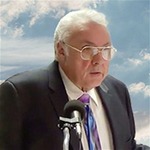
In writing to the Corinthians, the Apostle Paul encouraged his readers to be adaptable, to reach beyond their comfort zones to win others to Christ. So was he advocating for Christians to blend in with the culture? Alistair Begg dives into Paul's purpose and strategy today on Truth for Life as he's teaching from 1 Corinthians chapter 9.
We're looking, then, at these verses under the heading, A Lesson in Adaptability. When we see somebody who does something with great power and influence, we are probably prone to ask the question, Why is he doing this? And how is he planning on achieving it?
And what is it that drives him to that end? And that is essentially what we're doing this morning in listening to Paul proclaim these words to the Corinthian church. And we begin, then, with the question, What are you doing, Paul? He would be able to answer that in one sentence, straightforward and simple.
If you look at the text, you will be able to judge whether I am accurate in asserting this. What are you doing, Paul? Answer, I am seeking to win people for Christ. Paul is in the business of winning, in the old-fashioned business of soul winning.
And he is in absolutely no doubt as to what he's doing. Now, the word which is used here throughout these verses for win is a very graphic word, and it means just what it seems to mean. For example, in Matthew 18, in the instruction which Jesus provided on church discipline, where he said that if somebody was involved in sin and an individual went to them and confronted them, and they listened to them and responded in repentance, then said Jesus, You have won your brother over. It's the same word that he uses there. And it is the same word, the idea of securing as a possession as an indication of a measure of victory. So he is in the business of winning.
You will notice that he repeats this word, win, with frequency. In verse 19, he says, to win as many as possible. Verse 22, I have become all things to all men, that by all possible means I may save some. He changes his word to sozo, which means to save, to rescue, as a slave would be rescued from bondage by the purchase of another. And Paul says, This is it for me.
I want to win. Now, when Paul makes this profession, one of the things, of course, we would just need to do is to say, Well, there's one thing to say that, Paul, but we want to see just exactly what that means in your life. I mean, in the space of four or five verses, you've said, I want to win these people, win these people, win these people. Is that really it for you, Paul?
That's exactly it. Don't you want to see them have Bible studies? Certainly. But they can't have Bible studies unless I win them. Don't you want to see the church built up?
Of course I do, but they'll never be built up unless they're won. Don't you want to see people in accountability groups? Of course I do, but there'll never be any groups to be accountable in unless they're first won for Christ. And his all-consuming passion was to see those who were as yet unbelievers, who were as yet outside the scope of Christ's influence in their lives, coming to faith in him. He had a consuming passion to see men and women come to Christ. Question, was he in line with what Jesus had said? What did Jesus say? I want you to establish an aquarium and to keep it. Did he say, I will make you keepers of an aquarium?
No. He said in Matthew 4 verse 19, Come, follow me, and I will make you fishers of men. Fishers of men. No matter what else, no matter what is supplemental, this is fundamental, says Jesus. I will make you fishers of men, says the children's chorus.
If you follow me, if you follow me, I will make you fishers of men, if you'll only follow me. One of the key ingredients in a life that professes faith in Jesus Christ—indeed, we might say that it is the supreme, evidential element—is not—and get this—that men and women attend church. It is not that they are in Bible studies. It is not that they like to sit around and talk about the implications of the return of Jesus Christ. The supreme, evidential factor of our new birth is that we can no longer keep it to ourselves, that we recognize that this is a day of good news, and there are others who don't know the good news, so every day and in every way we want to win others to faith in Jesus Christ. In accord with Solomon's words in Proverbs 11.30, He that winneth souls is wise. In Paul's words to the Corinthians elsewhere, knowing the fear of the Lord, we persuade men. Christians are in the persuasion business.
I want to win these people. Do you ever go fishing? One of our dear men, one of our elders, took us on a fishing trip out by Putin Bay or something last year. Unbelievable. Burned to a crisp, we sat there drinking gallons of diet pop and eating vast quantities of food, and every time anybody caught anything at all, they were told to throw it back in because it wasn't the right kind.
I had no interest in it whatsoever. I was glad to be in the company, but we had passed many decent golf courses for this experience. And I frankly was not for fishing. Presumably, that's where some of us are this morning.
Fifteen hundred of us sitting in here, ready to do battle in the attack of the evil one, are we? While fifteen hundred to go out fishing? Do you think if fifteen hundred people really went fishing—I don't mean fishing in other churches for people who are tired with their minister. No, no, I'm talking about fishing for people who are agnostic.
I'm talking about talking with our friends in the office when they say, you know, I don't really understand faith. I'm talking about reaching into the lives of our neighbors who never, ever darken the door of a church and have no interest in the Bible and probably have got very little idea whatsoever of the concept of eternity. Are we prepared to take Paul's example here and somebody say to us, What's your purpose in life? What's the purpose of your ministry? I want to win people for Jesus Christ.
Jesus said, I will make you fishers of men. Paul says, You want to know what I'm about? What are you doing, Paul? I'm fishing.
I'm fishing for men. Second question, how are you doing this, Paul? His purpose is clear.
His strategy is equally clear. There's an amazing paradox here in the nineteenth verse. He says, Though I am free and belong to no man—and he's been speaking all about freedom, as you know, as we've been studying this—though I possess this freedom which I have just declared to you, I make myself a slave to everyone. For though I am no man's slave, I have made myself every man's slave. That's a strange statement. Why? Well, we're back again. To win as many as possible.
Every decision he made in his life was oriented around his overarching purpose. Do you want to go there? Question, Will it help me win as many as possible? Should we introduce this ministry? Will it enable us to win as many as possible? You see, he ordered his strategy on the basis of his purpose.
He did not bring a purpose out of strategy. Now, it is the positive dimension of what he had referred to in verse 9 of chapter 8. Remember, he'd said there, Be careful, however, that the exercise of your freedom doesn't prevent people from coming to Christ. Now he turns it around the other way, and he says, By the curtailing of my legitimate freedoms, I'm going to try and make it more possible for people to come to Christ.
Now, let's try and understand this in the time that we have. What Paul is saying here—and you must judge for yourselves whether this is accurate—Paul is modifying—he says, I am prepared to modify my habits, adjust my lifestyle, and set aside my preferences. Let me ask you a question. For what are you prepared to adjust your habits, change your lifestyle, and set aside your preferences?
Hey, this is what I do. And I don't change. Well, are you prepared to change for anything or for anyone?
I'm not sure. Well, are you prepared to adjust your habits, change your lifestyle, and change your preferences for the sake of seeing other people come to faith in Jesus Christ? Are you prepared, along with Paul—am I prepared, along with Paul—to abandon what are my legitimate rights for the sake of the gospel? One commentator says, Paul sought to use the methods which combine the greatest integrity with the greatest impact. That's what we look for—the greatest integrity with the greatest impact. To become all things to all men—which is where we eventually come in this little paragraph here, you'll find that in verse 22 or so—to become all things to all men means assuming different roles in accordance with the way people differ.
It doesn't mean changing our message in the face of opposition. Let him then illustrate his principle. Essentially, what we have here is a lesson in starting where people are.
Starting where people are. So he says, To the Jews I became like a Jew. Why? To win the Jews. You see, when you take away that final phrase every time, the things are nonsense.
Why? So that Jewish people would like me. Well, I mean, that would be valid, and that happens all the time. So some young person listens to this and says, To my friends, I became just like my friends in their lifestyle, their language, and the substance that they used, because I was afraid of my friends, and it was the only thing I could think to do.
That's what you call peer pressure. To say that I sit with a group of guys in the cafeteria who are radically different from me, and I sit with them and listen to them and share with them, without ever compromising my own principles so that I might have the opportunity to proclaim my message, is using wise strategy for the best impact. And that was Paul's approach to the Jews. Of course, he was a Jew by background, but he had been liberated from all of that stuff.
But this is what he says. When I go to Jewish people, I become as Jewish as is necessary in order to work with Jewish people. In other words, I don't berate them for the fact that they have an unnecessary commitment to special days and feasts. If participating with them in certain things opens a door for the gospel, then I'm going to open that door. If it means entering into the purification rites in order that I may gain the opportunity to preach to these people, then we will go through the purification rites. If it means the shaving of my head and the taking of a Nazarete vow in order that I may proclaim the gospel, then bring the barber in and shave my head. See what he's doing?
In order that he might have the opportunity to put himself within the framework of influence. Now, don't let's apply this, except in our minds as we go through. Verse 21, he says, in dealing with the Gentiles, or in contrast to the Jews, those not having the law, he said, I did the very reverse.
When I went into a Jewish context, I was as Jewish as I possibly could. They said, we're having this kind of meal. He said, fine, the meal doesn't compromise my commitment to the gospel. Let's have the meal.
Now I went over to my friend's house. They've got no interest in those days or those ceremonial meals. They hardly even wash their hands before they eat. But I didn't walk in and go, hey, where are the purification jars? Don't you know that I was a Hebrew of the Hebrews? Don't you realize that I am a follower of Jesus Christ, and we always wash our hands?
No, no. He said, I just would sit down, and I would get on with it. I would start where they are. They had no law, they had no religious obligations, so I didn't come to them with a load of religious obligations. They were beyond the pale of establishment and orthodoxy, and so I came to them in this way.
Now, two groups of people would immediately, having read this letter, be really in trouble. The groups we've mentioned before—the Legalists on the one hand, and the Libertine guys on the other—the ones who said, You can't do anything, and the ones who say, You can do everything. Now, when he said that he became like one under the law, the people who are the You can do everything gang say, That's not right. So you will notice in verse 20 that he adds a disclaimer. I became like one under the law.
What is this, Paul? You're a legalist. You're putting yourself back in a wrong framework. Parentheses, though I myself am not under the law. In other words, he's good. You see, he's a lawyer.
He thinks around the corners fast. He knows as soon as he says this, I became like one under the law, someone will put up their hand and go, That's not right. So before they get the chance, he says, And I know it's not right. I'm telling you it's right, but what I am not doing is declaring to you that I am somehow under the law. In the same way, the Legalists, when he says in verse 21, I became like one not having the law, they want to stand by and knock on his door and say, Hey, hey, but wait a minute. Don't you realize that Jesus Christ came to fulfill the law? Paul has to have a disclaimer for them. He says, Though I am not free from God's law, but I am under Christ's law.
And those little parenthetical statements are absolutely crucial. So to the Jews, he became as Jewish as he needed to. To the Gentiles, he became as Gentile as he could. Verse 22, To the weak, he says, I became weak to win the weak. Now, obviously, Paul is not talking here about moral matters. The whole early chapters, the first eight chapters of 1 Corinthians, make that clear. So he is not for a minute saying that in matters of morality, he became immoral in order to win immoral people to Christ. That is to make the Bible a nonsense.
But what he is saying is this. Paul is identifying as closely as he possibly can, stooping down to the level of people's weakness. If they need it in ABCs, although he is one of the greatest intellects of the universe, he will give it to them in ABCs. If they have been tyrannized by religious experience and have come out of a hotbed of absolute nonsense, then he will go as far as he can to identifying the fact that that was a lot of nonsense out of which they came. If, however, they are coming out of a background of religious religiosity, which means a great deal to them, then he will get as close to that as he possibly can by identifying the fact that he too is a religious person, and there is importance in religion, and there is importance in procedure, and there is importance in observation.
Of course, he doesn't believe all of that is important. But he understands that to weak people, he must get to where they are. Now, loved ones, this morning, let us understand this. We need to learn how to adapt ourselves to people in their weakness. That doesn't mean we need to adapt ourselves to people who are stubborn, but to people who are weak. Jesus had plenty to say about the weak, but he also had plenty to say about the stubborn. He told the Pharisees, he said, you are a bunch of blind men, and I don't want to waste my time with you. That doesn't seem loving, but it was because he needed to go to the people who were genuinely interested. Now, what happens here is Paul then summarizes it in this great little statement, so that he says, I have become all things to all men, so that by all possible means, I might win some. In other words, he was prepared to cross the cultural gap rather than asking men and women to cross the cultural gap to him. I wonder, do we understand what that means?
I want to say something to you this morning, and I want to say it to you straight, to my own heart as well. Do you know what danger we are in in this country, of increasing circles of isolationism when it comes to the Christian faith? Do you know how irrelevant we really are? In our cozy little subcultures, with our fine little meetings, and our holy little talks, and our wonderful little events, while our friends and our neighbors, who cannot find it in themselves to cross the great cultural divide which we have built between heaven and hell, between Jerusalem and Gerizim, cannot find it in themselves to walk across the bridge.
And I'm not surprised, and I for one don't blame them. Because Jesus never asked them to. He asked us to walk across the bridge. And Paul said, To the Jew I walk across this bridge one way.
To the Gentile I walk another way. To the weak I start at weakness, because I've become all things to all men, that by all means I may save some. Now, why are you doing this, Paul? That's the final question, and you see it in verse 23.
Why am I doing this, he says? I'm doing it for the sake of the gospel. I want to see, says Paul, the power and reality of the good news spread as far and wide as possible. Let others, he says, be concerned about their rights.
Let others be concerned about their rewards. I want to be concerned about the gospel. I want to see men and women come to faith in Jesus Christ. Now, if your heart says amen to that this morning, I want to ask you what you're prepared to do about it.
What kind of change are you prepared to make? Because you declare this morning you have been reminded again forcibly from God's Word by the example of Paul that you exist in order to win men and women to Jesus Christ. Some of our flames are dim. Some of them are under bushels, under buckets, under Christian buckets, under church buckets, but they're under buckets. And we wonder why no one sees the light.
You can't see a candle under a tin bucket. Are you prepared for some of your Christian friends to say, I think he's really off the wall? Do you know what he's doing?
Do you know where he's going? Isn't that what the Pharisees said? Jesus comes to town, Luke 19. Presumably, the religious people must have said, We've got Jesus coming to town.
It should be a good time. He comes to town, he starts walking around the place, he looks up a tree and sees Zacchaeus. Stops under the tree, looks up, the dirty little cheat Zacchaeus.
Everyone knew he was a dirty little cheat. They didn't all know he was up the tree, but as soon as Jesus stopped and started calling his name, everyone in the place knew he was up the tree. Jesus goes, Hey, Zacchaeus, let's go. We're going for tea. Where? Your place. Fine. Zacchaeus takes him down, and all the Pharisees stand outside, and they mutter with one another, saying, He has gone to be the guest of a sinner.
For what reason? To win the sinner. He didn't become a cheater to win a cheat. But he went in the cheater's house, and the cheater came out a changed man.
All things to all men to save some. It's a church on the west coast. It's late 60s. It's 69.
And of course, many people were coming out of the west coast in the hippie movement. And so the church is absolutely packed, the pastor of worship has begun the service, and as they're all seated, a fellow comes in. Nobody looks after him. It's jammed. Back row, mixed back row, all the way down. He comes to the front looking for a place.
There's no place. All eyes are on him. He has no shoes. His jeans are frayed.
He's got the kind of, if you're going to San Francisco, be sure to wear some flowers in your hair, Luke. And it's all hanging down the side. And he is moving inexorably towards the front. Still, no one moves. No one touches him.
No one guides him. And when he finally reaches the front and it's all full, he looks around and sits down, cross-legged, on the floor, right underneath the pulpit. And all eyes were fastened on him. And eventually, they see the chairman of the elder board gets up out of his seat. So now they're watching him. He's gonna deal with this guy. And he comes across the back, and he comes down the aisle. And the people were watching to see what he would do.
And he came right down, and he sat cross-legged on the floor, right beside the guy. Loved ones, that's what it's gonna take. It's gonna take reading some books, if you're dealing in a world of science. It's gonna take thinking things out.
It's gonna take crossing the barriers that we have made to win people for Jesus Christ. Who was it? It wasn't C.T. It might have been C.T. Studd. It might have been William Booth.
It was one of them. Remember his words, Some want to live within the sound of church and chapel bell. I want to run a rescue shop within a yard of hell. You're listening to Truth for Life. That is Alistair Begg sharing the Apostle Paul's strategy for maximizing opportunities to win others to Christ. In this study in 1 Corinthians, it's clear that Paul was all about the gospel.
He committed himself fully to instructing the early church to hold firm to the integrity of the gospel message, and nothing else. And the book, Gospel People, a call for evangelical integrity, helps us know how to do the same. As you read the book, Gospel People, you will learn why, as followers of Jesus, we should look only to scripture for our instruction. Only to Jesus for our salvation. Only to the Holy Spirit for our regeneration. Ask for your copy of the book, Gospel People, when you donate today to support the ministry of Truth for Life.
You can give online at truthforlife.org slash donate or call us at 888-588-7884. Thanks for studying the Bible with us today. If you were serious about trying to win a competition, you wouldn't prepare just by watching a bunch of YouTube videos of your favorite sport. You would train rigorously. Tomorrow we'll find out why a similar discipline is required to live a life of faith. The Bible teaching of Alistair Begg is furnished by Truth for Life, where the Learning is for Living.