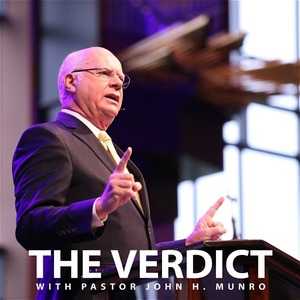
Today on the verdict with Pastor John Monroe.
So in the Jewish calendar, Uh there were these major festivals. Times of praise, times of reunion, of joy, of celebration, of remembrance. And inner study of Esther, we come this evening to chapter 9, and the subject is the Feast of Purim. It's a time of celebration. It's a time of remembrance of the goodness of God.
Welcome to the Verdict with Pastor John Monroe. Have you ever heard of the Feast of Purim? It's a Jewish feast observed to this day to celebrate how God delivered the people of Israel from the threat of extinction. Today, on the verdict, we'll think of this celebration of God's faithfulness and how we should remember his even greater victory over sin and death.
Now, here's Pastor John Monroe with his message: celebration and remembrance. In the book of Esther, we've seen that Haman plotted to exterminate the whole Jewish nation. Such hatred for the Jewish nation could not continues even today. But God watches over his people. and orchestrates a brilliant reversal.
The Jewish nation is spared and the evil Haban ends up hanged on its own gallows. To celebrate the defeat of the enemies of the Jews, there is this wonderful time of celebration. Followers of Jesus Christ don't celebrate the Feast of Purim. but we do celebrate the Lord's Supper. Which is a celebration of the death, burial, and glorious resurrection of our Lord and Saviour Jesus Christ.
So, let's learn more about the Feast of Purim. And see how it is helpful to us who celebrate a greater deliverance than ancient Israel.
So let's open our Bibles to Esther chapter nine. It's quite a long chapter. And we're going to see, first of all, in the first 19 verses, that the enemies of the Jews are. defeated. In self-defense and I emphasize self-defense The Jews slay their enemies.
Let me read the scripture with you.
Now, in the twelfth month, which is the month of Adar, on the thirteenth day of the same, when the king's command and the edict were about to be carried out, on the very day. Isn't God's timing perfect? On the very day when the enemies of the Jews hoped to gain mastery over them, The reverse occurred. The Jews gained mastery over those who hated them. It's not wonderful.
It's a kind of summary. Uh of the chapter. The king of Persia very wisely. gave the Jews the right to defend themselves.
Now in verses twenty through thirty two Our lives, we're going fairly quickly here. We have the institution of the Feast of Furim, let me read the scripture with you. And Mordecai recorded these things and sent letters to all the Jews who were in all the provinces of King Ahasuerus, both near and far, obliging them to keep the 14th day of the month of Adar and also the 15th day of the same year by year, as the days on which the Jews got relief from their enemies, and as the day that had been turned, notice this, a day that had been turned for them from sorrow into gladness and from mourning into a holiday, that they should make them days of feasting and gladness, days for sending gifts of food to one another and gifts to the poor.
So the Jews accepted what they had started to do. and what Mordecai had written to them. For him and the agagite, the son of Hamadatha, the enemy of all the Jews, had plotted against the Jews to destroy them. And had cast pure, that is, cast lots, to crush and to destroy them. But when it came before the king, here's a summary of it.
He gave orders in writing that his evil plan that he devised against the Jews should return on his own head. And that he and his son should be hanged on the gallows. Therefore they call these days purim, after the term pure. Therefore, Because of all that was written in this letter, and of what they had faced in this manner, and of what had happened to them, the Jews firmly obligated themselves and their offspring, and all who joined them, that without fail they would keep these two days according to what was written, and at the time appointed every day, that these days should be remembered. That's it.
These days should be remembered and kept throughout every generation in every clan, province, and city. And that these days of Purim should never fall into disuse among the Jews, nor should the commemoration of these days cease among their descendants. Then Queen Esther. The daughter of Abihil and Mordecai the Jew gave full written authority, confirming the second letter about Purim. Letters were sent to all the Jews to the 127 provinces of the kingdom of Ahasuerus in words of peace and truth.
That in those days of Purim, Should be observed at their appointed seasons as Mordecai the Jew and Queen Esther obligated them. And thus they had obligated themselves and their offspring with regard to their fasts and their lamenting. The command. Isn't this interesting? Yeah.
This young woman. Who we thought was about to be killed, who wondered, if I perish, I perish. Think of the wonder of it. The command of Queen Esther confirmed these practices of Purim. And it was recorded.
So here is a proclamation by Mordecai that annually, on the 14th and 15th day of Adar, the Feast of Purim was to be celebrated. The reason is given in verse 22. This is the day that the Jews got relief from their enemies. The months that have been turned for them. From sorrow into gladness and from mourning into a holiday.
What are they to do on these holidays? Days of feasting. Days of gladness, days of joy. days of sending food to one another. We still do that, don't we?
Potlucks and things like that. It may have been better than this. No green beans, please. Thank you. Sending gifts of food to one another and gifts to the poor.
What was the point? The Jews were never ever to forget. Their deliverance from Haman, the adversary of all the Jews who had schemed against them.
Now this word purim is the plural form of the Persian word pur. In Persian, as in Hebrew, the plural is made by I am.
So it is purim, meaning the lot. The name Was a reminder to the Jews of how God, remember the story earlier, had used the casting of the lot. To deliver them from their wicked enemies. And so Purim was to be celebrated and never forgotten.
So that the Jewish nation would never ever forget the astonishing deliverance. From the hatred of Persia. And how God had delivered them. And Kirim continues today among our Jewish friends. A month before Passover.
Reminding The Jewish people that God had reversed a seemingly irreversible edict. And out of tragedy comes triumph.
Sorrow comes gladness. A day. of triumph. of good over Evil. During the Feast of Shurim, this book of Esther Is read in the synagogue.
As I said before, when Mordecai's name is mentioned, the congregation cheer. When Haman's name is mentioned, people boo. His stamp their feet. I didn't hear any of that. I mentioned that earlier in the series, and obviously you've forgotten.
I thought at least one person would boo when I mentioned Haman's name. You know, I think if you're Jewish your booze would be stronger. Interesting, in the Nazi prison camp. I read that any Jew possessing the Book of Esther was killed. Yet some of the Jews in the Nazi concentration camp wrote copies of the Book of Esther from memory.
Why would it be so important? In a concentration camp, if you're Jewish, a reminder. of God's triumph over hatred and evil. A reminder that however evil our enemy, Good ultimately. Triumphs.
Now what are we to say to this? Just think of this. If the Jews, as they do, during the Feast of Purim, Celebrate their physical deliverance from their earthly enemies, how much more we, the people of God. How much more should we celebrate the victory of our Lord Jesus Christ over our enemies, of Satan, of darkness, of sin, and death itself? And I understand that at the Lord's table, it is a solemn occasion.
It's not a flippant occasion. It's not an occasion when we make jokes, of course not. Uh we are remembering the death Of our Lord Jesus Christ, that never-to-be-forgotten death as he atoned for the sins of the world. But we must never. Also, forget that it's a time of victory, that we are celebrating the victory of our Lord Jesus Christ, that the one who was nailed to the cross, that the one who was buried is risen from the dead and is alive forevermore.
And so Paul says In 1 Corinthians 11:24, do this. in remembrance of me. He says, as often as you eat this bread and drink the cup, you proclaim the Lord's death until he comes. Comes. Remember, Paul says magnificently in Colossians 2:15 that the Lord Jesus Christ disarmed the rulers and authorities.
And he put them to open shame by triumphing over them. Think of our enemy. Far more devious. than the Persians. Our enemy is Satan himself, his sin and his darkness and death.
The wages of sin is death. There is in a sense no greater enemy than death itself. And just as the Jews were under the sentence of death from Haman's edict, so we are under the sentence of death because of sin and Satan. But think of the wonderful grace of God. That the wages of sin is death, Paul says, but the gift of God, the free gift of God.
Salvation through our Lord Jesus Christ. Jesus. No wonder we sing, Man of Sorrows, what a name. For the Son of God who came, ruins sinners to reclaim. Hallelujah.
What? A saviour. Do you understand the magnificent victory? Of our Saviour. That we celebrate a victor, a deliverer far greater than Esther or Mordecai.
We celebrate the Savior who's the king of kings and lord of lords, and this deliverance. Is far greater than the deliverance of the Jewish nation in Persia. The Feast of Purim was a time of feasting and rejoicing, we're told. We faced Not literally on bread and wine. That was the problem in Corinth.
They were making a meal out of it. No, we feast on our Lord Jesus Christ. Remember Peter says Quoting the psalmist, Taste and see that the Lord is good. And so today as we come together then this evening, we are rejoicing. And just as the feast of the Passover was held once a year so that Israel would never ever forget that they were once slaves in Egypt, so the feast of Purim was to be celebrated so that the Jews would never ever forget that they were once on the point of extinction.
But God in His grace supernaturally intervened. With this woman, Esther, with this man, Mordecai, and brought them, as it were, from the very point of death, and did this wonderful reversal. that the Jews then had mastery over The Persians.
Now what about the reversal in your life and mine? Can I remind you apart from the grace of God? All of us were heading to hell. Remember, Jesus said there's only two ways. The way of destruction.
Many are on that. Can you imagine where you would be? Apart from the grace of God, Some of us We have taken our lives.
Some of us would have died before now if left to ourselves, wouldn't we? What an utter mess we would make of our life. Once we were on the broad road, heading to hell itself. with a verdict of guilt over us. Under the condemnation of God, as we're learning from the book of Romans.
But in the triumph of Jesus Christ, that has been reversed.
Now we rest not in our own goodness, We rest in the grace of God because we understand that we are saved not by our works, but by God's grace alone, through faith alone, in Christ alone. It wasn't the brilliance of Esther and Mordecai that was responsible for the reversal. in Persia. It was a sovereign working of God. Yes, he used Esther, he used Mordecai, but it was totally the work of God who once again had saved his people.
And so we come. and we celebrate this great deliverance that we have. And you know, I thought of this as well, that just as the Feast of Purim. would bind together the Jewish nation.
So, the feast of communion binds us together as brothers and sisters in Christ, doesn't it? Because they The blood that cleansed my sin. is the same blood that cleansed your sin. And the Holy Spirit who indwells me is the same Holy Spirit who. And dwells Europe.
And the Christ who saved me is the same Christ who saved. You. And that the God who is my Father is also your father. We are brothers and sisters In Christ. And just as in the Feast of Purim, they gave portions of food to one another, we fellowship together as we pass from hand to hand the bread.
And the cup. And we also show our gratitude, just as the Jewish people were to give gifts to the poor, so we give tangibly. Gifts to the Lord. To be used for the spread of the gospel. To be used for the needy, to be used for the poor.
And we give them as an act of worship to our Lord. How can we who have received so much? We who have been saved by the grace of God, how could we be anything other than generous and giving people? As God in His grace. has saved us.
And communion tells us, as the Feast of Purim also reminded the Jewish people. that God always wins. I realize it doesn't always seem that.
Sometimes it seems that the world wins.
Sometimes it seems the devil is winning. But in the end, God always wins. God is always faithful to His covenant. God is always faithful to His promises. And God has promised that He will always, always take care of His people.
Do you believe that? Do you believe that God is always with you? We have that wonderful song. A reminder. That sometimes in the darkness, sometimes in the difficult day, it's difficult to see the hand of God.
And life can be very, very hard, and devastating situations can quickly come into our life. That is true, but. The Lord's Supper reminds us. that God is with us. And that as we go with the gospel, the Lord Jesus has promised that he is with us to the end of the age.
And all of human history is moving towards the return of our Lord Jesus Christ, when he returns as king of kings and lord of lords, and when all of his enemies will be overthrown, and when Satan himself will be cast into the lake of fire.
So, God, in his grace, reached down. and saved you. Why is God being so gracious to the Jewish nation? I don't know. But I know he's true to his covenant.
I don't know why God is so gracious and patient with me. I don't know why God saved you. Part of it is in the mysteries of God, but rejoice this evening that God and His grace, that you who were once heading, to hell itself that he intervened. And then that day that we sang about, a day that we never want to forget. We heard the sweet call of our Savior saying, Come unto me.
And I will give you rest. Remember that day when you were saved? Remember that day when you heard the call of Christ, and we came and we found rest for our souls? We find forgiveness of our sins. We found that wonderful joy of knowing that now There is no force in the whole universe which can separate me from the love of God, and that God will take care of me.
Every day. Every circumstance. He is with us. And all of these truths come together, don't they? On this simple feast.
You say it's very simple. Isn't that wonderful that it is simple? Only bread and only wine, but to us who believe. It's a sign. Of what God and His grace.
has done.
So celebrate. Praise the Savior. Live for Him. Because we know that soon the clouds will open. And soon our Lord Jesus will come.
And we say tonight. Maranatha, even so come. Lord Jesus. Father, we thank you for Your word, we thank you for your grace. We thank you for this wonderful illustration that we see in your ancient people.
And we thank you that you're true to your covenant, to the Abrahamic covenant. You're a God who never goes back on your word. We do. Father, we are unfaithful sometimes, but you're always faithful. And so We thank you, we reaffirm our trust in you.
That trust can sometimes waver, Father. But we thank you. For our magnificent Saviour. And we thank you that he's building his church and the gates of hell will not prevail against it. We thank you for that mighty day when he arose.
When hell itself couldn't stop him. And he arose and is alive forevermore. And we thank you that we know him. And he knows us. And each individual, every boy and girl and Man and woman who puts their trust in him.
is saved and saved for all of eternity. Thank you. For this simple celebration that reminds us of the wonder of your grace, we thank you. For our magnificent Savior, in whose name we pray. Amen.
This is the verdict, featuring the Bible teaching of Pastor John Monroe. There's still more to hear when John returns in just a moment, so stay with us. From matters of truth and identity, to the subjects of love and grace, our world seems more confused than ever. but to find truth and certainty about who we are and find peace, we must turn our attention away from the world and look to the Word of God. To help you do that, John wrote a booklet titled Eternal Security, Finding Certainty in a Chaotic World.
Through this special resource John shares his personal testimony, along with a careful examination of Scripture, to offer us clarity on matters of eternity. Get your copy today by visiting our website at theverdict.org. While you're there, consider making an investment in this Bible teaching ministry. Whether it's $5, $50, or more, your gift today helps cover the cost of sharing these gospel messages to listeners around the world. And if you haven't already, be sure to subscribe to the Verdict Podcast, featuring John's weekly podcast exclusive called Avizandam.
It's available wherever you get your podcasts, or simply go to our website. Again, that's theverdict.org. The verdict is a ministry of Calvary Church in South Charlotte. We're located on the corner of Highway 51 and Ray Road. If you've been looking for a church home or a community to help you grow in your walk with Christ, we invite you to join us for our Sunday services.
For more details about Calvary and our service times, visit theverdict.org.
Now, here's Pastor John Monroe.
Well, what's your verdict? Can you look back over your life and see how God has worked through you? through the difficult situations for His glory and your blessing. It can be easy to be discouraged. In the midst of our despair, in the midst of terrible circumstances.
But don't give in to the darkness. God has not abandoned you. Today be encouraged. Remember that God is at work in your life. Take time to thank Him for His goodness and grace and for the way of salvation He provides through our Lord Jesus Christ.
Thanks, John. And today we again have the opportunity to include a special Q ⁇ A segment and hear from John on different questions and timely topics. John, for several years in Scotland you practiced law. What made you decide to leave practicing law and go into full-time ministry? How did that happen and what was it like?
Well, it was a surprise to me. I must say I love practicing law. Michelle, I like working with people. I like using my brain. And it was exciting to be in a law practice where we were doing very, very well.
For some time I was a criminal prosecutor. And then for the last five years before God called me into ministry, I was in a private practice. I was a partner and I dealt with mainly litigation.
So I thoroughly enjoyed it. How did God call me? You know, the first conscious Awareness of the spirit working me in that regard was when I went out for lunch with a friend of mine, a fellow attorney. And he said to me, John, do you see yourself being in law for the rest of your life? And I said, well, of course I did.
What a silly question. I was a partner. We're doing very, very well financially. And I had no thought of doing anything else. Later, I was to realize he was going to go into investment business and was wondering if I would join him.
But that question burned into me. And I thought, as I left, I thought that was very arrogant. The way you answered that, shouldn't that be a decision from the Lord? And the Holy Spirit used that question, Michele. to totally change uh the trajectory of my life.
And I realized that God was calling me into full-time ministry. I had read some books by professors at Dallas Theological Seminary. And so I decided I was going to leave my law practice, it was a huge decision, sell my home. And head to Dallas for the four-year program, which in fact I did. When I announced that to my wife, she was totally taken aback, and it took her some time, in fact, some months as we prayed about it.
But then she was totally with me. And so I went from law to grace. And I've never really, really regretted it. I enjoyed being an attorney, but there's no greater privilege than holding up the Holy Scriptures. Thank you, John.
And that brings us to the end of today's program. I'm Michelle Davies, and you're listening to The Verdict with Pastor John Monroe. Today's program was produced and distributed by Calvary Church in Charlotte, North Carolina.