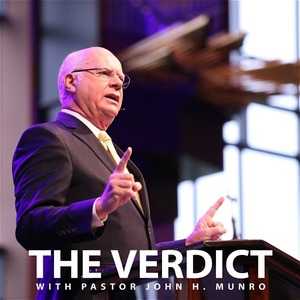
Today on the verdict with Pastor John Monroe. David wants to get back to that time. when he was directed by God's word. He wants to get back to that time when God's hand was on his shoulder. He wants to get back to that time when he's a man after God's own heart.
having a clean heart. and a renewed spirit.
so that the joy of the Lord will be restored to him. Welcome to The Verdict, featuring the Bible teaching of Pastor John Monroe. Senior pastor of Calvary Church in Charlotte, North Carolina. When we make a terrible mistake or fall into sin, we might think that we're beyond hope or beyond redemption. But today on the verdict, we'll be encouraged as we learn from David's unique first-person account of his repentance and restoration.
So with the next part of our study on the life of David, Here's Pastor John Monroe. David, Israel's greatest king. A man after God's own heart had a tremendous fall. In spite of all of his achievements and blessings, he committed the serious sin of adultery. and that sin led to other disastrous choices and sins.
How will David respond? We saw last time that he's confronted by the prophet Nathan. We don't need to wonder about his response. That response is recorded in Psalm 51. Here is a powerful confession of sin.
A powerful repentance. and one that we can learn from. Other people are certainly impacted. By David's sin, including his family and the nation, but most of all. David has offended God.
and David knew better. Let's look then at David's repentance and restoration. We thought of King David's terrible fall. into serious sin. A man after God's own heart.
a man who accomplished so much. A man who was a gifted musician. A poet A writer Israel's greatest king, described as the sweet psalmist of Israel. Commits. Adultery.
Not only adultery, but as we saw, As we looked at 2 Samuel 11, that that sin was Led to other terrible sins. What a fall. And as we thought of King David, we of course reflected on ourselves. And I think all of us acknowledge that not one of us here is exempt. from sin and exempt from Temptation.
Is there anyone here? Who's committed sins of which you are deeply, deeply ashamed. Anyone here? I'm not asking for a show of hands. I think All of us would put up our hands, wouldn't we?
Just think. of the sin of the past. And this evening, we want to think of the mercy of God. We've been singing about it, the grace. of God.
We want to think of David's amazing Unbelievable. Restoration. David writes in Psalm 23, He restores my soul. And when David writes of God, that God is a God of restoration and He restores our soul, He's not writing just out of. Academic knowledge, he experienced the restoration, the forgiveness of God in the very depth of his soul.
And today we're going to. See from the Word of God that sin, yes, all sin, your sin. can be removed. Your sin can be forgiven. 2 Samuel 12 verse 13.
The Lord also has put away your sin, David. You shall not. Die.
So, for those here who are overcome by guilt, by remorse, by shame, by defeat. Here is hope. We're going to look at this magnificent psalm. Psalm fifty-one.
So if you have your Bible there, Turn with me to Psalm I think that David writes this psalm. As he reflects on that moment, that intense moment, When he's confronted, By the prophet Nathan of his sin. and his evil, his wickedness. His deliberate sin overwhelms him. But it doesn't defeat him.
But it turns them to the mercy of God. Because we're learning not only of the depth of our sin, we need to learn of that. But of the glorious grace. of God in the forgiveness. of sin.
Here is one of the most powerful confessions of sin. In all of Scripture. And I want to read, first of all, with you the first seven verses of Psalm I'm reading from the English standard. Yeah. Superscription to the choir master, says Psalm of David.
Notice when Nathan the prophet went to him after he had gone into Bathsheba.
Now verse 1. Have mercy on me, O God. according to your steadfast love, According to your abundant mercy, blot out my transgressions. Wash me thoroughly from my iniquity, and cleanse me from my sin. For I know my transgressions.
And my sin is ever before me against you. You only have I sinned. and done what is evil in your sight.
So that you may be justified in your words and blameless in your judgment. Behold, I was brought forth in iniquity. And in sin did my mother conceive me. Behold, you delight in truth in the inward being. And you teach me wisdom in the secret heart.
Purge me with hyssop. And I shall be clean. Wash me. And I shall be whiter. Then snow.
David is saying in these first seven verses, then, that when we confess our sins, God graciously forgives our sins and restores us. Do you hear that? When we confess our sins, God graciously forgives our sins and restores us. David here is confessing his sin. He acknowledges his guilt.
2 Samuel 12, verse 13, David says, I've sinned against the Lord. David could have given many excuses for his sin. He could have talked about the stress he was under in being king of Israel. People today talk about stress, everybody's stress. Can you imagine the stress of being a king?
of Israel and Judah. He could have talked about some of his unloving wives.
Some of them weren't very good wives. He could have talked, as it were, in psychological terms about his inner child crying out for acceptance is The insensitivity of his older brothers, he was the youngest, and they looked down on him. He could have talked about the post-traumatic stress of being persecuted by Saul for many years as Saul was trying to kill him. He could have talked about the loneliness of being the leader. of the nation, but he does none of these things.
He offers no excuses. He offers no rationalizations, he blames no one. Psalm 32 verse 5. I acknowledged my sin to you. And I did not cover my iniquity.
I said, I will confess. My transgressions to the Lord. And you forgave the iniquity. of my sin. That's key, isn't it?
David? Takes responsibility for his sin. And he confesses His sin. Did you notice in the superscription in Psalm 51? That David makes no mention in the Psalm or in the superscription.
of Bathsheba and the circumstances of his particular sin. How unlike, can I say, modern psychology and secular counseling? Where it is often thought that the answer to our problem is found within ourselves. Therefore, we need to talk about our struggles, our past, our feelings, and our hurts. David doesn't do that.
In Psalm 51, he doesn't do that in Psalm 32. He acknowledges and he knows That his problem is sin, and that sin, as we will see from Psalm 51, is multifaceted, it is multi-dimensional. He acknowledges his sin.
Society trivializes, rationalizes, excuses Redefines, denies, and even laughs at sin. Even the concept many people would deny that there is such a thing as sin. You know, a pig is never concerned. That is dirty. I like watching pigs.
My wife can't understand it, but I do. There's something Interesting about pigs, aren't there? I'm the only one that thinks that, obviously, by your expression. But you watch pigs. They don't know they're dirty.
In fact, they enjoy the dirt. And spiritually speaking, Unless we acknowledge that we were that we are spiritually dirty that we will never know God's forgiveness. David's problem was not his wives. They certainly weren't perfect. His problem was not his loneliness as a king.
His problem was not the lack of appreciation of the nation. The problem was not his upbringing. The problem wasn't beautiful Bathsheba. The problem was not the traumatic experiences of his past, you could say, well, these were factors But David goes to the very root of the problem. He deals with the basic problem that he has, and that is sin.
Notice what he says, verse 1. Have mercy on me, O God, according to your steadfast love, according to your abundant mercy. Blot out what? My. Transgressions.
David knows that he has First word for sin here, transgressed. The idea of transgression is a deliberate rebellion against God. It's not a mistake, it's not an indiscretion. He hasn't slipped up. It's not that he made a mistake.
No. It was a deliberate act or acts pursued over a period of time. Deliberately, he went against the law of God. He knew better. He was the king.
He knew the law. He studied the law. He knew exactly what he was doing. He had transgressed God's law.
Furthermore, he had Presumed on the love of God. He had transgressed not only the law. Against Which had broken. He transgressed against the love of God. God had showered David, had taken this lowly shepherd boy from Bethlehem, the little town of Bethlehem.
and over a period of years had made him king of Israel, king of Judah. And God would have given them even more. Tremendous blessings. He knew better. And he says yes.
I have Transgressed. You ever transgressed? You know what you're doing is wrong. You know it's against the word of God. Your conscience convicts you, and yet you have done it.
That is transgression. Here is the line drawn, and you step over it. That's the transgression. But he also refers to his iniquity, verse 2. Wash me thoroughly from my iniquity.
Not only has he transgressed, he's committed iniquity. This word iniquity refers not just to the conduct, he's gone astray, he's turned aside. This refers in part to his character. David realizes that he's twisted. There was a twisted aspect to his character.
There he was, all of the advantages, and he took another man's wife.
Furthermore, he plotted and schemed that he put that man's wife to death. He had lied, he'd covered up. Yes, he had transgressed. but it also committed En echo day. Anyone here committed in equity?
You look back and something you did, something you said, and you can hardly believe. that you did that. He had gone astray.
Furthermore, verse 2, He had sinned. Wash me thoroughly from my iniquity, cleanse me from my sins. Send. What is sin? Sin is a falling short of God's standard.
It's a missing of the mark. Many of us have memorized Romans 3:23. We all have. Sinned and come short of the glory of God. Sin is a missing of the mark, a missing of the target.
He had come short. Yes, you did, David. You were created for the glory of God, but you have failed. You have come short. You have been enjoying yourself.
Rather than enjoying God. In particular, He had come short. Of the Ten Commandments. He had broken them. He had committed adultery.
He had committed murder. he had committed covetousness. He had been a false witness. At least four. Of the Ten Commandments.
He had deliberately. broken and he acknowledges that. Notice Transgression. Iniquity? Sin are all measured against the law of God.
against God's standard. Not the norms of society. It's not just that he went against the culture. No, he realizes I've transgressed. I've committed iniquity.
I have Yeah. You say, what's the point, John? The point is this. David spells it out in verses 3 and 4 that sin And its basic form is rebellion against the Holy God. He says, I know my transgression, and my sin is ever before me.
Notice the words, my, my, and I. David is taking responsibility. for his transgression and iniquity against You verse 4. You only have I sinned and done what is evil in your sight. And you say, Well, your sin was against Bathsheba, your sin was against Uriah.
Your sin was against your own wives. Yes, that's true. But David accepts responsibility before God. He doesn't point to other people. In the Garden of Eden, Adam blames Eve.
Eve blames the serpent. And ever since. We have this tendency, don't wait when we do wrong, to blame someone else. Wasn't me, it was him, it was her, it's not my fault. We do that as families.
I grew up in a large family. We're always blaming the other. I didn't start the fight, mom. It was him. It was her.
pointing the finger Portraying herself as a victim. Rather than accepting personal responsibility of our wrongdoing. Don't do that with God. David sins terribly, but here he gets it right. He confesses that he is the sinner.
Isn't this what is lacking today? An acknowledgement. of sin that we've trivialized. Sin I mentioned last week of the prodigal. On the way back from the far country, what does a prodigal say?
Yes, he'd sinned against his father, but As he comes back very wisely, he says, to God, I've sinned against Heaven. That's it. It's a sin against God. God. Yes, our sin drastically impacts our relationships with others.
Our sin destructively impacts ourselves. That is true. But isn't it the case that we have forgotten, haven't we, that our sin most of all offends a holy God? This is why in our worship We want to keep the focus on God, the holiness of God, the greatness of God, the size of God. Because otherwise We think, I'm not so bad.
I'm just like you. Yeah, I messed up, but you messed up as well. No, it feels too not so bad because we've all messed up. That's not the point, is it? David is not saying other people have sinned.
He's saying, no, I. have Yeah. That is awareness. That God is offended is essential. He's the one that gives us the commandment.
He's your creator. He's the one that you're accountable to. And he calls his sin Evil. Did you catch that, verse 4? I have done What is evil in Your Yeah.
Against you, you only have I sinned. He is the anointed of God. He's the king, but he has been against God. Do you realize that about your sin? That your sin is against God?
Yes, other people are affected by it. Others are disappointed by it. Others have caused great heartache through your sin and through mine, but above all, it's against. God. Personally acknowledging the depth of our sin is essential.
This, of course, is a work of the Spirit of God within us.
So often we have this approach.
Okay, I messed up. I'm sorry. What else do you want me to do? Let's go over it, move on.
So what you say? Dear wife, dear husband. To your friends. When you sin against them, oh, get over it. Yeah, I mess up.
I'm sorry. What would you want me to do? That's not what David's attitude is it? You see, to think superficially of your sin It is to think superficially of God's grace and of God's forgiveness. What is true repentance?
Repentance is a turning from our sin. It's a change of mind which leads to a change of heart, to a change of conduct. It's a turning From our sin and the turning to God. It's a hating of our sin, and it's a loving of God and His righteousness. If you're involved in sin, Will you stop justifying yourself?
Will you stop making excuses? Will you stop rationalizing your sin? Will you stop pointing to other people? Yes. There may be Some truth in what you're saying, but that's not the basic problem.
Your problem is David's problem. I've sinned against God.
Now notice what happens. God is gracious. and compassionate. When you come before a holy God like that, No wonder David begins by saying how wonderful in verse One. What does he do?
He asks for grace. He asks for mercy. Have mercy, verse 1 on me, O God. According to your steadfast love, according to your abundant mercy. I'm reading from the English Standard Version, and they translate this Hebrew word hen as mercy, but it could also be translated grace.
The New American Standard Bible that I used for many years says, Be gracious to me, O God. According to your loving. Kindness. David, as he comes before a holy God, what is he asking God for? Justice?
Not at all. He's asking for grace. He's asking for mercy. He's immediately expressing his utter dependence on the mercy of God. And the grace of God.
What's grace? Grace is undeserved favor. David realizes he knows the law, he deserves death. He deserves to be taken off the throne. And killed because of his deliberate.
Sense. He doesn't try to justify himself. He realizes he is utterly Dependent upon the mercy of God and the grace of God. God's free grace is the only basis for his approach. David can do nothing.
He can lay no claim. In asking for the forgiveness of his terrible sins, there is no sacrifice that can deal with this. He needs forgiveness from God. He needs mercy and grace from God. If you receive justice under the law, He would have been stoned to death.
He's totally dependent. Upon grace. And he says so beautifully. Have mercy. On me.
Oh God. Mercy. And grace. According to your steadfast love, this grace, this mercy, where does it come from? Oh, it stems from, it flows from.
God's steadfast love, sometimes translated his loving. Kindness. Be gracious to me. O God, according to your loving kindness, according to your steadfast Love. David knows that although he has sinned so badly, that God still loves him.
and that God's steadfast love His covenantal Love is the very ground, the very basis of his grace and of the mercy and the forgiveness. This grace flows from the greatness of God's abundant mercy or compassion. This Hebrew word translated abundant mercy or great compassion is related to the word for womb. Just as a mother who has borne a child for nine months or so in her womb has a deep, deep love and compassion for the child, so God is full of compassion. For David, isn't that amazing?
Have mercy. O God, according to your steadfast love, according to your what? Abundant. Mersey. See David.
is going to find complete forgiveness. This is the verdict with Pastor John Monroe, and the beginning of a message titled David's Restoration. John will be back with more in just a moment, so stay with us. And as we continue in our ongoing study on the life of David, We want to make sure you don't miss out on the valuable study guide that goes along with each of these daily lessons. To help you follow along and interact with Scripture during this series, John has created a special printable listening guide full of insightful notes, engaging questions, and inspiring prompts, so that you can apply these biblical teachings to everyday life.
Just go to our website to download your free copy of the Life of David Listening Guide. You'll find it at theverdict.org. While you're there, consider subscribing to the Verdict podcast if you haven't already. Along with these daily messages, subscribers also receive Avizandam. John's weekly take on current events and biblical topics.
Each Tuesday, he offers the kind of careful consideration that Scottish law calls avizandam. bringing biblical wisdom to the issues we're all thinking about.
So, just go to your podcast app and look for the verdict with Pastor John Monroe to subscribe. We'd also like to invite you to visit us at Calvary Church here in Charlotte, North Carolina, home of the verdict. Whether you join us in person or through our online services, you'll find a welcoming community centered on God's Word. You can learn more about our church and service times at theverdict.org.
Now, here's Pastor John Monroe with closing remarks.
Well, what's your verdict? What do you think of David's repentance? Doesn't the enormity of the sin overwhelm him? What about you? You too have fallen into sin.
What about your repentance? You may have cried. You may be sorry you've been found out, but have you truly repented? Have you experienced the restoration of God? What happens next?
How does David go on? Does he continue to have a close relationship with God? Join me next time as we continue to think of David's repentance. And let's learn from a man broken before God. Thanks for joining us today on The Verdict.
I'm Michelle Davies. Today's program with Pastor John Monroe was produced and sponsored by Calvary Church in Charlotte, North Carolina.