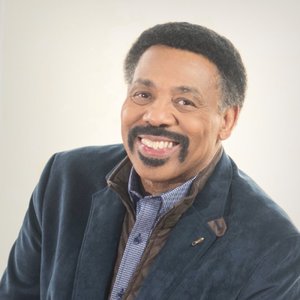
The reason so many Christians see so little is they believe so little. Dr. Tony Evans says belief can be the key to unlocking divine insight. Seeing comes after believing. Faith must precede sight. Your faith will let you see for it. This is the alternative broadcast featuring the timeless biblical teachings from the archives of Dr. Tony Evans.
How often have you followed your GPS directions to a place you've never been? Trusting the root will lead you there. Well, faith is acting on God's guidance, trusting He sees the destination even when we can't. Today, Dr. Evans explores the transformative power of faith, as Jesus calls His first followers. Let's join him in the Gospel of John. We are now picking up in chapter 1, beginning at verse 43. The next day, Jesus purposed to go to Galilee, and He tells Philip to follow Him.
This invitation to follow Him is an invitation to become a disciple. So Philip finds his friend, Nathaniel, verse 25, and says to Nathaniel, we have found him of whom Moses in the law and the prophets wrote, Jesus of Nazareth, the son of Joseph. Now Nathaniel says to him, can any good thing come out of Nazareth? Nazareth was a city with a poor reputation. Plus, Messiah was going to be born in Bethlehem. So he said, what's Nazareth got to do with what you're talking about?
That was the city that Jesus grew up in. And so Philip tells him, well, don't take my word for it. Come and see for yourself. We challenge him to check out Jesus on his own. Come and see, verse 46. So Nathaniel is on his way at the invitation of Philip to check Jesus out himself. When he comes, Jesus says in verse 47, Behold, an Israelite indeed, in whom there is no deceit. So Nathaniel is walking to Jesus, and Jesus, before Nathaniel has uttered the word, says, You're an Israelite, and you have no deceit. Nathaniel's response to just that short statement is mind-blowing. He says, How do you know me? Okay, we've never met. You called me an Israelite, and you talked about my character, that I have no deceit.
But he's talking about something deeper. Jesus answered and said to him, Before Philip called you when you were under the fig tree, I saw you. Jesus tells him where he was, who he is, and he tells him what he was thinking about.
You're an Israelite. Before Philip came and told you, Come see me, I know where you were, where you were sitting, and I know the kind of tree you were sitting under, even though I wasn't there. So Jesus Christ, of course, is showing his omniscience, his all-knowingness. And you are without deceit. Jacob was a man known for deceit. Genesis 27, verse 35, He deceived Esau out of his birthright. Jesus is literally saying, You are a man who has no deceit. You're not like Jacob, because you were under the fig tree, and you were thinking, and you were thinking about Jacob, who was a deceit, and you're not like him. Now, how do I know that Jesus is talking about not only where he was located, but what he was thinking?
Look down further. Nathaniel answered him, Rabbi, you are the Son of God. So him just hearing this, let him give him everything he needed to know about who Jesus was, the Messiah and the Son of the living God, and you are the King of Israel.
Well, wait a minute. All he said was, I know who you are, I know where you were sitting, I know the kind of tree you were sitting on, I know your character. But then he says something else. Jesus answered and said to him, Because I said to you, I saw you under the fig tree.
Do you believe? You will see greater things than these. And he said, Truly, truly, I say to you, you will see the heavens open and the angels of God ascending and descending on the Son of Man.
But wait a minute. That's what Jacob saw. Jacob saw the angels of God going from heaven to earth as messengers, bringing heaven's answers to earth when he was meditating in the Old Testament, and he was a deceiver. He says, You're going to see what Jacob saw. See, when he heard, Jesus identified him where he was sitting meditating under a tree, what he was dealing with, the deceit of Jacob, which was not his character, what he was thinking about regarding Jacob, the angels of God going up and down the ladder. He tells him, I'm going to let you see what Jacob saw, because that's exactly what you were thinking about, the deceiver.
Well, Manuel's mind has been blown. He said, You know me and you never met me. You know where I was and you weren't there. You know what I'm thinking about, and now you're going to apply the Old Testament to me right now. And Jesus says, And I'm going to let you see things because you believe what I said. Since you believe what I said, you're going to see.
So here is the principle. Seeing comes after believing. Now, I know some of you may be from Missouri, but in the Bible, as you'll see in other places, seeing comes after believing. Faith must precede sight.
And because he believed, and he believed for good reason, that Jesus was who he was declared to be, who Philip said he was, and now he experiences it for himself because he had come to Jesus on his own, Jesus says, Now I'm going to let you see more. And what I'm going to let you see is the heavens open and the angels of God ascending and descending on the Son of Man. I'm going to be the ladder.
I'm the ladder in the Old Testament, and I'm your ladder. And what will this ladder show you? It'll show you angels moving down to earth and going back to heaven. All that simply means is you'll see more of the supernatural.
That's what it means. You'll see more of the supernatural. Your faith will let you see more. The reason so many Christians see so little is they believe so little, even though Jesus has declared and demonstrates throughout the book of John, he is who he said, who he declares himself to be. So he's going to see more of the supernatural, and he's going to see it on the third day.
Remember, there are no chapter divisions in the—when the Bible is written, man added those to help us find things more quickly. So he tells you that on the third day, after he tells him you're going to see something, we have this miracle of the wedding at Cana. So he's going to see a miracle. So let's look at this miracle. There's a wedding in Cana, and the mother of Jesus was there, and Jesus and his disciples were invited to the wedding.
So let's get this done. Jesus didn't spend all his time in church. The wedding is a social event. He's been invited to a wedding, and he goes to the wedding.
He's living in the context of human activity, and so he goes to the wedding, and there's a problem. Verse 3, the problem is they run out of wine. There is no wine. Now you have to understand, in the New Testament days, weddings lasted for like all seven days.
I mean, it would be—it was a long, extended celebration. And so they ran out of wine, which is used in the Bible as a place of joy, not in terms of drunkenness, but in terms of celebrating with joy. The Bible often talks of wine in the context of joy. So this was a joyful occasion, and the wine had run out, because it was a wedding. Jesus—so the mother of Jesus says to him in verse 3, they have no wine.
It ran out. Now, she tells Jesus this because she knows who her son is, and she knows that he can fix this problem. He can solve this problem. So she comes to him. He says to her, woman—now I know that that sounds odd to us, but that was normal communication back then. He says, woman, what does that have to do with us? My hour has not yet come.
So that tells us what she was asking by his answer. She says, they're out of wine. This is the time to show your stuff. Let them see who you really are, because they don't know who you are. So why don't we use this wedding as an opportunity for you to reveal your deity? He says, my hour has not come. This is not the time and the place to manifest my supernatural activity. However, I will solve the problem.
I just won't advertise me when I do it. So the hour, meaning the hour of public advertisement, he says, I will now do it, but not to advertise me. His mother said to the servants, whatever—and there's a great lesson here—whatever he says to you, do it.
Now this is the lesson that we must all learn and grow to learn. God often doesn't explain Himself in advance of our action. He tells us what to do, but He doesn't always explain how He's going to do what He's going to do based on what we've done. Dr. Evans will have more on a lesson in faith when he continues our study from the Gospel of John in just a moment.
Don't go away. The thing about serving an infinite God is that no matter how much you know about Him, there's always more to learn. So whether you're brand new to Scripture or an experienced ministry professional, there's something for you at the Tony Evans Training Center.
You'll find online courses covering core concepts of the faith. Working at your own pace and schedule, you'll dig deep into the historical context of the book, uncover the key teachings, and learn how to apply them in real-world situations. There's lots of exclusive content from Dr. Evans to keep you interested and motivated, and an online forum where you can ask questions, get answers, and collaborate with other students. The more you learn, the more you'll want to learn.
Give it a try. The Tony Evans Training Center. A world of discovery, anytime, anywhere.
You can find out more about the Tony Evans Training Center when you visit our website at tonyevans.org. The lesson we're in the middle of today is just one installment in Tony's 14-part sermon series on the Gospel of John. In this study, Dr. Evans explores the words, thoughts, and actions of Jesus as recorded in John's first-hand account of the Savior's life.
You'll find comfort and hope as you more fully understand Christ's divine mission and be encouraged to live a life of purpose in light of His love and sacrifice for humanity. This complete study is available for your own personal audio library on CD or digital download, and it even includes material we won't have time to present on the broadcast. This is a valuable collection of messages, and for a limited time, we're making them all available bundled along with Tony's classic book, Dry Bones Dancing, a look at how to inject new life and vitality into a faith that has grown old and dusty. Get them both as a gift with our thanks when you make a donation toward the alternative broadcast ministry. You can do that online today at tonyevans.org.
Details of the special offer are right on the homepage. Again that's tonyevans.org, or reach out to our resource center at 1-800-800-3222 for some in-person help. That's 1-800-800-3222. I'll repeat our contact information for you after the second part of today's lesson.
Here's Dr. Evans once again. Now there are six water pots containing twenty or thirty gallons each. So you've got between a hundred and twenty, a hundred and thirty gallons containers that they use for their Jewish purification. Jesus said, fill the water pots with water so they filled them up to the brim.
They needed wine. He tells them, give him water. The point that you and I need to grab from this is to give God something to work with. He calls them to do something before he does something because faith without works is dead. A lot of people say, well I'm trusting God, but they haven't done what he told them to do. A lot of people say, I'm waiting on God. When God's answer is, I'm waiting on you. You give God something to work with if he tells you to do something.
Even though you don't understand how you doing something will affect the situation that you're facing. The water became wine after they put the water in the containers, and by the time they get to the head waiter, it's been transformed. God transformed obedience into a miracle.
We all need miracles, but are you giving God something to work with? So by the time they get to the head waiter, he takes the water which becomes wine and did not know where it came from. And the head waiter called the bridegroom. He said, where's this wine?
Because last time I checked, we didn't have anything. He said to him, every man serves the good wine first, and when the people have drunk freely, then he serves the poor wine, but you have kept the good wine until now. Now what does that tell you about Jesus? When he moves, it's going to be the best thing for you. They thought the best was already gone, and the best hadn't even happened yet because Jesus hadn't gotten involved yet.
So I don't know what you need to be transformed, changed, reversed, flipped. Just make sure you are positioned yourself to whatever he's asked you to do, because some of his best work is done on the back end. He told Nathaniel, you're going to see heaven. You're going to see the supernatural. You're going to see angels moving up and down on the Son of Man that is fulfilling the wishes of Jesus Christ. Some of Jesus' best work is going to be done when you are on empty. Oh, did you hear me? Some of his best work is going to be done when you didn't run out of gas, you'll get up and go.
It's gone. Oh, see, that's when he can show off because it's going to be better than anything else. Some of his best work is on the back end, and it is transforming in nature. And so, this is the beginning of his signs. Verse 11 says, in other words, he's just getting started, that Jesus did in Cana of Galilee and manifested his glory and his disciples believed in him. So this was for the benefit of the disciples, not for the crowd. The crowd never found out how this happened.
The crowd never found out. So he does things for his disciples to develop their faith, to let you grow stronger. If God wants to take you to a deeper spiritual level, he will let you get on empty. And then when you obey, at the right time, the transformation of whatever is in the context of that particular situation according to his will can happen. So as the song says, don't give up on God, even if you run out on empty.
Make sure you got some water in the pot. Give him something to work with in terms of obedience. So it's now the Passover, verse 13, and Jesus then went up to Jerusalem and he found in the temple those who were selling oxen and sheep and doves and the money changers seated at their tables. And he made a scourge of cords and drove them out of the temple with the sheep and the oxen, and he poured out the coins of the money changers and overturned the tables. And to those who were selling the doves, he said, take these things away. Stop making my father's house a place of business.
What is going on here? Jesus cleanses the temple, which was a fulfillment of prophecy, Malachi 2 15, that Messiah would cleanse the temple. He turns, because they had turned worship into a place of commerce. God is not against commerce, but they had misused the temple and turned it into a business deal. Now what were they doing?
Well, you got money changes, he says. The people came from different places to worship at the temple. So they had to exchange the money where they came from into the Roman coins so they could use and buy what they needed to buy to offer for sacrifices. Well, the leaders had turned it into a profit-making business that had nothing to do with worship, but it had only to do with making money. So that worship was no longer the central purpose for people gathering. It was a gathering of business, and unfortunately, many ministries exist for business. Nothing wrong with legitimate business, but once it trumps worship, it becomes illegitimate.
And later on, he's going to say, you've turned my house into a house of thieves. Because when they exchanged money, they were charging exorbitant interest rates. They were robbing and stealing, and that's why he calls them later on a den of robbers. It was the nature of how they were doing business in the house of God. They had turned it from something other than what the temple was meant to be.
Zeal for God's house would consume him, which was what the prophet-predicted Messiah would have. What sign, the Jews say, do you show us of your authority for doing such things? You turned over the temple, run us up out of here.
Who gave you permission? Who died and made you boss? And this is when Jesus speaks. He says, destroy this temple and in three days, I will raise it up. Because he knew they were threatening him, basically.
The Jews says, it took 46 years. So they didn't know what he was talking about. It took 46 years to build this temple, and you will raise it up in three days? Because they're thinking physical, but he's speaking spiritual. By this, he was speaking of the temple of his body. You will find regularly Jesus speaks in unclarity, because it would be kind of natural for them to think he's talking about the physical building, since he's just disrupted things in the physical building, but he was talking about his body. But he will speak disruptively or unclearly.
Now, let me tell you why. Jesus will often speak in parables or something that is vague or camouflaged, because when he is rejected, he will not give you more light. The Scripture puts it this way, he that has more shall be given to him, but he that does not have that which he has shall be taken away. That means he will give more light to people who really want light, but to people who are rejecting, then he will remove light.
And so, he would speak in ways that the disciples could understand, but the people couldn't, because they came to him in unbelief. Dr. Tony Evans on the important role faith plays in our understanding of the world. Today's lesson is the second in Tony's study from the Gospel of John. As I mentioned earlier, all 14 full-length messages in this sermon collection can be yours with our thanks if you'll make a donation to help us keep presenting these life-changing messages to a world in need of good news.
You'll receive the complete two-volume series on CD or downloadable MP3s. And as a special bonus, you'll also receive Tony's encouraging book, Dry Bones Dancing. Take advantage of this limited-time offer by calling for details at 1-800-800-3222. Resource team members are on hand 24-7 to help you. That's 1-800-800-3222. Or make the arrangements and get your digital downloads right away at tonyevans.org. Again, that's tonyevans.org. Parents will give responsibilities to their children based on their maturity, and in a similar way, God does the same for us. Tomorrow, Dr. Evans takes a look at how Jesus challenged his followers to consider not just the desire for spiritual growth, but their capacity to receive it. Be sure to join us for that.