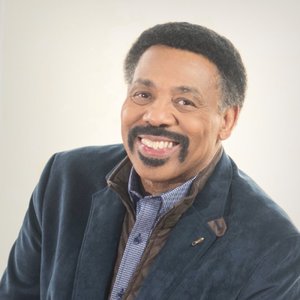
The Bible does not have authority in the lives of most believers. Dr. Tony Evans says many Christians doubt the Bible's power because they misunderstand its source. A lot of us believe it's the word of man about God, rather than the word of God to man. This is the Alternative Broadcast, featuring the timeless biblical teachings from the archives of Dr.
Tony Evans. When it comes to hearing from God, people may ask, "Why just the Bible?" Well, today, Dr. Evans explains why the collection of books we call Scripture is complete, trustworthy, and final. Let's join him as he presents this important look at how God chose to speak, and why that matters today. When we talk about cannon, we're not talking about a gun that fires.
The word cannon was used; it meant a reed, and this reed was used like you would use a ruler today to measure something. While this reed or cannon became that which measured a standard.
Something that would be the standard for something that would become the rule or the guideline or the boundary.
Well, when applied to the Bible, the word "cannon" came to be used of the completed list of books that make up the Bible. When we talk about the canon, we're talking about the books. That make up the Bible. Remember, the Bible is one book composed of sixty-six books written by over forty different authors over a period of fifteen hundred plus years. And these sixty-six books—thirty-nine in the Old Testament, twenty-seven in the New Testament—make up the canon or the rule that God established.
For the revelation that he wanted recorded, inspiration, and passed down to man, the Bible is the complete and binding, determinative standard for rule, faith, and life, by which every other writing, every other concept, and every idea must be measured.
So that's where canon is. It's the standard or the measuring rod for anything else that's written, for anything else that's thought, idea, for anything else that's communicated or any other concept. The Bible is the standard. The question of the canon is: How do we know which books should have made up the Bible? There were plenty of books written that are not in the Bible.
How do we know that somebody else can't come up with a new book and say this book should be in the Bible or part of the canon, part of the collected books that make up the Bible? At the heart of this, we must understand a very fundamental principle, and that is. Man does not determine the canon; God does. Man only recognizes the canon that God has set up. The chief standard is this: that the books placed in the Bible had to have been written by a prophet or an apostle.
Prophet in the Old Testament, Apostle in the New Testament, or someone operating under their authority. The first prophet that God spoke through is Moses. We get a little bit of that in Exodus chapter twenty-four. Verses three and four. Then Moses came and recounted to the people all the words of the Lord and all the ordinances, and all the people answered with one voice and said, "All the words which the Lord has spoken, we will do." And Moses, here it is, wrote down all the words of the Lord.
So God spoke revelation. Moses wrote it down. Inspiration. Then he arose early in the morning and built an altar at the foot of the mountain with twelve pillars of the twelve tribes of Israel.
So then there was a record. Moses heard from God. He made a record of what God had said.
So that there was now a recording of events that God wanted recorded. How do how do we know what happened in Genesis one in the beginning? God created the heavens and earth.
Well, the only one way we know that it was written down. That's how we know that. Who wrote it down? Moses. Where did Moses get the information?
Well, remember all the nights he was spinning up there in the mountain. He was getting private consultation on events that had already taken place that no human being was around to witness when they took place. God told him directly. How do we know there's a heaven? The same way Moses found out that the earth was created by God.
God wrote it down. The reason we know that there's an eternal future is because God had it written.
So when it was written down. It became part of the written documentation that later on would be made part of this canon. In fact, the scripture goes on to say that there was strict guidelines when God spoke to a prophet, and this is some information you can even use today. Look at Deuteronomy chapter eighteen. God says in verse eighteen, Deuteronomy eighteen eighteen, I will raise up a prophet from among the countrymen like you, and I will put my words in his mouth, and he shall speak to them all that I commanded.
Because God spoke through the prophets, and it shall come about that whoever will not listen to my words, which he shall speak in my name, please notice that he's speaking, but I'm talking.
Okay, he's just the mouthpiece. I am the spokesperson. I myself will require it of him. But the prophet who shall speak a word presumptuously in my name, which I have not commanded him to speak, or which he shall speak in the name of other gods, that prophet shall die.
Now, don't be in a hurry to be a prophet.
Okay. In other words, if you gonna say God said, and you speaking on behalf of God, so you walked out there and you said, "Let me tell you what God told me to tell you," and God says, "And I didn't tell him to say that." You will know that I didn't tell him to say that. There will be no question about whether I told him to say that. You know why? Because he won't be saying anything else.
He will die.
Now, do you think there was a long line of people volunteering to be a prophet? No, because that person was responsible for speaking the very words of God. He had to communicate what God had said.
So God spoke through the prophet. It was recorded in a book. But now we go one step further. The book became the standard by which the people of God were supposed to live.
So, what made it canonical or part of the canon? God said it. A prophet got it. The prophet wrote it. But it became now the measuring stick.
Or the standard by which the people of God were to live their lives and function. In other words, God didn't give the Bible so you would have reading every day. He didn't give the Bible just so you could have some spiritual words to pick up. No, no, no. He gave the Bible so that it would be the standard for the life of the person who received it.
Look at Joshua, chapter one. Verse eight, talking about the book that Moses had composed, which basically are the first five books of the Bible. Joshua, who's the next generation, verse eight, this book of the law.
So now we've already got a book that's a very small book because this is the only part of the Bible that's been written. This book of the law shall not depart from your mouth. But you shall meditate on it day and night, so that you may be careful to do according to all that is written in it. For then you will make your way prosperous, and you will have success.
So, why are we failing? Because we're not following. We like parts we like. We don't like parts we don't like. We do the parts we like.
We don't do the parts we don't like, and we wonder why we have unsuccessful lives. The canon were the books God chose that the people were supposed to follow, not simply the book God chose that the people were supposed to read. And so that would be the canon. Let's look at another verse in Joshua. Joshua twenty four, the last chapter of the book.
Verse twenty six, Joshua twenty four, verse twenty six. And Joshua wrote these words in the book of the law of God, and he took a large stone and set it up there under the oak that was by the sanctuary of the Lord.
Now, please notice this: Moses wrote the book, but guess what Joshua does? Add to the book.
So God is building His book over time. He said something through Moses.
Now he's giving additional data through Joshua. He tells Joshua to write it down. Why does he tell Joshua to write it down? Because God wanted it as part of His canon. He wanted it to be passed on to the next generation.
So the Bible is an accumulated document over time, not a one book wonder that was written by one person. Because it was written in stages as the people had need for more information.
So you have an accumulated document again, spoken by God. To a prophet or somebody functioning underneath of a prophet, that was to be the standard whereby the people of God were to live, and that standard didn't stop with the Old Testament. We'll see how divine revelation continued through Jesus and the gospel message when Dr. Evans returns in just a moment. First, though, be sure to check out how you can receive a copy of Tony's current audio series, *The Glory of God's Word*.
This ten-message collection explores the nature, purpose, and divine power of Scripture, showing how God's Word can renew your mind, direct your steps, and transform your life from the inside out. When you make a financial contribution to help support the alternative, we'll send you this complete series as our thank you gift. Gift. And if you do that today, we'll also include an added bonus: Tony's book, *The Power of Knowing God*. It's designed to help you go beyond simply knowing about God, to discover the joy and transformation that come from pursuing Him as the greatest priority in your life.
Request your copy of this exclusive resource package online today at TonyEvans.org, or call us at one eight hundred eight hundred thirty two. Twenty-two, or someone from our friendly resource team will be glad to assist you. We'll return to the second part of today's message right after this. When everything feels louder, faster, and more divided by the day, where do you find real peace? We live in a very frayed world.
On the Unbound Podcast, Doctor Tony Evans explores timeless truth for today's toughest realities. Faith that doesn't escape the world but speaks directly into it. Prayer changes the chemistry of the brain. The Unbound Podcast with Doctor. To Tony Evans, biblical truths in real life.
Listen to the Unbound podcast anytime of the day or night on your favorite podcast streaming platform. Right now, let's get back to Doctor Evans with more of today's message. Let's look at Galatians chapter one. This is how the last days things were spoken by Jesus Christ. He spoke it to the disciples, and they recorded it.
At the proper time, and so the Old Testament through prophets, the New Testament through Jesus Christ—that is, through his apostles—in Galatians chapter one verse eleven, we read these words. For I would have you to know, brethren, that the gospel which was preached to me is not according to man. For I neither received it from man, nor was I taught it, but I received it through a revelation of Jesus Christ.
So he's saying, No, I didn't go to school for this. Nobody sat me down and told me to write it. I got this directly from God. That's why he can say, if you turn back a few pages to Romans chapter fifteen, verse four, we see these words: "For whatever was written in earlier times, the Old Testament, was written for our instruction, that through perseverance and encouragement of the Scriptures we might have hope." The New Testament people knew the Old Testament scriptures came from God. A lot of us.
Believe it's the word of man about God, rather than the word of God to man. Did you follow that? It had to bear the testimony of the Holy Spirit. That it is, its content had the square with biblical truth. Its content had the square with biblical truth.
You couldn't be writing something that contradicted everything else that had been accumulated up to that point. Because a contradiction cannot be God, because God is a non-contradictory being. God is totally consistent with Himself. God never gets confused.
So everything must always be consistent.
So therefore, it had to line up with the Holy Spirit. That's why it says the prophets, Second Peter one, spoke by means of the Holy Spirit. That's why the best way to interpret Scripture, the Scripture says, is to compare Scripture with Scripture.
Now, one of the keys to knowing that it was canonical is that the Church or the people of God accepted it as such. In other words, it found a hearing among God's people. Why? Because their spirit witnessed with the information that was given them. One, it came from an apostle.
Two, it was consistent in doctrine. But three, it found wide hearing, no matter where it went, because it was indeed the word of God, and they would refer to it as the Scripture.
So God's people recognize it as such. That's why the people in Nehemiah chapter eight cried. The Bible says when they heard the word of God, they just wept. They cried like a baby, and then it says they got up and threw a party. They cried because they had missed it for so long.
Then they threw a party because they finally had it, because they had what was the word of God.
Now, when the standard was met. You know there were all these books out there, but they began narrower and narrower. As men recognized what was written by a prophet or authorized by a prophet or an apostle, what was consistent in doctrine, what was widely accepted by the church, what was validated by Jesus's own words, it was composed of a canon or the closed book.
Now let me say something about the Bible.
Now, as we wind down here, the Bible is finished. Complete. There are no new revelations. There are new illuminations. The application of the Bible, but God is not writing anymore.
You can't write past Revelation. You can't write past the end. When you come to a book and the last thing on the page is the end, if you're writing something else, then you just didn't have the end. Revelation is the end.
Now look at what Revelation twenty two eighteen says. I testify to everyone who hears the words of the prophecy of this book. If anyone adds to them, God shall add to him the plagues which are written in this book.
Now, sometimes you just need to read this book because I don't even want to deal with the plagues in the book. No less have added plagues on top of that in the book. Yet many have tried to add to the revelation of God. The reason why the books called the apocryphal books, the additional books to the sixty-six you find in the Catholic Bible, are wrong. They should not be part of the canon.
Just so you know, number one is because they're never referred to by Jesus.
Okay, Jesus referred to the whole Old Testament that we have. He never refers to one of those books. Number two, the books themselves don't declare themselves to be the word of God, but the books in the Bible declare themselves to be the word of God.
So there is no internal indication in the books themselves that they are in fact that they even believe that they are scripture. Third. It was never accepted by the church prior to Catholicism coming on the map. Fourth, they have errors in them. For example, one of the books says that you need to give money to go to heaven.
You need to do alms to go to heaven.
Well, see that would not be consistent with the work of the Holy Spirit because that would contradict doctrine. See, so for numbers of reasons. Why are those books added on to it? I'll tell you why those books are added on to it because the church said so, and that's the problem. I have a lot of good Catholic friends, a lot of great Catholic Christians.
So I'm not talking about individual people. I'm talking about a system, a system that places the church over the revelation of God. But I don't want to pick on them. The Mormons have the same problem. The Mormons have a Book of Mormon.
Joseph Smith, he's sitting there having a dream one day, and he hears revelation.
So he doesn't just add to the Bible; he writes his own Bible, Book of Mormon. Jehovah Witnesses, same thing—they've got their New World Translation. They've got their Watchtower, which they call Revelation. Christian scientists—they have their own revelation. They call their piece Revelation.
So people are regularly adding to the Bible. Why do people want to add to the Bible? Because they do not want to be limited to God. They want to be able to add some man in there. God composed the canon of sixty-six books.
One is called the beginning, Genesis. The other is called the end, Revelation. You can't start before the beginning. You can't go further than the end. Nor can you add to it, because there are no more apostles.
Now I know you got guys running around here saying I'm an apostle. All right, there are no more apostles. Why do I know that there are no more apostles? Because the Bible says in order to be apostle, you have had to have seen Jesus in the flesh. All right, if you haven't seen Jesus in the flesh.
There are no more apostles. You have had to see Jesus in the flesh in order to qualify for that.
So God had a special group of people He was using to write the Bible.
However, He's given us all the Holy Spirit so that we can be illumined by the Bible and see it applied in the various aspects of our lives. God composing the canon is like going for a walk. Let's say you're going for a walk with your girlfriend, or you're going for a walk with your wife. And you're walking down this path, and there are some beautiful flowers on the path. And so you're walking along, talking.
And you pick up a flower and you hand it to her. Then you keep walking. You pick up another flower and you hand it to her. You walk a little further. You pick another flower and you hand it to her.
You walk a little further. You pick another flower and you hand it to her. Then you walk a little further. You pick up another flower and you hand it to her. Of course, she's grinning from ear to ear by now.
But you pick up another flower and you hand it to her. After you come to the end of your journey, she has a bouquet. She has a beautiful. She didn't start with a bouquet. She started with nothing.
But along the way, things were picked up that were there that got added to, so that when you started with a flower, you wind up with a cannon. Called a bouquet, where the full orb'd expression of beauty has been completed, as you walked along the way, as God has walked through history, He'd pick up a book here and say, "Moses, you write this. Joshua, you write this. Samuel, you write this. Go, author Matthew, you write this.
Paul, you write this. Luke, you write this. John, I want you to close out the bouquet." And so, what you have over fifteen hundred years are different books compiled by God, so that there would be a bouquet called the Bible, which is the canon of Scripture. Dr. Tony Evans reminding us that the Bible isn't just a collection of ancient texts; it's God's message carefully woven together over centuries to reveal His truth, His character, and His heart.
He'll return with a closing thought to wrap up this powerful series in just a moment. Before he does, though, don't forget to take advantage of our special double offer that ends today. All ten full-length messages in Tony's current collection, *The Glory of God's Word*, along with his insightful book, *The Power of Knowing God*. As I mentioned earlier, they're both yours with our thanks when you make a donation to help keep this listener-supported program coming your way. But today is the last time we'll be bundling these two resources together.
So visit TonyEvans.org right away to make the arrangements, or if it's more convenient, give our resource center a call at 1-800-832-2222 any time today or tonight. That's 1-800-832-2222. Cultural trends and events can cause a disruption in our lives that we may not be entirely comfortable with. On Monday, Dr. Evans turns to biblical passages that reveal what God can teach us when the world around us is changing.
Right now, though, he's back with his final thought to close out his series on the glory of God's word.
So God provided you and me. With a well-ordered process by which we can measure the legitimacy of his canon, because it meets the standard of faith written by the right people, accepted by the right group, the church, consistent with the doctrine that he had proclaimed, and then validated by Jesus Christ Himself, because He referred to it. All of that makes us to know that when you read the Bible, as Paul said. It's not a book for men. It is the very word and words of God.