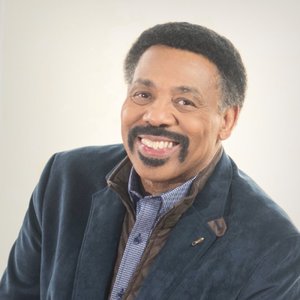
Many of us are being hindered from our destiny because we're being held hostage by a leash around our souls called unforgiveness. Dr. Tony Evans explains why getting the pardon we need depends on the pardon we give. If you're holding on to vengeance, then you are blocking God from taking care of it for you. This is the alternative broadcast featuring the timeless biblical teachings from the archives of Dr.
Tony Evans. When we think of hostages, we picture people being held against their will or threatened in some way.
Well, today, Dr. Evans talks about the kind of hostage who could walk away at any time, but refuses to go. Let's turn to the book of Genesis as he begins. Nothing. And I mean nothing.
will hinder you arriving at God's destiny for you. like unforgiveness. Unforgiveness is that one thing. Above all else, That will block God's movement in your life. taking you from where you are to where you're supposed to go.
When you carry the weight of yesterday. It will ruin the place of the day. and the progress to tomorrow. Unforgiveness is that one area. That must be addressed.
If you're going to reach your destiny. If anybody had a right to be angry, Bitter. and hold a grudge. It was Joseph. A dysfunctional family, a dysfunctional father.
Put in a pit, sold into slavery, seduced. Unjustly jailed, forgotten in jail. If anybody had a right to be. Mad. If anybody had a right to say life is not fair.
It was Joseph. Joseph occupies From chapter 37 to chapter 50 of the book of Genesis.
So God wanted us to zero in on this man's life. He gave so much of the first book of the Bible to it. Because he wanted to show us. The key to destiny. And one of the things that Joseph was going to have to grapple with.
That you and I will have to grapple with if we're ever going to get through the detours and arrive at God's design for our lives, destiny, His purpose. For our creation and our salvation, if you're going to finish life having fulfilled the reason why God left you here, Then you're going to have to we're going to have to deal with The issue of forgiveness. First of all, let's define forgiveness because part of the problem is many people don't know what it is. or they don't know if they've really done it. Forgiveness in the Bible means A decision to no longer credit an offense against an offender.
Forgiveness has to do with a decision. Let's start with that. It is not first and foremost an emotion. Forgiveness is not how you're feeling in any given moment. It has to do with whether you have made the choice.
To delete. The offense. Let me give you A qualifying measure of whether you have truly forgiven the offense and the offender, and that is. Are you still seeking revenge? If you are seeking revenge, if vengeance is yours, Forgiveness has not occurred.
Because when forgiveness occurs, The delete button is pushed, or as 1 Corinthians 13, 5 says, you keep no record. Forgiveness can operate on two levels. Unilateral forgiveness? and transactional forgiveness. Unilateral forgiveness is when you forgive.
and the person having asked for it. requested it or repented of what they did to you. You are unilaterally, that is, on your own without their involvement, granting them forgiveness. The reason you grant you the lower home forgiveness is so that you can keep going. Because nothing will hold you hostage.
to your detours. keeping you from your destiny. like unforgiveness. But then there is a second level of forgiveness. Transactional forgiveness.
Transactional forgiveness is where There is a desire for reconciliation and restoration of a relationship. It's where the person who has offended you is willing to confess and repent in order to restore what was broken. That's what I'm calling transactional. That's why the Bible regularly calls us to repent. He calls us to repent in order to reestablish the relationship.
So that's transactional forgiveness because it's reconciliation.
Now. I want to show you in chapter 45. The steps you take to validate your own forgiveness. They're very interesting in chapter 45. Remember, this is the long story.
And this is now 22 years later. This is 22 when we hit these chapters. We're 22 years from the time Joseph was sold into the pit at 17 years old.
So this is years unfolding. But I'm going to show you a little something special in a moment that you don't want to miss out on. But for right now, let's look at how you validate your own forgiveness. Chapter 45, verse 1. Then Joseph could not control himself before all those who stood before him.
He cried. Have everyone go out from me so that there is no man with me when Joseph made himself known to his brothers. He wept so loudly that the Egyptians heard it, and the household of Pharaoh heard of it. What did Joseph do? He sent all the Egyptians out of the room.
When he confronted his brothers, And he wept. Here's how you know you're serious about forgiveness. You don't bring other people in who have nothing to do with the sin. He told all the Egyptians, y'all leave. Y'all are not involved with this.
Y'all have nothing to do with this. I'm going to confront the offenders, but y'all, get out. You always know a person who has not forgiven because of the gossip. They bring people in who have nothing to do with it. Who can't fix it, they can't resolve it, they don't even know about it, but I want to bring them into it because I want a vent.
Because I'm seeking vengeance. True forgiveness does not bring people into it who have nothing to do with it. Leave the Egyptians outside.
Now, of course, during this time, he unveils himself to his brothers so that they now know it's Joseph, which I think means he showed them his circumcision, because that would have been the thing to validate that he was his brother, since the Jews were the only ones who circumcised their young males.
So he revealed to the fact that he was, in fact, their Jewish brother. But he also removed those who had nothing at all to do with it.
So if you are gossiping to everybody else about the offense and the offender, forgiveness has not occurred. Secondly. You know you have forgiven. When you make the offender Feel at ease with you. Verse 4.
Then Joseph said to his brethren, Please Come closer. me. Uh When you haven't forgiven, you say, get away from me. He says Come, you did me wrong. Come close to me.
I am now welcoming you into my space. He makes them feel comfortable. In his presence. instead of making them feel uncomfortable. In his presence.
He says, come near, not get out of my sight. I can't stand you. Don't want to ever see you again. Get away from me. No, he says, come near to me.
And these were the ones who've done him wrong.
So forgiveness creates a space. Where the offender who repents, because we're talking about transactional forgiveness now, not unilateral, where the offender. Can come into a space. They've been extricated from... Because of their offense.
The next. thing that happens. Verse 5.
Now do not be grieved or angry with yourselves because you sold me here. The next thing that true forgiveness will do. is it will help the offender to forgive themselves. Where they've asked you to forgive them. He says, don't be angry.
with yourself. They were upset with themselves of what they had done because they repented. We're talking about transactional forgiveness. They've said, I'm sorry, and have passed the test and demonstrated they were sorry.
So he says, Well, let me help you forgive yourself. In other words, here's what they didn't do. Heap guilt on top of guilt. And then he did one more thing. Wow.
Verse 9. Harry and go to my father, Joseph says. And say to him, my father Jacob, Say to him, Thus says your son Joseph. God has made me Lord of all of Egypt. Come down to me.
Do not delay. I won't you miss this. He tells his brothers. Go back home. And tell daddy.
I'm okay. Up here. In Egypt. Wait a minute, you mean you're not going to tell him? D go tell daddy what y'all did to me.
What he did Was he protected them from the one who would have been hurt most by it? Because he was seeking transactional forgiveness. If you're holding on to vengeance, Watch this. then you are blocking God from taking care of it for you. If you're trying to pay them back yourself, then God will let you pay them back yourself.
But God will stay out of it. The scripture says, vengeance is mine, saith the Lord, and I will repay. God believes in justice. He believes in payback, his way, his time. And he does it without your help.
I'm not talking about somebody who breaks the law, that's a legal issue. It should be addressed. But we're talking about personal. Vengeance. He says that I will repay.
And if you read the story, you'll find out he did. Dr. Evans will have more for us on the link between forgiving and being forgiven. when he continues this lesson on the detours of pardon. one of the nine messages in his powerful series called Joseph Detours to Destiny.
These lessons reveal how many of life's twists and turns are Are actually part of God's plan to shape our character and prepare us for His purposes. And to help you take these principles even deeper, we're also including Tony's encouraging book, Detours: The Unpredictable Path to Your Destiny. Together, they make a practical resource package for anyone learning to trust God through life's unexpected seasons. We'll send you this special collection as our thank you gift when you make a donation to support the Ministry of the Alternative. Just visit Tony Evans dot org to make your request.
This is a limited time offer, so be sure to stop by today, or call us at 1-800-800-322. Team members are available around the clock to help with your request. Again, that's one eight hundred eight hundred three two two two. I'll have that information for you again after part two of today's lesson and this. What happens when faith meets the edge of survival?
On the Unbound podcast, Dr. Tony Evans shares stories shaped by hardship, purpose, and redemption. At one point in my life, I could have gone down the path where probably years in prison or not being here today. Generational trauma can be passed from generation to generation, but so can healing. Forgiveness can be the key that continues to unlock your future.
Unbound with Dr. Tony Evans. Listen now. You can subscribe to the Unbound podcast on Dr. Evans' YouTube channel.
or on your favorite podcast platform. Right now, let's get back to today's lesson on the detours of pardon. Take Judah. And the reason I want to talk about Judah is because he was the lead guy who got Joseph put in a hole to begin with when he was 17. Judah said, let's get rid of him.
Well, if you read the story, you will find a whole chapter on Judah.
Now, why is Judah put in this story with a whole chapter on him when the whole story is about Joseph? But there's a whole chapter on Judah. Because it's showing you how God pays somebody back who messes over you. Because when you read the story of Judah in the middle of the story of Joseph Judah starts losing his sons to death. He gets tricked by his daughter-in-law, has an affair with his daughter-in-law, giving birth to a child from his own daughter-in-law.
His whole life crumbles. Because God will repay. But if you don't believe that then you get to pay it without God.
So when you are forgiving. That means you skip it, that means you ignore it. He didn't ignore it. He said, y'all sold me here. But God was up to something too.
Because remember, whatever happens to you has to pass through God's fingers first. Oh. What helped Joseph to forgive? This was a painful situation he's lived through. And there are many here who have lived through, or maybe are living through.
the pain of yesterday. I want you to look at chapter 41. And I want to show you what set him up for forgiveness. And you have it. For you two.
Watch this. Verse 50 through 52.
Now before the year of famine came, Two sons were born to Joseph. whom Asimath, the daughter of Potiphara, priest of On, bore to him. Joseph named the firstborn Manasseh. For he said, God has made me forget all my trouble. and all my father's household.
He named the second Ephraim, for he said, God has made me fruitful in the land of my affliction. God set him up for forgiveness. He gave him another family. Remember, his family messed him up. He gave him a whole new family, and he said, My new family helped me forget my old family.
And the way he kept reminding himself That he was no longer hostage to his own family. was in naming his kids. He named one Manasseh and one Ephraim. Manasseh means God has helped me to forget my troubles.
Well, how often did he have to say the name Manasseh? Every time he was calling him to dinner, every time he was correcting him, when he was sending him to school, Manasseh this, Manasseh that, Manasseh this, Manasseh that.
So every time he called Manasseh's name, God has helped me to forget. God has helped me to forget. God has helped me to forget. He named the baby. Exactly what he needed from God.
But to help Manasseh out. You need to have a second baby. Ephraim. Ephraim means God has made me fruitful. Watch us now.
And he says, in the land of my affliction. God has made me fruitful.
Okay, Manasseh. God has caused me to forget that is the pain. Ephraim He's blessing me where I am right now. See, if you get so locked into the past that you don't see the goodness of God that He is showing you right now. See, you need to say Manasseh, but then you got to turn and look at Ephraim.
Because Ephraim says, Oh, well, what that happened to me yesterday, but God is providing for me today. He's blessing me today. He's taking care of me today. And even though I had a bag yesterday, my baby's name is Ephraim today. And I like this.
He says, he's blessed me in the land of my affliction. Unforgiveness blocks you from the supernatural. Lord's Prayer in Matthew 6: Forgive us our trespasses as we forgive those who've trespassed against us. You read further in the chapter, and he says, For if you do not forgive, you will not be forgiven. We all have to remember we got two sides to our story.
The need to forgive and the need to be forgiven. There are very few people who need to forgive who don't also need to be forgiven.
Okay? Forgiveness is a beautiful word when you need it. It's an ugly word when you have to give it. But we all need both words. Because we need to be forgiven and we need to forgive.
He says, and when you do, your Father who is in heaven will forgive you. He's not talking about your salvation. He's talking about your fellowship, your harmony, your experience with him. You no longer walk in darkness, John chapter 1 says. You're now living in the light.
You're in the light of the supernatural. Your GPS is working now. He can move you on to the place he's taking you. God will recycle your pain to His purpose. Doesn't excuse it.
Vengeance is mine. It doesn't say you ignore it. Not saying any of that. I'm saying you have a providentially sovereign God who can overrule it. And fulfill his purposes in spite of it, and in fact, use it.
for where he's taking you. without excusing it. You've seen the movie. I'm sure 90% of you have. The old movie Forrest Gump.
You remember Forrest had a friend from his childhood days named Jenny. And one day, Forrest and Jenny were walking along. And they came across the shack in which she was raised. which was also the shack in which she was abused by. her parents.
When she walked by her old home, that shack. She looked at it. She reached down. She picked up a rock. and threw it at the shack.
Then she reached down. She picked up another rock. And throw it through the window of the shack. Then she reached down. And she picked up another rock.
Ah! Yeah. as she remembered the pain of the past. And after she had thrown as many stones or rocks as her energy would allow, she collapsed. And that's when Forrest looked at her and said, Jenny.
Sometimes they're just on enough rocks. Because no matter how many you throw in, that shack is still up there.
Some of us have been throwing stones at the shack. Oh. Why did you do that? Why didn't you stop him? Why did I have to go through that?
That was not fair. STOP! I can't take it anymore. You throw rocks, but the shack is still up. Because sometimes There's not enough stops.
Um Dr. Tony Evans will return in a moment with a final illustration to wrap up today's message. But first, if you'd like to get a copy of this lesson to review again or share with someone you care about, The title to ask for is The Detours of Pardon. Better yet, request Tony's complete nine-message series, Joseph Detours to Destiny. For a limited time, when you request the audio collection with your donation to support the alternative.
We'll also include Tony's companion book, Detours, The Unpredictable Path to Your Destiny. Together, these resources offer biblical encouragement and practical insight for trusting God's plan when life doesn't unfold the way you expect it. Don't put it off. Visit us today at tonyevans.org to make your request. or let one of our friendly team members assist you by calling 1-800-800-3222.
That's one eight hundred eight hundred three two two two.
Well, tomorrow, Dr. Evans shows how God helps us grow into the people He wants us to be. in part because of what he wants us to do. I hope you'll join us to find out more. Right now, though, Tony's back with a final thought for those who aren't feeling free enough to forgive.
But you say the past I still feel it. I still feel it.
Well, let me remind you about the bell. You know the bell in the bell towers. is on a rope. And you pull the rope. BANDING.
Bye. Um And then they would let the rope go. And you still hear boom. Boom. Boom.
Boom. Um Bang. Because When they let go of the rope, The bell would still be swinging. But it would slow down. Until it stopped.
because they were no longer forcing it. Tari. I want to invite you today to let go of the rope. Cause as long as you pulling that Bong, it's not fair. Bong, you hurt me too bad.
Bong, you never said I'm sorry. Bong. As long as you're pulling the rope, you're gonna hear in your soul the sound of the bell. But when you make the decision to let it go, it may ring for a little while. Boom.
Dae. Beauty. until you feel it subside. Because you let go of the probe.