When you take a stand, you're going to be criticized.
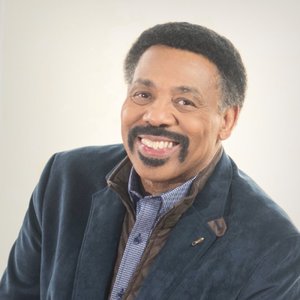
Just make sure you're taking the right stand. Dr. Tony Evans reminds us that living for God means choosing purpose over popularity. In other words, you will not be able to please everyone, so please the Lord. This is the alternative broadcast featuring the timeless biblical teachings from the archives of Dr. Tony Evans.
There are times when you try to fix what's broken, only to hear people say it can't be done. But the Apostle Paul reminds us that if it's within the Lord's will, who can be against us? Today, Dr. Evans shows how faith plays a crucial role in success when you're up against worldly resistance and criticism.
Let's join him in the book of Nehemiah as he explains. In chapter 4, we learn a very valuable lesson. If you're going to rebuild something that's broken, you're going to have to have a faith that overcomes.
Why? Because any time you try to fix something that's broken, you're going to be criticized. In fact, you will find that when you are the most determined to fix your life, fix your family, fix your church, or fix your society, people you never even knew are going to show up.
To tell you why it can't be done, shouldn't be done, ought not be done, could never be done, and you're a fool for thinking that it could be done. Nehemiah, in chapter 3, gets the people together and does the main thing that must be done to rebuild something that's broken, and that is unite people around a single purpose. And let me define what I said earlier so that you don't forget it. Unity in the Bible does not mean sameness. You're not unified because everybody's the same.
You are unified because there's oneness of purpose. Nehemiah runs into brick destroyers in chapter 4, verse 1. Now, it came about that when Sanballat heard that we were rebuilding the wall, he became furious, very angry, and mocked the Jews. When the word got out, we were doing something. See, now, if you're not doing something, no word will get out, because there's no word to get out.
But now, the word was out that the Jews were finally, now catch this, taking responsibility for their own actions. People try to tear down what you want to build up under God because people are threatened. That was Sanballat's problem. He did not want Israel to rebuild these walls because that would make them strong again.
And as long as they were weak, he was strong. So some people have it as their vested interest to keep you weak so that you don't become as strong as they are. And then the final reason that people criticize is traditionalism. They don't want change. Because times change, circumstances change, people change, attitude changes.
You must have change if you're going to have progress. That does not mean all traditionalism is bad. It simply means that certain traditions run their course. And so there is Sanballat who pops up.
Now, Sanballat and his friend are a formidable foe. Because what they do in verses two and three is keep ridicule on them. To put it another way, they try to discourage them. And he spoke in the presence of his brothers and the wealthy men of Samaria and said, What are these feeble Jews doing? Are they going to restore it for themselves? Can they offer sacrifices? Can they finish in a day?
Can they revive the stones from the dusty rubble, even the burnt ones? And now Tobiah the Ammonite was near him and said, Even what they are building, if a fox should jump on it, he would break their stone wall down. The last thing you need are people sitting on the sidelines telling you how big a job it is and how much it's going to take to complete it and you really can't do it. Listen, people can only criticize you because you're doing something. If you're not getting criticized, get worried. When you take a stand, you're going to be criticized. Just make sure you're taking the right stand and therefore being criticized for the right thing.
You ought to be criticized because that means you're standing for something. There's a story about criticism that illustrates this. The story is told of an old man whose grandson rode a donkey while they were traveling from one city to another. So they were traveling from one city to another and the grandson was on the donkey. Well, as they passed by some people, the grandfather heard the people say, Would you look at that?
That old man suffering on his feet while that strong young boy is totally capable of walking. So they heard the criticism. They said, Well, let's change it. So the old man rode a donkey while the young boy walked. But then they passed some more people who said, Will you look at that? That healthy man making that poor boy suffer, can you believe that?
So they heard that criticism, so they said, Well, maybe we ought to change it. So the man and the boy rode on the donkey. They passed some more people.
Said, Can you believe that? Would you look at those heavy brutes making that poor donkey suffer? So they both got off and they both walked until they heard some more people say, Would you look at that wave? A perfectly good donkey not being used.
Finally, frustrated, the scene shifts and we see the boy walking and the old man carrying the donkey. No matter what you do, you can't please everybody. No matter what you do, you can't satisfy everyone. I had a preacher tell me when I was coming into the ministry, he said, Boy, don't try to please all them people. I said, Well, why not?
I need to please the flock. He said, To a point. But he said, You got all these personalities and all these people. Don't try to please all these people.
I said, But why not? He said, Because Jesus already died for them once and if that don't change them, there ain't no need for you dying for them. That's what he told me.
That was the advice I got. In other words, you will not be able to please everyone. So please the Lord. In fact, you find Paul in the New Testament saying, It matters not what you think.
When there is a clear injunction from the word of God. And so he begins a rebuilding program. Well, what does Nehemiah do to this discouragement? He does what he always does first. He prays. I hope if you've learned anything through my lectures so far, you've learned the primacy and priority of prayer. You do not pray after the mess. You pray first. Verse 4, Hear, O our God, how we are despised.
Because the word had gotten back to Israel. Return their approach upon their own heads and give them up for plunder in a land of captivity. Do not forgive their iniquity and let not their sin be blotted out before they have demoralized the builders. Before I say a word about this prayer, may I say a word about what he didn't do?
You're not going to like this, but it's a great lesson to learn. He did not retaliate. He could have said, you know, what goes around comes around. He could have retaliated.
Say, you talk about me, I'm going to talk about you back. Can I quote a verse to you? Vengeance is mine, saith the Lord, I will repay.
Let me tell you why it's an important verse. Once you do the repaying, you cancel out divine vengeance. God says, well, since you're going to take care of it, you don't need me.
He did not retaliate. He called on the vengeful God. Said, Hear, O God, they despise us.
You take care of it. Now, who can do this better? You or God? See, but because we don't believe God pays back, we think we have to do it.
Now, don't get me wrong. He doesn't do nothing. He does something. He prays. He gets God on that case, and he calls on God in what we call an impeccatory prayer. Impeccatory prayer is a prayer where you call down God's wrath. Now, there's a lot of confusion about whether you pray impeccatory prayers today under grace.
And the answer is, under certain circumstances. You pray impeccatory prayer when the name of God is being destroyed by what people are attempting to do, which will destroy the unified program of God and what he's seeking to build. 1 Corinthians chapter 3, it says anybody who destroys the temple of God by God will be destroyed. In other words, there's certain things that you don't tolerate, and there's certain things you call on God to deal with immediately. When there are people trying to destroy God's name and God's character, you say, Lord, save them or judge them.
But do something and make your name demonstrable in this world and in this circumstance. You call on God. You call on God to deal with people who has as their intent to destroy the work of God. And I hope you know it, some people have that as their intent.
They want to break up your home, break up your life, break up the church, keep the community in a disaster because they have no reverence for God whatsoever. And so, he prays. When Dr. Evans returns in just a moment, he'll explain how Nehemiah's commitment to prayer and hard work led to victory. First though, I want to let you know that the lesson we're hearing today is part of a powerful series taking us through the Old Testament book of Nehemiah, a study that goes far beyond ancient history. In this two-volume, 15-lesson collection, Dr. Evans shows how Nehemiah's mission to rebuild the walls of Jerusalem is a model for how God wants to rebuild our lives, restore our communities, and renew our faith. It's available right now as our thank you gift when you make a contribution to support the ministry of the alternative. And as an added bonus, along with the complete Nehemiah audio series, you'll also receive a copy of Dr. Evans' compelling book, One Nation Under God. It's a timely resource that lays out a kingdom approach to turning our culture around, starting not in Washington, but in the hearts of God's people. Visit us today at tonyevans.org to request this special package, or call us at 1-800-800-3222 for assistance from our resource team. I'll have our contact information for you again after part two of today's lesson and this.
I urge you to take this course. Dr. Craig Evans, renowned expert on the New Testament, serves as the special guest lecturer for the Tony Evans Training Center course on the Dead Sea Scrolls and the Bible. It covers very important ground, what they are and what they're not. One of the most significant archaeological finds of the 20th century, the Dead Sea Scrolls provide unparalleled insights into the accuracy of the Bible. These ancient manuscripts offer a treasure trove of historical and spiritual significance. They preserve for us the Hebrew Bible and shed light on the teaching of Jesus and the major contributors to the New Testament. The scrolls open a vivid window into the life and beliefs of the Jewish people during the time of Jesus. You will understand the Bible and Jesus and Christian origins better than you ever have before.
Take your first step as an honorary amateur archaeologist. Dive into the Dead Sea Scrolls with special guest lecturer, Dr. Craig Evans. Discover this and other fascinating biblical studies at tonyevanstraining.org.
Explore the kingdom anytime, anywhere. So he doesn't retaliate, he does pray, and thirdly, he keeps on working. Verse 6, so we built the wall, the whole wall was joined together to half its heights for the people who had a mind to work.
Because when people come together with a mind to work, we got a different scenario now. Now the people had a mind to work and guess what? The wall is half up. They built the whole wall in 52 days, so now we're in 26 days. And a wall that had been down for 150 years is halfway up, but you know, halfway can be the toughest spot.
To be halfway back can be a tough place to be. So he keeps on working. This leads to a conspiracy in verse 7. It came about when Samballah, Tobiah, the Arabs, and Ammonites, and the Ashtodites heard that the repair of the walls of Jerusalem went on and that their breaches began to close, they were very angry. Their criticism didn't work. What happened, verse 8, and all of them conspired together to come and fight against Jerusalem and to cause a disturbance in it.
They upped the ante. They now say, well look, they're not letting our criticism work, let's threaten them physically. So in verse 9, he says, we prayed to our God, and because of them we set up a God against them day and night.
Now what did he do? He prayed and watched. Verse 10, we see they were struggling because their burdens were failing, there was a lot of rubbish, and we ourselves are unable to rebuild the wall. There was this discouragement setting in. And then verse 11, their fear that the enemies were going to come upon them. So, we now see that Nehemiah sets in motion a plan to address what's going on. And so, in verse 13, he stationed the people in the lowest part of the space behind the wall, exposed the places, and stationed the people and families with their swords. Notice what he said in verse 14.
When I saw their fear and I rose up and spoke to the nobles, officials, and the rest of the people, do not be afraid of them. Remember the Lord. Now you know what Satan causes us to do? Forget the Lord. We take it back to our own human initiative. He says, stop thinking about them, start thinking about the Lord, who is great and awesome. Remember we saw that in verse 1? Think about the Lord.
He's great and he's awesome. One of my kids was telling me, I can't do this algebra. I said, let's change that right now.
No. See, I do not know now how to do this algebra. I am sure the educational information is out there so I can do this algebra. So, where do I need to go from where I am to where I need to be to be able to do the algebra and make an A while doing it? See, because that changes your mind.
So, now that may mean tutoring after school, that may mean getting with the teacher, that may mean a lot of things, but let's not say I can't do the algebra, let's say I haven't mastered it yet. You know, the first American steamboat took 32 hours to go from New York to Albany. People laughed. The horse and buggy passed the early motor car as if it was still standing still, and it usually was. People laughed. The first electric boat was so dim people had to use a gas lamp to see it. People laughed.
The first airplane came down in 59 seconds after it left the ground. People laughed. Oh, but we fly today, we drive today, the boats move across the water fast today.
People are always going to laugh when you have a dream. Let's come to a conclusion here for the day. He comes up with a plan. Please notice at the end of verse 14 the plan surrounds their families.
I'm concerned about, wait, am I going to get out of the deal? He says, you got a wife, what about her? You've got kids, what about them? You know, couples get divorced and they say, yeah, well, what about the kids? Well, I can't think about the kids. I got to think about me.
Well, if you could forget you long enough, we can fix the wife and kids, and then they'll be in a better position to fix you. You say, but I'm miserable. Of course you're miserable. Now we know the problem. Let's talk about what we're going to do about it. Don't keep repeating the problem. I'm miserable, I'm miserable, I'm miserable, I'm miserable.
All right, we all agree it is unanimous. You're miserable. Now, what are we going to do to fix your misery? And so, he says, think about other people.
You've got a family here. You've got other people involved in this deal. You don't want to fight, but you've got your wives and your children's lives at stake. And so, it gives them a bigger vision. Verse 15, and it happened when our enemies heard that it was known to us and that God had frustrated their plan. Who frustrated their plan?
God. God had frustrated their plan. Because he prayed, God let them know what the plan was. God gave them a solution. But he still used people with their own armament and all of that. He uses human effort, but it is God who brings it about. And then all of us return to the wall, each one, to his work.
It came about from that day on, half my servants carried to work while half of them held the spears. Said, we're going to build this wall. If you're going to do something for God, if we're going to revitalize the community in which we live, we're going to have to make an investment that's unified. We're going to have to say that we can do it, that we can turn it around, that we can make a difference. If we're going to rebuild our homes, we have to be determined and we're going to have to set up a plan. So many people want to lock their way into success. It doesn't happen that way. You have to have a plan.
You have to have a plan that you're pursuing. And so he comes to the conclusion here and he says, at the end of verse 20, our God will fight for us. Has God ever fought for you? There's nothing like God fighting for you because when God fights for you, that's the only way you can explain the win. In fact, I like being put in impossible situations where there's no human solution.
I like that because then I can say, God, stretch your stuff. I like that because then I can call on God to do the supernatural. So many of us never see the supernatural because we do the fighting for ourselves. He says, our God will fight for us.
So we, verse 21, carried on the work with half of them holding the spears from dawn until the stars appear. The Bible says in Romans 8, 31, if God be for us who can be a gangster, the result of the work was that they were going to be protected, protected from outside enemies that were going to destroy them. So let me ask you in conclusion, what's trying to destroy your life, your family? What's trying to destroy our church and what's destroying our community? On a personal basis, it may be drugs, sexual immorality, it could be any number of things that's destroying your life. On a family basis, personality conflicts, how you were raised, how your wife was raised, vice versa, it could be any number of influence, it could be your children, church, there are always people who come into the church to try to cause division.
By the way, you can always tell, ask a person who's criticizing what are they doing. Too many lives are being broken and even if you don't feel it directly, it'll influence you one way or another because it's going to spill over to your life or your family. And so that's why we must have a unified coalition to make a difference. You know, I found out something the other day about icebergs. No matter how much the wind is blowing, icebergs will never be pushed in the direction of the wind but will always glide in the other direction.
Why? Because the current of the water is stronger than the power of the wind. And you know another thing about icebergs?
The water has access to most of it for non-tensity icebergs is underwater. See, most of us are reacting to the winds of life that are blowing against us when we've got the current of God's power available to us. So you don't have to go with the wind if you flow with the current. I don't know what the wind of this world is doing to you today. And I don't know what the wind of this world is pushing you, telling you you can't make it, you're never going to be anything, and you're never going to become anything, and you're never going to get anywhere, and that marriage can't be saved, and those children can't be changed, and you can't make anything of yourself, and you can't, you can't, you can't, you can't. You're listening to the wind.
You're not flowing with the current. Because when you flow with the current, you understand that He that is in you is greater than he that is in the world. Dr. Tony Evans, reminding us that no matter what the world says, our victory comes from the power of the one who lives within us. Now the message we heard today was called The Faith That Overcomes, and is part of Tony's powerful series from Nehemiah, a 15-lesson journey through leadership, perseverance, and spiritual renewal. It's a reminder that God can rebuild what's broken in our lives, just as He did in Jerusalem in Nehemiah's day.
We'd love to send you the complete series on digital download, as well as in a CD album or USB thumb drive. They're our thank you gift when you make a donation to support the ministry of the alternative. And for a limited time, we'll also include Tony's insightful book, One Nation Under God, offering a kingdom perspective on how believers can impact our nation for good. Visit TonyEvans.org today to request this special double offer, or call 1-800-800-3222. Again, that's TonyEvans.org, or by phone at 1-800-800-3222. When Nehemiah set out to rebuild the broken down walls of Jerusalem, he wasn't just taking on a construction project. He was calling God's people to rebuild their spiritual foundation. Tomorrow, Dr. Evans will explore the importance of believers recognizing and responding to God's priorities. I hope you'll join us.