Hi, Nathan W. Bingham here, host of Renewing Your Mind. I hope you can join us August in South Portland for an always-ready youth apologetics event. I'll be joined by Dr. Stephen Nichols and Pastor Eric Bancroft for a full day of teaching and fellowship.
Today, countless voices pull us, especially young people, in different directions, urging us to embrace contradicting ideas of what it means to just be yourself. But in the midst of this chaos, we can be left wondering. Who am I, really? On Saturday, august second, we'll explore our identity, providing answers from Scripture to combat the opposition of our day, whether that's to do with gender and sexuality, our status as forgiven Christians, or the rise of artificial intelligence and the coming challenges to what it means to be human. I invite all Christians aged twelve to eighteen and their parents and youth pastors to join us that weekend.
If you haven't registered, you can learn more and register at ligoneer. org slash always ready New England, or visit ligonier. org slash events for all upcoming cities and dates.
Now on to today's episode of Renewing Your Mind. The reason I would say to people: if you want to learn how to pray, immerse yourself in the Psalms, is this, that here in this book, We have Divinely inspired. Prayers. Prayers of supplication, prayers of celebration. Prayers of confession.
But above all, Prayers of adoration. The wisdom literature of the Old Testament can help us to grow in wisdom, to grow in our ability to live life skillfully. But it can also help us to pray.
Okay. I'm glad you're with us for this Thursday edition of Renewing Your Mind. And today, R. C. Sproll will focus his attention on the Psalms and why this is where he would direct people who were struggling with prayer to this book of divinely inspired prayers.
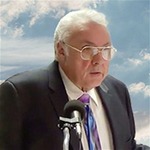
Well, here's R. C. Sproll, the founder of Ligonier Ministries and the first president of Reformation Bible College. I think that most all of us have. A favorite teacher.
In your life, somewhere. My favorite teacher ever was my seminary professor, Dr. John Gerstner, and I've been studying under him ever since I was in seminary. I devour everything that he writes, and I try to listen to as many of his tapes as possible. I've heard Hundreds and hundreds and hundreds of hours of lectures from him.
And I've noticed some strange things happening. And they include the following. First of all, Every time I hear him, no matter how many times I've heard him in the past, I learn something I didn't know before.
So that's the serendipitous part. I like that. The other thing that I've noticed, which is sometimes weird and a little bit eerie, is that I'll be listening intently to him as he's working through a carefully planned argument or something. I'm thinking along with him, and I just know what he's going to say before he says it. Not just the idea, I know the very words that he's going to say before he says them.
Have you ever had that sort of experience with people with whom you're very familiar? You can almost finish their sentences for them. And that's the way I found myself with Gerstner. And it's kind of eerie, but it's also kind of fun to anticipate what he's going to say.
Now, the third thing I've discovered. over all these years of listening to him. Is that there are those moments where I'm absolutely sure of what he's going to say next. And walla. There's a curve ball.
There's a surprise. He says something that is totally unexpected.
Well, that's what happens sometimes to me when I'm reading the New Testament and when I'm. Listening, as it were, to the teaching of Jesus, who is obviously our supreme. Mentor. We read the gospel accounts over and over and over again, and you sort of get a feel for the flow of Jesus' thinking. And after all, we are trying to get the mind of Christ.
We ought to be not only thinking his thoughts after him, but we ought to be able to anticipate what our Lord would say in a given circumstance. But there's one place in the New Testament where I just can't get over it. It surprises me so often, and that's when. The disciples come to Jesus. and they have observed the power.
Yeah. that is manifest in him, and they also see the extraordinary passion and level of communication that he has with the Father in Jesus' prayer life. And the disciples link these together. They add up one and one and get two. They say, wait a minute, there's got to be some kind of connection between this powerful prayer life of Christ and the manifestation of power that's found in his ministry.
And so when they come to him, they don't say, Lord, teach us how to walk on water, teach us how to turn water into wine. They want to get to the root of the thing and they say, Lord, teach us. Teach us how to pray.
Now, what would you expect Jesus to say? I know what I would expect. I mean, I every time I read that, it's like watching an instant replay in a football game and say that man can't run for that touchdown a second time on the instant replay. But I've seen it so many times, I'm still surprised at Jesus' answer. He answers like this.
He said, when you pray, Pray like this, Our Father who art in heaven, hallowed be thy name. And he gives to his disciples the model prayer. Which is fine. Please don't misunderstand me. Far be it from me to criticize my Lord and the answer that he gives to his disciples.
I'm just testifying to my surprise at it. What I would have expected Jesus to say. to his disciples when they came to him and said, Lord, teach us how to pray. I would have thought Jesus would have looked him in the eye and said, if you want to learn how to pray, Immerse yourself. in the Psalms of the Old Testament.
That's what I would have expected. It's not what he did. But if you ask me, I'm not Jesus, but if you ask me, RC teaches how to pray, the answer I would give. Yeah. If you really want to learn how to pray, Just spend hour after hour after hour.
in the Psalms. You know, in the sixties Something basically unique in the history of Christianity. Erupted in this country called the charismatic movement. Prior to that decade, it had been contained in certain small denominations, but all of a sudden there was an explosion of interest in the gifts of the Holy Spirit and so on that swept through the Roman Catholic Church and the mainline denominations, and it became a historical phenomenon in our day. And at the heart of charismatic interest at that time was the experience of glossolalia, or of speaking or praying in tongues.
And I remember back in those days, when this was a brand new thing for many people, how many people would come to me earnestly seeking the ability or the gift to pray in tongues. And as they would discuss this with me, I would frequently ask the question. Why do you want to be able to pray in tongues? And I got the same response time after time after time. The people would say, Okay.
I want something. that will enrich my prayer life. I feel so inarticulate.
So inadequate.
So unable To express myself the way I feel in the depths of my soul. when I'm on my knees. And if I could get some kind of Holy Spirit-inspired means of communicating with God. That would be glorious. We have such a limited vocabulary.
And I think when we look at the different parts of prayer, Like thanksgiving, confession, supplication, adoration. the place where our vocabulary fails us the most. is in the area of adoration. Just yesterday, I was reading a reprint of a book that Calvin wrote in the 16th century in response to some of his critics who were complaining about his doctrine, in this case was his doctrine of providence. and they were contending against Calvin and so on.
And Calvin in this response to his critics. Use an expression over and over and over again. And the expression was this: He would say something like this: Why are you complaining about the inscrutable? ways of our adorable God. And it struck me that again and again and again in this body of writings, Calvin kept referring to God as our Adorable God.
I think if anything permeates the writings of the reformers, it is that profound sense of adoration. for the greatness and the glory of God. And if there's anything that is characteristically missing. From modern evangelicalism, it is that preoccupation with the adoration of the greatness of God. We're defective at our understanding of God's very character.
Now, what does this have to do with wisdom literature? Remember that wisdom literature is given to us that we may be instructed on how to live lives that are pleasing to God. And the book of Psalms. It's quite different from the Proverbs. The book of Psalms doesn't tell us how to save money or practical guidance of that sort.
For the most part, the Psalms are made up of prayers and hymns. Different kinds of prayers, different kinds of hymn, but set forth in poetic structure. But at the heart of the Psalms, is a spirit of adoration. And the reason I would say to people: if you want to learn how to pray, immerse yourself in the Psalms, is this: that here in this book, We have Divinely inspired. Prayers.
You know, Paul tells us in Romans that when we come before God on our knees in prayer, that God the Holy Spirit is working to help us and to assist us in our expressing of our thoughts before God. He groans within us sometimes with groans that are inutterable. But in the Psalms, We have inspired, divinely inspired, prayers Prayers of supplication, prayers of celebration. Prayers of confession. But above all, Prayers of adoration.
And when David prayed, in adoration before God, he was not inarticulate. The Holy Spirit knows how we should pray. And the Holy Spirit assists us in expressing ourselves to God in prayer. Let's look for a moment at Psalm 8. I've chosen a Psalm that's somewhat familiar for now to give an example of this.
In Psalm 8, David. praise like this. Oh Lord, Our Lord. How excellent is your name in all of the earth. who have set forth your glory above the heavens.
Out of the mouths of babes and nursing infants, you have ordained strength. because of your enemies, that you might silence the enemy and the avenger. When I consider your heavens, the work of your fingers, The moon and the stars which you have ordained. What is man that you are mindful of him, and the son of man that you visit him? But you have made him a little lower than the angels.
And you have crowned him with glory and honor. You have made him to have dominion, and so on. And then back to the refrain: O Lord, our Lord, how excellent or how majestic is you. is your name in all of the earth. Here is a person.
who, under the supervision of God the Holy Spirit, is pouring out his soul in the adoration and exaltation of the majesty of God. Wouldn't you like to be able to do that? In a way, that is similar to the way David did it. You know, if you read the writings of the great saints of the ages, even though their writings are not inspired like the book of Psalms was inspired. You will find a similar pattern.
Of expression of a spirit of reverence and awe and adoration for God. in their prayers. and in their teaching. One historian made the observation that every time. that we see in the record of church history A large and significant revival of the people of God.
At the same time, There is a renewed interest in the Psalms. Because there's something about the impetus of the psalter to induce The soul. to worship. And there can't be genuine revival unless it is followed by a heightened sense of worship among the people of God. Because the Psalms give us Undiluted Worship.
Worship that we know is pleasing to God because it comes to us from His wisdom and from His own inspiration. And not only do we find psalms of adoration. But there are also those psalms that express the broken heart of the sinner who comes in profound contrition before God. One of the hardest things to do is to express our sorrow. when we have deeply hurt or grieved.
I know people will come to me and say, you've been in the ministry. I have a friend whose wife has died. I've never been to a funeral parlor before, and I'm going over to see my friend at the funeral home today. What do I say? They want a rehearsal.
They want me to give them a line that they can use that is appropriate for the occasion. I said, you don't have to say anything. Just go. Just be there. Stand there.
With your friend. Put your arm around it. Hold his hand. And play it by ear as far as the words go. But people are embarrassed.
To even go to situations like that because they say I feel inadequate in my ability to express my compassion or to express my grief or to express my mourning. Any words that I seek to use seem empty, vacuous, and trite.
Well If you don't have any words, just say don't say anything, but be there. But what's better is to be able to find the words. that capture that moment. You can find them in the Psalms. David not only knows how to praise God, he knows how to repent before God.
And he knows how to confess his sins before God. And he knows how to express his own mourning and his grief before God. Oh God. My pillow. is wet.
with my tears. How graphic is that? It says it all, doesn't it? My pillow is wet with my tears.
Now, one of the other things that you will find if you look at the Psalms very carefully. Is that you will find that the prayers that are in the Psalms, Are prayers that celebrate many great things about God. But they are not sermons about God. They are communications to God. Have you ever been in a church service and the minister begins to pray and he refers to God in the third person?
And you wonder why he has his eyes closed. I mean, you get the distinct feeling that what you're listening to is another sermon, it's not part. of Honest prayer. And I often wonder when I hear that, I wonder if that's offensive to God. Because there's something fundamentally dishonest about it.
There are other people, when you hear them pray, you feel like you're violating their privacy, that you're eavesdropping in a tender moment of a soul speaking directly to God.
Sometimes, when I hear people pray in a certain ministerial tone, I think to myself, God forgive me for this, but I think to myself, If God walked in this room, that person would never talk to God like that. It's too officious. That's not how prayer is. Prayer that is true prayer comes from the soul. It comes from the heart.
It's not just an expression of phrases or carefully devised sentences.
So, I'm not saying that you should read the Psalms just so that you get a better vocabulary and become more articulate in your prayer, but also that you learn the spirit of prayer. Because it's there. It's there in the broken heart of David. It's there in the joyous celebration of the people of God when they celebrate deliverance that God comes. It's even there in the most problematic portion of the Psalms, the so-called imprecatory Psalms, where the psalmist calls down the wrath of God upon his enemies.
David makes a statement in there once that's very difficult to understand. He says, I hate my enemies with a perfect hatred. Oh, Jesus said you're supposed to love your enemies, David. How can you hate them with a perfect hatred? Is there such a thing as perfect hatred?
If you mean by a perfect hatred, mean that it's undiluted, there's pure hate, no charity in it at all, then shame on you. Here, the Holy Spirit is simply recording your sin. Or does he mean that there is a kind of antipathy That is legitimate to have toward the enemies of the kingdom of God. We are to pray. We pray for the well-being of everybody, including our enemies, and yet at the same time, we pray for the defeat of God's enemies.
You can pray for the soul of Hitler at the same time that you're praying that he would be stopped in his madness.
Okay. But even there, in the prayers of judgment, Prayers of anger. we find the heart of God. And so I commend to you. as our model.
of wisdom in prayer. The book of the Psalms. I'm afraid I'm going to have to be a hard taskmaster. I've been like Fayrogue, not giving you any straw for your bricks, giving assignments over the year. You're not even enrolled in my class.
I can't monitor them. I'm not going to grade anybody. These are simply suggestions I've asked already as we study the wisdom literature that you take time to read the Proverbs. I think you can anticipate what I'm going to say to you today. To make it a part of your life, not just for a month, but as a daily thing, try to read a psalm every day of your life.
To kill. Keep. the movement of the sacred Literature of prayer and adoration that are contained in the Psalms. running through the fiber of your life. In 1994, I completed probably the most difficult task I've ever had to do in my life, and that was to be the general editor of the New Geneva Study Bible.
Boy, am I excited about that. But I had to go over and over and over again detailed notes that were prepared by scholars on all the various books of the Bible. And it was an arduous task, a tedious task, a pedantic piece of work, you know, that just seemed endless in its labor. But in all of that work, the one part of that task that was most fulfilling to me. Was working with the person who wrote the comments and notes on the Psalms.
Just having to go over them again and again. was so refreshing to my soul. And I was reminded how important it is to be Moved daily by exposure to that book of the Bible. What a great encouragement to be in the Word, reading it, memorizing it, meditating upon it, studying it. And that study Bible that Dr.
Sproul mentioned is now called the Reformation Study Bible. If you have not explored this theological library in one volume, I do encourage you to visit ReformationStudy Bible.com and don't forget to look for the student edition for a younger person in your life. You're listening to Renewing Your Mind, and you're hearing messages this week from RC Sproll's series on wisdom. Request access to this series, plus a copy of What Is Wisdom, when you give a donation at renewingyourmind.org or when you call us at 800-435-4343. Return to these messages again and again and read your copy of What is Biblical Wisdom as you seek to grow in your ability to interpret and apply the wisdom literature of the Old Testament.
In a time of information overload, where knowledge abounds, we need wisdom.
So request this timely wisdom resource package to day before this offer ends tomorrow. Use the link in the podcast show notes, visit renewingyourmind. org or request the global digital offer at renewingyourmind. org slash global.
So far this week, R.C. Sprawl has considered the Book of Proverbs and Psalms.
Well, tomorrow, to conclude this week on wisdom, he'll consider Ecclesiastes, Job, and Song of Solomon.
So be sure to join us tomorrow here on Renewing Your Mind.