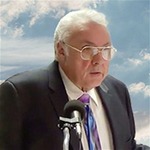
This is Robert Jeffress. In response to the horrific attack on Israel, I've written a brand new book called Are We Living in the End Times?
Go to ptv.org to order your copy. Prayer is not some altered state of consciousness where we empty ourselves of all thoughts and feelings. That is not prayer. Prayer is intense, difficult work that requires us to remain focused. Jesus was focused in his prayers, and so should we be. Welcome to Pathway to Victory with author and pastor, Dr. Robert Jeffress. You know, few Christians are completely satisfied with their prayer life.
Most feel like there's room for improvement. So how do we cultivate that meaningful prayer life that we long for? Well, just like any other skill, learning to pray takes practice. And today on Pathway to Victory, Dr. Robert Jeffress describes the four characteristics of a successful prayer life. Now here's our Bible teacher to introduce today's message.
Dr. Jeffress? Thanks, David, and welcome again to Pathway to Victory. While it's true that our generation is spending countless hours every day glued to their mobile devices, I found that there's nothing quite like a wholesome magazine to keep my mind engaged. It's one of the many reasons we created a wonderful publication for you called Pathway Magazine. Pathway Magazine is printed in a convenient portable size, but don't let the size fool you because it's chock full of interesting articles, brief daily devotional readings, and a variety of other features that will encourage you.
And today I'm prepared to send a complimentary issue to your home when you go online to ptv.org. Well, today we're moving ahead in our study about improving your personal prayer life. And to enhance this practical series, I'm pleased to offer you one of the most practical books I've ever seen on the subject of prayer. My daughter, Julia Jeffress Sadler, has written a children's book that's fully illustrated and called You Can Pray Big Things.
Put this book on your lap and share the storyline and wonderful pictures with your child or grandchild. It will help them understand that prayer is not something that only adults do. Your children can pray big things too. A copy of this children's book, You Can Pray Big Things, is yours when you give a generous gift to support the ministry of Pathway to Victory. Now, let's turn in God's words to Colossians chapter 4 as we continue our study on prayer.
I titled today's message, Heavenly Communication. Today we're going to look at what Jesus' life reveals to us about prayer and how that should impact our relationship with God. Let's look at verses 2 and 3 of Colossians 4. Paul writes, Devote yourselves to prayer, keeping alert in it with an attitude of thanksgiving, praying at the same time for us as well that God will open up to us a door for the Word so that we may speak forth the mystery of Christ for which I've also been imprisoned. If Jesus Christ is central in your life, prayer is going to be a priority in your life.
Prayer's got to be a priority in your life. How do you have a successful prayer life? Notice in these two verses, verses 2 and 3 of Colossians 4, there are four characteristics of a meaningful prayer life. First of all, a successful prayer life is consistent.
Look at verse 2. He says, Devote yourselves to prayer. Literally in the original text, be persistent in your prayer. A successful prayer life is first of all consistent.
Secondly, it is energetic. Look again at verse 2. He says, Devote yourselves to prayer, keeping alert in it. In Ephesians 6, 18, he says, With all prayer and petition, pray at all times in the Spirit. With this in view, be on the alert with all perseverance and petition for all the saints. What does he mean, stay on the alert, to be energetic?
I think there are two implications of that. First of all, stay focused in your prayer life. Write that down, stay focused. Some people translate this word alert as watchful. Be watchful in your prayers. Some commentators say that means we're to be watching out for the second coming of Christ.
No, that's not what he's talking about. Yes, we are to be watching for the second coming of Christ, but when he says be on the alert, he's first of all saying be focused in your own prayer life. Don't let your mind wander when you pray.
That's what it means to stay focused. Do you realize that two of Jesus' greatest battles, in fact the two greatest battles Jesus Christ faced in his life were battles that he fought on his knees in prayer. One was at the beginning of his public ministry when he was alone in the wilderness, and the last was at the end of his earthly life in the Garden of Gethsemane. And in both battles, the issue was the very same. It is the bottom line issue that you and I face in our relationship with God, and that was, was Jesus going to submit his will to God's will?
God, is it your way or is it my way? That's the battle that Jesus had, both in the wilderness and in Gethsemane. It is the same battle that you and I face. And so intense was this battle, Luke says in Gethsemane, that Jesus sweat, as it were, great drops of blood.
Now here's the point. Prayer is not some altered state of consciousness where we empty ourselves of all thoughts and feelings and reach the state of nirvana or transcendental meditation where we empty ourselves completely. That is not prayer. Prayer is intense, difficult work that requires us to remain focused. Jesus was focused in his prayers, and so should we be. To be alert is to first of all stay focused in our prayer life, but secondly it also means to stay sensitive to the needs in ourselves and others.
That's what it means to be on the alert. Be on the alert for special spiritual needs in your life and in the lives of the others around us. You know, there are two ways to view our life. One way to view your life is to see it just as a series of unrelated circumstances that end when you die. But the other way to look at your life is to see it, as God describes it, as an intense spiritual battle. Ephesians 6 says that we're all in a struggle in this world, but as Christians our struggle is not against flesh and blood. That is, it's not against other people.
It's not against circumstances. We are in a life and death struggle, Paul says, against the unseen forces of wickedness in the heavenly places. And those who stay spiritually sensitive are those who realize that we are constantly in this spiritual battle, and that is why we are continually talking to God about it, asking for his intervention. Let me just mention to you three ways that this spiritual battle manifests itself in our lives.
First of all, in our personal life. 1 Peter 5 says, be of sober spirit, be on the alert, for your adversary the devil prowls about like a roaring lion seeking someone to devour. For us to stay sensitive in our prayer life means we need to be aware of the battle that's going on in our own soul.
The battle between good and evil, between God and Satan. When we keep alert in prayer, it means to keep alert about the battle that's going on in our own souls. This spiritual battle sometimes manifests itself also in the lives of others around us. To stay focused and to stay sensitive in prayer means to be aware of the spiritual needs of those around you, your children, grandchildren, your mate, your friends. Stay sensitive to those needs. Be asking God to intervene in those needs. Also be aware that Satan is a destroyer and a divider.
There is nothing more he would like to do than destroy, ruin those relationships you have with people who are important to you. Be on the alert about that. Stay sensitive to that. Be praying about that. Thirdly, this spiritual battle not only is waged within us and in people around us, it is also fought thirdly in the church itself. Do you realize God created the church? He created this church. This church is to be a force of God in this city and in this world. And that means there is an intense struggle that goes on between good and evil, between God and Satan.
And that contest is never more powerful or intense than in the worship service of our church just like this. Do you realize God is speaking to every one of us this morning? He has a message.
I'm only the mouthpiece for the message. He has a message. He is speaking to you through the preached word.
And the battle that is raging is a battle that is raging in every heart right now. God, is it going to be my will or your will? God is speaking to some people right now about your need to accept Christ as your savior, to have your sins forgiven. To others of you, He is speaking about the need to make your relationship with God a priority that it has not yet been in your life.
Some of you are involved in secret sin right now that is about to destroy your life. God is gently speaking to you about surrendering that area of your life to Him. That's what it means to stay on the alert, to be alert to the spiritual needs of those around us. That ought to characterize our prayer life. A prayer life that is effective is one that is energetic.
It's alert. Thirdly, Paul says a successful prayer life is one that is marked by thankfulness. We ought to be thankful in our praying. Look at verse 2 of chapter 4.
Devote yourselves to prayer, keeping alert in it with an attitude of thanksgiving. Have you stayed in a hotel lately? You know, in some of the nicer hotels, they have this feature and I love it. On the console in the room, the telephone console, there's a button that says Service Express. And what is neat about this button is all you have to do is press it.
Twenty-four hours a day, you just press it and somebody on the other end is always there. And you hear them pick up the phone and they say, Well, Dr. Jeffers, can I do something for you? You think, well, this is sure nice.
Let me think about it for a moment. No, usually when you call, you have something in mind that you want them to do. You know, I've got a garment that needs to be cleaned, a suit that needs to be pressed. My most frequent request is I need a milkshake delivered to the room, you know. But it doesn't matter what you ask. They're always on the other end. They're always answering and they're always there to fulfill your request. Now, many of us treat prayer just like that. We treat prayer like the Service Express button on a telephone. And we figure that God is on the other end of the line, always there, 24 hours a day, to do whatever we ask Him to do. We forget sometimes that when God does answer our request, to say thank you for His answer.
That's what Paul is saying here. He's saying when you ask God to do something and He responds, don't forget to thank Him. Philippians chapter 4 verse 6 says, Pray about everything.
Don't worry about anything. Tell God your needs and don't forget to thank Him for His answers. You know why it's so important for us to regularly lace our prayers with gratitude to God? First of all, God's not different than we are as parents. He delights in hearing words of gratitude from His children. But gratitude's important for what it does for us as well. Every time we thank God for something He's done in the past, it is a reminder of God's faithfulness.
And it gives us courage for the future. A great illustration of this is in Joshua chapter 3 and chapter 4. Remember the story, the children of Israel were passing through the Jordan River and God miraculously dammed up the river upstream so the children of Israel could pass with the Ark of the Covenant. And Joshua 4 says when they got to the other side, God said, now I want you to take 12 stones and I want you to build a memorial of these stones so that in the future when people ask, what are these stones for, you can always remind them of what I did for you.
They were to be stones of remembrance. That's a biblical principle to always remember God's past faithfulness. Some of the most effective stones of remembrance we have are answered prayers in our life. To constantly thank God for what He's done in the past for us. To keep those things at the forefront of our mind, doing so not only delights the heart of God, it gives us courage for the present and for the future. Fourthly, successful prayers are to be purposeful, Paul said in verse 3. Paul said, remember verse 2, devote yourself to prayer, keep alert in it with an attitude of thanksgiving.
Verse 3, praying at the same time for us as well that God will open up to us a door for the word so that we might speak forth the mystery of Christ for which I've been imprisoned. The point here is that Paul said, I want you to pray specifically. If you're going to have a successful prayer life, it means praying specifically. Do you know what the problem most of us have in our prayer life is? Most of our prayers suffer from a case of severe blessitis.
Do you know what blessitis is? Lord bless this, bless this, bless this, bless Tommy, bless Timmy, bless the pastor, bless the church, bless, bless, bless, bless, bless. Nothing could be more trite or ineffective than just praying, Lord bless, bless, bless. How do you ever know if God answers that prayer? How do you know if God has blessed the person or not?
See, I have a sneaking suspicion. The reason we pray in trite generalities rather than specifics is we want to give God a way out. And more importantly, we want to give ourselves a way out. We are afraid to pray specifically because we're afraid God won't answer our prayers and that we'll become disappointed in God. And then we'll begin to doubt God and eventually we'll drift away from God. And so to save ourselves from that problem, we don't pray specifically. We just pray in generalities, never really expecting God to do anything. But Paul says if you're going to pray powerfully, that means praying specifically. Isn't that what James said in James chapter 5? He said in verse 16, the effective prayer of a righteous man accomplishes much.
And then he gives an illustration of an effective prayer offered by a righteous man. He says in verse 17, look at Elijah. Elijah was a man with a nature like ours. You know what that means? It means he wasn't any holier than you or I.
He's just like us, just a normal guy. He was a man with a nature like ours and yet he prayed earnestly that it would not rain and it didn't rain on the earth for three and a half years. And then he prayed again and the sky poured rain and the earth produced its fruit. Elijah prayed a specific will that it would not rain so that God would be glorified.
So that Israel might understand their sin and the results of their turning away from God. Elijah prayed specifically and James said the effective prayer of a righteous man can accomplish much. Or think about Jesus, how he prayed.
Remember in Matthew chapter 26 verse 39, Jesus said in Gethsemane, Lord, let this experience pass from me. Here's a specific request, God. I want you to find another way to accomplish the redemption of the world so that I don't have to go to the cross.
Lord, if it be your will, let this cup pass from me. But then he went on to say, not my will, but your will be done. Now that is a perfect model of praying. Telling God exactly what you want. Sharing with God the deepest desire of your heart, but then saying, God, more than anything, I'm trusting that your will is the best way. That's the prayer of faith. When you say, Lord, if this be in your will, bring this to pass, that's not an escape clause. That is the ultimate expression of faith. Saying, God, this is what I really want, but I trust you so much.
I'm going to trust you to do what's best in this situation. You see, there is no blanket promise in the Bible that God will answer every request. 1 John 5.14 says, and here is the confidence that we have in him, that if we ask anything according to his will, we know that he hears us. All of God's promises are bordered by the perfect loving will of God.
We understand that. But just because we don't know whether something is God's will or not when we pray it, doesn't mean we shouldn't ask for it. Jesus asked God to do something that God ultimately did not do. God didn't provide another way of escape for Jesus, but that didn't keep Jesus from asking. Sometimes God says yes, as in the case of Elijah.
Sometimes God says no, as in the case of Jesus. But we are to always pray. In Luke 18.1, Jesus taught his disciples why they should pray at all times and not lose heart. Jesus said we are to pray not just when the answer seems possible and logical, but when the answer seems totally impossible. We are to pray at all times and leave it to God to do what is best.
Let me close today with three practical applications from this message. I always want to give you something you can walk away with that will make a difference in your own relationship with God. Let me give you three applications of this message to make your prayer life more effective. First of all, let me encourage you to set aside time every day to pray, a time when you're going to have that appointment with God. Remember, it doesn't have to be 30 minutes or an hour, but begin small, but begin having a time with God.
Now, I know the excuses. People say, well, you know, we're not like you, Pastor. We have a real job, and we, you know, can't be, you know, praying all the time. I'm just too busy to pray. Ladies and gentlemen, if you're too busy to pray, you're too busy not to pray. Martin Luther said one time, I have so much to do today, I'd better spend an extra three hours in prayer.
After all, any activity without God's blessing on it is really futile, isn't it? We need to make time every day to pray. It doesn't matter when it is, morning, lunchtime, evening, but set that appointment with God. Secondly, make a habit of praying before each new activity.
This is a way, if you're not used to it, to getting into a regular ongoing conversation with God. Begin every new activity in prayer. Before you go into a meeting, pray. Before you make a telephone call, God, help me know what to say in this call. Before you take an exam, well, especially before you take an exam, Lord, help me.
Before you go to bed at night, Lord, thank you for the day that you've given me. Before you begin a new activity, just have a habit of talking to your Heavenly Father about it. And then thirdly, and this is so important, learn to keep a prayer list.
Keep a prayer list. This is the single most revolutionary practice I've had in my own prayer life. That is to keep a record of the things I'm talking to God about.
I have sheets and sheets of paper that have a line right down the middle, eight and a half by eleven piece of paper. On one hand it says, my request, the other column is listed, God's answers. And I make my request, I put the date by it, and then when God answers, whether it's yes or no, I put the answer on the right-hand side. You know what that does for me? Two things. First of all, it helps keep me focused in my prayer life.
I have the same problem you have. When I'm praying, I'm thinking of a million different things I ought to be doing. Telephone calls I need to make, arguments I'm having with other people, you know, what I could say. All those things come into my mind, but having that prayer list keeps me focused. And so when I kneel down by the couch, I have that prayer list with me. I keep my eyes open. By the way, God is not impressed with your eyes being closed, okay?
It's okay to have your eyes open. And I go through that prayer list as I talk to God about these different things. But that prayer list also is my own private stones of remembrance. Because as I look back and see the things God has done for me, it gives me something to thank God for.
But it's also a reminder of God's past faithfulness. Do you desire to enjoy the same kind of intimacy with your Heavenly Father that Jesus enjoyed with His? Would you like to experience the same power, supernatural power in your life, that Jesus experienced every day of His life?
Then you have to have the same devotion to prayer that Jesus had. Devote yourself to prayer, keeping alert in it, with a spirit of thanksgiving. Having listened to this message on heavenly communication, I want to remind you that Pathway to Victory created a brand new resource to deepen your family's prayer life. As I mentioned earlier, I'm recommending that you request a new book for children written by my daughter, Julia Jeffress Sadler. Her new book is called, You Can Pray Big Things. When you respond today, I'm going to include Julia's companion book for adults and also a bestseller. Her book for adults is titled, Pray Big Things. Julia wrote this book in a season of waiting, suffering, and disappointment. She knows firsthand that life is hard, yet the Bible tells us that God wants us to be fulfilled. So, request a copy of Julia's book, Pray Big Things, when you give a generous gift to support the ministry of Pathway to Victory.
Remember, it will arrive with the brand new children's book, also written by Julia, called, You Can Pray Big Things. Now, before we wrap up today's broadcast, I'd like to share a letter I received recently from one of our listeners. Cindy writes, I listen to Pathway to Victory on my way to a very stressful job every weekday morning. I cannot tell you how much your messages, filled with understandable and encouraging wisdom coming from the Word of God, helped me get through the workday. I just wanted to say, thank you. Well, thank you for that kind note, Cindy. I'm so glad that Pathway to Victory is an encouragement to you. And for those of you who give financially to support Pathway to Victory, I hope Cindy's note inspires you as well, because your generous giving is truly making an impact. Together, we are piercing the darkness with the light of God's Word.
David. Thanks, Dr. Jeffress. Today, when you give a generous gift to support the ministry of Pathway to Victory, you're invited to request a copy of You Can Pray Big Things. That's the brand new children's book by Julia Jeffress Sadler. Plus, we'll also send along her original bestselling book, Pray Big Things. To request both books, call 866-999-2965 or give online at ptv.org.
Now, when your gift is $75 or more, we'll also send you the Prayers That Really Work teaching series on CD and DVD, with every message in its original, uncut form. Time is running out, though, to take advantage of this offer, so make your request right away. Again, call 866-999-2965 or visit ptv.org. You could write to us if you'd like. Here's that address. PO Box 223609, Dallas, Texas, 75222.
Again, that's PO Box 223609, Dallas, Texas, 75222. I'm David J. Mullins. You've probably heard plenty of persuasive arguments about the power of prayer, but do you honestly feel like your prayers make any difference?
Learn how to practice the principles of powerful praying. That's Tuesday on Pathway to Victory with Dr. Robert Jeffress. Pathway to Victory with Dr. Robert Jeffress comes from the pulpit of the First Baptist Church of Dallas, Texas. In response to the alarming war in the Middle East, Dr. Robert Jeffress has written a brand new book for you. It answers pressing questions like, are we living in the end times? In this time-sensitive book, Dr. Jeffress answers seven questions about the future, such as, what are the major events of the end times? Request a copy right now by going to ptv.org. It's called, Are We Living in the End Times? To receive your pre-release copy, go to ptv.org.