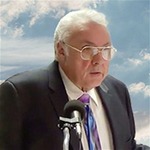
Hey, podcast listeners. Thanks for streaming today's podcast from Pathway to Victory and Dr. Robert Jeffress. We're dedicated to bringing you bold biblical teaching that transforms your life and strengthens your walk with God. And you can study God's Word alongside Dr.
Jeffress in person on the 2026 Pathway to Victory cruise to Alaska. Have you ever witnessed the breathtaking majesty of massive glaciers rising from crystal blue waters or stood in awe as bald eagles soar over snow-capped mountains? I want you to experience these unforgettable moments with me on the Pathway to Victory cruise to Alaska, June 13th through 20th, 2026. Join Dr. Jeffress and the Pathway to Victory family for a spectacular seven-day adventure aboard Holland America's luxurious Koningsdam.
Indulge in elegant staterooms, world-class dining, and expansive decks perfect for breathtaking views. Visit historic ports like Juneau, Skagway, and Ketchikan, where wilderness and frontier history await. There's something powerful about connecting with God and fellow believers in the majesty of his untamed wilderness. I truly believe this journey will refresh you spiritually, physically, and emotionally. Cabins are filling quickly, so reserve yours today.
To book your spot on the 2026 Pathway to Victory Cruise to Alaska, call 888-280-6747 or go to ptv.org.
Now, here's today's podcast from Pathway to Victory. Hi, this is Robert Jeffers, and I'm glad to study God's Word with you every day on this Bible teaching program. On today's edition, A Pathway to Victory. And if you submit yourself to God's testing, Don't be surprised. If that test involves that thing that is most important to you.
a relationship, a dream. And it's your response to that test that determines and reveals whether or not you truly have saving faith. Welcome to Pathway to Victory with author and pastor Dr. Robert Jeffers. What does it mean to have a faith that goes beyond mere belief?
Well, today on Pathway to Victory, Dr. Robert Jeffers tackles one of the most challenging stories in all of Scripture. When God asked Abraham to offer his beloved son Isaac as a sacrifice. This defining moment reveals what extreme faith really looks like. But first, let's take a minute to hear some important ministry updates.
Thanks, David, and welcome again to Pathway to Victory. Just before we commence with our study in James, I want to invite all of our friends to join us on the 2026 Pathway to Victory cruise to Alaska. By signing up now, you'll have access to premium cabin space. Plus, you can look forward to seven exquisite days on board a luxurious cruise liner for the vacation of a lifetime. The dates are June 13th through 20th, 2026.
Look, cruise ships leave the harbor every day of the summer bound for Alaska, but this one is truly unique. In addition to the world-class service, we're bringing our own Christian music and entertainment, including America's favorite funny man, comedian Dennis Swanberg.
So check it out and sign up today by going to ptv.org. The fact that you're listening to Pathway to Victory is good evidence that you're serious about your Christian walk, even when life is hard. And along those lines, I'm inviting you to join me on a life-changing journey to understand the profound and practical letter of James. I've written a book that will walk you through this New Testament letter. My book is titled, How to Know if You're Really Saved.
You see, true salvation isn't just a one-time decision. Salvation is something you live out every single day. in my book will examine how genuine faith manifests through perseverance and trials, and I'm offering this faith building resource to anyone willing to support pathway to victory with a generous gift. We'll share further details just after my message. But right now, let's turn in our Bibles to James chapter 2.
I titled today's message, Extreme Faith. In Acts 16:30, the Philippian jailer asked two of his prisoners, the Apostle Paul and Silas. Perhaps the most important question in life. The jailer wanted to know What do I need to do? to be saved.
And when you think about it, isn't that life's most important question? If there is something more. than life in the here and now. If there is an existence beyond the grave, if there is a God who's going to judge me one day, what do I have to do to escape the horrors of eternal separation from God in hell? That was the question.
And Paul answered very, very simply, He said, believe. That means trust in, depend upon, lean upon, believe on the Lord Jesus Christ, and you shall be saved. How is a person saved from hell? By trusting. In the grace of God.
Demonstrated when Christ died for our sins, trusting in what Christ did for us for our salvation. Is what brings us eternal security that one day we'll be in heaven. If there is anything else that we need to do, then Paul should have said it. But he said, there's only one thing to do: believe on the Lord Jesus Christ, and you will be saved. Paul elaborates on that truth in Romans 4.
Look at verses 1 to 3. What do we say about Abraham, our forefather, according to the flesh? For if Abraham was justified, that is, made right with God by works, he has something to boast about, but not before God. For what does the scripture say? Abraham believed God and it was credited to him as righteousness.
Abraham was declared righteous when he believed. It wasn't after he was circumcised. It wasn't after he was willing to offer Isaac as a sacrifice. In that moment that Abraham believed the promises of God, that's the moment he was declared not guilty in the presence of God. That seems pretty clear, doesn't it?
Wait a minute. James, the half-brother of Jesus, seems to say something completely different and contradictory. In the passage we looked at last time from James 2, beginning in verse 1, James wrote, Was not Abraham our father justified by works when he offered up Isaac, his son, on the altar? You see that faith was working with his works, and as a result of the works, his faith was perfected. Verse 24, you see that a man is justified, made righteous by works and not by faith alone.
Last time we looked at what appeared to be the greatest contradiction in the Bible. Paul who says we're justified by our faith in God's grace without works. James, who says we are saved by faith and works. You know, we better get this right if we're going to heaven, hadn't we? Is it faith or is it works?
Remember last time we saw that word justified is the key word, righteous. When Paul uses the word justified, he uses the first meaning of justified to make a person righteous. We are made righteous by our faith in God's grace. But the word justified can also mean to show to be righteous, to prove to others that you are righteous. And that's what James is talking about.
When Paul talks about the moment Abraham was made righteous, it was in that moment he believed the promises of God. But when James says Abraham was made righteous, he means he was shown to be righteous by his willingness to offer his son Isaac as a sacrifice. And it's that story that we're going to look at today. When we studied Abraham's life a few years ago, we looked at this incident, but it's worth looking at again because it teaches us a very important truth about what extreme faith actually looks like. I want you to take your Bibles and turn not to James 2, but to Genesis chapter 22.
Search through the scriptures. And you'll find that the men and women who have been used most powerfully by God. Are those who have gone through the severest trials and the greatest tests? Do you desire to be used by God in a powerful way before you answer too quickly? You might want to consider this story from Abraham's life.
You know, I believe every person has a defining moment in his or her life, a moment that shows what is really in his or her heart. For Abraham Lincoln, that deciding, defining moment was the Civil War. For George W. Bush, it was 9-11. For Noah, it was the flood.
For Adam and Eve, it was the garden. For David and Bathsheba, It was that night they spent together. There is an event, a defining moment in our life. And today we're going to look at the defining moment in Abraham's life. Notice the preparation, first of all, for this event, the preparation for the test.
Genesis 22:1.
Now it came about after these things. Whenever you see that phrase, after these things, you have to ask yourself, after what things?
Well, Moses is talking about after everything that had happened to Abraham so far. Let me give you a brief synopsis of his life. Remember when Abraham was 75? God told him, I want you to take your family, your wife, your relatives, your possessions, and go to a land that I will show you. And he's promised Abraham.
He said, Abraham. Even though you're 75, I'm going to make you a great nation, the father of a great nation. From you, all the nations of the world shall be blessed. Abraham had a hard time believing that. He had a hard time believing he would be the father of many when he wasn't the father of any at that point in time.
So God said, Abraham, go outside, look up in the sky and count the stars. See how many of them there are, so shall your descendants be. And Genesis 15, 6 says, At that moment Abraham believed God and his faith was counted as righteousness. That's the moment Abraham was declared righteous in a right standing with God.
So he picks up and he moves and they get to the promised land. Ten years pass and nothing has happened.
So Abraham and Sarah decide they need to help God out in fulfilling his promise. Never a good idea. Never a good idea. But they went ahead. Sarah said, Now, behold, the Lord has prevented me from bearing children, Abraham.
So please go into my maid, have sex with my maid, and perhaps I'll obtain a child through her. What in the world could go wrong with that plan, right? Everything. Abraham agreed with the plan. He had sex with Sarah's maid.
And at 86 years of age, Abraham became a father. And he thought, surely this is the fulfillment of the promise. It's not how we thought it was going to happen. It didn't check all the boxes, but it was close enough.
So they accepted that son. His name was Ishmael. Thirteen years pass. Ishmael's a young teenager. Abraham is 99 years old when God appears to him again in Genesis 17.
And God said to Abraham, as for Sarai, your wife, you shall not call her name Sarai, but Sarah shall be her name. I will bless her, and indeed I will give you a son by her, and I will bless her, and she shall be the mother of nations. Kings of peoples will come from her. But God said, Sarah, your wife, will bear you a son, and you shall call his name Isaac. And I will establish my covenant with him for an everlasting covenant.
In verse 21, God says, for my covenant I will establish. Isaac, whom Sarah will bear to you at this same time next year. Abraham had a son, Ishmael. But Genesis 17 said the promise of a great nation wasn't going to Ishmael, it was going to another son, Isaac. By the way, the Tension you see right this morning in the Middle East and the rumblings of war once again, it's all based on this passage.
Who is the rightful heir of the promise made to Abraham? Is it Isaac or is it Ishmael? God's word says it is through Isaac, it is through the Jewish people that this promise will be fulfilled.
Well, Abraham was dumbfounded when God said that. You mean when I'm nearly 100 years old, I'm going to have a son? Look at me, God. I'm almost 100 years of age. And this wife you gave me, she's no spring chicken either.
She's almost 90 years old. When Sarah heard it, she laughed. She just imagined strolling that baby carriage into the Mesopotamian park every day or going to PTA meetings with Abraham. I mean, it was ridiculous. But look what happened, Genesis 21, verse 2.
So Sarah conceived and bore a son to Abraham in his old age at the appointed time for which God had spoken to him. And Abraham called the name of his son who was born to him Isaac. Here at last was the child of promise. The final verses of Genesis 21 paint a picture of contentment. Abraham planted a tamarish tree at Beersheba, and there he called on the name of the Lord, the everlasting God.
Can't you see Abraham sitting under that tree? with his new son. Saying now. God's promise has been fulfilled.
Now I can relax. Isn't God good? Little did Abraham know. that his greatest test in life was just around the corner. And that's when we get to Genesis 22.
Now it came about after these things that God tested. Tested. Abraham. Tested Abraham. Why would Abraham need to be tested?
Hadn't he proven himself to be faithful after all of these years? Why did God test Abraham? Why does he test any of us? who are followers of Christ. F.
B. Meyer, the great scholar, has this helpful word about testing. He writes, Satan tempts us that he may bring out the evil that is in our hearts. But God tries or tests us that He may bring out all the good. Trials are therefore God's vote of confidence in us.
I love that. Testing is God's vote of confidence in you. Are you going through a time of testing right now? It's not for an evil purpose. It's for a good purpose.
God is not trying to destroy your faith, He's trying to strengthen your faith. We saw that in James chapter 1. He said, We can count it all joy when we encounter various trials, knowing that the testing of our faith produces endurance. But then he talks about temptation and says, Don't say when you're tempted, you're being tempted by God, for God doesn't tempt anyone. No, God tests us to strengthen us.
Satan tempts us to destroy us. Big difference. Actually, A single situation can be both a test and a temptation. Let's say you lose your job. You don't have a way to provide for your family.
That can be a test God is using to strengthen your dependence on Him. At the very same time, Satan will use that same situation for a different motivation. He'll use it to try to destroy your faith in God. Whether a difficult situation Is a test from God or a temptation from Satan Really depends on your response to that difficult situation. Remember, Job in a single day, he lost his livelihood, he lost all of his children in a freak accident.
He lost his own health, and yet in Job 23, 10 he said, But God knows the way I take. When he has tried me, I shall come forth as gold. There are some of you here, some of you watching this program. You're going through a severe test in your life right now. God knows it.
He may have planned it. And He's going to use it for your good. That was God's purpose here. Look at the test itself in verse 2. God said, Abraham, take your son, your only son, whom you love, Isaac, and go to the land of Moriah and offer him there as a burnt offering on one of the mountains which I will tell you.
Kill my son This made absolutely no sense. Why? To sacrifice Isaac would not only devastate me and Sarah. It would mean the end of this vision before it ever got off the ground of a great nation. It doesn't make sense, God.
Most of us, after hearing such a command, would wonder if it was really the voice of God we had even heard. But Abraham had heard God's voice too often to mistake it for anything else. And that's what makes the response to this test so unusual. Abraham obeyed. immediately.
You know, Abraham. We're surprised that this command came. But he understood it was certainly within God's right to ask for such a sacrifice. No doubt, for many years, Abraham had witnessed Canaanite fathers offering their children as burnt sacrifices to appease the angry gods. It's not that the Canaanites loved their children any less than Abraham loved his.
But their superstition, coupled with their sinfulness, made them desperate to appease their angry gods they had imagined. I'm sure as Abraham walked by and saw those sacrifices, he was grateful that God had never asked him before to do such a thing. But now that God had, Look what his response was. Verse 3: So Abraham rose early in the morning. Boy, I would have found a reason to sleep in that day.
Wouldn't you? or to linger, or to come up with excuses, not Abraham. He rose early in the morning, and saddled his donkey, and took two of his young men with him, and Isaac his son. And he split wood for the burnt offering, and arose and went to the place which God had told him. The journey to the place of sacrifice, Moriah, was about fifty miles.
It would take three days to travel there by foot. One commentator imagines what it must have been like for Isaac.
now a middle-aged teenager at the time. What it must have been like is he and his dad walked together toward Moriah. I'm sure Isaac tried to engage himself in Abraham and conversation, but Abraham was strangely silent. Isaac didn't know that Abraham was probably praying for strength to take every next step. Finally, they arrived at the place of sacrifice.
Verse five says Abraham said to the young men with him, Stay here with the donkey, and I and the lad will go over there. And we will worship. And we will return to you. That is amazing. We will return to you.
How was that going to happen if Abraham had killed Isaac? Abraham didn't understand everything. But this is what he did understand. Hebrews 11, verses 17 to 19 give us the commentary on this event. By faith, Abraham, when he was tested, offered up Isaac, and he who had received the promises was offering up his only begotten son.
For it was he to whom it was said, In Isaac, your descendants shall be called. But Abraham considered that God is able to raise people even from the dead, from which he also received him back as a type. He considered. That God is able. That word considered in Greek means to calculate.
to calculate. I imagine the night before had been a sleepless night for Abraham as he tossed and turned in bed. Contemplating what he had to do the next morning. And I'm sure in that sleepless night, He did maybe what I often do and perhaps you've done. Develop a list of pros and cons for engaging in a certain action.
I imagine there are plenty of cons reasons not to obey God. It would mean the death of this vision. It would destroy the family. It would ruin the reputation of God. There were all kinds of reasons not to obey God.
But there were some probes as well. God had been faithful to keep every other promise he had made. God miraculously brought about the birth of Isaac. And as he added up the plus and the minuses, he considered that God is able. He calculated he could take the risk and obey God because God is able to even raise people from the dead.
If he killed Isaac, God could raise him from the dead and bring him back.
Now, what was amazing about that was nobody had ever been raised from the dead before at this point. Nobody. Nobody. Abraham never had gone to an Easter service. Do you realize that?
Because there had been no Jesus Christ and no resurrection from the dead. There had been no 1 Corinthians 15 about the power of the resurrection. He knew none of that, but he knew God was able to keep his promises. And so he obeyed God. Look at verses 6 and 7.
Abraham took the wood of the burnt offering and laid it on Isaac, his son. Picture that. And he took in his hand the fire and the knife, so the two of them walked on together. Isaac spoke to his father and said, My father, Behold the fire and the wood. But where is the lamb?
for the burnt offering. Isaac had watched Abraham perform many sacrifices. He knew what you had to have, but primarily you had to have something to sacrifice. Where is the sacrifice, Dad? That question must have been like a knife plunged in the heart of Abraham.
We've reached this climactic moment in Abraham's story, and I'm urging you to keep listening when our study continues. Plus, in a moment, David will explain how you can receive the audio CDs and the video DVDs for this teaching series on James. By owning this collection, you'll be able to listen at your own pace, and you can share these studies with your friends and family as well. But that's not all. I'm eager to send you my latest book about the teaching in James.
My book is called How to Know If You're Really Saved. We're living in hostile days when our faith in Jesus Christ is tested, mocked, and in some cases smothered and silenced by those who vehemently oppose the gospel. These are times that call for extreme faith, just like Abraham. In my new book, How to Know If You're Really Saved, we'll explore what extreme faith actually looks like. If you're going through a difficult time right now, remember it's a test of your faith.
And in reality, it's a statement of God's confidence in you. This may be the most important book you read all year long, and I want to send you a copy. Again, my book is titled, How to Know If You're Really Saved, and it's yours when you give a generous gift to support the ministry of Pathway to Victory. Please be generous as you think about the size of your gift. God has positioned Pathway to Victory to engage our culture in ways I never dreamed possible.
And because of partners like you, we're reaching millions around the globe.
So thank you for sharing in this important work of God as one of our partners. We couldn't do it without you. Here's David to tell you more. When you support the Ministry of Pathway to Victory by giving a generous gift, we'll say thanks by sending you the brand new book by Dr. Jeffress, How to Know If You're Really Saved.
To request your copy, call 866-999-2965 or go online to ptv.org.
Now, when your gift is $75 or more, we'll also send you all 12 messages from the brand new How to Know If You're Really Saved teaching series.
Now, these messages come on both DVD video and MP3 format audio discs and even come with a personal and group study guide. Again, call 866-999-2965 or go to ptv.org. If you'd prefer to send your donation by mail, write to PO Box 223-609, Dallas, Texas, 75222. That's PO Box 223-609, Dallas, Texas, 75222. I'm David J.
Mullins, inviting you back next time when Dr. Jeffers concludes his message called Extreme Faith. That's Thursday here on Pathway to Victory. Pathway to Victory with Dr. Robert Jeffress comes from the pulpit of the First Baptist Church of Dallas, Texas.
You made it to the end of today's podcast from Pathway to Victory, and we're so glad you're here. Pathway to Victory relies on the generosity of loyal listeners like you to make this podcast possible. One of the most impactful ways you can give is by becoming a Pathway Partner. Your monthly gift will empower Pathway to Victory to share the gospel of Jesus Christ and help others become rooted more firmly in His Word. To become a Pathway Partner, go to ptv.org/slash/donate or follow the link in our show notes.
We hope you've been blessed by today's podcast, From Pathway to Victory.