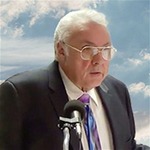
Hey, podcast listeners. Thanks for streaming today's podcast from Pathway to Victory. Pathway to Victory is a nonprofit ministry featuring the Bible teaching of Dr. Robert Jeffress. And right now, your generous gift will have twice the impact thanks to the Salt and Light Matching Challenge active now through July 6.
To give a special matching challenge gift, go to ptv.org slash donate or follow the link in our show notes. Now here's today's podcast from Pathway to Victory. And I'm glad to study God's Word with you every day on this Bible teaching program on today's edition of Pathway to Victory. But Jesus said that when you go out to preach the kingdom, the majority of people will not respond to this offer of the kingdom, but some will. That brings up the question, why do some people respond to God's Word and other people reject it?
That's the story that Jesus was going to tell about the kingdom of God. Welcome to Pathway to Victory with author and pastor Dr. Robert Jeffress. Whenever you share the gospel with someone, there's no predicting how they're going to respond. Some people welcome Jesus with open arms while others flat out reject him.
Why do people react so differently to the same message? Today on Pathway to Victory, Dr. Robert Jeffress answers that question in a message called Prescription for a Healthy Heart. Now here's our Bible teacher to introduce today's message.
Dr. Jeffress. Thanks, David, and welcome to this Monday edition of Pathway to Victory. I love the first few sentences in John's gospel. He wrote, In the beginning was the Word, and the Word was with God, and the Word was God. In Him was life, and the life was the light of men.
Quickly and efficiently, John declared Jesus' unity with God. And he identified Jesus as the light of the world. In keeping with those truths, we chose to call our June giving plan the Salt and Light Matching Challenge. You see, our efforts have nothing to do with shining a light on Pathway to Victory, but our fundraising efforts have everything to do with shining the light of God's truth into the dark places of the world. Gratefully, because of the $1 million matching challenge, every dollar you give this month will be automatically doubled. And every dollar that's accumulated in this fund will be used by Pathway to Victory to pierce the darkness with the light of God's Word.
We're asking God to use these resources to impact millions more in 2025 and beyond. So let me urge you to participate in this exciting opportunity with your best gift. And as you do, I'll say thanks by providing a book I've written that aligns perfectly with these purposes. It's my brand new book called Shine the Light. By reading my book, you'll discover how your courage, kindness, and faith can shine a light of hope into the dark culture in which we live. I'll say more about my book and other resources later in today's program. But right now, let's focus our attention on our study from Luke, chapter 8.
I've titled today's message, Prescription for a Healthy Heart. One thing we preachers learn very quickly is the power of a good story. In fact, we often learn the lesson that long after people forget the sermon, they remember the stories in the sermon. They remember that more than they do the sermon points.
Then I'm still getting letters about my cat story. People remember those stories very, very well. Jesus understood the power of stories, which is why he told them in such number. Of course, the stories he told were called parables. And today in our study of the life of Christ as told by Luke, we have come to the first of the parables that Jesus told. And it's a story that answers a question perhaps you have wondered about. Why doesn't everyone who hears the gospel respond to the gospel? Or put another way, why is it you can have two people listening to the same message from God's Word, one responds enthusiastically to that message and the other turns away from that message? Well, Jesus answers the story in the first parable we're going to look at today.
If you have your Bibles, I want you to turn to Luke chapter 8 as we look at Jesus' prescription for a healthy heart. Now, since this is the first of the parables we're going to look at, it might be helpful to remember a few things about parables. First of all, the definition of a parable. The word parable comes from a Greek word that means to lay alongside of. A parable is an earthly story, a story from everyday experience that Jesus lays alongside a deep spiritual truth to illustrate that truth.
Now, there are four characteristics of parables that will help you understand them when you read them. First of all, parables teach only one truth. Now, if you remember your English classes, allegories, remember an allegory? An allegory was a story where everything in the story represented something else. Every person had a symbolic meaning.
Every object, the door, you know, the grass, whatever, had a special meaning. That's not true in parables. There's only one truth that a parable teaches. Number two, parables must be understood in the terms of the culture. Parables have to be understood in terms of the culture. As we go through Luke's gospel and read some of these stories, they're going to just seem plain weird to us.
Or they seem unfair. They're strange. And the reason they seem strange to us is because we're reading these stories through the Western 21st century mindset. We have to travel back in time to understand the culture in which these were written.
As one writer says, we need to be able to smell the aroma of the Jewish villages. We need to feel the dust of the Galilean roads as we try to understand what Jesus is teaching. Number three, and this is key, parables are meant to both clarify and obscure God's truth. You know, I hear people say, well, you know, since Jesus told so many stories, pastor, you need to tell more stories.
We need to hear more stories because stories help us understand God's truth. Well, as we're going to see, Jesus did use parables to clarify God's truth for some people, but he actually used parables to also obscure or hide God's truth from other people. Jesus isn't trying to make God's word clear to everyone, only to some people.
He said, well, now that sounds kind of strange. Well, listen to what Jesus himself said. After telling the story we're going to look at in just a moment, notice in Luke 8, verse 9, the disciples begin questioning him as to what this story, this parable might be. And Jesus answered, to you it has been granted to know the mysteries of the kingdom of God, but the rest it is in parables in order that, and then he quotes from Isaiah, seeing they may not see and hearing they may not understand. This first parable occurred at a very critical time in Jesus' ministry. The Jewish leaders had rejected Jesus' Messiah.
They were plotting to destroy him. And so Jesus is now speaking his truth only to those whose hearts are receptive. Jesus uses parables to actually hide God's truth from those who have rejected his truth already. And number four, parables must be read in context. Each one of these stories can't be ripped out and looked at on its own.
It has to be looked at in context. Parables were given to illustrate a certain spiritual truth or to answer a specific question. And that's certainly true about this first parable. You've turned to Luke chapter 8. Let's remind ourselves of the context of Luke chapter 8. Look at verse 10 again. And Jesus said to you, disciples, it has been granted to know the mysteries of the kingdom of God.
Jesus told this parable to illustrate one of the mysteries about the kingdom of God. Now the phrase kingdom of God is a phrase we read all the time in the Bible, don't we? What is the kingdom of God?
Now listen to this. A king's kingdom was that territory over which a king ruled. It was that piece of real estate within which what the king wanted done would get done. Where is it that God's will is being done? You say, when a pastor, doesn't the Bible teach God is sovereign? He's in control of all the universe, all creation?
Yes. Yes, in a theological sense, that is true. But in a practical sense, there is one small speck of real estate in the universe where God's will is not being done.
And that little speck of real estate is called planet earth. Right now, God for his own reason has allowed a temporary rebellion against the king. One day God is going to quell the rebellion on planet earth. One day Jesus is coming back again to establish his what? His kingdom on the world. And at that time, what God wants is going to be done. Isn't that what Jesus prayed? Thy what? Kingdom come, thy will be done on earth as it is now being done in heaven.
Now, stay with me on this. When Jesus came the first time, he actually offered to set up his kingdom. Had the Jews received him as Messiah, he would have established his kingdom right there. People would have submitted to Israel. It would have been the kingdom of God on earth. But they didn't accept his kingdom, did they? They rejected his kingdom.
Now, those of you who are thinking people are probably saying to yourself, no, wait a minute, pastor. What if the Jews had accepted Jesus and his kingdom rule? That means instead of crucifying him, they would have submitted to him. And if he hadn't been crucified, he wouldn't have died for the sins of the world. And had he not died for the sins of the world, you and I would spend eternity in hell.
That's absolutely correct. And here's the genius of God. God used the rejection of Israel to accomplish his ultimate purpose, which was the salvation of the world. By the Jews' temporary rejection of Jesus as Messiah, you and I have been saved. That's what Peter said in his sermon at Pentecost in Acts 2 23 and 24. He said to these Jews, this man, Jesus, was delivered up to be crucified by the predetermined plan of God.
But you nailed him to the cross. In other words, you're responsible for rejecting Christ, but your rejection was still all a part of God's plan. So when the kingdom of God was offered the first time, the people said no. Now, does that mean the kingdom of God has been canceled?
No. It hasn't been canceled. It's just been postponed. And that is what the mystery of the kingdom of God is. The kingdom of God hasn't been canceled.
It's just been postponed. Right now, God's kingdom is secretly but powerfully working in the hearts of individual men and women. And Jesus was about to send his apostles out in Luke 9 to preach the kingdom of God. But Jesus said, when you go out to preach the kingdom, don't be discouraged when everybody doesn't respond. The majority of people will not respond to this offer of the kingdom, but some will. And that brings up the question, why do some people respond to God's word and other people reject it? That's the story that Jesus was going to tell about the kingdom of God.
By the way, don't you wonder that same question? Why doesn't everybody respond to God's word in the same way? Right here in our congregation today, we have the people, unbelievers, who have not yet trusted in Christ or may be watching this broadcast on iCampus or Pathway to Victory. Some will respond to the gospel and trust in Christ. Others will walk away completely unchanged. Or you have two Christian women sitting in a Bible study together. They hear the very same message from God's word. One woman is convicted to submit every part of her life to the lordship of Jesus Christ.
The other woman yawns her way through the study. How do you explain that different response? Or you've seen this many times. Here are two children being reared in a Christian home. Same parents, same Christian parents. They're brought to the same Bible-believing church. One child becomes a dedicated follower of Christ.
The other child an agnostic or an atheist. How do you explain those differing responses to the word of God? Well, Jesus answers that story in this parable we call the parable of the soils. Look at verse 5. The sower went out to sow his seed. And the sower, as much seed as he scattered, the seed fell on four different types of soil, Jesus said.
Notice what he says in verse 5. First of all, some of the seed that the sower spread fell on the hard soil. This was the soil closest to the sower's feet. This was the soil that had become very hardened and compacted almost like asphalt by the constant pounding of human foot traffic. And so when the sower's seed fell on this hard soil, the seed couldn't penetrate the soil.
It would just lie on top of it. And the birds would soon come. And they would eat that seed.
It was a nice breakfast or brunch for them. They were happy to see it because it had not yet penetrated the soil. This was the seed that never took root. And then some of the seed that the sower spread, spread on a second kind of soil, the thin soil.
Look at verse 6. Another seed fell on rocky soil. Now underneath the top soil in Israel, there is a layer of hard limestone. And in many cases, that limestone is several inches, just several inches beneath the top soil. So in this instance, the seed would fall on the soil. The soil was loose. It would take root in the soil. But when the seed began to grow roots, the roots would press against that limestone and they couldn't go deep. And because the plant had nowhere else to go, it would go upward above the soil. And many times, this plant would be the first to bloom and it would produce foliage that was more brilliant and larger than the rest of the plants.
That sounds good, right? But when the hot sun came out, this plant was the first to wither away. Why? Because it had not developed a deep root system that could derive the nutrients and moisture it needed from the soil. That's what happened. As soon as this grew up, it withered away because it had no moisture. The third kind of soil Jesus mentioned was the weed-infested soil. And other seed fell among the thorns. And the thorns grew up with it and choked it out. Here is seed that falls on soil that is loose.
It is deep. It starts to take root and grow a root system. And as soon as it begins to grow that root system, it is strangled out by a vast network of weeds underneath the soil that have been there long before the plant ever took root.
And these weeds overpower the roots and they strangle the life out of the plant. Finally, there is the good soil. And the other seed fell into the good soil and grew up and produced a crop a hundred times as great. Here is seed that falls on what Jesus called the good soil.
It is loose, not hard. It is deep, not thin. It is free from the infestation of weeds.
It grows deep roots and as a result, it produces fruit 100 times as great as what was planted. Now, what's the meaning of this parable? Jesus says in verses 9 and 10, let him who has ears hear. That is, the one who's really interested in what Jesus has to say, listen to his explanation.
What does this mean? Obviously, this isn't a story about soil conservation. Jesus tells us beginning verse 11 what this parable means. He said the parable is this. First of all, the seed is the Word of God.
Now, that's key to understanding this. The seed is not salvation or eternal life. If the seed is salvation or eternal life, then you run into a big problem of people losing their salvation in this passage. But Jesus said very clearly, the seed is the Word of God. And the sower is just anyone who spreads the Word of God. You know, the sower did not have to manufacture the seed. The seed was already given. His job was just to spread it.
And it's the same way with us. Our job is to not make up the message, not to manufacture the message, it is to spread the message. The seed is the Word of God. Now, the method the sower would use to spread the seed was a method that used to be called broadcasting. That's what the sower did. He broadcasted the seed. He would spread it as wide and as plentiful as he could.
Why? Because the more seed he spread, the more fruit he would produce. Only 25% of the soil was any good. But he played the law of averages. The more seed he spread, the more fruit he would produce. Now, in our culture, we have co-opted that agricultural term broadcasting. And we use it today to refer to the electronic transmission of a message or a program. Radio broadcasting, television broadcasting, internet media.
What it's talking about is spreading a message as widely as you possibly can, knowing that the more you spread it, the more likely more people are to hear it and respond to it. You know, I have people who ask me sometimes, Pastor, why does our church spend so much money on media and broadcasting? Why do we spend all that money on that? Here's the question they're really asking. Why do we spend so much money spreading the Word of God throughout the world? Well, there's a simple answer to that.
Duh. I mean, that's a ridiculous question when you think about it. Why wouldn't you spread the Word of God as broadly and as widely as you can? The fact is not everybody's going to respond. Most people won't respond, but some will. And the more you spread it, the more response you are going to have. I was told just this week that in the last 12 months, there have been one and a half million downloads of our messages just on the internet alone. That doesn't count radio and television. You know, I believe God has given us this technology in these last days to make sure everybody has a chance to hear the gospel before Christ returns. How foolish it would be not to take advantage of that. And gratefully, we have a church.
And I'm speaking to our home audience watching Pathway to Victory. We have a church, First Baptist Church in Dallas, that loves the Word of God. And it loves people. And it has a mission of spreading God's Word to as many people as possible. Thank God for a church like this.
A church like you that has a vision for spreading the Word of God. Well, that was the sower. Now, what I want you to see in this passage is the amount of fruit that grew had nothing to do with the sower. There's no indication in this passage that this sower had any special skill.
He just threw the stuff out there. It didn't depend upon the sower. It really didn't depend upon the seed. The seed was the same in all four instances.
What determined whether the seed produced fruit was the condition of the soil on which it fell? Now, remember, Jesus is answering the question, why is it that people respond differently to the Word of God? Some accept it, some reject it.
Why is that? It all has to do with the condition of the human heart that receives that truth. And Jesus points out that these four kinds of soils represent four conditions of the human heart. First of all, verse 12, the hard soil represents the impenetrable heart. Look at verse 12. And those beside the road are those who have heard, and then the devil comes and takes away the word from their heart so that they might not believe and be saved. Remember, this is a soil that the seed just would lay upon.
The birds would come and snatch it away. Jesus said this represents the hard heart, the heart that hears the Word of God, but the Word of God never even is able to penetrate the heart. Why? Because the heart has become so hardened. How do people develop a hard heart?
Listen to this. It is by a constant rejection of the Word of God. Did you know it is possible to say no to God so often that you harden your own heart to a point that you are unable to believe the truth?
This is God's prescription for a healthy heart. And there's much more I want to show you in Luke chapter 8 because the principles in this passage will intensify your love for God and His Word. Look, as your radio pastor and Bible teacher, I know that you've invested a lot of personal energy building your faith. You've been serious about growing deeper in your understanding of God's Word. You're to be commended.
That being said, maybe it's time to take your next steps. Perhaps you're ready to make an eternal impact. You see, while the world is growing darker, your light shines even brighter. Well, when you give a generous gift, a support pathway to victory, you're investing in a ministry that's become a beacon of light and hope for a world that is shrouded in darkness. Plus, when you give a gift today, I'm going to send you my brand-new book, which contains a brief and compelling tutorial on how to live with purpose in our dark world. My book is titled Shine the Light. It's a great way for me to say thank you for your generous support by providing a book that will inspire your walk with God. Because of the Salt and Light Matching Challenge, there's never been a better time to invest in Pathway to Victory. Every dollar you give right now will be automatically matched and therefore doubled in size and impact.
The goal is $1 million so that we can utilize the combined $2 million toward reaching more people with the light of God's Word. Will you stand with me? Will you be Salt and Light in this generation? Join the Salt and Light Matching Challenge today because America needs bold believers, now more than ever.
David. Thanks, Dr. Jeffress. You're invited to request the brand-new book by Dr. Jeffress, Shine the Light, when you give a generous gift to support the ministry of Pathway to Victory. Simply call 866-999-2965 or visit our website at ptv.org. Now, when you give an especially generous gift of $100 or more, we'll also include the complete Shine the Light Teaching Series on audio and video discs.
Remember, your gift right now will have twice the impact because of our Salt and Light Matching Challenge. So be sure to get in touch right away. Call 866-999-2965 or go to ptv.org. You could send your request by mail if you'd like. Write to P.O. Box 223-609, Dallas, Texas, 75222. One more time, that's P.O.
Box 223-609, Dallas, Texas, 75222. I'm David J. Mullins. Join us again next time for the conclusion of this message called Prescription for a Healthy Heart here on Pathway to Victory. Pathway to Victory with Dr. Robert Jeffress comes from the pulpit of the First Baptist Church of Dallas, Texas. You made it to the end of today's podcast from Pathway to Victory, and we're so glad you're here. Pathway to Victory relies on the generosity of loyal listeners like you to make this podcast possible. And right now, your ministry gift will be matched and therefore doubled in impact thanks to the Salt and Light Matching Challenge. Take advantage of this opportunity to double your impact before the deadline on July 6th. To give toward the matching challenge, go to ptv.org slash donate or follow the link in our show notes. We hope you've been blessed by today's podcast from Pathway to Victory.