Four hundred fifty years of silence. The last prophet of Israel was Malachi, and then revelation from God was put on hold. Four hundred fifty years with no direction from on high, and by now the people needed direction badly. Luke was a doctor, the man who wrote the third of the four gospels. He documents the appearance of a man called John the Baptist.
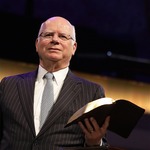
This man's preaching broke the long silence from heaven. From Chicago, this is The Moody Church Hour, a weekly broadcast of worship and teaching with Pastor Philip Miller. We're beginning a long series from the Gospel of Luke. Part one of this series focuses on the topic: the Savior comes, and we'll begin with breaking the silence. Here now is Pastor Philip, along with worship leader Tim Stafford.
Well, good morning, Moody Church. Good, good to see all of you. One of the things I love about Moody Church is how God draws us from all over the world, all over the place, and has made us one big family in Jesus Christ. Amen, amen. Would you bow your heads and pray with me, Father?
We thank you that you have made us one family in Jesus Christ. Father, help us as one people, one family, called by your name. To live out this gospel proclamation right here in Chicago, and now all around the world, we're so grateful. We pray this in Jesus' name, Amen. Amen.
Let's join together in worship. You made the sun rise. You made the mountains rise. The evening sun through wonders, the earth is your throne, from desert to the sea, all nature testifies. We'll stand and praise the Lord, praise the Lord, sing His greatness.
Operations. Praise the Lord. Raise your voice. You rise to all your ends. From penitence to rest, burn everything that rests.
Praise the Lord. Sing for these reasons, and drums and pipes ring out. I'll heaven hear the sound. Bless every nation, bring its rulers to the King. I'm brought up on these, these words and prayers alone.
Prayers alone, sing His praises, all creation, praise the Lord, praise your Lord, you rise and all dance from praises to prayers, bless everything that happens, praise the Lord, oh praise the Lord, sing His praises, all creation, praise the Lord, praise your Lord, you rise and all dance from praises to prayers, you dance and praise, all creatures sing, praise the Lord, sing His praises, all creation, praise the Lord, praise your Lord, you rise and all dance from praises to prayers, bless every nation, bring its rulers to the King. Praise the Lord, praise the Lord, all creation, praise the Lord, praise your Lord, you rise and all dance from praises to prayers, bless every nation, bring its rulers to the King.Summer and winter, springtime and harvest, sun and stars, and oceans of gold. With all nature and its wonders, to thy great goodness, mercy and love, praise Thy greatness, praise Thy goodness, morning by morning to. Mercy, mercy, all I can be, I can't ever be. Give me strength, goodness, for us to be.
Mercy. He sent into him a holy presence to hear and to guide. Strengthen today and guide for tomorrow. Blessings on my new friend, cousin, his son. Praise Thy Name, bless, praise Thy Name, bless, for in Thy morning, through the seas I see, all I have need, all I have, all I have.
Praise Thy Name, bless, praise Thy Name, bless. All that's for us to see. Great is thy greatness, great is thy greatness. Glory and glory to the mercies I see. All I have.
Jesus, I am yours. Jesus, I am yours. Jesus, I am yours. Amen! Amen!
God is faithful. Let's give Him praise, Father. We thank you because you are abundantly faithful to us. We may not have everything we want, but we have everything we need. You have been faithful through and through, and we can count on you.
Yesterday, today, and forever.
So we thank you in Jesus' name, and all God's people said, "Amen, Amen." You may be seated. The Savior has come, and the Savior is coming. Let's also celebrate that today. Come, thou long expected Jesus. Jesus, born to set thy people free, from our fears and sins released, that at last our debts may be paid.
He is the strength and consolation for all the weary, all the tired, all the weary, all the tired. Born thy people to deliver, born a child of heaven, a king, born to redeem. Us forever, our generations in the green. Our Lord Jesus, King, ruling over Our hearts are open. Our eyes are reaching.
Lead us to higher heights. By Thy most saving hand, raise us to Thee. Lord, as we think on these things, all our hopes, everything we could know about the future, is in Christ. You've given us all things, that we can have a house with you for eternity. That those we love who Who've died in the Lord are with you now.
That the Christ who was given for us can actually save us from our sin, heal us of all our diseases, and give us eternal life. What precious, precious truths we celebrate today. We thank you in Jesus' name. Amen. In the Gospel of Luke, we encounter a king like no other.
Most kings care about themselves, make it about themselves. They wield their power and authority and strength for their own benefit, but not King Jesus. Jesus is the king who came to serve. He laid down his rights and privileges in love to rescue each and every one of us. From his place of glory, he came all the way down to the very fringes of this broken world to redeem the very people everybody else had given up on.
You see, Jesus knew the secret to the upside-down kingdom: that in giving ourselves away, we actually get ourselves back.
So Jesus is the servant king, my friends. He shows us the way to real abundant life, and he beckons us to come follow him.
So today we're beginning a brand new series in the third gospel in the New Testament. Gospel is the word that means good news. This is the good news of Jesus Christ, recorded for us by our author named Luke. Grab your Bibles. We're going to be in Luke chapter one.
This is the Word of the Lord. Let's read the first twenty-five verses, Luke chapter one. Inasmuch as many have undertaken to compile a narrative of the things that have been accomplished among us, just as those who from the beginning were eyewitnesses and ministers of the word, and have delivered them to us, it seemed good to me also, having followed all things closely for some time past, to write an orderly account for you, most excellent Theophilus, that you may have certainty concerning the things that you have been taught. In the days of Herod, king of Judea, there was a priest named Zechariah of the division of Abijah. He had a wife from the daughters of Aaron, and her name was Elizabeth.
And they were both righteous before God, walking blamelessly in all the commandments and statutes of the Lord. But they had no child, because Elizabeth was barren, and both were advanced in years.
Now, while he was serving as priest before God, when his division was on duty according to the custom of the priesthood, he was chosen by lot to enter the temple of the Lord and burn incense. And the whole multitude of the people were praying outside at the hour of incense. And there appeared to him an angel of the Lord standing on the right side of the altar of incense. And Zechariah was troubled when he saw him, and fear fell upon him. But the angel said to him, "Do not be afraid, Zechariah, for your prayer has been heard, and your wife Elizabeth will bear you a son, and you shall call his name John.
And you will have joy and gladness, and many will rejoice at his birth, for he will be great before the Lord." And he must not drink wine or strong drink, and he will be filled with the Holy Spirit even from his mother's womb. And he will turn many of the children of Israel to the Lord their God. And he will go before him in the spirit and power of Elijah to turn the hearts of the fathers to the children, and the disobedient to the wisdom of the just, to make ready for the Lord a people prepared. And Zechariah said to the angel, "How shall I know this?" For I am an old man, and my wife is advanced in years. And the angel answered him, "I am Gabriel.
I stand in the presence of God, and I was sent to speak to you and to bring you this good news. And behold, you will be silent and unable to speak until the day that these things take place, because you did not believe my words, which will be fulfilled in their time." And the people were waiting for Zechariah, and they were wondering at his delay in the temple. And when he came out, he was unable to speak to them, and they realized that he had seen a vision in the temple. And he kept making signs to them and remained mute. And when his time of service was ended, he went to his home.
And after these days, his wife Elizabeth conceived. And for five months, she kept herself hidden, saying, "Thus the Lord has done." For me, in the days when he looked upon me to take away my reproach among people, thanks be to the Lord for the reading of His word.
So in this passage, Luke is documenting for us the backstory of the coming of the person we will know as John the Baptist. He's the first prophet come to Israel since Malachi, some four hundred and fifty years previously. But now God is breaking the silence. He's once again on the move. Salvation is awakening, and in this first chapter, Luke wants us to see that God's salvation is historical, it is prophetic, and it is redemptive.
There's our roadmap for this morning: historical, prophetic, and redemptive. These are the traits of God's saving work. Would you bow your heads? And pray with me as we jump in to this text. Oh Father, as we begin this new series, help us be captivated by the servanthood of our Jesus in a way that would change us deeply on the inside and grow us into people of love.
Help us to marvel at who our Jesus is. For it's in His name we pray. Amen, amen. So, first of all, God's salvation is historical. Historical.
You'll probably know that there are four gospels in your New Testament, and of course, gospel means good news, as in the good news of Jesus. And each of the four gospels bears the name of its author. And in this case, the author is Luke.
Now, the question is, who is this guy named Luke? Interestingly. His name shows up several times in the New Testament. Let me just point out a couple of them. In Colossians chapter four verse fourteen, near the end of the book, Paul says, "Luke, the beloved physician, and Demas greet you." So Paul's writing a letter to Colossi, and he sends greetings from Luke, Philemon verses twenty three and twenty four.
No chapter; it's all one chapter. Philemon twenty three and twenty four. Paul writes this: At Paphros, my fellow prisoner in Christ, sends greetings to you, and so do Mark, Aristarchus, Demas, and Luke, my fellow workers. Second Timothy four verse ten, which is probably the very last book. The Apostle Paul wrote, "This is what he writes: Demas, in love of this present world, has deserted me and gone to Thessalonica.
Creskins has gone to Galatia. Titus to Dalmatia, and Luke alone is with me." So Luke is a physician, and he is the traveling companion of the Apostle Paul. And he trekked along with Paul on several of his missionary journeys, notably the second and third missionary journeys that Paul took. We know this because of the "we" sections in the Book of Acts, where all of a sudden the pronouns shift to "we" as Luke, the author of Acts, is actually traveling with Paul and. Luke writes two books in the New Testament.
He writes the Gospel of Luke and he writes the Book of Acts as a kind of two-volume history: first of Jesus, and then the Acts of the Apostles in the early church. It's interesting. Of the authors of the New Testament, Luke actually writes more of the New Testament than anyone else, including the Apostle Paul. It's interesting. Now, both Luke.
And Acts are dedicated to the same man. You can see this in Luke one three and Acts one verses one and two, where both histories are dedicated to this guy Theophilus.
Now Theophilus, his name simply means friend of God, and he was probably a patron of some kind. And Luke tells us exactly what he set out to do in these opening verses in Luke chapter one verses three and four. He It seemed good to me, also having followed all these things closely for some time, to write to you an orderly account, most excellent Theophilus, that you may have certainty concerning the things you have been taught.
So Luke is compiling a documentary here. He's of the life and times of Jesus. We know he's aware of other written sources. In verse one, he says many have compiled accounts.
So he's aware of what's been written beforehand. We think most definitely he had the Gospel of Mark in hand as he wrote. There are sections that he almost copies verbatim from the Gospel of Mark. He also had access. To other sources as well that helped him, he has access.
He says in verse two to eyewitness testimony.
So he's interviewing people. He's been investigating what has been handed down to him and Theophilus through the ministry of the apostles. We see that in verse two, and he's putting it all into an orderly account, verse three, in order that Theophilus might have certainty of the things that he has been taught. Verse four.
So Luke here is acting as a kind of first-century investigative journalist, documenting the life and times of Jesus through eyewitness testimony and the original primary source materials that were available to him. It's fascinating. There's a scholar by the name of Richard Bachum who is retired now, but used to teach at Saint Andrews University in Scotland. He wrote a masterful book back in 2007 titled "Jesus and the Eyewitnesses." Jesus and the Eyewitnesses, and in this book, he showed that the Gospels should really be read and understood as reputable historiographic testimony from eyewitness. He points out various details in the Gospels that only make sense coming from eyewitness accounts.
For example, the color of the grass on a hillside, or the specific kind and number of water jars that are available, or region-specific. Detailed knowledge of currencies and weights and measures, or trade routes and local political tensions, and even weather systems. In the Gospels, we find repeatedly the exact kinds of peripheral details that would normally give credence to eyewitness testimony in a court of law. Richard Bachum argues that one of the reasons the Gospel writers include The names of little bit characters—you see them every so often—just random people that are named in the text. Bachem argues the reason they're named is the gospel writers are documenting their sources.
Those are their sources. For example, Mark fifteen twenty one tells that Jesus stumbled and he falls under the weight of the cross as he's going to be crucified, and some guy named Simon of Cyrene is tapped by the Romans. To carry the cross, and it says he's the father of Alexander and Rufus. Why mention these two sons, Alexander and Rufus? Balcom says it's because those are the sources; those are the eyewitnesses that Mark is actually.
Interviewing to say what happened at that moment. That's how he knows what happened. And by the way, they're still alive.
So if you want to know, just go ask them. Alexander and Rufus. Just go see them. Knock on their door. And say what was that moment like?
These are eyewitnesses. The same thing is true of the list of women who were at the foot of the cross. There's a long list of names. The same thing is true of the women who went on resurrection morning to the tomb. A list of names documenting sources.
And in addition to this, some of the accounts that we have in the Gospels contain details that only could have come from eyewitnesses. Notably, stories like Zacchaeus and Bartimaeus, the blind man who was healed, or stories like what we have right in front of us here in Luke chapter one with Zechariah and Elizabeth, and even Mary. These are deeply personal accounts with the kinds of details that can only come from eyewitnesses.
Now, how does Luke get that kind of detail?
Well, it's because he's interviewing him. He's interviewing. He's sitting down, and he's collecting the stories, the narratives of the historical events that have happened. One of my favorite things in the Gospel of Luke has to do with the birth narratives of Jesus. And there is this little refrain that keeps popping up in Luke chapter two.
Mary treasured these things up and pondered them in her heart. It comes up a couple different times. How does Luke know that? Hmm. You think about it.
My guess is he's watching her eyes as she tells him the story as he interviews her, and he realizes this is a mom. Who has been meditating and pondering on these little details of glory for years? These are treasures to her, and she's bringing them out to share. Isn't that amazing? The point here is this: Luke tells us that the gospels are a compilation of eyewitness testimony.
These are real historical portrayals of actual events. On September 19, 1931, C.S. Lewis was in his rooms. He's agnostic at the time. He's in his rooms at Maudlin College in Oxford, and he invites two of his friends over: Hugo Dyson and J.R.R.
Tolkien. Which is amazing to think that those people were together. And and Lewis is sharing with his two friends that whenever he encounters the ancient myths of the dying gods, a dying deity, that he quote found himself mysteriously moved. Even though no one knows where he's supposed to have lived and died, he's not historical. He was surprised at how deeply moving these stories were to him.
And Dyson and Tolkien responded that the gospel story of Jesus possesses the same sort of mythic grandeur, but quote with this tremendous difference that it really happened. The dying God really appears as a historical person living in definite time and place. Bottom line, friends, is this: God's salvation is trustworthy, and we can discover it. God's salvation is trustworthy, and we can discover it. Have you ever seriously considered the veracity of the gospel accounts of Jesus?
Have you ever sat down and said, "Is there really something true here?" Something definite. The stakes couldn't be higher, my friends. If Jesus really is the Son of God, who died on a cross and rose again, nothing could be of greater importance for your life and mine than the veracity of these claims. I want to commend to you just three resources if you're ready to do a little investigative work on your own to see the veracity of what Jesus has to offer. Three resources.
Number one, Lee Strobel's book, "The Case for Christ." Lee Strobel was an investigative journalist for the Chicago Tribune for many years, and one day decided to do a little investigating into the claims of Jesus, and he wrote this book, "The Case for Christ." Came a bestseller. It's a little dated now, but it's a fantastic work. If you want something a little bit more recent, a little more updated, Dr. Peter Williams, my friend who teaches at Tyndale House in Cambridge University, wrote a book called "Can We Trust the Gospels?" Can We Trust the Gospels? It's a short read, but it's magnificent and it's scholarly and up to date.
And then, if you really want to dive in deep, Richard Bachum's "Jesus and the Eyewitnesses" would be a great. Read it is heavy. It is scholarly. It's seven hundred something pages, but it's awesome.
Okay, it's awesome.
So if you have a long year ahead of you, you can read that.
So. The point is again, God's salvation is trustworthy, and we can discover it. It happened in space and time; it's a historical event.
So, secondly, God's salvation is prophetic. It's prophetic. Luke now begins in earnest this orderly account with the introduction of two characters, Zechariah and Elizabeth. The scene takes place in the days of Herod, the king of Judea, which scholars will and historians will date to about four BC. That's when this time frame is.
And both Zechariah and Elizabeth are of priestly lineage, which is an increasing rarity in these days. They're both pious and devout individuals, but there's only one problem. Verse seven: they had no child because Elizabeth was barren, and they were both advanced. In years, now of course, at this time, this is not just the disappointment of infertility, although that's hugely disappointing. But there's no one to carry on the family name, the legacy, the family.
There's no one to care for them as they age. They're on their own. There's no one to continue this priestly line in service of the Lord God. Everything is coming to an end.
Now we come to the events of this chapter. The temple duties were shared among approximately eighteen thousand priests in Zechariah's day, and so they went in shifts up to the temple, usually about twice a year. And Zechariah, during one of these shifts, is called up for service in the temple. And in this particular stint, he's chosen by random lot to be the one and only priest who would enter into the holy place. And offer incense in preparation for the sacrificial offering to the Lord in the evening.
This is a once in a lifetime appointment. It was the greatest ministry of Zechariah's priestly career. This is a big day for Zechariah, and it is in this moment when Zechariah. Thinks he's all alone in the holy place in the temple. No one else allowed to go in there with him.
That he discovers he's not alone. Look at verse eleven. And there appeared to him an angel of the Lord, standing on the right side of the altar of incense. And Zechariah was troubled when he saw him, and fear fell upon him. But the angel said to him, "Do not be afraid, Zechariah." For your prayer has been heard, and your wife Elizabeth will bear you a son, and you shall call his name John.
Now, some people suggest that Zechariah must have been praying for a child right there in the holy place at that time, since Gabriel says your prayer has been answered. But given Zechariah's struggle to believe down in verse eighteen, I think it's better to understand this as an answer to the prayer that Zechariah and Elizabeth have been praying over the balance of their lifetime. That prayer is being answered. Verse fourteen, and you will have joy and gladness, and many, many will rejoice at his birth. This is about more than just you, Zechariah.
For he will be great before the Lord, and he must not drink wine or strong drink. These are typical prohibitions of those who were consecrated to the service of the Lord, and he will be filled with the Holy Spirit even from his mother's womb. Anointed as a prophet of the Lord, and he will turn many of the children of Israel to the Lord their God. And he will go before him in the spirit and power of Elijah to turn the hearts of the fathers to the children, and the disobedient to the wisdom of the just, to make ready for the Lord a people prepared. Remember the very last prophetic word that God gave to Israel through Malachi 450 years ago.
Do you remember it? In Malachi chapter three, Malachi says, "Behold, I send my messenger, and he will prepare the way before me, before the way of the Lord." Malachi chapter four verses five and six: "Behold, I will send you Elijah the prophet in the great and awesome day of the Lord, when he comes, and he will." Turn the hearts of the fathers to their children, and the hearts of the children to their fathers. There's no mistaking Gabriel's meaning here. The ancient promises are being fulfilled. The prophecies are coming true.
The Lord is coming, and John will be the forerunner who will prepare the way for the Lord in the spirit and power of Elijah. But Zechariah finds all of this too good to be true. Verse eighteen, Zechariah said to the angel, "How, how shall I know this? For I am an old man, and my wife is advanced in years." Ladies, how would you like that to be the description of your husband? My wife is advanced in years.
You know, it's interesting when Mary is told that she's going to have a baby. Down in verse thirty-four, we'll look at that next time. She says something similar. She says, "How will this be, since I am a virgin?" And there, she's commended for her faith. Zechariah says, "How shall I know this?
For I am an old man, and my wife is advanced in years." But he is confronted for his unbelief. You see.
Now the difference lies in the heart, doesn't it? In the heart, the heart behind the question, because there is a world of difference between Mary's "How will this be?" and Zechariah's "How will this be?" Right? How will I know this? One asks in childlike wonder; the other one asks in skeptical disbelief. It reminds me of Abraham and Sarah, in Genesis eighteen.
Remember when God promised them a son in their old age, and Abraham it says believed God, but Sarah laughed in disbelief. No way. But this time around, notice it's the women who believe, Elizabeth and Mary, and it's the men who struggle. Zechariah and Joseph, in their own particular ways, Zechariah here is looking for proof. How will I know this is true?
I need something definite.
Some, I need a sign. I need evidence. I need some proof from you, Gabriel. And I love Gabriel gets a little attitude on here, doesn't he? Verse nineteen, the angel answered him, "I am Gabriel." Stop messing around!
I stand in the presence of God. Look, you—this is the highlight of your life—to come here and stand in the presence of the holy place. I stand in the presence of God every day, and I was sent to tell you this, and I was sent to give you good news. Sit down. Sit down.
And behold, he says, you will be silent and unable to speak. Until the day that these things take place, because you did not believe my words, which will be fulfilled in their time.
So Zechariah gets his sign and a little bit of discipline, and he's struck temporarily mute, speechless until his son is born, which is the sign you see. The sign he asked for, he gets proof. And it's also a little chastisement because of his unbelief, but God still loves him, doesn't He? He's still blessing him, blessing his socks off. Verse twenty-one.
And the people were waiting for Zechariah, and they were wondering at his delay in the temple, just lighting a little incense. What's taking you so long, brother? And when he came out, he was unable to speak to them, and they realized he had seen a vision in the temple. And they kept making signs to them and remained mute. It's fascinating, isn't it?
It's Zechariah's greatest day in ministry ever, and on the day when his most heartfelt personal prayer has been answered. On the day that he finds out that God's promised salvation is finally drawing near after four hundred and fifty years, as God breaks the silence, Zechariah can't say a word about it. Isn't that amazing? It's it's like God is trying to keep this all quiet. Keep it quiet.
Verse twenty three, and when his time of service was ended, he went to his home. And after these days, his wife Elizabeth conceived, and for five months she kept herself hidden. Just pause there.
So Elizabeth, it's fascinating. Elizabeth joins Zechariah as they together quietly bear this child in secret. She decides, I'm going to be quiet, just like Zechariah is quiet. We're going to keep this under wraps, as this messenger promised from of old. The one who will make the way for the Lord is growing in her womb, and it all happens just as the Lord had promised, which is amazing.
God's salvation, friends, is fulfillment. We can believe it. God's salvation is fulfillment. We can believe it. You see what's happening in these verses without without fanfare, without hype.
Is that God is being faithful. To his covenant promises to his people, even after four hundred and fifty years of prophetic silence, God has not forgotten his promises. He will be faithful to his covenant. He will deliver on what he has prophesied. Deuteronomy seven verse nine, the Lord says, "Know therefore that the Lord your God is God." He is a faithful God, who keeps His covenant of steadfast love with those who love Him and keep His commands to a thousand generations.
Now it's amazing in the pages of the Gospels that follow.
Some scholars estimate that Jesus Jesus alone will fulfill well over three hundred prophecies from the Old Testament. Three hundred prophecies, and most of them are not even called out. He just does them without even drawing attention to it. Friends, God's salvation is fulfillment. We can trust.
We can believe it. It's prophetic, and God is faithful to keep His word.
So God's salvation is historical. It's prophetic, and now it's redemptive. It's redemptive. Not only is the coming of John the Baptist of national significance. As the people of God have been waiting, it's the fulfillment of these prophecies of old.
It is signaling the coming of Messiah. The Lord Himself is drawing near. The coming of John is also a tender moment of personal redemption, isn't it? It's a sweet, tender moment. Just look at these closing words from Elizabeth.
Thus, the Lord has done for me. In the days when he looked on me to take away my reproach among people, just look at just look at her words. Look how much shame she's been carrying all these years. She's been watching other moms get pregnant and bear their children and hold them in their arms. She's been praying through her tears for miracle, and then the years go by, and age takes its hold, and the pitying glances of her neighbors fall like daggers into her heart, and the self-reproach grows thick, and she says, "What's wrong with me?" What's wrong with me?
And Zechariah is helpless to help her. And then, how sweet, how sweet of the Lord to choose this couple, this couple to redeem their story, to breathe life into their hope bereft world. It's a glimpse, don't you see? Of what God is all about, God is in the business of mending what is broken, of filling that which is empty, of restoring what is lost, of redeeming all the hopelessness. In this world, John is the forerunner who will make way for Jesus the Messiah.
And when Jesus announces his ministry to the world with the words of Isaiah in Luke chapter four verses eighteen and nineteen, listen to what Jesus says: "The Spirit of the Lord is upon me, because He has anointed me to proclaim good news to the poor. He has sent." Me to proclaim liberty to the captives and recovering of sight to the blind, to set at liberty those who are oppressed, to proclaim the year of the Lord's favor. Because, friends, Jesus comes to bring redemption. He comes to bring redemption.
Now, you can. Yeah, let's clap for that. Jesus comes to bring redemption. You've been trying to clap for a while. I'll just let let's get it out there.
Now it's true. Not everyone is going to get the child of their dreams. Not everyone, not everyone is going to get their deepest prayers answered, right? But friends, through the cross and the resurrection of Jesus Christ, all who believe in Him. Will experience a measure of his redemption now, which is a foretaste of the true and final, complete redemption, which will come when Jesus returns and makes all things new.
So, this miraculous child of Elizabeth and Zechariah is a glimpse, a glimpse, a taste of the redemption that is breaking into the world through the coming of Jesus Christ. And it's a redemption that's cosmic; it's for all humanity, and it's a redemption that's up close and personal for this aged couple who's given up all hope. Because friends, God's salvation is transforming, and we can experience it. God's salvation is transforming; we can experience it. Just this week, I was talking with a young man.
Whose life of addiction has been turned around because of Jesus Christ? Just last week, a young lady emailed me, sharing with me how Jesus is bringing newfound peace into her anxiety-ridden heart. Earlier this month, a middle-aged couple told me about their marriage and how it has been rescued because of Jesus Christ. You see, friends, God's salvation is not just historical; it's not just a bunch of facts to be learned. God's salvation isn't just prophetic; it's not just a bunch of promises that are being kept.
God's salvation is redemptive; it is transformative. It is found in the person of Jesus Christ, who is alive and is changing lives every day, including right here, right now. And so, here in chapter one, Doctor Luke wants us to take away this bottom line point: that God's salvation is awakening, and we can perceive it. God's salvation is awakening, and we can perceive it, friends. God is breaking the silence in the quiet and the stillness of these events.
Salvation is drawing near. And He is coming, and His name is Jesus. Won't you lean in and discover the saving work of God? Salvation is at hand. It's historical.
It's prophetic, and it's redemptive. And Jesus has come for you and for me, and that is good news for us all. Amen. Amen. Let's bow our heads and pray together.
Father, we thank you for the hope that is breaking into the world as we see these events through the eyes of those who witness them. Father, help us to grow confident, certain of the things that we have been taught, that have been handed down to us. By faithful witnesses, Father, the events of Jesus Christ in any other category would be too hard to believe—the dying and rising one, the Son of God, saving the world. But this is real history. Real space, real time.
Something happened that radically split history into B.C. and A.D.
Something happened that changed the world, and it can change our lives and stories too. It changed Zechariah's and Elizabeth's lives, and it can change ours today.
So we cling to you. We give you all of our hope. All of our trust, we look to you. In Jesus' name, we pray. Amen.
Amen. Our benediction today is going to be from the Psalms, Psalm thirty-three. I just I thought these verses. Really captured what must have been on Zechariah and Elizabeth's heart.
So let me just read these. Our soul waits for the Lord; He is our help and our shield. For our heart is glad in Him, because we trust in His holy name. Let Your steadfast love, O Lord, be upon us, even as we hope in You. Amen.
On today's Moody Church Hour, we heard Pastor Philip Miller with the first message in a long series from the Gospel of Luke. Here we met John the Baptist, the forerunner whose appearance preceded that of Jesus.
Next time, the angel Gabriel makes two visits to a man named Zechariah and to Mary, the mother of Jesus. Join us to hear about conceiving hope. One of the best things about Christmas is the music we all enjoy, carols being our favorites. Erwin Lutzer has written the Carols of Christmas, a celebration of the Christ Child. This hardback book is our gift to you when you give a gift of any amount to support The Moody Church Hour.
For details, call one eight hundred two one five five zero zero one. That's one eight hundred two one five five zero zero one. Online, go to MoodyChurchHour dot com. That's MoodyChurchHour dot com, or write to us at Moody Church Media, sixteen thirty five North LaSalle Boulevard, Chicago, Illinois six zero six one four. Ask about the carols of Christmas.
Join us next week for another Moody Church Hour with Pastor Philip Miller and the congregation of Historic Moody Church in Chicago. This broadcast is a ministry of The Moody Church.