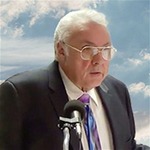
The following program is recorded content created by the Truth Network. It's Matt Slick Live. Matt is the founder and president of the Christian Apologetics Research Ministry, found online at carm.org. When you have questions about Bible doctrines, turn to Matt Slick Live for answers. Taking your calls and responding to your questions at 877-207-2276.
Here's Matt Slick. All right, everybody, welcome to this show. It's me, Matt Slick, and your missed list. Just messed up on your list of match lick live. If you want to give me a call, all you got to do is dial 877.
Two zero seven two two seven Six. I think the last four digits spell C A R M on your phone. I think that's why you got it that way.
So, uh there you go. And let's see, as a dock. Please, okay. You laughed that going on already. Hey, I spent three hours on TikTok last night going over stuff.
I enjoy. Dialoguing with people, working with people, and asking questions of people. And uh And the EO, the EO, the East Orthodox, had come in, and this guy, I'm going to tell you really fast, this guy comes up to me and he says, Well, our church gave you the Bible. And so I said, well, okay, where'd your church get the authority to do that? Is it self-authority or is it authority from Scripture?
Because if he says it's self-authority, it's not from God, but if it's a from scripture, then how do you know what the scriptures were that the church says gave you the Bible by which you get the authority from what the Bible is? I said it's circular. What are you going to do with that? You're an idiot. You're stupid.
And that's how it went.
So, anyway, a lot of fun for me. I enjoy talking, using logic against people, and watching the wheels or watching the wheels come off their cart. And uh Uh Stuff like that. Hey, let's just get on the phone here with Alan from Virginia. Alan, welcome, brother.
You're on the air. Hey, fine, how's it going? Oh, it's going, man. I'm just hanging in there. Talking radio and talking smack.
What do you got, buddy?
Okay. I'm going to leave in a in a second, but um I just wanted to kind of Suppose the question is Can you give a little bit of detail about Tenc about each of the Ten Commandments for folks? 'Cause I know some people get confused about what's what some of them mean and don't mean and such, you know? Oh sure. Yeah, we can go through them just briefly.
And I could just do a little quick intro to them. The Ten Commandments are a Caesar and Vassal Treaty pattern, Covenants document. of the third millennium BC. And people say, what the heck does that mean? What it means is that.
Uh It's a suzerain is a big king, a vassal is a smaller king. And in the pattern of the third millennium BC, the covenant documents and contracts. Of this type were preceded or opened with: This is who I am as the suzerain, the big king. This is who I am, this is how many battles I've done, this is what I've done, how great I am, blah, blah, blah. And uh Here are the stipulations that you're to keep and I will keep in the middle of uh of our contract.
And so the Ten Commandments fit that pattern. And I'll go over it a little bit. In that suzerain vassal treaty pattern, there were two documents that were produced. They were copied. Identically, so that the suzerain, the big king, and the vassal, the lesser king or kings, would get each get a copy.
The two documents, the two tablets of the Ten Commandments are ten and ten. Not six and four, or four and six, or five and five. Not how it was done back then. It was a covenant document that God was instituting with the people of Israel, binding himself as the suzerain with the lesser vassal, the people of Israel. And so the Ten Commandment documents were held By Israel in the Ark of the Covenant, upon which was the mercy seat, which was called the throne footstool of God.
The Ark of the Covenant was in the Holy of Holies. in the tabernacle or the temple.
So, this signified that it was the very presence of God. He had a copy, but it was also held by Israel, they had a copy.
So, this Ten Commandments document. Was important to signify the binding of God to Himself and His people, and that He would keep Himself bound by the Word that He gives and holding them to. To it as well. They had to copy the contract as well as God.
So they, so to speak, could hold him at his word. and he could hold him that air worked. This is behind the scenes stuff of the Ten Commandments, which rarely ever gets presented. But it's I learned this from Meredith Klein in seminary. The Susan vassal treaty pattern in the third millennium BC, he discovered it.
And he went through this in great detail and showed it and showed documents and showed stuff. He goes, This is where it is. This is what it is. And as archaeology often verifies scripture, there's another example of it.
So, if you go to Exodus 20, then God spoke all these words, saying, I am the Lord your God who brought you out of the land of Egypt, out of the house of slavery. This is who I am, this is what I've done.
Okay, I am Yahweh. You're Elohim. I am the Lord your God. He's identifying himself of who he is. and what he has accomplished.
Now th this is the the intro, so to speak.
Now we have the stipulations.
Now remember, there's rewards and punishments in a covenant. You shall have no other gods before me. You shall not make for yourself an idol, or any likeness which is in the heaven above, or the earth beneath, or the water under the earth. You shall not worship them or serve them, for I, the Lord, I, Yahweh, your Elohim, your God, am a jealous God, visiting the iniquity of the fathers on the children. on the third and fourth generations of those who hate me.
So this is a boundary with a stipulation Don't have any other gods before me, boundary, and the stipulation is: if you break this, there's going to be problems with your children. You and your children on down the line.
Okay? This is what's happening in America now. Incidentally. But he says, but showing loving kindness to those who love me and keep my commandments.
So now we have in the covenant document the boundaries and the rewards and punishment. But if you keep this, I'm going to reward you, showing loving kindness to thousands, to those who love me and keep my commandments. He said, You shall not take the name of Yahweh, your God, in vain, for the Lord will not leave him unpunished, who takes his name in vain. One of the signs of apostasy in the Christian church is women pastors is pro-homosexuality, is pro-socialism, and using the Lord's name in vain. And I have had many, many, many encounters with Christians who use God's name in vain.
They speak of Him the same way the unbelievers do. They'll say, and I can't repeat it because it's losers Lord even being able to say, oh my, and they'll start the letter G, and they'll say these things. Or they'll use Jesus as a cuss word. Yeah, an explanation. And so this is a judgment upon them.
Because they're taking the name of the Lord God in vain. And this is the problem with the world right now, in that it doesn't even care how they use God's holy name. It's a swear word to them. This is the degradation and the apostasy of our culture. We're far from a Christian culture.
And the unbelievers are the ones who are using God's name in vain, and it's on the increase. I see it all the time in movies now and shows and things like this. It's nothing to them, it's like breathing. Remember the Sabbath to keep it holy.
Okay, so the Sabbath is the rest day.
Now, God made the earth in six days, and the Sabbath He rested, not because He was tired, but because the Sabbath is typologically and prophetically representative of salvation. you work Six days, one day you have rest. And Jesus is the Sabbath. And he says, Come to me, all who are heavy laden, I will give you rest. This is salvation in him.
It's typological of that. It says, Six days you shall labor and do all your work.
Okay, but the seventh day is a Sabbath. And you shall not work, because salvation is not by works, but by faith. And this is a hidden message in here of the work of Christ on the cross and things like this. All right. Let's see.
Honor your mother and your father, verse 12, that your days may be prolonged in the land which the Lord gives you.
So, honor your mom and dad, it's really simple.
Okay, don't disrespect them. Don't speak evil of them behind their backs. You shall not murder.
Some say shall not kill, but killing is not bad. Murder is. Killing is the lawful taking of life. Murder's the non lawful taking of life. You shall not commit adultery.
This is the sanctification of the marriage commitment. And murder, of course, is the sanctification of human life. Which means in the womb and out of the womb as well. But anyway, back to the adultery. This is for sexual purity.
You shall not steal. This demonstrates the issue of ownership. Right there, communism is false. You shall not bear false witness against your neighbor. This is an issue of truth.
God cannot lie, and we represent Him. We are to speak truth. We don't bear false witness because a lie can hurt people severely. And we know this, the Me Too movement, and so many people just say, hey, He's guilty of that guilty, and they just lie, and people suffer because of it and get him all this. You shall not covet your neighbor's house.
This is because they have the right of possession of property. You shall not covet your neighbour's wife, because they're married out of one flesh, you have no business getting involved with them. and nor his servant or female ox or his donkey or anything belongs to the neighbor. The issue of possessions and the things that help the neighbor survive and and perform well in his wealth or not wealth, you are not to covet that. And so all the people perceive the thunder and lightning flashes, sound of the trumpet, etc., etc.
And these are the basics of the Ten Commandments.
Now, ten. is a kind of a number of completion. And we have in this pattern of the suzerain vassal treaty pattern of the third millennium BC, the Ten Commandments, and we are to follow them.
Now, one of the commandments is not reiterated in the New Testament, and that's the Sabbath, because Jesus is the fulfillment of it.
So, I've written an article on this. Nine of the Ten Commandments are restated and verified in the New Testament. But the one that's not is the Sabbath because it points to Christ. And there you go.
Okay. Oh, I guess he's off the air.
Alright, a sip of coffee. And hope you guys enjoyed that because It's interesting info. Hope you guys like that. All right. Now, if you want to give me a call, the number is 877-207-277.
2276. You can give me a call. You can also send me an email. That is easy to do. All you have to do is send an email to info at carm.org.
Info at CARM.org. And put in a subject line, radio comment, or radio question. And we can get to them. Let's get to. Cole from Georgia.
Cole, welcome. You're on the air. Hello, man. How you doing? I'm doing okay hanging in there.
Mm-hmm.
So what do you got? One last unfold. I got one quick question and I want you to read three verses.
Okay. If I said I loved you, But I never came to see you. Do I love you? It depends on the situation. You could have someone able to see you.
Okay, you mean if you're able to go see the person? It depends on the situation. Like uh I have a missionary friend in Nigeria. And I'm not going to go see him because it's not safe for white people in Nigeria, he tells me. I'm still able to go see him.
But I don't.
Okay. No, I'm saying I'm saying, you know, if you're able, no circumstances like this or that, you know, but I I live like in the same town and I say, Oh, I love you, I love you, but I never go see you. I don't know. Look, I can't judge all situations, but I think, generally speaking, if you love somebody, you ought to go check them out. Yeah, generally speaking.
Okay. Okay, three quick. Wait. I'm not going to hold you too long. Three quick verses.
Uh Revelation is chapter seven.
Okay, Revelation seven, yes. What version? Yeah, a great multitude from all the tribes. Both in white robes, it means they're saved. Salvation to God, all the angels.
For the creatures fell down their faces, worship God, yes?
Okay, now. Those three verses. God loves us. We're going to see God. We're going to see him.
It clearly says it right there before his throne with all nations, tribes, everybody's going to be there before the throne of God. And on that throne, it says God Himself and the Lamb will be there if you read those three verses.
Okay, hold on. We got to break.
So we're going to see. Hold on. We've got to break. We're going to break. Hold on.
Okay. Hey, folks, you're right back after these messages. We have three open lines. If you want to give me a call, the number is 8772-07-2276. We'll be right back.
It's Matt Slick Live, taking your calls at 877-207-2276. Here's Matt Slick. All right, and welcome back to the show. Thanks for listening. And if you want to give me a call, it's easy.
877-2-07-2276. Let's get back on with Cole.
Okay, Cole. You're back on the air, brother.
Okay, uh, now back. I I'm trying not to growl because uh Screen caller told me last night that I a little bit, but you know, I can't help but talk. Bye. Um Now, uh Um Um um Hold on a second. Um We're going to see God, man.
We're going to see God. He clearly said that in those three verses. No, we're not going to see God the Father because the Bible says that no man can see God. In 1 Timothy, that's the Father. It's 1 Timothy 6:16.
He dwells in unapproachable light to whom no man can see. has seen or can see.
Okay. But in those three verses, Matt, it clearly says the God in the Lamb on the throne. Who's on the throne? Can you read those verses? I noticed you didn't read those verses.
Yeah. Yeah. Man, you crack me up. Let's go through them. Let's go through them.
Let's go through them and learn how to read scripture. All right? After these things I looked, and behold, a great multitude, which no one could count, from every nation and all tribes and tongues, peoples and tongues, standing before the throne. And before the lamb, clothed in white robes and palm branches were in their hands. Wait, go down, go down!
Hold on. Look. I've muted him, all right, so that I can talk because he's not letting me go through and do the exact thing I need to do. And he stops me. That happens a lot with people.
They'll ask me questions. I go to answer it. And they stop me from answering the question by interrupting. I'm just blown away by that.
So, what it says is they're standing before the Lamb, they're clothed in white robes. The Lamb is representative of Christ, so it's not a literal lamb. White robes are representative. Of salvation. Palm branches deal with peace, okay?
And it was in their hands. And they cried out with a loud voice, saying, Salvation to our God, who sits on the throne.
So they're before. The throne and before the Lamb. We can say that they're before it.
Okay? It says, Salvation to our God, who sits on the throne and to the Lamb. And all the angels were standing around the throne and around the elders and the four living creatures, fell on their faces before the throne and worshiped God. It doesn't say they're seeing God. It says that they're before the throne.
If you want to find a verse that says they actually saw him, that's what you have to do. You can't read into the text and say, it means they're seeing him, because it doesn't say that.
Okay, very clearly, it doesn't say it. All right, Cole? No, I I know you said this before, but now that I I find this so hard. Come on, man. Come on now.
You gotta really think about this.
Now uh I've only argued it I've I've only argued a thousand times over forty-six years. Look, I've only argued. Hold hold on.
Okay, oh oh my goodness.
Okay, so um I've only argued this hundreds and hundreds and hundreds of times. I'm very familiar with the argument and God being seen in the Old Testament. I didn't quote the verses at the top of my head. And the issues here. We're not going to see the father.
Because Paul the Apostle clearly states that he dwells in unapproachable life whom no man has seen or can see. He says it very clearly, or can see. That's what it says. The coal. You know, you have to go with all of Scripture.
Your pericope in Revelation 9, or 7, excuse me, does not say they see God, but Paul clearly says no one will see the Father in 1 Timothy 6:16.
Okay? Okay, so wait a minute.
Now I'm gonna slow down a little bit.
So they're all around the throne. The elders, the beasts, and everybody's there falls down and worships God, but they're never going to see his face. That's what you're telling me. God doesn't have a face.
Well, how are we made in this image if he doesn't have a face?
Okay. Uh are you a Mormon? No Okay. Mormonism teaches God the Father has a body, flesh and bones, he has a face. Christianity does not teach that God the Father has a face.
He doesn't have a body of flesh and bone. To be made in His image is not about size. is not about facial features. It's about the characteristics of what's called the communicable attributes.
Okay, that's that's a different topic. I'll get into that.
Okay, clock call. You're you're you mute. Can I resp well, hold on. Can I respond one more one more thing to what you said and then I'll get off?
Okay. Now, uh when Moses when God says uh cover the Moses in the cliff there, and he says, I'm going to pass by you. I can't, you can't see me and live.
Now He saw his backsides, okay?
Now, I don't know if that was Christ, or I'm pretty sure that was Christ. It had to be, well, I don't know, because. We've seen Jesus. I don't know, man. It's weird.
But. Anyway, he told him, You can't see my face and live.
Okay, so when he passed by him, he saw his backsides.
Okay, now. Um That doesn't mean in eternity when we're in our spiritual bodies that he won't let us see. I believe God the Father is going to let us see him in the Son. We're going to see God. We're probably going to be overwhelmed, sure, but we're going to see God, man.
No. And you talked about Exodus 33.20. He said, you cannot see my face for no man can see me and live. God the Father is a spirit. God is spirit, John 4, 24.
Luke 24, 39, his spirit does not have flesh and bones, as you see, I have. And so what Jesus was clearly teaching is that God the Father, whose spirit is referencing while Jesus was incarnate here on the earth, he's still incarnate but in heaven, that it's not possible to see God the Father. Because God says, you cannot see my face. Doesn't mean he has a face. In Exodus 24, 9 through 11, it says, Aaron, Nadab, Abuhu, and the elders of Israel went up and they saw the God of Israel.
And under his feet there appeared to be a pavement of sapphire, as clear as the sky itself. Yet he did not stretch out his hands against the son of the nobles of Israel. And they beheld God and they ate and they drank.
Now, in Numbers 12, 6 through 8, God says to Moses, or to Miriam and Aaron, Aaron and Miriam, actually. Because he married a Cushite woman, that's another topic. And he says and they didn't like that. And so God he says to them, Hear now my words. If there's a prophet among you, I, Yahweh, will make myself known to him in a vision or dream.
Not so is my servant Moses. He is faithful in all my household. He beholds the form of the Lord, of Yahweh.
Now I can go to Exodus 6, 2 and 3, and it says there, God spoke further to Moses and said to him, I am Yahweh. I appear to Abraham, Isaac, or Jacob as God Almighty.
So he appears to people in the Old Testament. When you go to Jesus, what he says in John 6:46, he says, No man's ever seen the Father at any time. Jesus said this, John 6:46. They were seeing God Almighty in the Old Testament, but it was never God the Father, because Jesus says it wasn't.
Furthermore, Paul says in 1 Timothy 6:16, speaking of the context of the Father, he dwells in an unapproachable light, whom no man has seen or can see very clearly. This falsifies Mormonism, for example. God the Father can't be seen.
Now, I've talked to Mormons about this. They just deny the scripture, they deny truth because they submit God's word to their own feelings and their own stupid prophet.
So I know this topic very, very, very well. And everything I just said to you, I quoting. from memory. And I got other verses I can get into: Genesis 17, 1, 18, 1. And I can go to Acts 6 and 7.
And I'm telling you. God the Father does an unapproachable life to whom no man has seen or can see. Paul says. When they're seeing God in the Old Testament, it was not the Father, it was the pre-incarnate Christ.
Now, hold on, we got a break coming out, folks. We'll be right back after these messages. Please stay tuned. It's Matt Slick Live, taking your calls at 877-207-2276. Here's Matt Slick.
All right, everybody, welcome back to the show. Thanks for listening. Let's get back on with Cole from Georgia. All right, call you there. Yeah, well, I'm not going to take up no more time.
I'm going to I got a going I got a going away uh comment here. Um now uh Matt. Uh I know you know a lot about the Bible and you've been studying it. But I I I I just don't believe you. That we're going to go through eternity and never see the face of our Heavenly Father.
I just don't believe that. And there's no amount of things you can say and bring up I believe God loves us. He's going to let us see him. That's my going outcome. I'm lying up.
You have a great weekend. I'll call you back next week or something. All right, sounds good.
Okay, appreciate it. All right. All right. Bye. Okay, bye.
Now, this is a good example of something to focus on. I'm not going to speak ill of him. But it's a good example of what I hear regularly from people. I will not believe unless blah, blah, blah. Or I can't believe this or I can't believe that.
I get this all kinds of ways. I can't believe God won't let us see him from all eternity.
Well, where's this in scripture? Or, I won't serve a God who predestines people.
Okay. But God predestines people according to Scripture. We have so many people in so many ways what they'll do is they'll subject God Himself and the Scriptures to their own feelings or intuition. And I used to do that too. And uh I've spent a long, long time trying to get as far away from that as possible.
This is why I believe it's easy when you look at scripture. To simply understand something, God is able to communicate. what he wants to us. He can communicate and we can listen and we can hear. We can read.
And we can just believe what he says. I've had hundreds and hundreds upon hundreds and hundreds and hundreds of conversations. In different contexts uh online in person in debate situations, QA situations, etc. Impromptu discussions, all kinds of stuff. And it doesn't mean I'm right, but I'm just saying I've got a lot of experience with stuff.
And And I've learned some things over the years. And I can only offer what I've learned. Doesn't mean it's true. But it's what I've learned. is that people very often read into the text of God what's not there.
They very often do this. and it's a natural consequence of our sin.
So, one of the things I'll do to trap people, I'll say, Look, do you mind if I trap you or try and trick you on something and get you to see something? I'm being polite. And they say, Yeah, go ahead, because I'm not being deceptive. I say, Okay. Is free will, here's an example, is free will the ability To be able to choose between a good choice and a bad choice.
You can do A or you can do B. You can do good, you can do bad. A and B, you can do either one, and you make a choice between them. No one's forcing you, and that's what free will is. It just means you can make these choices between good and bad, you can choose to do either one.
And that's known for us as you have free will. And they say, Well, yeah, that's free will. I'll say, oh.
So the problem with that is it excludes God. I use this illustration all the time. See, God can't choose between good and evil. He can only do good because his nature necessitates that he's only good, because he's holy. He cannot choose to do evil.
And the point I'm trying to make is that what people inadvertently do frequently is they judge God by their own standards without even thinking about it. Yeah, I know what free will is because I define it by what's good with me. And therefore, God fits in this definition too, and that's idolatry. Because we're subjecting God to ourselves. We've got to be careful of that.
So I say to people, no, God cannot choose to do A and B, good and bad. He can only do good, and yet he's free.
So, we have to change the definition of free will to being able to do anything you want, not forced on you, that's consistent with your nature. That includes God, it includes man. This is just an illustration to show people that what they do inadvertently and naturally is to judge truth by their own experience, not subjecting it to the scriptures.
Now, let me go to Revelation. Where was that that he was talking about? Revelation uh s let's see if I can find it. Seven. Oh man, let's go see if I got it over here.
Anyway, around the throne, Revelation 7, I think it was. Let me go. I'm going to go sick and read it. I'm going to read through it and show you what I mean. All right.
Um You know what I lost exactly? No, there it was. Revelation 7:9. And here's an example of something. I'm going to go through this, and I'm going to go through 1 Timothy and give you a little bit of a lesson on Bible interpretation.
Now, again, I'm not declaring I have it all. I'm not saying that. But I want you to think with me. After, this is Revelation 7:9. After these things I looked, and behold, a great multitude which no one could count.
From every nation, all tribes and peoples and tongues standing before the throne and a lamb.
Now it says no one could count. Does that include God? No, it doesn't include God. He can count because he knows.
So, what's it saying? It's just a lot of people, and it's an expression. No, count them. That's how many there were.
Alright, that's not a problem. Because this is a symbolic book. every nation, all tribes and peoples and tongues.
So it's just a way of saying basically from everywhere. all kinds of people from everywhere. standing before the throne of the Lamb of God. Standing before the throne and before the Lamb of God, excuse me.
So there's standing before the throne and before the Lamb of God.
So we have two items here: the throne and we have the lamb. And so they, these people, are clothed in white robes, and that's from other stuff in Scripture, white robes, white stones, it means salvation. We'll get into all that. That's from other places in Scripture. You can go to Revelation 6 and stuff like that.
And palm branches were in their hands, and this is a symbol of peace. It says that just imagine what it's actually saying.
So there's a throne and there's the Lamb which represents Christ. Because it's not actually Jesus that he's being said, but before the Lamb. It actually is a vision of a throne with a Lamb, and the Lamb obviously represents Christ. And so that's what we have to understand. This is what what's Revelation saying.
And they cry out with a loud voice, saying, Salvation to our God, who sits on the throne and to the limb.
So they're crying out to God. Who sits on the throne?
So now we know God is sitting on the throne. That has to be the father, of course, here, right? And uh the lamb is there. a still reference as a lamb.
So this is a vision, obviously.
Now does it say that they see God the Father on the on the throne?
Well, is it a logical possibility Now when I say this, I say Carefully. Is it logically possible? That means within the scope of the scriptures that are right here that we're looking at, is there anything that excludes the idea? that God the Father is being seen, and nothing in here excludes it. Does it mean it's true, though?
And you got to be careful. If it's not excluded, it means it's therefore it's true. That's like when I talk to Eastern Orthodox and Roman Catholics, and they say, Well, it's not in the Scripture. And they say, Well, God could do whatever He wants. And I say, Okay, could He have taken Mary to Venus for two days?
Because he could do anything, but it doesn't say he didn't, so therefore it's possible, right? And trying to show them, you don't argue from what it doesn't say, you try and argue from what it does say, but that's an exergetical principle.
So they might say to me, Well, you just admitted it doesn't say you can't see.
Well, right here it doesn't say you can't, but it also doesn't say you are seeing the Father. And so they will quickly pick on one side and ignore the other. They're not being objective. This is what you have to do when you look at scripture. What does it say?
What does it not say? What are the possibilities? That's all you do. And if you're not sure how to interpret something, you go elsewhere in scripture that speaks of the same thing for clarification, if it's possible. But it says in verse 10, they cry out with a loud voice, saying, Salvation to our God, who sits on the throne and to the Lamb.
And all the angels were standing around the throne and around the elders and the four living creatures. We'll get into all this, who was the four living creatures and the elders. They fell on their faces before the throne and worshiped God.
Now, does it say that they were seeing God the Father? It does not. Does it say they were not seeing God the Father? No, it does not.
So can we say they were or were not? We can't say either way. But people will come here and say, See, this is what it means. They were seeing God. But it doesn't say that.
And they say, Matt, you're just being ridiculous. And I say well I happen to know about these other verses 1 Timothy 6, starting at verse 13. I charge you in the presence of God. who gives life to all things, and of Christ Jesus.
So, God here is the Father and Jesus, who testifies the good confession before Pontius Pilate, that you keep the commandment without stain or reproach until the appearing of our Lord Jesus Christ. That's the return of Christ, okay? Verse fifteen, Which he will bring about at the proper time, he who is blessed, the only sovereign, the king of kings and the lord of lords, who alone possesses immortality and dwells in unapproachable light, whom no man has seen or can see.
Well, who are they talking about? Have anybody seen Jesus?
Well, yeah.
So it's not talking about Jesus. It says he possesses immortality, dwells in unapproachable light, whom no man has seen or can see.
So we learn here he dwells in unapproachable light. and you can't see the father. Because that's what it says.
Now, when we go to Acts 755 through 60, I'm going to show you something one quickly because the break's coming up. Acts 755. It says, Well, Stephen, being full of the Holy Spirit, gazed intently into heaven and saw the glory of God. They say, See, he says he's God. It's not what it says.
says the glory of God. His glory. Remember, God dwells in unapproachable light. He's seen the glory of God and Jesus standing at the right hand of God. And he says, I see the heavens opened up, and they cried out, etc., etc.
And he cried out to Jesus. He's praying to Jesus.
So people will often read into the text what is not there, and I call them on it. Don't do that, because that's how you end up in error. Be very specific, very critical, very logical. What does it say? What does it not say?
Relate other scriptures to it and draw conclusions based on the whole, not a single part. Otherwise, you'll end up in error. Ugh. There you go. We'll write back after these messages.
We have wide open lines. Give me a call. I'll be right back. It's Matt Slick Live, taking your calls at 877-207-2276. Here's Matt Slick.
Everybody, welcome back to the show. If you want to give me a call, all you got to do is dial 877-207-2276. Let's get on with Chris from Boise. Chris, welcome. You're on the air.
Hey, Chris. Er, Chris.
Sorry. How's it going? It's going all right, man. It's one of those days, man. Trust me, I know that.
I got that.
So, what do you got, buddy? Yeah, um So my question is basically regarding the Okay, so I've kind of been looking into the topic of you know, the like the slavery topic. because I feel like that's one of the attack points for the atheists. as to basically attack the m you know, what they say is uh they call God immoral because of the list of uh you know, what you can do with slaves and everything throughout Exodus twenty-one. And um I don't know if you have read about this and if you feel like it's a it's a if it's a legitimate reference point, but it's Matthew nineteen.
where Jesus is talking about Um nineteen seven where uh the Pharisees are trying to trap and And it's regarding the certificate of divorce. And it's and Basically what Jesus said is Moses permitted you to divorce your wife because of the hardness of your heart. Right. But it was not God's, basically, not his ideal from the beginning.
So I don't know if you feel like that's a. If that's a good defense against that because Bitcoin is permitting something.
Well, it's it's uh I'm saying, yeah, in regards to slavery. I'm just saying if that's a good reference point or not. Not really. Not really. But.
You could use it as a principle when you say the principle is that God permits things that He doesn't really want to occur because people are free to make their own decisions. There's an example. Then it would work fine. He doesn't want you to have divorce, but he permits it. doesn't want you to enslave people, but he permits it and he governs it.
And so in that sense, yeah, that's a good thing if you connect him like that.
Okay. Okay. I love him. There's more to it. I can see more stuff.
Oh, okay. That'd be great. Go ahead. When someone says God of the Bible is immoral, I say, Okay, what's your universal standard of mor of morality? You you're judging God.
What gives you the moral right to do that? Justify your morals. If you say you don't like how God is, that's your opinion. That's fine. I don't really care about your opinion.
No disrespect meant. But if you're going to say somebody else is right or wrong, you need to have an authority from some source to say it. And if you say, well, it's just wrong 'cause it's wrong, well, I just say God's right 'cause he's right. And so you have to be able to say to me, why is it that your system of morality is superior to that which God provides? And just not liking it is not a good enough thing.
And I say, do you have this standard?
Now that's one thing.
Okay. And they don't like that. Because to them, it's more like you are just skipping the issue and not dealing with the issue. Another thing I'll do is I'll be able to do that. I'm sorry, go ahead.
Well, I was just going to say well, I feel like the the rebuttal against that is like they just say, well, uh, you know, I'm a humanist and I I believe in the You know, that every it's in the best interest of everybody to treat others nicely, and why? That's kind of what. Human humans have constructed from the beginning of like over a period of time. It's been like an evolution or Progress, right? And say, oh, so you're an evolutionist now, and you say morality is developed evolutionarily.
Survival of the fittest is a moral issue? Is that what you're saying? Or are you mixing categories? Because how do you get morality derived out of a humanistic system? Because in your humanism, you don't have universals.
If humanism is true, what it says is the human being is the standard of righteousness and truth. First of all, How do you know that's true? And if you say any particular individual is the right one you judge truth by, then how does it apply to anybody else? If, on the other hand, you say the majority of humanists believe this, that's called argumentum et populum. Majority believe it's true, so therefore it's true.
I said, humanism I say to them, if you're a humanist, you have no right to to complain. You need to justify that your moral standard is the right one to go by. And just claiming, well, it's because I'm a humanist doesn't mean anything. You're just arbitrarily saying that humans are the are the standard of righteousness. What demonstrates that it's right?
They don't like talking to me. Atheists don't like talking to me because it's so easy to beat them. It's so easy, particularly when it comes to morality. Yep.
Okay. Yeah, and I mean, don't you feel like morality is maybe one of the strongest? points in defense for God because it's It's kind of Um it's almost like we've discovered what was intrinsic in our hearts from the very beginning. Right. If that makes does that make sense or not really absolutely I'm just saying like Uh like we all agree, like you were saying, there's a universal agreement that Obviously, pretty neat people this way is wrong, but just 'cause they did it back in in the tim you know, in early biblical times, Mm-hmm.
could kind of be go back to what Jesus was referencing back in Matthew nineteen, where he said, uh It's because of the hardness of your hearts. Yes, permitted. It's a whole nother topic. I'm saying I tackle them one topic at a time. And a lot of people don't know how to, they need to learn to focus, and they need to learn how to say, well, this particular issue you're raising, let's address this particular issue.
And so what I'll do is try and get people to deal with that particular issue. Say, what do you mean by this? What do you mean by that? Yeah. Okay.
So your starting point is going to be Basically if Why are they saying it's wrong to begin with, right? Right. Like the foundational reason why do you claim it's wrong? Like, we need to get to the bottom of that first, right? Absolutely.
Before you even tackle the slavery thing, right? Right. They made a claim. Verify the claim. Like when I talk to Eastern Orthodox Roman Catholics, our church gave you the Bible.
Really? Can you demonstrate that to be true? How do you demonstrate it? Because you have apostolic authority.
Well, you claim you have apostolic authority. But If it's true that you have this so-called pedigree, does it mean because you have a pedigree, therefore you're true? Is that what you're saying? And I ask these questions, and they do not like because they see the illogic of their position.
So you can ask, and atheist is very bad. If they want to get into morality, it's over with. Because What gives you the right to make a moral judgment on anybody else? If it's just humanism and evolution, you have no right. You can just say you don't like it.
That's all. And I say to them, that's all you have. That's the best you have. And I said, do you have anything that we could maybe go by that might be better, you think, you know? Uh what do you got?
And I'll ask you. Yeah. Right. So, so you feel like morality is probably the strongest case when you're arguing against atheists? It did.
It depends. Different atheists, it'll work, some it won't work. I have an argument from morality they use that traps them easily. But when they bring up the moral issue, they are the ones who just shot themselves in the foot. I've got to point out the hole in their foot.
Look, see that hole right there? You did this to yourself. Let me explain why. Because you're presupposing a universality of morality.
Now, think about this. This is a little background information. A moral is an abstraction. It's a thought, intention. A moral of You shall not lie is a statement.
My wife, when she was, you know, before she passed away, I love my wife, I still do, love my wife. I can't take three ounces of my love and give it to her in an envelope. It doesn't work like that. It's an abstraction. Morals are abstractions.
So I asked him, how do you have a universal abstraction that's true in a humanistic, atheistic world? Because you're now saying there's a universal truth. But if truth is an abstract which requires minds, What are you saying? when you say there's a universal truth of a moral nature. What is the condition that must exist in order for you to have a universal true abstract entity?
It's called. An abstraction. They automatically start seeing this.
Well I'm not going to argue God with you, so you're saying that this necessitates God. As the one who's the foundation and the necessary precondition for universal moral truths. Because if a moral truth is developed out of your mind, it can't be universal. It's simply subjective. And if you're going to say that X, Y, Z in the Bible is morally wrong, then you're saying there's a universal moral.
Because you're saying you're observing it, knowing it, and applying it to something else, which means it's not just from you and your subjective opinion, but it necessitates that you're apprehending it or obtaining it from something external to yourself, which necessitates a universal quality to it.
So what is the condition that must justify a universal condition by which you can have universal moral absolutes? Does that make sense? Yeah, I mean, a little bit over my head, you know, because I know you've been doing this a long time, but I'm trying to take it in as much as I can. But I was going to say, like.
So is another way of putting it is like We're kind of experiencing the derivatives of God's nature. And almost like thinking his thoughts after him, in a way. Very good. That's a good way to think it, okay. It's a good way to think.
We're thinking God's thoughts after Him. Those are the laws of logic. This kind of reasoning I'm introducing you to. is very powerful. It's it's so uh in a in an elementary way.
Why is the chair not falling through the floor? Because the floor's in the way. Why is the floor staying where it's at? Right. Because the ground is there.
Why is the ground there? And you go back and back and back till you find where you can't go back any further. That's the ultimate.
So if you have a moral A truth. It is wrong to A B C Then that's a It's a it's a universal statement they're making of truth value. But that's an abstract. occurs in the mind. How do you have a universal thing that's in the mind?
that's across all minds. And all atheist minds, all Christian minds. that therefore is true, and applies to them, Once they see that, you ask the question: what must be the case so that you have a universal moral truth? That's the what you're getting to. And the Christian answer is God.
The atheist answer is my left sock that's been washed and thrown in the dirt. That's as good an answer as any in atheism.
Okay. What their attack is going to be: well, you're the one that's inferring God. And I mean, that's kind of Dillahunty. And you say, Yeah, you're right, I am. Do you have a better explanation?
It's called abduction. Abduct there's induction, or deduction, abduction, induction, and abduction. Deduction, induction, abduction. Abduction is the conclusion, is the inference of the best possibility or the best answer.
So what do you have I said you have a better answer? Give a better answer for the idea of universal morals than a universal mind. Are they embedded in in atoms? What's your What's your foundation? That's universal applicable.
from your worldview.
Okay. Well, so you you don't think that these things can kind of come about from naturalistic Okay. We're out of time, so hold on. Let me give you some homework. What I want you to do over the weekend, it's okay, is to look up what's called universals.
and particulars. Just just look up universals and particulars and read about 'em. Universals in particular. like the universality of trees and there's a particular tree.
So we have tree this and tree, universals and particulars. What must be the case for both to exist? This is a serious conversation. I think it's where we get to. We're out of time, brother.
Study that and call me up on Monday, okay? Good chat. All right, Chris. All right, sounds good, man. Have a good weekend.
Okay. Well, that's I hope it's not too highfalutin', but that's some of the stuff that we do. And if you want to give me a call, all you got to do is wait on Monday. May the Lord bless you. I hope you have a great weekend, and by his grace, we'll talk to you next week on Monday.
God bless. Another program powered by the Truth Network.