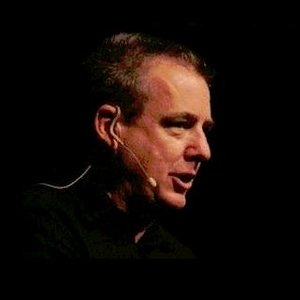
The following program is recorded content created by the Truth Network. It's Matt Slick Live. Matt is the founder and president of the Christian Apologetics Research Ministry, found online at Carm.org. When you have questions about Bible doctrines, turn to Matt Slick Live for answers, taking your calls and responding to your questions at 877-207-2276. Here's Matt Slick.
Hey everybody, welcome to this show. It's me, Matt Slick, and you're listening to Matt Slick Live. As usual, if you want to give me a call, it is easy. All you have to do is dial 87720-72276. I want to hear from you.
Give me a call, okay? And um So I've been, oh, today's date, that's right. Today's date is, let's see, the 20th of May, May 20th, 2026, for the podcasters. There you go. Yeah.
Alright, so I'm going to tell you a little bit of just what I've been working on. I learned something today, as a matter of fact, biblically. And I always like it when that happens. I always like learning something new. And I'm going to tell you the little story, what led to it, just to go through, I'm going to teach a few things here.
So that makes sense. And so uh As you know As you know, I do a great deal of work against Mormonism, Jehovah's Witnesses, Islam, things like that, Roman Catholicism, Eastern Orthodox. And so uh you know a lot of times I'll talk about what happens.
Well The Catholics and East Orthodox have gone to John 6 many times, and I've talked about this on the air. And uh I decided to write an article. Today, on whether or not on the logic of the scriptures, of the verses where it says, Jesus says, unless you eat the flesh of the Son of Man and drink his blood, you have no life in yourselves. He who eats my flesh, drinks my blood, has eternal life. And so They always say that those things are literal, that it means it's literal body, it's literal blood.
So what I've been telling them for a while now Is that it's not literal because, in all basics, Jesus says He is the bread that came down out of heaven. The Catholics and Eastern Orthodox say the bread is referring to His body. but his body did not come down out of heaven.
So it cannot be his physical body they're talking about. We just cannot. And Uh this is very basic, it's very easy, and it has stumped them left and right. When I brought this up, they just get stumped. They said, well, I'll have to study it.
Okay, well, you know, that's okay. Study it, please do.
So I wrote this article, it's on Carm. Does the bread from heaven in John 6 teach the real presence in the Eucharist? And uh So no, it doesn't, okay, because uh they say that the bread and wine become the body and blood. and that it's literal what Jesus was saying. And I show them that it wasn't literal.
Now Sometimes, um Yeah, actually, before I get to that. And so I discovered something today, several things actually. The Old Testament references to eating the Word of God. In Proverbs 9, 5-6, come, eat my food, and drink of my wine I have mixed. Forsake your folly and live.
and proceed in the way of understanding. It's talking about wisdom and truth. In Jeremiah 15, 16, Your words were found, and I ate them, and your words became for me a joy and the delight of my heart, for I have been called by your name, O Lord God of hosts. Ezekiel 2.8 Now you, son of man, listen to what I'm speaking to you. Do not be rebellious like that rebellious house.
Open your mouth and eat. What I'm giving you.
Now, there's more verses that are not as clear as that, but in the context, it's the same kind of thing that's going on. It's talking about this. All right.
So I'm working through this and I um And I remembered an objection. that some of them have raised. And so I started researching the objection. And uh the objection is found uh where Jesus um First. the account, where is it?
The people want to leave. Because they think he's talking about his literal flesh. And they want to leave and So the argument goes he didn't Uh correct them. Therefore it's at least literal flesh. And that argument right there, you know, that's an interesting Argument.
And I've known a couple of things about How to answer that, but I thought I'm going to. go into this more in depth and it brought me to writing yet another article today. And um What about Jesus not correcting them? They said, Well, how can you give us your flesh to eat? And doesn't correct them?
I found out. that there are many examples in the New Testament. from Jesus where he does not correct people in their false understanding. A lot of them. There are, let's see, uh Two in Matthew, one in Mark, and ten in the Gospel of John.
Yeah.
So And um In Matthew fifteen, Peter asks Jesus to explain the parable about the defilement. Jesus' response, mild rebuke, are you still lacking in understanding? Uh you know, he wants in the parable. And he said, don't you understand? And he didn't clarify afterwards.
In Matthew 6, 5-12, Jesus warns about the leaven of the Pharisees. The disciples think he means literal bread. Jesus questions them before clarifying. Leaven means the teaching of the Pharisees. This is not a reference to food compared to word.
In Mark 9, 9 through 10, Jesus instructs the disciples to tell no one until the Son of Man rises. They discuss amongst themselves what rising from the dead means, and Jesus doesn't clarify to them. You just explain it. In John 2, 19-21, we have Jesus saying, Destroy this temple three days I will raise it up. The Jews said, Well, it took forty six years to build this temple but he was speaking of the temple of his body.
That's verse twenty one. That's a comment by John the Apostle, but there's no record of Jesus correcting them. In John 3, 3 through 5, Jesus tells Nicodemus he must be born again. Nicodemus thinks it's about entering into the mother's womb. And Jesus uh corrects him and says, No, it's not the mother's womb.
Excuse me, he doesn't correct him. My bad, I'm just going to do something here. I saw a typo, I'm going to fix stuff. And um,. He doesn't correct them.
It's really interesting. He doesn't correct him, he just explains stuff. In John 4, 10 through 13, the Samaritan woman living. and the living water. She thinks Jesus means physical water, but Jesus does not correct her at that.
He just teaches. Later in John 4, the disciples urge Jesus to eat, but Jesus speaks of spiritual food that the disciples don't understand. In John 6, 52, the Jews misunderstood, that's what we're talking about here: Jesus teaching the bread and the wine. And uh so We already went over to that, John 7. 33 through 36, that people misunderstood Jesus' teaching about him leaving.
uh thinking it was a dispersion. In John 8, he doesn't correct them. He does not correct them. It's what's really interesting to me. He does not uh correct them.
I'm going to get into why this is a little bit.
So, why would he do that? That's a correct, it's a good question. And I started thinking about that as well, but I'll get to it in a little bit. Um So we have in uh John 8, Jews misunderstood Jesus about him leaving and killing, thinking he should kill himself. And uh Okay, let's see, get over here like this.
There we go. It does not correct them. That's right. And so then we go to John 8, 31 through 33. And in there, the Jews misunderstood Jesus' teaching on the truth will make you free.
And he thinks about being it means being enslaved. They don't get that and he doesn't correct them there. It's really interesting. Why doesn't he correct them?
Okay. In Johnny 56, The Jews misunderstood Jesus' teaching about Mary. It's not about Abraham rejoicing to see his day. But he didn't understand what it meant. He doesn't correct them.
In John 12, 32 through 34, the Jews misunderstood Jesus' statement about him being lifted up from the earth. And and they didn't understand that, he does not correct them. In uh John 14, Let's see, John 14, the disciples, including Thomas, misunderstood where Jesus was going when he was referring to his death. and his return. In John 16, 16-18, the disciples are confused about Jesus' death and resurrection.
And uh They don't understand what's going on, and he doesn't correct them. It's just I was looking through this going, man, that's interesting. Uh that there are so many instances of Jesus not correcting people in a misunderstanding.
So when the And I'll get to this a little bit more, but when the Catholics, these Orthodox, say, well, then why didn't he correct him? because it was common for Jesus, not. to correct them. And that's the key.
Now why would that be? Why would it be that he doesn't correct people?
Well, I wrote some uh possibilities. Uh whether it might be in at the end of this article. And um And you go to the end of the article here, let's see. Um I had three possibilities. And I said, I'm not exactly sure, to be honest, but here's some theories.
Perhaps it's because they were not given eyes to see and ears to hear. And in Mark 4:10 through 12, Jesus talks, he says why he speaks in parables: so the people who don't have eyes to see, won't be able to see, won't be able to hear, won't be forgiven. He actually says it. Maybe it's related to that. Or perhaps it's a teaching device that he uses Uh Yeah, I bet he uses to cause people to question more.
Like me. You know, I'm sitting here going, oh, wait a minute, why didn't he answer this? And so it caused me to look and to learn. And finally, perhaps it's a way that he had of exposing their hearts and their failures.
Now these are all reasonable, and perhaps it's a combination of all three of these.
So I'm not saying I have the right answer. but I'm just offering uh ideas. Why is it? At Jesus. Would Uh speak.
and then not correct people. And he did, you know, many times.
So I think it's interesting and um. I don't know what you can think. If you want to call me and tell me what you think about that, I'd be interested to To hear what you have to say. Anyway, let's get to Alberto. I've got a lot of things in my mind right now.
Alberto, welcome. You're on the air.
Well, good evening, Max Lick. How you doing today, sir? Fine? Doing all right, hanging in there, man. What do you got, buddy?
Okay, I hear pastors that say that when a person accepts Christ, that God gives him a new heart. And it's a flesh that no a Christian no longer has an evil heart.
So, but it's a possibility that a person's heart can still get polluted, infected by sin.
So with a hard steel not be evil, or it would be evil still, even though God gave us a new heart. that the Bible said guard our hearts. Um so your question is what exactly?
So pastors teach that a person a person no longer has an evil heart. he has a new heart, a car has a good heart, but still even look at a new heart, You can still be infected, your sin, your heart could still be infected by sin.
So, what's your question? My question is, would our hard suit stay remain On Our evening. Even even exposed. When we're redeemed, the Lord God indwells us, John 14:23. He wipes our certificate of debt away.
Colossians 2:14. Colossians 2.14.
Alright.
So, this is what happens. And we are made to be born again. That's 1 Peter 1:3.
Alright, so it does not mean, however, that we are immune from the fallenness in which we still abide and live. We're given a new heart in the sense that we are now warring against sin, and now we're able to understand and receive the things of God. It does not mean that we never do anything wrong. It means the new heart says, Oh, I'm aware of my sin. I'm aware of what I need to fix.
I'm aware of these things and struggle with repentance and doing this right before God.
Okay? Paul did the same thing. All right?
Okay. Okay. There's a break. All right, man. God bless.
Okay. Okay. God bless.
Thank you. Bye-bye.
Okay, bye. All right, hey folks, if you want to give me a call, the number is 8772-07-2272. 7-6, be right back. It's Matt Slick Live, taking your calls at 877-207-2276. Here's Matt Slick.
All right, everybody, welcome back to the show. If you want to give me a call, all you got to do is dial 877-207-2276.
So, what do you think of what I found today? I've discovered a couple of things recently. One being that there's what's the difference between the internal and the externals, in that false religions work with the externals, like smells and bells, and robes, and stained glass windows, and coffins, and candles, and baptism, and ceremonies, the Eucharist, and all these things. And this is where they find their spirituality. But the Lord God, He Finds the spirituality or discovers it or manifests it inside of us.
He dwells in our hearts. He circumcises our hearts. He makes us born again. He opens our heart and mind.
So, the difference here between what's called the internal and the external, in my opinion, is very obvious. And it's something I've just recently come to understand as I've gone through the scriptures and said, you know, what is this? And I've been using that as an apologetic, also. And then, as I said, with John 6, the issue of the Eucharist, as the false churches of Roman Catholicism and Eastern Orthodox will claim that I just thought of something. You know, I know there's a lot of people out there, the Bible Belt out there, who listen to me who might be Catholic and Eastern Orthodox.
And when I say that the Catholic Church is false, I mean, let me just kind of make it more clear. What I mean is, the Catholic Church is not a true Christian church. It's a false church. It preaches a false gospel, has false priesthood, and promotes idolatry. And so uh You know, I know there are a lot of people who will be offended by that.
Well, if I'm wrong, it proved me wrong from Scripture, not from tradition, not from a counsel, not from whatever, not from your feelings. You have to go to the Word of God because the Word of God is a standard. Even Jesus used the Word of God, He was God in flesh. The Apostles referenced the Old Testament Word of God, even each other. And so we want to use the Word of God as our authority and where we're going to go to for spiritual truth, not my feelings, not your church.
We don't want to trust a church. We're going to trust the Lord Jesus Christ. It'd be, well, He gave us the church, you know. And then they always say that the church is their particular church. And then, you know, get into all this stuff.
And there's just so much error. Yeah.
And this has caused me to ponder something. Why is it that God is allowing so much deception to go on? within Christianity. Within the halls of the Christian faith, why is it that down these halls there are corridors of darkness that lead to Mormonism, Jehovah's Witnesses, Islam, that lead to Roman Catholicism, Eastern Orthodoxy? And people walk down these corridors, these dark corridors.
They open the doors and they just jump into the false light, the false shepherds that beckon them. I guess they hear those false calls and they are attracted to, like a moth of the flame, attracted to the lies of the enemy. But the true Christian. He doesn't go down these halls of truth looking for truth. They look for Jesus.
And there's a humongous difference. Jesus says, My sheep hear my voice, they follow after me. We go after the voice of Christ, we go after the truth of who God is. We don't want to follow false shepherds or false prophets or false masters. And.
It's like Mormons, you know, Joseph Smith came along and he's a deceiver. We have the Roman Catholic Church, which just is apostate, as is the EO. And as I talk to more people, and I debate this with people who are becoming converts to those groups, like EO and RC. Eastern Orthodox, Roman Catholics. I was talking to people.
And The reasons that they go in there are never based on scripture. It's based on something else. It's based on They like the pomp. They like the appeal. They like the visuals.
They like the connection to history. They like the cathedral kind of. of attitude and belonging to something bigger than themselves. These are all false reasons. They're just false.
We need to go to Christ for the forgiveness of our sins, not to go and join an ancient church. We want Jesus. The true believers follow Jesus. The true ones who dwelt by the Lord go after Christ. Just as the Bible says, the Father bears witness of Christ.
Jesus bears witness of himself. The scriptures, the prophets bear witness of him. The Bible is about him. And so he is the focal point of history and the redemptive work of the cross, the incarnation, redemptive work, the death, burial, resurrection. He is the most important person in history.
And he's the most important person in all of history. Yeah.
And so the true Christians are the ones who follow after Christ. They seek their fellowship and relationship with Jesus. And The ones that God is calling for that. Because God says through the Apostle Paul in Ephesians 1:4 and 5, those whom it says God chose us in Him before the foundation of the world that we be holy and blameless. God the Father chose us to be holy and blameless, and He has chosen us from the beginning for salvation.
2 Thessalonians 2:13. This is a specific group.
Now, when I go into this kind of a thing and I'm talking about this, I'm always reminded of John 6:37 and what Jesus says there. And it's very important: all that the Father gives me will come to me. And when it comes to me, I certainly will not cast out.
So Jesus says that the Father is giving some, the chosen ones, to Jesus, to him, to Jesus. And he says, This is the will of him who sent me, that all he's given me, I lose nothing. And so when you look at this, What I'm doing is trying to get people to understand quickly and sufficiently that it's not a church that's going to save you. It's not a ceremony that's going to save you. It's Jesus Christ.
And you have to have the right Jesus.
Now how do you know if you have the right Jesus or not? The Jesus of Mormonism is not the Jesus of the Bible, even though Mormons say it is. The Bible has prayed to specifically in Acts 5, in Acts 7, 55 through 60. And Jesus says, you know, just to ask him anything in his name, and he'll do it, John 14, 14.
So he's prayed to. He's worshipped. Matthew 2, 2, 2, 11, 14, 33, 28, 9, John 9, 35-38, Hebrews 1.6. They pray to Jesus. I mean, excuse me, they worship Jesus.
And Thomas called him the Lord and God. You know, Haqruyas mu kahatos mu in Greek, in John 20, 28, after Jesus appeared to him. And Thomas says, My Lord and my God, speaking to Jesus.
Now, the true Christian is the second person of the Trinity who became flesh. He bore our sin in His body on the cross, 1 Peter 2.24, and He finished the atonement on the cross, John 19:30, it's finished. In fact, Colossians 2:14 says He cancelled our sin debt at the cross. Colossians 2:14 says that. It is not that he finished it when you get baptized, you take a sacrament, you go up in front of the church and bear witness, or all that stuff.
All these are the inventions of false religions. And you know how you could I can tell? I'm gonna tell you, you know how I know? Because I study God's Word. People will tell me, Matt, what about the church fathers?
Well, what about the church fathers? Are they inspired? And more and more now I'm hearing, yes, they are. And they'll say, church councils. I'm saying, are the church councils inspired?
Yes, they are. He said, Really? The church councils are on the same level as God's Holy Word? Yes, I'm getting more people saying this. The lies.
The idiocy. The heresy.
So last night I'm talking online, and I'm in a room with a discussion, a Catholic, and he's pretty good. He's an above-average defender of his faith. And um he made a mistake. He made a mistake, and he asked me. The mistake was to ask me to defense a position.
that the idolatry I'm accusing the Catholic Church of was uh was leading to attributing to Mary divine qualities, I couldn't believe he asked me that to prove it. And I said, Okay. And I went through I went through this argument about what she is by nature. A human being. And what she has to go through to be changed in order to do what Catholics say she can do.
And I'll get back to that after the break. And if you want to call me. It's 8772072276. Be right back. It's Matt Slick Live, taking your calls at 877-207-2276.
Here's Matt Slick. All Rubby, welcome back to the show. If you want to give me a call, the number is 877-207-227.
Now, I have a confession to make. I forgot what I was talking about right at the last moment before the break because I got into researching another topic. I always do this. I'm often writing during the breaks, writing articles. I write a lot of articles, you know, and I have to do it all the time.
And so it's in my head, and I was researching.
Something Uh and I f I forgot. I forgot what it was. Maybe you guys can write it down, and they're like, it has to do with Mary. Oh, yeah, I remember now. That's right.
Now I remember. And so this guy made a mistake. He made a mistake of asking me to demonstrate how Mary is attributing God-like qualities. And I said, sure. And so I thanked him.
I said, thank you for asking that question. But anyway, it gets down to the issue of now Mary can hear millions of prayers simultaneously spoken and thought different languages all over the world. And I said, what has to change in her in order for her to be able to do that? Because a change has to occur. Because before she couldn't do it, and now she can.
so that means her to change in her nature her essence. Yeah.
And so we went down this road, and he wasn't very good at getting out of that. Argument. He was good at some other stuff, though. I've got to admit, he was good. Except.
that he was very rude. And you know, some of these Catholics And Eastern Orthodox, man, they are arrogant. They're just so arrogant. And it was insulting. And I'd ask them, stop insulting me.
He deliberately said he called me a liar. And I said, Wait, I'm not lying. He goes, Yes, you are. He says, What, you're saying I'm purposely trying to deceive? He goes, Yes.
Oh, man. You know, it's like uh It's like arguing with children sometimes. I said, look, stick to the argument, all right? Stick with the argument.
Well at any rate um So, this is some of the stuff I'm going through and dealing with. And there are other articles and topics that I want to get into. And One of the things I need to write about, and I've got some research on this as well, is what to do with the coming digital IDs. What are they? What should we Christians do about them?
And another article I want to work on is Biblically When Did Cavemen Live? See, these are a lot of times questions that people on the radio will ask, and they're good questions. And I know I haven't written on it, I don't think I have. And so I'll write down in my list, my list of questions. How many have I got here?
It's uh one thousand six. I added some. It's still staying right about 1006. That's interesting. Maybe the count is uh not right.
Well, anyway, um And so, other questions are: this is going to be an interesting for me. A comparison of ultimates.
Now that may sound dumb. Or, like, what the comparison of ultimates. Why is that so important?
Well, the ultimate is that of which there is nothing greater or nothing equal.
Okay, so if I were to say, what's your ultimate best car? That means you believe that there's a car, that there's nothing better, nothing equal to it. Or, what's your ultimate best movie? You know, for me, it's Aliens, the second one, obviously. I mean, that's what it's going to be.
That's just the standard of all movies. Yeah.
Now What about When we come to things like The ultimate questions: okay, is there a God? Is there not a God? Or, what's the nature of the universe? Where do things come from? Whatever it is.
These are the kind of questions and when I'm talking to people, I want to get into what is their ultimate, what is their foundation, their ultimate foundation? What is it that they go back to? Because you have to have something that you believe, and then what's the basis of what you believe, and what's the basis of the basis, and how far back you go. There has to be a terminus. a terminus.
and with atheists the terminus is the physical universe. With Christians the terminus is God Himself, the Trinity. In Hinduism it's Brahma. And uh So I was thinking about going through an article and trying to find the ultimates. of different systems.
This what is the ultimate of which is the source and/or origin and or standard. of what it is they believe and do and think.
Now this is interesting because When I talk to people in false religions, One of the things I have to do is ask them what their standard of righteousness and truth is. It can come down to something as simple as, Well, why do you believe what you believe? When I talk to Muslims, why do you believe the Quran is true? Because it comes from Allah. But how do you know it comes from Allah?
Because uh Mu Muhammad told us.
Well, how do you know Muhammad's true? Because the Koran says so. And it's circular. And there's no way out of this for them because they have to do it that way. And if you propose that Allah is the ultimate of all things, then Allah is Not a composite, he's not partials, he's a singular being who is one person, not three persons like the Trinity.
This means that the ultimate nature of all things reflects the ultimate nature of their God, which is one. But there's a problem in that logically. You see, if the ultimate nature of God is one, there's no distinguishing factors within him. Because everything is of one essence. If there's no distinguishing factors within him, how do you justify distinctions between objects that he creates?
Because if everything is based on the oneness of what he is, in his essence, then isn't everything else that he creates? Reflective of his nature? Because if they say yes, then you destroy distinctions. If they say no, then he's creating something different than is according to his nature. This is problematic either way.
Stuff like this. And I like that. I like those kinds of discussions. For me, those are entertaining. And some of the other articles I get to work on is: you know, does going to a therapist show a lack of faith in God?
No, it doesn't. Um And then there's an argument. which if any of you are out there And you have information on this. This is one of the ones I want to get to and get more research and deal with this. There are apologists for the Eastern Orthodox Church who say.
That the transcendental argument for God's existence, they're using it to justify the truth of their. institution. their particular church. And I'm interested in that argument.
Now, I've heard it in passing from a few people, but I've not heard any formal presentation of it that I recall. Maybe someone's told me, I just don't remember. Should I have to qualify things like that? Because sometimes I've, you know, I may have talked to somebody a year ago and the person says, Don't you remember talking to me? No, I don't.
I remember, yes, you do, you're a liar. And it's like, oh, geez. And so. I have to say, as far as I can remember, I have not been presented with this argument, and I am curious about it.
So, if you have information on that, please let me know. Send it to me at info at carm.org. And um Let's see. I am going to get into that. Let's see.
I got an old article I started. I haven't finished yet. Who are what are the Nethanim? And do Christians have an objective standard for interpreting Scripture?
Now, that's an interesting question because it was raised. Uh By Eastern Orthodox Roman Catholics. And even Mormons, what's your objective standard for interpreting God's word so we can know it's true? And what they want is to Is to imply that we have no means by absolutely knowing anything.
So they're trying to promote a kind of ignorance, and therefore you need to go to your church. To believe what the church tells you because it's objective. It's the church. But the problem with that, of course, is the church is full of individuals. And how do you know what the individuals are saying is true?
And then people will say, well, you know, they're inspired of God. And we get back to this stuff. And how do you know they're inspired of God? We go back to the scriptures. You know, He gave us authority, blah, blah, blah.
And I'll say, Oh, so now you're interpreting the scriptures. We go into the circularity of this and stuff like that.
So, and I'm going to write an article: What's happening with the new theology of Mormonism? Because it's going through yet another change. And they have been Saying, Mormons have been saying that they believe in only one God in all existence, all place, all time. And this led me to do a study out of the four standard works of Mormonism on their view of God. And it took me several days to condense the information, collect, condense, collate.
and simplify. And I wrote an article and released it. Either Monday or last week, Tuesday, Wednesday, Thursday. I don't know, within the past few days. And you can go check it out.
There are problems inside the standard works of Mormonism where they contradict each other. And I go through six problems found in the standard works. And one of the things I want to do is go through the four standard works and on LDS theology and do the same analysis on salvation. Just to see. to see what they say.
And I know there's problems. Oh, there's some big problems there. Because it's a worked righteousness system, and I've got a lot of those memorized already. I'll get into that.
So, and then another article: what's your objective standard for determining the books of the Bible? And that's it. These are questions that the EORC asks in that they want you to. Tell them how the Bible's arrived at, otherwise, you can't use it. In fact, when I was in a in a uh a virtual room a couple of nights ago.
And it was discussing in an Eastern Orthodox cathedral, a virtual cathedral. And I was in there, and people, one guy goes, Are you really Mad Slug? Because he couldn't believe I would do that. And I go, Yeah, it's me. And we had this interesting discussion.
And one of the things this one guy asked was, well, you have to tell me what the Bible is and how we got it before you're allowed to use it, which is a faulty logic. There's the music. If you want to call me, 8772-07-2276, I'll be right back. It's Matt Slick Live, taking a call at 877-207-2276. Here's Matt Slick.
Everybody, welcome back to the show. If you want to call me, 877-20-72276, you can call. We have nobody waiting right now.
So, um Yeah, I've gone through a lot of questions, a lot of issues, a lot of things and uh I think I'm going to get some to some of the questions. Uh that Because I tell people, hey, if you want to email me a question, you can. It's info at carm.org, info at carm.org. And put in the subject line radio comments or radio questions, and you can get them to me, and we can blab.
Alright, so here's a question that This comes in. uh and says what are the claims of presuppositional apologetics?
Well, one of the claims of presuppositional apologetics is that there's no neutrality. We are not neutral. We all have opinions. We all have presuppositions and assumptions. We cannot come to a fact with neutrality.
And the atheists always want you to be objective. They'll ask me sometimes, Bat, why don't you just be objective and say, just argue from the idea that God doesn't exist?
Now let's be objective. I go, that's not going to work. And they want neutrality, but there is no neutrality. the unbeliever doesn't realize that he's standing on the reasoning structure that comes from God himself, and they're arguing against God using the pre the very logical principles and stuff that are reflective of God's nature. And so that's that.
And also, another claim is that all reasoning is ultimately circular.
Now what that means is that When you reason, when you think, you have to presuppose certain values consistent with your world view.
So an atheist will presuppose the ubiquity of the laws of logic, as will a Christian.
So there's circularity in there.
Now, everybody assumes certain values consistent with their worldview. You cannot prove every position, even if you try and prove a position if it presupposes the validity of logic.
So everybody is circular. The question isn't is circularity okay or not okay. The issue is What world can you ground or make sense of circles, of the circular argumentation?
Now, one of the things that the presuppositional camp will focus on is what we call tag, the transcendental argument for God's existence. And it asks the question, what must be true for human intelligent uh intelligibility to occur. In other words, what must be the case?
so that things make sense. what must be there in order for us to make sense of things. the laws of logic, the uniformity of nature, Objective morality.
So, think about this: the laws of logic, you know, I am what I am, I'm not what I'm not, you know, law of non-contradiction, a statement can't be both true and false at the same time, same sense, various things, also presuppose the uniformity of nature, that the laws of physics are the same here as they are over there. And that's why we can make predictions. And another one that's not as focused on as I think needs to be is the issue of objective morality. And a lot of times the uh A lot of times the atheists in particular will want to get on their high horse that they have a higher objective standard of morals. I remember a few days ago I was walking around the neighborhood and talking to an atheist and he was raising issues up in the Bible.
about how God did this and that and and uh killed a lot of people and and various things. And he was saying that's wrong. And I said, well, uh Why is it wrong? You're an atheist. It may be inconvenient, you may not like it, but why is it universally true that it's wrong?
And he couldn't answer the question, so he started attacking me. And he said I wasn't a a a a sincere interlocutor. And I said, No, no, I'm asking you a question. You're the one making a universal claim that there's a moral obligation. But from your atheist perspective, how do you do that?
How do you claim and verify there's a universal moral obligation? And he wasn't able to do this. He wasn't able to answer it. Natheist can't. And so he just imploded on that.
And it was really interesting to. To see. And so, anyway, there's other basics, but let's get on the phone with Scott from Washington. Scott, welcome. You're on the air.
Hey there. I just had a question regarding the authors of. basically the Pentateuch, like the Genesis, for example. I've heard there's several authors, including even maybe Adam, but I was wondering what you think about those.
Okay, so Jesus he attributed The Excuse me. He attributed the five books to Moses. There's a theory called the documentary hypothesis or the Graf Wellhausen. uh hypothesis. And it's the idea that four different authors were used to compile.
The The Pentateuch, the first five books of the Old Testament, and that Moses had access to many ancient writings and he collected stuff and put it together. And so That's one theory. But what he was doing was using different authors. Another theory is that different authors were somehow combined into. the uh the corpus of the pentate.
In fact, that reminds me. I'm going to go to my website and see. If uh will be transferred over. I don't know if I've ever checked. Documentary Hypothesis.
See if the information I written years ago answered it. Yeah, there it is. And so uh Yeah, it's there.
So it's called documentary hypothesis or JEDP theory. Yahwist. Elohist uh J E D D Deuteronomist and uh And P is Petro father or something. I forgot what the P stands for. I wrote this article back in sheesh, 1999.
Back there, just man, a long time ago. Anyway. Yeah, I was six. Yeah.
Yeah, I actually wrote. It was interesting. I remember this. This particular issue was alive and well at the time. And before church, I wrote.
What is the documentary hypothesis? I thought about it all in church. I wasn't paying attention to the sermon.
Sorry, I wasn't. I was so into this. I'd been doing research, and I finally wrote this article before it was just all came just gushing out, you know, and there it is. And then when I got home, I jumped right back on and wrote the article. Answering the hypothesis.
And one of the things, I'll explain why I did it and I'll bring this up. But The critics will say that there are different authors of the Pentateuch, not Moses.
So, the refutation is basically found in that Moses attributed all, I mean, Jesus attributed all the works. to all the books to Moses. In addition, in the JEDP, in the theory of the of the four writers who compiled. I have Where is that? Yes, I have on answering it, I have.
The research that the scholars have said, this verse, the first half of this verse is from J, and the second half is from D, and they do stuff like this. And I went and I wrote out the table for J and P. It's on the thing. And you can see how sometimes the verses just jump around and who they say is the writer. It's really stupid.
It's just stupid. And I know I'm rambling here, but what I did when I got back and I wrote the second article, I then had an idea at the end of the article. To run it through, I was using WordPerfect at the time, and it had what's called the Flash Kincaid grade level something as a way of analyzing your writing level. Passive and active voice and things like that. And when I, the first article, the grade level was 13.6, and answering it, the grade level was 10.3.
The passive voice in both of them were nine per cent. but the sentence complexity in the first one was sixty percent. percent complexity or a value of sixty percent. and in answering it was forty three, and vocabulary complexity was thirty eight and then twenty two.
Well, you could then conclude that different authors write this wrote the different articles. And I just put that in to say, no, I wrote on the same day. The same author.
So, anyway. There's a lot to this about who wrote the first five books and uh I can get into more stuff like colophons and things like that, but that's yeah, okay.
Okay. Okay, cool. And just a quick update. After sending that video that you helped me retrieve, they are now wanting to come pick up the car, give us a rental and do an estimate.
So thank you.
So tell them what happened, tell them why, because uh on the radio they don't may not know. Yeah, so what happened was my wife got in a car accident. She was T-boned by another driver, completely not her fault. And the people decided to lie to the insurance company because we didn't have a police report. Because they seem really nice, and oh, we could just exchange info.
And next thing you know, we were told yesterday that they're not paying anything, and she was 50-50 at fault, and we know that was a lie. And so we were able to retrieve the deleted video that showed from the dash cam completely showed that lady just crashed right into her.
Now the insurance company is That's because your wife uh in her you said this, she went to get the video after the action and accidentally formatted it out and wrote over it, right? Yep. Yeah, and I told you you can undelete it. There's a way to undelete. And you went in and did that, apparently.
So you found a program to do that, right? Yeah.
Okay. Yep, it worked great. Good. And you show it, it's having the video. There's no way your wife was f at fault.
The other person was, according to the video. It's simple. Yeah.
The video is very cut and dry, isn't it? Yeah.
Yeah.
Well, I'm sorry she was she's okay though, right? She wasn't hurt or anything, just just kinda Yeah, sh amazingly, she was fine. She didn't even get whiplash. You know, my accident from a month or two ago, I had bad whiplash for like a month, but no, she's just fine. Yeah, car got spun around a hundred and eighty degrees.
I saw that. You know, in the whole left side's caved in, the door is a big hole in it. You could reach under the car. The beam that holds the whole thing up on the left side is snapped in half. I mean, that thing is.
Wow Well, I'm glad she is okay.
So good. You know, if she didn't swerve to the right, she would have got hit right on her driver's door and she would have gotten hurt.
Okay. Well, praise God, you're able to retrieve that video, and I am curious to see what happens and what the insurance company does. I have cameras on my car, too. We always have them. One of the things my late wife and I would do on Saturdays, we'd go get a cup of coffee, go downstairs, and we'd watch cr a car crash videos.
We got into them. Like, wow, look at that. And it taught us to drive better. And then we all we made sure we got video cameras. That's funny.
We do the same thing. I like those kind of videos. It just reminds you of how mortal we are, and to be careful and to. Be ready to meet our maker, you know? That's right.
Amen, brother.
Well, good for you, man. All right, Scott, I appreciate it. All right.
Yeah, I'll talk to you later.
Okay. All right, we got nobody waiting, so I'll just tell you a quick story, one minute or so.
So, my wife and I, before she passed away, we would just watch crash videos on a Saturday morning. We'd watch them for a half hour to an hour, and we enjoyed them in a weird way. But it really was interesting to see what would happen, how fast things could happen.
Well, one day I was driving down a road, and the exact scenario that I'd seen so many times on roads, on these accident videos, going down the road, someone's on the right side, on the shoulder, and right before you get there, they just pull out. And I'm thinking, this is gonna, watch this person pull out right in front of me. I'm the only one in the road. This person's sitting on the shoulder. I'm going down this road, and sure enough, This pulled out right in front of me.
I was ready, and I hit the brakes, you know, and And because of that, because I'd seen that stuff, I was ready for it. And I saw, he's going to do it, he's going to do it. And duh.
So, anyway, I recommend you get a dash cam. It'll save you a lot of pilakia. Or is it some say palakia? It's it's uh Hawaiian for big trouble. Big trouble.
All right, folks, we're out of time. The music's going to start. May the Lord bless you and by His grace, I'll be back on the air tomorrow. And I hope you enjoyed the initial teaching and stuff about stuff I've been learning out of the Word of God. And if you want to read more about that, just go to carm.org, C-A-R-M.org, and read.
There's a lot of stuff there. May the Lord bless you and by His grace, I'll be back on here tomorrow. We'll talk to you then. Bye. Another program powered by the Truth Network.