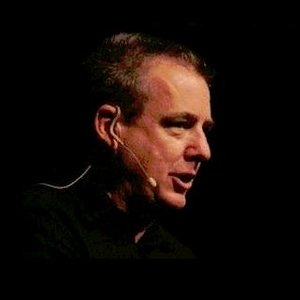
The following program is recorded content created by the Truth Network. It's Matt Slick live. Matt is the founder and president of the Christian Apologetics Research Ministry, found online at KARM.org. When you have questions about Bible doctrines, turn to Matt Slick live. Francis, taking your calls and responding to your questions at 877-207-2276. Here's Matt Slick. Everybody, welcome to the show.
It's me, Matt Slick, and you're listening to Matt Slick live. If you want to give me a call, as usual, all you have to do is dial 877-207-2276. If you want to email me, you can do that as well. The email address is info at KARM.org, info at C-A-R-M dot O-R-G, karm.org. And you can give me an email.
You can send me an email and put in the subject line, radio comment or radio question, something like that, and we can get to it. All right. We have nobody waiting right now, and there's always so many things to be able to talk about that we can get to and things like this. We've got a caller coming in. That's good.
Three open lines also if you want to call, 877-207-2276. So I'm working on two articles, which might be interesting. The Catholic Church Teaches a False Gospel, False Priesthood, and Promotes Idolatry.
That's one of the articles. I'm going to also do the identical article with Eastern Orthodoxy. And what I'm doing is going through and documenting from their own writings, from their own stuff, what they teach, and then comparing it with Scripture.
Because I've been saying this for a long time, that both those churches teach a false gospel, and they do, have a false priesthood and promote idolatry. So these are the things that are really serious in those groups. And that's one of the things we're working on. Another is what is idolatry? So I started researching that and just kind of, I thought I had an article on it already, you know, and I thought I did, but I really didn't. I've talked about it so many times. I've written things, is this idolatrous or whatever it is.
And I don't have an article, what is idolatry? So I started working on that, and I got carried away a little bit. And I found some interesting stuff. You know, I like to use the word of God as the ultimate standard. And when I do that, you know, I think it's the right thing to do. And so I found out that in idolatry that some idols are carried, some are made of wood, some are made of stone, you can bow before the images. There are images that are done, put on walls in the Bible, burning incense to them, sacrificing to them, they are the works of people's hands, you know, just things like that. And I was going through them, and I thought, man, it just reminds me, reminds me of the Catholic Church and the Orthodox Church.
It just does. And so it was enlightening. I've not released it yet.
It's 639 words, but I got to work on it, polish it, and get a few things ready, and do stuff like that. And also, last night, in fact, I'm going to show it. Last night, I was in a chat room, and someone presented a, I got a kick out of it.
I really did. Let's see if I can get to where it is. There we go. Where'd it go? Hey, how come it didn't stay up? Come on, get the PowerPoint thing. So, wow, that's interesting.
It won't stay up on top of the screen. So someone did a picture of me as a saint, and I'll share it with the screen here a little bit so people can see it. I thought it was pretty good. I got a kick out of it. They were kind of mocking me a little bit, but I thought it was really well done.
That's why I started chuckling. So there's that, and I'll go through that in a little bit. All right, all right, all right. Let's get on the air here with Cole from Virginia, Virginia, from Georgia.
Cole from Georgia, welcome, buddy. You're on the air. Hey, Matt Slick, how you doing, sir? By God's grace, I'm doing okay hanging in there. So what do we got? Oh, that's a good thing.
That's a good thing. Okay, Moses and the 10th commandment, I got three points. 10th commandment, I'll just ruin them all three by you, and then I'll listen to you. The first is with the 10th commandment, we seem to keep all of them. But the Sabbath, we say, oh, we don't really need that one. If you go down the list, every one of those are relevant.
So, but people do away with the Sabbath. Okay, that's my first one. Okay, let me address it. Hold on, let's address this one. Okay, okay.
All right. So nine out of the 10 commandments are restated as valid in the New Testament. The Sabbath is not.
It's just not. And the reason is because Jesus is our rest. He is our Sabbath.
And so we have rest in him. So I have an article on this on Karm where we worship on Saturday, I mean, on Sunday. And I think that's the one I go through where I demonstrate how I cite them. I show where they're cited in the New Testament. And the Sabbath is not. It's just not there. And the reason is because, as I said before, Jesus is our Sabbath. We have a rest in him.
Okay? So that's one. Yeah, but isn't the Sabbath mentioned in Revelations? And also, the apostles observed the Sabbath because, you know, certain times they did things on the Sabbath. Well, yeah, the word is mentioned, the Sabbath, is not reiterated as valid. Like, you know, the Ten Commandments are, you know, in the New Testament, where it says, you know, he'll quote the Ten Commandments, someone will, and say, it is, you know, said that we're not to commit adultery, you know, and say, oh, okay, just like that. But you don't find it where we're to keep the Sabbath. In fact, you find it contrary to it in the Bible. Okay, one more quick point, and then we can get off of that.
One more, I'm going to make one quick point. In the beginning, God said, forever, and God's not a liar. He says, we're going to keep this Sabbath forever. That was before the law. He said, forever the Sabbath will be kept, and that was before the law. Hold on, hold on, hold on. What verse is that?
Always look at the context. What's in Genesis? Okay.
And remember when he created everything, and then he rested on the Sabbath day? He said, forever. Well, hold on, hold on, hold on, hold on. Hold on, you're just going too fast.
Too much too fast. Right, right, right. So I need to know where that verse is to take a look at it. That's all I'm saying, and I'm looking right now. And so I'm looking to see where it says Sabbath forever. So let me take a look at it. No, no, he said, I'm going to rest it. Okay, all right. Well, what you're saying, you know, to verify it. And I see nothing, I see nothing in, let me do a search here. Yeah, I'm looking, and nothing, no verse is in the wordset. Well, it's the end of creation.
No, it's the end of creation, it's the end of creation. Hold on, hold on. All right, all right, all right. I'm giving you the, I'm telling you what I'm doing right now. I'm looking, and I can do searches very fast. I can do searches very quickly in the Bible. Verses that have the word Sabbath and forever in them in the same verse.
That's what I'm saying. No, no, no, no, it doesn't say Sabbath. It doesn't say Sabbath. But you know he's talking about the Sabbath because he says keep this, the seventh day, the end of creation. He said he rested on the seventh day, not Sabbath, but the seventh day. And he says this will be a covenant forever. Okay, you need to show me the verse.
That's what I'm saying. Well, I have to call you back on that one. I'll just have to call you back on that one.
I've got to search it now. Now, well, the other two, okay, Moses went up to the mountain 40 days, and boy, I'm a little confused, right? He went up for 40 days and 40 nights. Okay, he said he didn't eat or drink, okay? Now, my question is, did he go to sleep? You know, I wonder it.
I don't know. It doesn't say he did or didn't. And by the way, when I did my search, I had inadvertently restricted it to the New Testament, so I expanded it to all of the passage. And there is a verse, 2 Chronicles 2, 4, that has the word Sabbath and forever in the same verse. This is on the Sabbath, the New Moons, on pointed festivals, this being required forever in Israel. And this is about dedications and incense and things like that.
It was tying with the context of Israel, covenant Israel to do. But nothing like that is in the New Testament, just so you know. Okay, now, so yeah, I'm bewildered by the idea that Moses didn't eat or drink for 40 days. He'd have to have been supernaturally sustained because he had to have water. So I'm not sure what's going, oh, that's interesting.
You know what? That's really interesting because I remember that he neither ate or drank, let me see if that's true. Moses neither ate or drank for 40 days. Because if that's true, what would that mean?
I mean, is there something in it? Yeah, it says in Exodus 34, 28, so he was there with the Lord 40 days and nights. He did not eat bread or drink water. And he wrote in tablets. I wonder, you know, so I'm just thinking, okay, he could have had wine, but I mean, you know, it doesn't say anything like that.
It didn't drink anything. So he had to be supernaturally sustained. So I wonder if there's something about being in the present, if there's not being in the presence of, I guess I've got a background noise there, man. Oh, I'm sorry.
That's my, that's my GPS. Yeah. Okay. And so I wonder if there's something typological in that in his presence, he needed no sustenance.
I wonder typologically if it means that the Lord was his sustenance, the way he will be when we are in heaven. It just makes me think. So it's an interesting thing there. All right.
Sorry about that, but go ahead. Yeah, if that's the case, then we don't have to worry about digestion either, huh? We won't be using the bathroom up there, I guess, you know. But it does say we're gonna eat in the new kingdom in the new, right?
I'm sorry, several things happened at once here. Yeah, I don't know if we're gonna eat or drink. No, Jesus did eat after his resurrection.
So I assume, since we'll be like him, we'll be able to eat. And I don't know what that means biologically. So I just don't know, okay? Yeah, yeah, I understand, I understand. Yeah, well, it's weird to me.
Yeah, there's a lot of stuff that goes on with that. And I don't know about it. Yeah, God, he don't mess around. You know, he told Moses. You know, it's amazing to me that Moses had to stop God.
I don't think he really had to stop him. I think God was just teasing with him, you know, when he says, I'm gonna step back, I'm gonna kill those people. And Moses says, no, no, don't do it, God.
You're gonna look bad if you do it. You know, I would say, wow, Moses, you know, kind of calmed God down from doing something. I mean, he mentioned it a couple times. So, yeah, Abraham did too. So the idea here is that we interact with God. We can influence him.
The Prince of the righteous man availed much with God, James 5, 16, 17, so we can do that. But it's ordained from eternity that we do. So, yeah, it's not a big deal. It's just anthropomorphic. God interacts with us on our level, okay?
Yeah, well, one more thing, and I'll let you go. The closer we get to him, though, more accountability, because Moses messed up and struck the rock, and boy, he couldn't get, he got mad, and God punished him. So the closer you get, more accountability. That's what it seemed like to me. Well, probably the reason that Moses was punished is he struck the rock twice when God said to do that once. And the rock most probably represents Christ, who was struck once.
What I mean by that is one death and crucifixion, not twice. Okay, so that's probably what's going on. All right, there's a break, buddy, we gotta go. So, God bless you, man. All right, man, I'll talk to you later. All right, all right, thank you, bye. Okay, see you, bye. Hey, folks, we'll be right back after these messages, please stay tuned. All right, everyone, welcome back to the show.
Hope you're having a good time. And if you wanna continue to listen, would you please consider supporting us, because we do need your support, and we stay on the air by your contributions. That's how we stay on the air. If you're interested in supporting us, all you gotta do is go to karm.org, C-A-R-M dot O-R-G, forward slash donate, and all that you need right there. And we would hope that you would.
Five or $10 a month recurring is what we like, because it really does help us make budgets and things like that, just giving you an FYI. Let's get to Ron from North Carolina. Ron, welcome, you're on the air. Yes, sir, I wonder what's the best way to study the Bible properly without, you know, how you've been taught all your life certain things. Like, for example, I'm getting into Ephesians, where he talks about predestination and choosing. I wanna study that properly without being, you know, without what I've been taught.
What's the best way to study the Bible without, you know, what you've been taught all your life? What I would do is get a document like Word, or you can go to Google Docs or something like that, and I would create a document, a blank document first, and because you're gonna prep that document for recording what you learn, and then you're gonna learn to organize what you learn by keeping an outline. I do lots of stuff in outlines, because outlines are quick and easy. All right, so what you do then, like for example, you know, you have this outline, but there's nothing in there yet.
You learn how to just make an indent and, you know, an outline, it'll indents and things like that. It's easy to do. So you type in the word, because you mentioned predestination, and you go there.
Now, one of the things you can do is go to blueletterbible.org. So I'm there right now, and I'm gonna just type in the word predestination, right? And hit Enter, and it comes up, oh, look at this. Predestination, King James Zero, ooh, look at that. So now let's do it in the NASB, and let's see what it does here. And okay, so it doesn't do that. So I'm just doing this right now, and so predestine, okay?
And I'll hit Enter, and what the heck? Oh, it says wild, wild carded, that's interesting, because the word predestine occurs in the Bible, and what I'm trying to do is point you to a way to get to it. All right, so what I did was, in Blue Letter Bible, I just typed in predes, P-R-E-D-E-S, asterisk, which is a wild card, and so it'll do predestined, predestining, predestination, whatever it will be. And then you can find all the verses where it occurs, and it occurs in Ephesians 1-5 and Ephesians 1-11, but it also first contains two seven, Romans 8-30, Romans 8-29, and Acts 4-28. All right, so something like this, what you can do then, you type in the word predestination in your outline, if you just look like we're doing a doctrine, okay? And you wanna find out all the places it occurs, and you might wanna just copy each one of them, because there's one, two, three, four, five, six, and this is easy words only six times. You could copy each one and put them in the outline, and say verses where the word occurs, and then you list each one out.
And so that you can learn and you can see how is the word used in different contexts, but when you're studying a particular one, like Ephesians 1-5, for example, now I'm doing all of this on the blueletterbible.org, you click on the link for Ephesians 1-5, and you can read what's before, read what's after, study it, and look at what it is as best you can figure out from what it says there, what's related to it. Is there anything that is shedding light on what it means? Like it says, he predestined us to adoption as sons. Now I gotta look up the word adoption. What does that mean? Why is he saying adoption?
So I need to do that, okay. And I look at the verse after it, to the praise of his glory. Oh, so predestination for adoption is to the glory of God.
Oh, interesting. And maybe the verse before it, he chose us in him before the foundation of the world, that we be holy and blameless before him, and love he predestined us. Oh, so predestination's related to God choosing people from before the foundation of the world. And you see, all I'm doing is deriving truth from what it says. That's all I'm doing.
Right. And so, let me show you a little trick, a little something else I happen to, I've studied this stuff already. So when you go to Acts 4.28, it says to do whatever your hand and your purpose predestined to occur. Oh, now I gotta read ahead of it. Verse 27, for truly in this city that were gathered together against your holy servant Jesus, whom you anointed, both Herod and Pontius Pilate, along with the Gentiles and the peoples of Israel, to do whatever your hand and your purpose predestined to occur.
Whoa, what, wait, what? So now, predestination here is used in the context of the hand and purpose of God. And we see in the context in Acts 4.27, for truly in this city, there were gathered. Well, were gathered is passive voice.
You'll learn all this kind of stuff when you study. It's passive voice. It means someone gathered them against Jesus, whom you anointed, till they're gathered against Jesus. Herod and Pontius Pilate, those are two individuals, and the Gentiles and the peoples of Israel. Those are two people groups. So now we see that two individuals and two people groups were gathered against Jesus to do what your hand and your purpose predestined to occur.
What? Well, what was predestined to occur? The crucifixion of Christ. So we know that God predestined the crucifixion of Christ.
And you write that out from Acts 4.27, 28. But now we've got a problem. Did he predestined something bad to occur?
Because it was bad what happened to Jesus. So now we have another issue. Predestination here seems to mean that God can predest and bad things to happen. Well, now, how does that work? And I could, of course, give you answers to all that.
And I'm just saying that this is what you do. When you study a single word, you'll find that it will lead you all over the place. You will find that it's just immense. Now I'm gonna do the word justify.
I'm gonna do J-U-S-T-I-F asterisk. The word occurs 48 times. Now, it's in the Old Testament as well. Justified and justified and justified. And the New Testament. Well, 48 times what I'm gonna do is read through every one of them. It's gonna take me 20 minutes.
Was it worth it? Oh, yeah. Now, let me tell you something. I call them word studies.
I learn so much from just word studies. See, what we could do, back to Ephesians 1, five, well, God predestined us. Well, what that means is that God knows what we're gonna choose, so he predestines us according to our choices.
Okay, next. Well, it doesn't say that in the text, but people often assume it. So now what you do is you have an assumption. You make it in the outline, assumptions. Your own assumptions. Okay, not right or wrong. You just, your assumptions.
Well, he looks into the future to see who'll pick him. That's an assumption one. Assumption two.
He can't be guilty of things that they do bad in, okay? And hold on, we gotta break. I'm gonna continue with this. Because this is study. This is what you do for study.
It's what I do all the time. Now, hold on, okay? We gotta break. Hey, folks, we'll be right back after these messages. Please stay tuned. Thanks for listening and continuing to listen. Let's get back on with Ron from North Carolina.
Ron, you still there? Yes, sir. All right, now I know I'm giving you a lot of information. Let me just kind of continue with it. So you write down your assumptions. This is important because we assume so many times that what we believe is true. And it might be that they're true. It might be that they're not true. But if you write out your assumptions, then what happens is you can check them. And you can say, for example, does God look into the future to see who'll pick him? And you can ask the question. You can go, you know, how would I look at that?
How would I find out? Like foreknowledge. How does God use foreknowledge, the term? And you do your research.
And so now you're into Romans 8.29. Those of me foreknew, he also predestined. And say, well, hey, now what does that mean? Now you gotta study what foreknew means. So you see, what happens is when you start studying like this, it becomes an exploration. And what you do is you're learning from God the way he wants you to hear from his word, the best of your ability.
No one's perfect at it, you know, we make mistakes. But when you start learning one thing and you go to the next, you go to the next, you go to the next, what you find out is a mosaic of things. So now let me step back and tell you what happens when you do this. As you write down in your outline, you write down predestination, now you have to write down foreknowledge. You write down the verses that have those things in there. You look up what the Greek word is and you just learn how to look at a Greek lexicon.
Oh, that's what it means, oh, okay, no big deal. And you learn how to search for a Greek word eventually and things like this. And then what happens is it's like this. There's a big wall in front of you and you have a tile on predestination and you put it in place. You have one on foreknowledge, you put it in place. You have something on knowledge as a whole.
The verse Ephesians 1, five, Acts 4, 27, 28, predestining bad things to happen, all these things. At first, you don't know how they fit together and that's okay. And then after a while, you go, wait a minute, I see now how this relates to that. Now on that wall, you put those tiles next to each other because now you know they go together. And the more you do this, the more tiles get up there on that wall and what happens, what emerges is a picture. The picture is what you understand and what you learn as you relate and learn how things are related and interrelated.
Once this begins like this, it becomes, for me at least, entertaining and enjoyable, challenging, frustrating, worth it, it's just awesome. And then you start seeing this broad picture and from there, other things come in line. Election, predestination, salvation, security, choice, the Trinity, the incarnation and they all become interrelated and I've been doing this for, I know I'm talking a lot here but sorry. I've been doing this for so long that that mosaic I have, I see so many things how they are and only a few blank squares are, so to speak, left. I'm not saying that I understand everything but it's like, oh, I see this broad picture.
I see how it all interrelates. There's a few areas I'm still studying and that's what happens and that's how you study and of course, you do it prayerfully and you ask people questions and then you get commentaries and you start reading commentaries. You check what they say against scripture and as I always like to say, don't listen to a guy named Slick on the radio.
Check what I say against the word of God. That's what you're supposed to do. So that's just a prelim idea but the outline thing is very important and the reason is you will learn how to categorize your information and how to interrelate it and sometimes what you learn in one part of your outline belongs in addition to another part in your outline and you copy and you put this over here because this is related to that and then what happens is your outline becomes two pages, five pages, 10 pages, 20 pages long and you're learning stuff and then you go on a vacation and you come back and after three weeks, whatever it is and you say, where was I? And you, oh, wait a minute, I got this outline and you go, oh my goodness and then what happened, all your information is still there and then when you read through your outline, you see new things and then you wonder. Sometimes you go, what was I thinking? What did I write that for?
It doesn't make any sense. Now you have to do some more homework. This is Bible study. This is how I teach people the Bible study and that's what I do and I've developed it over the years and I'm telling you, wow, it is so helpful to learn doing that, okay? Yes, sir.
All right and then you expand them. I could keep going, man. My outlines on just Roman Catholicism's, 250 pages. My outlines on Eastern Orthodoxy's, almost 200 pages and I have outlines that I do on different topics.
Now this is different because I do this for a living, okay? But my outlines on Calvinism, I don't know, it's like 100 pages. Baptism is like 50 pages. On marriage outline, I don't know how many pages that one is. Oneness theology, philosophy, science.
I have an outline on quantum mechanics and so I doubt all kinds of stuff because this is what I do for a living but you don't need that. But you need to have outlines for what you study, whatever you're studying and you're gonna learn. At first, it's not easy. After a while, it's like, oh yeah, okay? Yes, sir. Did that help?
Yes, sir, it sure did. All right, well, good. Okay, yeah, give it a shot.
And also, one more thing. Enjoy making mistakes. Enjoy running up against dead ends. Enjoy thinking through things and you're absolutely lost. Enjoy the puzzles that you haven't solved yet. Enjoy the thing.
At first, there's a whole bunch and then they become fewer and fewer and then it becomes joyful. But there's a problem that occurs with this too. I'm gonna warn you about this. That you can go to church.
Once you've studied like this for six months to a year, you go to church and all of a sudden the sermons, you don't enjoy them as much because you're saying, well, wait a minute. This deals with this and that. How come you're not talking about it? Why that, why this?
Why you're not getting deep into where the word of God actually talks about this? This kind of thing happens. And we gotta be careful for that because it can become prideful. We gotta be careful, all right? Yes, sir. All right. Okay. Okay.
So there you go. All right, thank you, sir. I gave you a lot, I know.
But that's what you do. All right, buddy, God bless. All right. God bless you, Pete.
All right. All right, now let's get to this newbie caller, Jermaine. Hey, Jermaine. How you doing, buddy? Jermaine. Hey, Ned.
He's on hold. Yeah, I was really learning a lot in that last segment. It was really nice. But I had a question about. It's how I started, yeah. You went.
Yeah, our church uses God lines as well and I find it keeps us all focused. So, okay, what do you got? My question was. Yeah, my question was, you know, looking back in the past and all certain styles of demonic worship, like Baal and I can't recall all the others, but from the Old Testament, some of the barbaric practices we heard of, some of them seem lost in history, but then when I kind of looked throughout history and I see how a lot of people have dispatched people they don't really care for in very brutal ways and methods of torture and some of the cartels. I know some of the sites where the cartels were at least just to, you know, send them out. They would find effigies, candles, and what looked like, you know, like ritualistic practices. And I remember the current president of I think it was El Salvador, Ed Berkel, he said that one person that made a comment of leaving gang activity because someone told him the beast wants another sacrifice and they had to kill a child and he was just there for regular, you know, machismo gang stuff, but he realized he was in something that was actually satanic, he was deceived. Right. So I was just trying to wonder, do you have any current examples of some of those Old Testament demonic practices?
Yeah. Well, you mentioned one, there's another set where there are Satanists who, I'll be careful how I say this because there might be children around, so I'm gonna stall a little bit, give the moms and dads the ability to turn the radio down for the next 30 seconds, okay? And there are groups who, in the satanic realm of worship, who are raising children for that purpose and breed women for breeding for that purpose. And they're alive and well.
And there's other stuff. We'll get back, I'll talk more about the SS of Nazi, Nazi Germany, they offered people sacrifices also. But anyway, hold on, man, we'll get right back. After these messages, folks, please stay tuned. It's Matt Slick live, taking a call at 877-207-2276, here's Matt Slick. All right, I'm gonna welcome back to the show last segment of the hour. If you wanna give me a call, the number is 877-207-2276. Jermaine, are you still there?
Yes, I am. All right, so I mentioned before the break the sacrifices that Nazi Germany did in the SS. I was told this by an expert in Satanism who did research and stuff like that.
We have sacrifices today in abortion, how people sacrifice the lives of others for their own convenience and pleasure. There are, as I said, the satanic stuff that's at work is there, too. So, here, let me show you something.
I'm gonna read something. This is a demonic thing as well. This is one of the manifestations of supposedly Mary supposedly Mary in Fatima in 1917 in Fatima, Portugal. I'm gonna read the quote. Now, the Roman Catholic Church says this is officially, really, truly Mary.
We need to listen to her. But this apparition is a demon, not Mary, because this is what it says. Sacrifice yourselves for sinners. Mary's talking to the children, okay?
These three kids. Sacrifice yourselves for sinners and say often to Jesus, especially whenever you make a sacrifice, O Jesus, it is for the love of thee for the conversion of sinners and in reparation for the sins committed against the Immaculate Heart of Mary. Now, in the Old Testament, sacrifices were offered to demonic forces. The Bible talks about the, in fact, I had it up on my screen.
Let's see if I still have it. They, in Leviticus 17, sacrificing to demons, there was only 32. There's lots of places. 1 Corinthians 10, 20, Gentiles sacrifice their sacrifice to demons and not to God.
So, there's lots of stuff there, okay? But this is an example of a demonic manifestation because it says sacrifice, make sacrifices, doesn't say what kind of sacrifices, but for the conversion of sinners and to repair for the sins committed against the Immaculate Heart of Mary. So, previous to that, the apparition had said Jesus wants to use you to make me known and loved. He wishes to establish a devotion to my Immaculate Heart throughout the world. I promise salvation, whoever embraces it.
So, the Immaculate Heart of Mary is the purity of her heart and that they're to offer sacrifices to make things better for their sins committed against Mary. So, this is obviously demonic. So, these kinds of things are, it's another example of modern day demonic sacrifices. I can get into some more stuff, but that's, there's some examples of it.
You there? Sorry about that, my thumb hit the mute button, but yeah, no, that was pretty thorough and I guess we still do see some of that barbaric behavior is just, it's been renamed and sanitized for current times, but there's still very much going on. That's right, that's right. Now, I could make a case where, I was just looking at it today, where greed is a form of idolatry. Now, with idols, sacrifices were made to false gods represented by the idols. So, I could then step one step further and say that varying forms of idolatry have varying forms of sacrifice. So, sacrifice of adoration, of prayer to and worship, of objects and things like this is also this kind of thing in a more loose context. And it's bad news.
So, this is why we need to stick with scriptures. So, anyway, okay? All right, well, thank you very much, I appreciate it. You're welcome, buddy. God bless, man. All right, we'll see ya.
All right. Oops, cut him off there, sorry about that. And hope he calls back. He always has good questions. Let's get to Ben from Ohio. Hey, Ben, welcome.
You're on the air. Hi, how's it going? It's going, man. It's going.
What do you got? Yeah, I got a question in Genesis chapter one, verse 26. God says, let us make him in our image. And I was curious, is that referencing to the trinity that we hold clear and dear to our hearts?
I understand that there's a unity without uniformity and diversity without division. So, I was curious if that is a reference to that. Probably.
I can't say authoritatively, but it certainly looks like it. And notice this. It says, God said, let us make man in our image according to our likeness. Three plurals.
Trinity, three plurals. I think there's a relationship there. Let us make man in our image. Now, the image is not physical, but the image is what's called the communicable attributes. God is love. He loves, we can love. He thinks, we can think. He's self-aware, we're self-aware. He has morality, we have morality. And those are the communicable attributes, the non-communicable attributes. He's everywhere, we're not. He's perfect, we're not.
Things like that. So, that's what it means by image. So, then it says, let us make man in our image according to our likeness. And then it says, let them, that's man, rule over the fish of the sea. Now, I just can't help but go to Isaiah 44, 24. Thus says Yahweh, that's the name of God. So, in Genesis 1, 26, the word God is Elohim. In 1 Kings 8, 60, it says, Jehovah, Yahweh, is Elohim.
So, the name of God is Yahweh, no big deal. Thus says Yahweh, your redeemer, and the one who formed me from the womb, I, Yahweh, am the maker of all things, stretching out the heavens by myself, and spreading out the earth all alone. So, what we see here in Isaiah 44, 24, is the one being God is the maker of all things. He says, I, Yahweh, am the maker of all things. Included in all things is Genesis 1, 26, the making of man. So, we see the plurality of God in Genesis 1, 26. Let us make an hour image according to our likeness, but yet, it's a singular being. God, in Genesis, excuse me, Isaiah 44, 24, who makes all things by himself. So, yes, we see the Trinity, which is one God in three distinct, simultaneous, co-eternal persons, and there's divine simplicity, and I can get into it more and more, but there you go, so far, okay? Mm-hmm.
Truly amazing. The very first beginning of the chapter of the Holy Trinity is mentioned. Yeah, I was... Oh, absolutely. Basically, on my question, yeah, I just, when I was reading it, that just struck me, like, why would he say us? Then, you know, of course, you're into this, and, you know, get that 15, like, well, maybe it deals with the Trinity.
Could be. Yeah, thank you, I'm so much clear on that. Well, hold on, I'll give you some more information that might be interesting. Yeah, yeah, I'll give you some more information that might be interesting.
Yeah, totally, yeah. All right, so, in Genesis 1, it says, in the beginning, right, God created. And then in John 1, 1, it says, in the beginning was the Word, the Word was with God, the Word was God. But in 1 John 1, what was from the beginning, what we have heard, what you have seen with our eyes, concerning the Word of life, that's Jesus, the life was manifested, and this life was with the Father. Now we have the Father and the Son. In verse three, our fellowship is with the Father and with His Son, Jesus Christ. So we have the Father and the Son right there. But also, what we have is fellowship with the Father and with His Son. But the fellowship is implied through the work of the indwelling and the ministry of the Holy Spirit. Now, when you go also to 1 John 1, 5, this is the message we have heard from Him and announced to you that God is light, and in Him there's no darkness. Well, this is the same kind of a thing in John 1, where it says Jesus is the light of the world.
So the issue here is the plurality of God in creation in Genesis 1, in John 1, and in 1 John 1. One, okay, there's a lot there. Yeah.
That's like amazing. All right. That help? Yeah, I think, oh, yeah, yeah, it did.
It just gave me more clarity on the topic and the question of the us, so thank you again for that. Okay, let me give you some more, okay? Please, yes. Let us make man in our image according to our likeness. Now what I'm gonna do is go to Genesis 19, 24.
Check this out. Then Yahweh rained on Sodom and Gomorrah brimstone and fire from Yahweh out of heaven. Yahweh rained fire and brimstone on Sodom and Gomorrah from Yahweh. Yahweh rained fire and brimstone from Yahweh. Whoa, well, that's interesting. Now let's go to Amos 4.
10 and 11. God speaking, I sent a plague among you after the manner of Egypt. I slew your young men by the sword along with your captured horses. I made the stench of your camp rise up in your nostrils. You have not returned to me, declares Yahweh.
I overthrew you as God overthrew Sodom and Gomorrah. Interesting. Yeah. The plurality of God.
Here's another one. This is Exodus 6. Okay, Exodus 6, verse two and three. God spoke further to Moses and said to him, I am Yahweh. And I appeared to Abraham, Isaac, and Jacob as God almighty.
But by my name Yahweh, I did not make myself known to them. So God is talking to Moses. He says, I am Yahweh. Well, the text says God is talking and God identifies himself as Yahweh. So this isn't an angel.
It's not a vision. It's God speaking to Moses. And he says, I appeared as God almighty to them.
Okay, well that's interesting. Now when you go to John 6, 46, Jesus says, not that anyone has seen the Father except the ones from God. He has seen the Father. So it was not the Father that appeared to Moses or to Abraham, Isaac, and Jacob. So who were they seeing who's God almighty but not the Father? The Son. Oh my goodness. Wow. The plurality of God is there. And here's another one. I love teaching on the Trinity.
And I do, I love it. Isaiah 40, 8, 16. Okay. God says, come near to me.
Listen to this. From the first, I have not spoken in secret. From the time it took place, I was there. Now the Lord, okay, Lord God has sent me and his Spirit. Thus says Yahweh, your Redeemer, the Holy One of Israel. I am Yahweh, your Elohim. Now, if we had more time, we don't.
We're out in 15 seconds or so. I would then talk to you. If you want to call back tomorrow, I'll do it. I'll explain how the Trinity is the necessary precondition for all intelligibility.
How the Trinity itself is necessary for all truth values and our knowledge of truth. I can show you that. Anyway, we've got to go, buddy, okay?
A lot of stuff there. All right, thank you again. All right, man, God bless. Hey folks, hope you enjoyed that. I love teaching on the Trinity. One of my favorite topics. May the Lord bless you and by his grace, everybody, by his grace, be back on there tomorrow. Hopefully, we'll talk to you then. So have a good one. God bless. Another program powered by the Truth Network.