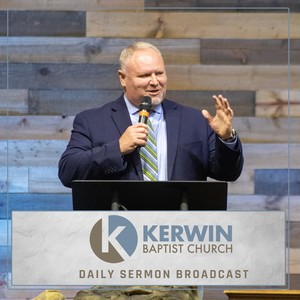
Welcome to the Kerwin Baptist Church broadcast today. Our desire is for the Word of God to be spread throughout the world so that all may know Christ. Join us now for a portion of one of our services here at Kerwin Baptist Church, located in Kernersville, North Carolina. Hebrews chapter 13. Let me mention too, with them, as we have mentioned about Miss Charlotte, Rick and Krista have asked if you don't mind to give them at least a day.
They're going to be traveling. They can't answer phones and all that. If anything, you want to just send a text, they don't answer back. And they just need time to get home and deal with all this, and they just can't field a lot of phone calls. And so if you could help them out with that.
Just give them a little bit, just because they just don't want to appear rude by not answering or something of that nature. And so I know that they would appreciate that help. We want to continue on our series of altars. This may be our last one, I'm not sure. I'm working on a few other things, but if God doesn't give liberty for that.
This may be one of our last if the Lord wants us to move on to something else. Today our subject is we have an altar. And this is good news for you, and it's good news for me. And this comes straight from. the word of God in Hebrews chapter 13.
Let me do a little bit of not review, but if I can, let's just take some things that we've learned, let's wrap them together a little bit this morning, just so that we can make sure everyone is caught up with what we have talked about. What is. An altar. An altar is a sacred structure. upon which sacrifices and offerings are made.
That's basically the definition of an altar. The Hebrew word for altar is mishbek, which means literally a place of sacrifice.
Now, what was an altar made of in the Bible? Most of the time, stone or earth, mud kind of stuff was used. Wood would have been something that would have been used on top of the sacrifice, not necessarily to build the sacrifice, because then the whole altar would burn down when they sacrificed.
So it would be stone or earth that they would normally use. And the person in charge of the altar, not a particular family altar, but religiously and corporately speaking, a priest was the person that was in charge of the altar.
Now, what were the different types of altars? First, there was the altar of burnt offering, and that is where animals were sacrificed to symbolize atonement for sin. Then there was the altar of incense, which is where sweet-smelling spices. were burned as an offering to God, just as an offering. Not asking forgiveness for sin, but as an offering.
And that's why in the New Testament you'll hear things like it was a sweet-smelling savor to God. It means that God literally enjoys when you and I do things for God, not asking him for anything, but we offer, we willingly offer our love, our commitment, our service, our strength, our time, our talents, our treasure. And the Bible says that is a sweet smelling savor to God. It literally is a picture of the altar of incense in the Old Testament. Then there was the altar of thanksgiving.
This was built to give thanks to God for his blessing.
So there is literally a sacrifice for sin atonement. There was the sweet-smelling savor of literally an offering to God. And then there was a gratitude altar, a thankful altar, a praise altar, thanking God for what he has done.
Now, what were the purpose? Yes. Of altars in the Old Testament. I want you to get this. Number one, they were places to meet with God.
Places to meet. With God. Second, they were places to worship God. It was a place where you could come to meet with God. An altar was a place where you could come to worship God, and it literally had to be done that way in the Old Testament.
Third, an altar was a place to make sacrifices to God, and that makes sense, and we have talked about that numerous times. Fourth, they were a place of remembrance. That altar would be a place where you could remember God did something great here, almost a memorial type of altar.
So, literally, an altar was where you met God, where you worship God, where you sacrificed to God, and where you remembered God. It's important for you to know this. Because in the Old Testament, this is the purpose of altars. But in the New Testament Jesus became our altar. He is our altar.
We're going to show you this.
So that means that Jesus is our altar.
So now we can meet with God, worship God, remember God, give to God, and we can do it straight to God. We don't have to go through a sacrifice, through an altar, through a priest, through the temple. We can now go directly to God. What was the significance? Of altars in the Old Testament.
This is all going somewhere, but I want you to get these facts. Altars were a physical representation of man's relationship with God. For a man to have a relationship with God. There had to be an altar. Did you hear me?
In the Old Testament, for man at all. to be able to communicate. or have any kind of relationship with God. There had to be an altar. In the New Testament, Jesus became.
Our altar. That means now there is no way for you and I to get to God. Except Jesus Christ. We have to have an altar. to get to God.
And that's what Jesus became.
Now, notice this secondly. Altars remind us that even though we are sinners, we can still have a relationship. With the Holy God. You know, in the Old Testament, a person would come to an altar. They would come full of sin, guilt, and all these things.
But they would sacrifice on that altar. They would have an atonement for their sin on that altar. and they could step away forgiven. It's a reminder, and altars are a reminder to you and to me. that even though we're sinners, We have been saved by the grace of God.
And even though we're sinners, we can have a relationship. with Jesus Christ. Notice third altars teach us that sacrifice is an essential part of our faith. Why? Because when you and I make a sacrifice to God, It is a reminder, a picture, an illustration to him.
of the sacrifice Jesus gave to God the Father. Jesus became the sacrifice. For my sin and your sin, he became the sacrificial lamb.
So when you and I make a sacrifice to God, It literally is a picture. of Christ. It reminds him of his son. Notice fourthly altars are a powerful reminder. That we need a Savior.
We need to say here. Why does there need to be an altar?
Well, because we're sinners. Why does there need to be a sacrifice? Because we need an atonement for sins. That reminds me, I'm the sinner. I'm the one that needs him.
He doesn't need us. We need him. And altars are a reminder of that.
So it's good, all these things in the Old Testament, you'll say, well, that's just Old Testament. Yes, but they're a picture of something. They're a reminder of something. They're profitable for something. It reminds us that we need a Savior.
It reminds us that even though I'm a sinner, I can still have a relationship with God through the blood of Jesus Christ.
Now, there were two altars in the tabernacle. Many of you have kind of studied a little bit about the tabernacle and different things and the inner parts of the tabernacle. There were two altars. Number one, there was the brazen altar, and this was made out of bronze. And it was used for sacrifice, for atonement.
But notice there is also the altars of incense, the altar of incense in the tabernacle. And these altars were made out of gold, and they were used to burn incense. They were a picture of atonement, and they were a picture of intercession in the temple.
Now, why you say preacher? Why do we not need a sacrificial altar. Anymore. You know, with what you and I do here in 2023. I am For illustration's sake, we started this series and made little fake rocks and stuff and made like a picture of an altar but I don't have to get up every morning and have an old rock altar, and I don't have to put wood on that thing and go find me a lamb, and I don't have to sacrifice and burn that lamb and ask God to forgive my sins.
I don't have to have those kind of altars anymore. Why is that? Because we don't need physical altars. as they did in the Old Testament. The Old Testament, let me explain this.
The Old Testament sacrifice system, please get this, because a lot of people misunderstand. It was not about an animal's blood. taking away your sin. Instead, it was about sending the sins of the people back to God. And that's why repentance is so important.
Listen, we don't come and say, hey, I got some sin. God, you need to get rid of it. Thank you. No, we repent. Because the whole animal sacrifice wasn't about, okay, well, we're just atoning for sin.
No, the whole point of that animal sacrifice was we were sending our sins back to God. It's a repentance, and that means that you and I don't just get down and say, God, forgive me for such and such, and then we just keep going right back and doing it. There must be repentance for our sin. What is repentance? It doesn't just mean that I feel bad about it, that's guilt.
Repentance means that I turn, I repent, I change directions. That's what repentance is in a person's life. All of our talk about altars. Should be a reminder that we need repentance. in our churches.
Look at me, dear friend. If there's no repentance, sin remains. You can have all kinds of altars. But if there's no repentance The sin is still there. You say, so preacher, what are you trying to say?
All this changed. And Jesus came. Hebrews chapter 13, where you're at, verses will be on the screen for you. Let me explain this passage and we'll let you go this morning. Look at verse 8.
Jesus Christ The same yesterday. Today Um and forever. I love it. Let me ask you this. Why is Jesus' sacrifice?
Why is it superior? Why do we no longer need this? Why is his sacrifice so much better?
Well number one, let me explain this before we even get into Hebrews here. What did it say? Jesus Christ, the same yesterday, today, and forever. Number one is this. Listen to me, I want you to get this.
Jesus' sacrifice on the cross, why is it so much better than the Old Testament sacrifice of a lamb on a rock altar? Listen to me, please get this. Number one, Jesus' sacrifice was voluntary. Can I tell you something? There weren't sheep lining up, like, please sacrifice me.
I want to try. In other words, a person had sin, they chose a lamb, they took it, it wasn't voluntary. That lamb, that sheep didn't have a choice. But when Jesus sacrificed, it was his choice. He chose to.
Number two, because his sacrifice was once and for all. You see, every time you'd sacrifice with a lamb to get atonement for sin, you start sinning again.
Now you got that sin to free. When Jesus became the sacrifice, that was the last sacrifice that would ever be needed for sin. It was once and for all. Instead of being a temporary solution, it was an eternal sacrifice. Number three.
Because Jesus is the high priest. The Bible says he's our high priest.
So, get this. This means we don't need a mediator. We don't need a priest. We don't need an altar. We don't need a sacrifice.
We don't need a lamb because Jesus is all of that. He is the altar. He is the sacrifice. He was the sacrificial lamb. He is the priest in control of the altar.
And then Jesus, according to Hebrews, became our altar. He's everything.
So let's look if you would. Number one, I want you to see. Please get this. Number one. I want you to see Jesus, our Redeemer.
In Hebrews Chapter 13, verse 8. Look at verse 8: Jesus Christ. The same yesterday, today, and forever. That means Jesus is not a temporary fulfillment. He is in eternal fulfillment.
Because he's our sacrifice, and he's the same yesterday, he's the same today, he's the same forever. He's eternal, and he never changes. Look at me. The reason his sacrifice is eternal is because he's eternal.
So, the first thing we notice in Hebrews about this, we need to know about Jesus, that he is the same yesterday, today, and forever. Notice, secondly, Jesus is our reliance, he's who we rely on. Look at verse 9: Be not carried away with diverse and strange doctrine, for it is a good thing that the heart be established with grace. Not with meats.
Now this is not pushing a vegetarian lifestyle. It's not what this is. Please don't take scripture out of context. Please keep it in the right context. He says, with grace, not with meats, which have not profited them.
That have been occupied therein. This word meats here is a term for animal sacrifice. It means that whole process of sacrificing an animal in the temple for sacrifice of sin.
Now, notice what he says: he says, Don't be carried away with strange doctrine. He said, It's a good thing that you are redeemed by grace, not by some animal sacrifice. That's how they did it back then. But Jesus came now. What does this mean?
Number one, it means we rely on grace, not works. You and I don't get saved because we go to the work, build an altar, put an animal, do all the work. We get saved because Jesus did all the work. It's called grace. Dear friend, you're here today.
You say, you don't know what I've done. I've really blown it. All of us have. But Jesus loves you, and He wants to show grace to you. He became the sacrificial lamb.
He became your sacrifice so that you could be saved. We rely on grace, not works. Notice, secondly, we focus on the heart, not the head. He is saying the sacrifice was all about knowledge. But it wasn't the heart.
When Jesus came, listen, that's why we talk about salvation involving the heart. For years, we've told, well, we'll say something like, ask Jesus to come into your heart.
Well, it's a metaphor. What does it mean? That means that we're asking Jesus to save me. But when you and I ask Jesus to save us, the Holy Spirit indwells us, He lives in us. What does He live in?
Your kidney? He lives in your soul. Your spirit. That's the heart. That's what we call it.
So that's what we mean by when we say that.
So that means this, we go by grace, not by works. We focus on the heart, not the head. Notice thirdly, we follow truth, not tradition. You see, the tradition was, this is what you do. You build an altar, you put an animal on there, and you burn it, and you sacrifice.
But that's tradition. Jesus came now. He has shown grace now.
So we follow truth, not that old tradition. Don't you love this passage in Hebrews? And then we come to number three. We see Jesus as our redemption. Look at verse 10.
Here is our whole theme. You don't need an animal sacrifice altar. Look what it says. We have an altar. We have an altar.
whereof they have no right to eat which serve the tabernacle. For the bodies of those beasts whose blood is brought into the sanctuary by the high priest for sin are burned without the camp. Wherefore, Jesus also, He's our altar. That he might sanctify the people with his own blood, suffered without the gate. You say, Preacher, what does this mean?
And they're going to leave this verse up just for a second. Under Jewish law, When you sacrificed an animal for sin, no part of that animal. was supposed to be eaten. But after the sacrifice it was supposed to be burnt outside of the camp. Because it was an animal sacrifice that had been sacrificed for sin.
Everybody with me say amen. Here's the whole point.
Now If you're going to subject yourself to the law, Instead of grace. then you have no way to eat the gospel. Why? Because the gospel was furnished By Jesus Christ. Him being the sacrifice according to Old Testament.
Whoever was, you know, the animal that was using the sacrifice had to be burned outside the camp. But Jesus, who became our sacrifice, Was buried, he was crucified, buried, but he rose again. And that means this, that under the old law, I can't partake of that sacrifice because it was for sin. But Jesus became our sacrifice. He defeated death, hell, and the grave.
He conquered sin.
So now we're not under the Old Testament. We don't have to take that sacrifice and cast it out. He is our sacrifice, and now we can eat freely from Jesus Christ. You say, preacher, that sounds technical. It is technical, it's called doctrine.
Baptists don't like doctrine. It keeps them from lunch and they don't like doctrine. But you need to go to a church that teaches you doctrine.
So what does this mean? Notice in this passage real quick. Look at verse 12. First we see the price. of our redemption.
with his own blood. That was the price. His eternal Pure holy blood. That was the price of our redemption. Notice, secondly, the pain of our redemption.
He suffered without. The gate. What does it mean? It means when Jesus came, they rejected him. It means when Jesus came, what did they do?
They crucified him. They wouldn't give him his rightful place as the head of the temple. What they did is they made him suffer without. They pushed him out. They rejected him.
They crucified him. And that was the pain that he came. They rejected and they killed. They sacrificed him, crucified him on the cross. Why did he do this?
Notice thirdly. The purpose of our redemption, verse 12, that he might sanctify. the people. That's the whole purpose.
So the price was his own blood, the pain was that he would suffer without the gate, but the whole purpose of it was so that he might sanctify you and me. have An altar. And it's Jesus Christ. Look at me. So what that means is We no longer need a physical Alter.
And because of that, there are some that take off with that. And they'll tell you, you don't need altars nowadays. And they're correct. When we say that you do not need a physical altar to put an animal sacrifice on because of your sin. Jesus is our altar.
He was the sacrifice. He's already covered it. He's already provided forgiveness.
So we don't need to build a physical altar. But there are things called spiritual altars. And a spiritual altar is simply when you communicate with God. A spiritual altar is simply when you give your offering to God. A spiritual offering, a spiritual altar is literally when you give the sacrifice.
of praise. to God. You see, you and I do still need altars. Not for atonement of sin. Jesus is our altar.
But because we want to praise God. for what he's done.
So let's continue in the passage. I love this. Notice, if you would, the responsibility we've been given. Look at verse 13. Let us go therefore unto him without the camp, bearing his reproach.
Notice that he suffered without the gate, he became the sacrifice.
So, what's our responsibility now? Number one is to serve. Go forth unto him. What does that mean? Follow him, serve him.
You know, everything in your life should be centered around him. Leave that Old Testament law. In the temple and go outside of the camp, freedom from law to grace. Yeah.
Well, that's four of us.
So, what is our responsibility? First, to serve him, notice second. to suffer. Mm-hmm. Go unto him without the camp and bear his reproach.
My suffering. My willingness to bear his reproach. Look at me, folks. is my sacrifice to him. He's my altar.
What I do for Christ. is my offering to God. Everybody got it? Listen, every time an usher here Stands there, hands out, welcomes people. Hey, come find.
That was their altar. That was their sacrifice to God. That's an offering that they're just sending up to God because God redeemed me. He became my altar. He's my salvation.
Now I don't have to go build a rock altar and put an animal on it and put wood on it just to let God know I want to praise him.
Now I can just praise him. I don't have to do that to say thank you, God. I now, because of Jesus Christ, can just say thank you, God. Everything you do. is an altar of sacrifice to God.
Everything you do in his name. That is our responsibility. Notice The reward. Look at verse 14. For here we have no continuing city, but we seek one to come.
It's like this isn't your home. Heaven's your home. Charlotte's home now. This never was our home. We seek a continuing city.
We're just basically people that are putting up camp for a while. But we're heading home. Notice this. This is enough. And we're done.
Notice this. What is our response to be? Hebrews, look at this passage. We have an altar. Jesus suffered without the camp.
He did this for us. It's a permanent sacrifice now.
Okay, so what should our response be? Look at verse 15. This is great. By him, therefore, what do you mean by him? By Jesus Christ, because he's our altar.
By him, therefore, let us offer the sacrifice of praise to God continually. That is the fruit of our lips, giving thanks to His name. What does this mean? Follow real quick, and notice this. Number one is to praise continually.
Praise God conditionally. How do I praise? I'm praised by him. The only way I can praise God is because of Jesus Christ. Without Christ, I couldn't talk to God.
I couldn't approach God because I was a sinner and He's a holy God. But because of Jesus Christ now, under that condition, I can now praise.
So praise condition, notice second, praise willingly. Offer a sacrifice. Notice this word in here at the end, giving thanks to his name. Offer the sacrifice. Give to His name.
It means to praise willingly. It means God doesn't say, Hey, it's about time to praise me now. Can you praise me a little bit, please? No, no, no, no. That's what fathers have to do.
Everyone's water to their kids, like, hey, I've done all this. Can you thank me? It's like Christmas, they go hug mom 30 times. Then on the way out The greatest news that anyone can receive is the news of the free gift of salvation found in Jesus Christ. It is our desire for you to know him personally.
Would you take a moment to hear this to-day? Every man is born with a sin nature. Romans 3:23 says, For all have sinned and come short of the glory of God. No matter how hard we try, We're not good enough to obtain God's glory. or to get to heaven.
Because of that sin carries the penalty of death. Romans 6.23 says, For the wages of sin is death. But the gift of God is eternal life for the through Jesus Christ our Lord. The wages of our sin, or the payment of our sin, only equals death and separation from God. But it's only through God's gift salvation through Jesus Christ that we can accept Him as our Savior.
Jesus Christ paid for your sin debt. The Bible says in Romans 5:8, But God commendeth his love toward us, in that while we were yet sinners, Christ died for us. All you have to do is receive Christ. by faith as your Saviour. Romans 10.9 says That if thou shalt confess with thy mouth the Lord Jesus, and shalt believe in thine heart that God hath raised him from the dead, thou shalt be saved.
Verse 13 continues, For whosoever shall call upon the name of the Lord shall be saved. It's as simple as admitting that you're a sinner believing that Jesus is the only way. and calling upon his name. Bible says whosoever that's anyone can call upon the name of the Lord to be saved. Have you accepted Christ as your personal Savior?
There is no greater day than today to take care of this. Would you accept Christ as your Saviour? If you have any questions, please give us a call at 336-993-5192 or visit our website at Crowin Baptist Church. Dot com. or visits that person at one of our three service times.
We hope you have a great rest of your day. God bless you. Mm-hmm.