This is the Truth Network. This is the Truth Network. This is the United States James. He became my personal saviour. Ladies and gentlemen.
The following contest is set for one fall. Introducing first from Lithuania, he weighs 123 kilos, the Russian nightmare, the kita kola.
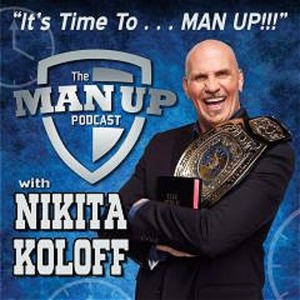
Now the devil's nightmare. Welcome back to another episode of It's Time to Man Up. When you think about discipleship, What immediately would come to mind? How about discipling through domestic missions more specifically?
Well, we're going to deep dive into what that looks like today. And with me in studio is Scott Reed. Scott, great to have you here on the Man Up Show. It's an honor. Thank you.
Well, no, it's fun. And it's always fun to have people in studio. A lot of times now, you know, it's over the air, you know, over the phone or, you know, or other means of technology. But to be in studio to me is the funnest part of what I do. Oh, and I'm pinching myself right now because my inner eighth grade year old is like I'm sitting with the guy I was terrified of as a kid and Oh.
So I so so my character struck fear in the heart of Scott Reed. Is that what I'm hearing? Oh, absolutely. I mean, man, as a kid, you would like there were bad guys. Yeah.
But you were a Soviet bad guy. I just had that conversation actually with the whole Cold War era. Oh, man. I mean, like, we were still on the edge of doing nuclear drills. And here comes this guy out.
Like, you made Ric Flair look like a good guy. There you go. Right. Because not everybody thinks he is.
Well, even when he was, he was like, there are a few bad guys that could cheat that well. Yeah, no, that's a great perspective, actually.
So were you having to get under your desk in case there was an air raid or something? In elementary school, that was, you know, we actually had one of those practices in elementary school.
So get under your desk. Like, that's going to help, right? You know, I had that thought. I was kind of like, this isn't going to make it less painful. Right, right.
I've never, you know, thinking back on that, I'm like, like, how did they think that was? Man, I'm kind of like, if it's going to be like that, man, send us out to the playground. Let us enjoy it. That's right.
So, so, and, and so, and where were those early formative years for you? Where did you grow up? I grew up in Wahlberg. Most people don't know where that is. Help me out.
And our listeners. These days is considered a suburb of sorts. It's its own city now. They incorporated it.
So they didn't have to pay Winston-Salem's taxes.
Okay. There you go. So it's outside of Winston-Salem. Yeah, we're a suburb of Winston-Salem.
Okay. A suburb. You know, it's funny because I don't typically here in the south hear that term, suburb.
Now, up north, where I grew up, you know, I grew up in a suburb of Minneapolis. Right. I think it's a growing term in the South. It's finally hitting us. Everything hits us slower.
Slower. Yeah. Because you move slower in the South. Right. And by the way, I.
I love it. I do. I do too for the record. I do too. Like, the show goes worldwide, right?
So, yeah.
So, you know, we're talking north, south. I mean, you know, people, and I've been here in the south longer than anywhere else at this point. Right. So I guess I kind of consider myself a Carolinian, not a Minnesotan any longer. But that's what I fell in love with actually is like the southern hospitality.
You know, things don't move quite as quick. Right. I kind of fell in love with that.
Well, if a fad gets here. It's pretty well established. Everywhere else. Right. There's no risk involved.
Right. Right. Well established. Don't have to worry about it.
So, so, so. Besides striking fear in the heart of Scott Reid, what else do you remember from out of curiosity from those? Wrestling-wise, from those days? Did you? I think for me, the formative, it was before the WWE.
Years. They were there. Yeah. But I want to and I'm I'm going to butcher this. It was it, the NWA.
Is that what it was? National Wrestling. I pulled that out. Yeah. There for me as a kid.
There was a rawness to that that felt more believable. Yeah. Then The WWE, even as a kid, that felt so. Over the top, yeah, but the stories felt more touchable and intimidating in the NWA, they did more realistic. I can't explain it.
It was there was just something about it, even the way the matches seemed to play out, just felt more, they weren't as athletic. But I liked that. They were more raw somehow. Yeah, and part of the mindset and the difference, some have said, and I'm not saying this is me saying this, but some have faith. They said, well, what would have been the WWF back in the day?
That was it. WWF. WWF was: if you want to watch cartoons, go watch the WWF. But if you want to watch real wrestling, man, you got to watch the NWA. Yeah, because that's the real stuff.
Well, there, you know, I guess they were cutting their foreheads and all that kind of stuff. And, yeah.
Well, they literally had cartoons. Like, there was the Hulk Hogan Andre, the giant cartoon, Junkyard Dog. They did. I forgot. Yeah, so they literally did have cartoons.
And then many of their matches, some people, some people thought they were pretty cartoonish as well. And we had a lot of guys, we had a number of guys that actually had some pretty stout. Yeah. Amateur backgrounds, guys like the Steiner brothers, Rick and Scott Steiner.
Okay. Mike Rotundo.
Okay. He wrestled at the University of Syracuse, like NCAA type. Dr. Death Steve Williams, who was a standout at the University of Oklahoma. And so, I mean, we had some.
Real, what, what, what the term would be real shooters are guys who really did know how to wrestle. Right. Our matches, many of our matches looked more believable or more real. And there was something about the promos. That felt the rivalries felt.
Oh. More bitter, it's like you it it hides. things. And as a kid, You certainly couldn't see it. And I bet insurance companies hated you guys because we couldn't get insured.
Well, I'm talking about in general because kids like me tried this stuff and it hurt.
Now, we gave a disclaimer for the record: hey, kids, don't try this at home. I had a group of professionals. I had a friend group of four, and I was the youngest by five years in some cases, and I weighed 135 pounds. I couldn't buy, I was the well, who's the guy who comes in and just were you the ball guy? Yes, I was the only one that they could body slam, and they did Scott back in the day.
Now, they have a more fancy term for this now.
Okay, but back in the day, you would have been called a jobber.
Okay, oh, yeah, that was me. You did the job for everybody, like my friends, they wouldn't even give me an, like, they would all take one of your names. I didn't even get a name, you didn't even get a name, no, no, they didn't make me wear a mask, but that's just not right, yeah. That was, and, and, of course, you know, the, the, the, the, the, the really, really popular phrase is, is. Let me try this.
I won't hurt you. Right. My best friend put me in a figure four. That thing's no joke. It's not.
You can, if you apply the pressure right, you can really. I was just heard a story recently about up north, we had the AWA.
Okay. And the guy, the promoter, was Vern Gagne.
Okay. And I just recently heard a story. He was on this sports talk show. And apparently they kind of knew each other from days past. And he's like, come on, Vern.
Come on. You can be on the level with me now. Right. And I guess Vern had had enough. And so, and his finishing move, as we call it, was a sleeper hole.
Okay, I remember that.
So he's like, all right, Jim, stand up.
So Jim stands, and Vern puts the sleeper hole out, and you can see Jim starting to go out. And actually, Scott went out, like went out. And it was live TV back then, and they had a cut to commercial. And they said, Jim started, you know, when you go out, there's some convulsing that goes on. And Jim started convulsing.
Yeah, that's not okay. When they brought him back to, and they came back on air, like his hair was messed up, and he was like not going to make fun of pro wrestling anymore from that point on.
So, anyway, anyway, I digress. But um yeah, so it was uh I'm I'm sorry.
Well, here and by the way, here's the modern day term for a jobber. Enhancement talent.
So That's what I was. You were enhancement talents. Those guys owe me. They do owe you. I think you should go collect.
I really do.
So, well, hey, on that note, all right, moving forward, moving forward. I mean, I'm guessing could have some really great stories about that. But I want to talk to you. I want to, I brought to you today. We met, you know, we just saw each other recently at what's the North Carolina Roundtable.
Yes. Tanya Skelly, right? And and and John Whaley. Yes, amazing. And good time.
And actually I had John here in the studio. Fantastic. Good. We're going to get Tanya in here sometime as well and talk about the round table, the prayer round table. But is that technically that where we met at the round table?
It is.
Okay. Yeah, that's earlier this year. Yeah, I didn't even know what I was coming to.
Okay. How'd you get invited to the North Carolina Roundtable? Ron and Elena Stockton. Keckman, I think, who were connected. With um Uh the the The uh the two million prayer thing.
Okay. That's going on, and I think it's too many. I probably got to mess that up. But they invited me, and I had met, and they had known me through the Sentinel group.
Okay. Through George Otis Jr. and Larry Lane of Revival Road. Gotcha. Which are national orgs in themselves.
And okay, and so, and you're living where now, where you currently still where you grew up? Yes, I was part of the. My family has been in Winston-Salem since the 1700s. We were part of the whole? Yeah, the establishment.
So my family helped start Free the Moravian in the 1700s. How many generations is that? I don't know. I'm actually living in the oldest farmhouse we've got left. My house.
Was built in the 80s. My house was built in the 1800s. There's one down the road that was actually still there from the late 1700s. And that was part of the Moravians? Yes.
Is that what you said?
So, wow. I mean, that's a whole show in itself. Oh, yeah. Talking about the move of the Moravians and the 100 years of prayer, I think. 24-7, non-stop.
100 years of prayer, something of that nature. And there's so many, and it's so exciting. There's so many efforts now to duplicate that. And I don't think we could duplicate it enough. I don't think, well, and I don't think you can duplicate it.
Right. I mean, it's obviously. Or go back to it might be the better way to say that. Yeah. Yeah.
Maybe use that as a, in a sense, a template or something that you could learn from. But, you know, my experience is, you know, if that was a, and it sounds like a sovereign move of God. Right on. I mean, let's be honest. 24-7.
Prayer for a hundred years. I don't know though how you could duplicate that. But no, no, no. I don't know you set out to do it, but I think you set out to start praying and not stop. Yeah.
Yeah. As a community. Yeah. And that's the important thing. A whole community did that.
Right. Right. And and then brought it from from Germany. Yep, Hernhut. Over to America.
In fact, for those who don't know, here in North Carolina is Moravian Falls. Right. And that's got a whole story and history behind it as well. There's a piece of property up there. Do you know this?
It's becoming a pilgrimage for people.
Well, there's a piece of property up there that literally on the land deed, the Moravians put Jesus Christ as the owners. The owner of the land. At one point. I don't know if you know this, and I know we want to talk about other things, but as far as the history of Winston. They were approached for the to have the county seat.
Okay. And they said no. We're not we don't really practice your form of government. They were still casting lots. Oh wow.
Okay. So they donated the land that became Winston.
Okay. And the county seat for Forsyth County was put there. Wow. Because The Moravians, they didn't plant churches, they planted cities. It's just a total different concept.
Different mindset. Yeah, how they did things.
So, your family, I'm still just kind of taking it aback by where you go, oh, yeah, no, we've been here since the 1700s. I'm like, okay, you're like. We were a small clan, so nobody really knows the Reeds, but we were here. That's amazing, though.
Now, you're not connected to the Reed gold mine down there at Kiberis County. Unfortunately, no.
Okay, okay, right. I think spelled a different way. I think it's R-E-E-D. Yeah, obviously, because I'm not getting any kickbacks. You're listening to the Truth Network and TruthNetwork.com.
If you would like to support Koloff for Christ Ministries, for a gift of $25, Nikita will send you his two CDs: Adoration and Declaration. For a gift of $50, Nikita will include his book, Wrestling with Success. And for a gift of $100 or more, Nikita will include a signed copy of his newly updated life story, A Tale of the Ring and Redemption. Go to www.koloff.net and donate today. The Man Up Show is honored to have Dr.
Johnny Gayton as one of our longest-running supportive sponsors. Dr. Gayton is regarded as one of the world's leading elite eye surgeons. He is motivated by his faith in doing all things heartily as unto the Lord. His desire to do his best has contributed to success in his eye care practice, performing over 70,000 eye surgeries.
In addition, he's a world-renowned speaker, writer, and author. Go to iAssociates.com for more information. Would your company, business, or you personally like to partner with me in supporting Koloff for Christ Ministries, The Man-Up Show, and Man-Up Minutes? Go to Koloff.net and click the donate button. You can give monthly, annually, or one time.
God bless you for making a difference around the world. Yeah. You're listening to the truth network and truth network.com. All right.
So so you're in the Winston-Salem, North Carolina area. You've been here for generations. But tell us, just take a minute, just tell us briefly about your family, wife and kids. Yes, my wife. You guys have some fascinating names, by the way, for the record.
Yes, we are definitely supporters of Israel.
Okay. And we had the opportunity to go back in 2021. Eventually, we hope to start offering trips ourselves. Through our nonprofit discipline trip. We hope to.
It's a dream.
Okay. But with that, so my wife and I were high school sweethearts. High school sweetheart. Yes, from the end of our sophomore year on. And her family is originally from Michigan.
She is a fourth generation grad from Indiana Wesleyan. up in Marion, Indiana. At any rate, we were married up there. Is that where you guys? No, you guys.
Well, we met. We met at high school, but then went to. Her family had moved down.
Okay. From Michigan.
So she came down when she was pretty young. She was still in elementary school. We met in middle school and started dating in high school. And uh About our sophomore year of college, we were married at that point. We were both at Indiana Westland.
and we were married up there. I was uh I've been youth pastoring since I was eighteen. Quite a variety of churches, no less. You know what, where the Lord has opened doors? Yeah.
Which is the key, right? Yeah, we've gone. And it's not that we don't isn't it's not that we're, I guess I would say theologically loose, we're not. But the gospel is the priority. Right.
And connection to Jesus has always been the priority. That's the goal. And so we have walked through the doors, and we have just had the opportunity to serve with beautiful saints. That were a part of the UMC, Wesleyan churches. I'm ordained through the Southern Baptist, but have really appreciated.
And for what we do, because we work with so many churches. And because of our call on our life, where we're always partnering, collaborating, I think it was very important that the Lord had a serve across some of these denominational spectrums.
Well, and on that note, I just want you something from the roundtable that we were recently at was, I think it was Whitfield that were telling the story about George Whitworld. Lord, are there going to be any Presbyterians in heaven? Nope. Are there going to be Congregationalists? Nope.
You know, he goes through the list, right? He goes, Well, Lord, who's going to be in heaven? Christians. Right?
So we get all these labels, right? On that note, because there were so many folks from the Billy Graham Association at that meeting. A famous story George Beverley Shea tells he was younger. And he was asking the question because George Beverly Shea had a Wesleyan background.
Okay. A lot of folks don't know that, but he was partnering with this more Baptist Presbyterian guy by the name of Billy Graham. Right. Right. Said to him, had him look out over a field, and he essentially said something to the effect: Son, when the wheat grows high enough, you can't see the fences.
And m spiritual maturity overcomes a lot of that. Wow, that's good.
So, how long have you been married? Let's see here. We're going on 32 years. 32 years. That's amazing.
And How many years? We have four kids. My oldest, his wife, and two grandbabies are on staff at Dorf Hope Church in Portland, Oregon. If you're familiar with the Bible project with Tim Mackey, I believe he had kind of gotten his start at that church. And his pastor is with the Louis Palau organization, and they're just doing phenomenal things out there.
Um Then I have a younger son, his younger brother Salem, he works in Old Salem. As a barista at a coffee house, there and he has a band and he leads worship. Their band is doing phenomenal. I think one of their songs has three million streams. Wow.
Right now they're doing great, proud of them. And then my daughter is on staff with YWAM. It was Circuit Riders.
So she's in Huntington Beach, California. I'm not bitter at all. Right, right. Right. Nice weather.
Yeah. And then my youngest is still in the house, Aiden Journey.
Okay. And he is 16.
So you've been in ministry for a long, long time. What age were you when you felt like the Lord was calling you into ministry out of curiosity? He grabbed my heart at the age of 16. 16.
Okay. Now, I had come to Jesus as a five-year-old.
Okay. But it really 16 at least. But 16 is where it locked in.
Okay. And started a Bible study. Uh at our high school. And that was back during the Iraq war when it first hit.
So, all the young men thought they were going to be drafted.
So, everybody showed up to our Bible study. Like, Lord, I'll go anywhere, just not Iraq or Afghanistan. Yeah, exactly.
So, but coming out of that, by the time I was a senior, Um, I was actually offered a youth pastor interview.
Okay. Literally, the year I graduated, and the Lord was like, Yeah, this is going to be your life. I didn't end up at that church, but I had already started volunteering as a youth pastor. And you have a Hartford discipleship. I opened the show talking about discipleship through domestic missions.
Well, discipleship is the full gospel.
Okay. It's the rest of the gospel, the good news. of the gospel? Is that the soul, the emotion, the will, and the intellect, which is everything. Wine, will, and emotion.
Like, if you've got a problem, that's where it's at. Yeah. That's always where it's at. You see our banner up here: spirit, soul, and body, right? Yeah.
The soul, right? Yes, that's where it's at. And the good news is there's healing. For that. And that's your focus.
Yeah. So if, and when you're a kid. Identity is everything. Uh that identity is going to determine most of the trouble. they get into or the trouble that they're going to be spared.
From Mm, that's good.
So we've got to find out who we are in Christ. And we've got to press into that until our birthday suit falls off. That's good. And so you've had that you've had a heart for that for many years now. Uh in your ministry what one twenty one Yes, 121, it started as a local youth ministry.
121 Inc.? Yep.
Okay. That's it.
So usually it's Colossians, excuse me, Philippians 1:21 to live as Christ, to die is gain.
Sometimes it's Job 121, the Lord gives and He takes away, but blessed be the name of the Lord. Oftentimes, in our teaching, it's James 1:21, which is to receive the word implanted, which is able to save the soul. We just love the 121 verses.
So we were just like, we'll just call it 121. Yeah, simple. And then just some scriptural foundation there, right, for what you do with that. And so specifically then, so with that vision and discipleship and discipleship, but discipleship mission, so discipling through domestic missions, what does that mean for our listeners? This is the thing.
I think foreign missions are great. They're phenomenal. But they don't teach a kid. Here, how to show share Jesus here. It's apples to oranges.
You show up on a foreign mission field. Uh you're the rich Westerner showing up. Right. It's it's I don't know, it's probably wrong to say easy, but your message is more readily heard. They're more receptive, without a doubt.
I've been there, so more receptive. But we all know The message is not readily accepted. In America. That's a fact. And I can attest.
The other thing is this. At your average children's home, which is where we go. We go to children's homes and rescue missions. Inner city urban centers. All over?
All over the southeast.
Okay, all over southeast.
Okay. We'll go further, but right now we just have relationships to places, and so we've just developed those relationships.
Okay. But with that said, Um The the if you're not familiar with the children's home. Uh the kids there they're they're mostly teenagers. They're not there because mom and dad are dead. They're there because of abject poverty.
They literally cannot be taken care of.
Some are there because of abuse. All kinds. Uh some are adjudicated. There. They've gotten in trouble.
Set there. Yes. By the courts. Yes. Okay.
They've gotten in some sort of trouble, and instead of putting them in juvie. The judge is showing mercy and putting them in one of these environments, just hoping that it'll be better for them. It runs the gamut. There's a home that we visit. I'm not going to give the name or location.
You don't need to. But they have three cottages of boys ages 12 to 18. They're all registered sex offenders.
Now, by the way, kudos to this home in their program. If they complete the program, their record can be expunged. They started it in 2014. As of today, they've yet to have a repeat offender. Oh.
Powerful program, then. Oh, my goodness, so great. And we've been going there for many. If the first year we went there, the director told us, he said, I've been here for 17 years. We maybe we've seen 17 kids except Christ.
This was the first year they were actually starting that program. They had 50 kids in residence that week. Forty-five of them. gave their heart to Jesus. over our three-time visit.
A three-day visit with them. It's just beautiful time.
So these are the places we go. And you go into minister. We only got a few minutes left, but you go into minister to these kids, love on these kids. What just quickly, specifically, what you do, what you will do. Right.
First five days is deep discipleship.
Okay. And they're learning how to load in. We travel with 30 four by eight stage platforms, lift towers, live band, live sketch comedy team. We train all of these students that we partner with. We train them to do all of it.
Then we go to two homes per leg. We're at each home for three days, and over three days, we do five large worship gatherings with them. And then we also have hangout atmospheres in between.
So we're getting to play pickup basketball, four square, you name it. Just pick up ball. Yeah, swim in the pool. We're rubbing elbows. We're touching.
Building relationships. Yes. Building.
So we're at each home for three days. Earning their trust. And so the thing is, we train every kid who goes. They're the ones who actually share the gospel.
Okay. They we train them to do it all so that when they get home They're going to meet kids in their public school that would qualify to live at one of these homes, but now they'll know how to interact with them. Wow, so it's a real, real teaching moment. Right. So it blesses the home and those kids for sure.
but it disciples the ones we take.
Okay. Yeah. And you've been doing it 2004. Since 2004. Wow, so for a long time.
With a long COVID hiccup. Yeah, I'm sure, but I'm sure you've seen a lot of success. And can you give us one quick praise, like one quick story? This summer? 60 seconds.
This summer we showed up to a home in Atlanta, and they were rough. There was a young man sat on the front row and he heckled me. All the way through, because I gave the gospel, straight gospel heckled me through the whole thing and not nicely. Fast forward to the last night one of my students had just befriended him. One of our students who went and just They became print.
Last night I looked at him as I was speaking. And you could see the tears in his eyes. As I closed, I went over. I was just going to put my arm around him, and he buried his face in my chest, and you could just feel his body heaving. Yeah, sobbing, probably.
As we had finished. We were getting ready to load, take everything down, pack it up. One of my students said, you know that young man who had heckled you the first night? He's over there, he's laying starfish on the y'all on our stage, and he's just whispering up to the ceiling. This has been the best three days of my life.
Wow. Come on. That's one of a myriad of stories I'm sure you could potentially share. How do people find out more about what you're doing? If somebody's out there listening, a home wants to bring you in, your organization, where do they go?
We're looking for groups to partner. We're looking for youth groups who want to go as a domestic missions opportunity. That's what we're after.
So they can go to our website. It's 121-O-N-E-2. two one dot life Just click on the circle journey link. We call it the circle journey. And they can find out everything they need to know.
Our contacts are on there. They can contact me. I'll get back with them. I'll have a coffee with them if they're local enough. But this is open to anybody, honestly, across the country.
We'll take anybody. In fact, we got a group from Portland who's going to go out with us in December. All right.
So if you're a pastor out there, a youth pastor, attend a church, and you're intrigued by what Scott and his team are doing, can I just encourage you to reach out, at least make a connection and get more information with Scott Reed. Great to have you on the show today, Scott. What a privilege. It's an honor, man. And well, one more time.
Give that website one more time. Uh 121 O N E Two one dot life. O N E two one dot life. That's it.
Wow. Hey, you want to make a difference in somebody's life? You're part of a youth group, part of a church ministry, or want to partner up with Scott. Let's go ahead and check out that website and connect with him. And as always, I challenge you today to go out today.
And have a Godfield and a God-blessed day. Until next time, this podcast is made possible by the grace of God. and your faithful prayers, support, and generous gifts. May God bless you for your continual contributions. Go to colof.net and donate.
Today. If you are enjoying the Man Up Show, would you help us spread the word? Tell your family, tell your friends, tell your neighbors to download, subscribe, and leave a comment. Hi, Nikita Koloff. Be sure to check out the Man Up Show now available on television, broadcast, and podcast.
Go to MorningstarTV.com or the Truth Radio Network. Check out your local listings, or better yet. Download the Truth Network app today. Nikita Koloff here. If you're needing to buy a car and have marginal credit and considering using buy here pay here, that's worse than taking the Russian sickle.
Winston-Salem motor cars will put you behind the wheel of a car you can rely on while helping rebuild, repair, or establish your credit score. Conveniently located on Silas Creek Parkway in Winston-Salem, be sure to check them out today at WSMCthenumberone.com because you are number one. Yeah. This is the Truth Network. Yeah.