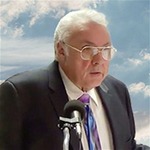
Hi, this is the Human Proclaim podcast, The Messages of John Fonville. You're listening to season 4 called Pray This Way: The Divine Pattern of Righteous Prayer. Here's message number two in the series called Jesus Honors Righteous Prayer. In Matthew chapter 6, we are currently studying the Lord's Prayer. Or you could call it the disciples' prayer, but you can also call it the Lord's Prayer because it was His prayer that He taught us to pray.
But Matthew chapter six, we're looking at verses five through fifteen, which You have to understand that as we're studying the Lord's Prayer, it is vital to understand that this prayer that He teaches us to pray is a part of the Sermon on the Mount.
So there's a whole context that you have to take into consideration if you want to understand this prayer and how to pray. Just by way of review, back in chapter 5, verse 20, Jesus says, For I tell you, unless your righteousness exceeds that of the scribes and Pharisees, you will never enter the kingdom of heaven.
So, in brief, what Jesus is teaching in the Sermon on the Mount is that the scribes and Pharisees had built their theology and their religious practice around a works-based righteousness. Do this and live. And so they had a righteousness that was superficial, it was exterior, it wasn't a real righteousness that granted to them a proper standing before God, justification.
So in contrast to this exterior, superficial, works-based righteousness, Jesus in Matthew chapter 5, verses 21 through 48, he illustrates the kind of righteousness that God requires for a person to enter the kingdom of heaven. And so, what Jesus is teaching on the Sermon on the Mount comes down to for you and me is the avoidance of legalism. Living like the scribes and Pharisees, trying to. Achieve a righteousness before God based upon what we do rather than what God gives as a gift through His Son. We are trying to fulfill by our own efforts and works and attempts at religious practice and belief to have a right standing with God.
Jesus teaches us that you will not enter the kingdom of heaven if you don't have a righteousness that exceeds that of the scribes and Pharisees. You must have a perfect righteousness. And so Jesus turns his attention then from this outward, fake, superficial righteousness that was based on this works-based teaching. He turns his attention from that in chapter five to religious practice in chapter six. And he shows that this outward superficial righteousness was actually producing showy outward religion.
And what he does in chapter 6 is that he doesn't warn us against engaging in religious practices. He expects the believers to exercise spiritual disciplines. That's not what he is condemning here. What he is condemning is the exercise of a religious practice or engaging in spiritual disciplines from the wrong motive. In Matthew chapter 6, verse 1, he gives his thesis statement.
Look at what he says. Look what Jesus says about the main point about what he's going to make about religious practice here in chapter 6. He says, Beware of practicing your righteousness before other people in order to be seen by them. That's the point. Yeah.
For then you will have no reward from your Father who is in heaven. And so Jesus illustrates religious practice, that is outward showing religion, with three examples of spiritual discipline. Almsgiving, chapter 6, verses 2 through 4. Prayer, chapter 6, verses 5 through 15, and then fasting, he ends at chapter 6, verses 16 through 18. We are looking at the section on prayer, which is his longest teaching.
And that's the focus of our study.
So that's the context of this prayer. And what Jesus does in Matthew chapter 6, verses 5 through 15, is he contrasts two ways to pray. Very simple. He contrasts two ways to pray. Last time we saw in chapter 6, verses 5 through 8, that he condemns unrighteous prayer.
This time we're going to see in chapter 6, verses 9 through 13, is that he commends righteous prayer.
So he condemns unrighteous prayer and he commends righteous prayer.
So there's your outline. It's very simple. What was the problem with the Pharisees' religious prayers? Here was the problem. The problem was not that they were praying.
The problem was that their prayers were unrighteous because they did not know God as Father. Hear that again. The problem was with their heart because they did not know God. as their father. Listen to Sinclair Ferguson.
He says that the scribes and Pharisees thought God was a slave driver. They had never entered into a gracious relationship with him. They slaved for him in the mistaken assumption that they might gain a right standing with him. The tragedy is, is that they did not really know who God was at all. The question before us about if we want to learn how to pray is here's the question.
Do you know God rightly? Who is he? Because that's the key to prayer. It's the key to the whole Christian life.
So in contrast to this unrighteous prayers of the scribes and Pharisees, Jesus commends to his disciples a pattern of righteous prayer. This divine pattern, look at chapter 6, verses 9 through 13. This divine pattern, this divine model, which is what we call the Lord's Prayer. Focuses on six major themes. of righteous prayer All of which those themes center on God the Father.
Jesus gives to us six themes about righteous prayer, and all six themes focus on an aspect of knowing God as Father. These six themes reveal the true character of God the Father and show how adopted sons pray to their heavenly Father.
So this week we're going to look at the first theme of righteous prayer.
So let's look at it. It's in chapter 6 verse 9. Jesus begins this model prayer with a familial address. I'll define the word familial in just a second, but just bear with me. With a familial address.
Look what Jesus says. He says, pray then like this. Our Father in heaven. The very first truth that Jesus would have you to learn about righteous prayer. as that righteous prayer is an expression of childlike trust in God who is your Father.
It's the first thing he says, our Father. Righteous prayer, Jesus says, is rooted in a familial, heartfelt relationship with God as Father. By familial, I just simply mean this: that which is characteristic of a family. And by heartfelt is simply meant genuine or sincere as opposed to superficial and hypocritical, which is what Jesus has just condemned in chapter 6, verses 5 through 8. In contrast to the scribes and Pharisees who had superficial.
Hypocritical prayers. Jesus says Trust from the heart in contrast to superficial outward assent. It's what true prayer is. Before any petition is to be made in this prayer that Jesus gives to us. Jesus teaches us to begin prayer by addressing God as our Father.
This is who he is. This familial address, this characteristic of a family, a son addressing a father, stands in stark contrast to the scribes and Pharisees' unrighteous prayer. Why was their prayer unrighteous? Because it was rooted in a distorted understanding of the character of God. We saw last week, as Jesus tells us here in chapter 6, verses 5 through 8, in the context of Matthew, these scribes and Pharisees saw Jesus as a slave driver.
They viewed him as a reluctant deity who did not have great affection for his people. Therefore, he must be manipulated in order to get things from him. Jesus says, that's not my Father, and that's not how and why you pray. Prayer, Jesus says in his divine wisdom, teaches us that righteous prayer is rooted in the highest privilege possible of the gospel, namely adoption. What is righteous prayer?
Righteous prayer is an expression of the spirit of adoption. It's crucial to understand that Jesus is implying here justification. Why? Because adoption, the highest privilege of the gospel, is the consequence of the most profound, important aspect of the gospel, namely justification. Listen to Jesus in the context of the Sermon on the Mount.
In Matthew chapter 5, verses 17 to 18, he says, Do not think that I have come to abolish the law or the prophets. I have not come to abolish them, but to fulfill them. to fulfill them. For truly I say to you, until heaven and earth pass away, not an iota or not a dot will pass from the law until all is accomplished. What is accomplished?
What is fulfilled? True righteousness. The only kind of righteousness that God the Father will accept to get you into the kingdom of heaven. True righteousness is based on the perfect imputed obedience of Christ as he is the one who has accomplished God's law and fulfilled God's law on our behalf. And in contrast to these scribes and Pharisees who were thinking they were accomplishing God's law and achieving a righteousness that would get them into the kingdom of heaven, Jesus says, the only way to get into the kingdom of heaven is through my accomplishment and my fulfillment.
And so genuine righteousness, genuine righteous prayer, as opposed to superficial righteousness, hypocritical prayer, comes to us as a gift through the fulfillment and accomplishment of Christ for us. And so Jesus is teaching that we receive all the benefits of adoption as a consequence of our justification before the Father, as if we have never sinned and as if we have always obeyed perfectly. That's justification. Which grants me the consequence, the privilege of adoption. And so once a person is justified by faith in Christ, declared righteous through the fulfillment of Christ's righteousness, his accomplishment, we are then given the right and title to eternal life.
We are granted an inheritance by grace. as sons and heirs of the Father. And so what are some of these benefits and privileges of adoption which prayer is coming from?
Well, listen to the Westminster Confession of Faith. It says, all those that are justified.
Now, here's a big word, it's hilarious. I had to look it up too because I don't speak Old King James English. All those that are justified, God vouchsafeth. Like, what in the world is vouchsafeth?
So I looked it up. It just simply means to grant a privilege. to give a special favor. All who are justified, God the Father gives a special favor to. Not great.
What is this favor? He gives it in and for his only Son, Jesus Christ, is because of what Jesus has accomplished, Matthew 5. He gives us a special favor for the sake of his son to be made partakers of the grace of adoption. By which we're taken into the number that is into God's family, and now we enjoy the liberty, the freedom, and privileges of the children of God. What are these privileges?
We have God's name stamped or put upon us. We receive the spirit of adoption. We have access to the throne of grace with boldness. We are enabled by the Holy Spirit who cries Abba Father in our heart to cry Abba Father from our heart. We are pitied by the Father, protected and provided by the Father.
Yes, we are chastened by Him, but by as a Father. We are never cast off. We are sealed to the day of redemption. We inherit the promises as heirs of salvation. You know what an heir does at a last will and testament is read?
Nothing. You know what he does? He sits down and he has the state of affairs read to him from a piece of paper, which was a legal document, that says, This is your special favor. Enjoy your inheritance. That's the gospel.
That's adoption. And so Jesus says to us, this is what he says: he says, if we are to pray rightly, we must remember that who God is, he is our Father. And we come to him with childlike trust.
Now look what Jesus also does. The second truth that he would have us understand about prayer is that we also come to him with childlike reverence. And so Jesus says, our Father in heaven. We must never separate these two truths. Childlike trust and reverence go together.
They're not in competition. In prayer, we address our Father, Listen, who is also a great king. The author of Hebrews tells us That we have bold, confident access to our Father. Let us with confidence, you hear that confidence, draw near to the throne of grace. Why?
That we may receive mercy and find grace to help in time of need. What is your time of need? Every single second of the day. That was in chapter 4. Yet at the same time, the author in chapter 12 says, Let us offer to this same God whom we come before with confidence, let us offer to God.
Acceptable worship with reverence and awe for our God. is a consuming fire. As we come to our Father in prayer, Jesus would have us remember two fundamental realities at the same time. We have intimacy as his children. But we also have access to a great king, so come with reverence.
Knowing God as our Father keeps prayer intimate, but knowing God as our Father in heaven keeps prayer reverent. By reminding us that our Father It's in heaven. Jesus is stressing the greatness of his heavenly glory. He's not like you and me. And I'm glad he's not.
He's different. It's the creator-creature distinction. We must never separate his greatness and his holiness from his love and his grace. Even the son of a king who enjoys great intimacy with his father also expresses reverence when he's on the throne.
So in prayer, we pray like Paul in 1 Timothy 1, verse 17: to the king of the ages, immortal, invisible, the only God, be honor and glory forever and ever. Amen. That's what Jesus is teaching us here. As our Father, God in Christ loves you as a Son. He knows all about you.
That's what Jesus tells us right here in Matthew 6. He knows your needs before you even ask him. And he is more willing and desirous, because he loves you so much, to meet those needs than you are to ask for him to meet them. He loves Matthew 6, verse 6, to reward his children. He delights in that.
In Matthew chapter 6, verses 32 and 33, Jesus says, What is my father like? He's like this. He loves to provide for you. He loves to care for you. He loves to take care of his children.
He loves to lavish good gifts upon his children. Jesus being the greatest gift you've ever received. As our Father in heaven, God, though, in Christ, is able to provide for us all things necessary for our body and soul. He is all-powerful, almighty. He is above us and beyond us.
He is transcendent, yet he is close and intimate at the same time. He is our Father in heaven. He is not anything like us. And aren't you glad? Because of that reality, he can provide for everything you need.
And so the first fundamental and vital truth that Jesus teaches us is that righteous prayer is rooted in childlike reverence and childlike trust.
So what is the application? It's very clear. Prayer is rooted in sonship, not in mechanical technique or formula. That's what the scribes and Pharisees had, mechanical techniques and formulas. Begging a reluctant deity to do something on their behalf.
Trying to put ladders to heaven and climb ladders, which were their prayers and their fastings and their almsgivings. Performance-based discipleship. But Jesus says, God the Father is not a reluctant deity who has to be manipulated or slavishly pursued in order to get things from him. He says, listen carefully in this context. Our Father justifies and adopts sinners who have broken his law only for the sake of his unique son who has fulfilled every iota and dot of that law for them.
That's who our father is.
So you know what our problem is though? We're too often just like the scribes and Pharisees. A legal disposition. Does still remain even in those who are justified and adopted as sons. How are we like them?
We're like them because we're awfully guilty of distorting the image of God the Father in our thinking. That is, we break the second commandment. How do we break the second commandment? Because we're often tempted to think that we must badger a reluctant deity who at best tolerates me into taking notice of my needs. Or perhaps we're tempted to think of God as a slave driver, and we operate on the mistaken assumption that by praying we gain God's favor and blessing.
It's a breaking the second commandment. That distorts the Father's image. And so it's easy to fall into a performance-based discipleship when our spiritual disciplines, which is prayer in this particular case, is not informed by the knowledge of God as our Father. Performance-based discipleship is what happens as a result of not knowing the gospel well. And in this context, Jesus says, knowing the gospel well is knowing God as your Father through his Son.
And so, for many, Christian growth, sanctification, having a better prayer life. It just simply means more discipline, more commitment. But for Jesus, growth in prayer, learning to pray. Means coming to a greater and more self-conscious understanding of God as your Heavenly Father. You see, you know what the greatest problem with our prayer life is?
We don't know the gospel well enough. We don't know God as our Father well enough. Jesus knew this. Because Jesus knew his father well. Better than any of us.
And so performance-based discipleship, performance-based prayer is evidence of a slavish spirit. But gospel-based discipleship founded and rooted in the knowledge of our God our Father. is an expression of an adoptive spirit. Prayer is an expression of an adoptive spirit. And so from the start, Jesus roots prayer and the knowledge of God as Father.
He teaches us that the motivation to pray is not human approval. Matthew chapter 6, verse 5. The motivation to pray is not trying to earn God's favor. Matthew chapter 6, verse 7. Growth in prayer does not come by merely more discipline and commitment.
Prayer is not an attempt to manipulate a reluctant deity to get things from him. The motivation to pray does not come because Jesus commanded, pray like this. The mere force of a command cannot produce the kind of heartfelt righteous prayer that Jesus is commending here. Cannot do it. Jesus teaches us At the very beginning, how do we pray?
He says that righteous prayer is an expression of gospel-based faith. Childlike heartfelt trust in our Heavenly Father. That is the first and most fundamental and basic truth. Of understanding what it means to pray and what it means to be a Christian. Listen to J.I.
Packer when he writes about this. And J.I. Packer says, you sum up the whole of New Testament teaching in a single phrase if you speak of it as a revelation of the fatherhood of the Holy Creator. In the same way, you sum up the whole New Testament religion if you describe it as the knowledge of God as one's Holy Father. If you want to judge how well a person understands Christianity, Find out how much he makes of the thought of being God's child and having God as his father.
If this is not the thought that prompts and controls his worship, and prayers And his whole outlook on life means that he does not understand Christianity very well at all. For everything that is distinctively Christian, as opposed to merely Jewish, scribes and Pharisees, hypocritical religious prayers and religion. Everything that is distinctively Christian is summed up in the knowledge of the Fatherhood of God. Father is the Christian name for God. Pray like this, our Father.
In heaven. If you trace throughout Matthew's Gospel, which I'm going to do for you very quickly here. He repeatedly refers to God as Father. And the reason he does this throughout Matthew's gospel is to correct and reorient our distorted way of thinking about God the Father. Let me just give you some examples of how this is found in Matthew's Gospel.
In the Sermon on the Mount, Jesus mentions Father 17 times. Three times in chapter five, twelve times here in chapter six. Two times in chapter seven. Throughout Matthew's gospel, he uses the descriptive title, Father in Heaven, three times. He says, Father who is in heaven 11 times.
He says, Heavenly Father, six times for a total of 20 times in Matthew's gospel, our Father who is in heaven. In addition, Jesus 14 times addresses his father as my father. And then Jesus 13 times in this gospel speaks of your Father to his disciples. That's a total of 51 times in Matthew's gospel. This is significant for a couple of reasons and bear with me and listen very carefully because I think this is going to be very very helpful to you to see this.
The way Jesus teaches his disciples to begin prayer is startling because only Jesus has the right to call God his Father. He says that in Matthew chapter 11, verse 27. All things have been handed over to me by my Father, and no one knows the Son except the Father. And no one knows the Father except the Son. And then he adds this, and to anyone to whom the Son chooses to reveal him.
This is startling. You see, up until this point in redemptive history, Abraham knew God as El Shaddai, God Almighty. Abraham knew God as Yahweh, the covenant-keeping, covenant-faithful God. They didn't necessarily refer to God as Father, and then here comes Jesus. 10.
God Almighty else you die, and Yahweh. The covenant name of God is Father. Startling. What is Matthew teaching us here? What is Jesus through Matthew's gospel teaching us here?
He's signifying that a significant change has taken place in the believer's relationship with God. In the parallel passage in Luke, It's a different context. Here is the context of the Sermon on the Mount in Luke. Jesus' disciples were watching Jesus pray and they said, there is something wholly different about how he relates to God than we do. And we want to pray like that because he knows something we don't know.
So they come to Jesus and they say, Lord, teach us to pray. In other words, teach us to relate to God the way you do because we don't get that. But it looks great and we want it.
So, what is this change that Matthew's gospel is teaching us? Listen. I'm going to tell you what the change is, and then I'm going to take you through all of redemptive history to show it to you. Matthew is showing us that Jesus' unique relationship with the Father, only Jesus the Son knows the Father. That unique relationship, Matthew is showing us that Jesus.
His unique relationship with the Father is the fulfillment of Israel as a failed son. In fact, it goes back beyond Israel all the way to Adam. Who, because of his sinful rebellion, was cut off from his original familial family relationship to God. What Adam was commissioned by God to do in the garden, govern God's world on God's behalf. He was God's vice regent.
He was God's king. He failed to rule the world on behalf of God, and so that mission was given to Israel as a nation.
So listen to Exodus chapter 4, verse 22. God calls Israel my firstborn son. In Hosea chapter 11, verse 1, God says, When Israel was a child, I loved him, and out of Egypt I called my son. But like Adam, Israel failed in the mission as a son, and so did all of Israel's kings.
Now listen, in the progress of redemption, the identification of Israel as a nation, as the sons of God, comes to be focused on a king.
So you go from the nation as being sons to the king. Particularly, listen on the son of David. And so in speaking of David's son, listen to what he says in 2 Samuel chapter 7, verse 14, the Davidic covenant. Speaking, he's not, the Lord is not speaking of David. He's speaking of David's son.
He says, I will be a father to him. And he shall be to me a son. Do you know what that is? That's adoption language. That's family language.
That's father-son intimacy language. This adoption formula, I will be to him a father, he shall be to me a son, intensifies this intimacy between God and between David's son.
So God's promise in the Davidic covenant is not focusing so much on David as on David's son, his offspring. The Lord promises in 2 Samuel 7 verse 15 that my steadfast love will be upon David's son and never depart. The Lord assures David that his house and his kingdom will be everlasting. And he says in 2 Samuel 7, verse 16, your house and your kingdom shall be made sure forever before me. Your throne shall be established forever.
Yet, at the same time, in this Davidic covenant, there's a conditional element that must be met. David's son To receive this eternal throne, must give full obedience to God.
So in 2 Samuel 7, verse 13, the Lord reveals the condition. Listen to it. He shall build a house. That's his condition. He has to build a house.
What? For my name, my glory. Hallowed be thy name. And I will establish the throne of his kingdom forever. If the son's obedient and builds the house, he will establish his throne forever.
And so the Lord must only give the faithful son, an obedient son, a throne forever. And this house that the king is to build, redemptive history shows us, is not just a temple. It's an obedient people for God's name's sake. The son of David, the offspring of David, who is righteous and who makes the people righteous, is the one who will have his throne established forever.
So, as we keep reading redemptive history, we come to 1 Kings. And you come to Solomon, David's offspring, David's son. And Solomon in 1 Kings chapter 8 thought he deserved the eternal throne. Listen to what Solomon says.
Now the Lord has fulfilled his promise that he made to my father David. He's fulfilled it. For I have risen in the place of David my father and sit on the throne of Israel. As the Lord promised, and I have built the house for the name of the Lord the God of Israel. Way to go, Solomon, you did it.
You fulfilled God's promise to your father David.
However, listen to what the Lord replies to Solomon after Solomon makes this remarkable declaration. He's built the house, he's done it. The Lord says, Solomon, if you will obey me, and do all I have commanded you, and keep my statutes and rules, then I will establish your royal throne over Israel forever, as I promised David your father, saying, You shall not lack a man on the throne of Israel. Oops. What happens?
Just keep reading the story. The story tells you what happens. God's covenant with David is clear. Due to the Lord's unconditional promise, David's son will always be on the throne. But due to the conditional element, only David's obedient son will get that throne.
And as the story of Israel progresses, we see in 1 Kings chapter 11, verses 1 and following, that ultimately Solomon. Proves to be a failed son. And after Solomon fails and he dies, the Lord punishes the house of Israel by dividing the kingdom. And so he will keep putting David's sons on the throne in Israel. And so when the sign, and when you hear sign, think king.
When the son, when the king is disobedient, the Lord will remove that son, that king, and install another son, another king. Read 1st and 2 Kings and see how many kings came along. He'll continue that pattern: taking out a disobedient son, putting another son in the place of a king. Until one son comes who will earn the everlasting throne and need no more succession. And that brings us to the fast-forward New Testament.
And what we find in the Gospels is God's people, Israel, eagerly waiting in faith for the fulfillment of God's promise for a true and righteous son of David. Where is the promise? He promised it. Where is it? Luke chapter 2 verse 25, there was a man in Jerusalem whose name was Simeon, and this man was righteous and devout, waiting for the consolation of Israel, the son of David, the king.
Where is he? There had not been a Davidic king on the throne for over 500 years since Nebuchadnezzar destroyed the temple in 586 BC. God's people were wondering with this eager anticipation: when will the Lord fulfill his promise to David and raise up the anointed son of David, the king, to save us? And then I want you to turn with that in mind to Matthew chapter 1, verse 1. And you hear these Startling words.
If you were a first century Jew, you would have hit the floor. This brings us to Matthew's gospel, who opens his gospel with these astounding words: the book. Of the genealogy of Jesus Christ. Who is Jesus Christ? The Son of David.
What? Right. I mean, you'd just be like, wow, here he is. Jesus Christ. The son of David, the son of Abraham, he has fulfilled God's promises to Abraham, the Abrahamic covenant.
He has fulfilled God's promises to David. He is David's son. Matthew is preaching the gospel here to us. Mary's son is the obedient son of David who fulfills the Davidic covenant. God the Father sent his beloved Son to do what Adam, to do what Israel, to do what all the kings of Israel failed to do.
Jesus, the Bible says, is the last Adam. He is the true Israel and he is the king, the Son of God. He says in Matthew chapter 5, verse 17: All faithless sons in the past, I am the faithful son, because do not think I have come to abolish the law of the prophets. I have not come to abolish them, but to fulfill them. I'm the faithful son.
John chapter 6 verse 38 Jesus says I have come down from heaven not to do my own will but the will of him who sent me the Father sent the Son who became Jesus incarnate for you and me. This is what has changed. What has changed? The adoption formula of 2 Samuel 7, verse 14, that's changed. I will be to him a father, and he shall be to me a son, is now fulfilled in Jesus.
This has changed. By his obedient life, by his death, his burial, his resurrection, he has built God's house. What is that? That's you and me, the church. And by building his people Through his life, death, burial, and resurrection, Jesus, Matthew says, has intensified, listen, this intimacy between God the Father and his people.
My father says Jesus is now your father almost 51 times in Matthew's gospel. Yeah. My Father, which is your Father, is now listen. When you pray, say, our Father. My father is your father.
He is our father. The same relationship that I have with my father, he is now our father. You're brought into this. He is the son of David. The relationship that he has eternally enjoyed with his father, he has come to gain for us.
Do not think I've come to put the law away, but to fulfill it, to gain for you this sonship, this relationship with a father who loves you. Why? Because the Father sent me to show you how much He loves you. Michael Reeves is correct. His little book, Enjoying Your Prayer Life.
We're going to get copies of it. It's just fantastic. It's a little time. You can read it in about half an hour or less. One of the best books I've ever read on prayer.
And 30 minutes. Listen to what he says to address God his father And mean it. It's to understand the gospel well. It means you understand that the Son, who has been eternally in the bosom of the Father, that is in closest fellowship with the Father, has come to bring us so that we might be with him there in closest fellowship with the Father. That we who have rejected him might be brought back, Adam, Israel, the kings.
Not merely as creatures, but brought back as children to enjoy the abounding love the Son has always known. This is the most remarkable truth about the Lord's Prayer that Jesus teaches us. The stunning reality, what is that? Enjoying the same fellowship. with the Father as the Son himself does.
Means that Jesus' command, pray like this. It's not just a command. It's an invitation. You see, if we view this as only a command, pray like this. Here's your pattern.
Follow this technique, follow this formula, discipline yourself and commit yourself. Performance-based discipleship. If you read it like this, you miss the rich heart message Jesus is teaching us about true prayer, which is this. Grasping the distinctive feature that Jesus teaches us is not so much a command but an invitation. It is an invitation to share in the prayer life of Jesus.
himself. This is how Jesus prayed. In John chapter 11, verses 41 through 42. Jesus, John says, Jesus lifted up his eyes and said, Father, I thank you that you have heard me. I knew that you always Hear me.
That's your salvation. Do you hear me? That is your salvation. That is your joy. That's what will make you pray.
I knew, Father, that you love me and you always hear your son. You love to hear the prayers of your son. And as adopted sons of the Father, Jesus, we take on his name and he presents us to the Father, and the Father says, I always love to hear the prayers. of my son. It's not a duty.
It's an invitation. Michael Reeves says this. The Son gives us his name to pray so that we pray as Him. That relationship between the Father and the Son is what we have been brought into. into to enjoy.
And in prayer, that's what we do. In prayer, we join in the fellowship of God the Father, Son, and Holy Spirit. who are already enjoying that fellowship. And we're brought into that communion. Thus the Son, who is already interceding for us with his Father, brings us to be with him.
before his father. And Jesus says, when you pray, Pray like this, our Father. In heaven. Does that motivate your heart to pray? As we reflect on this.
Just a s Downed in truth We see. That this keeps prayer from being a mechanical, superficial, religious exercise that I have no desire and my heart is cold. I don't want to pray. This just melts that desire away. Makes you want to pray.
And knowing God as Father is the means. Listen, it is the means. It is the expression of gospel-based faith. The Lord's Prayer is a Christian prayer. It is only for those who trust in Christ's fulfillment of the law on their behalf.
It is only through faith in Jesus, the Son of God. that we are accounted adopted sons of God. And so this morning, as we think about prayer as this expression of the spirit of adoption, being loved by the Father as much as the Father loves his own son. I want you to listen to Martin Lloyd-Jones as he closes out our service and listen to what he said to his congregation. He said, a man may say, our father, but the question is, is he conscious of it?
Does he believe and experience it? The ultimate test of every man's profession is that he can say with confidence and with assurance, My Father. My God, Is God your God? Do you really know him as your father? And when you come to him in prayer, have you that sense of coming?
To your father. That is the way to start. Says our Lord, to realize that you have become a child of God because of what He has done for you through the Lord Jesus Christ. This is the way to pray. This is how I pray.
And you are going to pray like this as a child of God. Thanks for listening to the Hymn We Proclaim podcast with John Fonville. Him we proclaim as a ministry of John Fondill of Paramount Church in Jacksonville, Florida. You can check out his church at paramountchurch.com. We look forward to next time.