This faith and finance podcast is underwritten in part by Praxis Mutual Funds. They are a leading faith-based family of mutual funds helping people integrate their finances with their values since 1994. With Praxis, your investments can make a difference for you and the world around you. Learn more at Praxismutualfunds.com. Let each of you look not only to his own interests, but also to the interests of others. Philippians 2-4.
Hi, I'm Rob West. We tend to think of that verse as a prescription for giving to help the poor and needy, and that's good. But is there an application that involves investing? Stella Tai joins us today to talk about how your investing can have a positive impact in the world. And then it's on to your calls at 800-525-7000.
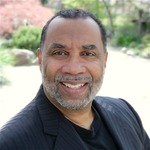
That's 800-525-7000. This is faith and finance, biblical wisdom for your financial decisions. Well, we always look forward to having Stella Tai on the program. She's manager of stewardship, investing, impact and analysis for Praxis Mutual Funds. And in case you didn't know, Praxis is one of the nation's oldest faith-based mutual funds and a leader in impact investing.
Praxis is also an underwriter of this program. Stella, great to have you back. Thank you, Rob.
I'm happy to be here. Stella, let's start with a definition and perhaps a little bit about your story. What is impact investing and what inspired you to get into this field of work?
That's a very good question, Rob. I would say that impact investing is an approach to investing that goes beyond the end goal of making a profit. It is a way to put your investment dollars to work, promoting social and environmental good in the world through investment portfolios. My journey into this field began right out of college. I went to business school.
I was thinking about how can we use finance to make a difference in the world on top of making a profit. And that led me right here into Philadelphia, where I work, working in the community development finance field. And then that opened the door for me to go to Praxis and join the team as we worked on our strategies to articulate and also communicate the impact of the Praxis funds.
I love that. And I'm so delighted at the work that you're doing and we're grateful to be partnered with you. Why do you think in particular people of faith should be focused on and thinking about impact investing? I believe impact investing is very important to people of faith because the idea of using our gifts and our talents, our possessions to do good is baked into so much of scripture. Faith gives investors a moral compass that one can guide avoidance of investments that harm our societies, but I'd say even more importantly, promote change making strategies. So these are strategies that can positively impact build world issues that we think about, for example, company practices, advancement of health care, education, the care of creation. And as people of faith, we have many pioneers that we can look to for inspiration, the Quakers, the Kathleen Dans, and many others that have gone before us doing this type of investing for many, many decades.
That's really helpful. Estella, what advice would you give to individuals or institutions looking to integrate faith-based impact into their investment portfolios? That's a question that our team gets often as investors begin the journey of integrating impact into their investments, whether they are thinking about traditional stock market investments or all the way to philanthropy. And I would propose a number of things. One, articulate what the values are that would guide these investments. Investors need to know that if they already have portfolios, what's being held in those portfolios and perhaps align that with their values. And then lastly, what tools are available, what funds are out there, what financial advisors are familiar with impact investing and go with that.
Yeah, very good. You've, of course, seen the real transformative power of impact investing. Perhaps we could finish today with a passage of scripture that inspires you in this area.
Absolutely. One of the things I've been thinking about and meditating on is the idea of being rich towards God. And so in Luke 12, we have a parable where Jesus rebukes a rich man, not because he has wealth and he has done well in his harvest, but that he was selfishly only thinking about himself. And so as investors, as we think about being rich towards God, what does that look like for us?
That's a powerful idea. One we talk about often here on this program. Stella, we're so grateful for our partnership with Praxis Mutual Funds. Thanks for stopping by today. Thank you.
I was happy to be here. That's Stella Tai with Praxis Mutual Funds. You can learn more at praxismutualfunds.com. That's P-R-A-X-I-S mutualfunds.com.
All right. Your calls are next. The number 800-525-7000. I'm Rob West and this is Faith and Finance. What's most important to you when it comes to choosing your financial advisor? Someone who's aligned with your biblical values? How about someone who will take the time to explain your options? Certified Kingdom Advisors are professionals who meet high standards in competence and integrity and have been trained to offer biblical financial advice.
To find a Certified Kingdom Advisor in your area, visit faithfi.com and click Find a C-K-A. We are grateful for support from Praxis Mutual Funds. Praxis Mutual Funds has seven impact strategies that are designed to create positive real world change. More information is available at praxismutualfunds.com. The fund's investment objectives, risks, charges, and expenses are contained in the prospectus and summary prospectus. This and other information is available at praxismutualfunds.com. Investments involve risk.
Principal loss is possible. Foresight Fund Services, LLC. Great to have you with us today on Faith and Finance.
All right. We've got lines open today. We're taking your calls on any financial topic. 800-525-7000.
That's 800-525-7000. Let me mention one other thing. You know, I hear from so many folks every day that are just struggling in the midst of high inflation.
They're really in a challenging environment where they're seeing expenses up across the board and they just don't know what to do about it and they're having real trouble staying on budget. And so let me just recommend that you take the time to download the FaithFi app. Julie and I use it for our budget. We have the ability to know at any point during the day throughout the month what's left in every envelope and whether she's out with my daughter shopping for clothes. And Emma or Abby want to know what's left in their clothing budget for the month or we're headed out to dinner as a family. We know in real time how much money we have left because it's right there in our digital envelope. And so if you'd like to have that kind of visibility in your financial life so you can stay on budget, check out the FaithFi app.
You can download it in your app store. All right. We're going to head back to the phones. We've got lines open. We'll take as many calls as we can between now and the end of the program. The number to call is 800-525-7000. Again, that's 800-525-7000.
Let's go out to Oklahoma. Hi, Jay. Go ahead. Hey, how are you doing? Thank you for taking the call.
I have a basic math question that I just can't wrap my head around. All right. We're both gainfully employed. We're approximately 90-95% debt-free. And we have a rental that is now filled and is producing income that is taking care of its own mortgage balance against it. My question is, we have the ability to pay off the mortgage, which is like five and a half, five and six percent against like $50,000. We have the ability to pay off that mortgage with other invested money. But I can't get my head around the idea. Would it be better to have my renter just pay off my house and then let that increase my net value versus paying it off and letting the money he gives me gain value? Does that make sense?
It does. And really, I think the key here is that you've got an asset that's worth whatever that home is worth. What do you think it's worth today? It's worth about $80,000 market value. And we've got a balance against it of around $50,000.
Okay. So it's worth $80,000 and that $80,000 is appreciating and it's appreciating at a pretty good clip, at least the last several years. We know that it's probably appreciating it five, six percent a year, maybe more. And then you have the ability with this money that you would pay off the mortgage. And where is that?
Where is it currently? That is currently in a mixed investment of stocks, conservative stocks, mutual funds, all kinds of stuff. I think I'm getting a return on there of about 10 percent.
Okay. So the question is, do you want to give up that 10 percent return and drop it onto the house? And basically, you're going to save yourself a guaranteed 5.6 percent a year on that, right? Because you're right now spending 5.6 percent a year to have that loan in place, regardless of, you know, who's cash flowing that. Right now, you're getting your renter to pay off the mortgage, but you would get a return equal to 5.6 percent on paying off that loan. And by not doing that, you are allowing that to grow at an average rate of 10 percent. Now, do we know it's going to continue to grow at 10 percent? No, but there's probably a pretty good chance if you have a good portfolio and you're taking a long perspective that you can do better than 5.6 percent. So does it make sense to leave that money where it is growing at 10 percent annualized, even if that comes down a little bit in the next few years and keep that 5 percent, 6 percent mortgage in place? I think it does, especially because it's not impacting your cash flow because you're not having to service the debt because the renter is doing that for you. So I think in this case, unless you just have a real conviction to be debt free and to be out of debt completely, given where you have it invested and how it's performed and assuming that's an indicator of how it's going to continue to perform in the future.
And we know that it's not directly, but it's at least an indicator. Then I would say it does make sense, at least on paper, for you to leave it exactly the way it is. Does that make sense? Debt absolutely clears it up for me. Thank you so much. I was getting lost in the interest rates and the values, and it's not that difficult, but thank you for clearing that up for me.
That makes sense. Well, you're welcome. Congratulations on having an extra house that is rented out where there's somebody paying that mortgage for you. That's going to continue to appreciate.
You're doing well in the cash you have available, plus you got plenty of liquidity. I think this sounds like a great plan. Jay, thanks for calling today. God bless you, my friend.
Quickly to Ohio. Hi, Larry. Go ahead, sir. Hi. We talked before. I have a question for you.
Sure. I'm looking at, I'm sitting on like five acres that I was looking at doing a lot split, and the home I'm currently in is part of that. And I've got enough road frontage to be able to build a smaller home for my final home, and I wanted to downsize a little bit. So I was wondering how we would work that out financially. I'd like to stay in my home currently until I get the other property developed. Would I just continue that on, and then how would that go about? Yeah, are you talking about in terms of borrowing money for the construction? Yeah, the thing is, if I sell this home, I'm going to have enough capital to build the other home. Okay.
So I think it would be out of debt completely. Sure. And so you've got a couple of options. I mean, the first option is you go ahead and sell the home and do the work to divide it up, and then you rent it back for a period of time for as long as it takes you to build out that new property if your buyer will allow you to do that, and that would be obviously one of the key considerations. The other is you get a construction loan and you build it out, and then upon the completion of it, you're ready to go ahead and split out and divide the land at that point, and then you sell the property or whatever parcel you've split off that you're going to let go of and then pay off that mortgage.
Does one of those sound like a better fit for you? Well, I'd just like to stay in my home and go ahead and get the lot split down. I've already done my investigations on that, and I've got approval for the lot split, and of course, you've got your septic system and all that, and I've got permits for that. And everything's ready to go. I just have to clear the land.
It's a wooded area. I just have to clear the land. I've got a guy to do that. So everything's been thought through and prepared for except for the sale, and I just don't want to have to go rent a place and move everything twice. Yeah.
No, I agree with that. I think the key would either be you sell it with the understanding that you could rent your own home back from the new buyer for a period of time or the probably more safe option if you can pull it off financially as you stay right there. You've already done the hard work to hire the surveyor and map out the boundaries and all the infrastructure, so you get that done and you go ahead and get a construction loan that covers the cost of the infrastructure plus that new construction.
With their understanding, you're going to have to service that debt until you get it completed, get your place sold, and now you're ready to pay it off and enjoy that smaller place in retirement. Right. Is there any capital credits if I make money on this above and beyond the construction that I'd be responsible for? Well, I mean, because this is your primary residence, for the sale of this property, you would be able to claim that exclusion for up to a half a million dollars if you're married on gains, and so that would be a benefit to you for sure. Okay. Okay. I thought I'd end up owning an uncle's home.
No, I mean, you can have 250,000 in profit as a single person, 500 in profit as a married person, so long as it's been your primary residence for two out of the last five years. So hopefully that helps you, sir. It sounds like a great plan. You've thought it through well, and we can help further along the way.
Let us know. Thanks for your call today. All right, we're going to take a quick break when we come back. We'll dive back into your questions. We've got lines open. 800-525-7000.
You can call right now. We'll be right back. Stay with us.
We'll be right back. We're grateful for support from Guidestone, whose diversified suite of investment solutions align with Christian values to create positive change in the world. More information is available at guidestonefunds.com slash faith. Investing involves risk, including potential loss of principal. Carefully consider the investment objectives, risks, charges, and expenses of Guidestone funds before investing.
They're distributed by Four Side Funds Distributors, LLC, which is not an advisory affiliate, a registered investment advisor, nor do they provide investment advice. Great to have you with us today on Faith and Finance. I'm Rob West. We're taking your calls and questions today. We've got some lines open. We're ready for you with your questions at 800-525-7000. That's 800-525-7000. You can call right now. Let's head right back to the phones to Spring Hill, Tennessee. Hi, Mike.
Go ahead, sir. Hi, Rob. During our working careers, I'm married. I made about four times what my wife made on average. And our plan was to start her taking her Social Security at 62, and then at 67, when I started taking mine, she would switch over to Spousal Social Security. And we were in a seminar on the web recently, and the lady said, if you do that, even if you do that, she will still suffer the 25% penalty even when she switches over to mine at 67.
Is that true? So you're saying, you know, as long as she's full retirement age, now are you talking about her switching to yours or switching to her own? Switching to mine. So switching to spousal benefits. To the spousal benefit. All right.
Yeah. So there is a reduction on that spousal benefit. And so if you start receiving benefits at 62 and then you reach your full retirement age later on, you can't switch to your full benefit amount without facing a penalty. So once you start receiving those Social Security benefits, your monthly benefit amount is generally fixed.
For the rest of your life with just adjustments for the cost of living. Now you can go the other way where you'd start taking a spousal benefit and let yours grow. So that's where I think perhaps that's what she's getting to. And so what I might do is is visit with the Social Security Administration just to get some more details on your specific situation and kind of walk through what each of those numbers are to make sure you understand kind of the implications, you know, of whatever you're looking to do there. But you do have to factor in those reductions before you make that final decision and make sure that it in fact makes sense depending on which she's going to take at which age.
So I know this can get complicated, but it's worth diving into, Mike, just because you don't want to inadvertently kind of lock her out of some of those increases down the road. Hopefully that's helpful. We appreciate your call today, sir. God bless you.
800-525-7000 is the number to call to Lakeland, Florida. Hi, Robert. Go ahead, sir. I'm 63 years old. My wife is 60. And she's still working. I'm still working. We pay tithes.
We give offerings. And we got about, I'd say, $200,000 in savings. And she gets 401K from her job. I was offered 401K, but I refused it because they didn't match it and I felt that me and my age is, it wouldn't really benefit anything, especially if the type of work I'm in, they could sell the property and get rid of everybody. So the money that we have in savings, you know, it's only making maybe one and a half percent, not very much, because in savings, is it best to invest that into something or leave it in savings?
Yeah. I plan on retiring. I want to work as long as God gives me my help. I'm in great shape.
I don't take medication. So I just like to work and that's my goal. Yeah, very good. But I just want this money set and we are not doing anything. Yes.
No, that makes sense. I can certainly appreciate that. Well, at the very least, I mean, right now you can get quite a bit more than that in high-yield savings. So if you go to Bankrate.com and look for, you know, the institutions with FDIC insurance, as long as you'd be willing to use an online bank, I mean, you can get as high as five percent right now on high-yield savings on a five-star rated bank with FDIC insurance.
So there's no reason for you to be settling for one and a half. I think the question is, longer term, what's the best thing for you so that you have the ability, you know, to continue to let this money outpace inflation. So I understand you're going to work as long as you can. Do you have any other investable assets other than the, did you say it was $200,000 in savings?
We have $200,000 in savings and my wife thinks her 401k is over $200,000 and that's pretty much it. Okay. Yeah, no problem. And so obviously you'll work as long as you can. I would imagine you all will delay Social Security.
Is that what you're thinking? Yes, I'm thinking what my goal is, is when I'm 65, I wanted to draw, until I get to a point where I can draw full benefits and still work, is what I want to do. Okay. Yeah. My wife wants to retire, she'll retire in five years.
Okay. Yeah, I mean, if you take Social Security at any point prior to full retirement age, which is 67 probably for you or close to it, you're going to take a reduction of about 8% a year for every year you take it early. Conversely, if you wait beyond full retirement age up to age 70, you'll add 8% a year to that check. So given your desire to continue to work as long as you can, there is a benefit here of you delaying taking that check, especially because you don't have quite as much in the way of assets as you might want to, to be able to, you know, offset other expenses beyond what Social Security will cover.
And so if you have the ability because you don't need the money right now because you're working to let that check continue to grow, then, you know, there's an opportunity for you to earn more that would be locked in for the rest of your life, plus the cost of living increases. In terms of the, you know, the $200,000 I imagine is invested in the 401k, that's great. With the $200,000 in savings, I'd probably set aside at least six months worth of expenses and keep it in high yield savings, but I'd move it to something paying at least four and a half, if not 5%. And then the other, let's say it's $150,000, you might want to look at investing that. Now, if you're just, you don't want to take any risk on that, you're not comfortable with that, especially because you've got the 401k money invested, you could look at laddering some CDs, you know, so maybe you have half of it in a one year CD, half of it in a two year, maybe even lock it in a little further out, maybe three and five years, just because you know rates are going to be coming down over the next 12 months, that would be another option.
But if you were open to it, I'd probably put that to work for you so you have more growing for the future. So hopefully that gives you some things to think about, but at the very least, Robert, I'd get that high yield savings moved to something that's paying at least four and a half percent. Check out bankrate.com and you'll see what I'm talking about. Thanks for your call, sir. Well, as we round out the broadcast today, let me remind you, if you're looking for a certified kingdom advisor, you can do that on our website at faithfi.com.
Just click find a professional. Now, if you're unfamiliar with that term, CKA, this is the only financial services industry designation for biblically wise financial advice. That's right. CKAs have met high standards and character and competence. They've had a pastor and client reference. They've had a regulatory review.
They've met significant experience requirements as well. And you can have confidence when you choose the CKA that you're choosing a financial professional that shares your values as a Christ follower. If you'd like to find a certified kingdom advisor in your area, just head to our website. Again, that's faithfi.com and click find a professional. You'll find CKAs in five disciplines, financial planning, investments, taxes, insurance and estate planning attorneys. Faithfi.com.
Just click find a professional. Well, that's going to do it for us today. A big thanks to my team, Taylor Stanrich, Amy Rios and Tahira Haynes for the entire team. I'm Rob West and we'll see you next time here on Faith in Finance. God bless you. Faith in Finance is provided by Faith By and listeners like you.