This Faith in Finance podcast is underwritten in part by Praxis Investment Management. Since 1994, Praxis has offered investment products designed to meet the practical needs of everyday investors while supporting positive change through impact strategies that go beyond screening. Guided by faith values, Praxis strives to make a positive impact on the world. Learn more at PraxisInvests.com. Did you know your financial advisor can actually help you invest in ways that reflect your faith?
Hi, I'm Rob West. Advisors do more than just help you hit financial targets. They can also guide you in making a lasting impact with your investments. Today, Josh Bean joins us to share how to start the conversation about faith-based investing. And then it's on to your calls at 800-525-7000.
That's 800-525-7000. This is Faith in Finance, biblical wisdom for your financial decisions.
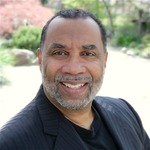
Well, we're glad to have Josh Bean with us today. He's with Praxis Investment Management, a proud underwriter of this program. Josh helps answer the kinds of questions investors often have about aligning their investments with their faith. Josh, so great to have you here today. Thanks, Rob.
Glad to be with you and appreciate obviously everyone there at FaithFi.
Well, thanks. The feeling is mutual about the team at Praxis. And Josh, I know you've been working on some new research about how investors and advisors think about faith-based investing.
So why don't we begin today by having you walk us through what you and the team at Praxis were exploring here. Yes, great. We appreciate that, Rob. 25 years ago, Praxis actually did some research on faith-based investing. We wanted to redo that and really gauge how investors and advisors were thinking about faith-based and values-based investing.
So we had a partner as Bellamy Market Research.
So we surveyed over 1,000 individual investors and 400 financial advisors. And what's great is that everyone can go check out that report at praxisinvest.com forward slash faith-based investing. And our focus there was really to understand motivations, concerns, opportunities. And the exciting part is the results confirmed what we have believed for a long time: that people want to align their investments with their values and what really matters most. Yeah, that's really encouraging.
So how does that play out, Josh? What signs tell you that people are genuinely interested in faith-based investing?
Well, I'm the national sales manager at HitPraxis, and I talk with financial advisors every day. And in many cases, those advisors have people that are asking about it.
So that's some anecdotal evidence. But what we've seen is that many people wanna have that natural expression of their beliefs.
So some call it kind of the right thing to do. Also, they might say they want to put their money where their mouth is. But for these investors, aligning their finances with their faith. is more practical. We actually, in the survey, had one investor put it this way.
Faith-based investing means investing according to the moral, ethical, and social sensibilities that arise from your religious beliefs. Another said faith-based investing can serve as a powerful tool for individuals and organizations to express their values and make a positive impact in the world. And as a sales guy, We've seen growth in this area over the past 31 years. It's a very exciting kind of niche of marketing. Wow, yeah, and the momentum is just powerful right now.
Were these results more or less what you were expecting going into the research, Josh? Yes, we really did have very similar kind of thoughts of what would actually happen. And so it's really been an exciting kind of feedback from the survey itself. And we can dive into some of the details. Yeah, let's dig a little deeper into that research.
I know you found that 48% of people have either already connected their investments with their faith or are interested in doing so. Unpack that a bit more. What does that tell you? Sure.
Well, what was interesting is we didn't just survey Christians or religious people. We actually surveyed general investors. And that 48% represents the whole population of investors, which really makes that 48% pretty encouraging. One advisor in the survey said faith-based investing reflects a growing trend toward responsible and values-driven financial practices, encouraging investors to consider the broader implications of their choices.
So we do see many investors out there just want to invest with their faith or values and really just need opportunities. And the challenge for those investors and advisors is, in many cases, they don't know how to get started.
So that's where hopefully Praxis and others can be of assistance. Yeah, no doubt about it. I mean, we feel, and I know you would agree, the opportunity is massive. Our latest data says in the hands of Christians today, just in the public markets, is $22 trillion. I mean, if you look at that compared to what's in these faith-based investments today, there is major upside potential, right?
For sure, oh yes, and we just always encourage people to either ask their advisor or have the advisor ask that question of: do you want your values considered? as part of your investment portfolio. When we come back with Josh Bean, we'll talk about that very thing. What are advisors and clients talking about, and how might you engage your advisor to talk about faith-based investing? Josh Bean is here today.
He's with Praxis Investment Management, an underwriter of this program. Much more to come just around the corner. If you love what you hear on this program, there's even more waiting for you at FaithFi.com. Explore podcasts, videos, articles, Bible studies, and devotionals, all designed to help you see God as your ultimate treasure and money as a tool to advance his kingdom. Pursue wisdom, practice generosity, and steward God's resources in a community with others who share your faith.
Visit FaithFi.com to take the next step in your faith and financial journey today. That's faithfi.com. We are grateful for support from Praxis Investment Management. Since 1994, Praxis has offered investment products designed to meet practical needs for everyday investors seeking to steward their assets consistent with their desire to promote positive social and environmental impacts. Praxis aims to bring a faith-based approach to ETFs, mutual funds, multi-fund portfolio solutions, and money market accounts, reflecting their 500-year-old Anabaptist Christian faith tradition.
More information is available at PraxisInvest.com. Thanks for joining us today on Faith and Finance. With me today, my friend Josh Bean. Josh is with Praxis Investment Management, a proud underwriter of this program. And we're talking today about some research that Praxis has done around values-based and faith-based investing.
They surveyed more than 1,000 individual investors and more than 400 financial advisors to really understand their motivations, the opportunities, even their concerns around faith-based investing. And the results. results confirmed what we've known for quite a while is that many people want their investments to do more than perform. They really want them to reflect their values. By the way, if you'd like to understand more about this, you can go to Praxis Investment.
Invests.com slash faith-based investing. That's praxisinvests.com slash faith-based investing.
Now, Josh, I know a big part of this was really looking at the advisor-client relationship. And am I right in thinking that most investors still aren't discussing this with their advisors? That's correct. That was really one of the main takeaways that we have from the research. Seventy eight percent of investors say it's important to learn about faith aligned options from their advisor.
But here's the part that really jumped out to me: only nine percent, nine percent. Of financial advisors say they bring it up to clients.
So that's really a huge gap that we've seen. And really, it's confirmed what we've seen for decades that people want their investments to reflect their values and convictions, and they just need guidance. They just need those advisors to assist them. As they go along, but the advisors are not asking, so we encourage clients to ask. Yeah, for sure.
And I know this has been a big part of your role at Praxis, talking to both investors and advisors.
So in your view, what's driving this gap? Because it's obvious people are interested in weaving faith into their investments. We see it as really that mistaken idea. That values-based investing, you're going to sacrifice returns. Performance has always been the issue.
But that's not the case now. And that's why it's important for asset managers like Praxis and others to have well-constructed, diversified, really competitive performance and to meet really clients' long-term goals. Nearly half of advisors say they'd recommend faith-based options more often if they had investments that perform in line with traditional ones.
So I'm really here at Praxis, and I say this every day to advisors, our goal is to achieve benchmark-like returns over the long term. We use what's called portfolio optimization, basically meaning we screen out companies that don't align with our values. That's usually about 15% of our benchmarks. And then we incorporate shared values and then track the benchmarks closely.
So we see it really like Jesus sees it.
So Jesus says in Matthew 25 in the parable of the talents, to be good stewards of our resources. that God has given us. And so in that parable, he says to the good and faithful servant, he says, well done, good and faithful servant. You've been faithful with a few things and I'll put you in charge of many things. Uh-huh.
So now more than ever, those financial advisors that are offering fape-based investments It's more than performance, it's also kingdom impact.
So we're excited about really trying to hopefully close that gap. For advisors and investors. It really is exciting just to see the momentum in this space and just the new products, the world-class investment solutions that are coming to bear, both in the private and the public markets now. Also, the corporate engagement that's happening. And I know Praxis is taking an active role in that as well.
So, in light of all of this related to the research, Josh, what should Christian investors take away from this? Sure.
I think it's a new opportunity for those that are learning about it. For many people, aligning their investments with their beliefs is Kind of the deeper sense of purpose and satisfaction. You know, talking about faith and values can strengthen the client relationship. And Really, if you want to get started, like I said before, I encourage you to talk with your advisor and see how faith-based investing can be incorporated into your financial plan. We've actually created a brochure for investors on faith-based investing.
And so, being able to ask those questions to your financial advisor, it's also available on our website. And so, it can kind of initiate that conversation. You know, I can't underscore that point that Josh just made there. It really, I think, in many cases, is going to require the client to engage their advisor around these things before the advisor is going to take the step to really build out their practice to make this offering available. Many advisors are just operating as they have for 20 years, and the industry has changed.
And faith-based investing is now available in a way that it did not exist previously, but requires your advisor to take steps in that direction. And your conversation about it may be just the thing that gets your advisor to take the next step. Of course, engaging here at Kingdom Advisors would be a great way to do that as well. Josh, what are some of the tools available to help investors screen their portfolios, either to exclude companies that conflict with their faith or values or to include those that align with their values specifically?
Well, there's many tools that are out there to take a look at. Really faith-based investing in general. And finding things that align with your values, what's important to you, talking about avoidance, company engagement. Community investing, anything that really aligns with how you want to have your portfolios for your investments.
So I encourage everyone to go out there and look. Obviously, you can use Praxis, you can use Kingdom Advisors. There's lots of tools out there for finding what's the right fit for you. Yeah, that's great. And then, in terms of the products themselves, I know we have come a long way in terms of the availability of mutual funds, now ETFs that are available.
So, talk about just what kinds of mutual funds and ETFs are now available for the typical investor and advisor that have not been available previously.
Well, this is the part that actually excites me because you know, as a fund family, now Praxis actually is now offering ETFs.
Now, you can build a portfolio much more fully than you could 10-15 years ago. There's lots of firms out there in the faith-based space.
So, the advisor can put together a really solid portfolio. And from an investor perspective, you can have kind of a wide range of faith-based investments for diversification and really have strong performance while at the same time utilizing really that faith-based and impact that you can have from our faith-based investments.
So, it's an exciting time in the faith-based world, including things like mutual funds, ETFs, things like that.
So, we think it's a very new opportunity for advisors and investors. And there's lots out there, and we just encourage you to take a look. Josh, we've got just about 90 seconds left. I want to finish with perhaps an example of what this might look like.
So for a client listening today, as they think about how their current portfolio that's really purely secular and not really looked at through a faith-based lens, what might that transition look like to a faith-based investment portfolio?
Well, I think the first step would be talking about it with your advisor. Secondly, looking at what's available on different platforms, you know, depending on who you're utilizing, and then really taking a look at what really matters. What things do you want to have screened out? Do you want to have engagement? Do you want to have community development investing?
And then targeting those firms and funds, ETFs, mutual funds, et cetera, and trying to put those together and work with your advisor to put together a diversified portfolio. And we think now more than ever that's possible, which is an exciting thing. Yeah, it sure is. And by the way, folks, if you'd like to look for a certified kingdom advisor who specifically offers faith-based investments, you can do that at faithfy.com. Just click find a professional.
Josh, I also want to give that website again where folks can explore this further at Praxis. Give that to us. Sure, it's praxisinvests with an s.com forward slash faith-based investing. You can find lots of resources there, including the brochure that can give you the first steps on faith-based investing. Josh, well done on this research.
We're so grateful for your partnership. Thanks for being here today. Thanks so much. Great to be with you. That's Josh Bean with Praxis Investment Management.
Talking with your advisor about faith-based investing can transform your financial plan into something that really accomplishes your goals, but also reflects your values as well. We're so thankful for our partnership with Praxis, their main website, praxisinvests.com. We'll be right back. We're grateful for support from Movement Mortgage, who provides residential home loans in all 50 states. Guided by a mission to love and value people and a goal to redefine the mortgage process, Movement seeks to help others achieve their financial goals.
You can find out more at movement.com/faith. Movement Mortgage LLC supports Equal Housing Opportunity, NMLS, number 39179. For licensing information, please visit NMLS ConsumerAccess.org. As the leading advocate for the Christian financial industry, Kingdom Advisors serves the public by promoting the integration of a biblical worldview across every aspect of the financial services industry. And we serve a growing network of thousands of Christian financial professionals, equipping and empowering them to carry biblical financial wisdom to their clients, peers, and community.
For more information, visit kingdomadvisors.com. That's kingdomadvisors.com. I'm so glad you're joining us today on Faith and Finance, helping you see God as your ultimate treasure. I'm Rob West. We're thrilled you're along with us today.
Nearly all the lines are full, so we'll be headed right to the phones here in just a second. But first, let me mention: you know, we hear from so many of you as you send emails and when you call the show each day, you write us letters. We love those handwritten notes, and you tell us how much God has used the program and the ministry to encourage you to be a wise and faithful steward. Your stories are incredible: how you've put these principles from God's word into practice. You're giving generously, you're preparing the next generation.
I love it. And often, folks will ask, What can I do to support the ministry? And listen, if you love the program and you've perhaps enjoyed some benefit by listening or some encouragement, we would invite you to become a Faith Vi partner. These are men and women who support our listener-supported work here at Faith Vi. And they do that at $35 a month or more, or at least $400 a year.
And by becoming a partner, it helps us reach more people with the stewardship message, but also it allows us to send you some great resources to encourage you along the way, including our Faithful Steward magazine. And the latest issue just came out. It's chock full of some incredible content. We'd love to mail it to you. Actually, we'll send you four issues of Faithful Steward each year, plus our new studies and devotionals.
Every time we come out with one, and we come out with one twice a year. In fact, we're working on our new devotional that I'm really excited about. It'll be out before the end of the year. I'll tell you about it in the weeks to come. But if you'd like to become a FaithFi partner, would you head to our site at faithfi.com/slash partner to learn more?
That's faithfi.com/slash partner. All right, let's head to the phones. Hanover Park, Illinois is where Roland's located. Go ahead, sir. Hi, I'm glad to be able to talk to you.
Uh I had a cold call today. uh requesting wanting to know if i want to my house for cash. Um I owe nothing on a house. The only expense I have on a house is And you will Uh homeowners insurance. That's only house expense.
besides utilities. Um no other debt. None, ladder. Yeah. Could I even entertain their thought?
I'm eighty-two years old. Yeah. And God has blessed me and basically It's nice to live without any mortgage. I love that. It's a great question, Roland.
And this is one that I'm glad you asked because a lot of people get this. And really, I mean, the first thing you need to understand is when you get these cold calls from somebody that says they'll buy your house for cash, or you get a letter in the mail, or you see a billboard on the side of the road that says, you know, we buy houses or something similar to that. What you have to understand is these are investors. that are offering quick closings. No inspections and guaranteed cash.
But the trade-off is a below market price.
So, on average, these cash investors are going to pay usually around 70%, maybe 80% of fair market value.
So that means in exchange for that quick closing and quick cash, you're giving up 20 to 30 percent of your home's value.
Well, on a $300,000 home, you know, that's 90 grand that you're walking away from. Compared to what you could get if you want to sell your house and you do it through a real estate professional by pricing it appropriately and putting it out there on the multiple listing service and getting a lot of people walking through it and then paying market value for it. But even though it's going to take a little bit longer, you're going to fully maximize this asset.
Now, in terms of making this decision, it really, I think you need to back up before even you get to the question of would I ever entertain selling to somebody who's going to buy it for cash over the phone, which I would say no. But really, the question that comes before that is. Do you want to sell this? Because, yes, this is an asset, but your home's a little different than other assets because you live in it. And so, if you were to sell it, yes, you're going to have a liquidity event, but now where are you going to live?
Are you going to go buy something else? Maybe you want to, you know, get into a place where you don't have as much upkeep.
Okay, that would be a good reason why you might want to consider it. Maybe you're trying to downsize, it's a little too big, you don't need that much space. That might be a good reason. Maybe you're ready to move into more of a senior living community. That might be worth considering.
But I wouldn't sell just because somebody's offering you, you know, to buy it. I would sell because you have prayed it through, you have a plan, and it makes sense to sell. Then, once you make that decision, then the question is: okay, how do I sell it? And I would tell you absolutely not to sell to somebody who's got a billboard or cold calls you. I would go find a real estate professional and fully maximize the value of the home by selling it the right way.
Does that make sense? I I hear you.
Okay. Yep. Thanks for the info.
Okay, rolling. I hope it helps. I appreciate your call. If you have other questions, give us a call back. Let's go to Betty.
She's been waiting patiently in Chicago. Betty, how can I help? Oh yeah. If I get a loan for about $20,000, I didn't want to take a home equity loan out, even though I have good credit. I was thinking of a personal loan With Bank of America, like I said, I have good credit.
What do you think?
Well, tell me why you don't want the home equity loan. Is it just you don't want to put your home up as collateral? Um I don't want to put my home up as collateral. And I just wanted to get a separate loan. I don't know which one is more cost.
efficient for us. Yeah. My husband's retired. I'm the only one working. Yeah.
Well, from a cost-efficiency standpoint, the home equity loan, home equity line of credit is going to give you the most effective interest rate that's likely because it's probably going to be around prime and those rates are going to come down. Whereas if you get that personal loan, you're going to pay a premium for that. Could be 9%, 10%, 11%, could be 12% with good credit because there's no collateral. And so it's unsecured, which just means they're counting on your good name. And if you didn't pay it, they'd have to sue you to get the money.
Whereas with the home equity line of credit, they take less risk because if you stop paying, they can foreclose on the house.
Now, you have to be confident that what you'd want to do in either case, that you have the money to service this loan, to make the payments and ultimately pay it off. But if you can, because you're taking just a little bit of money and you feel like, yeah, we've got plenty of cash flow. We're not with tons of excess, but we have enough. Feel good that this is a wise decision.
Well, the home equity line of credit is going to save you money. There's even some banks like Bank of America and a couple of others that are doing home equity lines of credit fee-free right now, where you know they're not charging any points or closing costs or anything like that. And so, you on paper, the financial equation would do a little better for you with a home equity line of credit, but a personal loan is an option, it's just going to be a little more expensive. Does that make sense? Yeah, that makes perfect sense.
Thank you so much, and I appreciate your show and your knowledge.
Well, thank you, Betty, and Lord bless you, and thanks for being so patient today. Folks, so grateful to have you along with us today on the broadcast. We'll be back. Tomorrow, Lord willing to do it all over again. Our goal: help you see God as your ultimate treasure and live as a wise and faithful steward.
Big thanks to our team today: Pat, Devin, Jim, and everybody here at Faith By. Have a great day. We'll see you tomorrow. Bye-bye. Faith in Finance is provided by FaithFi and listeners like you.