This Faith and Finance podcast is underwritten in part by The Good Investor, a book by Robin John. This Faith and Work memoir hopes to inspire readers to view their work and investments as opportunities to honor God and bring blessing to the world. You can learn more now at goodinvestor.com. That's goodinvestor.com. What if your investments could do more than grow your wealth?
What if they could also fight injustice, uplift your neighbor, and even bring joy to the world? Hi, I'm Rob West. Joy probably isn't the first word that comes to mind when you think about investing, but maybe it should be. Robin John joins us today to share how investing can be more than financial. It can be deeply spiritual.
And then it's on to your calls and questions at 800-525-7000. That's 800-525-7,000. This is Faith in Finance, biblical wisdom for your financial decisions.
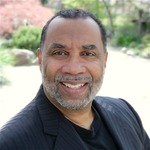
Well, it's always a joy to welcome Robin John back to the program. He's the co-founder and CEO of Eventide Asset Management, a Boston-based investment firm committed to investing that makes the world rejoice. And Eventide is a proud underwriter of this broadcast as well. Robin, great to have you back with us. Thank you so much, Rob.
Robin, I can't wait to dive into our topic today, which is around your new book, The Good Investor: How Your Work Can Confront Injustice, Love Your Neighbor, and Bring Healing to the World. It's one of the most engaging investing books I've ever read, filled with powerful stories that bring the principles to life. And I'd love to begin right there. You open the book with a story from your time in India that clearly left a deep impact on you. And so, if you don't mind, would you share that with our listening audience?
I am so thankful for this opportunity to share the story. You know, I was born in India, and I was eight when I moved to the U.S. I was born in a small village in southern India. And when I was twenty three years old, I was working at a large custody bank. And they asked me whether I would go back to India.
Uh to help with outsourcing. And it's that experience that really led me to question. My purpose, my calling. uh and really to uh re-understand The sacred secular kind of mindset that I was having at the time.
So I was sent to a place called Pune, India. And uh I was staying in a guest house And there were two young guys who took care of me at the guest house. Their names were Amal and Kamal. And every day they were taking care of me, they were cooking for me, ironing my clothes for me. And one day, you know, as they were preparing my dinner, I was in the kitchen.
Just talking to them and I asked them, because I saw behind the kitchen a pantry and a mat. I said to them, Is that where you sleep? And they said, Yes, sir, that's where we sleep. I had a beautiful bed, air-conditioned room. There were lots of empty rooms.
And these two guys were sleeping on the floor on a concrete floor. in a heart Uh humid pantry. and no pillow, no blanket And that really bothered me. And I'm also in my mid-20s. I looked very much like them, also from India.
And I emailed Management in America. And the response I got was, these guys are not our responsibility. We are outsourcing this guest house to a local vendor. And ultimately, lots of conversations later, I came to the conclusion incorrectly. that business is just business.
Business is about making profit. It doesn't care about people. And I'm just here to make money for others. And that was very dissatisfying to me. And that led me to a search and a prayer and fasting to really understand God's calling in my life.
Now that set you on a journey and a lot of things began to transpire, including you losing your job, for you to explore at a much deeper level the purpose behind our work, right? Yeah, so I was really struggling during that time and I had a sacred secular mindset and I really did believe that business was about just making profit and just making as much money as you possibly can. What I did is I spent a lot of time praying and fasting and my friend Finney prayed with me and I remember praying through Romans chapter 12, not conforming to the patterns of the world, but renewing our minds. What I needed was a renewed understanding of what business is and what investing is. And I really believe that through that prayer, God gave me a renewed understanding that business is much more than about profit and therefore investing can be much more than shareholder value maximization.
Well, we're going to continue to To talk about that because that led to the founding of Eventide, investing that makes the world rejoice. We're talking about the good investor, the new book from Robin John, co-founder and CEO of Eventide Asset Management. Back with more after this. Stick around. If you love what you hear on this program, there's even more waiting for you at FaithFi.com.
Explore podcasts, videos, articles, Bible studies, and devotionals, all designed to help you see God as your ultimate treasure and money as a tool to advance his kingdom. Pursue wisdom, practice generosity, and steward God's resources in a community with others who share your faith. Visit FaithFi.com to take the next step in your faith and financial journey today. That's faithfi.com. Faith in Finance is thankful for support from The Good Investor, a book by Robin John.
In his book, Robin shares his journey from an immigrant child struggling in school to co-founder and CEO of Eventide Asset Management, a faith-based investment firm. This Faith and Work memoir seeks to inspire readers to view their work and investments as opportunities to honor God and bring blessing to the world. More information is available at goodinvestor.com. That's goodinvestor.com. Thanks for joining us today on Faith and Finance.
I'm Rob West. With me today, my friend Robin John. He's the co-founder and CEO of Eventide Asset Management, a Boston-based investment firm committed to investing that makes the world rejoice. We're talking about Robin's brand new book, The Good Investor: How Your Work Can Confront Injustice, Love Your Neighbor, and Bring Healing to the World. Buy it wherever you buy books.
Robin, before the break, you were sharing some of the backstory that led to this discovery around really the purpose of our work, the deeper purpose behind that. And that led you ultimately with Finney, who you mentioned before the break, to found Eventide. And you began to really reimagine investing in a way that would bring human flourishing to the world and kick out those companies that were harming their stakeholders. Let's dive into that. That's a bit more in your mind.
What makes a company truly worth investing in? Yeah, for a company, what we look for a company is whether the company's products and practices are truly good. In other words, we talk about goods and services. It's the good Truly good, and it's the service that the company offers, does it truly serve a need? And so we want good products, and we also want good practices.
Companies whose management teams seek to serve well their customers, their employees, their supply chains, host communities, environment, and society.
So ultimately, We believe that investing is ownership. Investors participate in the dividends and capital gains, and therefore we are rooting for the companies that we invest in.
So the big question for us became what types of businesses do we want to root for in the world? These are the companies that are the companies that I believe have products and practices that are good, and we want to partner with those companies. Yeah, that's exciting. And that's certainly one side of this. I know there's another side with regard to those companies that you intentionally exclude.
And in the book, you use the phrase fighting dragons. Talk about that particular aspect of investing. Yeah, in the book, I talk about how dragons are these creatures and stories that lurk right outside the town, the village, and they are there to cause harm. And so we want to avoid dragons. We want to fight dragons.
We want to avoid investing in companies and allocating capital and supporting companies that are causing systemic harm. This includes things like addiction, exploitation, injustice. I often talk about the tobacco example. A more recent example that I think all of us are hearing a lot about in the news now is sports betting, online gambling. And I was just looking just even last night at a public company called DraftKings.
And in 2020, their revenue was 600 million. 2021, 1.2 billion, so it doubled it. 2022, 2.2 billion. And now 2024, 4.7 billion. And they are estimating 6.5 billion in 2025.
So You know, yes, you know, if you're just trying to make money, a company like DraftKings would be fine. But as a Christian, we should be asking ourselves: what do we want to advocate for in the world? What do we want to promote in the world? Do we want to root for a company whose customers are really being harmed in the process? I was reading recently about the increased divorce rates.
The increased bankruptcy rates, the increased even suicide rates due to online gambling. It's a major issue that's becoming a bigger and bigger problem in our country. And we, as Christian investors, can either choose to fight the dragons or feed the dragons. Yeah.
Well, it's a powerful idea. And it's one that so often investors just have not considered, Robin. And the exciting thing is that we now have the opportunity to actually think about this and choose investments that are world-class that do exactly what you're talking about here today.
Now, you said as a part of this journey, you spent a lot of time in the book of Genesis. And I know you talk about this idea of tending gardens as a metaphor. Talk about how that applies to the way we approach investing. Yeah, when we read Genesis 1, we see a mandate to cultivate. God calls us to cultivate the earth.
And God creates us in his image so that. We can build culture and cultivate as he would, a good God.
So, we are supposed to bring goodness into our everyday work.
So, when I think about this call to cultivate in a business context, I think about companies that are really promoting human flourishing through their products and practices. Imagine a trucking company that seeks to care for drivers so that their drivers could sleep in their own beds at home with their own families every night. Imagine a company that is seeking to cure cancer. Imagine a company that is treating Alzheimer's or Duchenne muscular dystrophy. These are the types of companies that we want to partner with.
The Bible, ultimately, in Romans 12, says to hate what is evil and also to cling to what is good. Yeah.
Now, I want to talk about how this comes out through the work you do at Eventide. How do you help investors live out this vision? of becoming the good investor. At Eventide, we have a framework that we call the Business 360 framework. And what we seek to do for our investors is to help them to invest in a way that aligns with biblical values, the love your neighbor principle.
So we are seeking to invest in companies that are loving and serving the real needs of the world, especially loving and serving their customers, employees, supply chains, host communities, environment, society. As I mentioned earlier, we have an avoid, embrace, and engage framework. We want to hate what is evil, but try to cling to what is good and find the companies that are promoting human flourishing. For investors that are investing with us, all of our investing is done this way. For listeners today, I would encourage you to visit both the Eventide Investments website, but also Goodinvestor.com.
When you go to goodinvestor.com, there are two tools on that website that I believe would be helpful for the listener. One of the tools is to screen your portfolio.
So you could just put your current portfolio into the tool and just see for basic biblical values like abortion, pornography, tobacco, how is your portfolio currently doing. But then secondly, we have a tool on that website that could connect you with a financial advisor that understands and practices good investing. Yeah, that is great. Again, that website again, Robin. is goodinvestor.com.
Excellent. We've got just a few seconds left. If there's one thing you hope investors walk away with from reading The Good Investor, what would it be? I really want investors to walk away believing and being inspired that their investments can change the world and can honor God in the process.
Well, Robin, I am so excited about this book. Folks, you need to pick up a copy today. You can buy it wherever you buy books. It's called The Good Investor. And also, check out these two tools at goodinvestor.com.
Robin, appreciate your friendship, and thanks for your time today. Thank you, Rob. That's Robin John, CEO of Eventide Asset Management and the author of The Good Investor. You'll have a powerful vision for how our work and investments can honor God and serve others when you read it. Back with your questions after this: 800-525-7000.
This is Faith in Finance, biblical wisdom for your financial journey. We'll be right back. We chase money thinking it'll bring security. We seek success hoping it'll satisfy. But the book of Ecclesiastes exposes this truth.
Lasting contentment isn't found in what we own, but in a personal relationship with Wisdom Himself, Jesus. FaithFi's study Wisdom Over Wealth: 12 Lessons from Ecclesiastes on Money will help you break free from empty pursuits and discover what truly lasts. Purchase your copy today or place a bulk order at faith5.com/slash shop. Feeling burdened by credit card debt? As faithful stewards, we are called to manage our finances wisely.
Christian Credit Counselors can help with a debt management program that allows you to pay off debt up to 80% faster while honoring your commitments with integrity. Don't let debt hold you back from the life God has planned for you. Take the first step toward peace and financial freedom today. Visit ChristianCreditCounselors.org. That's ChristianCreditCounselors.org.
Thanks for joining us today on Faith and Finance. Here in our final segment today, we'll get to as many calls as we can. If you have a question, call right now, 800-525-7000. Hi, Phyllis. Thanks for calling from Florida.
Go ahead. Yes, hi. I've listened before, but I've always been driving when you're discussing reverse mortgages with other callers. And you usually throw in that would be the one I would prefer, or I advise you check with them. What was the name of that company?
Do you recall? I sure do. Yeah, we have a trusted partner, an underwriter here at Faith Phi called Movement Mortgage. And they're a national lender, and they are run by believers and really operated based on biblical values. And not only do they provide nationwide mortgages that are very competitive, which is their primary business, they really use the business as a means to, in part, fund a lot of great ministry work.
They've started movement schools around the world to not only provide safe and effective schooling, but also share the love of Christ and just incredibly generous. Hundreds of millions of dollars have been given to ministry. But they also are specialists in this area of reverse mortgages.
So if you want to reach out, I'd be happy to give you a phone number and then I'll ask you. To hold, and if you didn't get it, our team can make sure you get it. But it's 855-970-100. 1084. Again, it's movement mortgage, 855-970-1084.
And if you hang on the line, our team will make sure you've got that. Here's the key, though, Phyllis. You know, I think reverse mortgages aren't for everyone. We talk a lot about getting out of debt and staying there. And, you know, you may be in a position where you say, listen, I have a conviction I want to be debt-free.
And I'd say, great, do it and don't look back. For some that have gotten into this season of life and, you know, maybe they still have a mortgage and they're struggling to put food on the table and balance the budget because they've got a mortgage and they've got limited income, or others who just, you know, they're right up to the edge and they've got some projects they'd like to do around the house, or maybe they'd like to have a little bit more disposable income just to do some things that they might enjoy in this season of life. Either paying off an existing mortgage with a reverse mortgage where the payment goes away, or having access to a line of credit, or getting an income stream, a monthly check for life to tap into what is. your biggest asset for most folks in this season of life. Is an opportunity because we look at our financial life and we say, Okay, what are all of the assets we have?
Well, I've got an IRA and I've got a 401k and I've got a home with a bunch of equity and it's got more equity now than I've ever had in that home. And you know, I've got different things. And so we say, What is the best asset to pull from to meet my needs that align with my values as a Christ follower? And for some, they have limited options, and that home equity is the way that they can finally make the budget balance in this season of life.
Well, that's where I think it's at least worth considering as a planning tool. Again, it's not for everyone, and yeah, there's a cost. I mean, that balance because you're not paying them payment is growing with interest and fees. And there's a fee on the front end, a 2% fee right up front that's the FHA charge to ensure that you never owe more than the house is worth so that at your death, there's not a balance after the house is sold. Um, so you know, there is fees and expenses you just need to be aware of, but.
If you are going down this road and you believe it's the best option for you, or at least you want to explore it, that's where our friends at movement.com/slash faith could be a great help to you. Thanks for your call today. We appreciate it. Let's go to what we'll stay in Florida. Duane, go ahead.
Oh, hey, Rob. Thank you so much for having me on your station there. Absolutely, sir. Yes, sir.
So yeah, my wife and I were both chiropractors and my wife has been called to stay at home and homeschool our children. And we've started over our business. This will be our third clinic that we've started. We sold one in the where we used to live. And yeah, we're still struggling to pay off our student loan debt.
It seems like every time we start a clinic. You know, it's hard to get started back up. Yeah, just we would like to buy a house. We've not bought one down here yet and just don't know where to start because we we both still have a lot of student loan debt. And I feel like I'm a slave to the lender.
I really have that on my heart. I want to pay it off, but I also want to give my wife and my kids the house that they want. Yes. Yes. Well, I realize these two tensions, Dwayne, and I certainly get that.
And I can understand your conviction to be debt-free. And I also understand that the security that comes, you know, from your wife around owning a home and your desire to be able to provide that for your family. And I think we need to move forward toward both and do that in a way that's thoughtful. And I think the two of you need to come together and really pray through this and agree on a path forward where you can honor both of your convictions. Give me just kind of a rundown of where you're at right now.
What do you have in emergency savings? Anything? Uh yeah, we have probably ten thousand.
Okay. And are you living within your means and have a little bit left over at the end of the month? Yeah, but I I mean, I I think we have trouble separating the business from our personal. Like we we use the business for yeah, a lot of the so I think that's always been our issue when I try to go make the budget. I don't know if I make the budget for the business first or the personal, and I don't know how to separate those two.
And I haven't found anyone really help us with that.
So I'd really like some Direction of that. Yeah.
Well, that's going to be a really critical step. That was the other thing I was going to tell you is we've got to find separation between those. And you've got to be able to put yourself on a consistent salary or compensation that covers your budget and allow the business to run separately. By dividing those, it's going to help with taxes so you can have true deductions for business expenses where you run into problems when you're mixing personal finances. Because if you were challenged on that from the IRS, you're going to have a difficulty justifying those.
And so that's why keeping it separate is key. You also can't ever tell truly how the business is doing, but when it stands on its own and you create the business plan, business plan and budget and so forth, and then you pay yourself more of a consistent amount where when you have a big month, you retain in the business. And when you have a low month, you pull from some of those reserves and you try to normalize that compensation coming over. Then that allows you to build the personal space. Spending plan on something that's a little more consistent so you don't have these wild fluctuations, which make it nearly impossible to budget against.
So, there's a lot of good reason for you to kind of separate these out, keep a separate set of books for the business and the personal finances. You really need to find a small business CPA, somebody who specializes in that. I'd head to our website, faithfi.com, and click find a professional. And what you're going to want to do is ask for a referral to a CPA who specializes in small businesses and let them know what you're looking for. And you should find one that can make that connection for you to a godly accountant or CPA who can really help you.
Because I think that's the next step. And then you can create the budget, and then you and your wife can come together on how much are we saving, how much are we paying off debt, and probably it's a combination of the two. God bless you, Duane. We appreciate your call. Folks, such a privilege to come alongside you each day to encourage you, to hear your stories.
We count it a privilege that you invite us into your journey. As a steward of God's resources, and our goal is to be hopeful, to be encouraging, to be reverent as we deal with and approach God's word, but always to point you back to Jesus. Here's my experience: when we get this area of our lives right, our finances, it has a ripple effect through every other area of our lives and ultimately will lead to a more intimate relationship with the Lord. That's our goal. A big thanks to my team today: Taylor, Devin, and Pat.
And we'll see you next time right here on Faith and Finance. Faith in Finance is provided by Faith Five and listeners like you.